Hair breakage is one of the most fixable hair problems there is, because it's mostly mechanical. A strand that snaps halfway down hasn't failed at the root; it has simply been bent, heated, stretched or rubbed past what it could handle. Change the handling, and the snapping slows down remarkably quickly, even though the pieces that have already broken need time (and a few trims) to grow out.
The first step is making sure it really is breakage. Short pieces around your face, a fuzzy halo along your part and little bits of hair on your sweater are very different from the full-length strands that collect in your brush. One is damage you can stop. The other is usually normal shedding, and occasionally a sign worth mentioning to a doctor.
This guide to hair breakage covers how to tell breakage from shedding, a "breakage detective" table that matches where your hair snaps to the likely cause and the fix, the seven most common causes, a gentle repair routine, how to protect your hair at night, what to stop doing and when breakage could point to something your doctor should check.
Good news first: you don't need a cabinet full of products. A handful of gentler habits does most of the work.
Breakage or Shedding? How To Tell
Gather a few hairs from your brush, pillow or shower drain and look at them against a white tissue or paper in good light. The ends tell the story.
- Shedding: the hair is full length, and one end has a tiny white or light bulb. That's the root. Losing a fair number of these a day is normal, since hair grows in cycles and old strands make room for new ones.
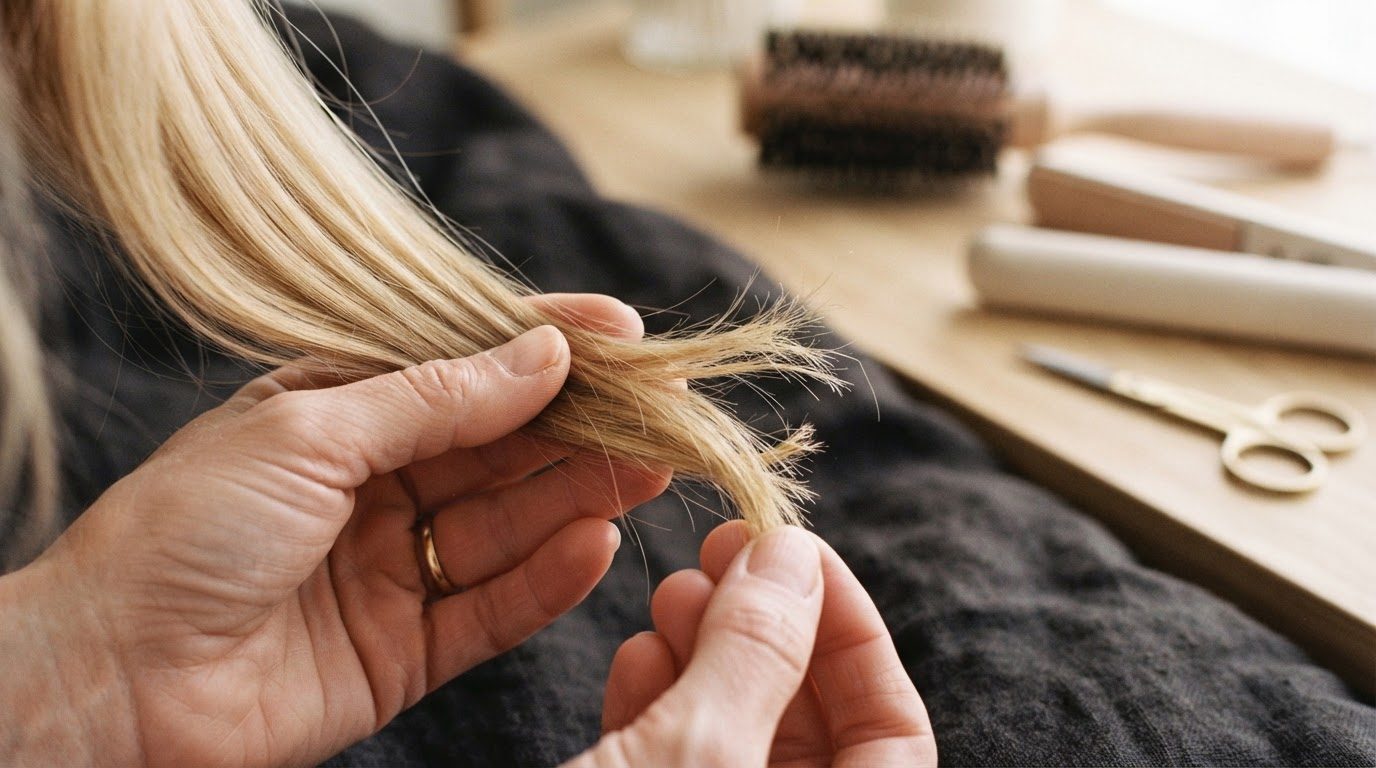
- Breakage: the pieces are shorter and uneven, often just a few inches long, and neither end has a bulb. Instead you'll see a blunt, frayed or split tip where the strand snapped.
Other clues for breakage: hair that never seems to get longer than a certain point, flyaways that stick up along the crown and part, rough, see-through ends, and short pieces around the hairline that look like "baby hairs" but feel crunchy. Shedding, on the other hand, shows up as more full strands in the drain and, if it's heavy, a thinner-looking ponytail overall.
Many people have a bit of both. If you mostly see short pieces, the routine below is for you. If you're finding much more full-length hair than usual, skip ahead to the section on when to see a doctor. To understand what is normal first, I also wrote about the difference between hair shedding and hair loss.
The Breakage Detective
Where your hair breaks is one of the best clues to why it breaks. Screenshot this table, look at your hair in daylight and match what you see:
| Where it breaks | Likely cause | Fix |
|---|---|---|
| Ends: split, see-through, rough tips | Age of the hair, dryness, heat, skipped trims | A small trim, weekly deep conditioning, heat protectant, a drop of oil on the ends |
| Mid-lengths: snapped pieces at the same height | Hair ties, clips or tight ponytails in the same spot every day | Silk scrunchies, a lower and looser hold, change the position daily |
| Crown and part: short, fuzzy flyaways sticking up | Rough towel drying, brushing wet hair, heat aimed at the top, sun | Microfiber towel, wide-tooth comb on damp hair, lower heat, a hat in strong sun |
| Hairline and edges: short, broken pieces | Tight headbands, pulling hair back tightly, harsh rubbing when washing your face | Soft headbands, a looser hold, gentle hands around the hairline |
| Nape: tangles and snapping at the back of the neck | Friction from collars, scarves, coats and pillows | Silk pillowcase, gather hair loosely at night, detangle the nape first |
| All over: gummy, stretchy or straw-like strands | Bleach or chemical damage, protein and moisture imbalance | Bond-repair treatment, a protein-moisture balance, pause chemical services |
One pattern usually stands out. Start with the fix for that area, and the others often improve along the way.
7 Common Causes of Hair Breakage
Hair breaks when its outer layer (the cuticle) gets roughed up and the inner structure weakens. These seven habits and situations are behind most of it.
1. Heat Without Protection
Straighteners, curling irons and blow-dryers on high heat dry hair out and, over time, damage the proteins inside each strand. The fix isn't giving up styling. It's lowering the temperature (fine or damaged hair usually does well around the lower settings), passing the tool over each section once or twice instead of five times and always using a heat protectant spray first. Look for a lightweight mist you can spray evenly through damp or dry hair, ideally with protection listed up to the temperature you actually use.
2. Bleach and Chemical Treatments
Lightening, perms and relaxers change the inner structure of hair, which makes it more fragile even when it looks lovely. Breakage after bleach often feels gummy or stretchy when wet. Leave plenty of time between services, ask your colorist about bond-building additives and avoid overlapping bleach on hair that's already been lightened.
3. Tight Ties and Clips
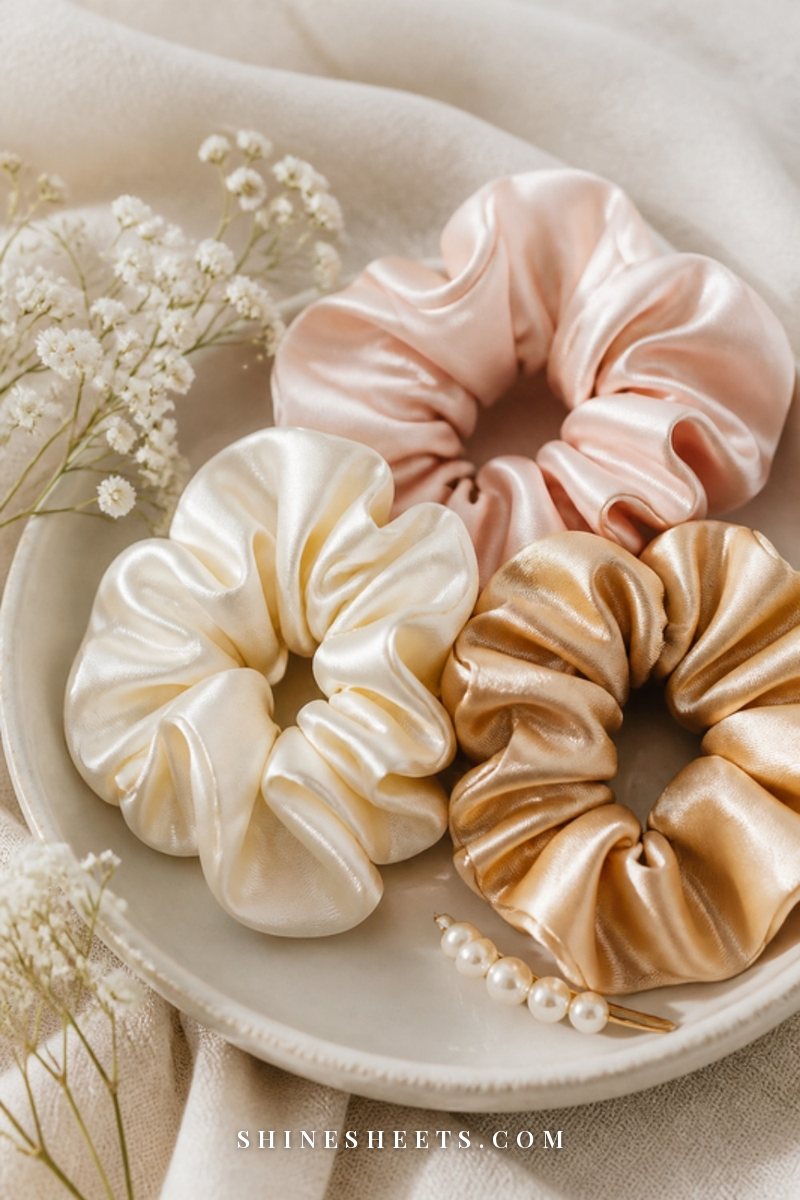
Elastic hair ties grip hair in the same spot day after day, and that's exactly where it snaps. Swap them for silk scrunchies, which hold with less tension and glide rather than grip. Choose a mix of sizes: a slim one for everyday wear and a larger one for nights. Keep the hold looser and vary its position, a little higher one day, lower the next.
4. Brushing Wet Hair Roughly
Wet hair stretches more easily and snaps more easily. Dragging a tight brush through tangles straight after washing is one of the quickest ways to create breakage. Detangle gently, from the ends upward, with conditioner still in.
5. Friction
Cotton pillowcases, rough towels, wool scarves and coat collars all rub against the hair, especially at the nape and ends. Each rub lifts the cuticle a little, and roughed-up strands tangle and snap more easily.
6. Dryness
Dry hair is less flexible, so it snaps instead of bending. Cold weather, indoor heating, hard water, swimming and harsh shampoos all play a part. Your hair's porosity also matters: high-porosity hair loses moisture fast, while low-porosity hair resists absorbing it. My guide to finding your hair porosity explains how to tell which one you have and what it needs.
7. Protein and Moisture Imbalance
Healthy hair needs both strength (protein) and flexibility (moisture). Too little protein, and wet hair feels gummy, mushy and overly stretchy. Too much protein, and hair feels stiff, straw-like and snaps with a dry crack. A quick test: gently stretch a single wet strand. If it stretches a lot and doesn't bounce back, it likely needs protein. If it barely stretches and snaps, it likely needs moisture.
A Gentle Routine To Repair Hair Breakage
Broken hair can't be glued back together, but you can strengthen what's there, smooth the cuticle so it snaps less and let healthier lengths grow in. This routine covers both.
1. Detangle Gently, Every Time
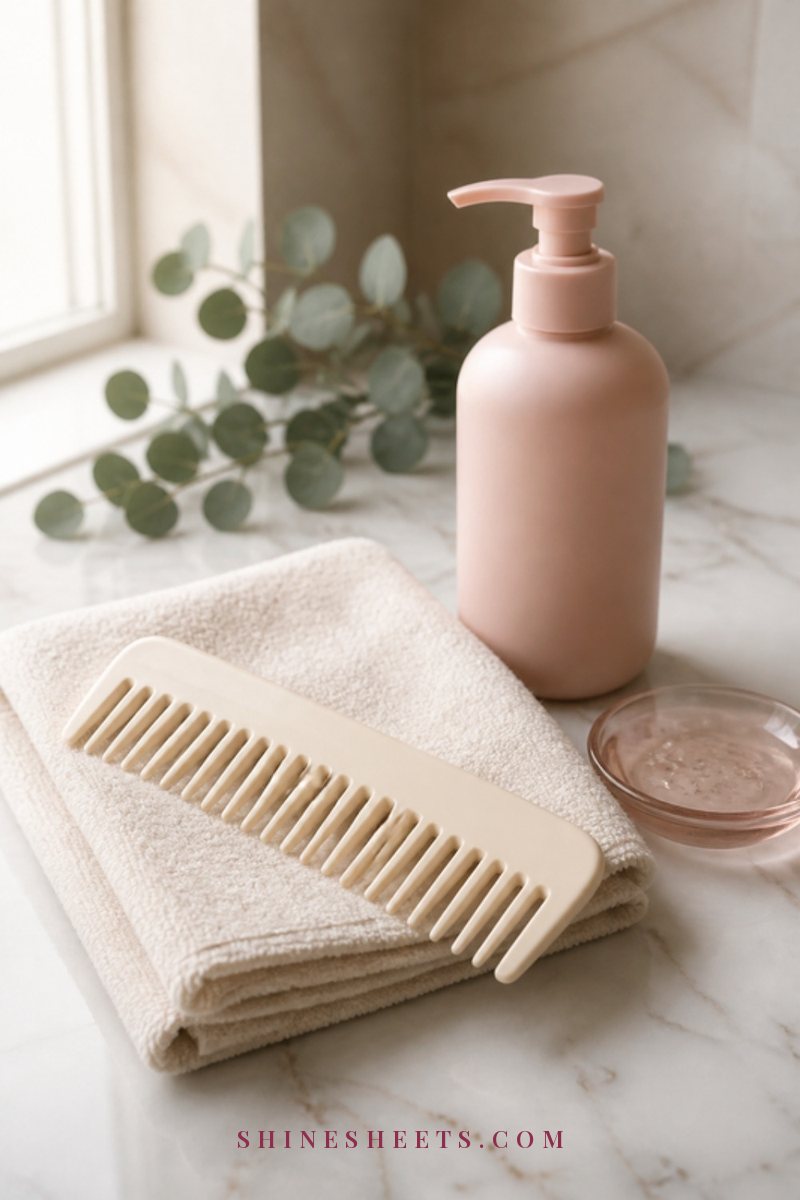
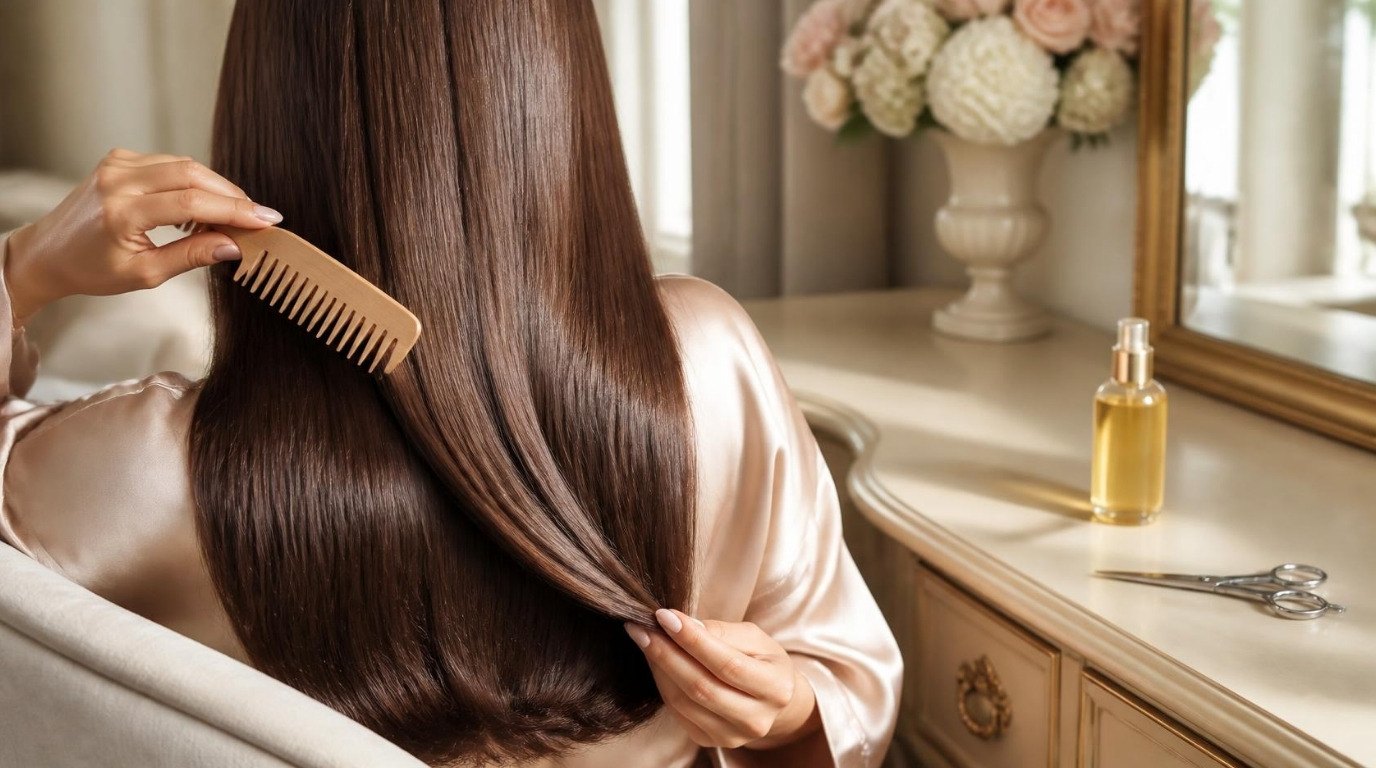
A wide-tooth comb is the single most useful tool for breakage-prone hair. Look for one with smooth, seamless teeth (run a fingertip along them; nothing should catch). Detangle in the shower with conditioner in your hair, or on damp hair with a leave-in.
How: divide hair into two to four sections. Start at the last two inches of each section, comb out the tangles, then move up a few inches and repeat until you reach the roots. Hold the hair above the tangle with your other hand so the pull doesn't reach your scalp.
2. Deep Condition Once a Week
A weekly deep conditioning hair mask brings flexibility back to dry, brittle strands. Look for a rich cream with conditioning ingredients like shea butter, oils, panthenol or ceramides. Apply it to clean, towel-dried hair from mid-lengths to ends, leave it on for 10 to 20 minutes and rinse with lukewarm water. My guide to hair masks explains which type suits which hair and how often to use each one.
3. Add a Bond-Repair or Protein Treatment Occasionally
If your hair has been bleached, colored or heat-styled often, a bond-repair treatment helps rebuild some of the internal structure that chemical processes break down. Look for one designed as a pre-shampoo or rinse-out treatment and follow the timing on the pack. Most people use it once a week at first, then every two weeks once things improve.
Protein treatments are a stronger option for gummy, overly stretchy hair. Use them sparingly, every few weeks, and always follow with a moisturizing conditioner. More protein isn't better; it can tip hair into stiffness and more breakage.
4. Seal the Ends With a Little Oil
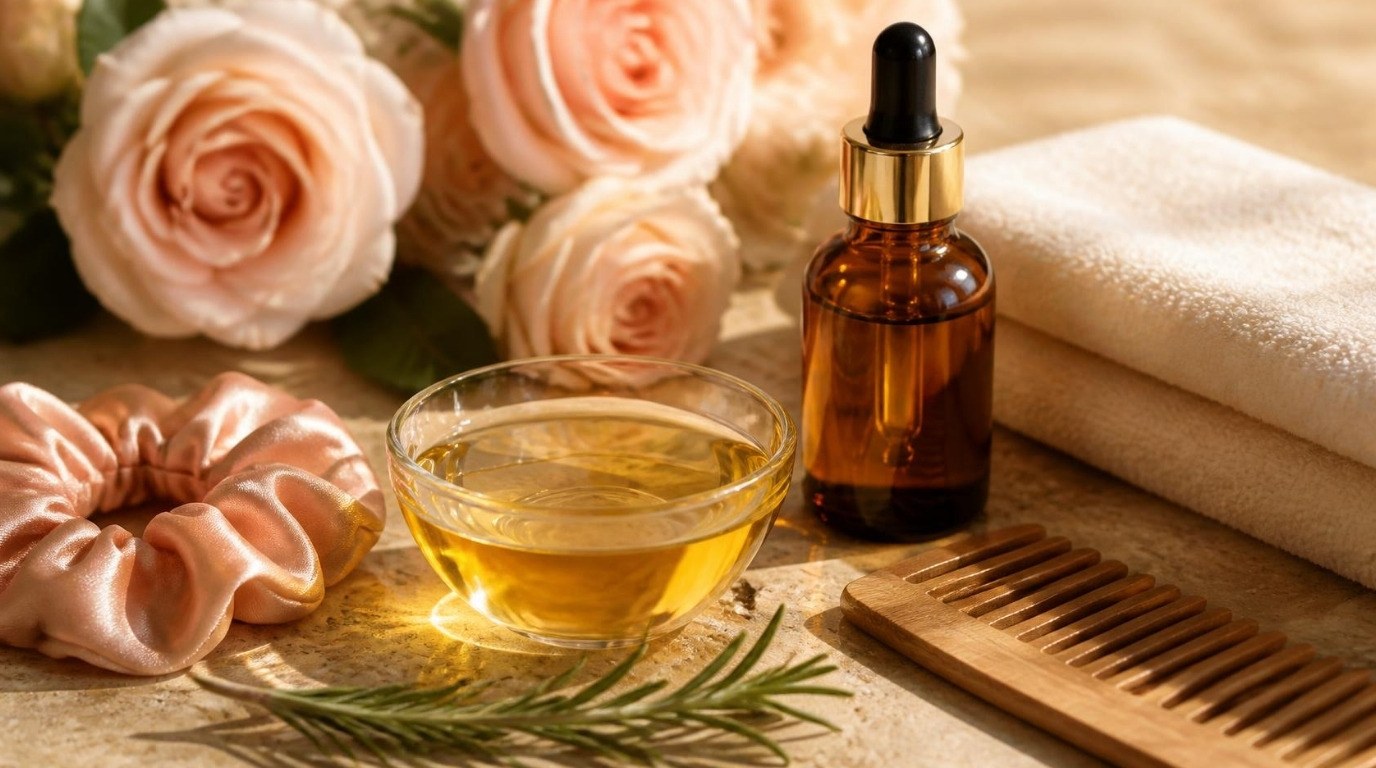
Two or three drops of a light oil, warmed between your palms and pressed onto the last few inches of damp or dry hair, smooth the cuticle and reduce friction. Keep it to the ends so roots don't look heavy. For a deeper weekly treatment, my hair oiling guide covers how to do it for every hair type.
5. Dry With a Microfiber Towel
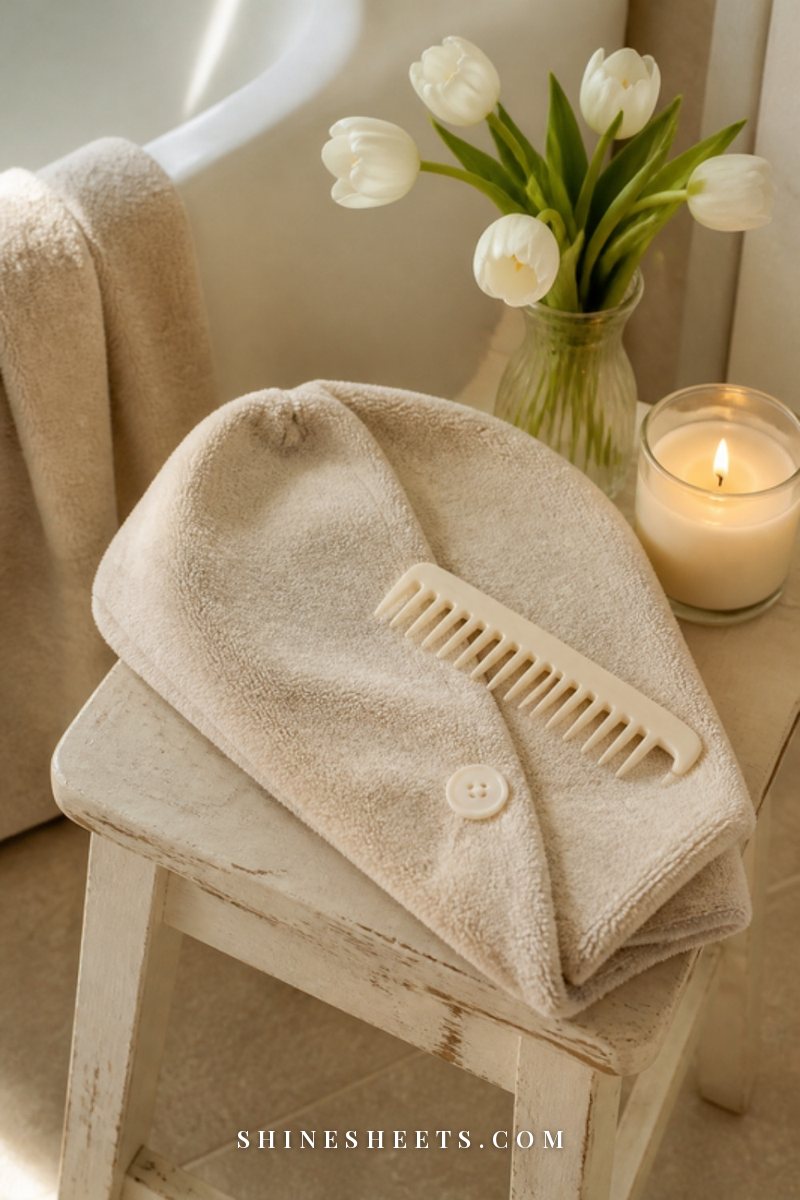
Rubbing wet hair with a regular bath towel roughs up the cuticle exactly when it's most fragile. A microfiber hair towel wrap absorbs water quickly with far less friction. Look for one with a soft, smooth weave and a button or loop closure that holds without pulling. Squeeze and blot, never twist or rub, then let hair air-dry partly before using any heat.
6. Trim Little and Often
Split ends travel upward if they're left too long, turning one small split into a long break. A small trim of a quarter to half an inch every 8 to 12 weeks keeps the ends neat while you grow healthier hair. It might feel like you're losing length, but in practice you keep more of it.
Your Weekly Breakage Repair Plan
Here's how the routine fits into an ordinary week, so it feels like a rhythm rather than a project:
- Every wash day: gentle shampoo on the scalp, conditioner on the lengths, detangle with the wide-tooth comb in the shower, blot with a microfiber towel.
- Once a week: swap your regular conditioner for a deep conditioning mask for 10 to 20 minutes.
- Every one to two weeks: a bond-repair treatment if your hair is bleached, colored or heat-styled often.
- Every few weeks, only if needed: a protein treatment for gummy, overly stretchy hair, followed by a moisturizing conditioner.
- Every styling day: heat protectant first, lower temperature, one or two passes per section.
- Every night: a drop of oil on the ends, a silk scrunchie and a smooth pillowcase.
- Every 8 to 12 weeks: a small trim.
If that feels like a lot, start with just three: the comb, the microfiber towel and the silk scrunchie. Those alone reduce most everyday snapping.
Extra Care for Lightened or Colored Hair
Bleached and colored hair needs a slightly softer touch, because the inner structure is already weakened before anything else happens to it. A few extra habits help it hold up:
- Wash a little less often if your scalp allows it, and use lukewarm water so the cuticle stays smoother.
- Use bond-repair treatments regularly in the weeks after a lightening service, when hair is most fragile.
- Keep heat to a minimum. Lightened hair reaches its breaking point at lower temperatures than untreated hair.
- Space out color appointments and ask for root-only touch-ups rather than color over the whole length each time.
- Protect from sun and chlorine with a hat in strong sun and a rinse of clean water before swimming.
Cold, dry months add an extra layer of fragility for every hair type, especially at the ends. When the heating comes on, give your hair a little more moisture than usual and keep scarves and coat collars from rubbing against it all day.
Protect Your Hair at Night

You spend hours a night moving against your pillow, so nighttime friction adds up quickly. A few small changes make a real difference:
- Sleep on silk or satin. A smooth pillowcase lets hair glide instead of catching. My guide to silk pillowcase benefits explains what to look for.
- Gather hair loosely. If your hair is long, gather it at the nape with a silk scrunchie, loosely enough that you can't feel any pull.
- Never sleep with soaking wet hair. Dry it at least partly first, since wet hair rubbing on a pillow all night is especially fragile.
- Add a drop of oil or leave-in to the ends before bed if they feel dry.
- Detangle gently before sleep so knots don't tighten overnight.
What To Stop Doing
Sometimes the most effective repair step is simply removing what causes the damage. For the next two months, try stopping these:
- Brushing wet hair from the roots down.
- Using the highest heat setting "to get it done faster."
- Wearing the same tight elastic in the same spot every day.
- Rubbing hair dry with a regular towel.
- Bleaching or coloring again before your hair has recovered.
- Pulling at split ends or picking at knots with your nails.
- Skipping conditioner because your roots get oily (just keep it on the lengths).
- Switching products constantly instead of giving a routine six to eight weeks.
If you'd like a broader reset for damaged hair, my list of beauty tips for damaged hair pairs nicely with these.
How Long Until You See a Difference
Be patient with yourself here. Hair is not living tissue once it leaves the scalp, so treatments improve how existing hair behaves, while new, healthier hair grows in at roughly half an inch a month. A realistic timeline:
- Weeks 1–2: hair feels softer and tangles less, and you notice fewer short pieces on your brush and sweaters.
- Weeks 4–8: fewer flyaways along the part and crown, and ends feel smoother after a small trim.
- Months 3–6: the broken pieces start to blend into the rest as new growth comes in, and your hair finally seems to grow past its old "stuck" length.
When Breakage Could Signal Something Else
Most breakage comes from styling and handling, but hair can also reflect what's happening inside your body. This guide isn't medical advice. Please talk to your doctor or a dermatologist if you notice:
- Much more full-length shedding than usual, or a noticeably thinner ponytail.
- Bald patches, a widening part or a receding hairline.
- Breakage along with fatigue, feeling cold, pale skin, brittle nails or other changes in how you feel.
- Scalp itching, redness, scaling or pain alongside breakage.
- Hair changes after an illness, surgery, a major stressful event, pregnancy or starting a new medication.
Things like thyroid changes, low iron and other nutrient gaps, hormonal shifts and some scalp conditions can affect hair strength and growth. A doctor can check for these with a simple conversation and, if needed, blood tests. It's always worth asking.
Final Thoughts
Hair breakage can feel discouraging, especially when your hair seems stuck at the same length for months. But it's one of the most responsive hair problems there is. Gentler detangling, lower heat, softer ties, a weekly mask and a little night protection do far more than any single miracle product.
Pick the cause that matches your pattern, change one or two habits this week and give your hair a couple of months. With a little patience, the short, snapped pieces grow out and stronger, softer lengths take their place.