Thick hair isn't "difficult" hair. It just needs a different rhythm: more water to get fully wet, more conditioner to reach every strand, more patience with drying, and a little strategy so wash day doesn't eat your whole evening. Once you work with its volume instead of against it, thick hair can be the softest, shiniest hair you've ever had.
Most frustrations with thick hair come from routines designed for average hair. A coin-sized blob of conditioner, a quick rinse and a rough towel rub might work for fine strands, but on a full head of thick hair they leave the middle layers dry, tangled and frizzy, and the roots still damp three hours later.
This thick hair care routine covers everything: how to wash and condition in sections, the right products for rich moisture without heaviness, a wash day table with timings, how to cut your drying time down, frizz control, heat protection, caring for the scalp under all that volume, sleeping with thick hair, and how often to trim.
Think of it as a calm, step-by-step plan you can follow once or twice a week, and adjust as you learn what your hair loves.
What Makes Thick Hair Different
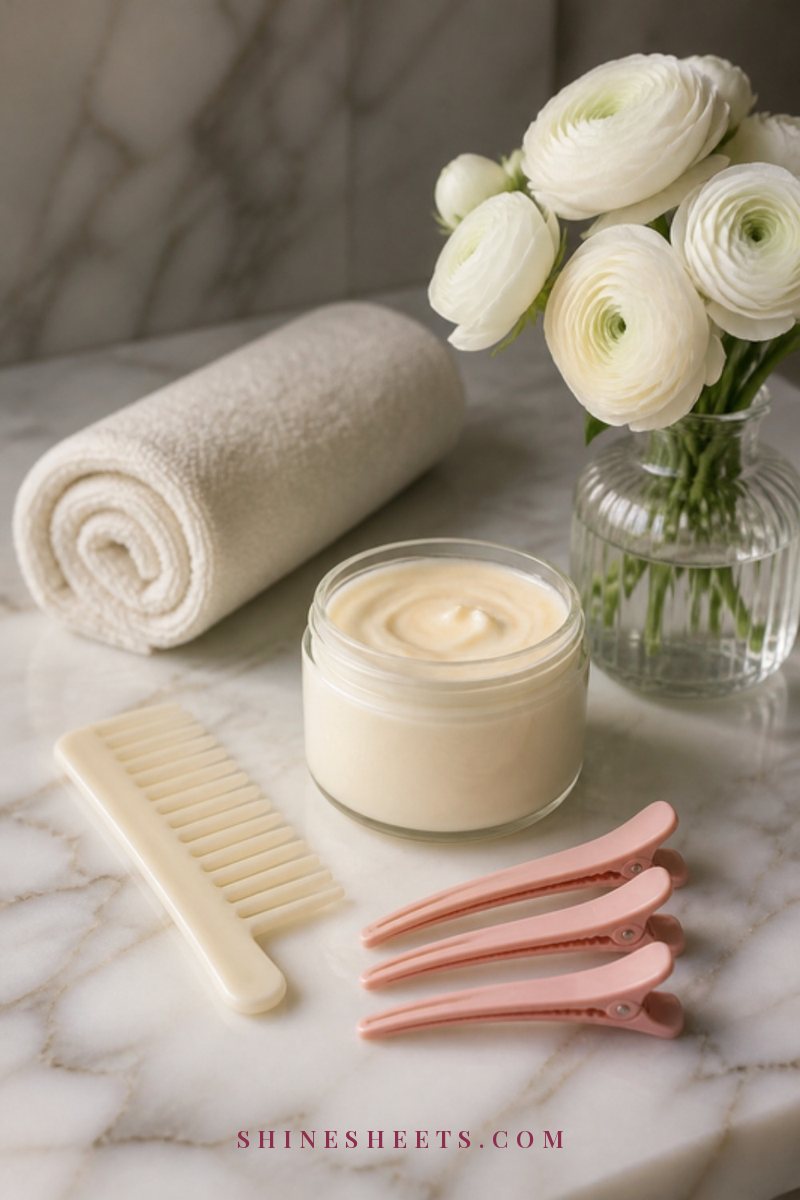
"Thick" can mean two different things, and it helps to know which one you have (often it's both):
- High density: you have a lot of individual hairs on your head. Your ponytail is big, and it's hard to see your scalp when you part your hair.
- Coarse texture: each individual strand is wide. If you roll a single hair between your fingers, you can clearly feel it.
Dense hair needs more product and more time simply because there's more of it. Coarse hair tends to be stronger but can feel dry and rough, because its wider outer layer doesn't always lie flat. Many women with thick hair also have hair that drinks up moisture fast and loses it fast. If you want to understand how your hair absorbs products, my guide on hair porosity is a helpful next read.
The good news: thick hair usually handles richer products beautifully. Where fine hair goes flat under a heavy mask, thick hair often just goes soft.
Choosing Products for Thick Hair
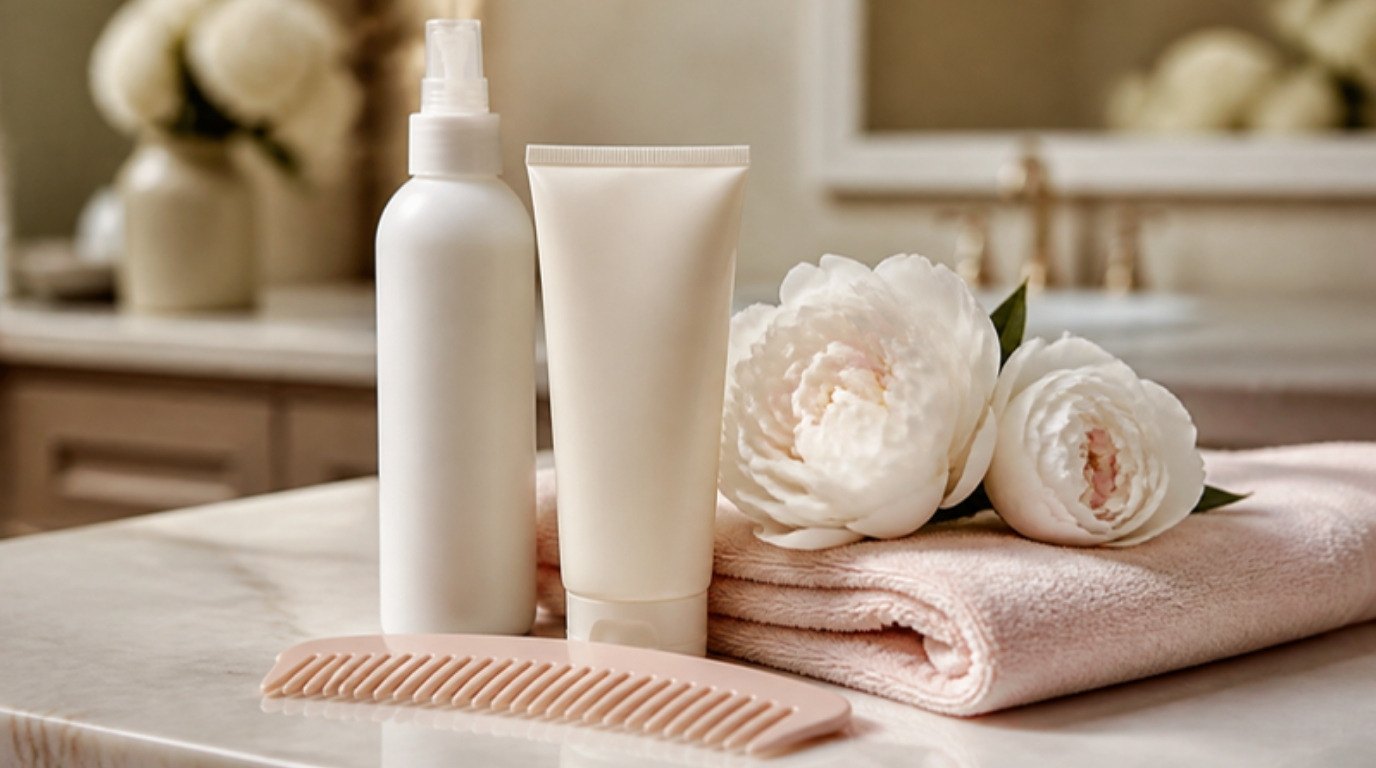
You don't need a shelf full of products. You need a few that suit how thick hair behaves. Here's what to look for on the label and in the texture:
- Shampoo: gentle and moisturizing. Words like "hydrating," "smoothing" or "sulfate-free" are a good sign if your hair feels dry. If your scalp gets oily quickly, a balancing shampoo for the roots is fine, as long as your conditioner is rich.
- Conditioner: thick and creamy rather than watery. Buy the large size. You'll go through it faster than you expect, and that's normal.
- Leave-in: a cream works well for coarse or very dry hair; a spray is easier to distribute through dense hair that isn't especially dry.
- Oil or serum: lightweight oils like argan or jojoba for finishing. A few drops are enough, even for thick hair.
- Heat protectant: a spray you can mist section by section, so it reaches the underneath layers.
Introduce one new product at a time and give it two or three washes before deciding. Thick hair can take a little while to show what it really thinks of something new.
Before Wash Day: Detangle and Pre-Treat
The biggest wash-day mistake with thick hair is getting it wet while it's still tangled. Water makes knots tighten, and you end up tearing through them in the shower.
Before you step in:
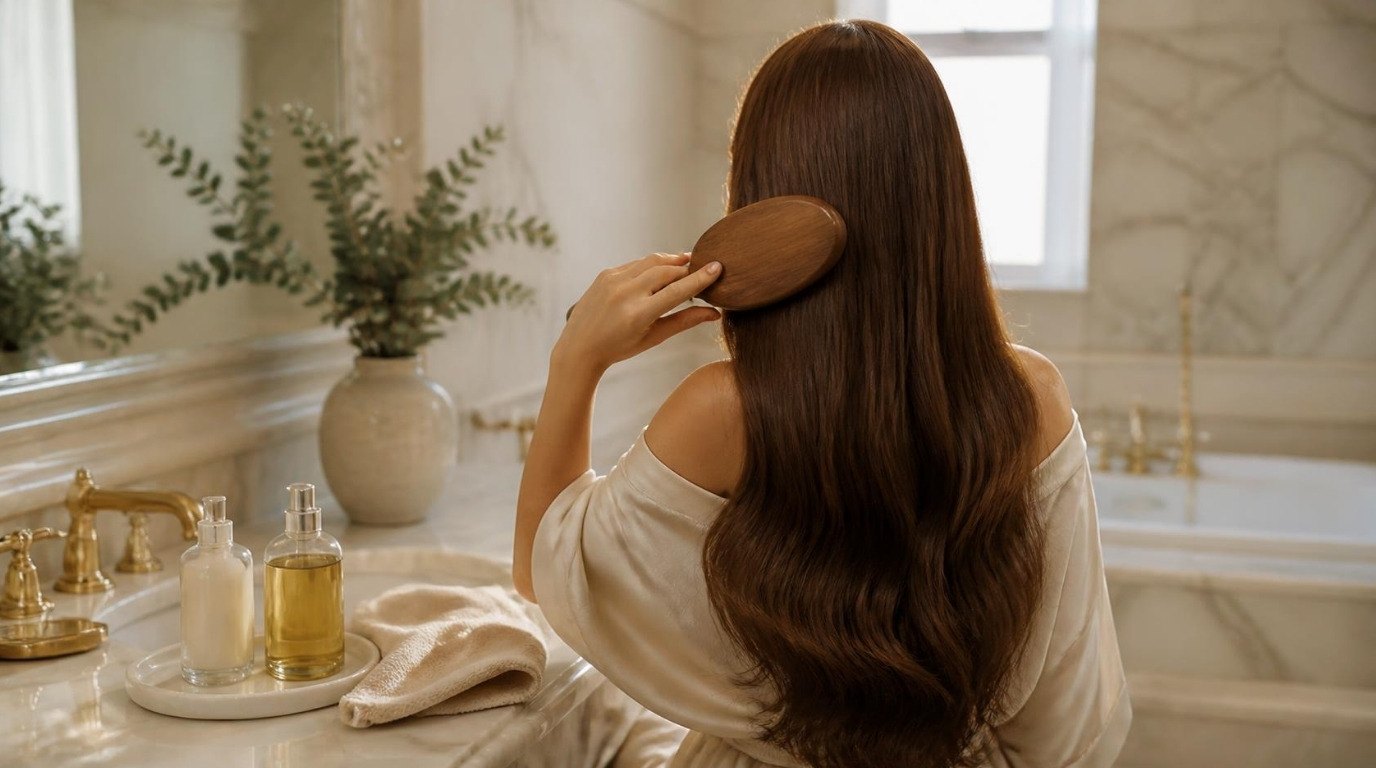
- Brush or finger-detangle dry hair, starting at the ends and working up toward the roots. Take two to five minutes, not thirty seconds.
- Optional pre-wash oil: once a week, smooth a small amount of a light oil (argan, sweet almond or jojoba) over your mid-lengths and ends for 20 to 30 minutes before washing. It softens the hair and protects it from the drying effect of shampoo. My guide to hair oiling explains how much to apply and how long to leave it.
- Divide your hair into four sections (two in front, two in back) and twist each one loosely. This one tiny step makes everything that follows easier.
The Thick Hair Wash Day, Step by Step
Here's the core routine. It looks like more steps than you're used to, but each one saves you time later in detangling and drying.
1. Wash in Sections
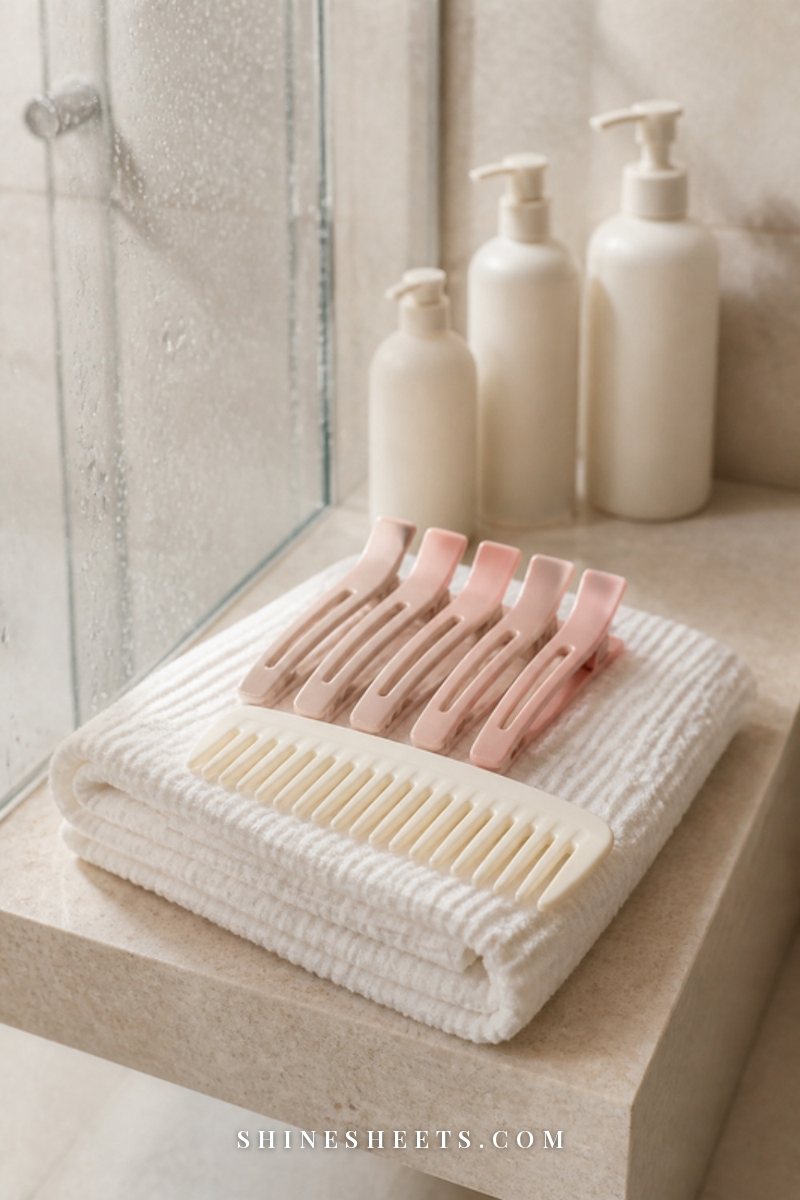
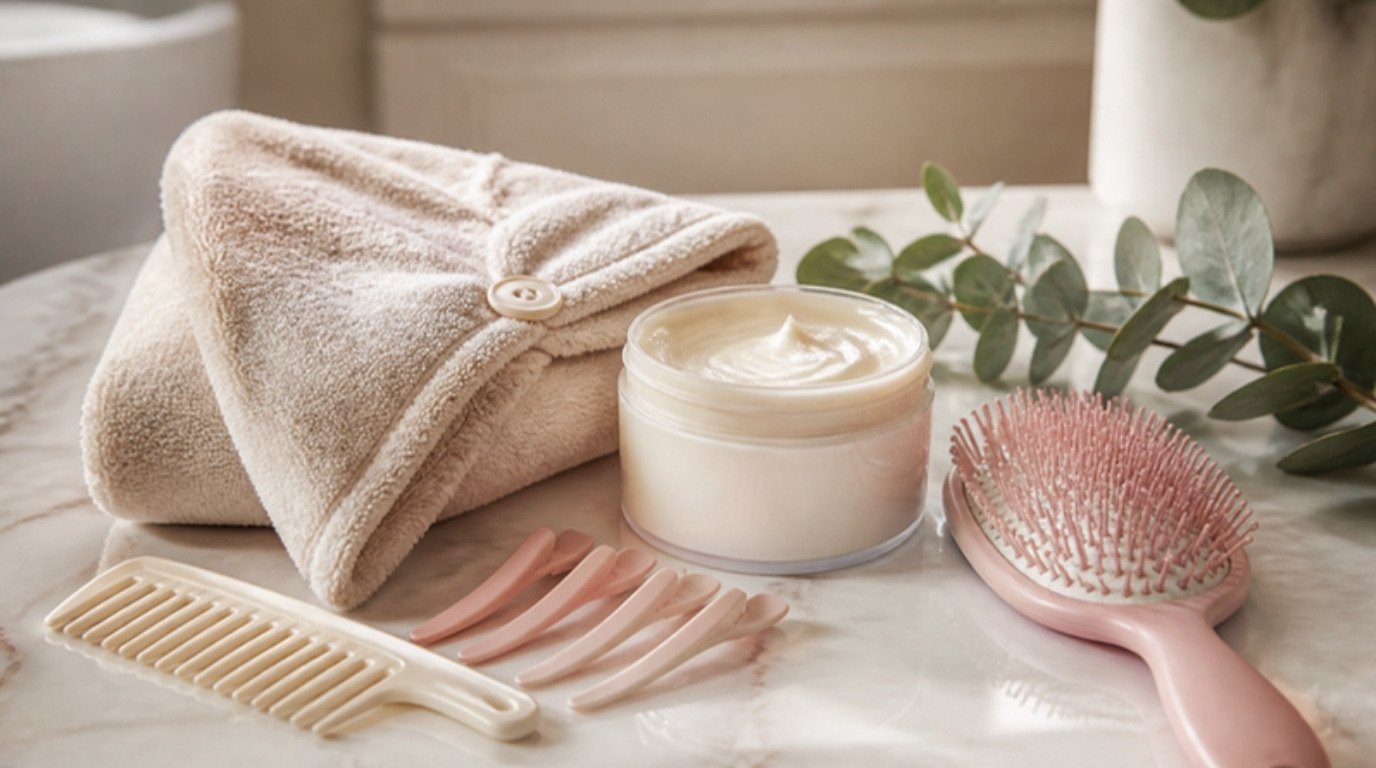
Washing in sections means shampoo and conditioner actually reach the middle and back layers, not just the top. Keep your hair in two to four loose sections, held with large sectioning clips that won't slip in wet hair.
First, soak your hair thoroughly with lukewarm water for a full one to two minutes. Thick hair repels water at first, and dry patches underneath are why products don't spread evenly. Lift sections with your fingers to let water reach the roots at the nape and behind the ears.
2. Shampoo the Scalp, Not the Lengths
Shampoo is for your scalp. Your lengths get cleaned by the suds rinsing through them.
- Use a gentle, sulfate-free or mild shampoo if your hair tends to feel dry.
- Apply a small amount to one section of scalp at a time, massaging with your fingertips (not nails) for about 30 seconds per section.
- Rinse well, letting the foam run down the lengths.
- If your scalp feels oily or you used styling products, shampoo a second time. The second wash usually lathers much better.
3. Condition Generously (and Let It Sit)
This is where thick hair care differs most from the routine on the bottle. You'll likely need two to three times more conditioner than the "average" amount, and you'll want to apply it section by section.
- Squeeze excess water out of your hair first, so conditioner isn't diluted.
- Apply to the mid-lengths and ends of each section, smoothing downward.
- Leave it on for 3 to 5 minutes. Use that time to wash your body or shave.
Your hair should feel slippery all the way through. If one section still feels rough, it needs more.
4. Detangle While the Conditioner Is In
Wet hair with plenty of conditioner is the easiest it will ever be to detangle. Use a wide-tooth comb, work one section at a time and always start at the ends, moving up a few inches at a time.
If you hit a stubborn knot, add a little more conditioner and gently separate it with your fingers rather than pulling. Patience here saves you from breakage later.
5. Finish With a Cool Rinse
Rinse conditioner out with lukewarm water, then finish with 10 to 15 seconds of cooler water if you can bear it. It won't magically seal anything, but it feels refreshing and many women find their hair looks a little smoother afterward. Rinse thoroughly near the nape, where conditioner loves to hide in thick hair.
Thick Hair Wash Day Table With Timings
Here's the whole routine in one place, with realistic timings. Screenshot it for your next wash day.
| Step | What to do | Time | How often |
|---|---|---|---|
| Pre-detangle | Brush dry hair from ends to roots, split into 4 sections | 3–5 min | Every wash |
| Pre-wash oil | Light oil on mid-lengths and ends | 20–30 min | Once a week |
| Soak | Saturate hair fully with lukewarm water | 1–2 min | Every wash |
| Shampoo | Massage scalp section by section, rinse, repeat if oily | 3–4 min | Every wash |
| Condition | Generous amount on lengths, section by section | 3–5 min | Every wash |
| Mask (instead of conditioner) | Rich mask on lengths, cover with a shower cap | 10–20 min | Once a week |
| Detangle | Wide-tooth comb through conditioner, ends first | 3–5 min | Every wash |
| Rinse | Lukewarm, then a short cool rinse | 2 min | Every wash |
| Towel wrap | Squeeze, then wrap in a microfiber towel | 15–20 min | Every wash |
| Leave-in | Apply to damp lengths, section by section | 2 min | Every wash |
| Dry | Air-dry partly, then rough-dry and finish | 20–40 min | Every wash |
Total: about an hour on a regular wash day, a little longer on mask days. Most women with thick hair wash every three to five days, so this is a once- or twice-a-week ritual, not a daily chore.
How To Cut Drying Time in Half
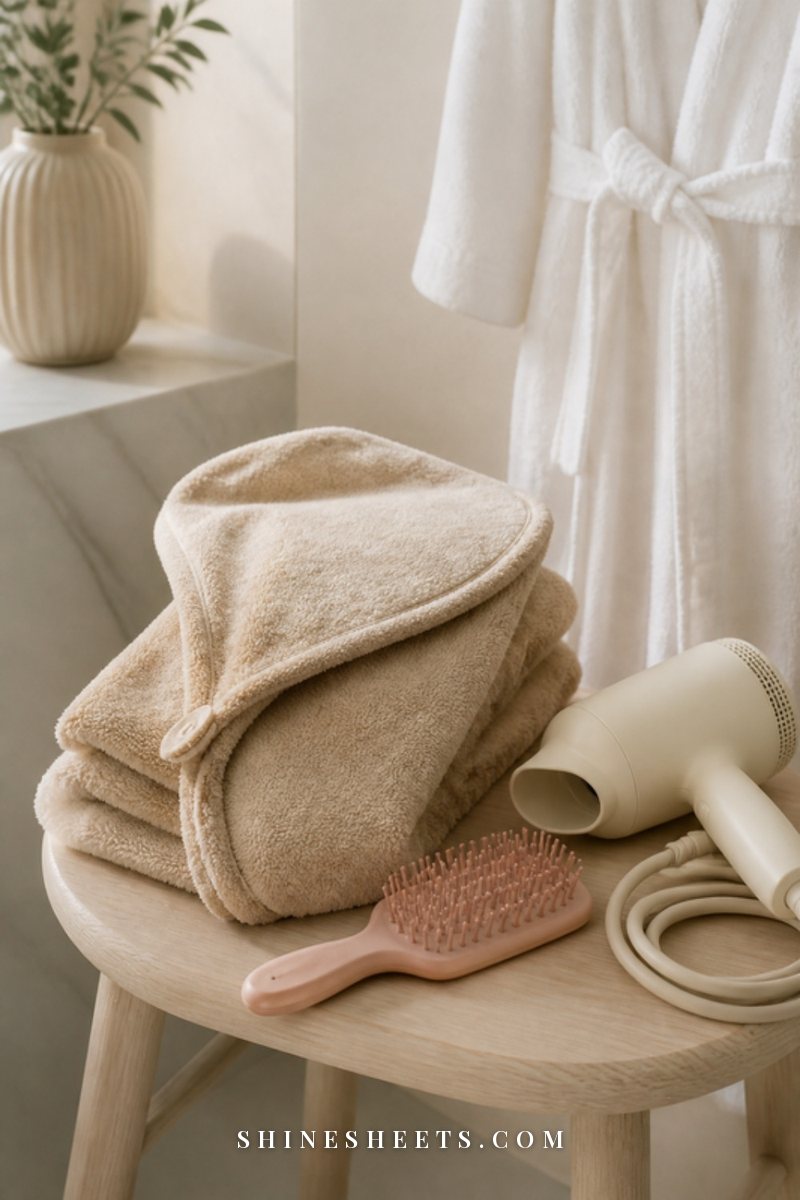
Long drying times are the number one complaint with thick hair. You can't make your hair less dense, but you can make drying much faster:
- Squeeze, don't rub. In the shower, gently squeeze water out of each section with your hands.
- Wrap in microfiber. A microfiber hair towel wrap absorbs much more water than a regular cotton towel, with less friction. Leave it on for 15 to 20 minutes while you do your skincare.
- Let it air-dry for a while. If you have time, let your hair air-dry until it's around 60 to 70 percent dry before using any heat.
- Rough-dry first. Blow-dry on medium heat, moving your fingers through your hair, until it's about 80 percent dry. No brush yet. This is the fastest part.
- Then finish in sections. Only now clip your hair up and smooth each section with a brush. A paddle brush covers a lot of hair quickly and is gentle on thick lengths.
- Point the nozzle down the hair shaft, from roots to ends. It helps the hair look smoother and less frizzy.
Small bonus tip: dry the underneath layers and the nape first. They take the longest, and if you leave them for last, you'll be tired and tempted to quit while they're still damp.
Frizz Control for Thick Hair
Frizz in thick hair is usually thirst. The hair is looking for moisture, and it takes it from the air. Here's what helps most:
- Apply a leave-in on damp hair. A leave-in conditioner applied section by section gives your hair the moisture it's reaching for. Spray or smooth it through, then comb.
- Seal the ends with a drop of oil or a light serum once your hair is dry. Two or three drops, warmed between your palms, smoothed over the ends only.
- Stop touching it. Running your fingers through drying hair all day breaks up smoothness and creates frizz.
- Swap cotton for smoother fabrics. Cotton towels and pillowcases rough up the hair surface.
- Watch the humidity. On humid days, a slightly richer leave-in and an anti-humidity spray help.
Heat Protection Done Right
Thick hair is often blow-dried and straightened more than other hair types, simply because it takes longer to dry and style. That makes heat protection non-negotiable.
- Apply heat protectant to damp hair before blow-drying, and again lightly on dry hair before a flat iron or curling iron.
- Apply it section by section. Spraying the top of your head leaves the layers underneath unprotected.
- Keep your blow dryer on medium heat and moving. Thick hair doesn't need the hottest setting; it needs more passes at a gentler heat.
- For flat irons, use the lowest temperature that works for your hair, and pass over each thin section once or twice, not five times.
- Give your hair a few heat-free days each week if you can.
Weekly Hair Masks for Thick Hair

Once a week, swap your regular conditioner for a richer mask. Thick, dry or coarse hair usually loves ingredients like shea butter, oils, ceramides and proteins in balance.
How to get the most from it:
- Apply a deep conditioning hair mask to clean, squeezed-out hair, section by section, from mid-lengths to ends.
- Comb it through so every strand is coated.
- Cover with a shower cap and leave on for 10 to 20 minutes. The warmth helps it absorb.
- Rinse well, especially at the nape.
If your hair starts to feel limp or overly soft, mask every other week instead. If it feels straw-like or snaps easily, a protein-containing mask may help. My guide to hair masks explains how to choose the right one for what your hair needs right now.
Don't Forget the Scalp Under All That Volume
With thick hair, it's easy to focus on the lengths and forget the scalp underneath. But all that volume can trap product, sweat and oil, especially at the nape and crown.
- Part your hair in several places when shampooing so you reach the scalp everywhere, not just the hairline.
- Rinse longer than you think you need to. Leftover product near the roots can cause itchiness and flakes.
- Dry your roots thoroughly, especially in cold weather. A scalp that stays damp for hours under thick hair can feel uncomfortable and smell musty.
- Exfoliate gently every two to four weeks if you notice buildup.
If your scalp is itchy, red or flaky in a way that doesn't improve with gentle care, please check in with a dermatologist. It's always better to know what you're dealing with.
Sleeping With Thick Hair
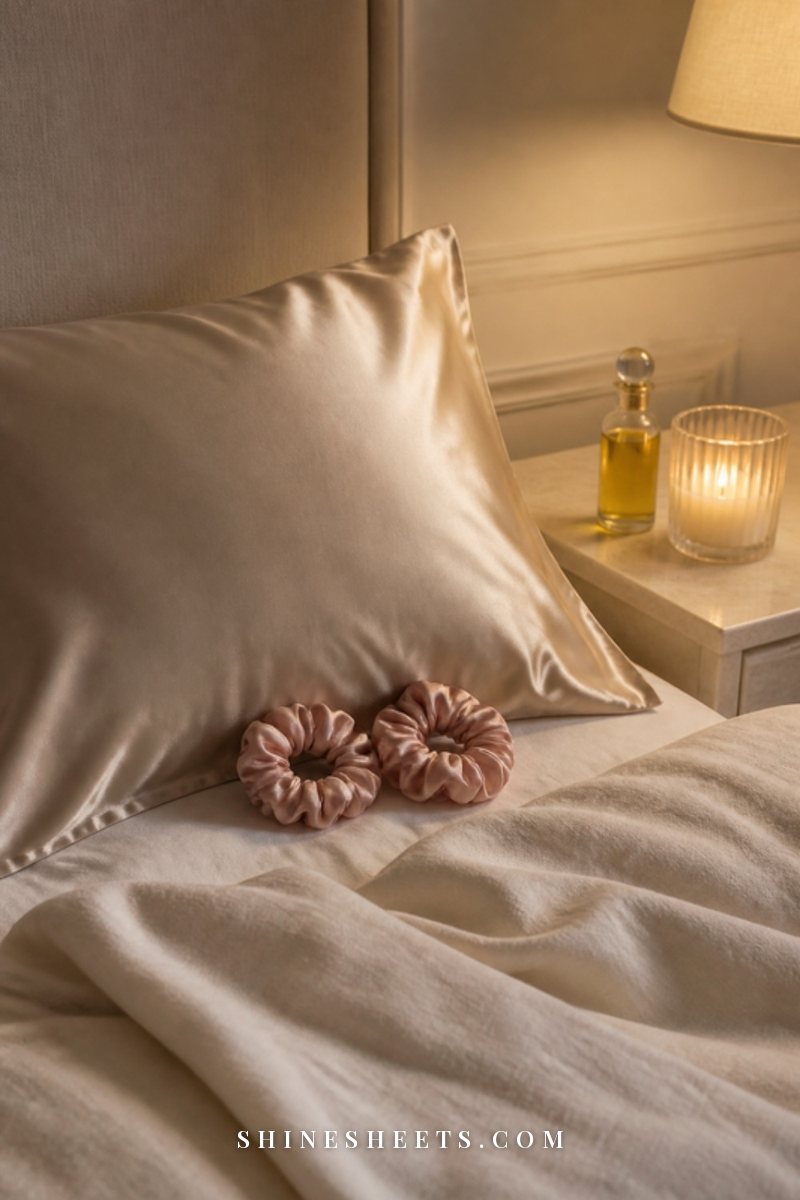
Thick hair can tangle into one big knot overnight if it's left loose against a cotton pillowcase. A few simple habits help:
- Never go to bed with soaking wet hair. At least rough-dry it first.
- Gather it loosely with a soft silk or fabric scrunchie at the top of your head, or in one loose braid, so it isn't crushed and tangled. Keep it loose to avoid tension at the hairline.
- Use a silk or satin pillowcase. It creates less friction, so you wake up with fewer tangles and less frizz.
- Smooth a tiny amount of leave-in or oil over the ends before bed on dry nights.
Trims and Thinning: What To Ask Your Stylist
Regular trims keep thick hair looking soft and healthy, because split ends travel up and make the whole length look frizzy. Most thick hair benefits from a trim every 8 to 12 weeks.
Many women with very dense hair also ask about "thinning" or removing bulk. That's a conversation to have with a stylist you trust, because how it's done matters a lot for how your hair grows out. Helpful things to tell them:
- How long your hair takes to dry, and whether that's your main frustration.
- Where it feels heaviest or puffiest (often at the back or around the ears).
- How you usually wear it and how much time you spend styling.
- That you'd like to keep it healthy and avoid lots of frizz as it grows.
A good stylist will explain what they suggest and why. Never feel pressured into removing more bulk than you're comfortable with.
6 Thick Hair Mistakes To Stop Making
- Using too little product. Your hair needs more conditioner and leave-in than most instructions suggest.
- Washing it all as one big mass. Sections make everything easier.
- Rubbing it with a cotton towel. Squeeze and wrap instead.
- Brushing dry hair from the roots down. Always start at the ends.
- Skipping heat protection on the underneath layers. They get just as much heat as the top.
- Sleeping on damp hair. It tangles and can leave the scalp damp for hours.
If you want a simple weekly plan that ties washing, masking and trimming together, my basic hair care routine is a lovely framework to build this thick-hair routine into.
Final Thoughts
Thick hair is a gift, even on the days it takes forever to dry. With a little sectioning, a lot of conditioner and a gentler hand, it becomes softer, smoother and so much easier to live with.
Start with the two changes that make the biggest difference, washing in sections and wrapping in microfiber, and build from there. Your hair will thank you with softness you can feel every time you run your fingers through it.