What you do in the first ten minutes after washing your hair decides how it looks for the next few days. Wet hair is at its most stretchy and fragile, the cuticle is swollen and lifted, and every rub, tug and blast of heat leaves a mark. Treat it gently in that window and you get softer, smoother, less frizzy hair without changing a single product in your shower.
Most of us do the opposite on autopilot: rub with a rough towel, twist it into a tight turban, rake a brush through from the roots and rush the dryer on full heat. I did all of those for years and blamed my shampoo for the frizz. The shampoo was fine. The after was the problem.
This guide walks you through an after-shower hair routine step by step: how to remove water gently, how to towel-dry, how to detangle while damp, when to use leave-in and heat protectant, air-drying versus blow-drying, routines for straight, wavy, curly, fine and thick hair (in a table you can screenshot), and the habits worth dropping.
Why the First Minutes After Washing Matter
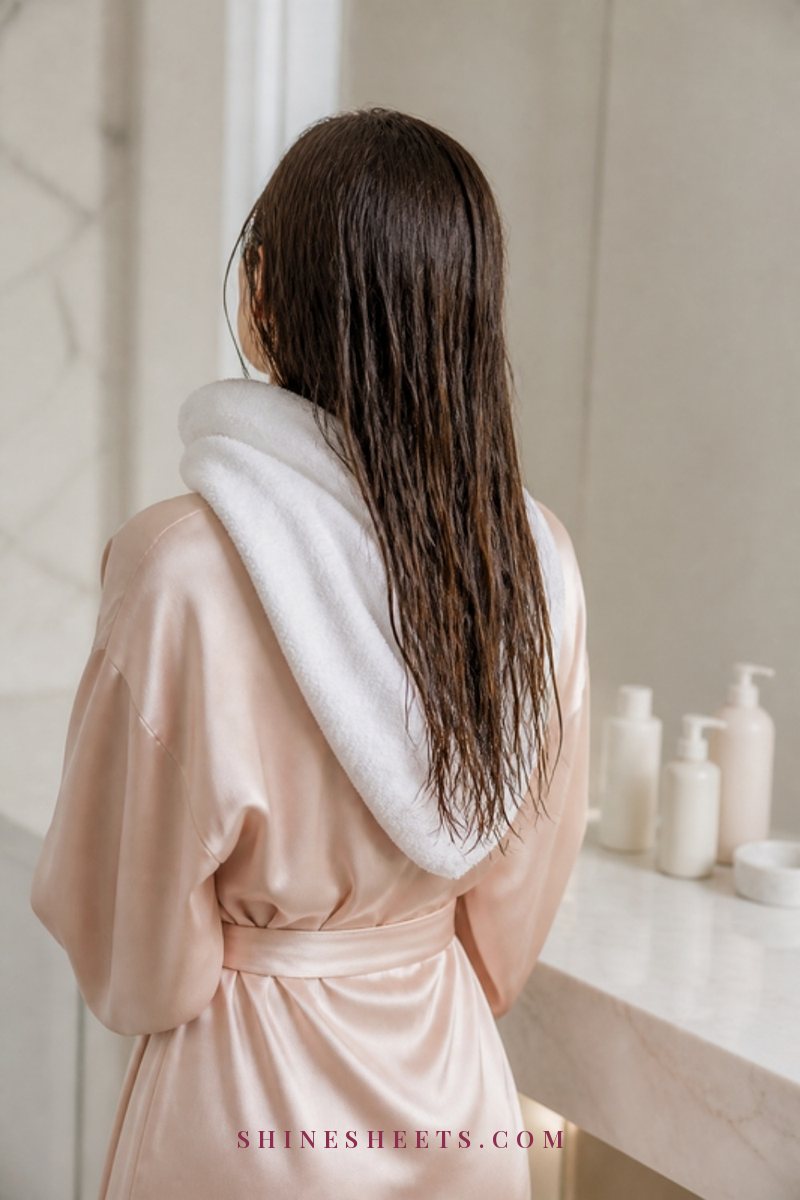
When hair gets wet, each strand absorbs water and swells slightly. The outer layer, the cuticle, lifts a little. That's why wet hair feels rougher and tangles more easily, and why it stretches before it snaps.
In practice, this means:
- Friction does more damage. Rubbing wet hair with a towel ruffles the lifted cuticle and creates frizz.
- Tension does more damage. Pulling a brush through wet tangles stretches strands until they break.
- Heat does more damage. High heat on soaking wet hair can make water inside the strand heat up quickly, stressing the hair.
- Products work better. Damp hair absorbs leave-ins and spreads them evenly, so this is the perfect moment to add moisture and protection.
The goal of an after-shower routine is simple: remove water gently, add what your hair needs, and let it dry with as little friction and heat as possible. If breakage is already a worry, my guide to hair breakage explains other causes worth checking.
Step 1: Squeeze Out the Water Gently
Before you even step out of the shower, start removing water.
- Turn off the water and gather your hair loosely in your hands.
- Squeeze it gently from the mid-lengths to the ends, like wringing out a delicate sweater without twisting.
- Repeat in sections for thick or long hair.
- Don't twist or wring hard. Pressing is enough.
This takes about 20 seconds and removes a surprising amount of water, which means less time with a towel and less time drying. If you have curls, try "scrunching" upward instead of squeezing down, so your curl clumps stay together.
Step 2: Blot With a Microfiber Towel or Cotton T-Shirt
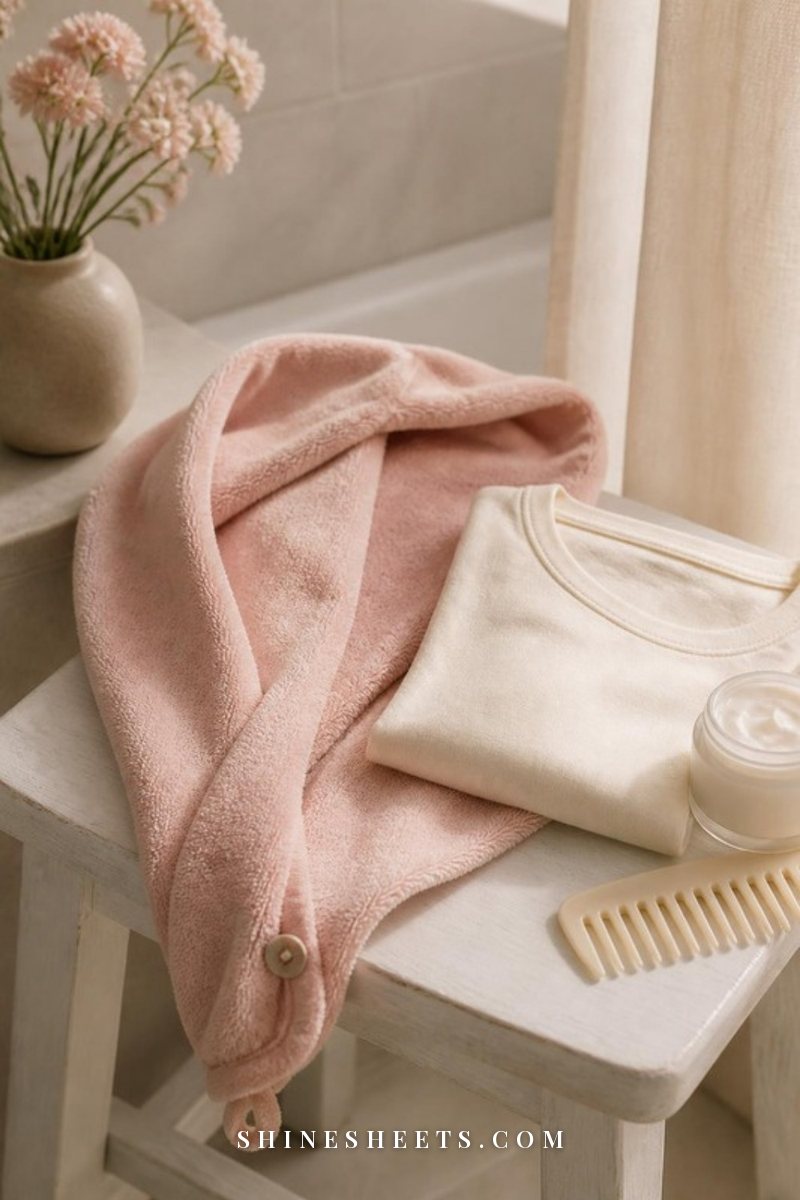
Regular bath towels have loops that catch and rough up wet hair. A smoother fabric absorbs water without the friction.
- Microfiber hair towel: very absorbent, light and smooth. Great for every hair type.
- Old cotton T-shirt: free, smooth and gentle, especially lovely for curls.
How to blot:
- Wrap the towel or T-shirt around a section of hair.
- Press and squeeze gently. No rubbing, no back-and-forth.
- Move to the next section until your hair is damp, not dripping.
- If you like a wrap, keep it loose and for no more than 10–20 minutes.
A microfiber hair towel wrap in cream is one of the cheapest upgrades in hair care and makes a visible difference to frizz within a week.
Step 3: Detangle While Damp, From the Ends
Damp, freshly conditioned hair is the easiest to detangle, as long as you're gentle.
- Section your hair: two sections for fine hair, four to six for thick or curly hair.
- Start with your fingers to loosen any tangles.
- Take a wide-tooth comb and comb the last few inches first.
- Move up to the mid-lengths, then the roots, always combing down to the ends.
- Hold the hair above any knot so your scalp doesn't take the pull.
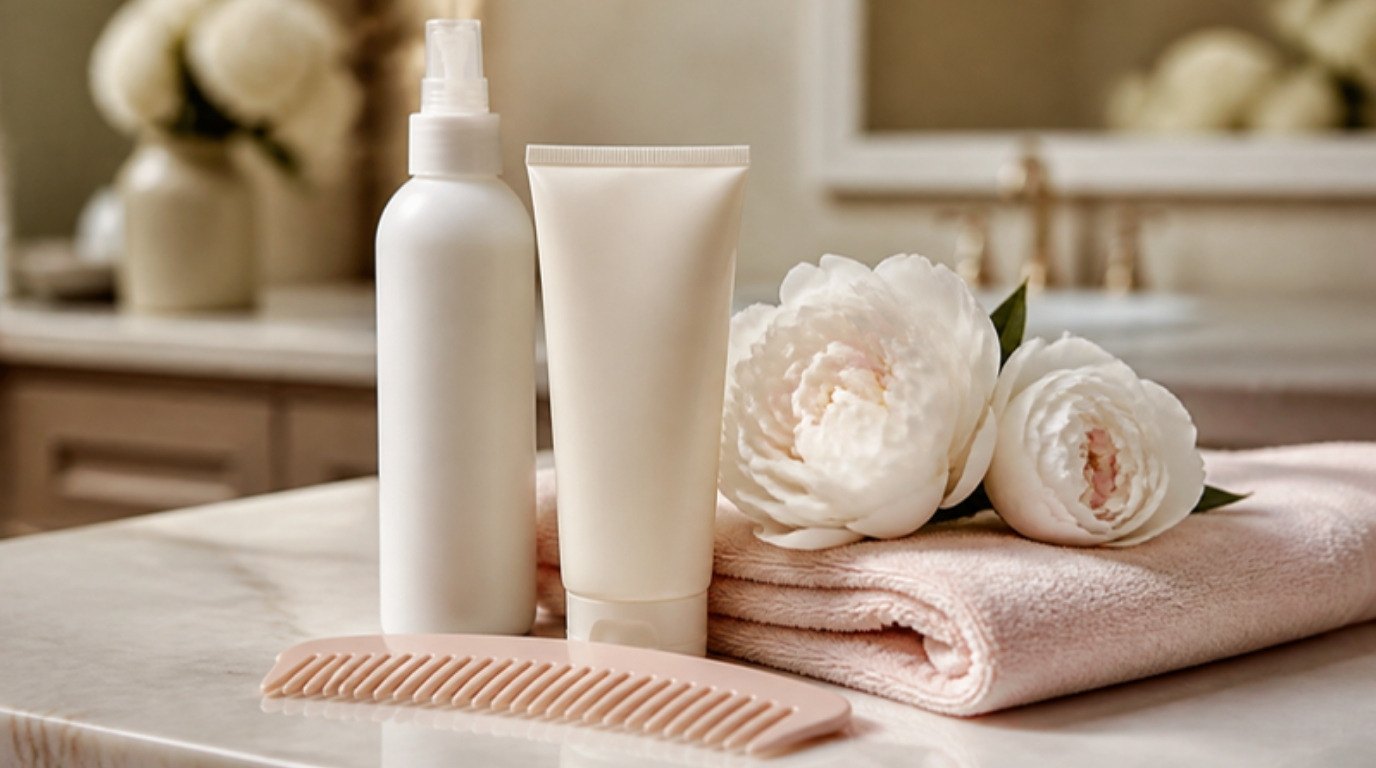
A seamless wide-tooth comb in ivory is the gentlest tool for this moment. For more detail and tricky knots, see my sister guide on how to detangle hair without breakage.
Step 4: Apply a Leave-In Conditioner
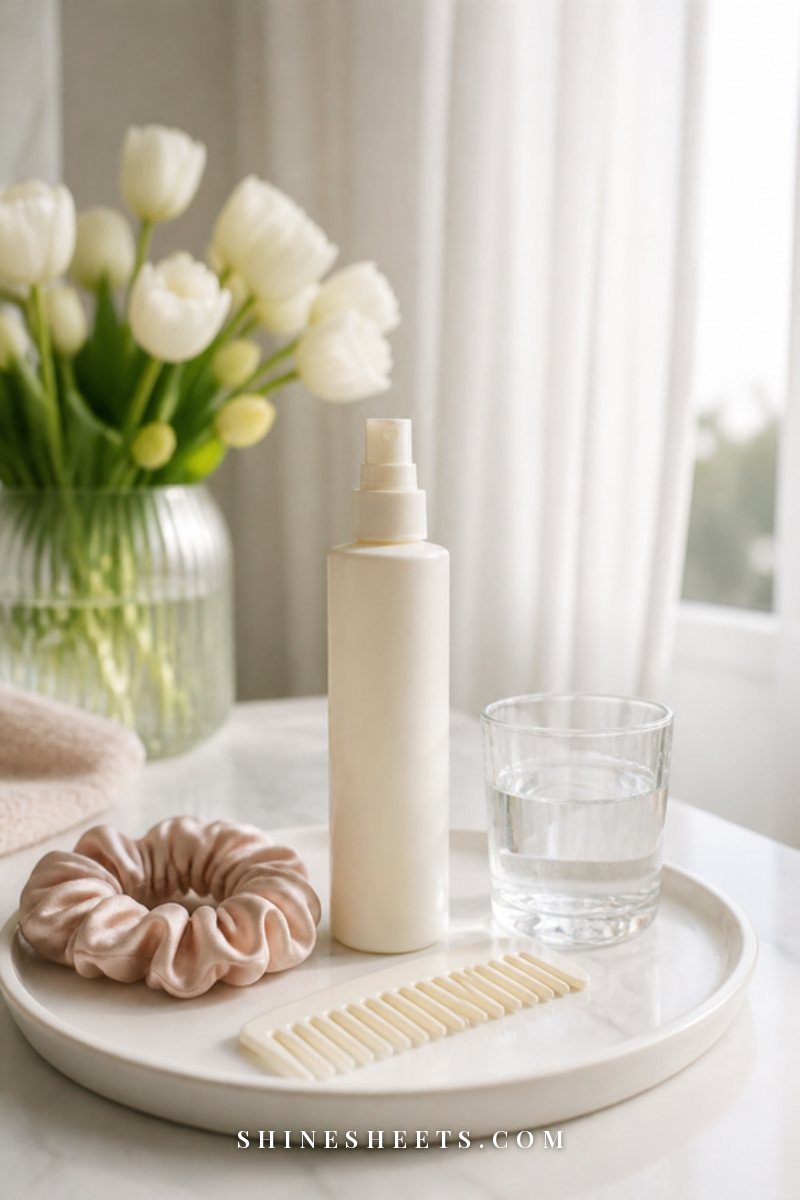
A leave-in adds moisture and slip, smooths the cuticle and makes everything after this step easier. It's the one product almost every hair type benefits from after washing.
- Fine hair: a light spray, 3–5 spritzes on mid-lengths and ends only.
- Medium hair: a lightweight lotion or spray, about a dime-sized amount.
- Thick, dry or curly hair: a richer cream, a nickel to quarter-sized amount, worked through in sections.
Apply it to damp hair, focusing on the ends. Keep it off your roots if your scalp gets oily quickly. A lightweight leave-in conditioner spray suits most hair types; my full guide to leave-in conditioner helps you pick between sprays, lotions and creams.
Many people detangle after the leave-in rather than before, and that's perfectly fine. If your hair is very tangly, apply the leave-in first so the comb glides.
Step 5: Use Heat Protectant if You're Blow-Drying
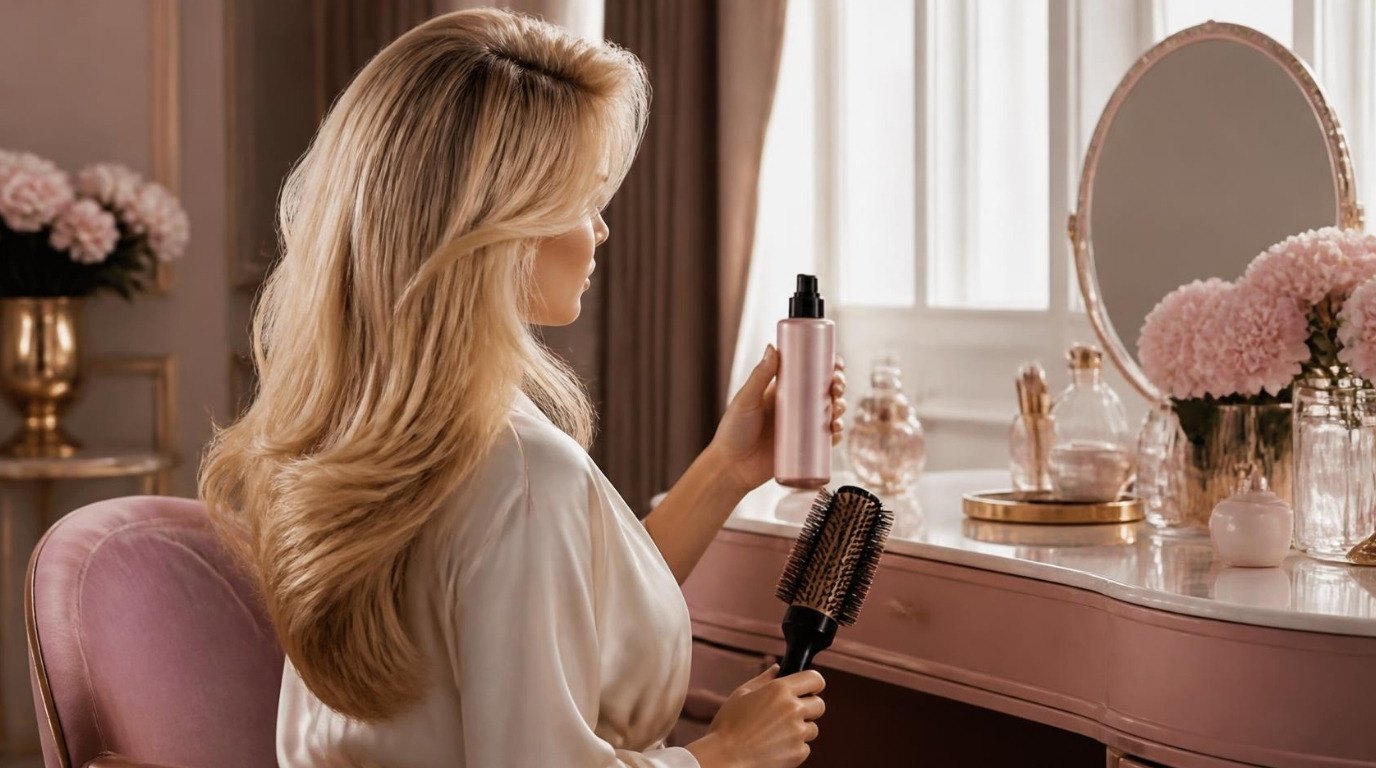
If you're planning to blow-dry, heat protectant is the step that protects all your other good work. It forms a light layer on the hair that helps reduce heat damage.
- Apply to damp, detangled hair.
- Mist evenly over each section from about 6 inches away, focusing on the mid-lengths and ends.
- Comb through once with the wide-tooth comb to spread it.
A heat protectant spray is easy to use and won't weigh down fine hair. Some leave-ins include heat protection too; check the label so you're not doubling up unnecessarily.
If you're air-drying, you can skip this step.
Step 6: Air-Dry or Blow-Dry the Gentle Way
Both methods can be kind to your hair. It's how you do them that matters.
Air-Drying Tips
- Hands off. Touching and fluffing while it dries creates frizz. Set it and leave it.
- Start early. Wash in the morning or early evening so hair dries fully before bed.
- Don't stay in a tight wrap. A towel turban for hours keeps hair damp and can crease or stretch it.
- Use a little product to set. A drop of serum on the ends, or a curl cream for curls, gives a smoother finish.
- Help it along. Gently flip your hair over or shift your part once halfway through drying for even airflow at the roots.
Air-drying is the gentlest option, but very long or thick hair can stay damp for hours. If yours does, a rough-dry on low heat for the last part is kinder than going to bed with wet hair.
Blow-Drying Tips
- Let hair air-dry 50–70% first. Less time under the dryer means less heat exposure.
- Use low or medium heat. High heat isn't necessary for most hair.
- Point the nozzle down the hair shaft. Roots to ends, following the direction of the cuticle. This smooths rather than ruffles.
- Keep the dryer moving. Stay about 6 inches away and never hold it in one spot.
- Finish with a cool shot. A burst of cool air at the end helps set smoothness and shine.
- Curly or wavy hair? Use a diffuser attachment on low speed and low heat, cupping the curls without moving them too much.
A universal diffuser attachment fits most dryers and is so much gentler on waves and curls than a concentrated nozzle.
Step 7: Finish With a Little Serum
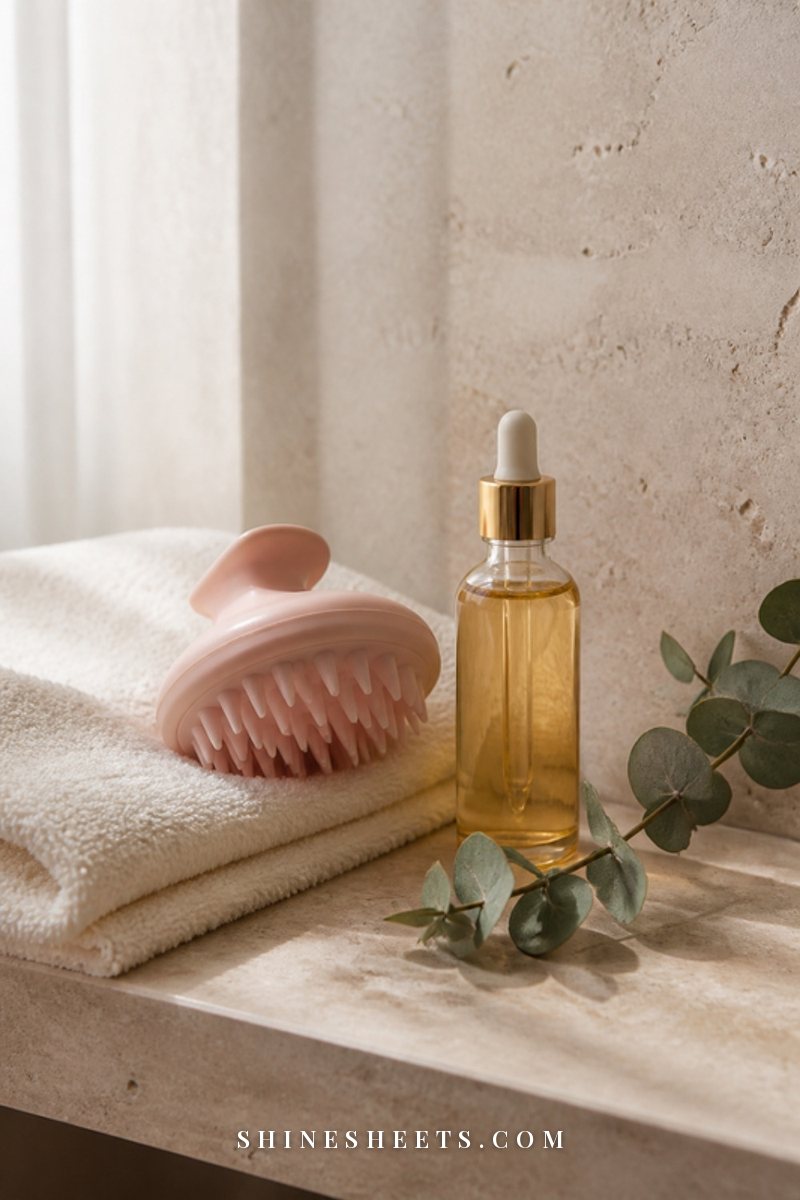
Once your hair is dry or almost dry, a tiny amount of serum smooths flyaways, adds shine and protects the ends from friction during the day.
- Rub 1–2 drops (fine hair) or 3–4 drops (thick hair) between your palms.
- Smooth over the mid-lengths and ends.
- Lightly press any leftover over flyaways on the top layer.
A lightweight smoothing hair serum in a pretty glass bottle feels like a small Old Hollywood moment at the vanity. If you're unsure whether you need a serum or an oil, my guide to hair serum vs hair oil explains the difference.
After-Shower Routine by Hair Type
Here's how the steps change depending on your hair. Find your type and you have your routine.
| Hair type | Remove water | Detangle | Products | Drying |
|---|---|---|---|---|
| Straight | Squeeze, blot with microfiber | Wide-tooth comb or detangling brush, ends up | Light leave-in spray; heat protectant if blow-drying; 1–2 drops serum | Air-dry or rough-dry on low, finish with nozzle pointing down |
| Wavy | Scrunch upward with a T-shirt or microfiber | Wide-tooth comb while damp, then leave alone | Light leave-in, a little mousse or wave cream | Air-dry hands off or diffuse on low |
| Curly | Scrunch gently with a T-shirt; don't rub | In the shower with conditioner; fingers first | Creamy leave-in, curl cream or gel | Air-dry or diffuse on low; don't touch until fully dry |
| Fine | Squeeze, blot lightly | Soft detangling brush or wide-tooth comb | Lightweight spray only, mid-lengths and ends | Rough-dry roots first for lift, low heat |
| Thick | Squeeze in sections, blot thoroughly | Wide-tooth comb in 4–6 sections | Creamy leave-in, heat protectant, 3–4 drops serum | Air-dry 50–70% then blow-dry in sections |
| Color-treated or damaged | Gentle squeeze, microfiber only | Wide-tooth comb only, very slowly | Rich leave-in; heat protectant always | Air-dry when possible; low heat if blow-drying |
Routines for Different Hair Types
A little more detail for each type, because every head of hair behaves a bit differently.
Straight Hair
Straight hair is the easiest to manage after washing but shows frizz and flatness quickly. Blot well, detangle from the ends, use a light leave-in, and keep products off your roots. If you blow-dry, aim the nozzle down for that smooth, shiny finish.
Wavy Hair
Waves love being left alone. Detangle in the shower with conditioner, scrunch out water with a T-shirt, apply a light leave-in and a little styling product, then let them form without touching. Diffusing on low speeds things up without frizz.
Curly Hair
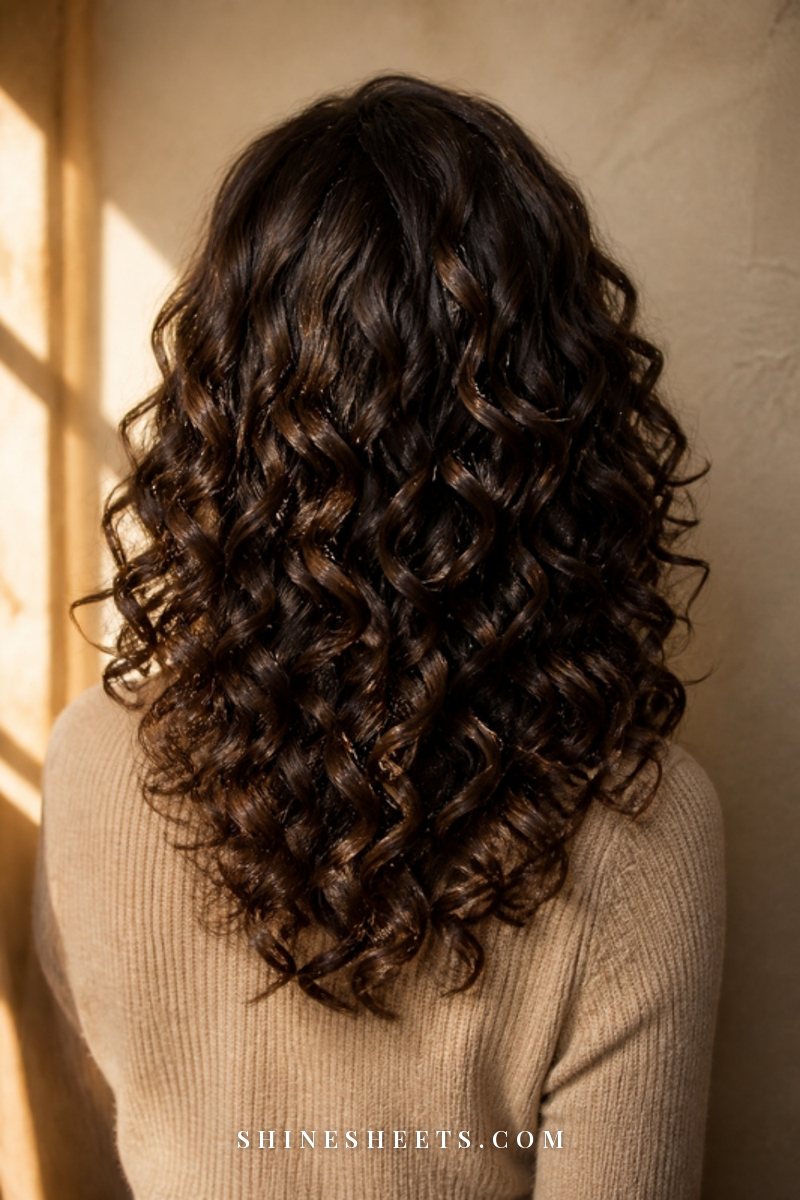
For curls, the after-shower routine is where definition is made. Apply products while hair is still very wet, scrunch gently, and leave your curls alone until they're completely dry. Then you can scrunch out any stiffness. My curly hair routine covers the full wash-day sequence.
Fine Hair
Fine hair needs lightness. Use sprays rather than creams, keep everything away from the roots, and rough-dry the roots first with your head tipped slightly forward for a bit of lift. A single drop of serum on the ends is plenty.
Thick Hair
Thick hair holds a lot of water, so the squeezing and blotting steps matter most. Work in sections for everything: detangling, products and drying. Letting it air-dry most of the way before blow-drying saves a lot of time and heat.
Color-Treated or Damaged Hair
Bleached, colored or heat-damaged hair is more porous, which means it soaks up water quickly, stays wet longer and stretches more easily. It needs the gentlest version of every step.
- Squeeze and blot only, never rub, and use microfiber or a T-shirt every time.
- Detangle slowly with a wide-tooth comb after the leave-in, not before.
- Choose a richer leave-in and apply it to every section, especially the ends.
- Always use heat protectant if any heat is involved, and keep the dryer on low.
- Air-dry whenever your schedule allows, and rinse with lukewarm rather than hot water to help color last.
If You Wash Your Hair at Night
Evening washing is lovely: you can take your time, and your hair is clean for the morning. It just needs a slightly different finish, because sleeping on wet hair is one of the roughest things you can do to it.
- Wash earlier in the evening if you can. An hour or two before bed gives hair time to air-dry most of the way.
- Remove as much water as possible. Squeeze and blot thoroughly with microfiber.
- Dry the roots. Even if the lengths stay a little damp, dry the roots on low heat. A damp scalp all night can feel uncomfortable and leave hair flat.
- Protect the lengths. A light leave-in, then a loose braid or a soft low twist secured with a scrunchie.
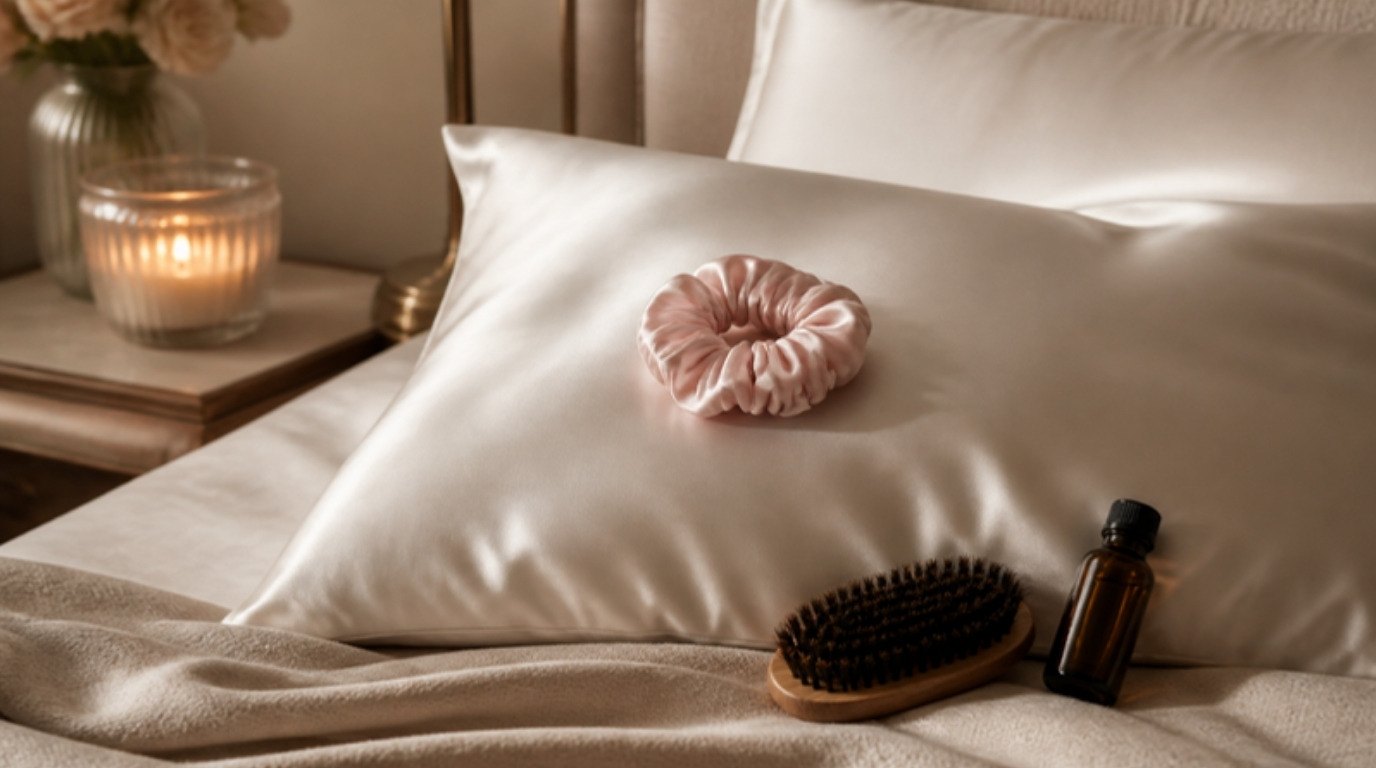
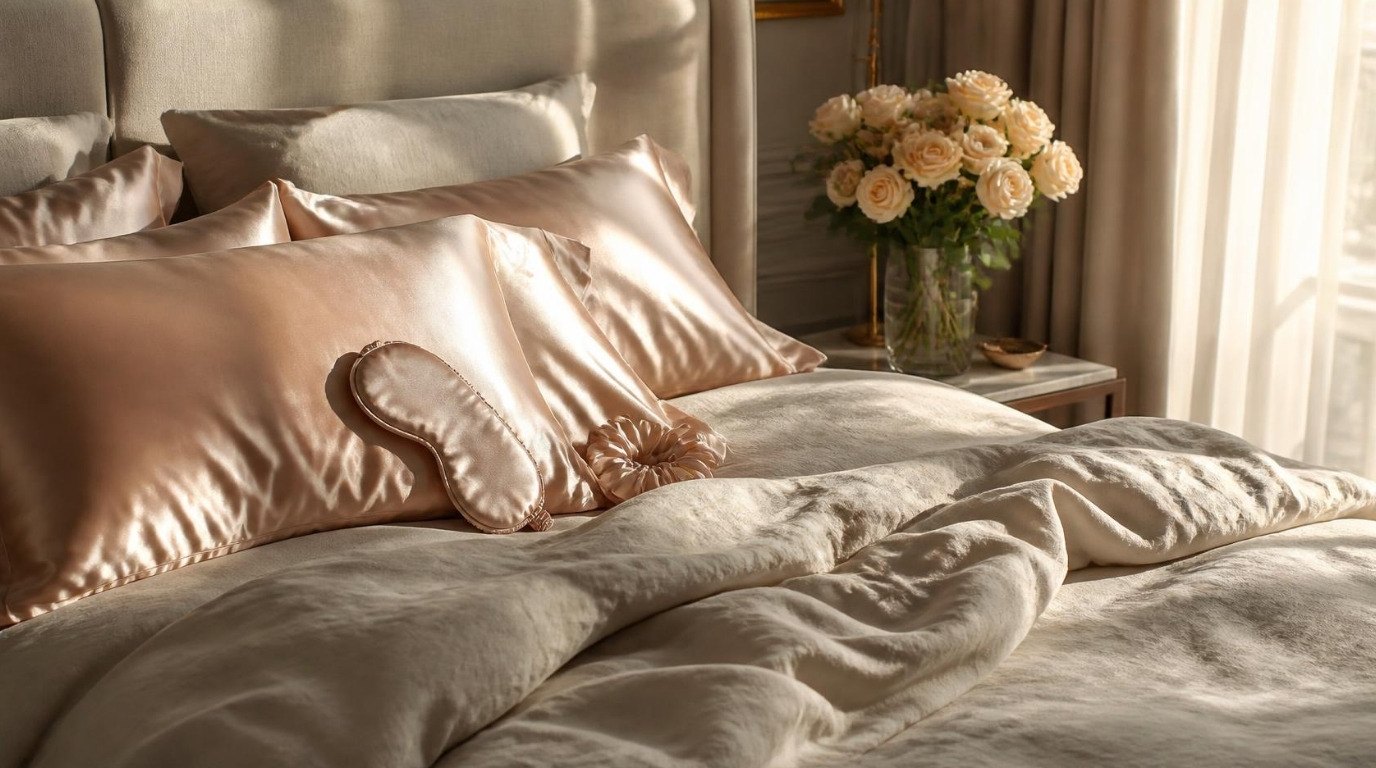
- Sleep on silk or satin. A smooth pillowcase means less friction and fewer tangles by morning.
In the morning, undo the braid gently, smooth a drop of serum through the ends and you're ready.
Don't Forget Your Scalp
Most after-shower routines focus on the lengths, but your scalp deserves a moment too. A few small habits help:
- Blot the roots gently. Press the towel against your scalp rather than scrubbing back and forth.
- Keep heavy products off the scalp. Creams, oils and serums belong on the mid-lengths and ends unless the label says otherwise.
- Dry the roots fully before tying your hair up, wearing a hat or going to bed.
- Change your part now and then. Drying with a different part helps roots dry evenly and gives a little lift.
- Wash your towels often. A fresh microfiber towel every few washes keeps old product and oil off clean hair.
A happy scalp and gentle lengths together are what make freshly washed hair feel its best.
What Not To Do After a Shower
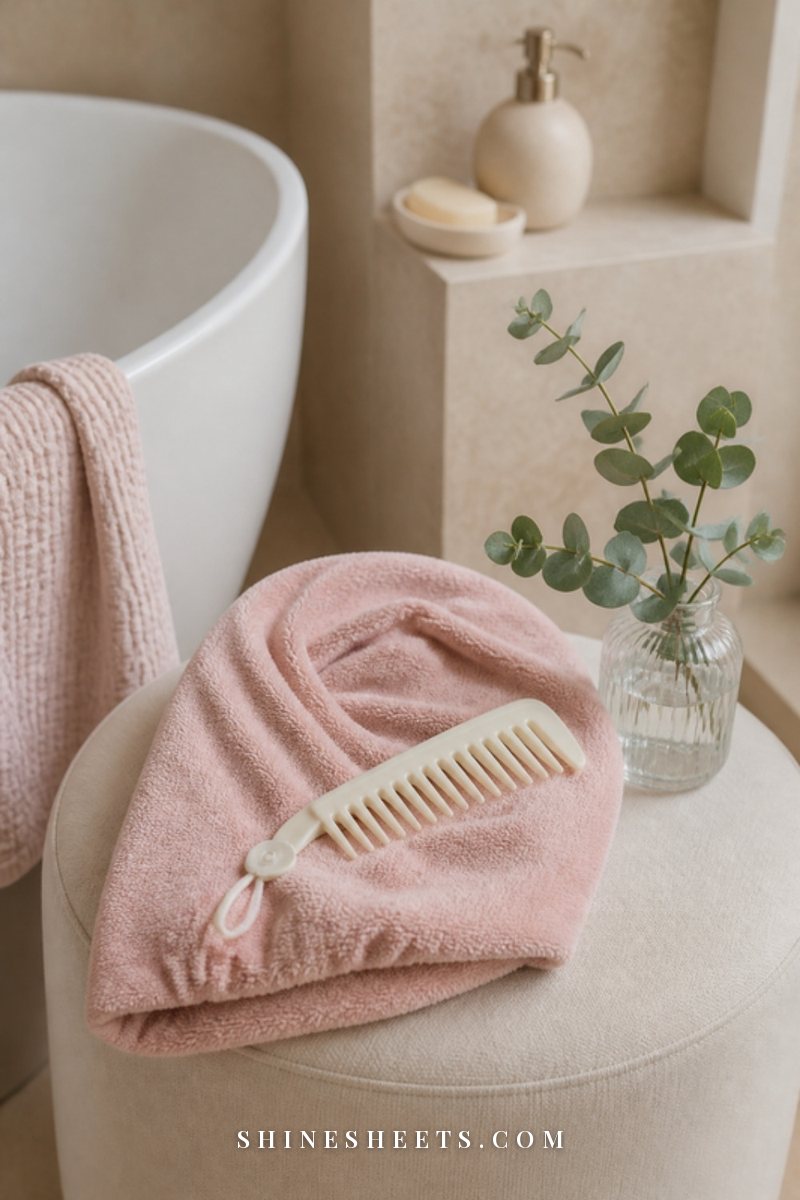
These habits are so common that they feel normal, but each one quietly adds frizz or breakage.
- Rubbing hair with a bath towel. It roughs up the cuticle in seconds. Press and squeeze instead.
- Wearing a tight towel turban for hours. It pulls on the hairline, keeps hair damp and can cause creases and breakage. Keep it loose and short.
- Brushing roughly from the roots. It drags tangles into knots. Always start at the ends.
- Using a fine-tooth comb or boar brush on wet hair. Save those for dry hair.
- Blow-drying soaking wet hair on high heat. Let it air-dry partly first and use low heat.
- Sleeping on soaking wet hair. Wet hair is fragile and rubs against the pillow all night. If you wash at night, dry it at least most of the way, or wear a loose braid on a silk pillowcase.
- Tying hair up while wet. Wet hair stretches around an elastic and can break as it dries. Wait until it's dry, or use a soft scrunchie very loosely.
- Touching it constantly as it dries. Every touch adds a little frizz.
A 10-Minute After-Shower Routine for Busy Days
On mornings when there's no time for the full routine, this short version still protects your hair:
- Squeeze water out in the shower (20 seconds).
- Blot with a microfiber towel (1 minute).
- Spray leave-in on the ends (20 seconds).
- Comb from the ends up with a wide-tooth comb (2 minutes).
- Dry roots on low heat with the nozzle pointing down, leaving the ends to air-dry (5 minutes).
- Smooth a drop of serum over the ends (20 seconds).
Ten minutes, gentle on your hair, and you're out the door with smooth, soft lengths.
Make Your After-Shower Routine Feel Lovely
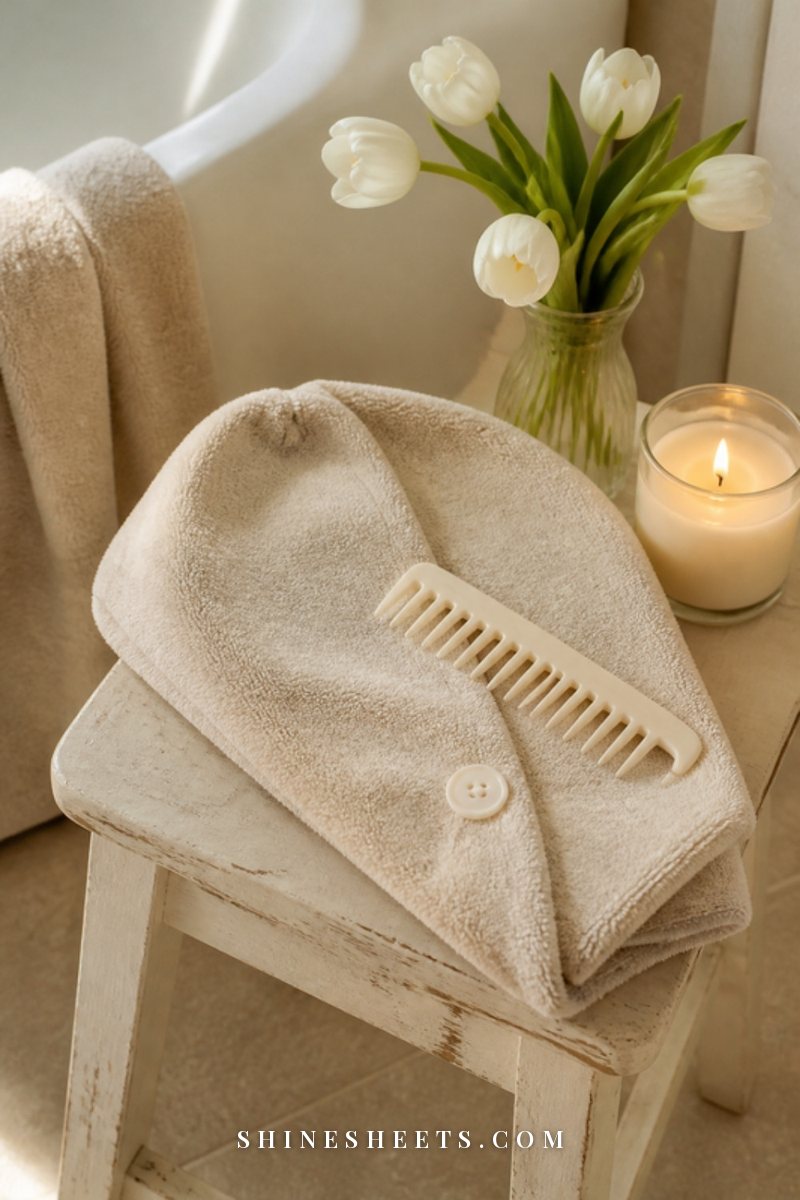
The after-shower moment can be rushed and frantic, or it can be a small ritual you look forward to. A few touches make it feel like care instead of a chore:
- Keep everything you need in one spot: towel, comb, leave-in, protectant, serum.
- Store your hair tools on a pretty tray so it feels like your own little vanity.
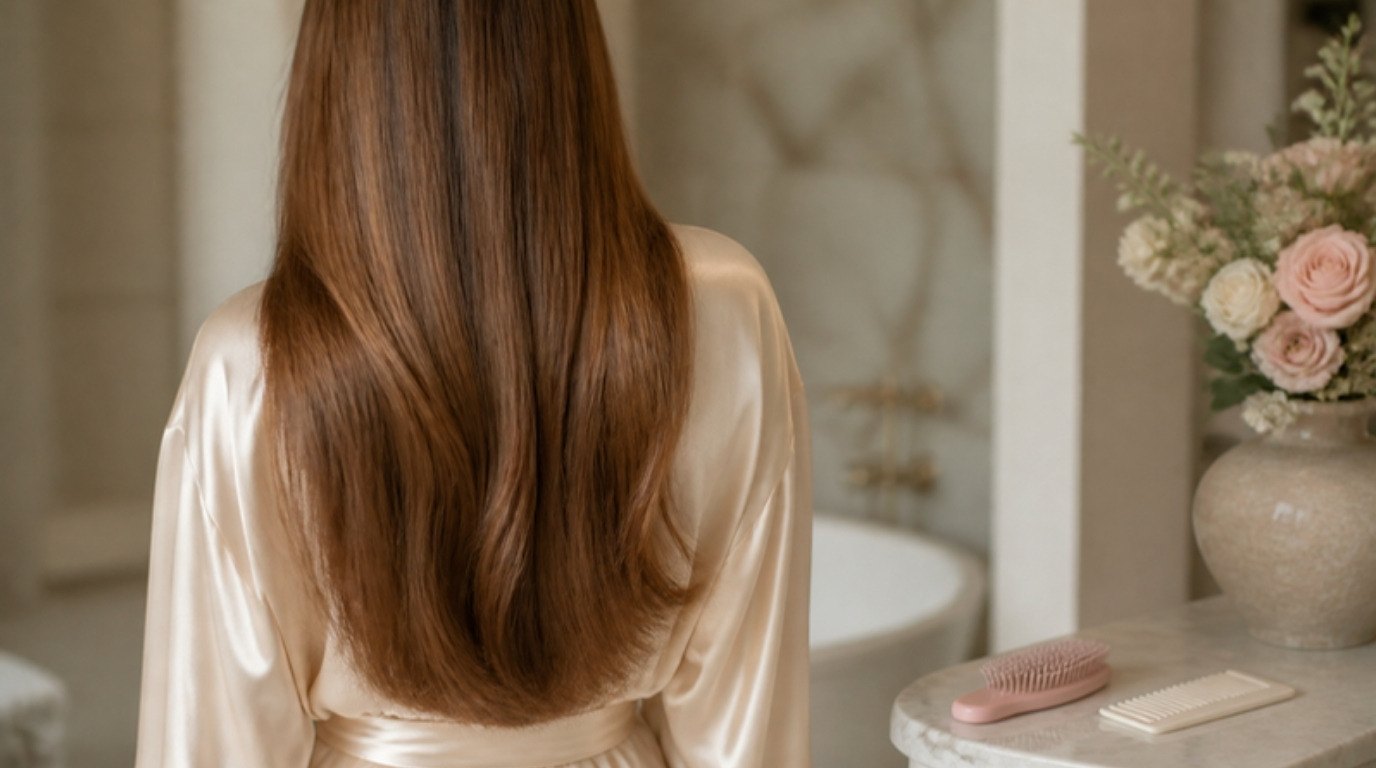
- Wrap up in a soft robe while your hair dries.
- Light a glass candle in the evening, or open the window for fresh air in the morning.
- Make a cup of tea and let your hair air-dry while you sip it.
When the routine feels nice, you're far less likely to rush it, and gentle is exactly what wet hair needs.
Final Thoughts
A good after-shower hair routine isn't about more products. It's about gentler moments: squeezing instead of rubbing, combing from the ends, adding a leave-in, and drying with less heat and less fuss.
Pick the steps that suit your hair type, keep your tools within reach, and give your hair those first quiet minutes after washing. Softer, smoother, healthier-looking hair often starts right there, with a towel and a little patience.