The most underrated step in any night skincare routine isn't a serum. It's the sleep that happens after it. Skin does a lot of quiet maintenance overnight, and when sleep is short or broken, it tends to show up by morning as puffiness, a dull, tired look and darker under-eyes. No cream can fully stand in for that.
The nice part is that you don't need a perfect life to sleep better for your skin. You need a gentle rhythm in the evening, a simple skincare order and a bedroom that works with you instead of against you. This guide walks you through a sleep routine for skin that's realistic: a bedtime timeline, the night skincare steps in the right order, pillowcase and position tips, hydration, your bedroom setup and what to do after a rough night.
My own skin is combination and a little sensitive, with a T-zone that gets shiny, and I've learned that it responds far more to steady habits than to any single product. Think of everything below as a menu. Pick what fits your evenings.
Why Sleep Matters for Your Skin

While you sleep, your body shifts into recovery mode. In general terms, that's when a lot of repair work happens: skin cells renew, blood flow to the skin changes, and your body balances fluids. Research on sleep and skin is still growing, but studies and dermatologists generally agree that regular good sleep supports the skin barrier, while ongoing short sleep is linked with a more tired look.
Here's what tends to show up after a few short nights:
- Puffiness, especially around the eyes, because fluid settles when you lie down and sleep is uneven.
- Darker under-eyes, since tired skin often looks paler, which makes the thin under-eye area look shadowy.
- A dull, flat look instead of the fresh bounce you see on rested mornings.
- More sensitivity for some people, with redness or tightness that's slower to calm down.
- Stress-related breakouts, because poor sleep and stress often travel together.
None of this is a reason to panic about one late night. Skin is forgiving. It's the pattern over weeks that matters, which is why a routine works better than a rescue product. If dark circles are your main concern, my guide on how to get rid of dark circles goes deeper into what helps and what's simply genetics.
Your Bedtime Timeline for Better Skin
This is the heart of the guide: a gentle countdown that pairs one skin step with one sleep step. You don't need to follow it to the minute. Shift the whole thing earlier or later to match your bedtime, and screenshot it if you like having it in front of you.
| Time before bed | Skin step | Sleep step |
|---|---|---|
| 2 hours | Take off makeup if you're home for the night | Finish a light dinner, dim the main lights |
| 90 minutes | Drink your last big glass of water | Put screens on night mode or away; switch to a book, tea or a slow chore |
| 1 hour | Cleanse, then apply your treatment step | Warm shower or bath if you enjoy one |
| 45 minutes | Moisturize, eye cream, lip mask | Set the bedroom: cool, dark, humidifier on in dry months |
| 30 minutes | Hair tied up loosely, hands off your face | Wind down: journaling, stretching, a calm podcast with the screen off |
| Lights out | Back or side on a smooth pillowcase | Sleep mask on, slow breathing |
| Morning | Rinse or gentle cleanse, moisturizer, sunscreen | Get daylight within the first hour, a glass of water |
Now let's walk through each part in a little more detail.
Two Hours Before Bed
This is when you start telling your body the day is ending. A few simple cues:
- Eat a lighter dinner, earlier if you can. A very heavy or very late meal can make it harder to fall asleep comfortably.
- Dim the lights. Turn off the big overhead lights and switch to lamps. It sounds small, but softer light is one of the clearest "evening" signals there is.
- Take your makeup off early if you're not going out again. Skin gets a longer break, and you won't be tempted to skip it later when you're tired.
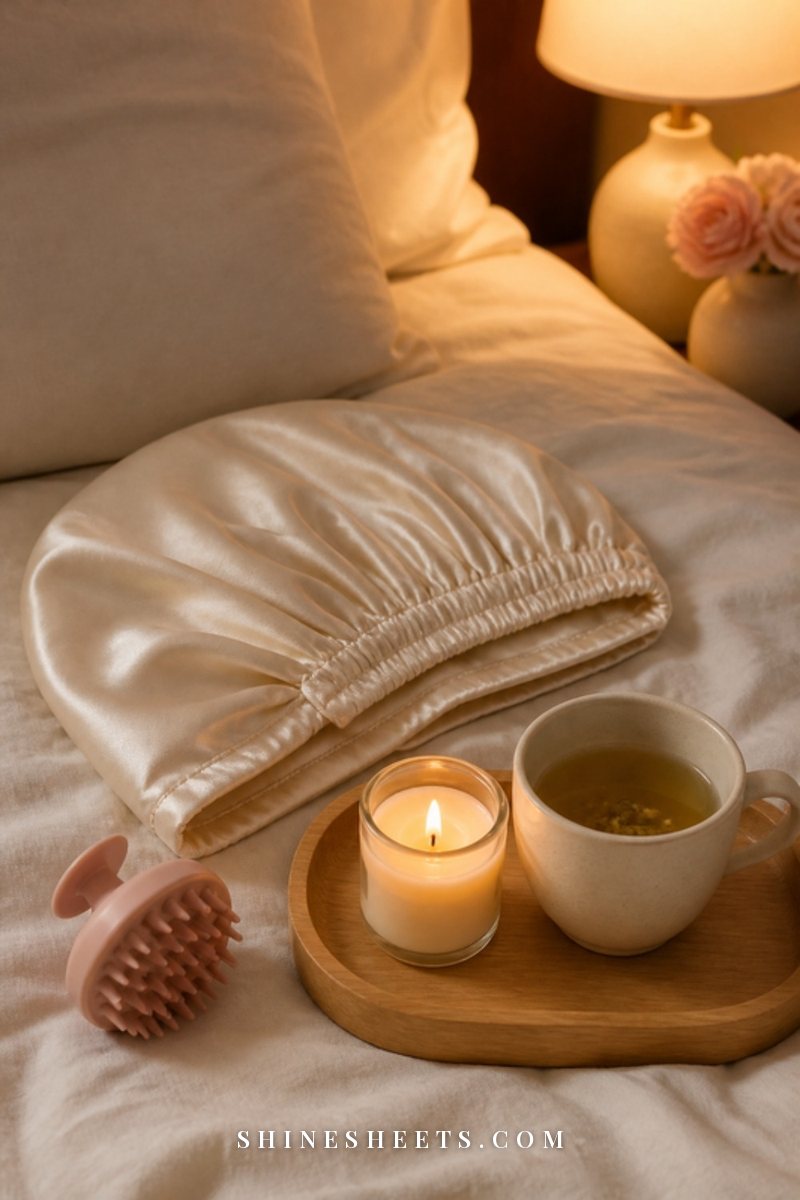
- Switch to something warm and caffeine-free. A cup of chamomile tea is my evening ritual. Coffee sometimes perks me up and sometimes makes me anxious, so after mid-afternoon it's tea only.
One Hour Before Bed
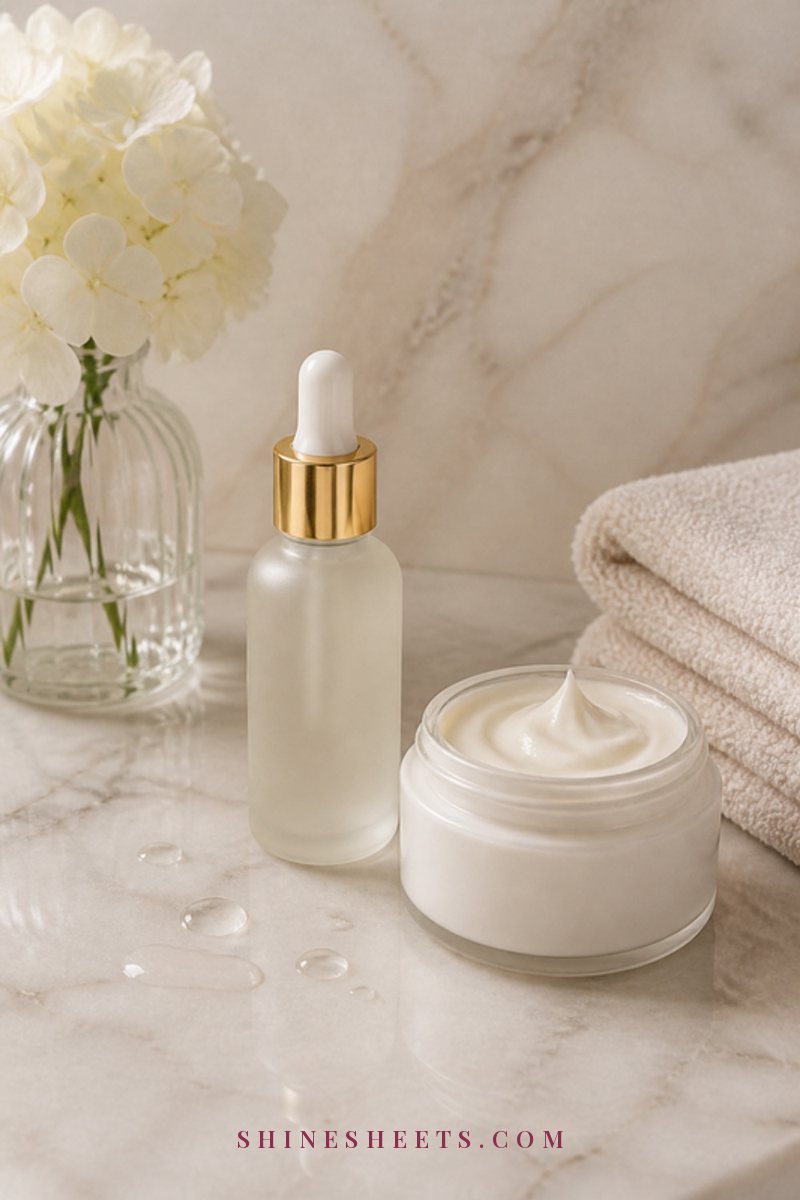
This is skincare time. Doing it an hour before sleep instead of right before your head hits the pillow has two benefits: products have time to absorb (so less ends up on your pillowcase), and the routine itself becomes part of winding down rather than one more task.
Put screens away or on night mode around now, and keep them out of reach. If phones are your weak spot, start with just 15 phone-free minutes and build from there.
Thirty Minutes Before Bed
Everything is done. Now you're only making it easy to fall asleep. Tie your hair up loosely, set the room, and do something quiet: a few pages of a book, five minutes of journaling, a slow stretch on the floor. Journaling after my evening tea is the moment my brain finally stops listing tomorrow's tasks. For more ideas for this window, my tips to sleep better at night are a helpful place to start.
A Simple Night Skincare Order
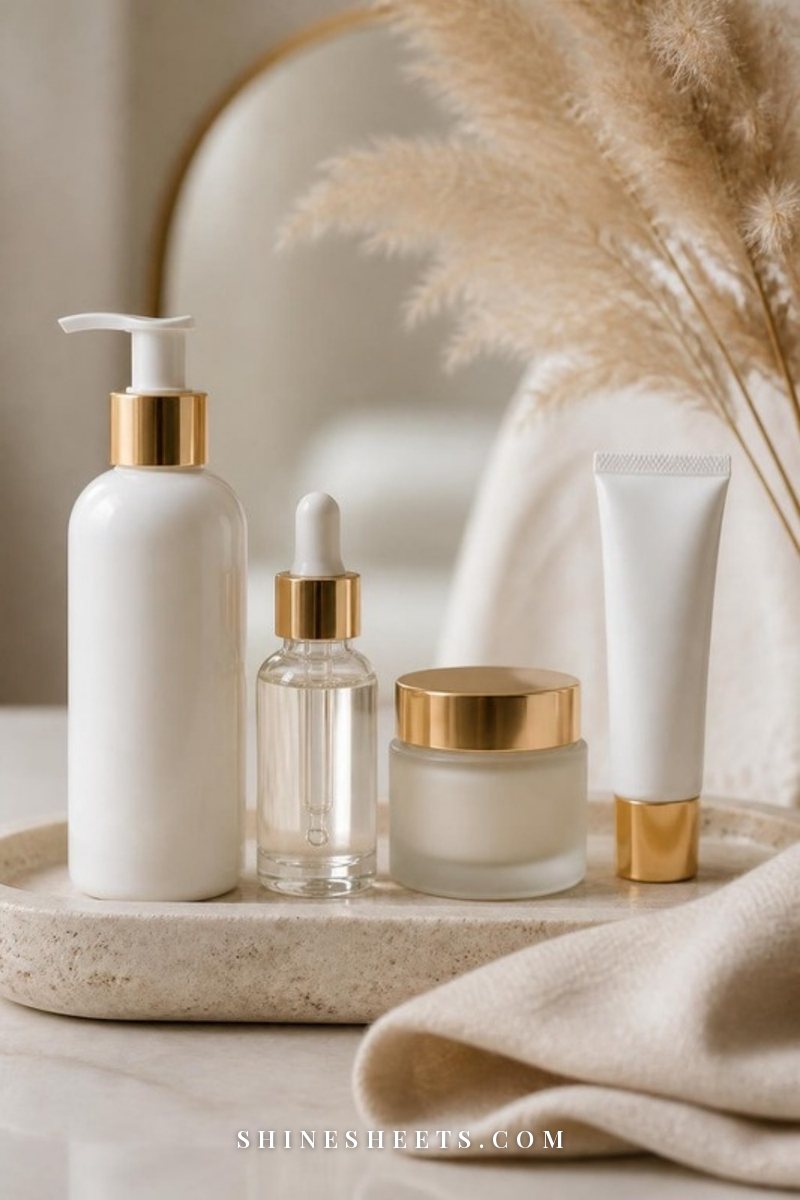
Night is when your skin isn't dealing with sun, makeup or pollution, so it's a good time for the hardworking steps. Keep it simple. Here's the order, from thinnest to thickest:
- Remove makeup and sunscreen. A cleansing balm or micellar water works well. If you wore heavy makeup or water-resistant sunscreen, follow with step two (that's a double cleanse).
- Cleanse gently. A low-foam, fragrance-free cleanser, about 30–60 seconds, lukewarm water. Pat dry; don't rub.
- Treatment (one at a time). This is where retinol, an exfoliating acid or a targeted serum goes. Use one active per night, not three, and follow the frequency on the label.
- Hydrating serum. Something with hyaluronic acid or glycerin, applied to slightly damp skin.
- Eye cream (optional). A small dot, tapped gently with your ring finger.
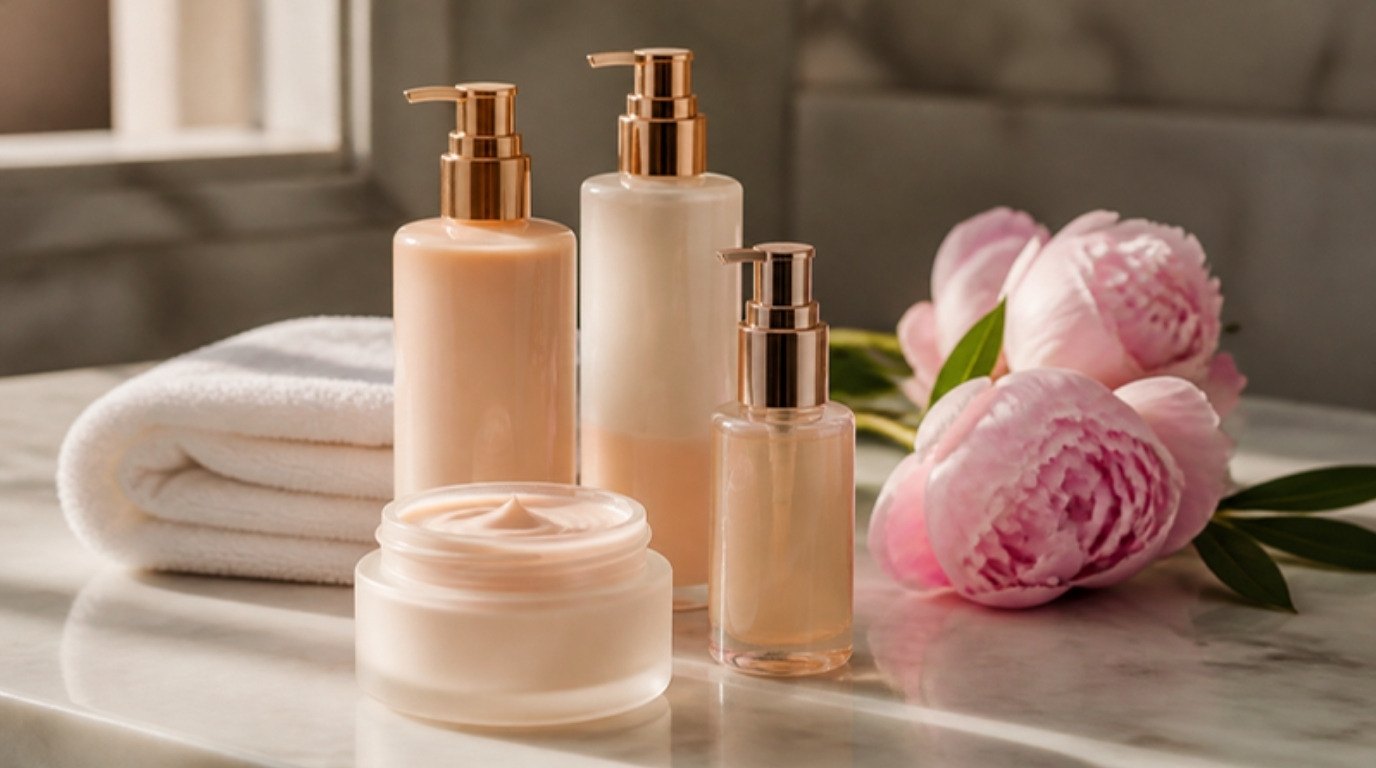
- Moisturizer. A ceramide night cream is a reliable choice for most skin types because it supports the skin barrier while you sleep. On combination skin, a thinner layer on the T-zone and a little more on the cheeks works well.
- Lips. Finish with an overnight lip mask, a well-loved K-beauty step that keeps lips soft by morning.
Not sure whether you need a sleeping mask, a night cream or both? My guide to sleeping mask vs night cream explains the difference simply.
Whenever you try something new, patch test it first: a small amount behind the ear or on the inner arm for a few evenings before it goes on your face. If you're dealing with persistent acne, eczema, rosacea or anything that worries you, a dermatologist can help you build a night routine that's right for your skin.
Sleeping Position and Your Pillowcase
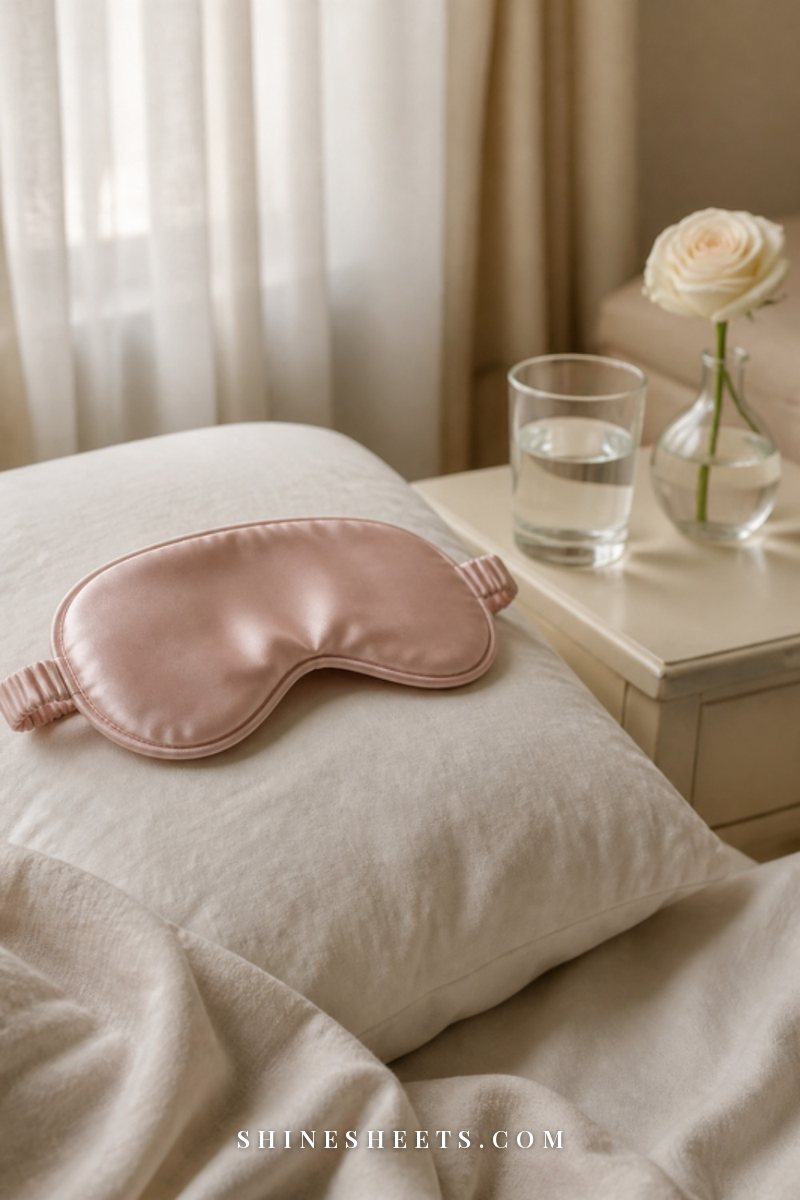
Your face spends hours pressed against fabric every night, so what's on your pillow matters more than people expect.
- Back sleeping is the gentlest on skin, since nothing presses on your face. If you're a side or stomach sleeper (most of us are), don't force a change that ruins your sleep. Good sleep beats a perfect position.
- Try a slightly higher pillow if you wake up puffy. A little elevation can help fluid not settle around your eyes.
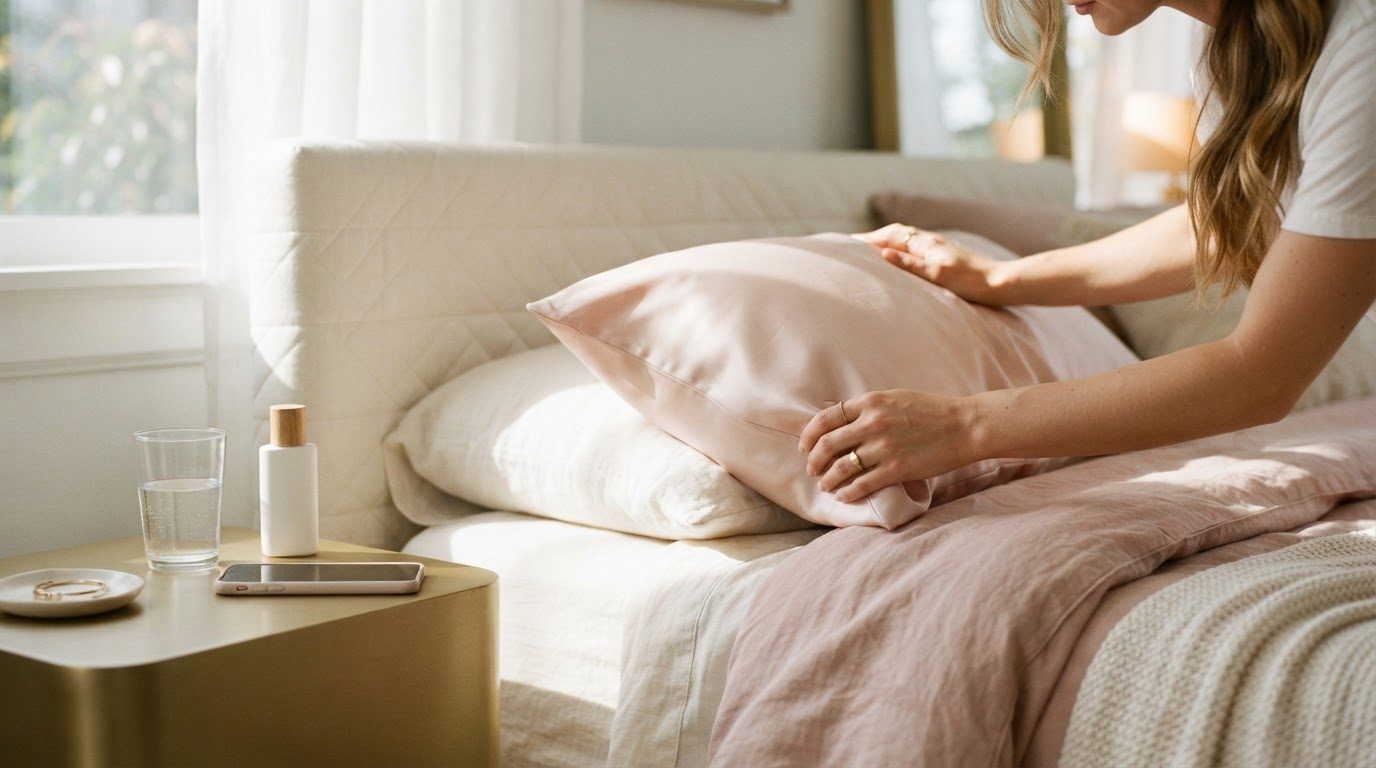
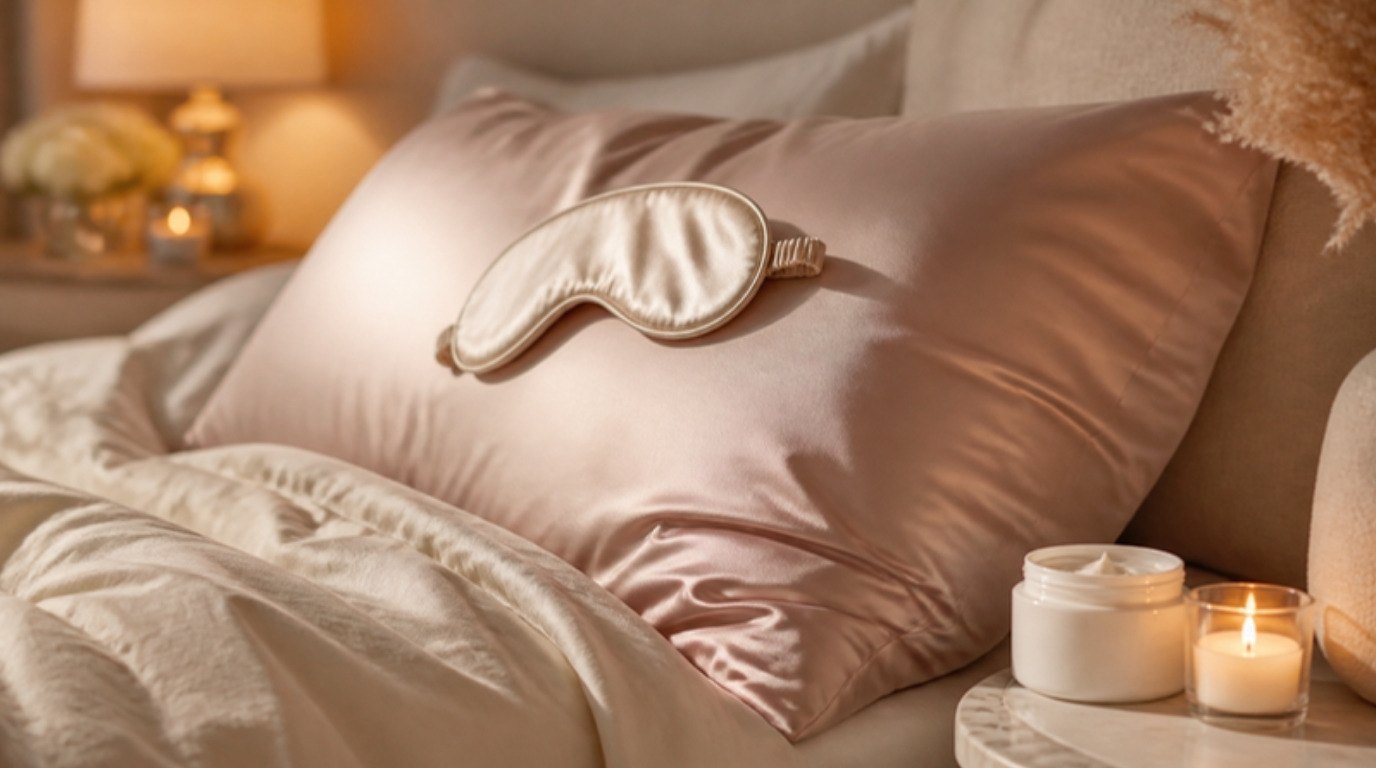
- Switch to a smoother fabric. A silk pillowcase has less friction than cotton, so it's kinder to skin and hair and doesn't pull on your face as you move. I wrote a whole guide on silk pillowcase benefits if you're curious what it can and can't do.
- Change pillowcases often. Every two to three days if you're breakout-prone, at least once a week otherwise. Oil, skincare and hair products build up fast.
- Block the light. A soft satin sleep mask helps you stay asleep in the early morning without tugging the delicate skin around your eyes.
Keep Your Hair Off Your Face
Hair carries oils, styling products and conditioner, and at night all of that rubs against your forehead, temples and jawline. If your breakouts like to show up along your hairline, this is worth a look.
- Tie hair up loosely in a soft scrunchie or a loose braid, away from your face. Avoid tight elastics that pull at the roots.
- Keep leave-in products and hair oils for the ends only on nights you sleep with hair down.
- Wash your face after your hair routine, not before, so conditioner residue doesn't stay on your skin.
- Bangs or face-framing pieces can be clipped back with a soft clip after your skincare.
Hydration Without Waking Up at Night
Water supports your whole body, skin included, but timing makes a real difference to your sleep. Drinking a huge glass right before bed often means waking up to use the bathroom, and broken sleep undoes the benefit.
- Drink most of your water during the day, spread out evenly.
- Have your last big glass about 90 minutes before bed.
- Keep a small glass by the bed for sips if your mouth gets dry.
- Go easy on salty dinners and alcohol in the evening. Both can leave you puffier in the morning, and alcohol tends to make sleep lighter and more broken.
Hydrating from the outside matters too: a humectant serum and a good moisturizer lock in water while you sleep, especially when the heating is on.
Set Up Your Bedroom for Skin-Friendly Sleep

A bedroom that helps you sleep deeply is a skincare tool in its own right. A few things to check:
- Cool. Most people sleep best in a slightly cool room, roughly 60–67°F. A cooler room also keeps you from overheating and waking up flushed.
- Dark. Blackout curtains or a sleep mask. Cover small blinking lights on chargers and electronics.
- Quiet. A fan or white noise if street noise wakes you.
- Humid enough. Indoor heating dries the air, and dry air pulls moisture from your skin overnight. A small cool mist humidifier in the bedroom during the dry months can make a visible difference in how tight your skin feels by morning. Clean it as the manual says, usually every few days, and use distilled water if recommended. My guide on using a humidifier for skin covers the details.
- Clean. Fresh sheets every week, a dust-free nightstand, and no phones in bed if you can manage it.
What To Do After a Bad Night's Sleep
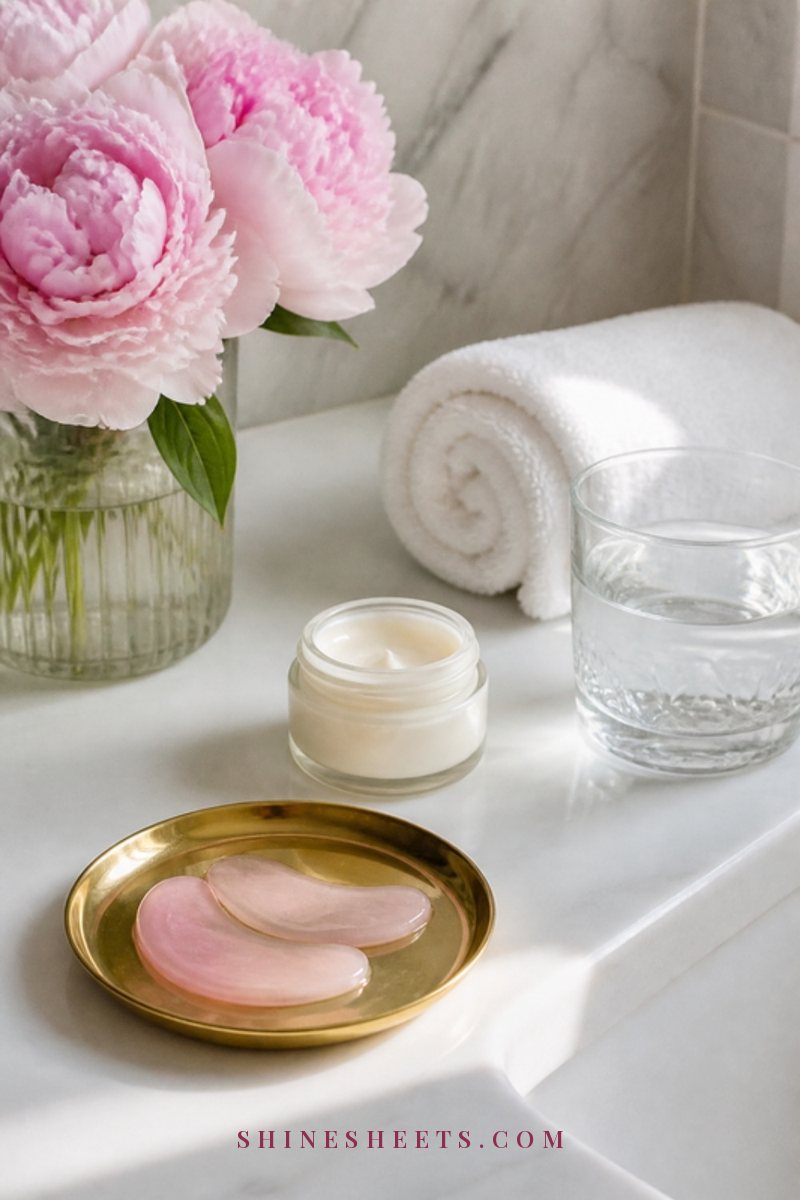
Everyone has rough nights. Stress, a late flight, a restless mind at 2 a.m. The morning after, skip the harsh scrubs and strong actives, and keep it calm and gentle:
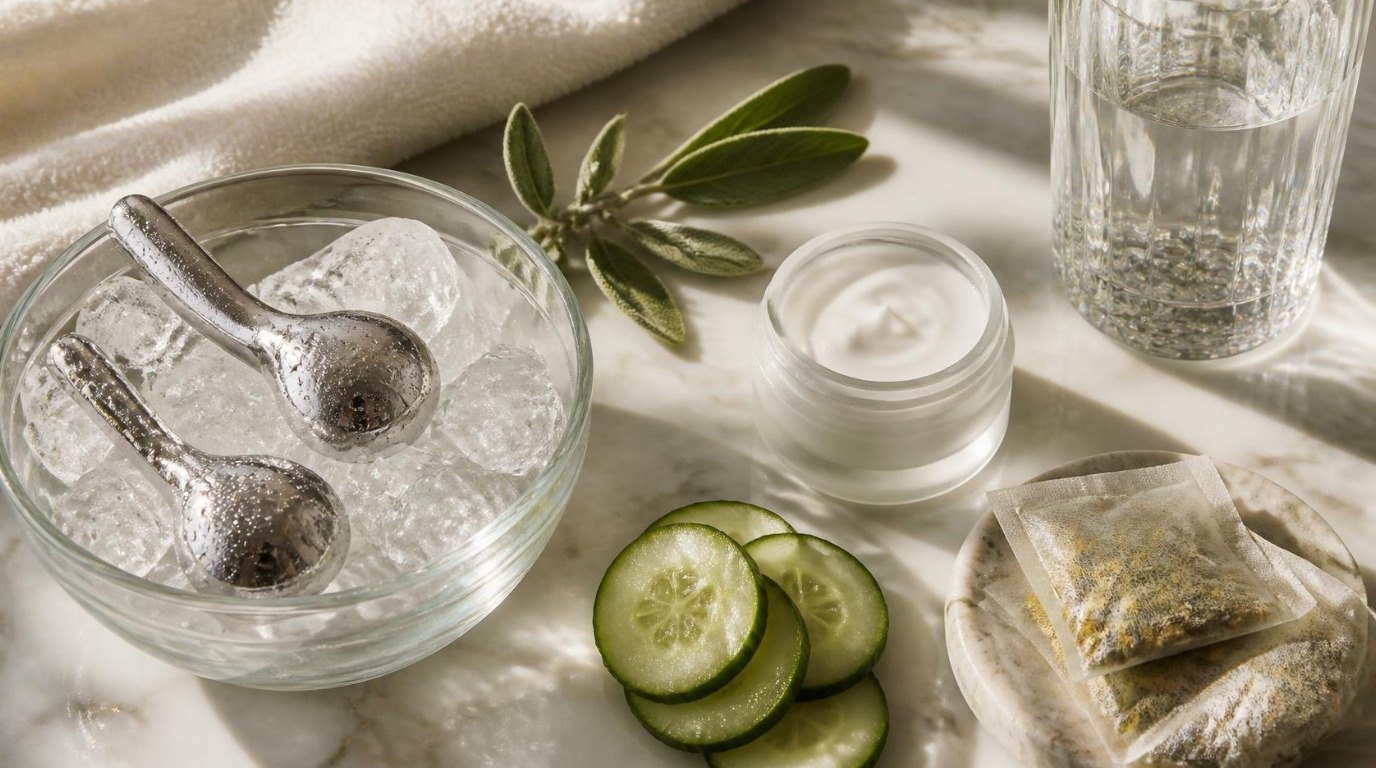
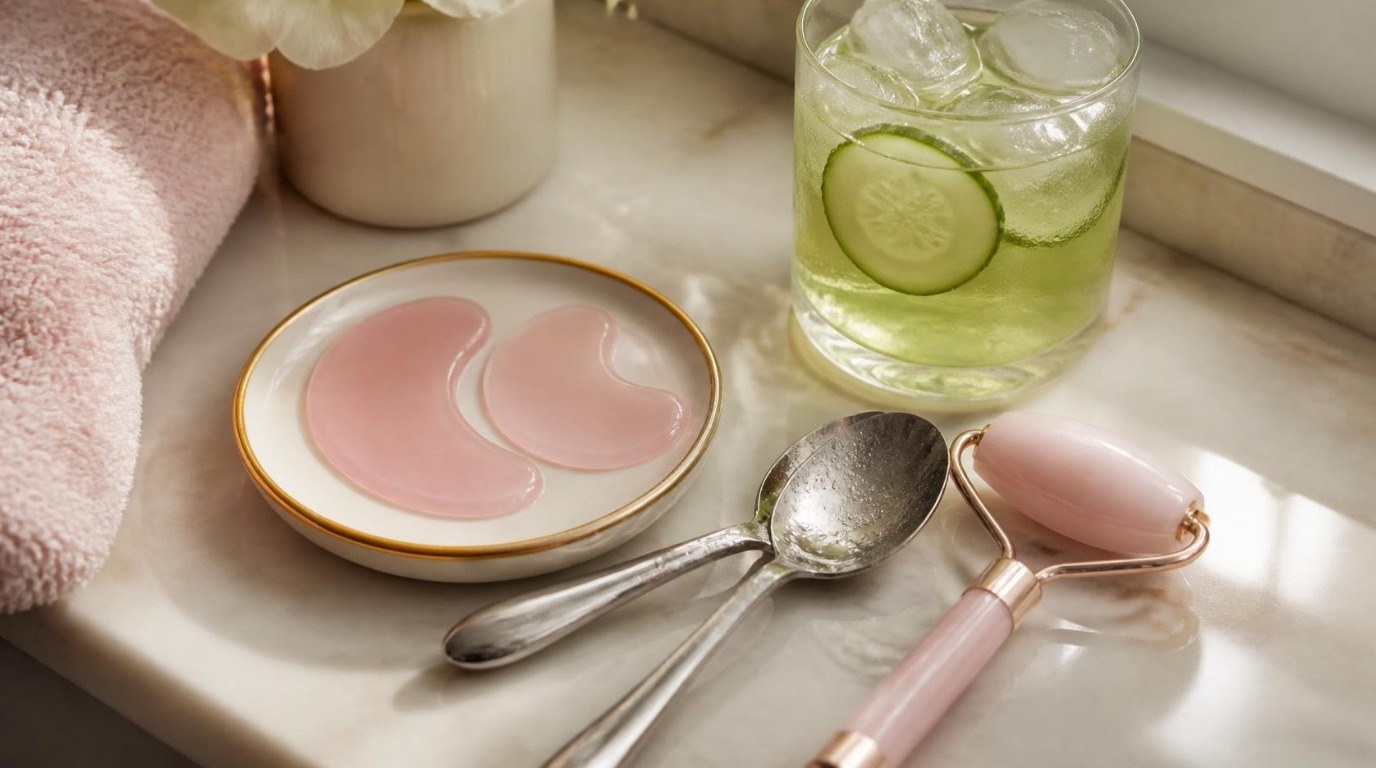
- Cool things down. Hold a cool, damp washcloth over your eyes for one to two minutes, or use chilled under-eye patches for 10–15 minutes.
- Cleanse gently or simply rinse with lukewarm water if your skin feels dry.
- Hydrate in layers. A hydrating serum, then moisturizer, applied with light upward pressing motions.
- Don't skip sunscreen. Tired skin is still skin that needs protecting.
- Drink a glass of water and get some daylight early. It helps your body clock reset for the next night.
- Keep the evening simple. No strong actives tonight; just cleanse, hydrate, moisturize and get to bed a little earlier.
And please don't spiral about one tired face. Your skin will bounce back with a couple of good nights.
Adjusting Your Night Routine for Your Skin Type
The order above works for almost everyone, but the products inside it can shift with your skin. Here's a quick guide:
- Dry skin: Choose a cream cleanser, layer a hydrating serum on damp skin and use a richer night cream. On very dry nights, a thin layer of a balm over moisturizer on the driest spots (never over active ingredients you've just applied) can help.
- Oily skin: A gel cleanser and a lightweight gel-cream moisturizer are usually enough. Don't skip moisturizer, though. Skin that feels stripped at night often looks oilier by morning.
- Combination skin: Use one moisturizer but apply it in a thinner layer on the T-zone and more generously on the cheeks. This is exactly what works on my own shiny-T-zone, drier-cheeks face.
- Sensitive skin: Keep it short and fragrance-free: gentle cleanser, a calming moisturizer with ceramides or panthenol, and introduce new products one at a time, two weeks apart.
- Breakout-prone skin: Look for "non-comedogenic" on your moisturizer, change your pillowcase often and keep hands, phone and hair away from your face at night.
Skin also changes with the seasons. In the colder months, you'll probably want a richer cream and that humidifier; in summer, something lighter. Listen to how your face feels in the morning: tight means you need more moisture, greasy means you can go lighter.
Night Routine Mistakes That Undo Good Sleep
Even a lovely routine can work against you if a few small habits sneak in. Watch out for these:
- Using too many actives at once. Retinol, acids and vitamin C on the same night can leave skin irritated, and irritated skin often itches and keeps you awake. One active per night is plenty.
- Doing skincare in bed. Products end up on your sheets, and lying down with a wet face means half the cream lands on the pillowcase.
- Staying on your phone while products absorb. The bright screen and endless feed keep your brain alert. Read or stretch while products absorb instead.
- Falling asleep with makeup. It happens, but if it's a habit, keep cleansing wipes or micellar water and cotton pads by the bed as a backup plan for the really tired nights.
- A very hot shower right before bed. Hot water dries skin out. Lukewarm and short is kinder, and a warm (not hot) shower an hour before bed can actually help you feel sleepy.
- Sleeping in a hot, stuffy room. You'll sleep more lightly and may wake up flushed.
- Changing everything at once. If you switch five products in one week and your skin reacts, you'll never know which one caused it.
Consistency Over Perfection

The best sleep routine for your skin is the one you'll actually do on a regular Tuesday. A ten-step ritual that happens twice a month does less than a three-step routine that happens every night.
If you're starting from scratch, choose just two changes this week. For example:
- Skincare an hour before bed instead of at the last second.
- Phone out of reach 30 minutes before lights out.
Next week, add one more: a cooler room, a smoother pillowcase or an earlier last glass of water. Small changes stack, and within a few weeks you'll likely notice that your mornings look and feel softer.
Some nights you'll fall asleep with your makeup on. Some weeks will be chaos. That's life, and it doesn't erase your progress. The next evening, go back to your rhythm without any guilt. If you're struggling with sleep for weeks at a time, or you feel exhausted no matter what you try, please talk to your doctor. Sleep problems are common and very treatable.
Final Thoughts
Your night routine doesn't have to be fancy to work. Softer lights, a gentle cleanse, one good moisturizer, a smooth pillowcase and a cool, dark room already do a lot of the heavy lifting.
Treat your evenings as a small act of care rather than one more thing to get right. Your skin, and the rest of you, will thank you for every rested night.