Skincare pilling is almost never a sign that your products are bad. It's usually a sign that they're arriving too fast, too thick or in an order your skin can't quite keep up with. Change the timing, the amount or the way you apply them, and the same products that rolled into little balls yesterday can sink in smoothly today.
That's good news, because it means you rarely need to throw anything away. Most pilling comes down to a handful of small, fixable habits: a heavy hand with serum, rushing from one layer to the next, rubbing when you could be pressing, or a sunscreen and foundation that simply don't like each other.
This guide covers skincare pilling from every angle: what it is, how to tell it apart from flaking skin or a reaction, the seven most common causes with a fix for each, a table you can screenshot with what each cause looks like and how to prevent it, a pill-proof routine order, how to rescue makeup that's already balling up, and how to test a sunscreen with your foundation before a big day.
My skin is combination and sensitive, with a shiny T-zone and cheeks that like a bit more moisture, so I know the frustration of layering carefully and still ending up with little crumbs along the jawline. Let's sort it out calmly.
What Skincare Pilling Actually Is
Pilling happens when a product rolls off the surface of your skin instead of sinking in or settling into a smooth layer. You'll usually notice it as you rub or press: tiny flakes, crumbs or little balls of product that gather on your fingertips or along the edges of your face. Sometimes it shows up later, when you apply foundation and it starts to lift and roll in patches.
What you're seeing is a mix of product ingredients clumping together, usually film-formers, thickeners and silicones that are meant to sit in a thin, even layer. When that layer is too thick, not dry yet, or mixed with something it doesn't blend with, the ingredients grab onto each other instead of onto your skin.
A few common places it shows up:
- Along the jawline and around the nose, where we tend to rub more.
- On the forehead, especially with sunscreen over moisturizer.
- Under foundation, where makeup starts to "lift" or look patchy.
- Around the mouth and chin, where skin moves a lot while products dry.
Pilling isn't harmful in itself. It just wastes product, makes makeup look uneven, and can leave thinner coverage of your sunscreen in the spots where it balled up, which is the main reason it's worth fixing.
Pilling, Flaking or a Reaction? How To Tell
Before you change your routine, it helps to be sure that what you're seeing is actually pilling. Three things can look similar at first glance:
- Pilling: the little balls are the same color as your product (white, beige or clear), they appear while you're applying or right after, and they roll away cleanly with your fingertip. Your skin underneath feels normal.
- Flaking skin: the flakes are thin, papery and skin-colored or translucent, they're there before you apply anything, and the area often feels tight or rough. This is dryness or dead skin build-up, not a product clash.
- A reaction: you notice redness, stinging, burning, itching, bumps or peeling that keeps going for hours or days. That's your skin telling you something in the routine doesn't suit you.
A simple test: wash a small area gently and apply nothing. If the flakes are still there, it's your skin, not your products. If the area is clear until you layer your usual routine, it's pilling. If it stings, turns red or itches, stop the new products and let your skin calm down before you try anything else.
7 Causes of Skincare Pilling and How To Fix Each
Most pilling comes from one of these seven causes, and very often from two of them at once. Read through, find the ones that sound familiar, and change just one or two things at a time so you can see what really helps.
1. Using Too Much Product
This is the most common cause by far. When you apply more than your skin can absorb, the extra has nowhere to go. It sits on the surface, starts to dry, and then rolls into crumbs the moment you rub or layer something on top.
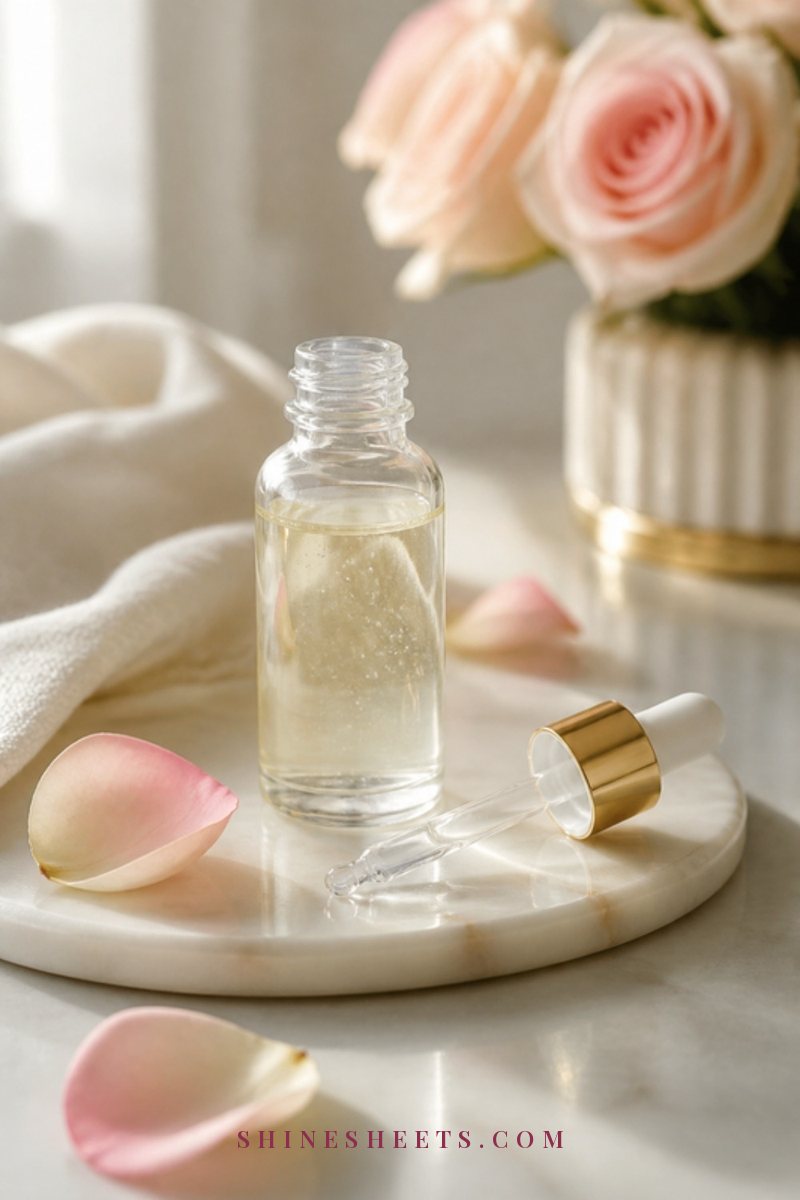
The fix: use thinner layers. As a rough guide for the face, try 2–3 drops of a serum, a pea-sized amount of moisturizer, and the amount of sunscreen recommended on the label (sunscreen is the one product you shouldn't skimp on, so if it pills, adjust the layers under it instead). If you've been using a full pump of serum, cut it in half for a week and see what happens.
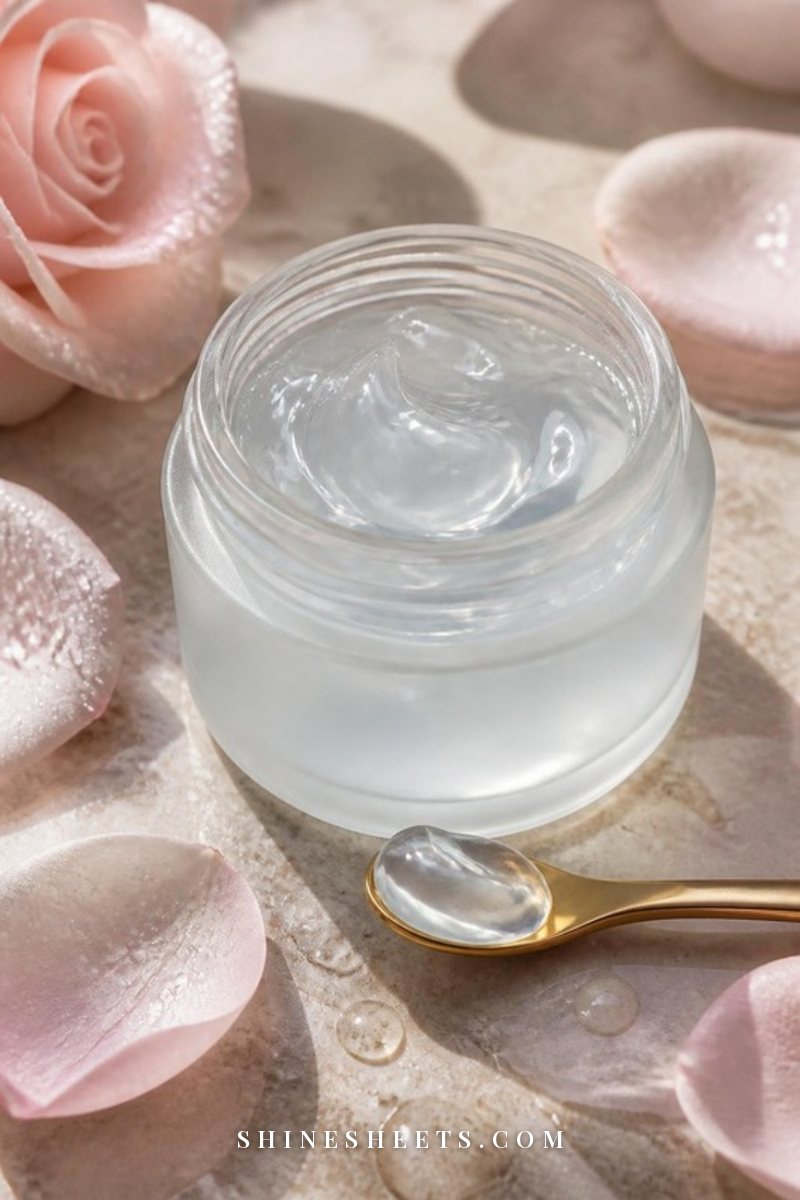
If your moisturizer feels heavy or you're piling on a rich cream because your skin feels tight, a lightweight gel moisturizer is a good pick for combination and oily skin. It gives water-based comfort without a thick layer that has to sit under sunscreen.
2. Not Waiting Between Layers
When you apply a product over one that's still wet, the two mix on your skin into something neither was designed to be. Film-forming ingredients in serums and sunscreens need a moment to settle into an even layer before something goes on top.
The fix: pause for 1–2 minutes between layers. Your skin should feel just slightly tacky or almost dry before the next step, not wet and slippery. Before sunscreen and makeup, wait a little longer (2–3 minutes is ideal).
A small trick to make waiting painless: apply your serum, then brush your teeth. Apply moisturizer, then put the kettle on for your morning tea. By the time you come back, your skin is ready for the next layer and you haven't stood staring at the mirror.
3. Stacking Silicone-Heavy Layers
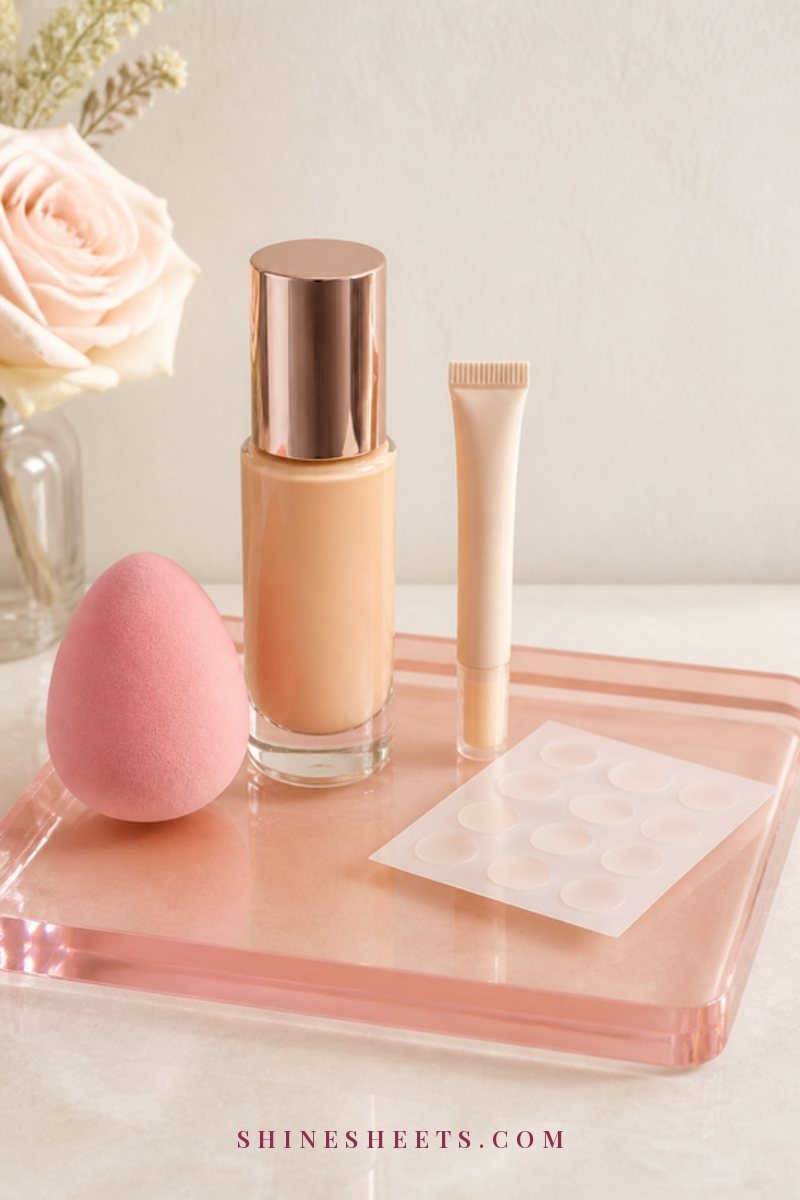
Silicones (look for words ending in -cone or -siloxane, like dimethicone or cyclopentasiloxane) are wonderful for that silky, smooth finish. They're in many moisturizers, sunscreens, primers and foundations. On their own, they're perfectly fine. The trouble starts when several silicone-rich products are stacked on top of each other, especially in thick layers.
The fix: you don't need to avoid silicones. Just don't stack four of them. If your sunscreen and foundation are both silicone-based, you might not need a silicone primer as well. Try skipping one layer, or swap one step for a water-based version.
If you love a smoothing primer, choose it carefully and use a thin layer only where you need it (the T-zone, for example). My guide on which makeup primer your skin needs explains how to match a primer to your skin and your foundation.
4. Putting Water-Based Products Over Oil-Based Ones
Water and oil don't mix, and your skin is no exception. If you apply a facial oil or a rich, oily balm and then follow with a watery serum or a water-based gel, the watery product can't get through. It slides around on top, then dries into flakes.
The fix: layer thin to thick. Watery products first (toner, essence, water-based serum), then lotions and creams, and oils last at night. In the morning, sunscreen goes over everything as the final skincare step.
A quick way to check a product's base: if water (aqua) is the first ingredient and the texture is light and runny, it belongs early in your routine. If it's an oil, a balm or feels rich and slippery, it goes later. My guide on how to layer skincare products walks through the full order step by step, and if you're unsure where toner, essence and serum fit, my guide to toner vs essence vs serum makes it simple.
5. Rubbing Instead of Pressing
Rubbing creates friction, and friction is exactly what turns a half-dry film into little balls. It's the same reason a wool sweater pills where it rubs against a bag strap. The more you swipe back and forth, the more product rolls up.
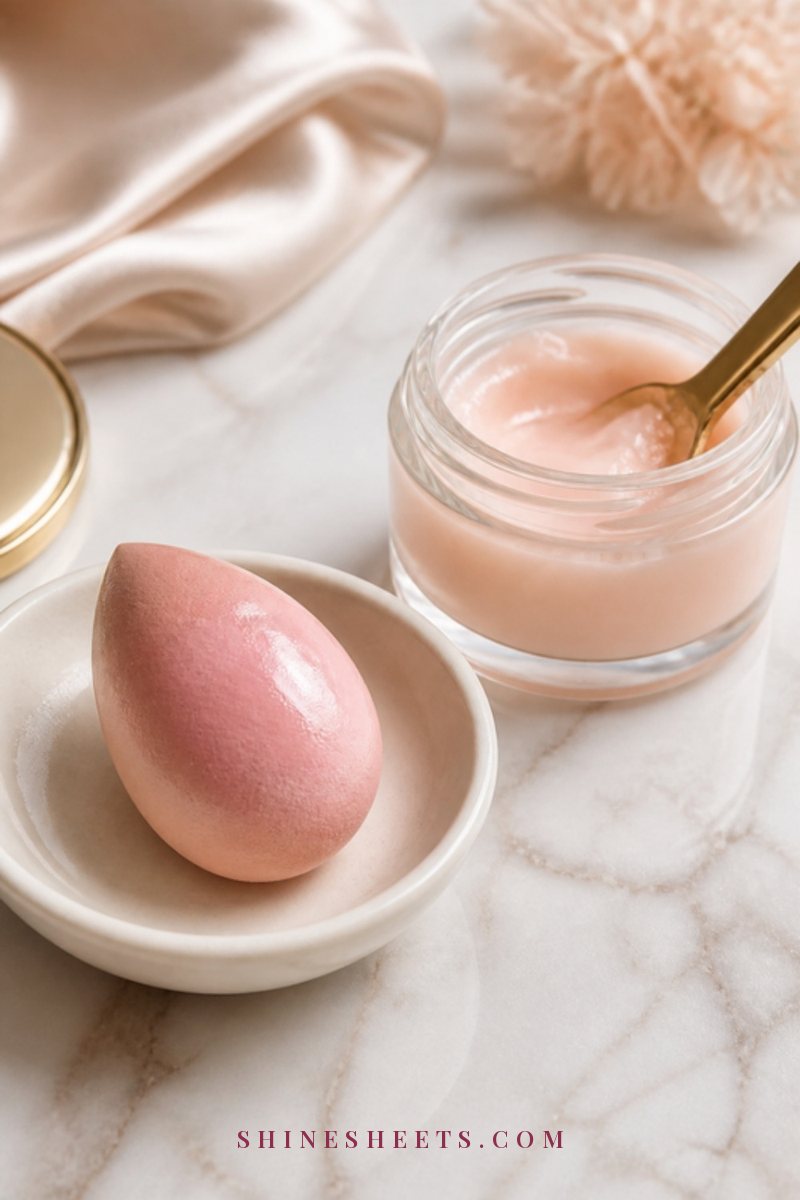
The fix: press, don't rub. Warm the product between your fingertips, then press it onto your skin with flat fingers or gentle pats, moving outward. Once a layer is on, stop touching it. For foundation over sunscreen, a damp blush makeup blending sponge pressed in a bouncing motion is much gentler on the layers underneath than a buffing brush.
6. Dead Skin Build-Up
When dead skin cells collect on the surface, your skin feels rough and products have a harder time spreading evenly. They catch on the rough patches, sit on top instead of settling in, and roll up more easily. You'll often notice this on the forehead, nose and chin.
The fix: gentle exfoliation once or twice a week. A mild lactic acid toner is a kind option for many skin types, because lactic acid is one of the gentler AHAs and also helps with hydration. A gentle lactic acid toner swept on with a soft white cotton pad in the evening, followed by moisturizer, is plenty. Don't exfoliate on the same night as retinoids or other strong actives, and always wear sunscreen the next day.
Exfoliating more often won't fix pilling faster. It can irritate your skin and cause flaking, which brings you right back to the start. My guide on how to exfoliate your face without overdoing it has the gentle, step-by-step version.
7. Sunscreen and Makeup Formulas That Don't Get Along
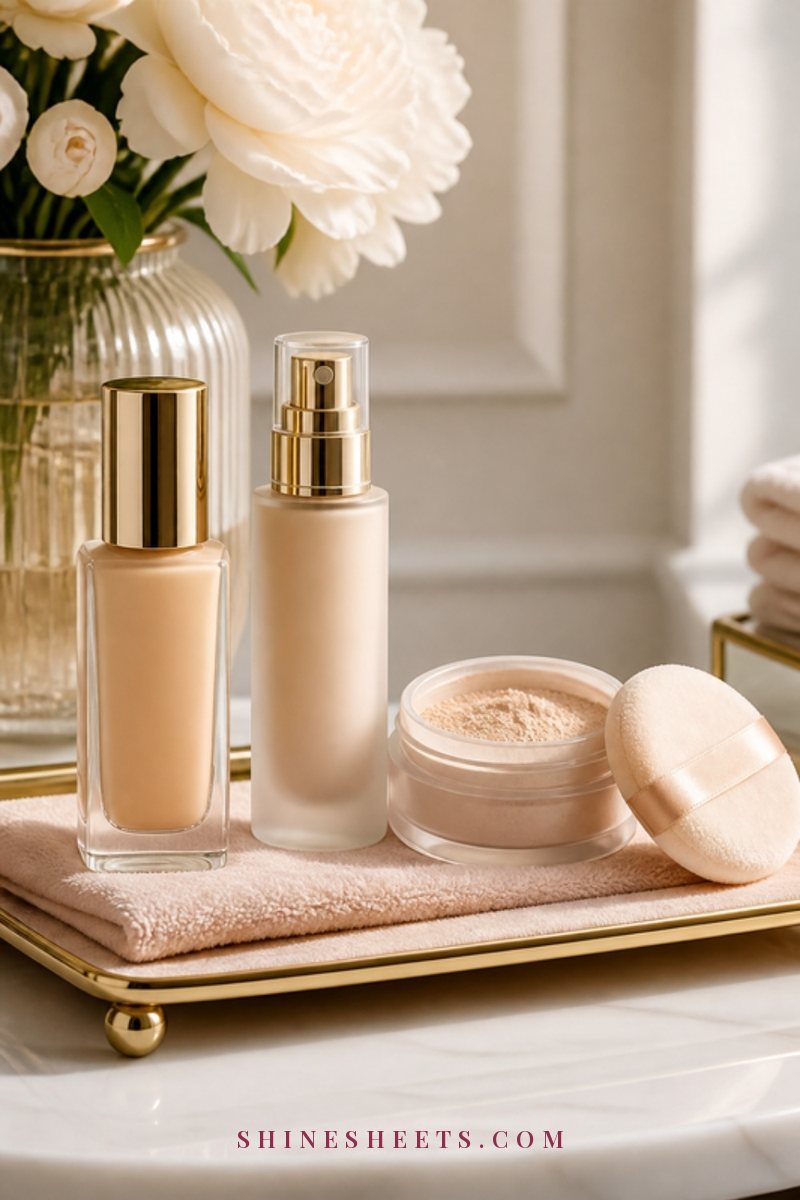
This is the sneaky one. Sometimes every product works beautifully on its own, but one particular sunscreen and one particular foundation just won't play nicely together. It often happens when one is water-based and the other is silicone- or oil-based, or when both contain strong film-formers.
The fix: test them together on a small area first (see the full method further down), and if they pill, try a different pairing. Lighter, fluid sunscreens tend to sit well under makeup. A fluid Korean sunscreen is a popular pick for this because the textures are usually thin and quick to set. Give your sunscreen 2–3 minutes to dry before foundation.
If you're also topping up sunscreen during the day, my guide on how to reapply sunscreen over makeup covers methods that won't make everything roll up by the afternoon.
Skincare Pilling Table: Cause, Look, Quick Fix and Prevention
Here's all seven causes in one place. Screenshot it and check it the next time something starts to ball up.
| Cause | How it looks | Quick fix | Prevention |
|---|---|---|---|
| Too much product | Thick crumbs all over, product feels slick for a long time | Blot gently with a tissue, press the rest in | 2–3 drops of serum, a pea-sized amount of moisturizer |
| Not waiting between layers | Pills appear right as you apply the next product | Stop, wait 2 minutes, then press instead of rubbing | Pause 1–2 minutes per layer, 2–3 before makeup |
| Stacked silicone layers | Silky but rolling patches, especially under foundation | Skip the primer or one silicone step today | Use only one or two silicone-rich layers |
| Water-based over oil-based | Product slides around, then flakes into small bits | Gently remove the top layer, reapply in the right order | Layer thin to thick, oils last |
| Rubbing instead of pressing | Rolls where you swipe most, like the jaw and nose | Press with flat fingers or a damp sponge | Warm product in fingertips, pat outward |
| Dead skin build-up | Rough patches where product catches and lifts | Apply less product over rough areas today | Gentle exfoliation once or twice a week |
| Sunscreen and makeup clash | Foundation lifts or rolls in patches over sunscreen | Press a damp sponge over the area to smooth it | Test the pair on a small area before a full face |
A Pill-Proof Routine Order
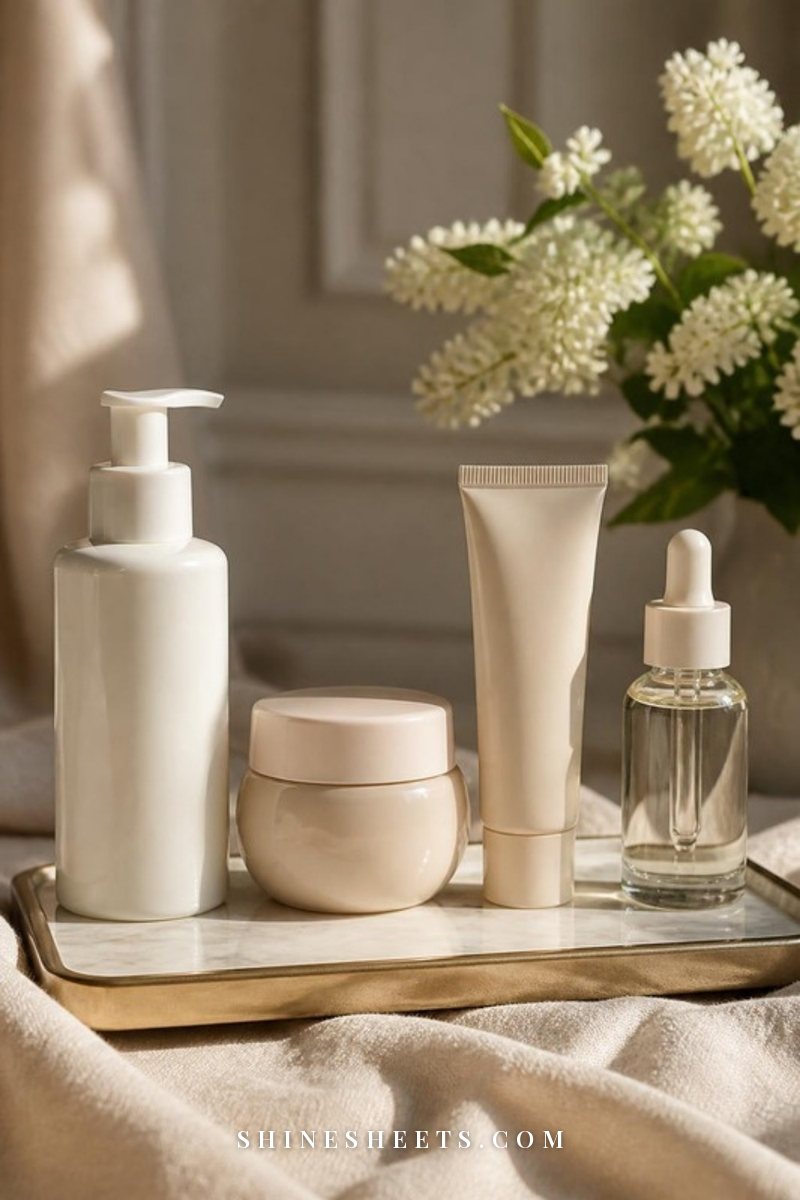
Here's a simple morning order that avoids most pilling, with the waiting times built in:
- Cleanse and pat dry. Use a soft cream facial towel and pat, don't rub, so skin stays calm and lightly damp.
- Toner or essence. Press a thin layer in with your palms. Wait about 1 minute.
- Serum. 2–3 drops, pressed in. Wait 1–2 minutes.
- Moisturizer. A pea-sized amount, warmed in your fingertips and pressed on. Wait 1–2 minutes.
- Sunscreen. The full amount on the label, applied in two thinner passes if that helps it set. Wait 2–3 minutes.
- Primer and makeup (optional). Only where you need them, pressed or bounced on with a sponge.
The whole thing takes about 10 minutes, and most of that is waiting time you can fill with other parts of your morning. If you're short on time, drop a step rather than rushing every step. Fewer, well-set layers will always behave better than six rushed ones.
At night, the same rule applies: thin to thick, with a minute between layers, and any oil goes last.
How To Rescue Makeup That's Already Pilling
It happens to everyone, often on the morning you're running late. Here's what to do when foundation starts to roll:
- Stop touching it. More rubbing makes it worse.
- Lift off the pills gently. Use a clean, dry fingertip or a cotton pad and roll them away with the lightest touch.
- Press, don't buff. Take a damp sponge and press over the area in small bouncing motions to smooth the layer back down.
- Add a tiny amount of foundation only where needed. Press it in, don't swipe.
- If it's really patchy, start over in that spot. Remove the area gently, reapply sunscreen, wait 2–3 minutes, then add makeup.
Then make a note of what you used that day. Pilling usually repeats with the same combination, which makes it easy to find the culprit.
How To Test Sunscreen With Your Foundation
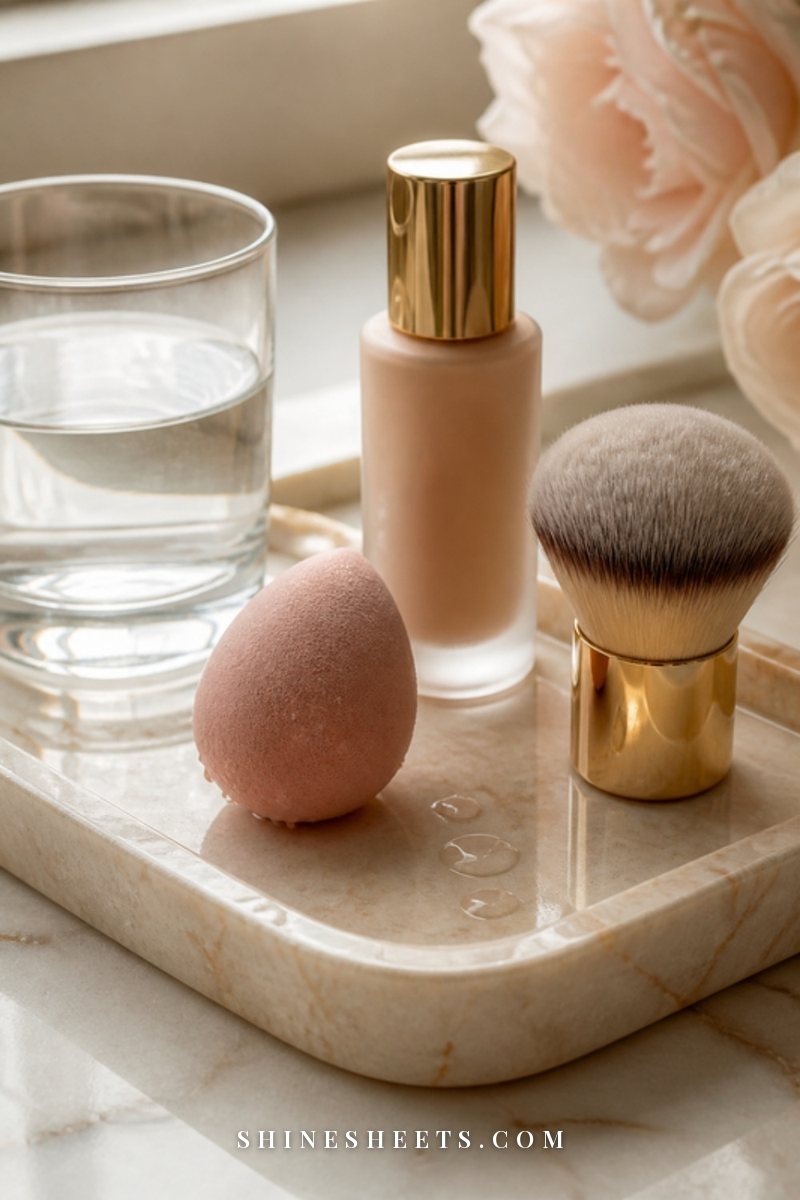
Before you trust a new sunscreen or foundation on a full face, test them together. It takes about ten minutes and saves a lot of frustration.
- Choose a small area, like the side of your jaw or the back of your hand.
- Apply your usual moisturizer in a thin layer and wait 1–2 minutes.
- Apply your sunscreen and wait 2–3 minutes until it feels set.
- Press on a little foundation with your fingertip or a damp sponge.
- Wait 5 minutes, then gently press and move the skin a little, the way your face moves when you talk.
If it stays smooth, you have a good pair. If it rolls, try waiting longer, using a thinner layer of moisturizer, or switching to a different sunscreen or foundation texture. Sometimes a pair simply doesn't work, and that's okay. It's not a flaw in either product, just a mismatch.
Patch Test and When To See a Dermatologist
Whenever you add a new product to fix pilling, patch test it first. Apply a small amount to the side of your jaw or behind your ear once a day for a few days. If you notice redness, itching, stinging or bumps, skip it. My guide on how to patch test skincare has the full, simple method.
A kind safety note: pilling is a texture issue, not a skin condition. But if what you're seeing is actually peeling, flaking that doesn't improve, stinging, burning or redness, please see a dermatologist or doctor. They can tell you whether it's dryness, irritation or a reaction and help you build a routine that suits your skin.
Final Thoughts
Skincare pilling is one of those problems that feels mysterious until you see the pattern. Thinner layers, a minute or two between steps, thin to thick, pressing instead of rubbing, and a quick test before you pair a new sunscreen with your foundation. That's most of it.
Change one thing at a time, be patient with your skin, and you'll soon have a routine that sinks in smoothly and a face of makeup that stays put all day.