A patch test is the cheapest insurance your skin will ever get. It costs a few minutes, a dab of product and a little patience, and in return it tells you whether that new serum is a friend or a week of red, itchy regret before you spread it across your whole face.
Most reactions are not dramatic. They're quiet: a bit of stinging, a patch of tiny bumps, a dry spot that wasn't there yesterday. The trouble is that once a product is on your entire face, it's hard to tell what caused what, and calm skin can take a couple of weeks to settle again. With combination, sensitive skin myself (hello, shiny T-zone and touchy cheeks), I learned that skipping this step never actually saves time.
This guide walks you through how to patch test skincare the simple way: why it matters, who should always do it, where to test, how much product to use, how long to wait, what a reaction looks like and what to do if your skin says no. You'll also find a 7-day patch test diary you can screenshot and fill in, plus a gentle plan for testing strong actives like retinol and acids.
Grab your new product and a few soft cotton swabs, and let's make this easy.
Why Patch Testing Matters
Your skin is a barrier, and every product you put on it is asking to come in. Most of the time, that's fine. But even gentle, well-loved formulas contain dozens of ingredients, and any one of them can be the one your skin doesn't like. Fragrance, essential oils, certain preservatives, botanical extracts and strong actives are the usual suspects, but there's no guarantee a "clean" or "natural" label means calm skin.
A patch test lets you meet a product on a small, low-stakes area first. If something goes wrong, it goes wrong on a coin-sized spot you can hide under a sleeve, not on your cheeks the morning of a big day. It also gives you useful information: if your skin is fine with a product on your arm but stings on your face, you know the issue is probably sensitivity or strength, not a true allergy.
Irritation vs Allergy, Simply Explained
There are two main ways skin can react, and they behave a little differently:
- Irritation is the most common. The product is simply too strong, too often or too much for your skin right now. Think stinging, burning, tightness, redness or flaking, usually where the product touched and often within minutes to a few hours. Strong acids, high-strength retinoids and harsh cleansers are classic triggers. Irritation often improves when you use less, less often.
- Allergy is your immune system reacting to a specific ingredient. It can take a day or two to appear (sometimes longer), and it tends to itch more than sting. You might see redness, small bumps, swelling or even tiny blisters, and the reaction can spread a little beyond where you applied the product. Allergies don't usually improve with "just using less", and they can get stronger with repeat exposure.
You don't need to diagnose yourself perfectly. What matters is that both types are easier to catch, and easier to recover from, when they happen on a tiny test spot.
Who Should Always Patch Test
Honestly, anyone trying a new leave-on product benefits from a patch test. But it's a must if any of these sound like you:
- You have sensitive or reactive skin. If your face flushes easily, stings with many products or gets dry patches, testing first is simply part of the routine. My calm, simple sensitive skin routine is a good base to come back to while you test new things.
- You're trying a new active. Retinol, retinal, glycolic acid, salicylic acid, lactic acid, azelaic acid, vitamin C and benzoyl peroxide are all effective and all capable of irritation.
- The product contains fragrance or essential oils. These are some of the most common causes of skin allergies, even in luxurious, lovely-smelling formulas.
- You've reacted to something before. If you know a past product upset your skin, compare ingredient lists and test anything that shares several ingredients.
- You have eczema, rosacea or very dry skin. A compromised barrier lets more in, so reactions are more likely.
- You're switching brands of something basic. A new sunscreen, cleanser or moisturizer can surprise you, especially sunscreens with chemical filters if your skin is touchy.
What You Need Before You Start
You don't need special equipment. A clean area of skin, the product itself and a way to keep track are enough. A few small things make it easier, though:
- A gentle cleanser. Clean the test area first so old products don't confuse the result. A simple fragrance-free gentle cleanser or a cotton pad with micellar water for sensitive skin works well.
- Cotton swabs. They help you apply a small, even amount without spreading it everywhere.
- Something to write with. A note on your phone or the diary table below. You'll forget which day you started, everyone does.
- Calm skin. Don't test on a day your skin is sunburned, freshly exfoliated, very dry or already irritated. You want a clean baseline.
One more tip: check the product isn't expired or long past its opened date before you begin, since old formulas can irritate more. If you're unsure, my guide on how long skincare lasts after opening has the simple rules.
Where To Patch Test
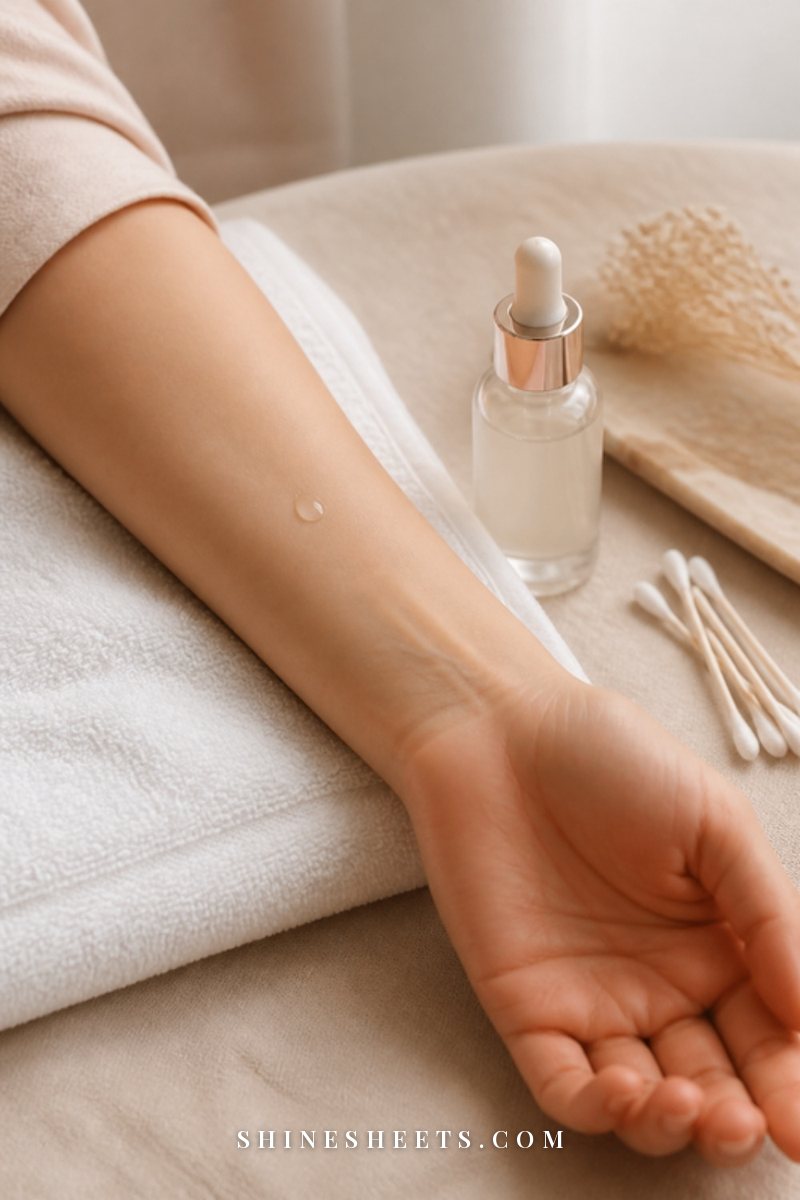
Where you test depends on what you want to learn. The skin on your arm is a little tougher than the skin on your face, so the best approach often uses two spots: one to check for allergy, one to check how your facial skin copes.
Inner Arm
The inside of your forearm, or the soft skin in the crease of your elbow, is the classic spot. It's easy to see, easy to keep clean and rarely touched by other products. It's best for catching allergies to body lotions, fragrance and new brands. The downside is that it's less sensitive than your face, so a product can pass here and still sting on your cheeks.
Behind the Ear
The skin just behind your earlobe, along the hairline, is thinner and closer to facial skin, and it's hidden. It's a lovely middle ground for face products. Keep long hair tied back so hair products don't land on the test area and confuse the result.
Along the Jawline
A small spot on the side of your jaw, just under the cheekbone, tells you the most about how your face will respond, especially to actives and anything that might clog pores. I'd use this spot second, after a product has passed the arm or behind-the-ear test, so if something does go wrong, it's small and close to the hairline.
How To Patch Test Skincare: 7 Simple Steps
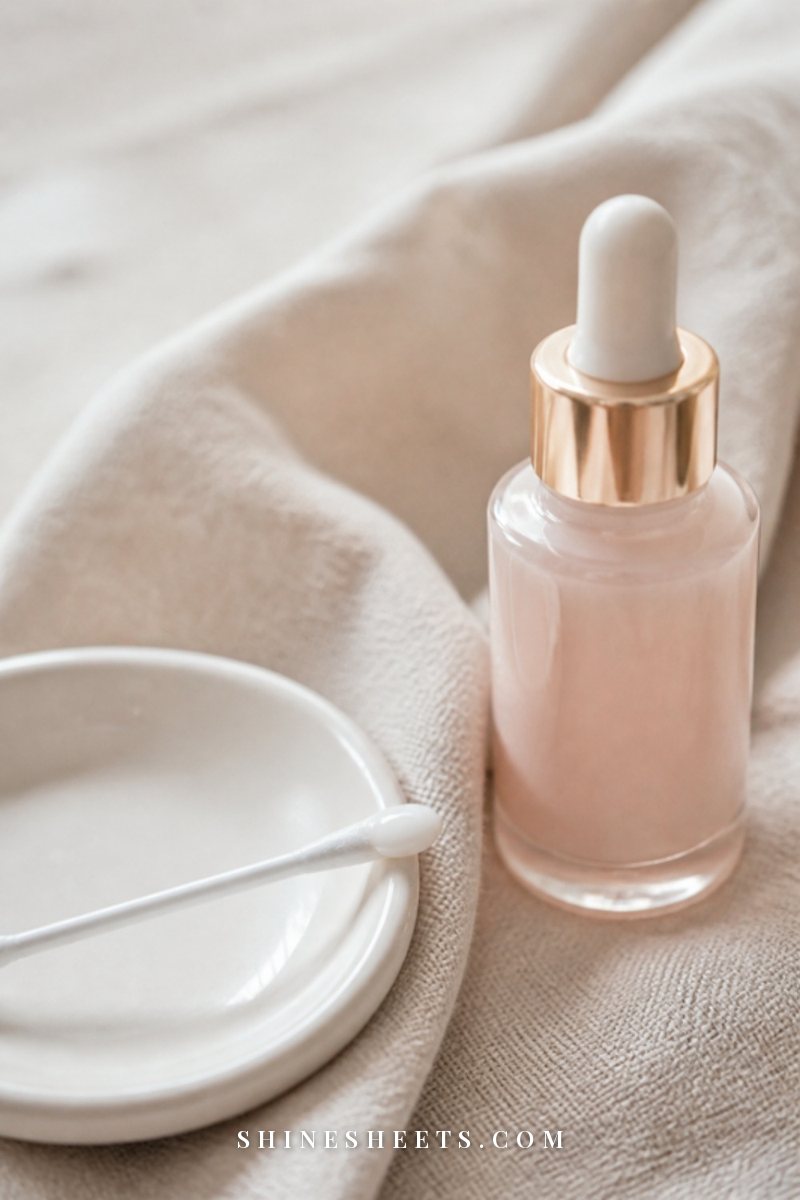
Here's the method I'd recommend for almost any new leave-on product: serums, moisturizers, oils, sunscreens, eye creams and masks.
1. Read the Label First
Skim the ingredient list and the instructions. If the brand gives its own patch test directions (some hair dyes and strong peels do), follow those. Note anything you've reacted to before.
2. Clean and Dry the Test Spot
Wash the area gently, pat it dry and wait a few minutes. Don't apply anything else to that spot during the test.
3. Apply a Small Amount
Use roughly a pea-sized amount, or a single drop for serums, spread over an area about the size of a coin. You want a normal, thin layer, the way you'd actually use it, not a thick blob.
4. Leave It On
Let the product absorb and leave it there. For leave-on products, don't wash it off. For rinse-off products like cleansers and masks, follow the normal contact time, then rinse.
5. Wait 24 to 48 Hours
Check the spot after a few hours, then again at 24 and 48 hours. Irritation often shows up quickly, while allergic reactions can take a day or two. Try not to get the area very wet or sweaty during this window.
6. Repeat for Several Days
One application doesn't always tell the full story. Some reactions only appear after a few uses, so continue with the repeat open application test below for five to seven days.
7. Write Down What You Notice
Even "nothing" is a useful note. Write the date, the spot and how your skin looks and feels. If you test more than one product, test them on different spots, or better, one at a time.
The Repeat Open Application Test (5–7 Days)
The repeat open application test sounds technical, but it's simple. "Open" just means you don't cover the spot with a bandage, you use the product the way you normally would. "Repeat" means you apply it to the same small area twice a day, morning and evening, for five to seven days.
This is the closest thing to real life you can do at home. A product you'll use every day for months deserves a week of trial on a hidden spot. It's especially useful for:
- Moisturizers, serums and sunscreens you plan to use daily
- Products with fragrance, essential oils or plant extracts
- Anything for skin that has reacted to "gentle" products before
If the spot stays calm after a full week, the chance of a surprise reaction on your face is much lower. Not zero, but lower, and that's what we're after.
Your 7-Day Patch Test Diary
Here's the diary I'd keep. Screenshot it or copy it into your notes app, and fill one row each evening. The example notes show what to look for.
| Day | Area | What you applied | What you notice |
|---|---|---|---|
| Day 1 | Inner arm | New serum, 1 drop, AM and PM | Check at 1 hour and before bed: redness, stinging, itch, or nothing |
| Day 2 | Inner arm | Same, twice | 24-hour check: any bumps, dryness or warmth when you touch it |
| Day 3 | Inner arm or behind the ear | Same, twice | 48-hour check: the key day for delayed allergic reactions |
| Day 4 | Behind the ear | Same, twice | Compare to the arm: thinner skin may show mild stinging first |
| Day 5 | Jawline | Small amount, once | Note texture: any tiny bumps, tightness or flaking |
| Day 6 | Jawline | Same, once or twice | Does it feel comfortable under your usual moisturizer and makeup |
| Day 7 | All test spots | Same | Final verdict: calm, mild and settling, or reacted (stop) |
If you only have time for the classic 48-hour test, use the first three rows. If the product is a strong active, stretch the jawline part over a longer, slower start (more on that below).
What a Reaction Looks Like
Not every sensation means trouble. A tingle that fades within a minute or two, especially with acids or vitamin C, is common and usually fine. Here's what deserves attention:
- Redness that lasts more than an hour or gets stronger over time
- Itching, especially if it builds over a day or two
- Burning or stinging that doesn't fade quickly
- Small bumps, a rash or a rough, sandpapery patch
- Swelling or puffiness at the test spot
- Dryness and flaking that appears suddenly on that spot only
- Blisters or oozing (stop right away and get medical advice)
One thing a patch test can't fully show you is purging, which can happen with retinoids and exfoliating acids on the face. Purging looks like small breakouts in your usual breakout areas that clear faster than normal. If you're not sure which one you're seeing, my guide to purging vs breakout explains the difference simply.
What To Do If Your Skin Reacts
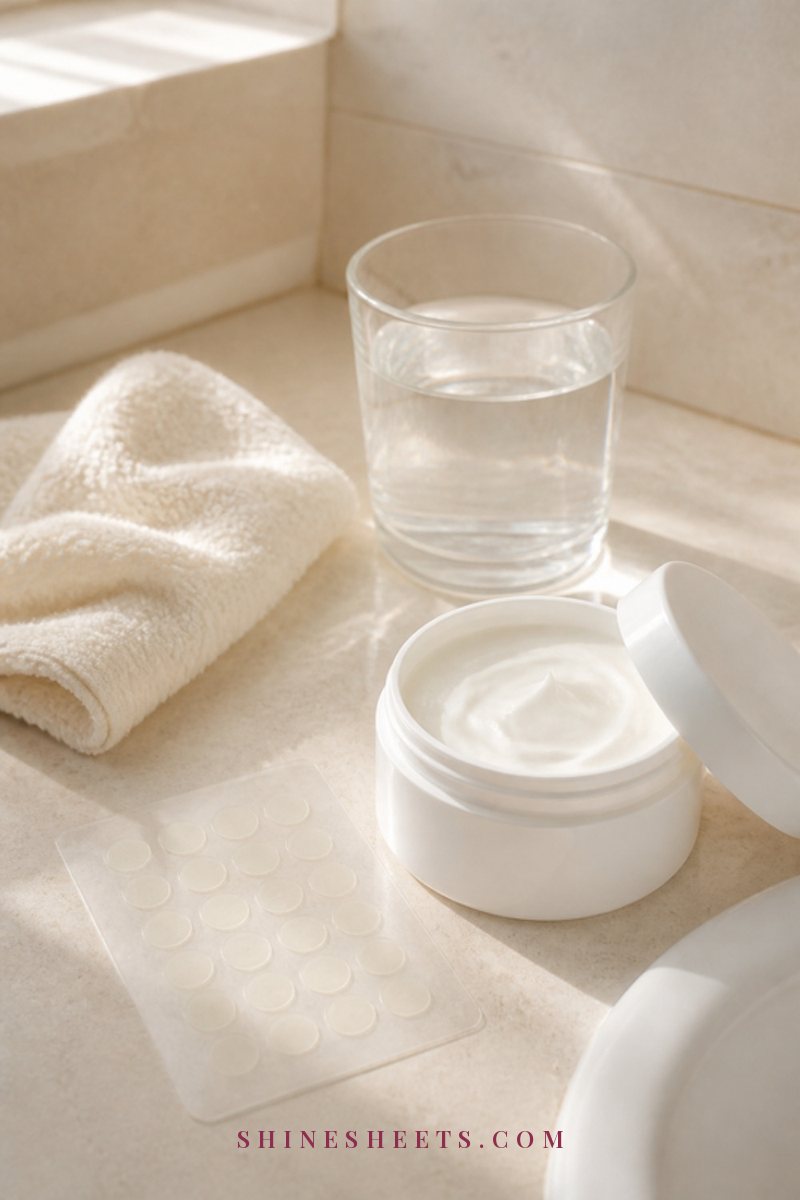
First, don't panic. A reaction on a small test spot is the patch test doing its job. Here's how to handle it calmly:
- Stop using the product. Don't try "one more time to be sure."
- Rinse the area gently with lukewarm water and pat it dry. No scrubbing.
- Keep it simple. Apply a plain, fragrance-free gentle moisturizer or a soothing ceramide cream to support the barrier, and skip actives on that area until it's fully calm.
- Don't pick or scratch. If a little bump or a scratched spot tempts you, a clear hydrocolloid patch is a handy physical barrier that keeps fingers away.
- Use a cool compress for a few minutes if it feels warm or itchy.
- Write down the ingredient list. Save a photo of the product label so you can compare it with future products and spot repeat offenders.
Most mild irritation settles in a few days. If it's spreading, swelling, blistering, very painful or near your eyes, or if you have any trouble breathing or swelling of the lips or face, get medical help right away.
How To Patch Test Actives Like Retinol and Acids
Strong actives need a slightly different approach, because the question isn't only "am I allergic?" but also "how much can my skin handle?" Many people pass an arm test with retinol and then get dry, flaky cheeks after a week of nightly use. That's not an allergy. It's simply too much, too fast.
Here's a gentler way to test them:
- Start with the standard test on your arm or behind your ear for two to three days to rule out a true reaction.
- Move to the jawline two or three evenings a week, not every night.
- Use a pea-sized amount for your whole face once you're ready, and buffer it with moisturizer if your skin is dry or sensitive.
- Increase slowly. Add one extra night a week only if your skin stays comfortable.
- Don't stack new actives. Test retinol and a new exfoliating acid weeks apart, never at the same time. My guide to skincare ingredients you shouldn't mix has the pairings that tend to irritate.
If retinol is your next step, the gentle retinol start plan for beginners breaks the first few months into easy, calm stages. And whatever active you test, daily sunscreen is part of the deal, since many of them make skin more sensitive to the sun.
Introducing One Product at a Time

This is the part most people skip, and it's the reason so many of us end up with irritated skin and no idea why. If you start a new cleanser, serum and moisturizer in the same week and your skin reacts, you have three suspects and no answers.
A calm rhythm looks like this:
- One new product every two weeks (or longer for actives). That gives your skin time to show you how it really feels.
- Keep the rest of your routine boring. Your usual cleanser, moisturizer and sunscreen stay the same while you test.
- Start with the product that matters most. If you want a new sunscreen and a new serum, start with the sunscreen, since it's the one you'll use every single day.
- Introduce new products when your skin is calm. Not during a breakout, a sunburn, a very dry week or right before an event.
It feels slow, I know. But slow is how you build a routine you actually trust, one product at a time, instead of a shelf of half-used bottles you're scared to touch.
When To See a Dermatologist
A patch test at home is a helpful screening step, but it's not a medical allergy test. A dermatologist can do professional patch testing, where small amounts of common allergens are placed on your back under special patches and read over several days. It can be really useful to know exactly what you react to.
Consider booking an appointment if:
- You react to many products, even ones labeled gentle or for sensitive skin
- You keep getting rashes, itching or eczema-like patches on your face, eyelids or neck
- A reaction is severe, spreading, blistering or lasting more than a week or two
- You have a skin condition like rosacea, eczema or psoriasis and want guidance on actives
- You're pregnant, breastfeeding or taking medication and unsure what's safe for your skin
Please don't feel silly asking. Dermatologists see reactive skin all the time, and getting answers can make shopping for skincare so much calmer.
Final Thoughts
Patch testing isn't about being afraid of skincare. It's about meeting each new product with a little curiosity and care before you invite it into your daily routine. A coin-sized spot, a few days of patience and a simple diary can save you weeks of irritated, unhappy skin.
Your skin is allowed to have preferences. Listening to them, one product at a time, is one of the kindest habits you can build.