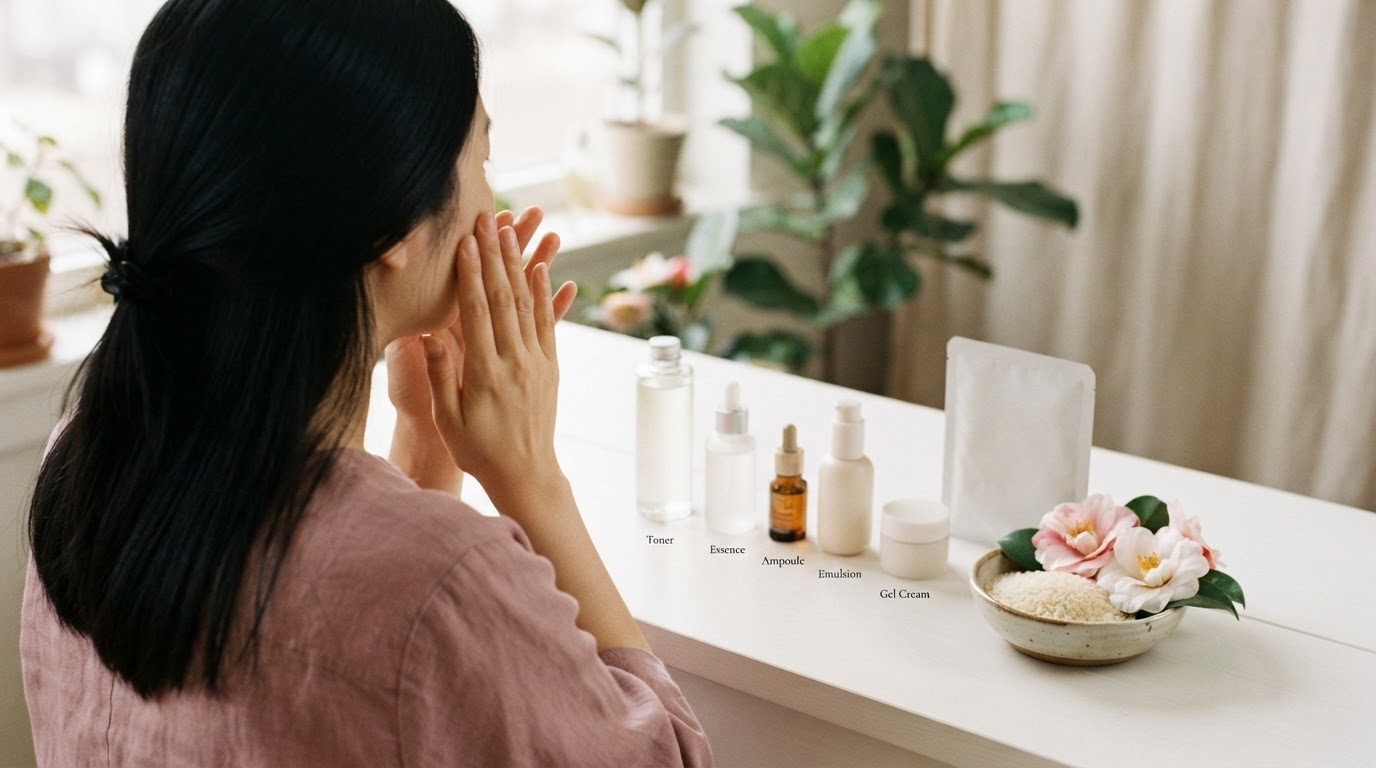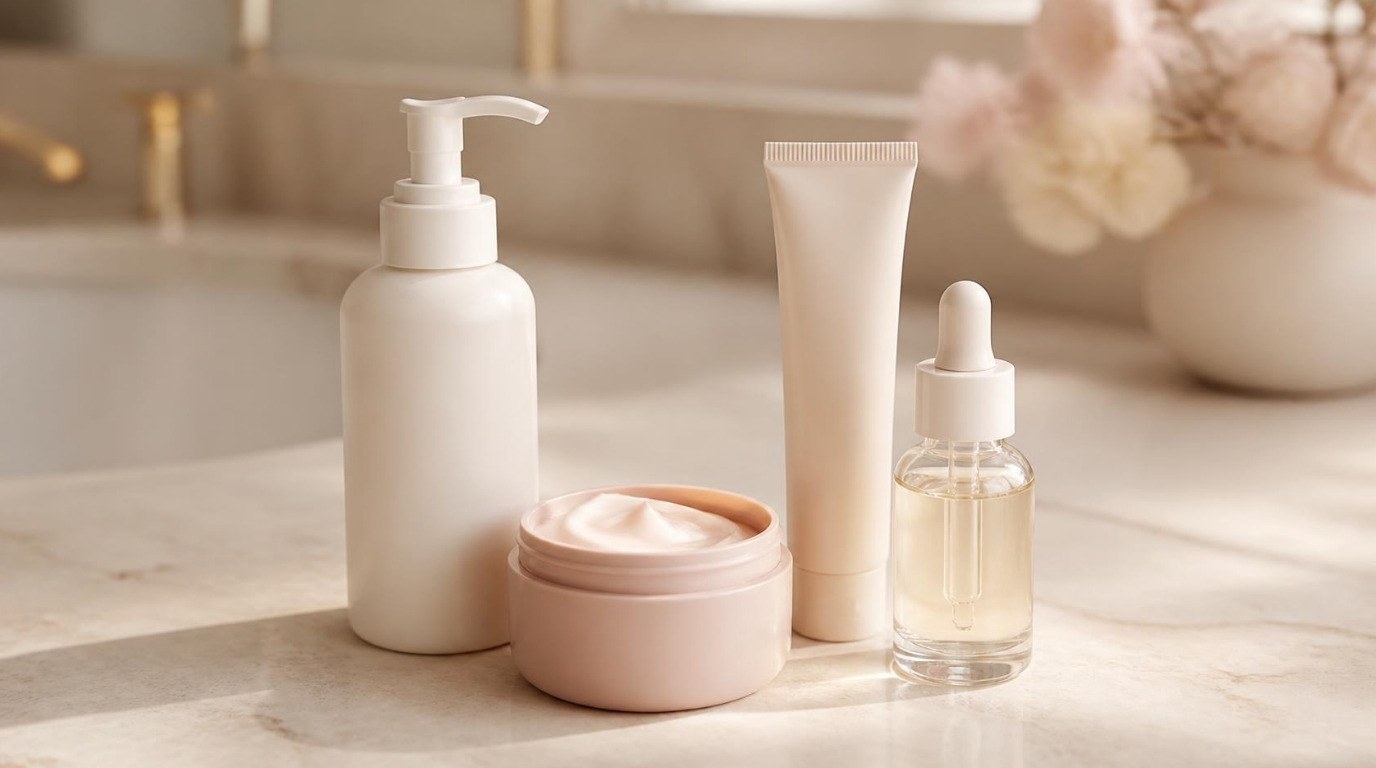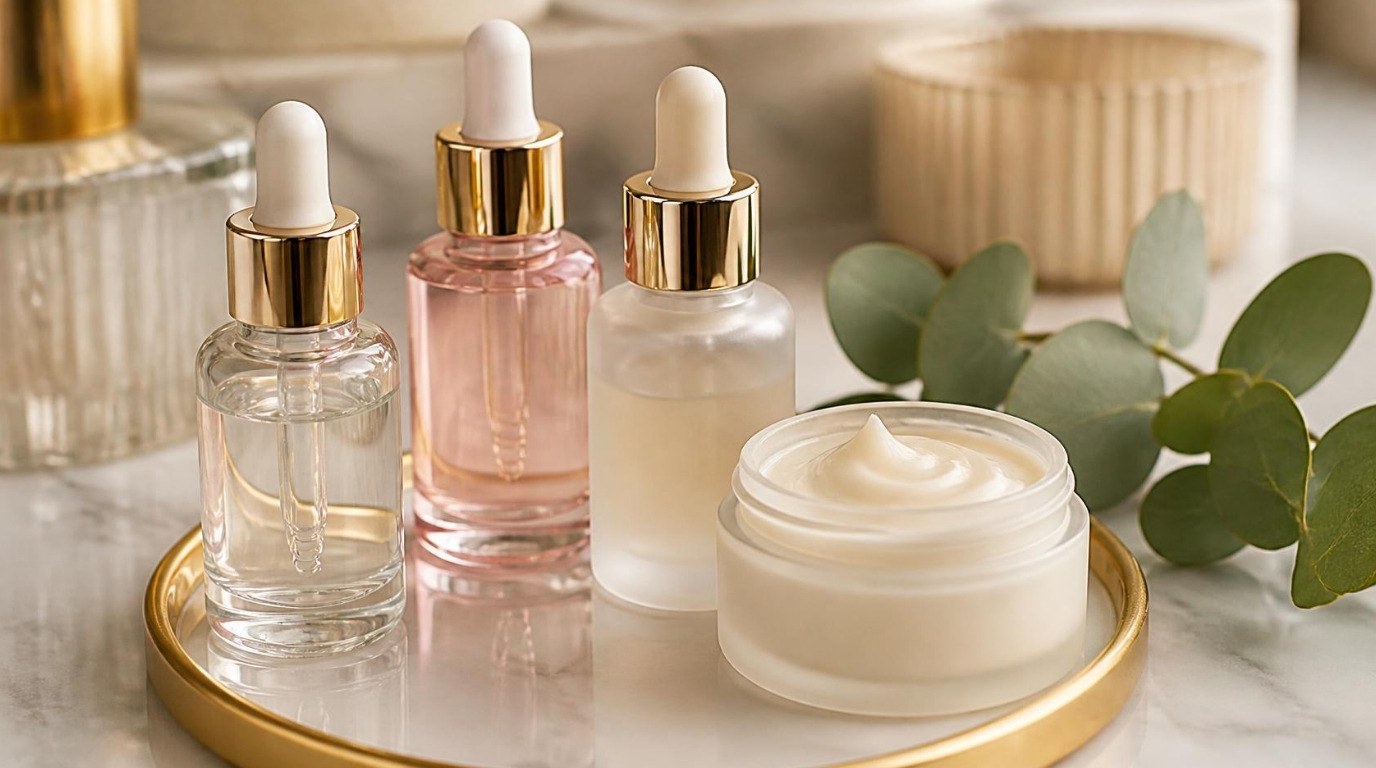
Toner, essence and serum aren't three versions of the same thing with different price tags. They're three different jobs: a toner preps and balances, an essence adds a light layer of water-based hydration, and a serum delivers one concentrated active to a specific concern. Once you know which job each one does, the shelf stops looking like a puzzle and starts looking like a menu you can order from (or skip entirely).
The truth most beauty aisles won't tell you: you don't need all three. Plenty of lovely skin runs on cleanser, one serum, moisturizer and sunscreen. Some skin types really do love the extra layers, though, especially when it's dry, dehydrated or a little stressed.
This guide breaks down toner vs essence vs serum in plain language: what each one does today, the textures and the right order, who needs which, how to apply them without wasting product, the common mistakes that cause irritation, and a budget routine next to a full routine. There's also a side-by-side comparison table you can screenshot for your next shopping trip.
What a Toner Actually Does Now
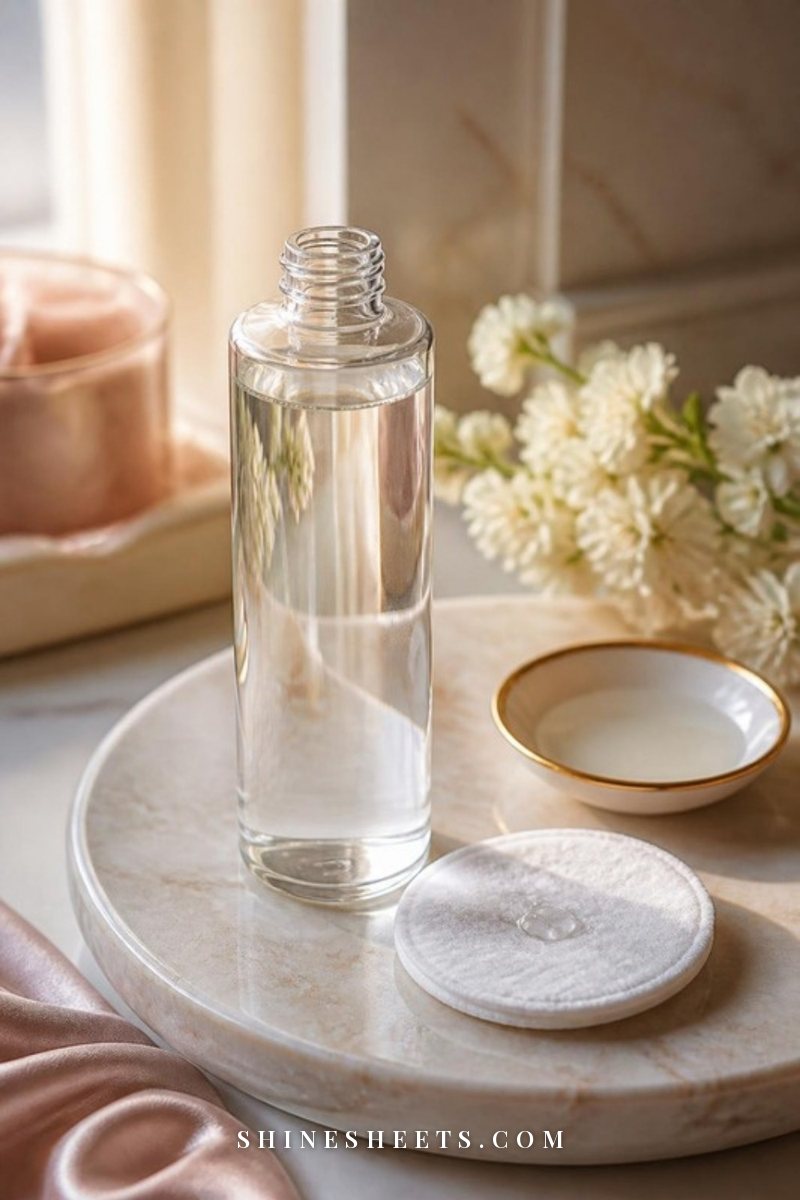
If the word toner makes you think of a stinging, alcohol-heavy liquid that left your face squeaky and tight, you're not alone. That was the old idea: strip away every last trace of oil and call it clean. Modern toners are a completely different category, and most of them fall into two groups.
Hydrating Toners
A hydrating toner is a water-thin liquid packed with humectants like glycerin, hyaluronic acid, panthenol or beta-glucan. It gives freshly cleansed skin a drink of water so everything you put on afterward spreads more easily and sinks in more evenly. Think of it as dampening a sponge before you use it.
Look for short ingredient lists, no denatured alcohol near the top and no strong fragrance. A good place to start is a fragrance-free hydrating toner with hyaluronic acid, the kind of Korean best-seller that feels like plain water but leaves skin soft rather than tight.
Exfoliating Toners
An exfoliating toner contains an acid: glycolic or lactic acid (AHAs) for smoother texture and brightness, or salicylic acid (a BHA) for clogged pores. It's not a prep step at all. It's a treatment that happens to come in toner form, and it should be used like one, which means a few evenings a week rather than twice a day.
If you want to try one, I'd choose a gentle glycolic acid toner at a low percentage, used two or three nights a week. If you're not sure whether your skin wants an AHA or a BHA, my guide to AHA vs BHA and which exfoliant suits your skin type walks through it.
The Old Astringent Kind (and Why You Can Let It Go)
Witch hazel and high-alcohol toners still exist, and some people with very oily skin like the instant matte feeling. The trouble is that the tight, squeaky finish usually means the skin barrier is being stripped, and stripped skin often responds by making more oil. If your toner stings on application, that's your skin talking, not the product working.
What an Essence Is
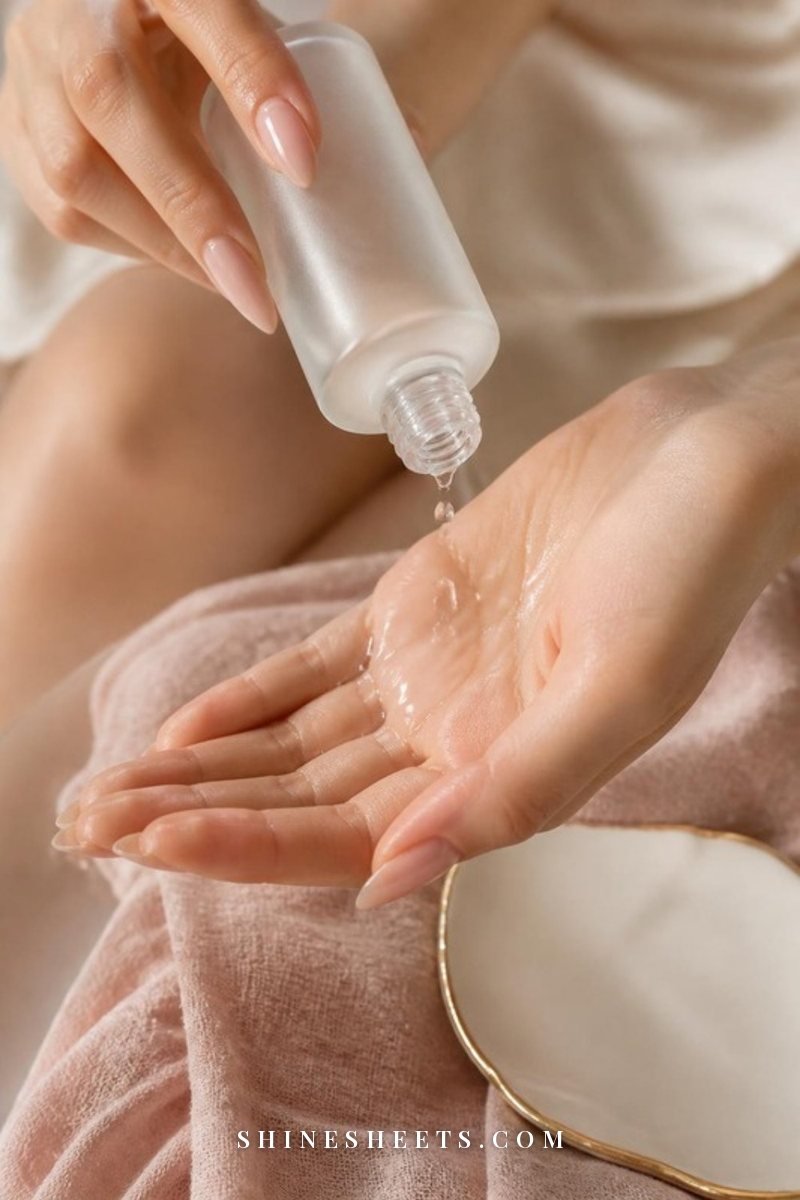
An essence sits between a toner and a serum. It's slightly more viscous than toner (sometimes watery, sometimes a little slippery), and its whole purpose is lightweight hydration plus a gentle supporting ingredient. Essences come from Korean and Japanese routines, where layering thin, watery products is the secret behind that bouncy, well-hydrated look.
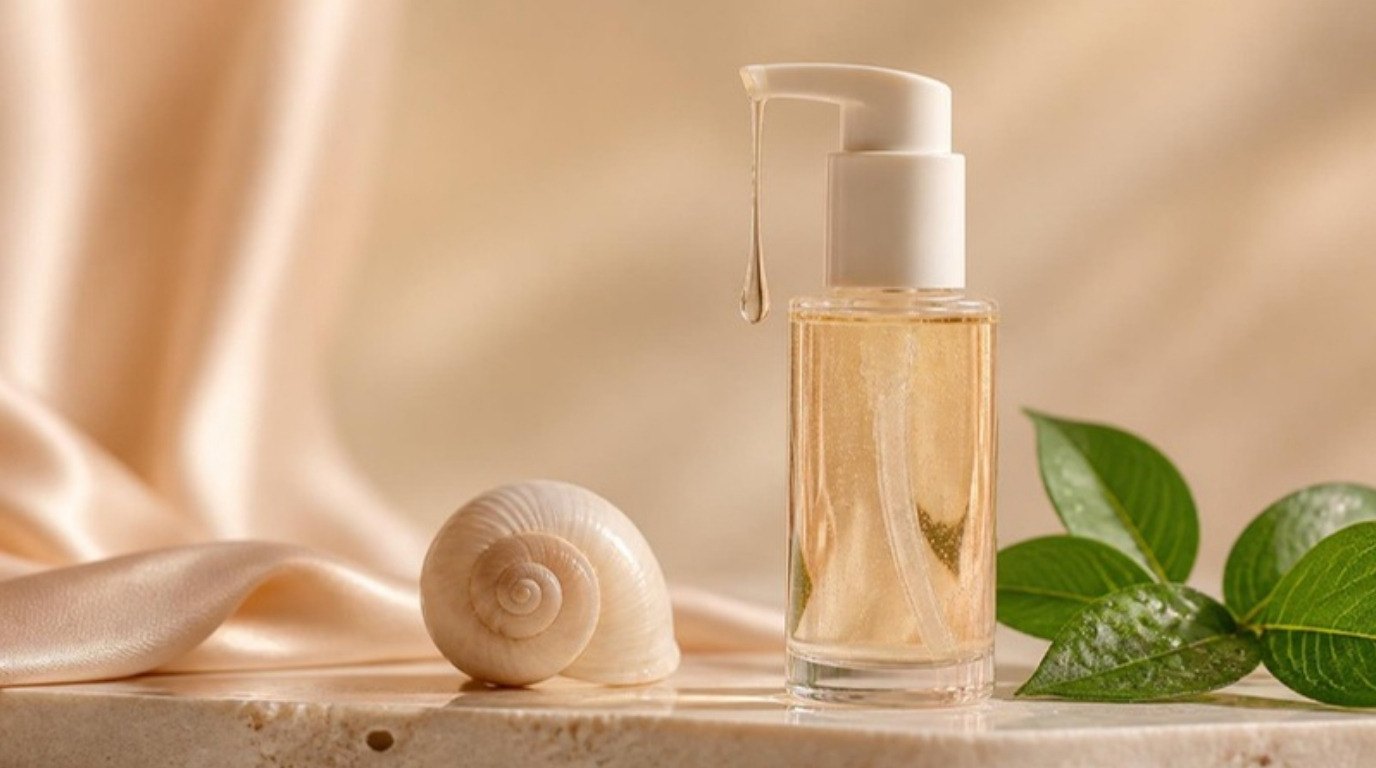
Common essence ingredients include fermented extracts (galactomyces, rice ferment, bifida), snail mucin, centella, niacinamide in small amounts and more humectants. They don't usually target one big concern. They make skin feel plumper and more comfortable, and they help the next steps perform better.
A classic choice is a Korean snail mucin essence, which has a slightly stretchy, gel-like texture and suits most skin types, including mine (combination and sensitive, with a shiny T-zone that never got the memo about winter). Fermented essences are the other big category and tend to feel more watery.
Here's my honest admission: for years I thought essence was a marketing invention. It isn't, but it is optional. If your skin already feels comfortable after moisturizer, an essence is a nice extra, not a missing piece.
What a Serum Is
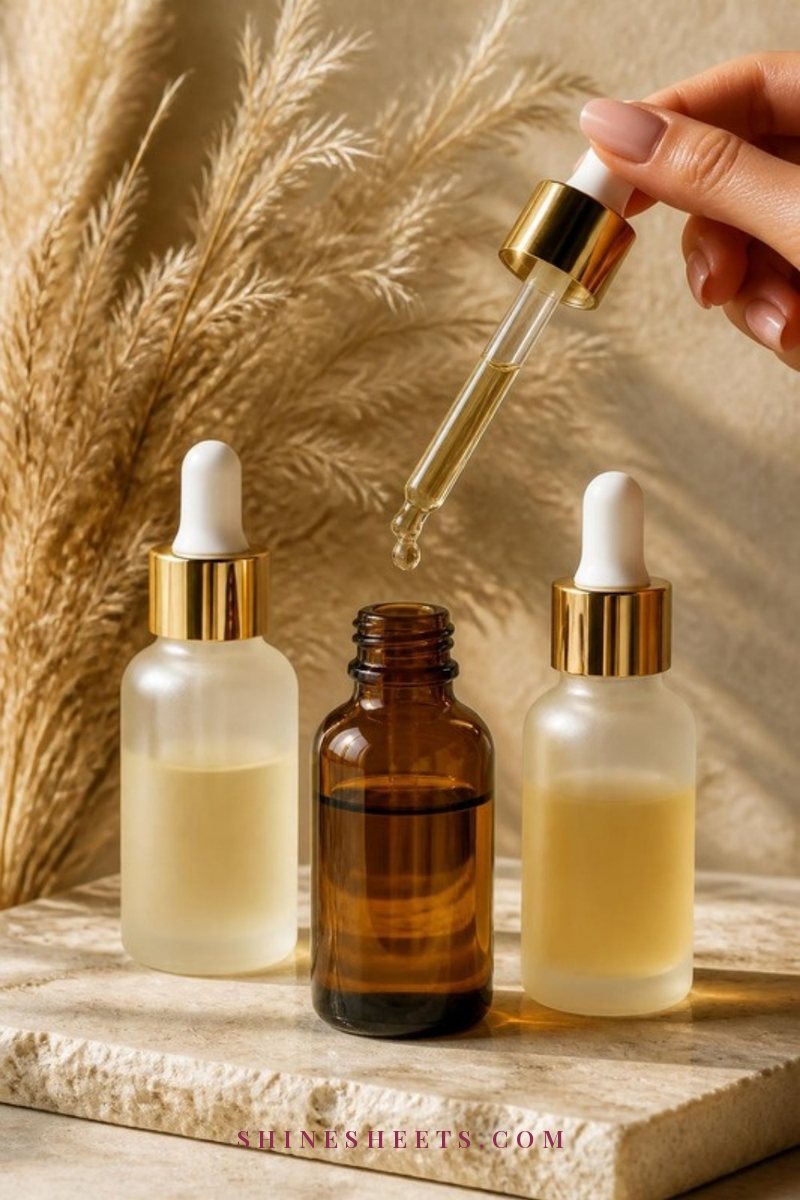
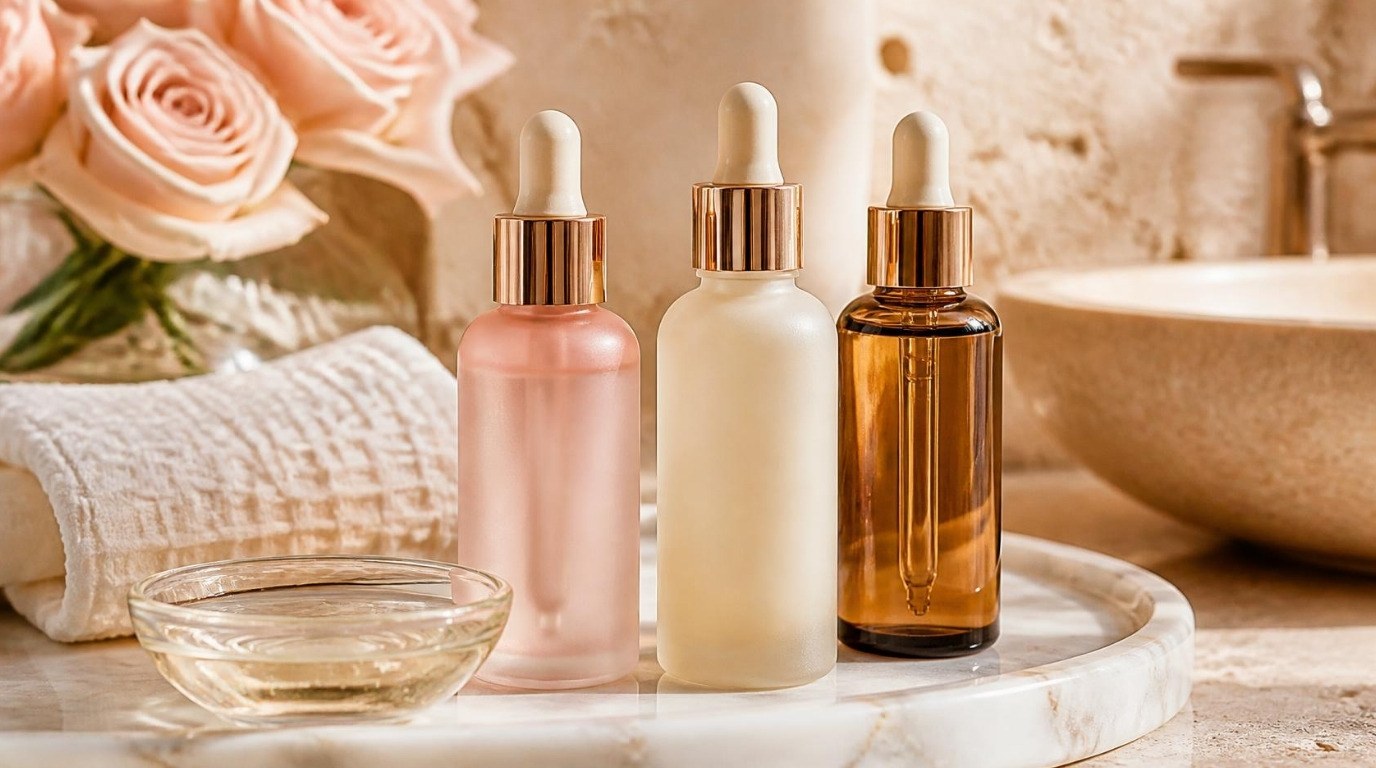
A serum is the most concentrated step in a routine. It's built around one or two active ingredients aimed at a specific goal: dark spots, dullness, enlarged-looking pores, fine lines, dehydration or redness. Textures range from watery to silky gel to light oil, and you only need a few drops.
The serums worth knowing by name:
- Niacinamide for oil balance, the look of pores, uneven tone and barrier support. It's one of the easiest actives to tolerate. A pick for beginners is a lightweight niacinamide serum at 5% or lower if you're sensitive. My full guide to niacinamide for calm, balanced skin covers the details.
- Vitamin C for brightness and dark spots, best in the morning under sunscreen. Look for a vitamin C serum in dark or opaque packaging, since vitamin C breaks down with light and air. Here's how to use vitamin C serum and who it really suits.
- Hyaluronic acid for pure hydration, applied on damp skin so it has water to hold onto. My hyaluronic acid guide and the damp skin rule explains why that matters.
- Retinoids for texture, fine lines and breakouts, used at night only and introduced slowly.
- Peptides and azelaic acid for firmness and redness, respectively, both gentle choices for reactive skin.
One serum chosen well will do more than four serums layered randomly. Pick the concern that bothers you most, choose the serum for that, and give it six to eight weeks before you judge it.
Toner vs Essence vs Serum: The Comparison Table
Here's the whole difference on one screen. If you only read one part of this guide, make it this one.
| Toner | Essence | Serum | |
|---|---|---|---|
| Main purpose | Preps and rebalances skin after cleansing; exfoliating types smooth texture | Adds a light layer of water-based hydration and gentle support | Delivers a concentrated active for one specific concern |
| Texture | Water-thin | Watery to slightly slippery or gel-like | Silky gel, light fluid or light oil |
| Key ingredients | Glycerin, hyaluronic acid, panthenol; or glycolic, lactic, salicylic acid | Ferments, snail mucin, centella, rice extract, humectants | Niacinamide, vitamin C, retinoids, peptides, hyaluronic acid, azelaic acid |
| How much | A few splashes into palms or onto a pad | A coin-sized pour into palms | 2–4 drops for the whole face |
| Who needs it | Dry, dehydrated or tight-feeling skin; anyone whose water is hard | Dry, dull or dehydrated skin; anyone who loves layered hydration | Anyone with a specific concern they want to treat |
| When to skip | Skin feels fine after cleansing; routine already feels too long | Moisturizer alone keeps you comfortable; very oily skin that feels heavy with layers | Skin is irritated or barrier is damaged; you're already using a strong treatment |
| Order | First, right after cleansing | Second, after toner | Third, before moisturizer |
A simple way to remember it: toner preps, essence hydrates, serum treats. If you need to cut one, cut the essence first, then the toner. The serum is the only one that targets a goal.
The Right Order: Thinnest to Thickest
The rule that sorts out almost every layering question is thinnest to thickest. Watery products go on first so they can spread over bare skin, and heavier creams go on last to seal everything in. If a thick product goes first, the thin ones just sit on top of it.
Your morning order looks like this:
- Cleanser (or just a splash of water if your skin is dry).
- Toner, if you use one.
- Essence, if you use one.
- Serum, such as vitamin C or niacinamide.
- Moisturizer.
- Sunscreen, always the last step in the morning.
Your evening order:
- Cleanser (double cleanse if you wore sunscreen or makeup).
- Toner, hydrating most nights, exfoliating on two or three chosen nights.
- Essence.
- Serum or retinoid.
- Moisturizer, plus a facial oil on top if your skin is dry.
Wait about 30 to 60 seconds between steps, just until each layer stops feeling wet. You don't need to wait ten minutes. For more on stacking products in the right sequence, see my guide on how to layer skincare products in five easy steps.
Who Needs Which
This is the part that saves money. Your skin type decides how many of these steps earn their place.
Beginners
Skip toner and essence for now. Start with a gentle cleanser, moisturizer and sunscreen, and add one serum after two or three weeks once you know your skin is happy. Building slowly means you'll know exactly what's helping and what isn't. My skincare routine for beginners lays out those four core steps.
Dry or Dehydrated Skin
You're the type that may love all three. A hydrating toner followed by an essence gives skin two thin layers of water before a hyaluronic acid or peptide serum, and a rich moisturizer seals it all in. Dry skin often looks noticeably smoother with this kind of layering, especially in cold months.
Oily Skin
A light hydrating toner and one serum is usually the sweet spot. Oily skin can still be dehydrated, and a thin toner adds water without weight. Niacinamide is a natural serum match. If you'd like an essence, choose a watery fermented one rather than a thick, sticky formula, and use a gel moisturizer.
Combination Skin
Here's where I live. A hydrating toner everywhere, a serum everywhere, and then a little extra essence or moisturizer only on the drier cheeks works well. You can use an exfoliating toner on the T-zone only, which keeps the cheeks calm.
Sensitive Skin
Fewer steps, softer formulas. A fragrance-free hydrating toner can be soothing, but exfoliating toners should be introduced very slowly, once a week to start. Patch test every new product on your jaw or behind the ear for a few days first. If your skin stings, burns or gets red with almost everything, it's worth seeing a dermatologist rather than adding more layers.
How To Apply Each One
Application sounds like a tiny detail, but it decides how much product you waste and how much actually ends up on your skin.
Toner: Hands or Cotton Pad
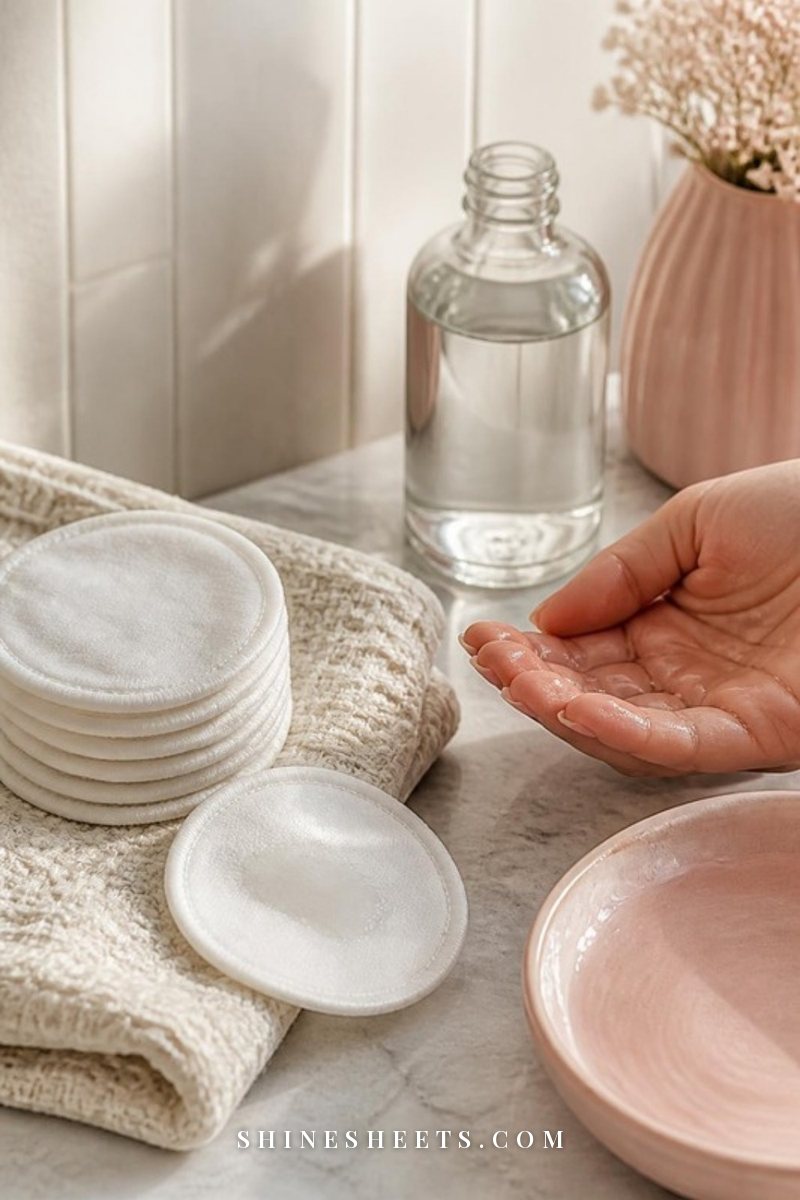
Hands work best for hydrating toners. Pour a few splashes into your palm, rub your palms together lightly and press them over your face. Nothing gets absorbed into a pad, so you use less product.
A cotton pad works best for exfoliating toners, because it spreads the acid evenly and gives a light mechanical swipe. Soak the pad, sweep it outward from the center of your face once, and avoid the eye area and the corners of your nose. Soft white reusable cotton rounds are a gentle option you can toss in a mesh laundry bag and wash.
A quick trick for very dry skin: the 7-skin method from Korean routines, where you press in a hydrating toner in several thin layers instead of one thick one. Three layers are plenty. Pause for a few seconds between layers so each one can settle before the next.
Essence: Press and Pat
Pour a coin-sized amount into your palm, warm it slightly between your hands, then press your palms onto your cheeks, forehead and chin. Hold for a second or two. Finish with light patting until it feels absorbed. No rubbing, no cotton, no rush.
Serum: A Few Drops, Not a Puddle
Two to four drops is enough for the whole face. Dot them on your forehead, cheeks and chin, then smooth outward with your fingertips. Include your neck if the serum is gentle. More drops don't mean faster results, they only mean more chance of irritation and a bottle that runs out twice as fast.
6 Common Mistakes To Avoid
- Layering too many actives at once. Vitamin C, an acid toner, a retinoid and a niacinamide serum in one evening is a fast route to redness. Keep to one strong active per routine and let the others rotate.
- Using an exfoliating toner daily alongside retinol. Both increase cell turnover. Together, every night, they can leave skin raw and flaky. Use them on different nights, for example acid toner on Monday and Thursday, retinol on Tuesday and Saturday, and rest nights in between.
- Treating an exfoliating toner like a hydrating one. Same bottle shape, completely different job. Read the ingredient list before you use it twice a day.
- Skipping moisturizer because you used three watery layers. Thin layers hydrate, but a moisturizer keeps that water from evaporating. Without it, skin can feel tight again within an hour.
- Judging a serum after a week. Hydration shows up fast. Brightening, texture and pore changes need six to eight weeks of steady use.
- Forgetting sunscreen with acids and retinoids. Exfoliated skin is more sensitive to the sun. Daily SPF in the morning is not optional when you use these at night.
A small safety note: if you're pregnant, breastfeeding or using prescription skincare, check with your doctor or dermatologist before adding retinoids or strong acids. And any product that causes burning, swelling or hives should be rinsed off and stopped.
Budget Routine vs Full Routine
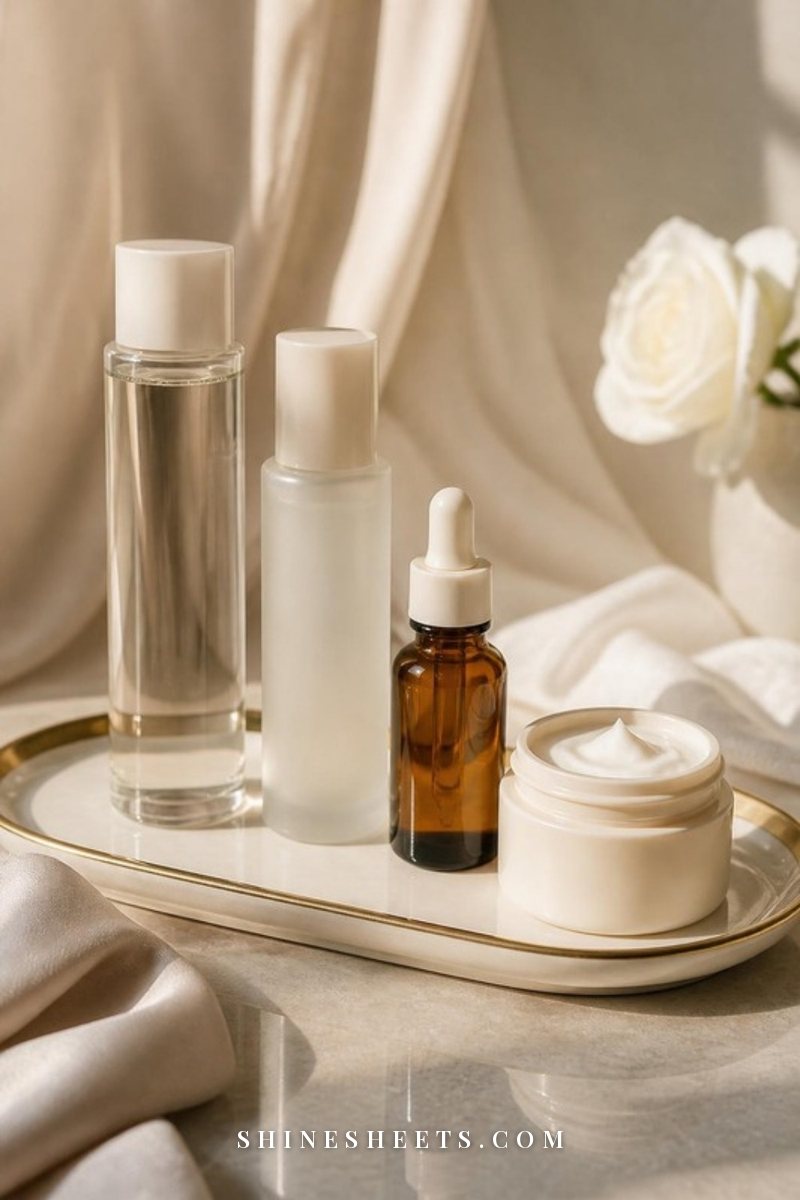
You can have healthy, comfortable skin on either of these. The full routine is a pleasure, not a requirement.
The 3-Step Budget Routine
- Morning: gentle cleanser or water, one serum (niacinamide or vitamin C), moisturizer, sunscreen.
- Evening: cleanser, the same serum or a hyaluronic acid serum, moisturizer.
- Swap if needed: if your skin feels tight after cleansing, add a hydrating toner before the serum. That's the only upgrade most people need.
This takes about three minutes and covers what skin really needs: clean, treated, moisturized, protected.
The Full Routine
- Morning: cleanser, hydrating toner, essence, vitamin C serum, light moisturizer, sunscreen.
- Evening (most nights): double cleanse, hydrating toner, essence, niacinamide or retinoid, moisturizer.
- Evening (two or three nights a week): double cleanse, exfoliating toner on a cotton pad, essence, hyaluronic acid serum, richer moisturizer. No retinoid on these nights.
The full version takes seven to ten minutes, and it's lovely as a wind-down ritual. I like to do mine right before my evening tea, with a glass candle lit on the bathroom shelf, because it turns a chore into a small daily pause.
If you're somewhere in between, build from the budget routine and add one step at a time, about two weeks apart. When something makes a visible difference, keep it. When it doesn't, let it go without guilt.
If You Only Buy One: A Quick Decision Guide
Standing in front of the shelf with a budget for just one bottle? Match your main complaint to the step that answers it:
- Skin feels tight right after washing: a hydrating toner. It's the cheapest fix for that stretched, uncomfortable feeling, and it makes your moisturizer work better.
- Skin looks dull and flat even when it isn't dry: a vitamin C serum in the morning, or a gentle acid toner two nights a week. Pick one, not both, for the first month.
- Oily T-zone, pores you notice in daylight: a niacinamide serum. It's forgiving, it plays well with almost everything and it suits combination skin beautifully.
- Skin feels thirsty all day, even with moisturizer: a hyaluronic acid serum on damp skin, followed by an essence once your budget allows.
- Rough texture and small bumps: an exfoliating toner with glycolic or lactic acid, introduced once a week and slowly built up to three.
Whatever you choose, give it a fair trial on its own before you add anything else. It's the only way to know what's really making the difference, and it saves you from buying products to fix problems another product caused.
Final Thoughts
Toner preps, essence hydrates, serum treats. Once that clicks, you can stop buying every new bottle and start choosing only the steps your skin actually asks for.
Start small, add slowly, keep your sunscreen close, and remember that a short routine you love will always do more for your skin than a long one you skip. Your skin is allowed to be simple, and you're allowed to enjoy the extra layers when you want them.