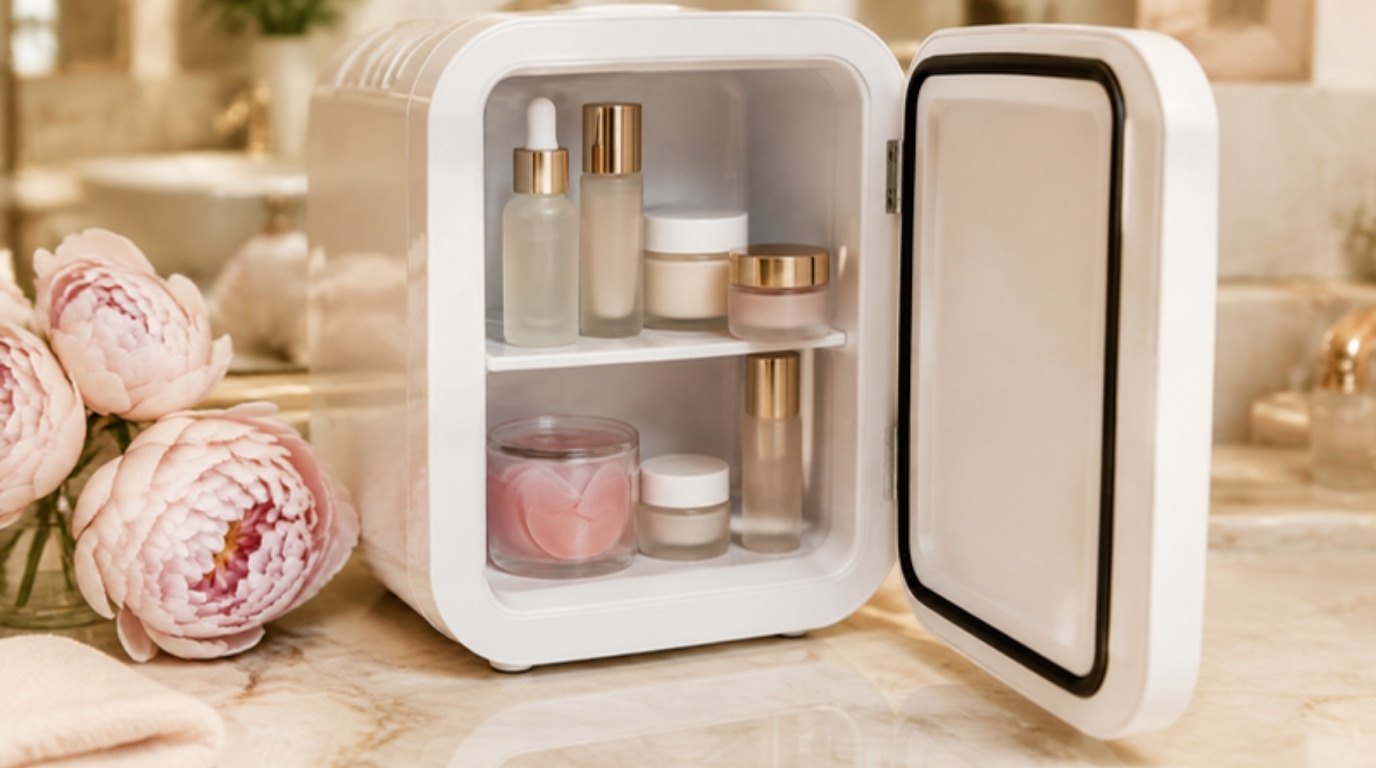
A skincare fridge is one of those things that looks like pure indulgence and sometimes is. The cold itself won't make a serum work better, and most of your products are perfectly happy on a bathroom shelf. But for a handful of products, a little chill makes them feel calming on puffy, warm skin, and for a few others it genuinely helps them last.
The trick is knowing which is which. Cold is lovely for eye gels and hydrogel patches. It is not lovely for a face oil that turns cloudy and solid, or a sunscreen that starts to separate. It took me a while to stop thinking of the fridge as a "better" place for everything and start treating it as a special shelf for a few specific things.
This guide walks you through what a skincare fridge really does, whether you need one or whether a shelf in your kitchen fridge works just as well, the six product types that benefit from the cold, what should never go in, the ideal temperature, how to keep it clean and a budget option that costs almost nothing. There's also a quick table you can screenshot for the next time you're standing at the fridge door wondering.
What a Skincare Fridge Actually Does
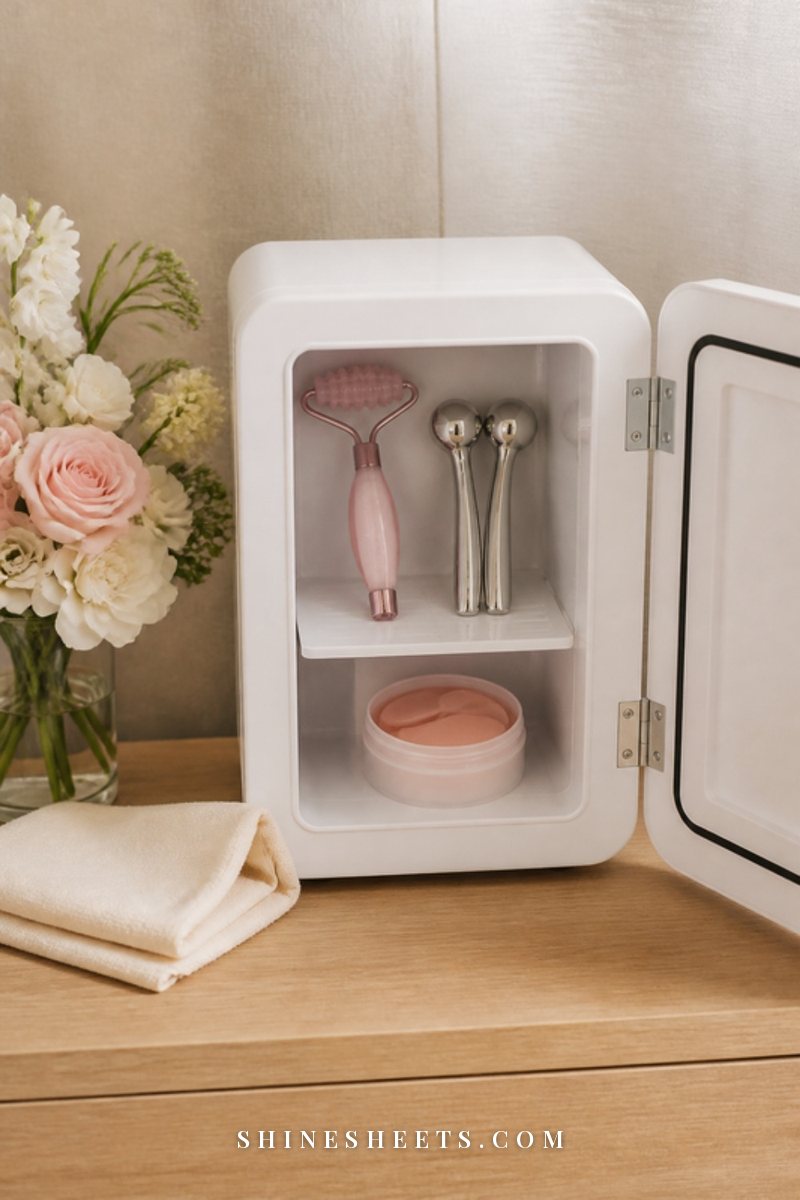
A skincare fridge is a small cooler, usually holding somewhere between 4 and 10 liters, designed to sit on a vanity or dresser. Most of them are thermoelectric rather than compressor-based like a kitchen fridge. That matters, because a thermoelectric cooler doesn't hit one fixed temperature. It cools to a certain number of degrees below the air around it, so in a warm bathroom it will be warmer inside than in a cool bedroom.
In practice, it does three things:
- It makes products feel cold on the skin. That brief cooling sensation is soothing on tired, puffy or warm skin, especially around the eyes and after time in the sun.
- It keeps some products away from heat. Steamy bathrooms and sunny windowsills can speed up the breakdown of delicate formulas. A cool, dark, steady spot is gentler on them.
- It gives your favorites a dedicated home. This one is a little silly, but real: when your patches and eye gel are right there, cold and ready, you actually reach for them.
What it doesn't do is turn an ordinary moisturizer into a stronger one, or make expired products safe again. Think "nice storage," not "skin treatment."
Do You Actually Need One?
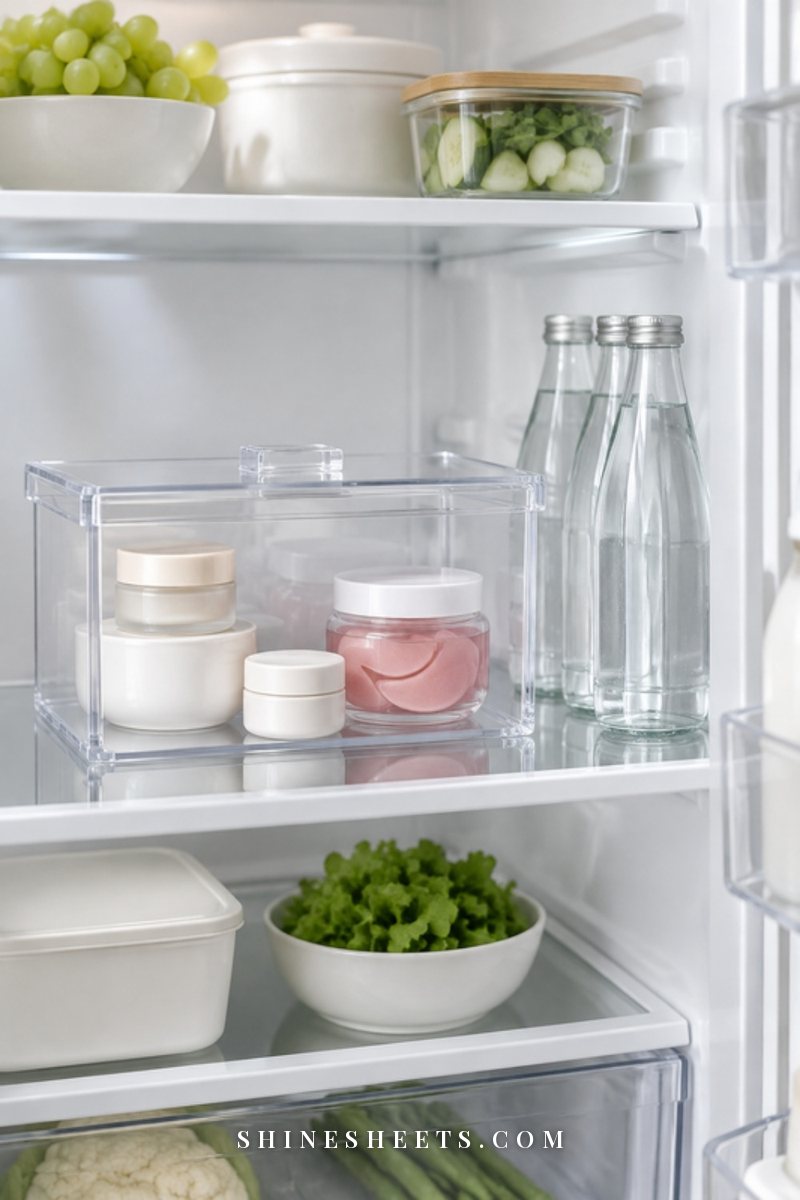
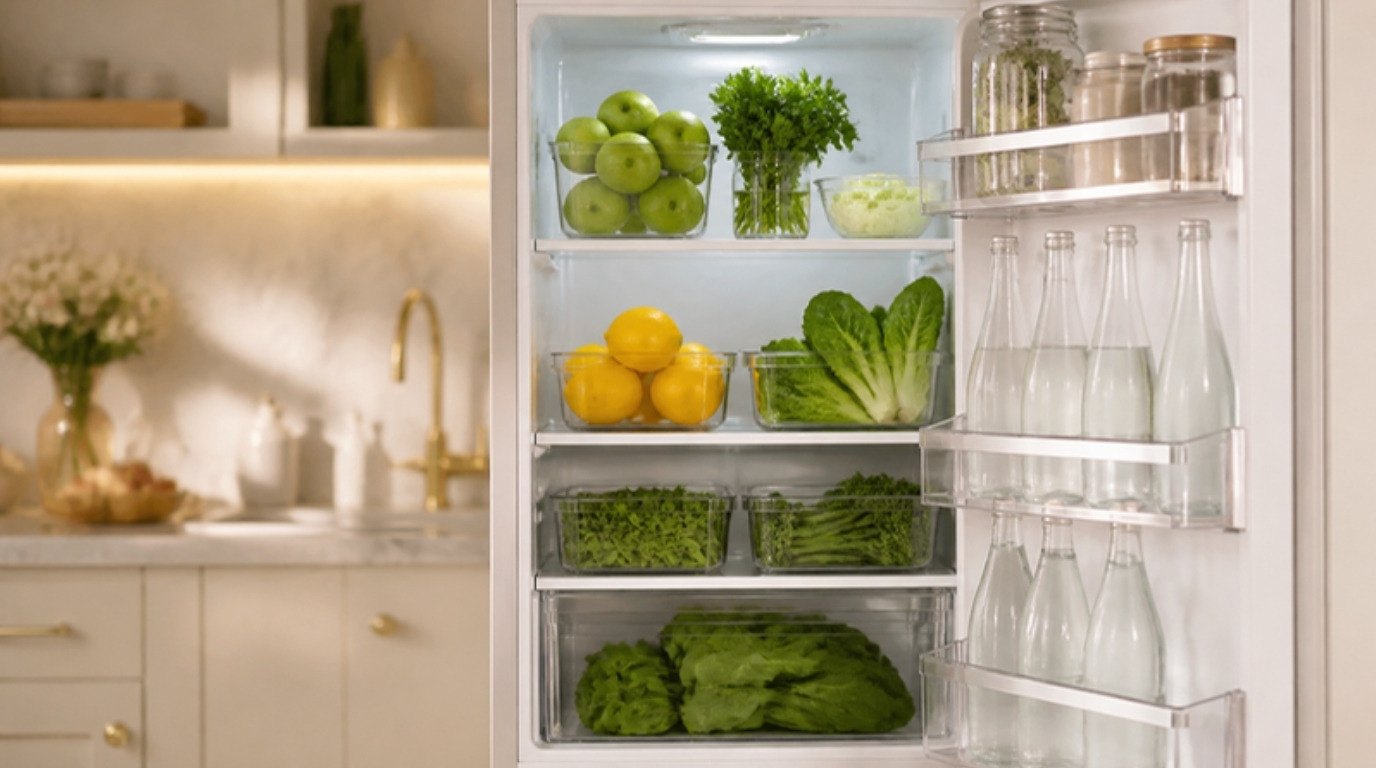
Here's my honest take: most people don't need a dedicated skincare fridge. If you only want to chill two or three things, a small spot in your kitchen fridge does the job beautifully, and it's actually colder and more stable.
A mini fridge makes more sense if:
- Your bathroom gets very warm or humid, or you live somewhere hot without air conditioning.
- You use cooling products daily (eye gel every morning, patches several times a week) and like having them on your vanity.
- Your household isn't fond of skincare next to the leftovers, or the kitchen fridge is always packed.
- You enjoy the ritual and it makes your routine feel special. That's a valid reason too.
If one of those fits, a small white skincare mini fridge with a removable shelf and a door rack is the simplest pick. Look for one with a quiet fan, a cooling and warming switch (only use the cooling mode for skincare) and a door that closes snugly. If blush is more your style, many come in soft pink too.
If none of those fits, keep reading for the budget alternative near the end. It works just as well for most routines.
6 Products That Benefit From the Cold
These are the product types where cold either feels genuinely helpful or where the packaging itself often suggests cool storage. Everything else can usually stay on your shelf.
1. Eye Gels and Eye Creams
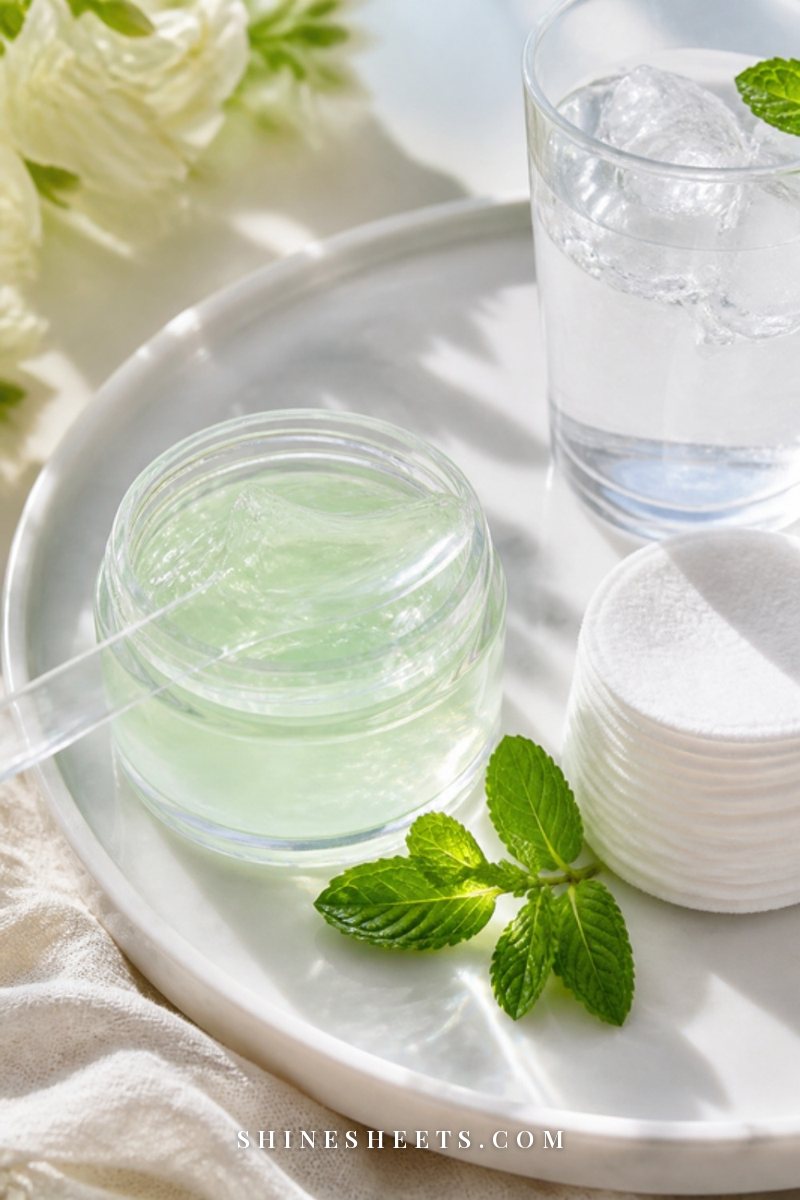
This is the classic. A chilled eye gel feels lovely on morning puffiness, and the cold gives a temporary de-puffing effect simply because cool temperatures make skin feel tighter for a little while. Gel textures chill best. Rich creams can thicken a bit, which some people like and some find harder to spread.
How to use it: take a rice-grain amount on your ring finger, warm it for one second so it glides, then pat gently along the orbital bone rather than rubbing. If you're still deciding whether a dedicated eye product is worth it, my guide on whether you really need an eye cream walks through what it can and can't do.
2. Sheet Masks and Hydrogel Patches
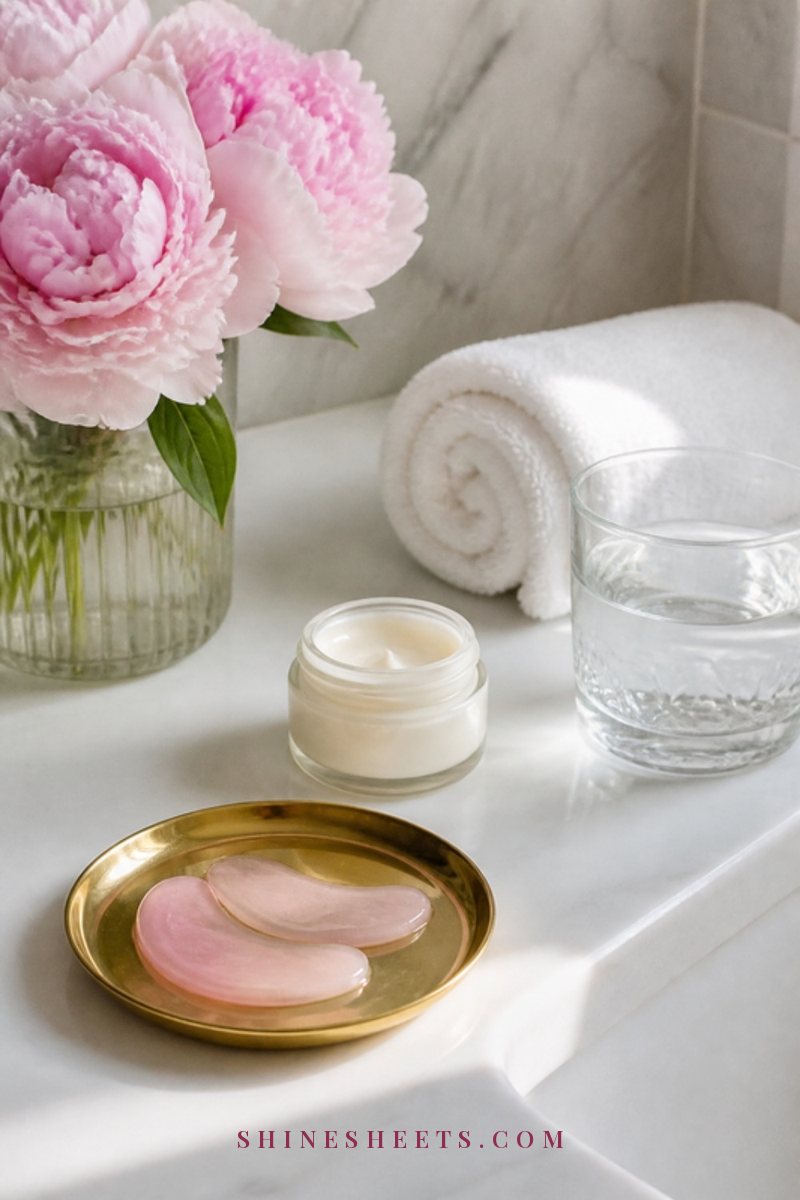
Sheet masks and hydrogel patches are probably the best reason to own a skincare fridge at all. A cold mask on a warm, tired face feels like a tiny spa moment, and the hydrogel holds the cold for several minutes.
Keep sealed sachets in the fridge for at least an hour before use (overnight is easiest). For patches, a jar of hydrogel under-eye patches is a pick for busy mornings: look for a jar with a little spatula so your fingers stay out of the essence. Leave them on for the time the pack suggests, usually 15 to 20 minutes, and don't reuse a patch.
For more on timing, how often to mask and which types suit which skin, see my guides to sheet masks and under-eye patches.
3. Aloe and Soothing Gels
Plain aloe gels and other soothing gels (think centella or cucumber-type gels) feel wonderful cold, especially after a day outdoors or a warm shower. A chilled layer is calming and gives your skin a light drink of water-based hydration.
A tube or tub of fragrance-free aloe soothing gel is a simple pick here. Look for a short ingredient list without added fragrance or drying alcohol near the top, especially if your skin is sensitive. Mine is combination and sensitive with a shiny T-zone, and a thin cold layer of gel is about the only thing that feels comfortable on hot summer evenings.
One kind reminder: aloe soothes how skin feels, but it isn't a treatment for a real sunburn. If skin blisters or you feel unwell after sun, please check in with a doctor.
4. Face Mists
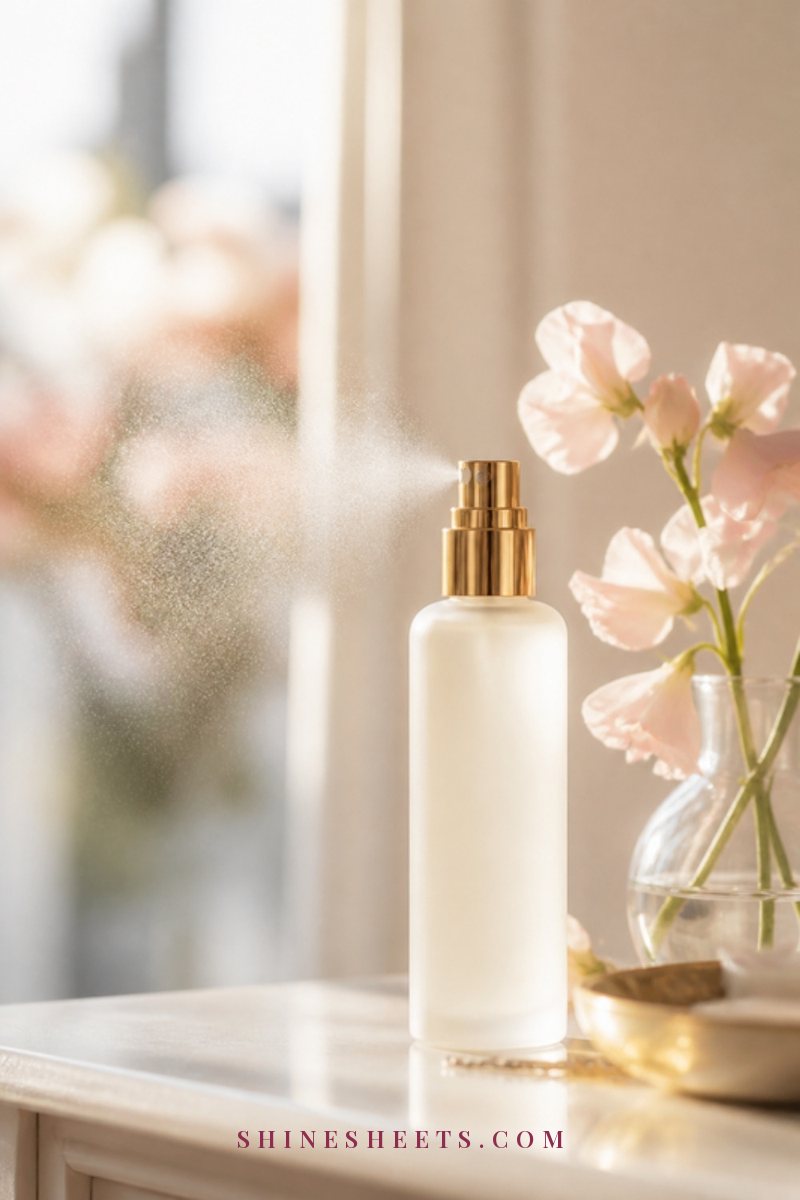
A cold face mist is a small, cheap pleasure. Spritz it after cleansing, over makeup in the afternoon or on warm days when your face just feels too hot.
Simple water-based mists are the best candidates. Mists with a lot of oil (the two-phase kind you shake) are fine too, as long as they don't turn cloudy when cold. If you'd like ideas on how and when to use one without it drying your skin, my face mist guide covers it.
5. Jade Rollers and Ice Rollers
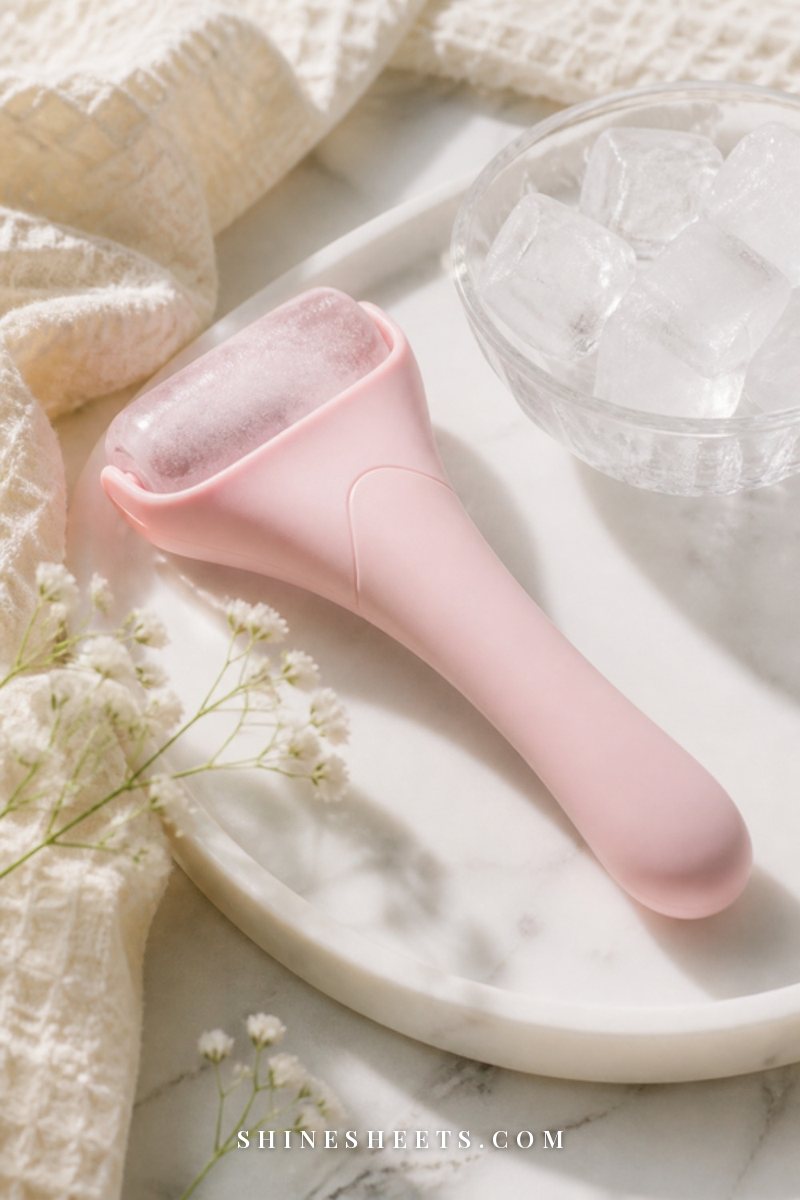
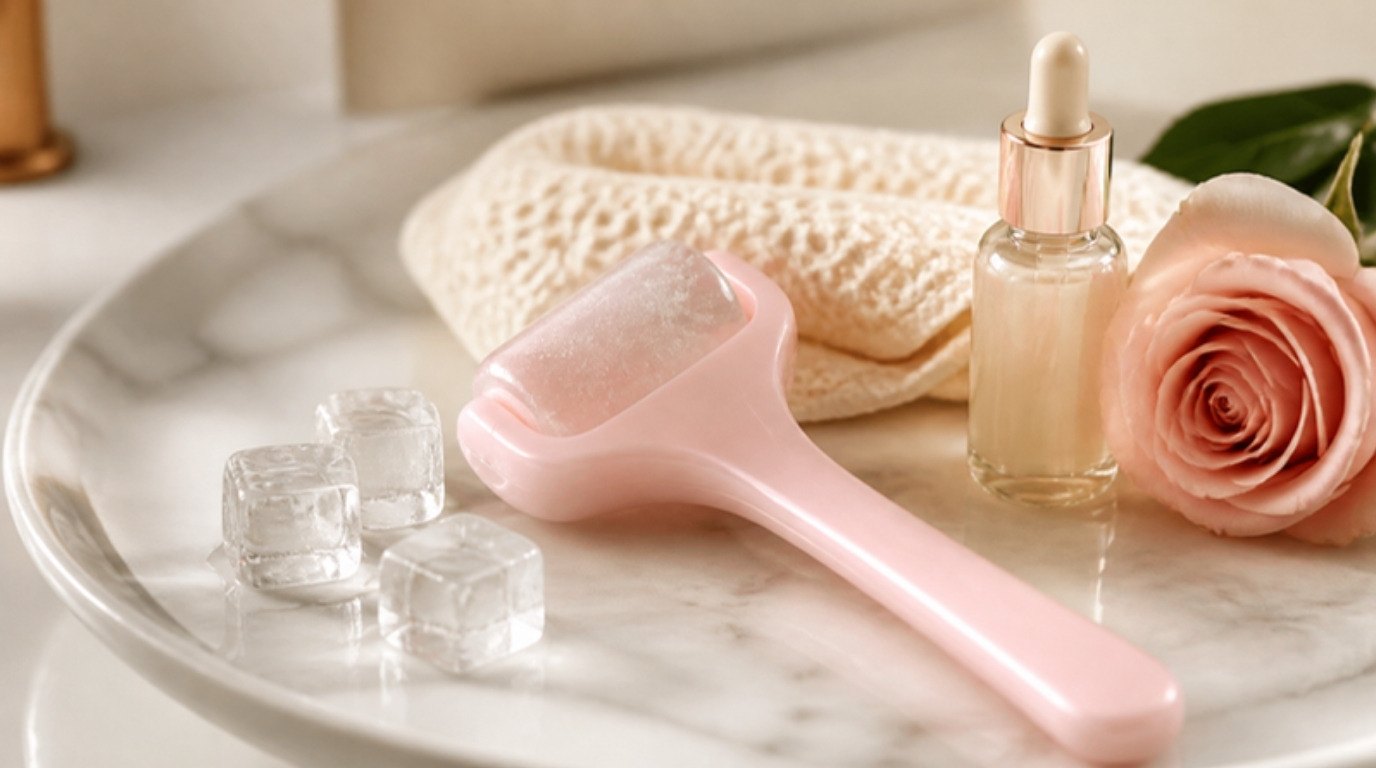
Stone rollers and gua sha tools hold the cold nicely in a skincare fridge. Ice rollers, the ones with a gel or water-filled head, need the freezer to work properly, so store them there and only keep stone tools in the skincare fridge.
A pastel pink ice roller is a pick if you like a stronger chill. Look for one with a removable head so it's easy to wash, and always roll over a thin layer of serum or gel, never on bare dry skin. Keep sessions short (one to two minutes per area) and keep it moving so you don't hold the cold in one spot. My guide to ice roller benefits covers the full technique.
6. Products the Label Says To Refrigerate
This one is the most important, because here the fridge isn't a nice extra but part of the instructions. Some natural, preservative-free or preservative-light products, a few fresh-style masks and some vitamin C serums suggest cool storage or refrigeration after opening.
Read the box and the small print on the back. If it says "store in a cool place," a shelf away from the shower is usually enough. If it says "refrigerate after opening," it belongs in the fridge, and you should also respect the period-after-opening symbol (the little open jar with a number like 6M or 12M). Cold slows things down, but it doesn't stop a product from going off. If the smell, color or texture changes, let it go.
What Should Not Go in the Fridge
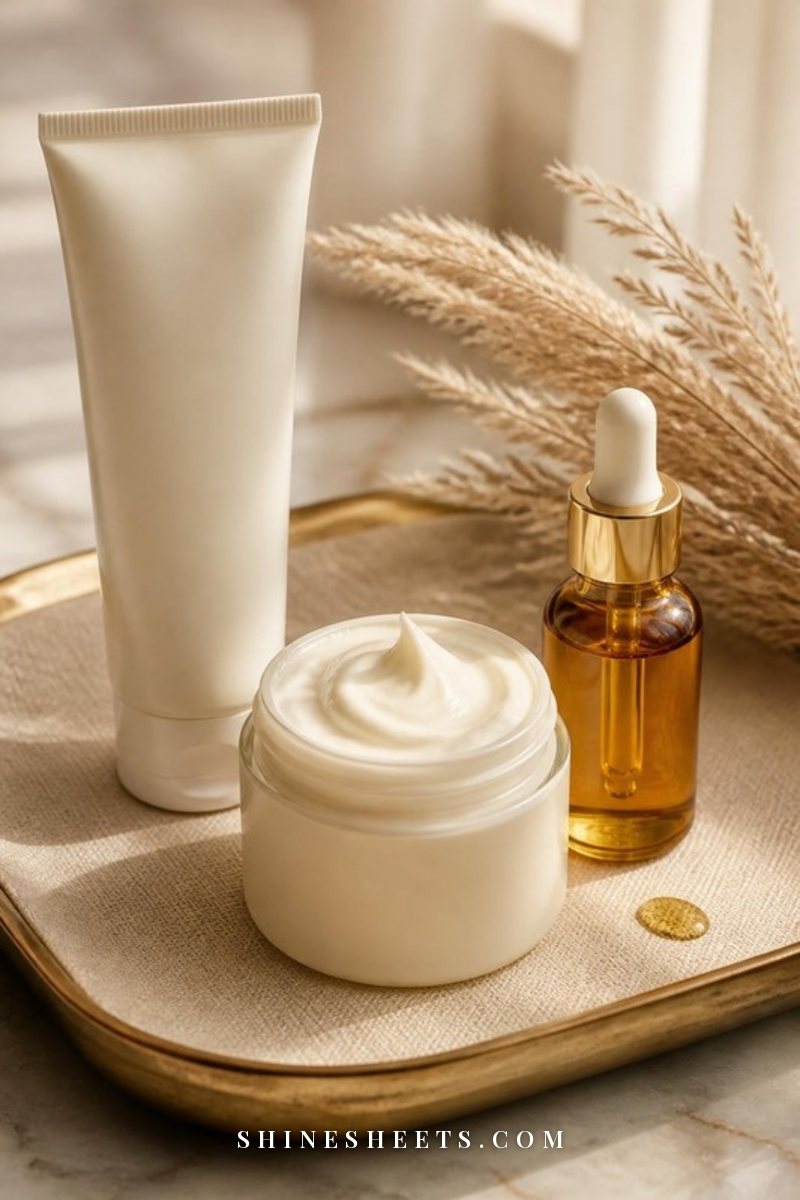
Cold is not kind to every formula. These are best kept at room temperature, in a cool, dry cupboard:
- Face oils. Many plant oils turn cloudy or solid in the cold. They usually recover, but repeated chilling and warming is not ideal.
- Balms and cleansing balms. They harden and become hard to scoop, and the texture can turn grainy.
- Clay masks. They're designed to be spreadable at room temperature and can stiffen or separate when cold.
- Many sunscreens. Most sunscreens are tested at room temperature, and big temperature swings can make some emulsions separate. Unless the label says otherwise, keep yours in a cool, shaded spot instead.
- Rich creams and emulsions. Some are fine, but others go lumpy or watery as the oil and water parts separate. If yours changes texture after a night in the fridge, take it out.
- Makeup like foundation and lipstick. Foundation can separate, and cold lipstick can sweat as it warms. Powders don't benefit at all.
- Prescription treatments. Follow the pharmacist's or doctor's storage instructions rather than guessing.
A good rule: if you're not sure, leave it out. Room temperature is what most products are designed for.
Skincare Fridge Table: What To Keep Cold
Here's the quick version. Screenshot it and keep it on your phone for the next time you're unpacking a beauty haul.
| Product | Fridge? | Why | Tip |
|---|---|---|---|
| Eye gel | Yes | Cold feels soothing on morning puffiness | Pat on with the ring finger, don't rub |
| Rich eye cream | Optional | Feels nice but may thicken | Warm a dab between fingers first |
| Sheet masks | Yes | A cold mask is calming and refreshing | Chill at least one hour, ideally overnight |
| Hydrogel patches | Yes | Gel holds the cold for several minutes | Use the spatula, never reuse a patch |
| Aloe or soothing gel | Yes | Extra cooling after sun or a hot shower | Choose fragrance-free for sensitive skin |
| Water-based face mist | Yes | Instant refresh on warm days | Hold 8 to 10 inches from your face |
| Stone roller or gua sha | Yes | Stone holds the cold well | Wash after every use |
| Ice roller | Freezer | Gel head needs freezing to work | Keep sessions to 1 to 2 minutes per area |
| "Refrigerate after opening" products | Yes | The label asks for it | Note the opening date on the box |
| Face oil | No | Turns cloudy or solid | Cool, dark cupboard |
| Balms and clay masks | No | Harden, stiffen or turn grainy | Room temperature, lid tightly closed |
| Sunscreen | Usually no | Temperature swings can separate emulsions | Shaded spot, away from heat |
| Foundation and lipstick | No | Separates or sweats as it warms | Drawer away from sunlight |
The Ideal Temperature for Skincare
You want cool, not icy. For skincare, roughly 40 to 55°F (about 4 to 13°C) is a comfortable range. Below that, some textures start to change, and if anything freezes, water-based formulas can separate for good.
A few practical notes:
- Kitchen fridges usually run around 37 to 40°F (3 to 4°C). That's fine for the products in the table, just keep them away from the back wall, where things can freeze.
- Thermoelectric mini fridges cool relative to the room. In a warm bathroom they may only reach the 50s or low 60s°F. Still helpful for the cooling feel, less so if a label specifically says "refrigerate."
- Avoid the door shelf for delicate products in a kitchen fridge. It warms up every time someone opens it.
- Let rich textures sit out for a minute before using them, so they spread easily and don't tug.
If you're curious, a small fridge thermometer tells you more than any product description. Pop it in for a day and you'll know exactly what your mini fridge is doing.
The Cooling Feel vs Real Shelf-Life Gains
This is where a lot of marketing gets fuzzy, so let's separate the two.
The cooling feel is real and immediate. Cold products feel soothing, can make skin look a little less puffy for a short while and turn an ordinary morning into a nicer one. That's a comfort benefit, and it's a good one.
The shelf-life gain is smaller and more specific. Heat, light and air are what break down many active ingredients, so keeping certain products cool can help them stay stable longer. But a well-made product with a good preservative system and airtight packaging is already designed to last at room temperature until its expiry or period-after-opening date. The fridge doesn't extend that date, and it doesn't make up for a jar you've been dipping fingers into for a year.
In short: the fridge is most useful for comfort and for the few products that ask for it. For everything else, a cool, dark cupboard away from the shower does almost as much.
Energy, Cost and Space
A mini skincare fridge isn't expensive to run, but it isn't nothing either. Small thermoelectric models typically draw somewhere around 40 to 60 watts while cooling, and because they work harder in warm rooms, they often run almost constantly. Over a year, that's a small but real line on your energy bill, a bit like leaving a bright lamp on all day.
Before you buy, think about:
- Space. Measure your vanity or dresser. These fridges need a few inches of space behind them for airflow, and they can be noisier than you'd expect on a bedside table.
- What you'll actually store. If it's three items, you don't need a fridge for them.
- Placement. Keep it out of direct sun and away from the shower so it doesn't have to fight the heat and steam.
- The off switch. When you travel, empty it, unplug it and prop the door open so it doesn't get musty.
The Budget Alternative: A Lidded Box in Your Kitchen Fridge
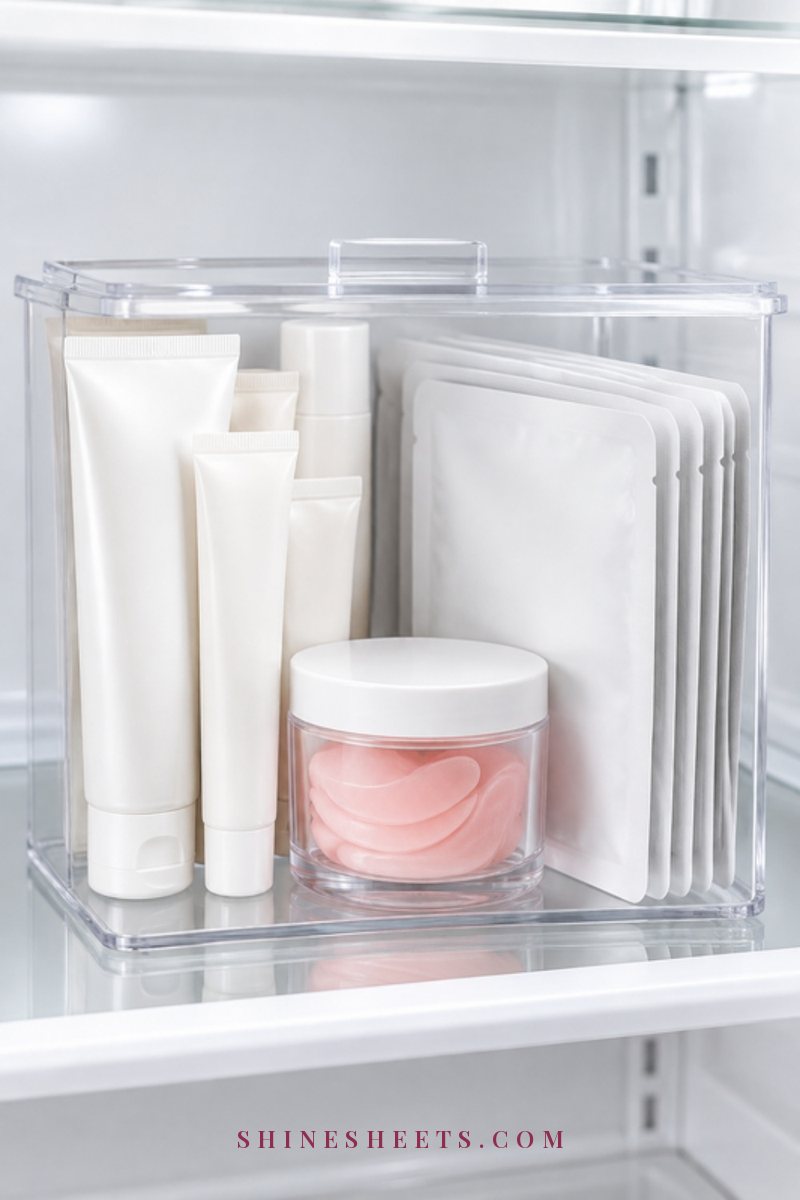
For most routines, this is what I'd choose. A clean, lidded box on one shelf of your regular fridge gives you a colder, more stable temperature than most mini fridges, uses no extra electricity and keeps your skincare separate from food.
A clear acrylic fridge organizer with a lid is a pick here: look for a stackable bin that fits your shelf depth, has a lid that closes fully and wipes clean easily. Then set it up like this:
- Choose a middle shelf, not the door and not right against the back wall.
- Wipe the box and its lid with warm soapy water and dry it completely.
- Stand tubes and bottles upright, and lay sheet mask sachets flat along the side.
- Add a small strip of tape on the lid with the date you last cleaned it.
- Keep it to cooling products only. If it starts filling up, that's your cue to reread the "what not to chill" list.
It's also a good idea to give the whole fridge a refresh every so often. My guide on how to clean a fridge fast makes it a quick job.
How To Keep Your Skincare Fridge Clean
A small, cool, closed box can turn musty surprisingly fast, especially if a cap was left loose or a mask leaked. A short routine keeps it fresh:
- Weekly (2 minutes): wipe any drips from shelves and caps with a soft cloth dampened with warm water and a drop of mild dish soap.
- Monthly (10 minutes): unplug it, take everything out, remove the shelves, wash them in warm soapy water, wipe the inside, then dry everything completely before plugging it back in. A soft cloth such as white microfiber cloths works well because it won't scratch the plastic.
- Every time: close lids tightly, wipe the necks of tubes and jars before putting them back, and never put a product in with a wet outside.
- Every season: check dates. Toss anything past its period-after-opening, anything that smells odd or anything with visible changes.
Avoid harsh cleaners or bleach inside the fridge, since you don't want residue anywhere near products that go on your face.
A Gentle Safety Note
Cold products feel soothing, but they aren't a treatment. Patch test anything new, even if it's cold and gentle, by applying a little behind your ear or on your inner arm for a day or two before using it on your face. Never put ice or a frozen tool directly on bare skin, and keep cold sessions short.
If puffiness around your eyes doesn't settle, comes with itching, pain or swelling, or if your skin stays red or irritated, please see a dermatologist or doctor. Persistent puffiness can have causes no cold gel will fix, and it's worth getting it checked.
Final Thoughts
A skincare fridge is a sweet little luxury, not a requirement. The cold feels lovely on eye gels, masks and patches, a few products genuinely ask for it, and most others are happiest on a cool, dark shelf.
Whether you choose a blush mini fridge on your vanity or a clear box on the middle shelf of your kitchen fridge, the real magic is simpler: knowing what to keep cold, keeping it clean and enjoying that calm, cool moment at the start of your day.