An ice roller is one of the simplest tools in skincare, and that's exactly why it works so well when you know what to expect. It won't change your skin long term, but it can make your face look less puffy, feel calmer and wake up faster in about three minutes. That's a lovely thing for such a small, inexpensive tool.
The key is honest expectations. Cold causes blood vessels to narrow temporarily and helps reduce the feeling of swelling, so the effects are real but short-lived. Think of it as a fresh splash of cold water, made more targeted and much more pleasant.
This guide covers the real ice roller benefits (and the limits), how to use one step by step, a 3-minute routine with exact timing for each area, the best moments to reach for it, how to clean and store it, who should be careful and a few easy alternatives if you'd rather not buy anything new.
What Is an Ice Roller?
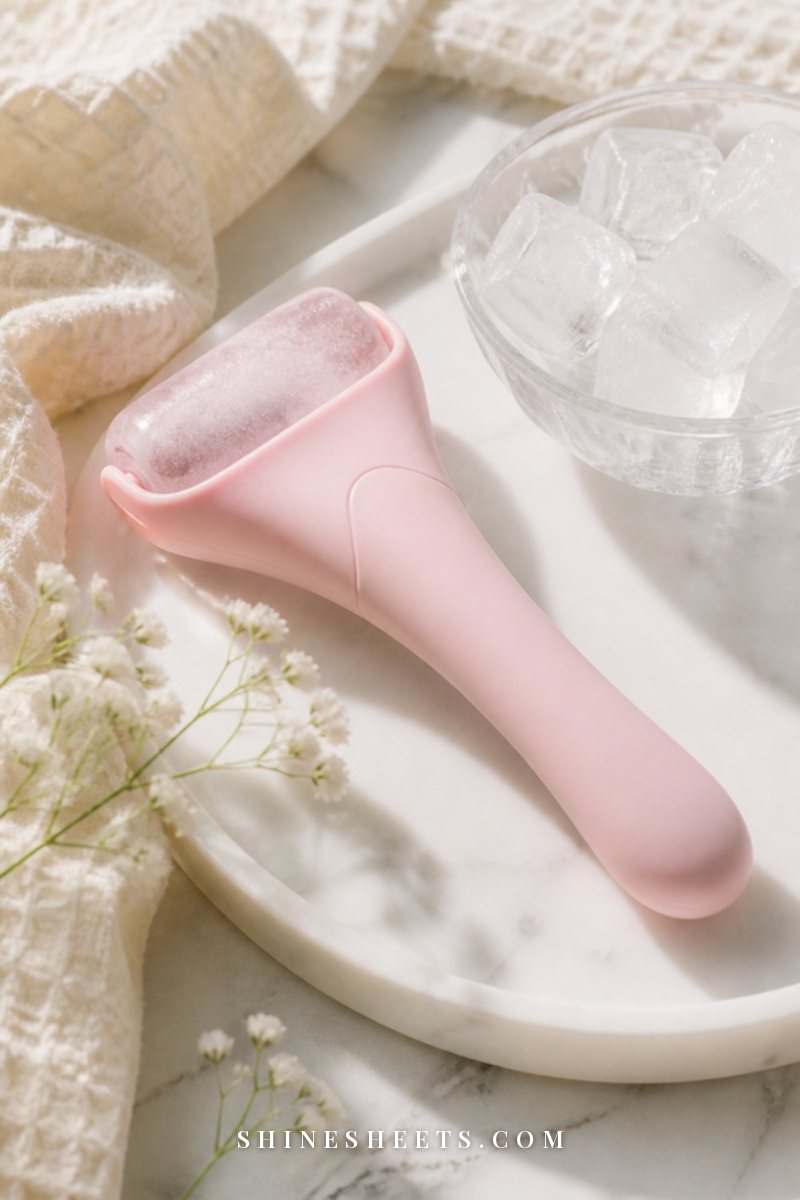
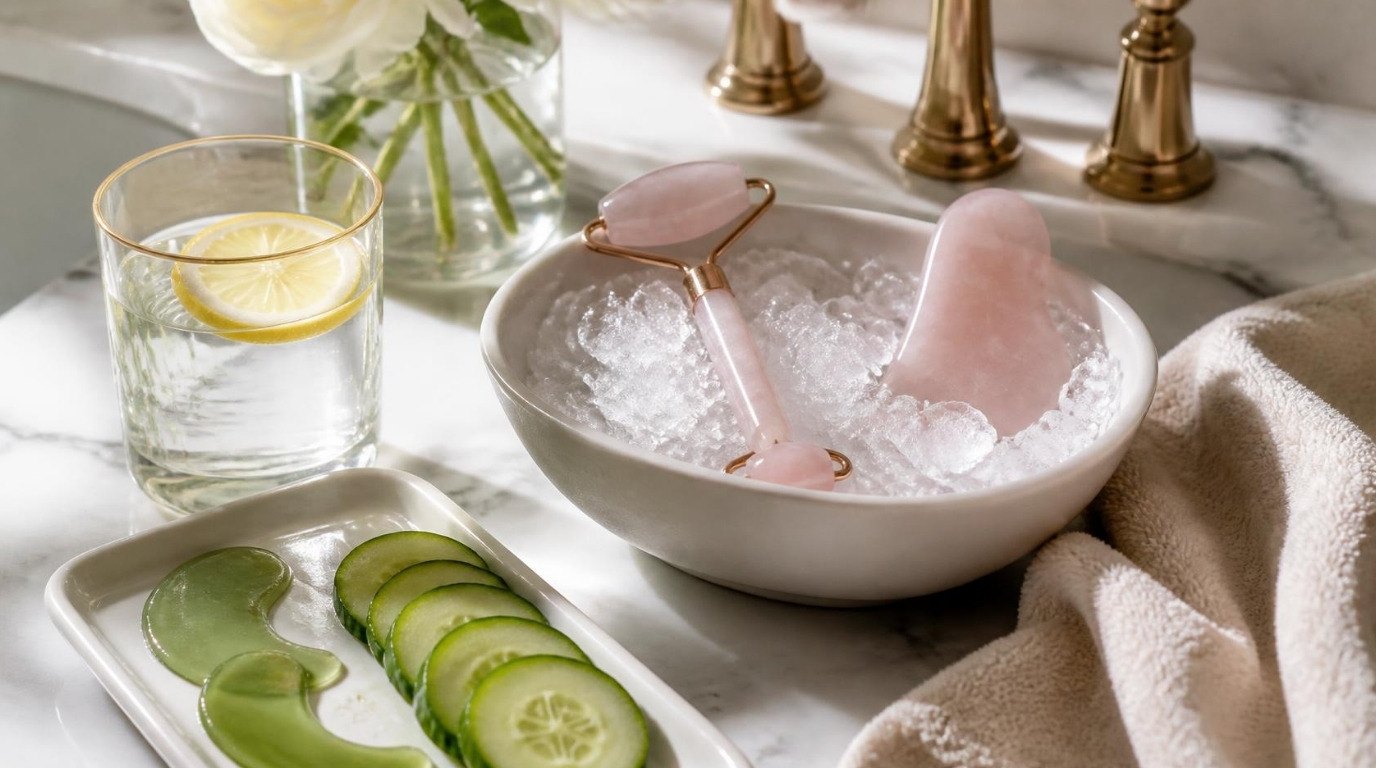
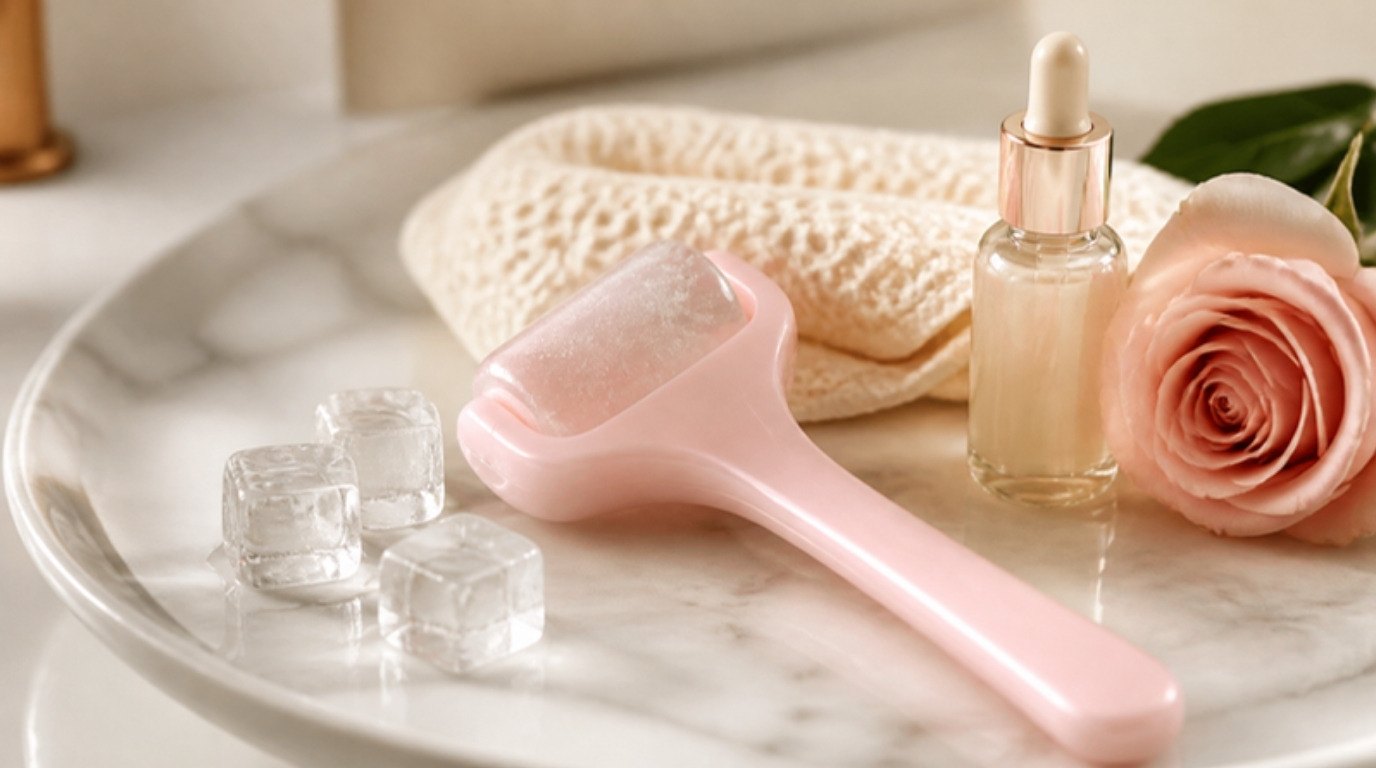
An ice roller is a small handheld tool with a rolling head that you chill in the freezer or fridge, then glide over your face. The head is usually made of stainless steel, plastic filled with a gel or water that freezes, or a stone like jade or rose quartz. The handle stays at room temperature, so your hand stays comfortable while your skin gets the cold.
The appeal is easy to understand: it's quick, it feels lovely on tired skin and there's no product to run out of. A pink face ice roller is a pick for beginners. Look for a removable head (easier to clean), a smooth surface without sharp seams and a size that fits comfortably under your eyes and along your jaw.
Steel, Gel or Stone: Which Ice Roller To Choose
Ice rollers come in a few materials, and each feels a little different. There's no wrong choice, just a better fit for your skin and habits.
- Stainless steel: stays cold for a long time, is the easiest to clean and doesn't crack if you drop it. It can feel very cold straight from the freezer, so it's often better from the fridge for sensitive skin.
- Gel or water-filled plastic: the classic "ice roller" style. The frozen core keeps the cold going for several minutes, and the head is usually larger, which is nice for cheeks, neck and jaw. Check the seams often, since a cracked head can leak.
- Stone (jade or rose quartz): pretty and pleasant to hold, but it warms up faster and can chip. It's lovely for a short, gentle routine rather than a long, very cold one.
- Double-head rollers: one large and one small head, which makes the under-eye area and the sides of the nose much easier to reach.
Whatever you choose, look for a smooth, seamless surface, a head that rolls freely without squeaking and a handle that stays comfortable in your hand for three minutes.
What an Ice Roller Can and Can't Do
Skincare tools often get sold with big promises. Here's the honest version, so you know exactly what you're getting.
What It Can Do
- Temporarily reduce puffiness. Cold narrows blood vessels and can help your face look less swollen, especially in the morning or after a salty dinner or a short night.
- Soothe and refresh. It can feel calming on skin that's warm, flushed or a little irritated after a long day.
- Wake you up. The cold is a quick sensory reset, which is lovely on slow mornings.
- Help makeup sit a little smoother. A calmer, less puffy face can make foundation and concealer look more even for a while.
- Give you a small calming ritual. A few minutes of slow, rhythmic rolling can feel genuinely relaxing, which counts for something on stressful days.
What It Can't Do
- It can't permanently shrink pores. Pores may look slightly tighter for a short time, but their size doesn't change.
- It can't remove wrinkles or fine lines. Any smoothing is temporary.
- It can't treat acne, rosacea or other skin conditions. It may feel soothing, but it's not a treatment.
- It can't "drain toxins" or reshape your face. Depuffing is real; dramatic contouring claims aren't.
- It can't fix dark circles caused by pigment or thin skin. It may help circles that come from puffiness look a little softer.
In other words, it's a feel-good, look-fresher tool. Enjoy it for that, and it will never disappoint you.
How To Use an Ice Roller Step by Step
Using an ice roller is simple, but a few details make it more comfortable and more effective.
- Chill it. Keep it in the freezer for at least 30 minutes, or overnight for the coldest effect. If your skin is sensitive, the fridge gives a gentler chill.
- Start with clean skin. Wash your face with a gentle cleanser so you're not rolling dirt and oil around. A mild, fragrance-free option like a gentle hydrating cleanser is a pick for this, especially if your skin is dry or sensitive.
- Decide: bare skin or serum. You can roll over clean, dry skin, or over a thin layer of a hydrating serum or sheet mask essence. A little slip helps the roller glide and feels lovely.
- Roll from the center outward. Start near the middle of your face and roll out toward the ears and hairline, and from the chin down along the neck. Upward and outward strokes are the usual approach.
- Use light pressure. Let the roller glide. You don't need to press hard to get the benefit of the cold.
- Keep it moving. Don't hold the roller still on one spot. Constant motion keeps the cold comfortable and safe.
- Stop at 1 to 5 minutes. Three minutes is a sweet spot. If your skin feels numb, stinging or very red, stop right away.
- Follow with moisturizer. Finish your routine as usual, with moisturizer and sunscreen in the morning.
A small comfort tip: if the roller feels too cold straight from the freezer, let it sit on the counter for a minute, or roll it over a thin cotton cloth first.
Your 3-Minute Ice Roller Routine
Here's a simple step map with the time for each area. It adds up to three minutes, and you can shorten or lengthen any part. Screenshot it and keep it near your skincare shelf.
| Step | Area | Direction | Time |
|---|---|---|---|
| 1 | Neck | From under the jaw down toward the collarbones | 20 seconds |
| 2 | Jawline (both sides) | From the chin out toward the ear | 20 seconds |
| 3 | Cheeks (both sides) | From beside the nose out toward the ear | 30 seconds |
| 4 | Under the eyes (both sides) | From the inner corner gently out to the temple, very light pressure | 30 seconds |
| 5 | Between the brows | Small upward strokes | 15 seconds |
| 6 | Forehead | From the center out toward the temples, then upward to the hairline | 30 seconds |
| 7 | Temples | Small slow strokes toward the hairline | 15 seconds |
| 8 | Chin and around the mouth | From the center of the chin outward | 20 seconds |
| Total | 3 minutes | ||
Do each area once, slowly, rather than rushing back and forth. Breathing out slowly as you roll turns it into a mini relaxation moment too.
Where It Fits in Your Skincare Routine
An ice roller doesn't replace any step in your routine. It slips in between them. Here's a simple order for morning and evening:
- Morning: cleanse, roll for one to three minutes (on bare skin or over a hydrating serum), then eye cream, moisturizer and sunscreen.
- Evening: cleanse, apply a hydrating serum or essence, roll for a minute or two, then moisturizer. Keep strong actives like retinoids or exfoliating acids for after rolling, not under the roller.
- With a sheet mask: roll gently over the mask for the last minute or two, then press the leftover essence into your skin.
Combination skin like mine (with a shiny T-zone that loves to look puffy and dull in the morning) tends to enjoy the morning version most. Dry or sensitive skin often prefers a short, fridge-cool evening roll. Notice how your skin responds over a week and keep whichever timing feels best.
How Often Can You Use It?
Most skin is happy with daily ice rolling, once a day, for one to five minutes. If your skin is sensitive or prone to redness, start with two or three times a week and see how it feels. There's no benefit to rolling several times a day, and the effects don't build up over time the way a serum might, so use it when you enjoy it, not out of obligation.
A good sign is skin that looks fresh and feels comfortable 10 minutes later. Lingering redness, stinging or tightness means less often, a gentler chill or a shorter session.
Under the Eyes: Go Gentle
The under-eye area is where most people want the biggest difference, and it's also where the skin is thinnest. A few rules keep it safe and comfortable:
- Use the lightest possible pressure. The weight of the roller is enough.
- Stay on the bone. Roll along the orbital bone below the eye, never directly on the eyelid or too close to the lash line.
- Roll outward only. From the inner corner toward the temple, then lift and repeat.
- Keep it short. 15 seconds per side is plenty.
- Use the smaller end if your roller has a double head.
Afterward, tap a small amount of eye cream along the same bone with your ring finger. The skin is cool and calm, and it's a nice moment to finish the area with care.
If puffiness under your eyes is something you deal with often, my guide on under-eye bags covers the everyday habits (sleep position, salt, allergies) that make the biggest difference. For an extra cooling boost on very puffy mornings, a set of cooling hydrogel eye patches kept in the fridge pairs nicely with your roller. Look for hydrating ingredients like hyaluronic acid or caffeine and a fragrance-free formula.
When To Use an Ice Roller

You can use an ice roller daily if your skin likes it. These are the moments where it really shines:
Morning Puffiness
This is the classic. Faces are often puffier in the morning after lying flat all night. Three minutes of rolling after cleansing can make you look noticeably more awake before your coffee has even kicked in.
After a Workout
If your face stays flushed and hot after exercise, a minute or two of rolling once you've rinsed off can feel incredibly refreshing. Wait until your skin isn't sweaty, and go gently if you're very red.
Before Makeup
Roll after skincare and before primer for a calmer, smoother base. Give your skin a minute to come back to room temperature before applying foundation, so it doesn't sit on damp, chilly skin.
After a Long Day
In the evening, after cleansing, rolling can feel like a small gift to a tired face. Pair it with a cup of evening tea and dim lights, and it becomes a tiny wind-down ritual.
On Hot Days
In warm weather, a quick roll over the face and neck can cool you down in seconds. Keep one in the fridge in summer for exactly this.
Cleaning and Storing Your Ice Roller
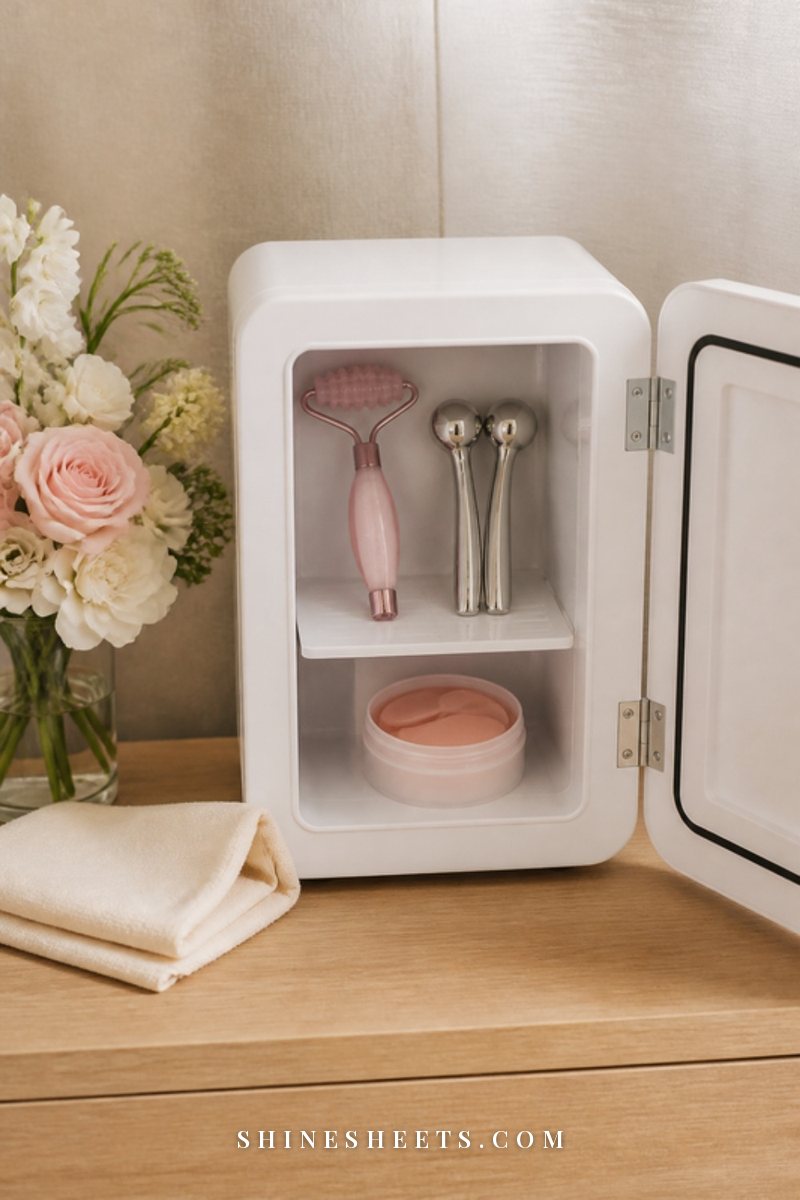
Because it touches your face every day, an ice roller should be cleaned like any skincare tool.
- After every use: wipe the roller head with a cloth and warm water with a drop of gentle soap, then rinse and dry it fully.
- Once a week: wipe it with a cotton pad and a little rubbing alcohol (if the material allows it; check the instructions for stone or plastic heads), then let it air dry.
- Removable head: if yours has one, take it off and clean the joint too, where moisture can collect.
- Store it in a clean bag or container in the freezer, away from food, so it doesn't pick up smells or frost from frozen items.
- Replace it if the head cracks, leaks or develops a rough edge.
If you'd rather keep skincare out of the kitchen freezer, a mini skincare fridge is a pick for a vanity or bathroom shelf. It keeps rollers, eye patches and sheet masks pleasantly cool (not frozen), which many people find more comfortable anyway. Look for a quiet model with a removable shelf and enough height for your tallest bottles.
Wipe your face dry afterward with a clean towel. Soft bamboo face towels are a gentle option if you like having a dedicated stack for skincare, and they're easy to wash often.
Who Should Be Careful
Ice rolling is gentle for most people, but cold isn't right for every skin. Please skip it or check with a dermatologist first if any of these apply:
- Rosacea or very reactive redness: extreme temperature changes are a common trigger, so a strong chill can make flushing worse for some people. If you try it, use a fridge-cool roller, not a frozen one, for a very short time. My guide on redness on the face explains other common triggers.
- Broken skin, open spots, cuts or active infections: skip those areas, and don't roll over picked or inflamed breakouts.
- Very sensitive or freshly treated skin: after peels, laser treatments, strong retinoids or exfoliation, ask your provider before using cold tools.
- Cold sensitivity: if your skin reacts to cold with hives, numbness or color changes in the fingers, cold therapy may not be a good idea.
- Anything that feels wrong: stinging, burning, numbness or white patches mean stop right away and let your skin warm up naturally.
And never put ice or a frozen pack directly on skin and leave it there. Keeping the roller moving is what makes it gentle.
Alternatives: Cold Spoons, Cryo Globes and Cold Gua Sha
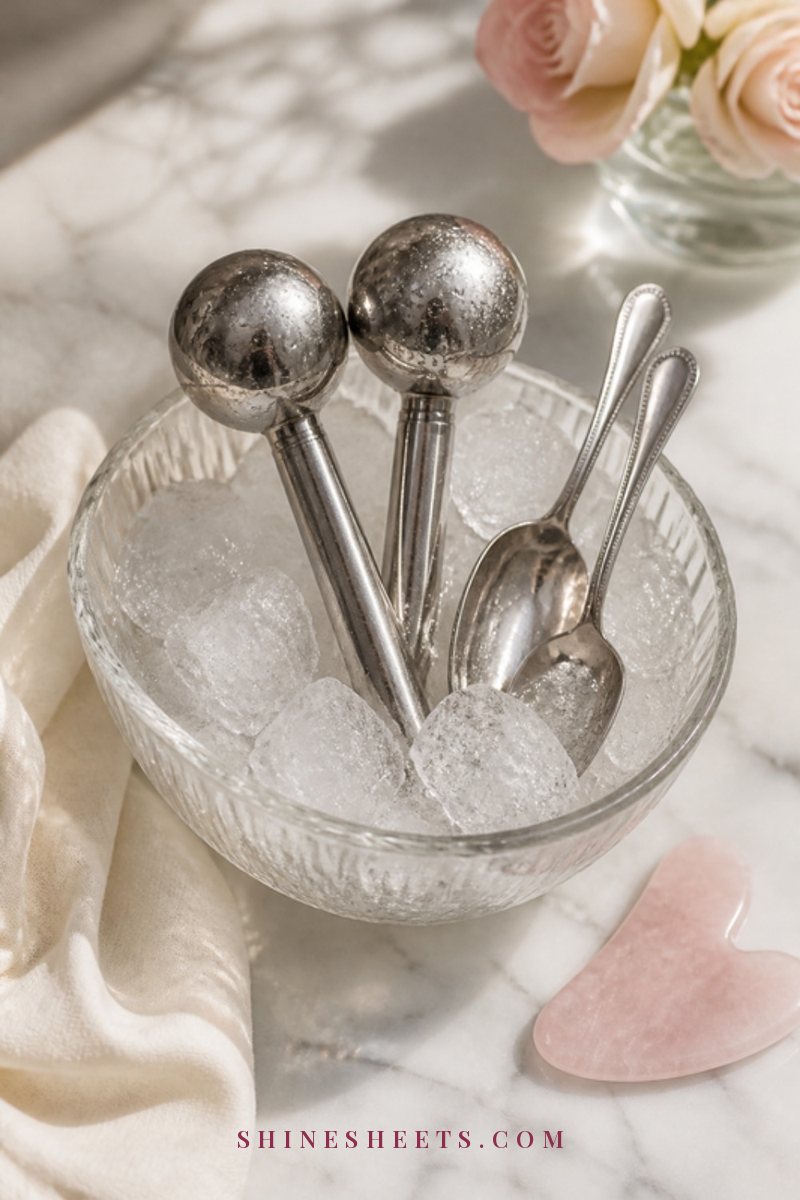
Don't have an ice roller? You already own an alternative, and there are a couple of nice upgrades too.
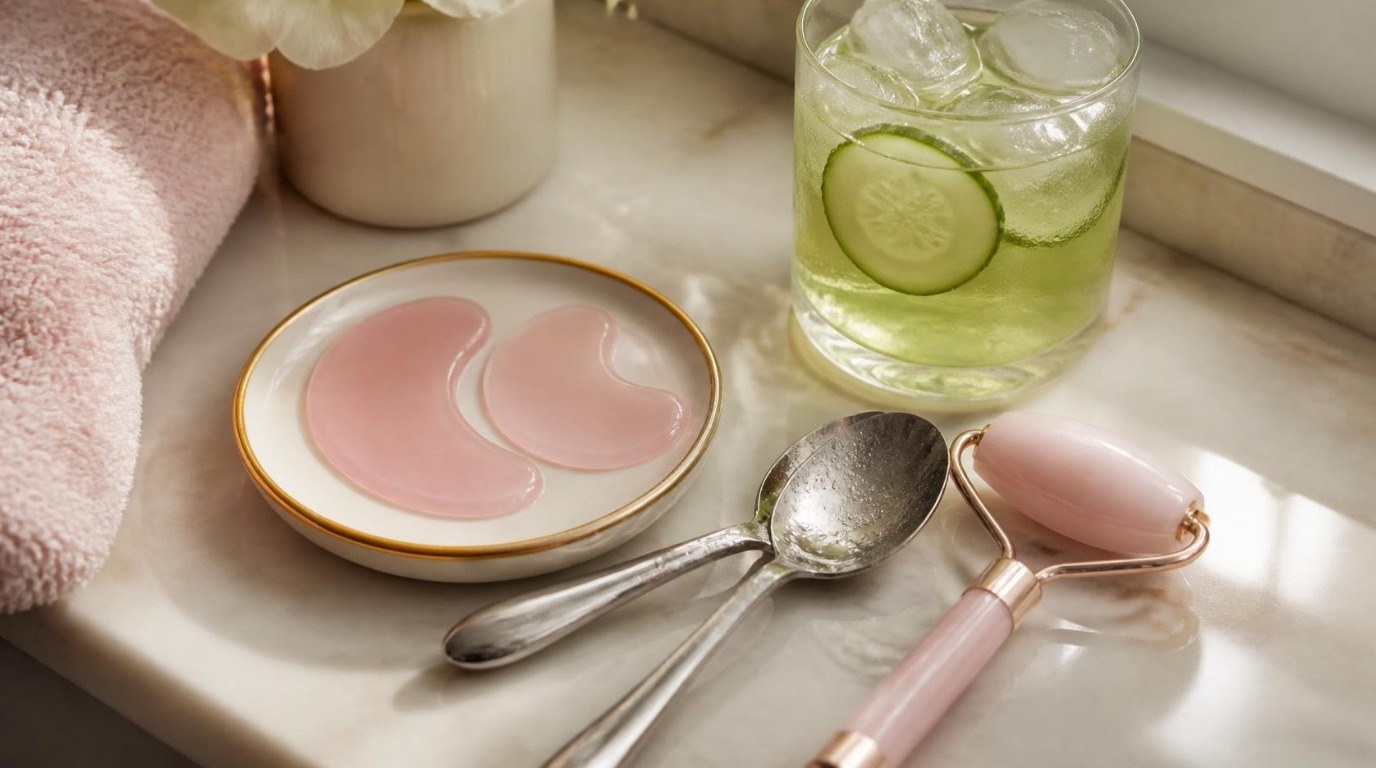
- Cold spoons: chill two metal teaspoons in the fridge for 10 minutes, then gently press the backs under your eyes or glide them along your cheeks. Swap them back into the fridge when they warm up. Free and surprisingly effective.
- Cryo globes: glass or steel globes with long handles that glide in smooth circles. Stainless steel cryo globes are a pick if you want something that stays cold longer and feels like a facial at home. Look for a smooth, seamless ball and a comfortable handle.
- Cold gua sha: chill your gua sha stone in the fridge for a few minutes before using it with a facial oil. You get the sculpting massage plus the depuffing chill.
- A cold washcloth: run a clean cloth under cold water, wring it out and hold it gently over your face for 30 seconds. The simplest option of all.
If you enjoy the massage side of things, my guide to lymphatic drainage face massage shows gentle movements that pair beautifully with a chilled tool.
Common Ice Roller Mistakes
- Pressing too hard. Light pressure is all you need. Hard pressure can irritate and doesn't add benefit.
- Holding it in one spot. Always keep the roller moving.
- Rolling too long. Five minutes is the upper limit. More is not better.
- Using it on unwashed skin. You'll just spread oil and dirt around.
- Skipping cleaning. A dirty roller can transfer bacteria to your face.
- Expecting permanent results. Enjoy the fresh, awake look for what it is: lovely and temporary.
Final Thoughts
An ice roller won't rewrite your skin, and it doesn't need to. What it offers is simple and real: a less puffy, calmer-looking face, a refreshing wake-up and a few quiet minutes that feel like taking care of yourself.
Keep it cold, keep it clean, keep your touch light and keep it moving. Used that way, it becomes one of those small morning rituals that make the whole day start a little softer.