A sheet mask won't transform your skin overnight, and it doesn't need to. Think of it as a short, concentrated drink of hydration: a thin sheet soaked in serum holds moisture against your face for 15–20 minutes, so your skin looks plumper, calmer and more rested right afterward. It's a lovely bonus on top of a good routine, not a replacement for one.
That's actually what makes sheet masks so pleasant. There's no rinsing, no measuring and no learning curve. You simply need to know which type suits your skin, how long to leave it on and the small mistakes that cancel out the benefits.
This guide covers sheet masks from start to finish: what they really do, the different types and materials, how to use one step by step, how often to mask, sensitive skin tips and the most common mistakes. You'll also find a simple table that matches your skin goal to the ingredients worth looking for on the package.
What Do Sheet Masks Actually Do?
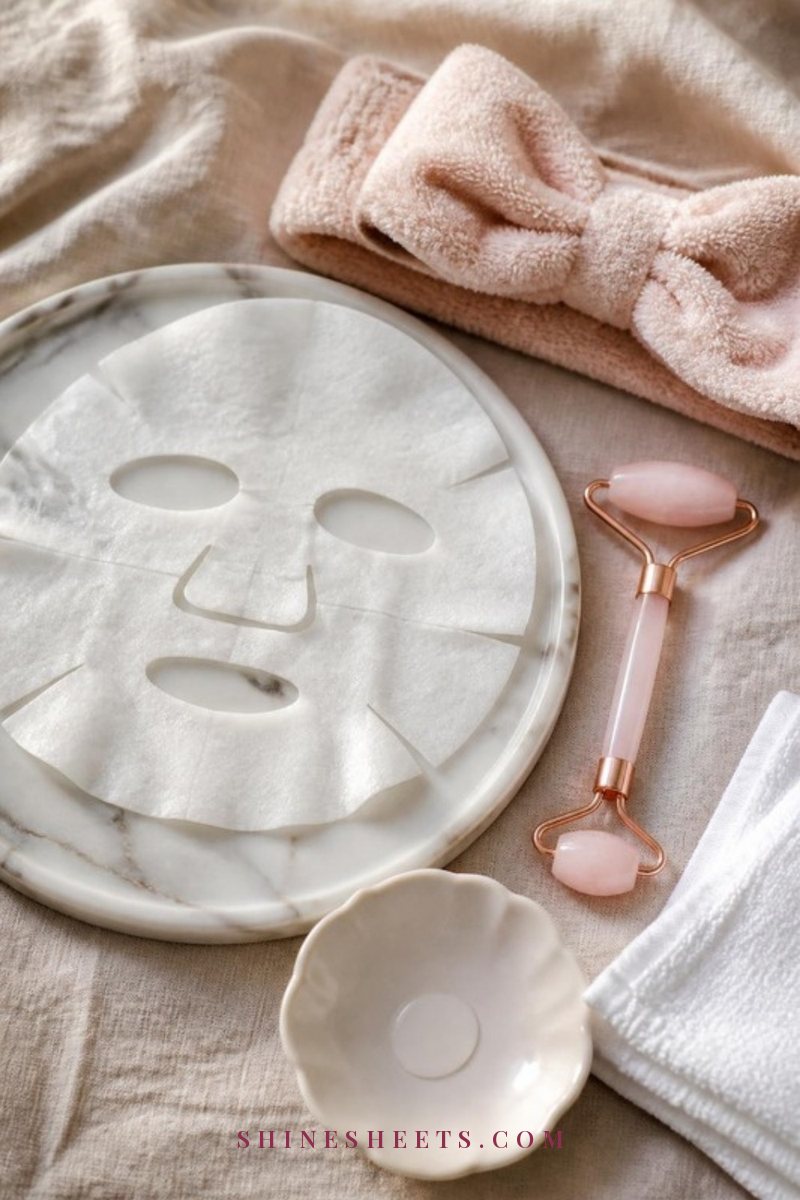
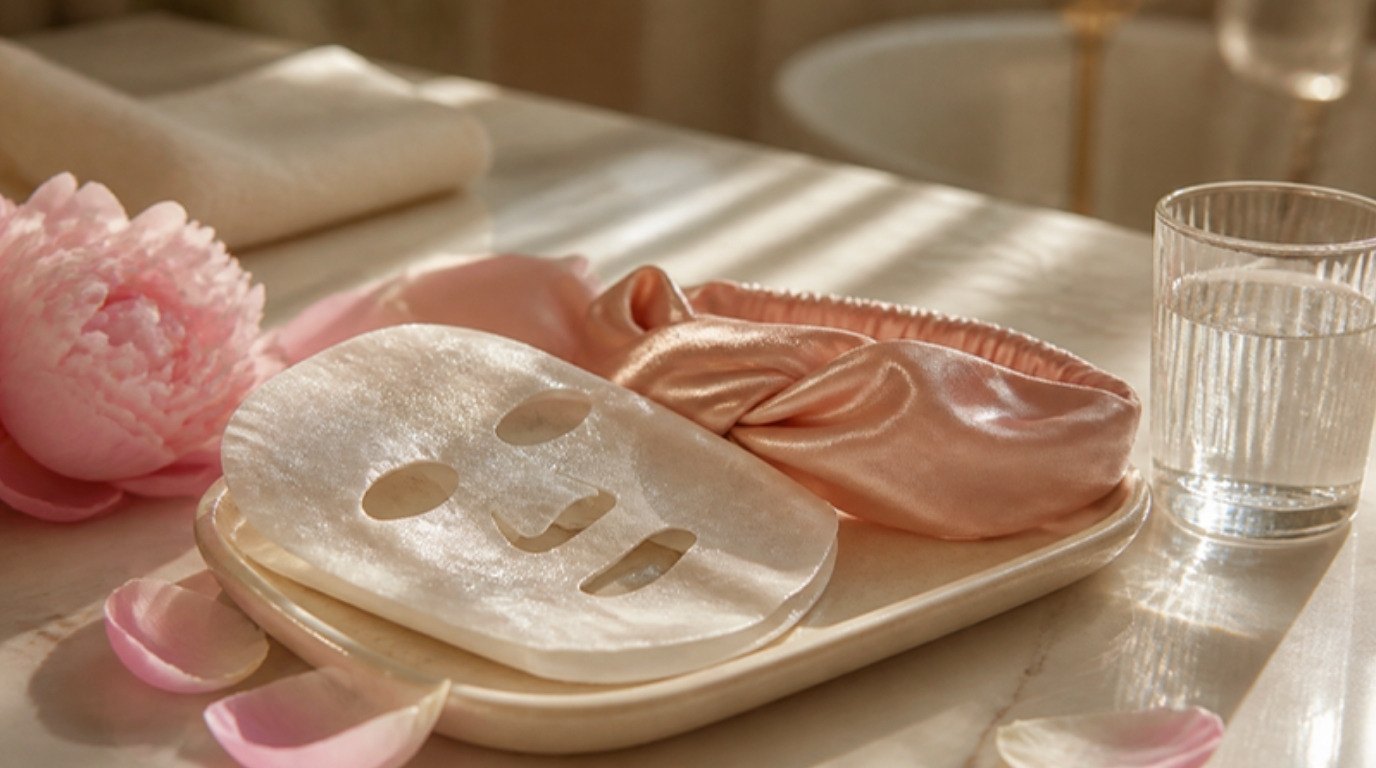
A sheet mask is a thin piece of fabric, gel or plant-based material cut in the shape of a face and soaked in a serum or essence. When you lay it on your skin, it does two things at once.
First, it delivers a generous amount of water-loving ingredients like glycerin or hyaluronic acid. Second, the sheet acts as a light barrier that slows evaporation, so your skin has more time to absorb that moisture. The result is a temporary boost: skin looks dewier, feels softer and often appears smoother because the outer layer is well hydrated.
What a sheet mask won't do: fix acne, erase wrinkles or replace your daily moisturizer and sunscreen. The effect is real but short-lived, usually lasting the rest of the day or night. That's why I think of sheet masks as a treat rather than a necessity. If your routine is already solid, they're the cherry on top. If it isn't, a good cleanser, moisturizer and SPF will do far more.
If you've ever wondered why your skin feels tight even though it's oily, it may be dehydrated rather than dry. My guide on dehydrated vs dry skin explains the difference, and dehydrated skin is exactly the type that tends to love a sheet mask.
Types of Sheet Masks
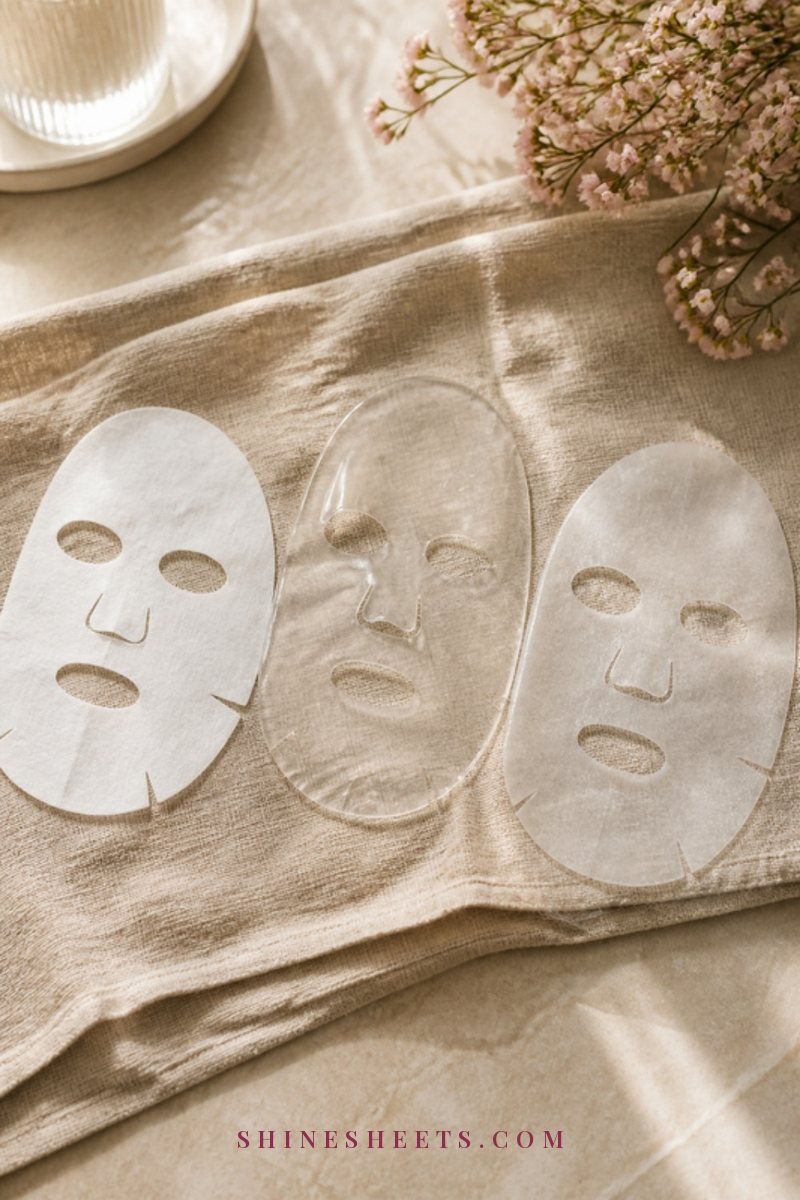
Sheet masks come in two main categories: what they're meant to do, and what they're made of. Both matter.
By Purpose
- Hydrating masks are the most common and the safest place to start. They focus on humectants like hyaluronic acid, glycerin and panthenol.
- Soothing masks are made for skin that feels warm, tight or easily irritated. They often contain centella asiatica, aloe, allantoin or madecassoside.
- Brightening masks aim to make skin look more even and radiant. Look for niacinamide, vitamin C derivatives or licorice root extract.
- Firming or "anti-aging" masks often include peptides, collagen or adenosine. They give a smooth, bouncy feel, but the visible effect is mostly from hydration.
- Purifying masks sometimes include tea tree, BHA or charcoal. These can be drying, so they're best for oily skin and occasional use.
By Material
- Cotton or fiber sheets are the classic, affordable choice. They're soft and breathable but can dry out faster.
- Hydrogel masks are thick, jelly-like and cooling. They cling well, hold serum longer and feel lovely after a long day.
- Bio-cellulose masks are made from plant-based fibers created through fermentation. They're ultra-thin, fit like a second skin and are often the most comfortable for sensitive skin. They tend to cost a bit more.
If you're new, a hydrating sheet mask variety pack from a well-known Korean brand is an easy way to try different textures and see what your skin prefers.
Which Sheet Mask Ingredients To Look For
This is the table to save for your next shopping trip (screenshot it). Find your skin goal and look for these ingredients near the top of the ingredient list.
| Your skin goal | Look for | Be careful with | Best material |
|---|---|---|---|
| Deep hydration, tight or dehydrated skin | Hyaluronic acid, glycerin, panthenol, ceramides | Alcohol high on the list | Hydrogel or bio-cellulose |
| Calm, easily reactive skin | Centella asiatica, madecassoside, allantoin, aloe | Fragrance, essential oils | Bio-cellulose or soft cotton |
| Dull, tired-looking skin | Niacinamide, vitamin C derivatives, licorice root | Strong acids if you already use exfoliants | Cotton or hydrogel |
| Bouncy, smooth look before an event | Peptides, adenosine, hyaluronic acid | Very rich formulas on oily skin | Hydrogel |
| Oily, congestion-prone T-zone | Niacinamide, green tea, light BHA | Heavy oils, frequent purifying masks | Cotton |
| Winter dryness, flaky patches | Ceramides, squalane, shea, panthenol | Fragrance, menthol "cooling" agents | Bio-cellulose |
For more about the star ingredients, my guides on hyaluronic acid and centella asiatica explain how each one works and who it suits best.
How To Use a Sheet Mask Step by Step
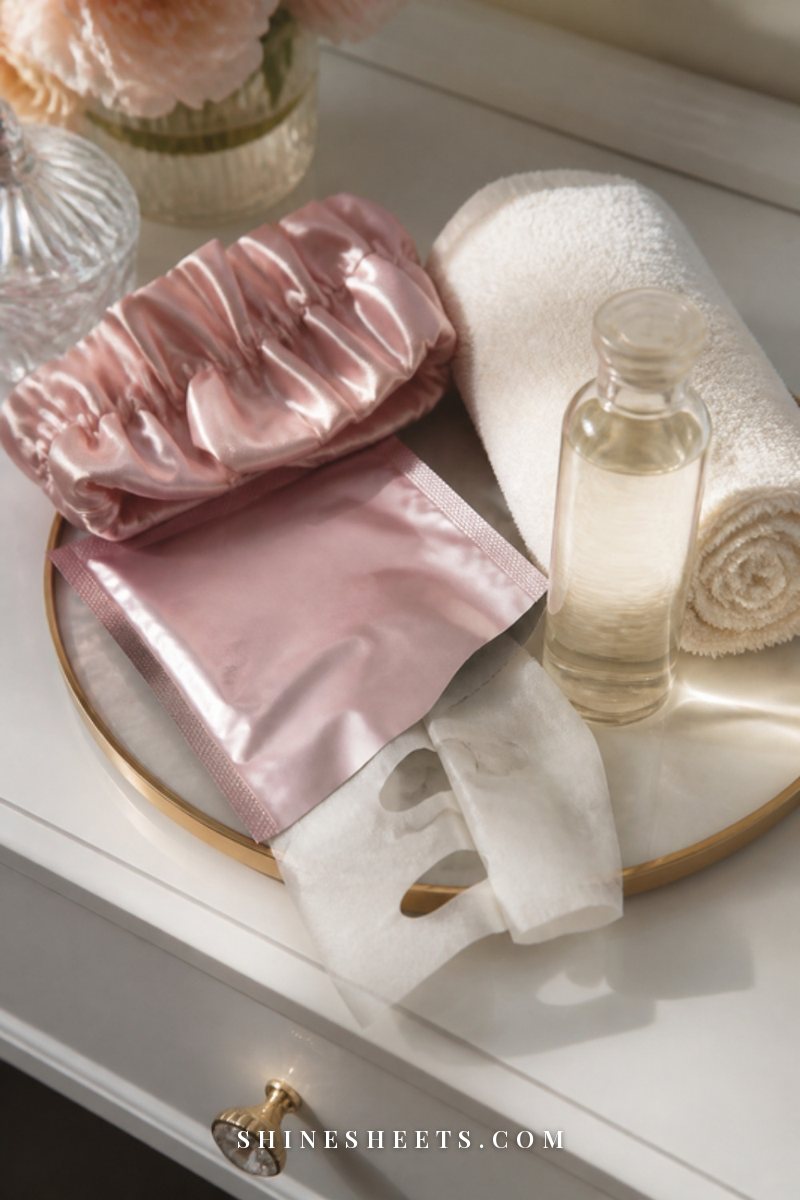
The steps are simple, but a few details make a surprisingly big difference to how your skin feels afterward.
- Cleanse. Wash your face with a gentle cleanser and pat it almost dry. Slightly damp skin is perfect.
- Tone if you like. A hydrating toner is optional, but it can help the mask's serum spread more evenly. Skip strong exfoliating toners right before masking.
- Pull your hair back. A soft satin spa headband keeps hair out of the serum and is gentle on your hairline.
- Unfold carefully. Sheet masks are delicate. Open the pouch, find the protective layer (if there is one), and gently unfold the mask with clean hands.
- Place and smooth. Line up the eye holes first, then the mouth, then smooth the sheet outward from the center to push out air bubbles. Fold any extra fabric on your forehead or chin instead of stretching it.
- Relax for 15–20 minutes. Lie back, put on a song or two and rest. Follow the time on the package, and take the mask off before it starts to dry.
- Remove and pat. Peel the mask off from the top down. Don't rinse. Gently pat the leftover essence into your face, neck and the backs of your hands until it's mostly absorbed.
- Seal with moisturizer. Apply your usual moisturizer to lock in the hydration. In the morning, finish with sunscreen.
Leftover serum in the pouch? Spread a little on your neck, décolleté or elbows. Just don't save an opened pouch for later, since it can grow bacteria quickly.
How Often Should You Use a Sheet Mask?
For most skin types, 1–3 times a week is the sweet spot. Hydrating masks are gentle enough that some people use them more often, especially in dry winter months or during a busy travel stretch, but there's rarely a need for a daily mask.
A few simple guidelines:
- Hydrating and soothing masks: up to 3 times a week, or more if your skin is very dry and happy.
- Brightening or firming masks: 1–2 times a week.
- Purifying or exfoliating masks: once a week at most, and not on the same night as retinoids or strong acids.
Your skin is the best guide. If it feels comfortable, bouncy and calm, your rhythm is right. If it starts feeling congested, itchy or overly slick, take a break and space them out.
The Best Times for a Sheet Mask

You can mask any time, but some moments make it especially worthwhile:
- The evening before an event. Masking the night before (or a few hours before) gives makeup a smooth, hydrated base and helps foundation sit more evenly.
- After a flight. Cabin air is very dry. A hydrating mask once you arrive helps skin bounce back.
- In winter. Indoor heating and cold wind pull moisture from the skin, so a weekly mask is a lovely addition to a winter skincare routine.
- After too much sun or wind. A cool, soothing mask can feel comforting (for an actual sunburn, keep things very simple and gentle).
- On a slow evening. Sheet masks are a sweet excuse to lie down for 20 minutes. Pair one with a bath, a book or a cup of evening tea. If you love this kind of ritual, my self-care night ideas have plenty more ways to make an evening feel restful.
Morning or evening both work. In the morning, keep it to a hydrating mask and always follow with SPF. In the evening, you can follow with your usual night routine.
Sheet Masks for Sensitive Skin
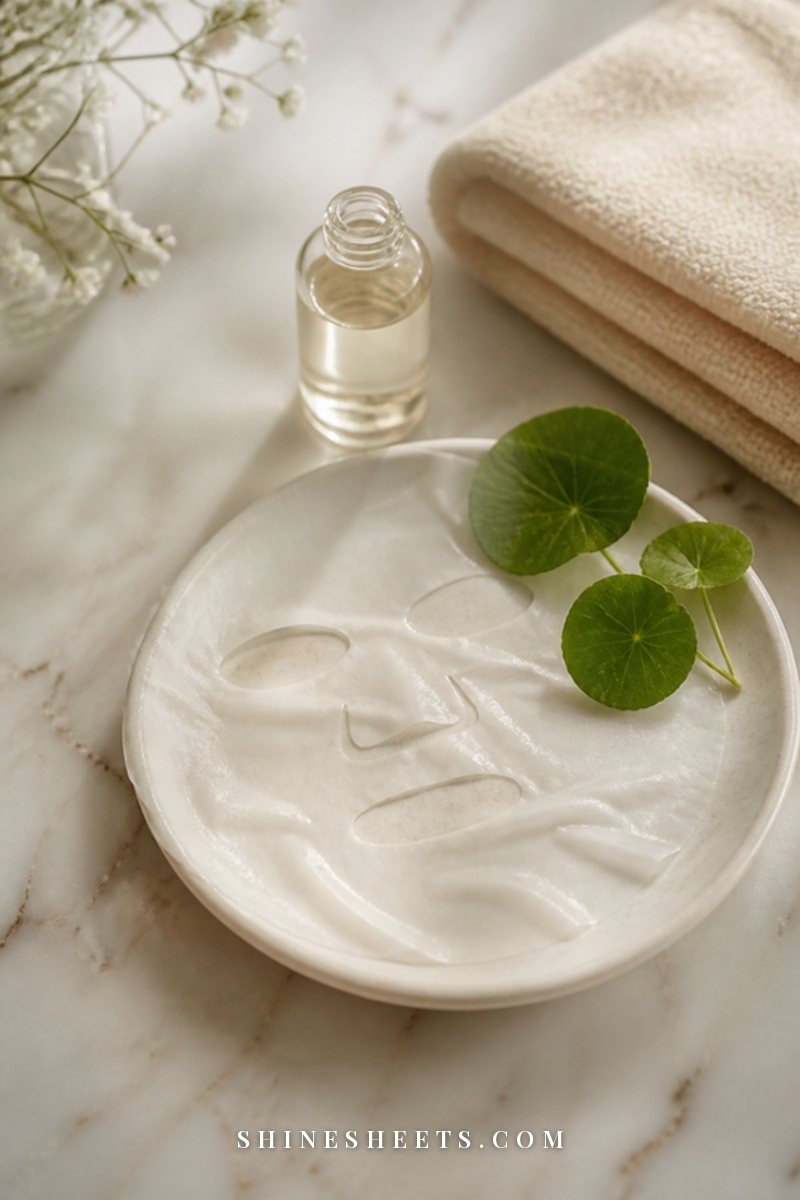
My own skin is combination and sensitive with a shiny T-zone, so I pay extra attention here. Sheet masks can be a dream for sensitive skin, or a nightmare, depending on what's in them.
- Choose fragrance-free. Many masks smell lovely because of added fragrance or essential oils, which are common irritants. Look for "fragrance-free" or check the ingredient list for "parfum" or "fragrance."
- Keep ingredient lists short. Fewer ingredients means fewer chances for a reaction.
- Look for calming ingredients like centella, panthenol, allantoin and ceramides. Centella soothing sheet masks are a popular Korean pick for skin that turns red easily.
- Choose softer materials. Bio-cellulose and fine cotton tend to feel gentler than thicker, rougher sheets.
- Shorten the time. If you're unsure, start with 10 minutes instead of 20.
- Patch test first. Apply a little serum from the pouch to the side of your neck or behind your ear and wait 24 hours before using the full mask, especially with a new brand.
If a mask stings, burns or itches, take it off right away and rinse with cool water. Mild tingling can happen, but discomfort is a sign to stop. If you have ongoing redness, eczema, rosacea or a reaction that doesn't settle, a dermatologist can help you choose products that suit your skin.
Sheet Masks for Oily and Combination Skin
Oily skin needs hydration too. In fact, skin that lacks water sometimes produces more oil to compensate, which is why a well-chosen sheet mask can leave an oily T-zone looking calmer rather than greasier.
- Pick light, watery formulas. Look for hyaluronic acid, niacinamide, green tea or centella, and skip masks with heavy oils or butters high on the ingredient list.
- Try cotton sheets. They feel lighter and more breathable than thick hydrogel on warm, shiny skin.
- Pat, then blot. After removing the mask, pat the essence in for a minute. If your T-zone still feels slick after five minutes, gently press a tissue over it before moisturizer.
- Use a lighter moisturizer afterward. A gel cream is usually enough to seal in hydration without feeling heavy.
- Multi-mask if you like. Some people cut a mask or use a purifying formula on the T-zone only once a week and a hydrating one everywhere else. It sounds fussy, but it's a sweet way to give each area what it needs.
Where Sheet Masks Fit in Your Skincare Routine
A sheet mask slots in after cleansing and toning, and before serums and moisturizer. On most nights, the mask can replace your hydrating serum entirely, since it's essentially a serum on a sheet.
A few pairing tips:
- On retinoid nights, mask first, wait until your skin is completely dry (about 20 minutes), then apply your retinoid, or simply keep masks for your non-retinoid evenings.
- On exfoliation nights, skip the mask or choose a very simple soothing one. Freshly exfoliated skin absorbs more, which can turn a gentle mask into an irritating one.
- With vitamin C in the morning, a hydrating mask before your serum is fine. Just finish with sunscreen.
- Facial oils go on last, after moisturizer, if you use them.
Keeping it simple on mask nights is often the nicest approach. Cleanse, mask, moisturize, done.
Common Sheet Mask Mistakes
These small slip-ups are surprisingly common, and fixing them makes every mask work better:
- Leaving it on too long. Once the sheet starts drying, it can begin pulling moisture back out of your skin. Stick to the time on the package, usually 15–20 minutes.
- Falling asleep in it. Same problem, plus a crumpled mask on your pillow. Set a gentle timer.
- Reusing a mask. Sheet masks are single-use. Once opened and worn, they can collect bacteria.
- Rinsing off the essence. The leftover serum is part of the treatment. Pat it in instead.
- Skipping moisturizer afterward. Without a moisturizer to seal it in, much of that hydration evaporates.
- Masking over strong actives. Using a sheet mask right after a retinoid or acid can increase irritation, because the occlusion helps everything sink in deeper. Mask first, or on a different night.
- Using a purifying mask too often. Charcoal and acid masks can leave combination skin feeling tight and oily at the same time.
- Expecting miracles. A sheet mask is a lovely boost, not a cure. Consistency with your basic routine matters more.
The Fridge Trick
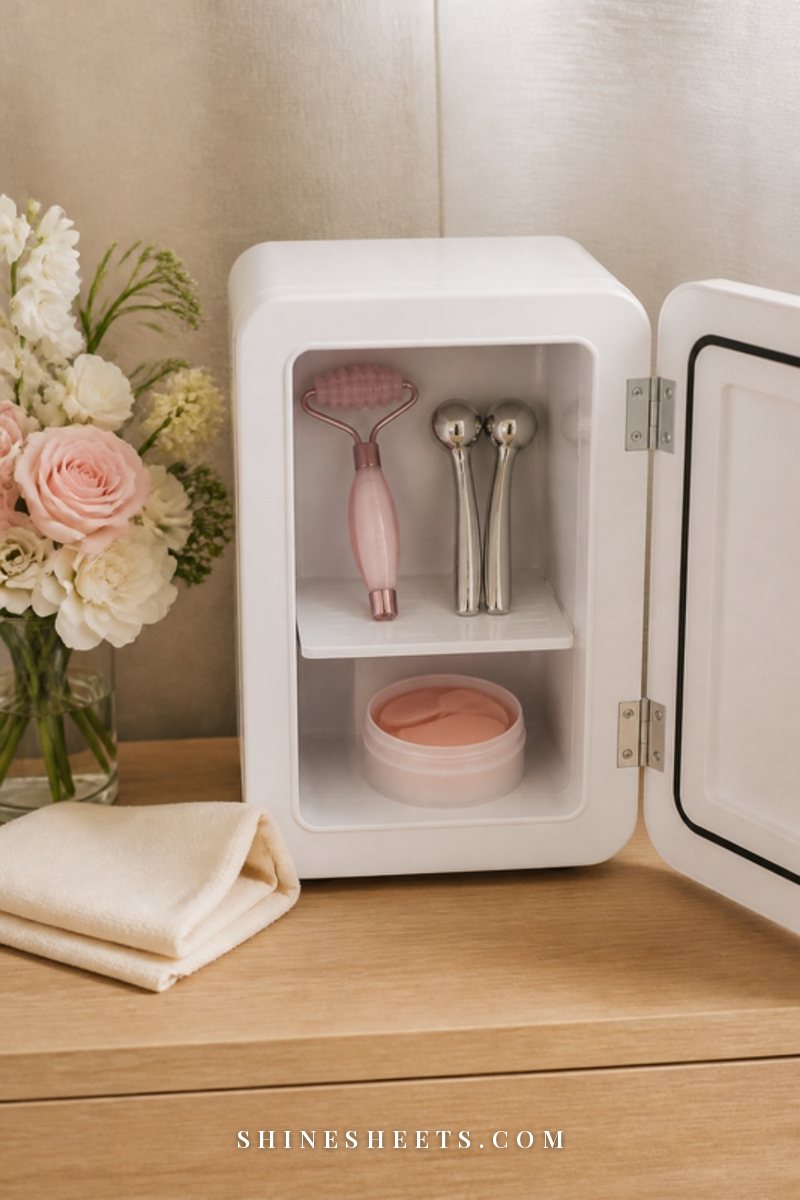
Chilling your sheet masks for 15–30 minutes before use makes them feel wonderfully cooling, especially on a warm day or on puffy mornings. The cold can help skin look a little less puffy for a short time, and it simply feels refreshing.
You can use your regular fridge (keep masks in a clean container away from food), or if you love the ritual, a small white skincare fridge on your vanity keeps masks and eye patches chilled and ready. One caution: don't freeze sheet masks, and skip the fridge trick if cold makes your skin red or irritated.
The same trick works beautifully with hydrogel under-eye patches. Pop them on for 10–15 minutes while you make your morning tea, and they're a soft, cooling little reset for tired-looking eyes.
Quick Answers About Sheet Masks
Should You Rinse After a Sheet Mask?
Usually not. The leftover essence is meant to be patted in. The exception is if your skin feels sticky or tingly afterward, in which case a quick splash of lukewarm water is perfectly fine before moisturizer.
Can You Wear Makeup After a Sheet Mask?
Yes. Let the essence absorb for 5–10 minutes, apply a light moisturizer and sunscreen, then makeup. Hydrated skin usually makes foundation look smoother, and a mask the evening before a big day works beautifully too.
How Should You Store Sheet Masks?
Keep unopened pouches somewhere cool and dry, away from direct sunlight and the steamy shower area. Check the expiry date on the back, and don't use a mask if the pouch is puffed up, torn or smells off.
Are Expensive Sheet Masks Better?
Not necessarily. The ingredient list and material matter more than the price. Many affordable Korean best-sellers are wonderfully hydrating. Paying more often gets you a softer bio-cellulose sheet or a more generous amount of serum, which is a nice extra, not a requirement.
A Kinder Way To Sheet Mask
Sheet masks are single-use, which means a fair amount of waste. You don't need to give them up, but a few small choices can lighten the footprint:
- Choose bio-cellulose or plant-fiber sheets when you can. They're often made from more renewable materials (check the brand's disposal advice, since not all are compostable).
- Check local recycling rules for pouches. Many are made of mixed materials and can't be recycled, but some brands use simpler packaging.
- Use masks with intention. One or two well-timed masks a week are more meaningful than a daily habit you barely notice.
- Use the leftover serum on your neck, hands or elbows so nothing goes to waste.
- Try a wash-off or leave-on hydrating mask from a jar for some of your mask nights. It gives similar comfort with less packaging.
Final Thoughts
Sheet masks are one of the sweetest little rituals in skincare. They're simple, soothing and give your skin a visible drink of hydration, especially when it's tired, dry or about to face a big day.
Choose the ingredients that match your skin goal, keep it to 15–20 minutes, pat in the leftover essence and seal it all with moisturizer. Then lie back, breathe and enjoy those quiet minutes that belong entirely to you.