Skin fasting sounds dramatic, but the useful part of it is surprisingly simple: when a routine gets crowded, taking a few steps away often tells you more about your skin than adding one more serum ever could. The trick is knowing which steps to pause and which ones you should never skip.
A lot of us end up with routines that grew one product at a time. A toner here, an acid there, a vitamin C because everyone talked about it, a retinol because it felt like the grown-up thing to do. Each one made sense on its own. Together, they can leave skin tight, stingy and confused, and you can't tell which bottle is doing what.
This guide is an honest look at skin fasting: what it means, where the idea came from, what a skincare break can genuinely help with and what it simply can't do. You'll also find who should skip a full fast, a gentler 7-day minimal-routine reset, a keep/pause/reintroduce table and a calm way to bring products back one by one.
It took me a while (and one very irritated T-zone) to understand that less can be a real strategy, not a lazy one. Let's look at how to do it kindly.
What Is Skin Fasting?
Skin fasting means pausing most or all of your skincare products for a set amount of time, usually a few days up to a week. In the strictest version, you only rinse your face with water and use nothing else. In softer versions, you keep a few basics and pause everything "extra."
The promise you'll often hear is that skin needs a "reset," and that a break lets it go back to regulating itself. There's a grain of truth in the idea that skin has its own protective systems (it does), but the word "reset" makes it sound like flipping a switch. Skin doesn't work like that. What a break really gives you is information: when you remove the noise, you can see how your skin behaves with less interference.
I like to think of it as clearing the table before you set it again. You're not punishing your skin, and you're not starving it. You're simplifying, watching and then rebuilding with intention.
Where the Idea Came From
The term became popular through Japanese beauty culture, where a minimalist approach to skincare and the idea of letting skin "rest" have been talked about for years. From there it spread through beauty magazines and social media, often framed as a detox for your face.
That framing is where things get a little wobbly. Your skin isn't storing up product "toxins" that need to be flushed out. What it can store up is irritation. If you've been layering several active ingredients, exfoliating often or trying new products every week, the barrier (the outermost layer that keeps moisture in and irritants out) can get stressed. Stepping back gives it a chance to calm down.
The trend isn't nonsense, but it's also not magic. The helpful version sits somewhere in the middle, and that's where we're going to stay.
What a Skincare Break Can Genuinely Help
A pause can be genuinely useful in a few specific situations:
- An overloaded routine. If you're using seven, eight or ten products twice a day, simplifying lets you see which ones actually matter to your skin.
- Irritation from too many actives. Acids, retinoids, vitamin C and benzoyl peroxide are all useful, but stacking them can lead to redness, stinging and flaking. Pausing them gives your barrier room to recover. If you've been combining a few of them in one routine, my guide to skincare ingredients you shouldn't mix is worth a read before you bring them back.
- Product fatigue. Sometimes the problem isn't your skin at all. It's you being tired of a 25-minute routine. A simple week can make skincare feel calm and doable again.
- Figuring out a mystery reaction. When you can't tell what's causing breakouts or stinging, stripping back and reintroducing slowly is the clearest way to find the culprit.
Notice what all of these have in common: the break helps because your routine was the problem. If your skin was mostly fine before, a fast won't make it dramatically better.
What Skin Fasting Cannot Do
This is the part that often gets left out, and I think it matters most. A skincare break cannot:
- Fix acne. Acne has many causes, including hormones, genetics and how your pores shed skin cells. Taking away treatments usually means breakouts have less working against them, not more.
- Treat rosacea or eczema. These are skin conditions that need proper care, and a dermatologist can help you find a plan. A fast can actually make eczema-prone skin drier and more uncomfortable.
- "Teach" your skin to make more oil. You'll sometimes read that skipping moisturizer forces dry skin to produce its own oil. Skin doesn't learn that way. Dry skin without moisturizer is usually just drier skin.
- Undo sun damage or replace sunscreen. Sunscreen is protection, not an "extra." It stays, every single morning.
If you've been hoping a week of nothing would solve a long-running skin problem, I understand the appeal (it would be so easy). But it's kinder to yourself to know the limits up front, so you don't feel like you failed when the break doesn't work miracles.
Who Should Not Fully Skin Fast
A strict water-only fast isn't a good fit for everyone. I'd skip the full version and go straight to the gentler reset below if any of these sound like you:
- Very dry skin. Without moisturizer, dry skin can crack, flake and feel tight within a day or two.
- Eczema-prone skin. A strong barrier routine is usually part of keeping eczema calm, so removing moisturizer can backfire.
- Skin under acne treatment. If you use a treatment from a doctor or dermatologist, don't stop it on your own. Ask them first whether a pause makes sense.
- Anyone who spends time outdoors. Which is all of us. Sunscreen is never part of the fast.
Combination, sensitive skin like mine sits in a funny middle spot: my T-zone can get shiny while my cheeks get tight. For skin like that, a full fast tends to make both problems louder. The minimal version is where it actually feels better.
5 Signs Your Routine Is Overloaded
Not sure if you need a break at all? These five signs are the clearest hints that your routine has gotten too busy for your skin.
1. Plain Moisturizer Suddenly Stings
If a gentle, fragrance-free moisturizer that never bothered you before now tingles or burns, your barrier is likely stressed. That's one of the most common signs that you've been doing too much, especially with exfoliants or retinoids.
2. You're Layering More Than One Strong Active
An acid toner, a vitamin C serum and a retinol in the same day (or worse, the same routine) is a lot for most skin. One active at a time is usually plenty, and a lot of people do best rotating them across the week.
3. Your Skin Feels Tight and Shiny at the Same Time
That "tight but greasy" combination often means your skin is dehydrated underneath while the surface tries to compensate. It's very common with over-cleansing and over-exfoliating.
4. Products Pill or Sit on Top
When serums and creams start rolling into little balls or never seem to sink in, you may simply have too many layers. Fewer, better-chosen products usually fix this on their own.
5. You Can't Tell What Any Single Product Does
If someone asked which of your bottles is responsible for your skin looking good (or looking irritated), and you genuinely don't know, that's a sign. A routine you can't read is a routine you can't adjust.
If two or more of these feel familiar, a simple reset is probably a good idea. If you're seeing broken-looking patches, constant redness or burning, my guide on how to restore your skin barrier goes deeper into the repair side.
The Gentler Version: A 7-Day Minimal-Routine Reset
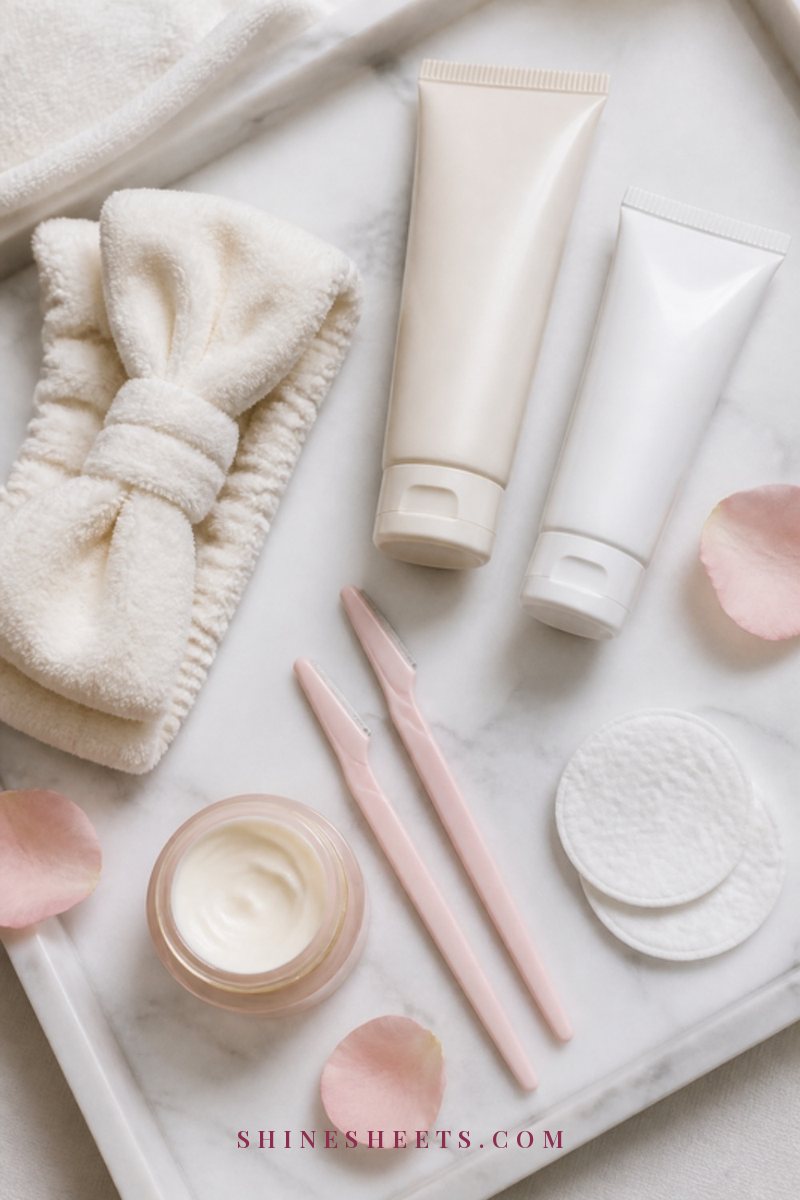
This is the version I'd choose for almost everyone. Instead of stopping everything, you keep three basics for seven days: a gentle cleanser, a plain moisturizer and sunscreen. That's it. Your skin gets a calm, predictable week, and it still has protection and moisture.
Before you start, pick a week where you don't have a big event coming up, so you don't feel tempted to "fix" something with a quick mask the night before.
Your Morning During the Reset
- Rinse or cleanse gently. If your skin isn't oily in the morning, lukewarm water is often enough. If your T-zone is shiny, use a small amount of cleanser.
- Moisturize. A thin layer of a plain, fragrance-free moisturizer. Look for a fragrance-free barrier moisturizer with ceramides or glycerin and no added essential oils.
- Sunscreen, every day. A mineral sunscreen for the face with zinc oxide is a good pick for sensitive skin, since it's often gentler during a reset. Apply about two finger lengths for face and neck.
Your Evening During the Reset
- Cleanse once, gently. A gentle cream cleanser that doesn't foam a lot is ideal. Massage for about 30 seconds and rinse with lukewarm water, never hot.
- Remove sunscreen properly. If your cleanser doesn't take it all off, go over the skin once more. Double cleansing is fine here, as long as both steps are gentle.
- Moisturize. The same plain moisturizer, maybe a slightly thicker layer if your cheeks feel tight.
I like to do my evening steps right after my tea, before I journal. It turns a three-step routine into a small, calm ritual rather than something that feels like "doing less."
What To Expect Day by Day
- Days 1–2: Not much change. Some people feel a little "naked" without their usual serums, which is normal.
- Days 3–4: If your skin was irritated, stinging often starts to calm. If you paused an acne treatment (with your doctor's okay), you might see a few spots.
- Days 5–7: You'll usually have a clearer sense of your skin's baseline. Is it naturally oily in the T-zone? Dry on the cheeks? Calm? That's the information you came for.
If your skin feels very dry, red or uncomfortable at any point, don't push through to "finish." Adjust: add a richer moisturizer or end the reset early.
The Skin Reset Table: Keep, Pause, Reintroduce
This is the heart of the plan. Screenshot it, stick it inside your bathroom cabinet or jot it in your notebook. The reintroduction days assume a 7-day reset and one product every 3–5 days.
| Routine step | Keep during the reset? | Pause | Reintroduce on day |
|---|---|---|---|
| Gentle cleanser | Yes, once or twice a day | Pause harsh foaming or scrubby cleansers | Keep throughout |
| Plain moisturizer | Yes, morning and night | Pause fragranced or "active" creams | Keep throughout |
| Sunscreen | Yes, every morning, no exceptions | Never pause | Keep throughout |
| Hydrating serum (hyaluronic acid, glycerin) | Optional; pause if unsure | Pause for 7 days to learn your baseline | Day 8 |
| Toner or essence | No | Pause | Day 11–13 |
| Vitamin C serum | No | Pause | Day 14–18 |
| Exfoliating acids (AHA, BHA, PHA) | No | Pause | Day 17–23, start 1–2 nights a week |
| Over-the-counter retinol | No | Pause | Day 20–28, start 2 nights a week |
| Face oil, masks, mists | No | Pause | Last, one at a time, only if you miss them |
| Prescription treatments | Ask your doctor | Don't pause on your own | As your doctor advises |
A little note on the order: hydrating, low-risk products come back first, and stronger actives come back last. That way, if something stings, it's much easier to tell what caused it.
How To Reintroduce Products One at a Time
This is the step most people rush, and it's the one that makes the whole break worthwhile. If you bring back six products on day eight, you're right back where you started, just with a week of good intentions behind you.
The 3–5 Day Rule
Add one product, then wait 3–5 days before adding the next. That gives your skin time to show you how it feels about it. Most irritation shows up within a few days, while some breakouts can take a little longer, so if you're adding something like a new moisturizer, waiting the full five days is a good habit.
Keep a tiny note in your phone or journal: the product, the date you added it and how your skin felt on day one, day three and day five. It takes ten seconds and saves you weeks of guessing later.
Patch Test Every Returning Product
Even products you used before deserve a quick patch test, because your skin may react differently after a calm week. Apply a small amount behind your ear or on the side of your jaw for a few days and watch for redness, itching or bumps. My step-by-step guide on how to patch test skincare walks through exactly where and how long.
Decide What Actually Earns Its Place
Here's a gentle question to ask with each returning product: did I miss it? If your skin looked great on the three basics and you don't feel a difference with a toner or a mist, you're allowed to leave it in the drawer. Your routine doesn't need to be as long as it was.
For actives, think about spacing them across the week instead of stacking them. A rotation like skin cycling can be a kind way to bring back exfoliants and retinol without overwhelming your skin. And if your skin feels thirsty after the reset, the layered-hydration idea behind skin flooding pairs nicely with a calmer routine.
Little Things That Make a Reset Easier
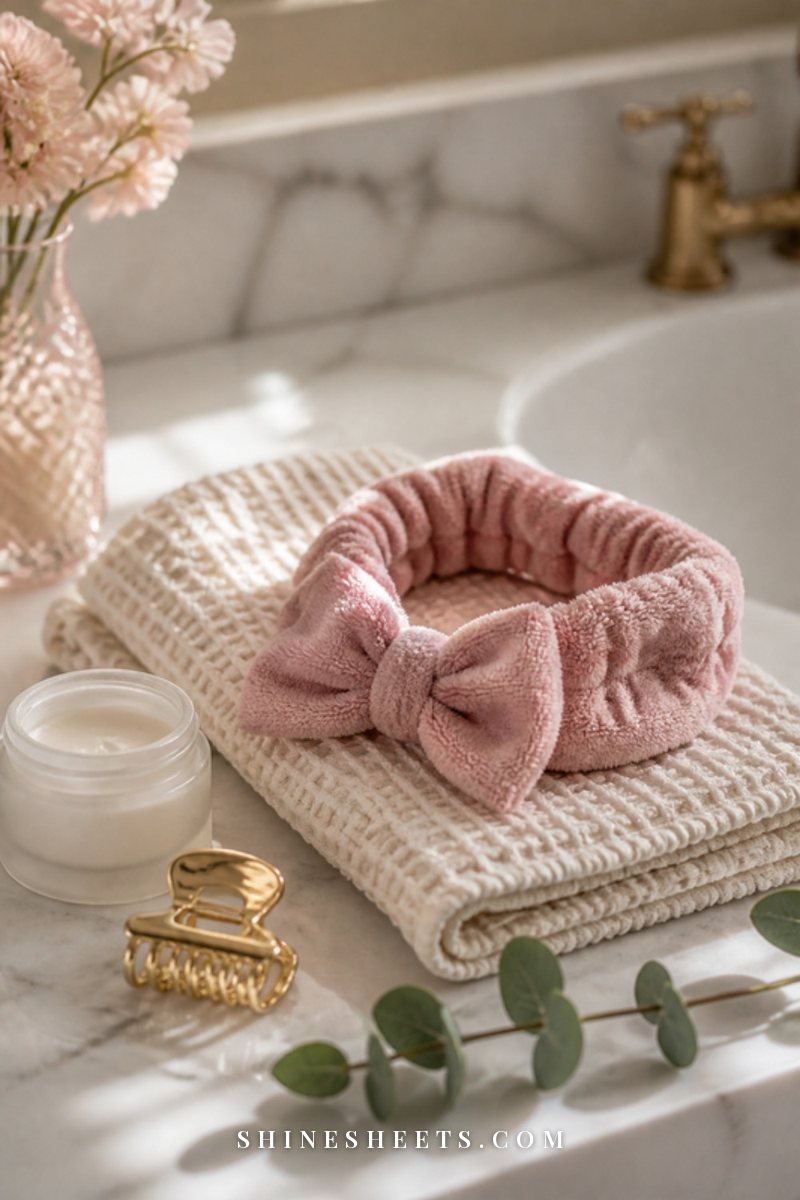
A simple routine feels so much nicer when the few steps you do keep feel a little special. A few practical helpers:
- A soft headband. A cream cotton spa headband keeps hair off your face while you cleanse, which also helps you notice how your hairline and forehead skin are doing.
- Gentle face cloths. Instead of rubbing with a rough towel, look for white muslin face cloths. Wet one with lukewarm water and press it gently over your face to remove cleanser. Use a fresh one every day or two and wash them on a hot cycle.
- Pat, don't rub. Dry your face with a light pat. It sounds small, but during a reset, less friction really matters.
- Lukewarm water only. Hot water can feel lovely but leaves sensitive skin tighter. Aim for water that feels barely warm on your wrist.
- Hide the extras. Put your paused products in a box or a cabinet for the week. Out of sight really is out of mind.
When To See a Dermatologist
A break from products is a good tool for an overloaded routine, but it's not a treatment for a skin condition. Please book a visit with a dermatologist or your doctor if:
- Irritation, redness or burning doesn't calm down after a week of the minimal routine.
- You have painful, deep or spreading breakouts.
- Patches of skin are itchy, scaly, cracked or weeping.
- You notice swelling, hives or a reaction that spreads beyond where you applied a product.
- You suspect rosacea, eczema or another condition and want a proper plan.
There's no prize for waiting it out. Getting help early often means a simpler routine and calmer skin sooner.
Final Thoughts
Skin fasting isn't a detox and it isn't a cure. At its best, it's a calm pause that helps you hear what your skin is telling you, and that's a lovely thing to give yourself.
Keep your cleanser, your moisturizer and your sunscreen, give it seven quiet days and then rebuild slowly, one product at a time. What you end up with is a routine that's shorter, kinder and completely yours.