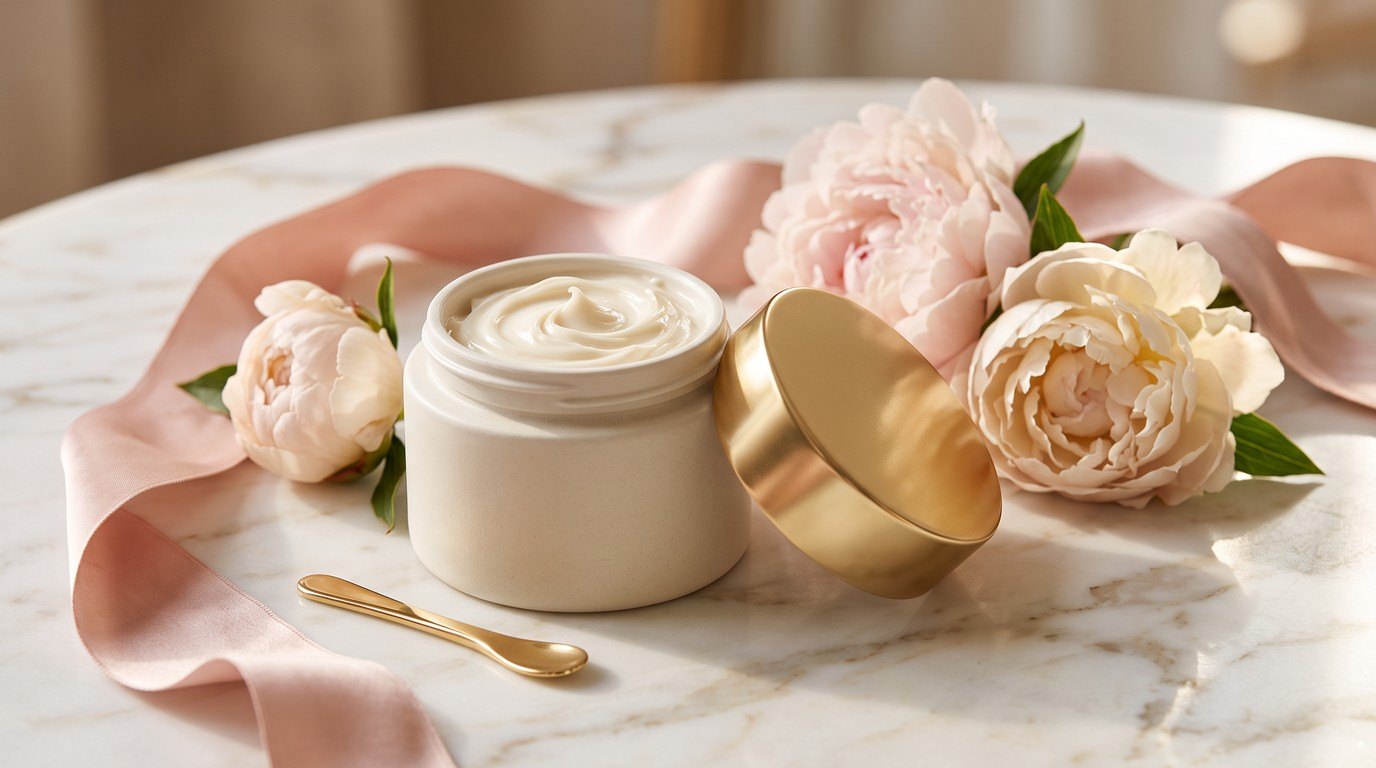
Beef tallow isn't a miracle and it isn't a scam. It's a rich, old-fashioned fat that can feel lovely on very dry skin and can also be the wrong choice for a lot of faces. The truth sits somewhere in the middle, which is exactly the part the hype tends to skip.
If your feed has been full of creamy jars of whipped tallow and bold promises about "ancestral skincare," it's completely normal to feel curious and a little confused. Is it the secret your dry patches have been waiting for, or a pore-clogging trend you'll regret?
This guide gives you the honest answer on beef tallow skincare: why it became popular, what it can genuinely do, what's overhyped, whose skin it may suit and who should be careful. You'll also find how to choose a good balm, how to use it on your face without overdoing it, five alternatives with a similar rich feel and a comparison table to help you decide.
No fear-mongering, no miracle talk. Just the facts, explained like a friend would.
Why Beef Tallow Became a Skincare Trend
Tallow isn't new. People used animal fats on skin long before modern moisturizers existed, and tallow was a classic ingredient in traditional soaps. The recent wave of interest came from a mix of three things.
- The "skin-similar" argument. Tallow is rich in fatty acids, such as oleic, palmitic and stearic acid, and our skin's own oils and barrier also contain fatty acids and triglycerides. That similarity is real, and it's the main selling point you'll hear.
- "Ancestral" and "simple" marketing. Short ingredient lists, small-batch jars and the idea of going back to what grandmothers used all feel comforting, especially if long labels make you anxious.
- Before-and-after videos. A dry, flaky face looks dramatically smoother after a thick layer of almost any occlusive balm. That makes for very convincing clips.
None of this means tallow is bad. It just means a lot of the excitement is about the story around it, not about proof that it outperforms the moisturizers already on drugstore shelves.
What Beef Tallow Actually Is
Beef tallow is rendered beef fat. Fat (often the firm fat called suet) is slowly heated, melted and strained so the pure fat separates from everything else. Once it cools, it becomes a firm, waxy, off-white solid. For skincare, it's often whipped with a little plant oil so it turns soft and spreadable.
Here's what it contains, in plain terms:
- Mostly triglycerides, made from fatty acids like oleic acid (also abundant in olive oil), palmitic acid and stearic acid.
- Small, variable amounts of fat-soluble vitamins (you'll often see vitamins A, D, E and K mentioned). The amounts depend on the animal's diet and on how the fat was rendered, and they're usually far lower than marketing suggests. I'd treat any claim built on those vitamins with a gentle raised eyebrow.
- Whatever else the maker adds, such as essential oils, fragrance or other butters. That's often where trouble starts for sensitive skin.
It's worth repeating: there's no need to make tallow yourself at home. Home rendering is messy, the quality is hard to control and a poorly rendered fat can smell and spoil quickly. If you want to try it, choose a well-made product.
What Beef Tallow Can Do for Skin
Tallow's genuine strength is simple: it's a rich occlusive and emollient. Here's what that means in real life.
- It softens dry, rough patches. Emollient fats fill in the tiny gaps between flaky skin cells, so skin feels smoother almost instantly.
- It locks in moisture. As an occlusive, it forms a protective layer that slows down water loss from the skin. That's why it works best on top of hydration, not instead of it.
- It cushions skin in harsh conditions. Cold wind, dry indoor heat and very low humidity can leave skin tight and chapped. A thin layer of a rich balm can make it feel more comfortable.
- It can be a simple, fragrance-free option. A good unscented tallow balm has a short ingredient list, which some people appreciate.
Those are real, useful benefits. They're also benefits shared by many other rich moisturizers, which brings us to the part of the story that doesn't get as much airtime.
What's Overhyped About Tallow Skincare
This is where I want to be really honest with you, because the claims online can get big very quickly.
- "It's better than any moisturizer." There's no good evidence that tallow beats well-formulated modern moisturizers. Research specifically on tallow for facial skin is very limited, and most of what you see is personal stories and marketing.
- "It's an anti-aging miracle." Any rich moisturizer can make fine lines look softer for a while because well-moisturized skin looks plumper. That's not the same as reversing aging. Daily sunscreen does far more for long-term skin aging than any balm.
- "It heals everything." Tallow is not a treatment for eczema, rosacea, acne or any other skin condition. If you have one of these, a dermatologist is the right person to guide you.
- "It's natural, so it's safe for everyone." Natural doesn't automatically mean gentle. Poison ivy is natural, too. Every skin is different, and some skin simply doesn't like rich animal fats.
- "It matches your skin exactly." Tallow shares some fatty acids with skin, but so do many plant oils and lab-made ingredients. Similar isn't identical, and it doesn't guarantee it will suit you.
If you've read my take on putting coconut oil on your face, this will feel familiar. A rich, simple fat can be lovely in the right place and frustrating in the wrong one.
Who Beef Tallow May Suit
Tallow tends to make the most sense for skin that's dry, rough or weathered, and for body areas that need extra cushioning. It may be worth trying if you have:
- Very dry skin that feels tight soon after cleansing, even with a good moisturizer.
- Weathered skin from wind, cold air or long hours in dry indoor heat.
- Dry, rough hands, especially after frequent hand-washing.
- Elbows and heels that look ashy or feel rough.
- Dry patches on cheeks or around the nose that stay flaky despite your usual routine.
A lovely, low-risk way to try it is on your hands rather than your face. Massage a small amount into your hands at night and slip on a pair of soft cotton overnight gloves so the balm stays put while you sleep. For heels and elbows, a thin layer after a shower works well.
If your skin is dry all over, my gentle morning and night routine for dry skin shows where a rich balm fits alongside cleansing, hydrating and sunscreen.
Who Should Be Careful With Tallow
Tallow isn't for everyone, and that's perfectly okay. These are the groups who may want to skip it, or try it only very carefully.
Acne-Prone or Oily Skin
Tallow is a heavy, rich fat, and for some people that kind of texture can clog pores and lead to breakouts. Comedogenic ratings (the scores that guess how likely an ingredient is to clog pores) aren't perfect, and how a product behaves depends on the whole formula and your skin. Still, if you break out easily, a thick animal-fat balm all over your face is a gamble.
My own skin is combination and sensitive, with a shiny T-zone, so if I were curious about tallow, I'd keep it far from my nose, chin and forehead and test it only on a dry patch first. If pore-clogging is your main worry, my guide to what non-comedogenic really means will help you read labels more confidently.
Fungal Acne
"Fungal acne" is the everyday name for a condition where tiny, itchy, similar-looking bumps appear, often on the forehead, chest or back. It's linked to a yeast that naturally lives on skin, and that yeast can feed on many fatty acids, including ones found in tallow. If you've been told you have it, or your bumps are small, uniform and itchy, rich fats are best avoided until a dermatologist confirms what's going on.
Sensitivity to Added Essential Oils
Many tallow balms are scented with essential oils like lavender, frankincense or citrus. They smell lovely, but essential oils are a common cause of irritation and allergic reactions, especially for sensitive skin. If your skin reacts easily, choose an unscented, fragrance-free version and read the full ingredient list before buying.
How To Choose a Good Tallow Balm
Quality matters a lot with tallow, because it's a natural fat that can spoil. Here's what to look for:
- Well-rendered and clean. Look for a maker that explains how the tallow is rendered and filtered. It should look smooth and uniform, without specks or grainy bits.
- Fragrance-free. A fragrance-free whipped tallow balm with a very short ingredient list is the gentlest place to start, especially for your face.
- No strong smell. A good tallow balm should smell faintly fatty or of almost nothing at all. A strong "beefy," sour or crayon-like smell is a sign it may be poorly rendered or going rancid.
- Clear storage advice. Store it somewhere cool and dark, away from a steamy shower and sunny windowsill. Some makers suggest refrigeration in warm months.
- A short shelf life you'll actually use. Natural fats oxidize over time. Check the date and the opened-jar symbol, buy a small size and use it within the time on the label (and toss it sooner if it smells off).
- Clean scooping. Use a small spatula rather than fingers to keep bacteria out of the jar.
How To Use Beef Tallow on Your Face
If you've patch tested and your skin seems happy, here's how to use tallow gently, without overdoing it. Less is truly more here.
- Cleanse gently with a mild, non-stripping cleanser, then pat your skin with a soft towel so it's still slightly damp.
- Apply your hydrating step first if you use one, such as a hydrating toner or serum. Tallow seals moisture in, so there should be moisture to seal.
- Take a tiny amount, about the size of a grain of rice for your whole face, or even less for just the dry areas.
- Warm it between your fingertips for a few seconds until it melts and turns slightly glossy.
- Press it onto damp skin rather than rubbing hard, focusing on dry patches. Skip the T-zone if it tends to be oily.
- Use it at night, as the last step, so it sits on top of everything else while you sleep.
- Start slowly, two or three nights a week, and watch your skin for one to two weeks before using it more often.
In the morning, cleanse as usual and finish with sunscreen. A heavy balm under daytime makeup can feel greasy and slide around, so night is usually its best moment. For more on choosing the right weight of moisturizer for each part of your routine, my moisturizer guide to gels, creams and balms breaks it down simply.
How To Patch Test Beef Tallow
Before putting anything new on your face, do a patch test. Apply a small amount to a discreet area, such as behind your ear or along your jawline, once a day for several days in a row. If you notice redness, itching, burning, bumps or a breakout, stop and rinse it off. Only move to your face if that spot stays calm.
A kind safety note: if you have persistent dryness, frequent breakouts, a rash or skin that cracks and bleeds, please see a dermatologist rather than trying product after product. Ongoing skin issues deserve a proper look.
5 Alternatives With a Similar Rich Feel
If tallow doesn't suit you, or you'd simply prefer a plant-based or more widely tested option, these five give you a similar softening, cocooning feel.
1. Squalane
Squalane is a lightweight, silky oil that's very similar to squalene, a lipid your skin makes naturally. It sinks in quickly, feels far less heavy than tallow and is generally considered low-risk for clogging pores, which makes it a friendly option for combination skin. A few drops of a pure squalane oil pressed over your moisturizer at night can soften dry areas without that thick layer. My squalane oil guide covers how to use it.
2. Shea Butter
Shea butter is a rich, creamy plant butter with a texture surprisingly close to whipped tallow. It's wonderful on the body, hands, elbows and heels. On the face it can feel heavy for oily or acne-prone skin, so use it mainly on dry areas. A rich shea body butter makes a lovely after-shower step for rough skin.
3. Ceramide Cream
Ceramides are lipids that are a natural part of your skin barrier, and many well-known drugstore creams combine them with cholesterol and fatty acids to support it. A ceramide barrier cream gives you that comforting, rich feel with ingredients that have been widely studied and are usually formulated to be gentle and fragrance-free. For many people with dry, sensitive skin, this is the option I'd choose first.
4. Petrolatum Balm
Petrolatum (petroleum jelly) is one of the most effective occlusives available. The ingredient itself is generally considered non-comedogenic, though as a very heavy layer it can trap whatever is underneath, so apply it on clean skin. A thin layer on very dry patches, lips or cracked heels at night is a classic, budget-friendly approach. Some people use it as a final "slugging" step on dry areas, but if you break out easily, keep it to spots that need it.
5. Plant-Oil Balm
Plant-oil balms blend oils and butters (and often a wax) into a solid that melts on contact, much like tallow. Their pore-clogging risk depends entirely on the oils inside: some, like coconut oil, are rich and may clog pores for some people, while others feel lighter. They're great for cuticles, elbows and dry cheeks. Look for an unscented formula and check the full list if your skin is sensitive. Many are vegan, but check for beeswax if that matters to you.
Beef Tallow vs. Alternatives at a Glance
Here's a simple comparison to help you choose. Pore-clogging risk is a general guide only; your skin and the full formula always have the final say.
| Option | Texture | Best for | Pore-clogging risk | Vegan |
|---|---|---|---|---|
| Beef tallow balm | Thick, waxy, melts on warm skin | Very dry or weathered skin, hands, elbows, heels | Moderate; higher for acne-prone or oily skin | No |
| Squalane | Light, silky oil that absorbs quickly | Combination, normal and dry skin; a light extra layer | Low | Usually (plant-derived); check the source |
| Shea butter | Rich, creamy, slightly dense | Body, hands, heels, very dry patches | Low to moderate on the face | Yes |
| Ceramide cream | Smooth, rich cream | Dry, sensitive and barrier-stressed skin | Low in most fragrance-free formulas | Usually; check the full list |
| Petrolatum balm | Very thick, glossy ointment | Cracked heels, lips, very dry patches overnight | Low on its own; can trap what's underneath | Yes |
| Plant-oil balm | Solid balm that melts on contact | Cuticles, elbows, dry cheeks | Varies with the oils used | Often; check for beeswax |
If you're torn, a simple rule of thumb: dry and not breakout-prone, tallow or shea may feel lovely. Combination or easily congested, squalane or a ceramide cream is the safer bet. Just need to rescue rough heels and hands, petrolatum or a body butter will do the job beautifully.
Final Thoughts
Beef tallow is neither a miracle nor a villain. It's a rich, comforting occlusive that can be a lovely choice for very dry, rough or weathered skin, and a poor match for faces that clog easily or react to added scents.
Start small, patch test first, choose a clean, fragrance-free balm and listen to your skin more than to the hype. Whether you end up loving tallow or reaching for squalane or a ceramide cream instead, the right moisturizer is simply the one your skin feels calm and comfortable in.