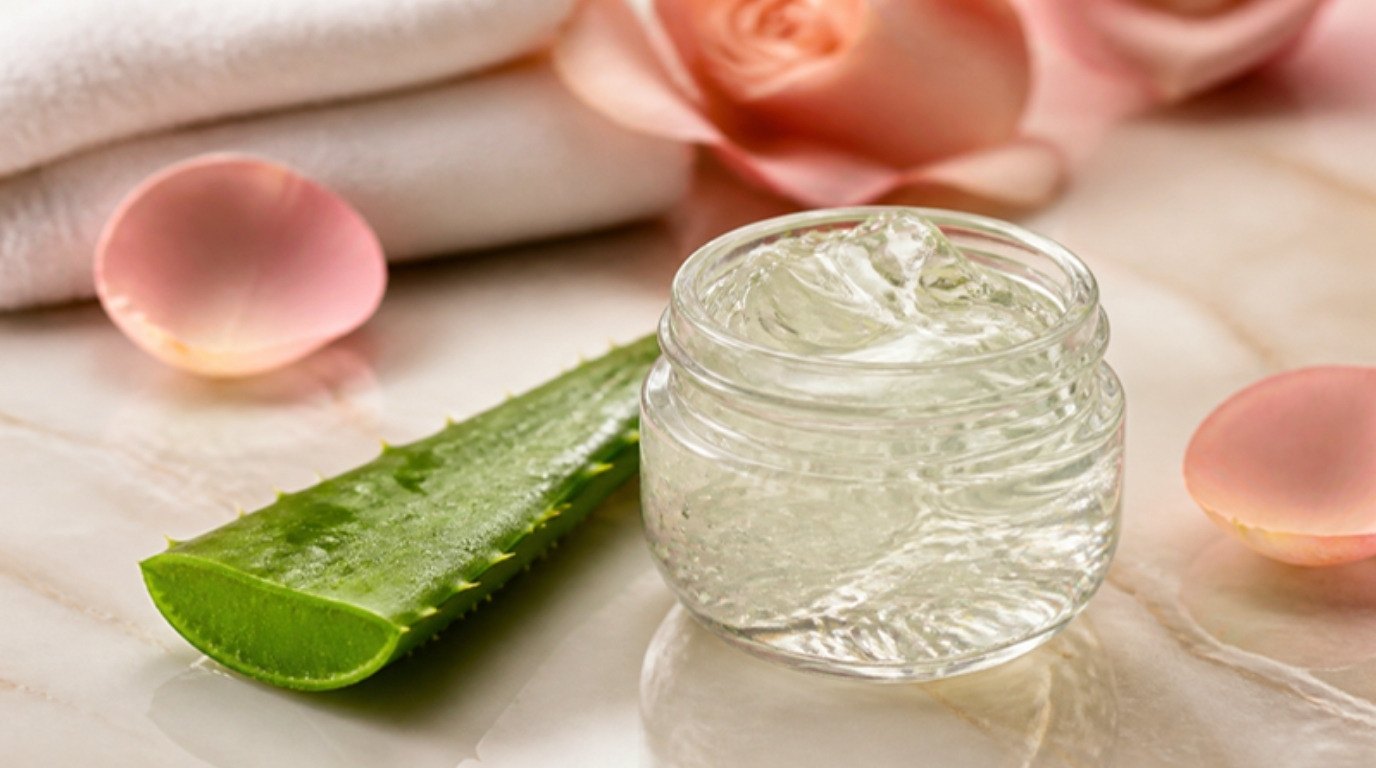
Aloe vera is less of a miracle plant and more of a very good comfort layer. It won't erase scars or cure breakouts, but when your face feels hot, tight, wind-burned or just a bit cranky, a cool layer of simple aloe gel can feel like exactly the right thing. That's its real strength, and it's a lovely one to understand.
The catch is that not all aloe is equal. A fragrance-free gel made for skin is a different product from a bright green, perfumed after-sun jelly or a leaf you've just snapped off a plant. On my combination, sensitive skin, that difference matters more than the word "aloe" on the front of the bottle.
This guide covers everything about aloe vera for face: what it is, the real benefits, what it can't do, store-bought gel vs. fresh leaf, how to use it for different skin types, after-sun care, who should be careful, and a simple comparison of aloe, centella and panthenol so you know which soothing ingredient fits your skin best.
What Is Aloe Vera?
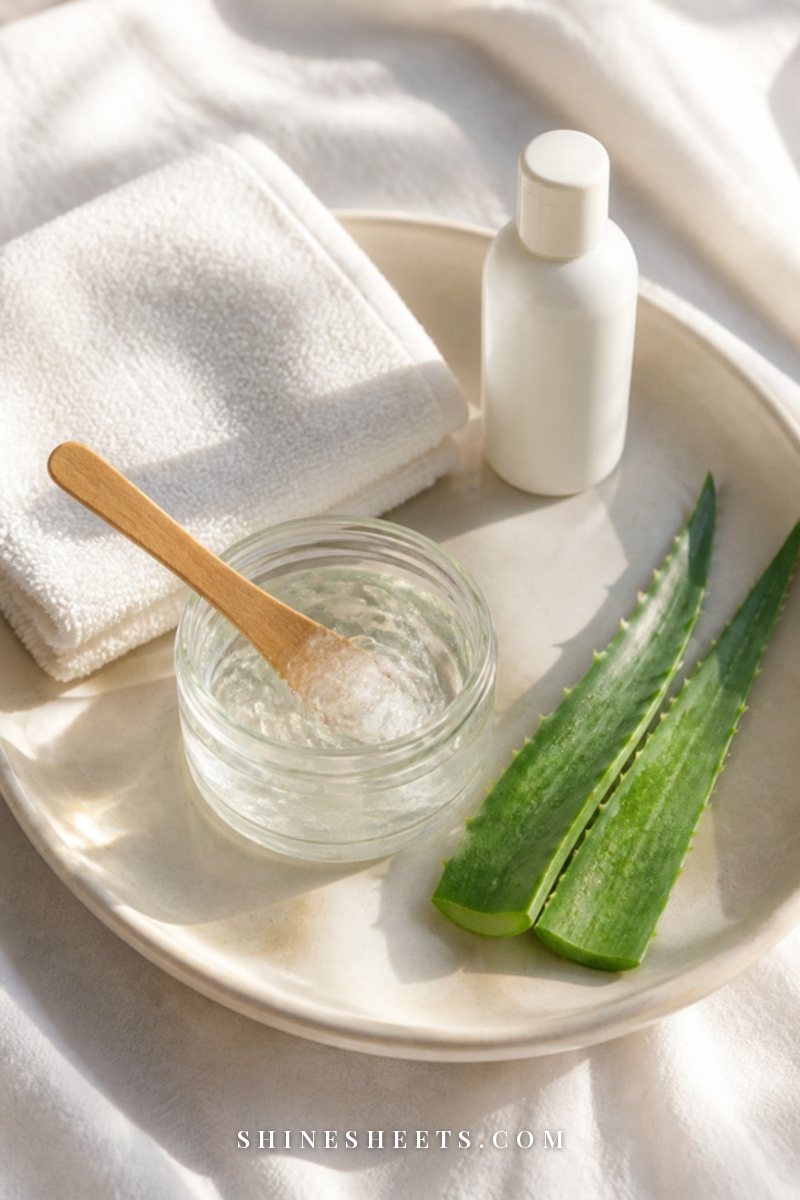
Aloe vera is a succulent plant with thick, fleshy leaves. Inside each leaf is a clear gel that the plant uses to store water, and that inner gel is what skincare uses. It's mostly water, around 99%, plus a mix of sugars called polysaccharides (acemannan is the best-known one), small amounts of vitamins, amino acids and other plant compounds.
Those polysaccharides are what give aloe its light, slippery, cooling feel. They help hold a little water on the skin's surface, which is why aloe feels hydrating, and they're part of why it feels so calming on irritated skin.
Between the green outer skin and the clear inner gel there's also a thin layer of yellow sap, often called aloe latex, which contains a compound called aloin. That part can be irritating, and well-made skincare gels are processed to remove it. Keep that in mind, because it comes up again when we talk about fresh leaves.
Real Benefits of Aloe Vera for Your Face
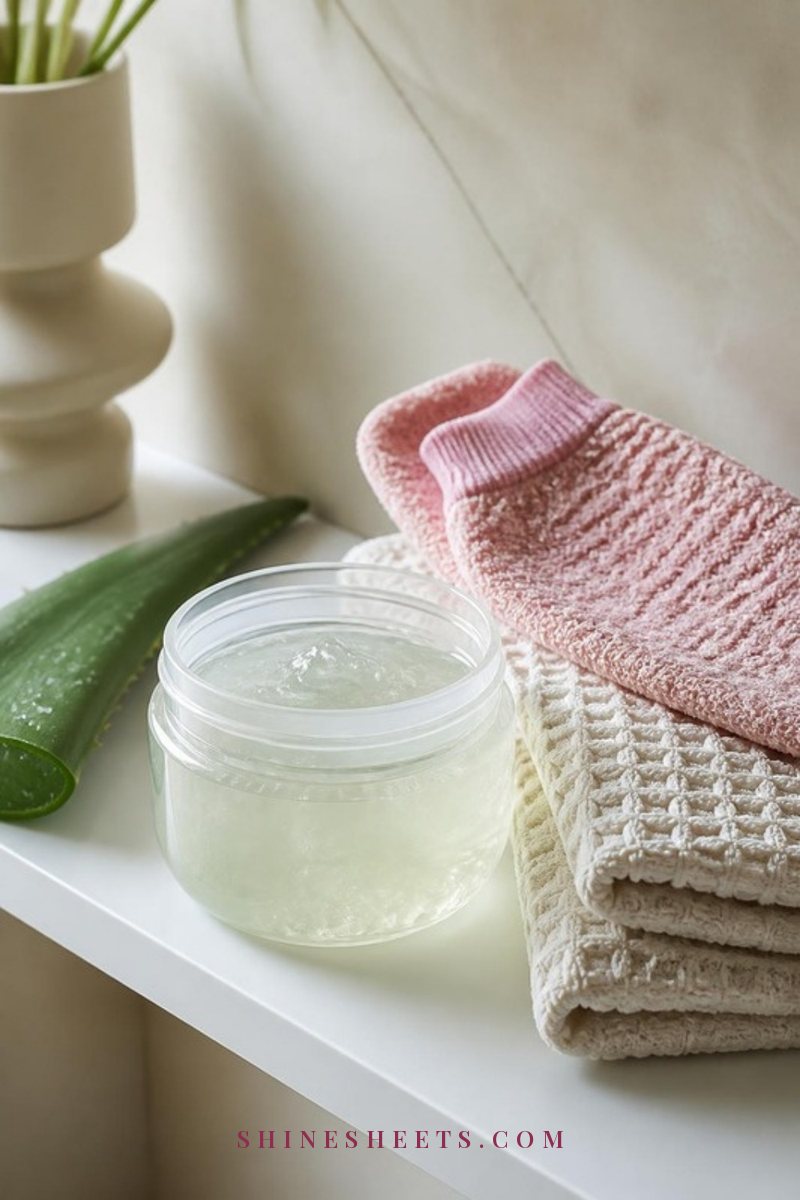
Here's what aloe can genuinely do, without the hype.
Calming After Sun
This is aloe's most famous use, and for mild, everyday sunburn it really does feel lovely. The cool gel takes the heat out of the moment and makes tight, warm skin feel more comfortable. It won't undo sun damage or replace sunscreen, but as a comfort step after too much sun, it's a classic for good reason.
Light Hydration
Aloe gel adds a light veil of hydration that sits nicely on oily and combination skin, which often finds heavier creams too much. It's not a moisturizer on its own for dry skin, because it doesn't contain the oils and barrier-supporting ingredients that keep water in, but it makes a good hydrating layer underneath one.
Comfort for Irritated Skin
When skin feels a little raw from wind, cold, a too-strong exfoliant or a mask that didn't agree with you, a plain, fragrance-free aloe gel can feel very soothing. Many people with reactive skin keep a tube on hand for exactly these days.
A Light Layer Under Makeup
A thin layer of aloe gel can act as a lightweight, slightly dewy base under makeup, especially on oily and combination skin in warmer months. Let it dry fully before foundation, and use only a small amount, or it may pill.
What Aloe Vera Can't Do
Setting realistic expectations keeps you from being disappointed by a perfectly good product.
- It isn't an acne cure. Aloe can make inflamed skin feel calmer, but it doesn't treat breakouts the way proven ingredients like salicylic acid, benzoyl peroxide or prescription treatments do. If you have persistent or painful acne, a dermatologist is your best ally.
- It won't erase scars or dark marks. Comfort and hydration can make skin look a little smoother, but aloe isn't a scar treatment.
- It isn't sunscreen. Aloe doesn't protect you from UV. You still need a broad-spectrum SPF every morning.
- It won't replace a moisturizer for dry skin. On its own, aloe can leave dry skin feeling tight once the water evaporates.
- It can't fix serious burns or wounds. For anything beyond mild discomfort, see a doctor.
Think of aloe as a gentle helper, not the hero of your routine. That framing makes it much easier to use well.
Store-Bought Gel vs. Fresh Aloe Leaf
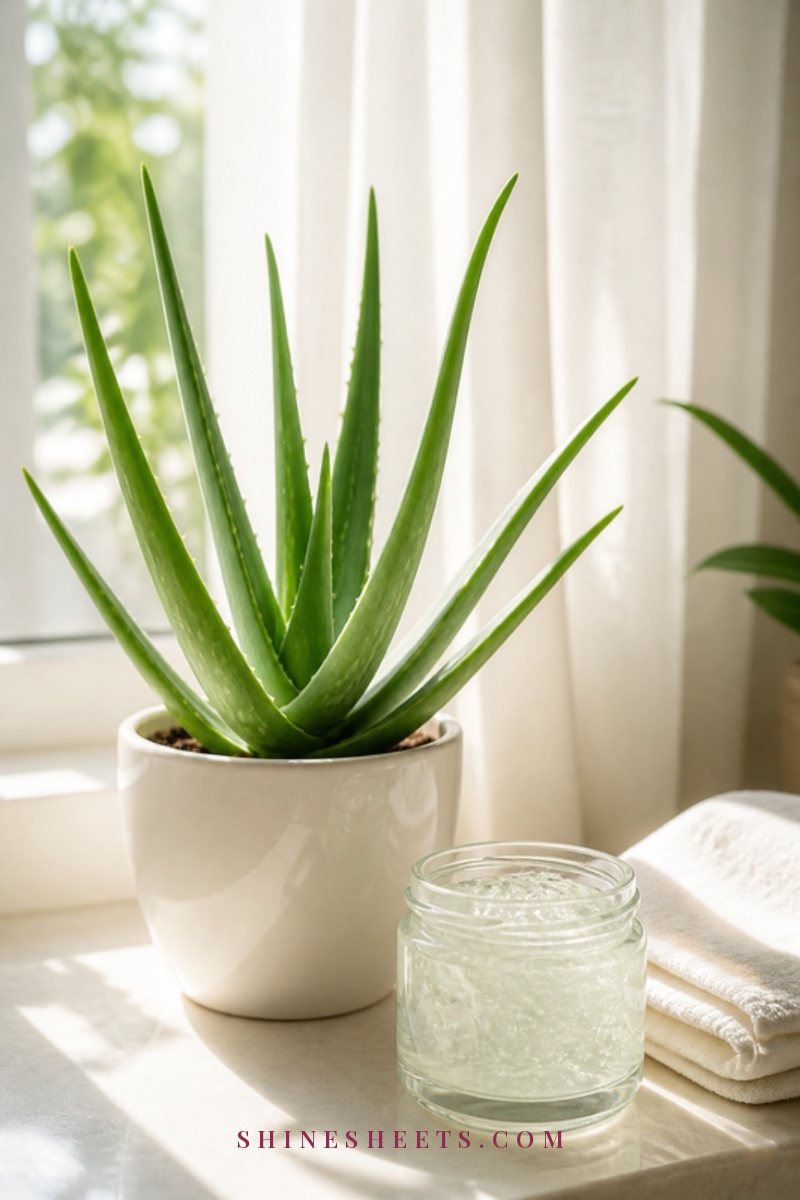
It's tempting to think the fresh leaf from your windowsill plant is the purest option. But for your face, a well-made store-bought gel is usually the safer choice. Here's why:
- Fresh leaves contain latex and aloin. The yellow sap just under the leaf's skin can irritate the skin, especially on the face, and it's hard to remove completely at home.
- Fresh gel isn't preserved. It can pick up bacteria from the knife, the cutting board or your hands, and it starts to break down within a short time.
- Strength varies from leaf to leaf. You never quite know what you're getting.
- Formulated gels are tested. A good commercial gel has the latex removed, a stable texture and preservatives to keep it safe for months after opening.
If you do want to use your plant, keep it to a small area on your body rather than your face, patch test first, and don't store the cut gel. I'd skip home-made aloe mixtures altogether. Adding lemon, honey, essential oils or other kitchen ingredients is a common way to end up with an irritated face.
A pick I'd look for is a fragrance-free pure aloe vera gel with aloe listed as the first ingredient, no added color and no alcohol near the top of the list. The best-selling clear gels in squeeze bottles are a great place to start.
Aloe vs. Centella vs. Panthenol
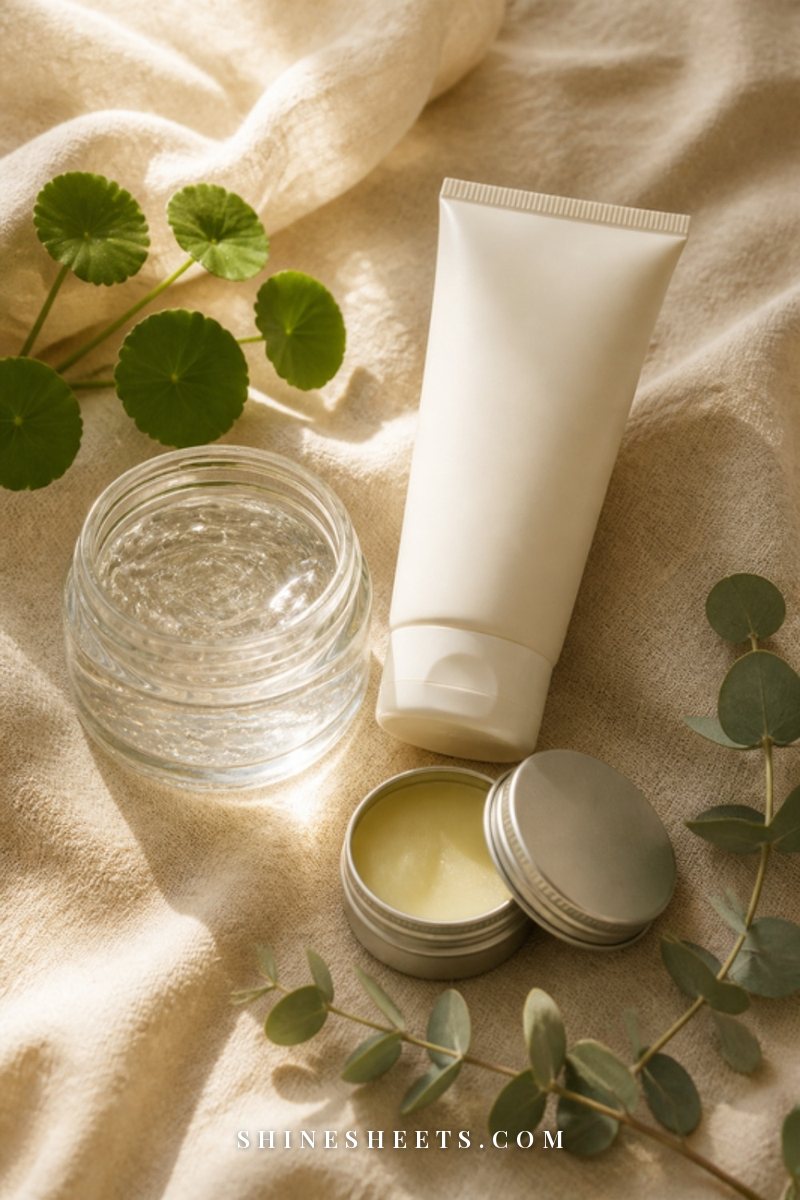
Aloe isn't the only soothing ingredient in town. Centella asiatica (often called cica) and panthenol (pro-vitamin B5) are two other favorites for calm, comfortable skin. They do slightly different jobs, so here's a quick comparison to screenshot:
| Aloe vera | Centella asiatica (cica) | Panthenol (pro-vitamin B5) | |
|---|---|---|---|
| What it is | Water-rich plant gel with polysaccharides | Plant extract with compounds like madecassoside and asiaticoside | Pro-vitamin that converts to vitamin B5 in the skin |
| Feels like | Cool, light, watery gel | Usually creamy or light gel-cream | Ranges from light serum to rich balm |
| Best at | Instant cooling comfort, light hydration | Calming redness and supporting a stressed barrier | Softening, hydrating and comforting dry or irritated patches |
| Best for | Oily and combination skin, after sun, warm weather | Sensitive, redness-prone and acne-prone skin | Dry, flaky, over-exfoliated or wind-chapped skin |
| Works alone? | For oily skin, sometimes; others need moisturizer on top | Often formulated as a complete cream | Balms can be the last step; serums need moisturizer |
| Watch out for | Added fragrance, alcohol, unprocessed fresh leaf | Fragrance or essential oils in some formulas | Very rarely irritating; check the full formula |
Many products combine two or all three, and they play beautifully together. If your skin runs red and reactive, a centella soothing cream is a lovely partner to aloe. If dry, flaky patches are the issue, a panthenol balm on top seals in comfort. My guides to centella asiatica and panthenol go into each one in more depth.
How To Use Aloe Vera on Your Face
The basic routine is simple, and you can adjust it for your skin type below.
- Cleanse gently. Use a mild cleanser that doesn't leave your face tight. A gentle cream cleanser suits dry and sensitive skin, while a soft gel cleanser suits oily skin.
- Pat dry, leaving your skin very slightly damp.
- Apply a thin layer of aloe gel. About a pea to a small coin-sized amount for the whole face. Press it in with your palms rather than rubbing.
- Let it settle for a minute. It should feel light and slightly tacky, not wet.
- Follow with moisturizer if your skin needs it (see below).
- In the morning, finish with sunscreen.
Start with once a day, then increase to twice if your skin enjoys it. There's no need to use more than a thin layer: a thick coat just feels sticky and can pill under other products.
For Dry Skin
Use aloe as a hydrating layer under your moisturizer, never on its own. Apply it to damp skin, then seal it in with a richer cream containing ceramides, oils or shea butter. Without that seal, the water in the aloe evaporates and can leave dry skin feeling tighter than before. My moisturizer guide will help you find the right cream to pair it with.
For Oily and Combination Skin
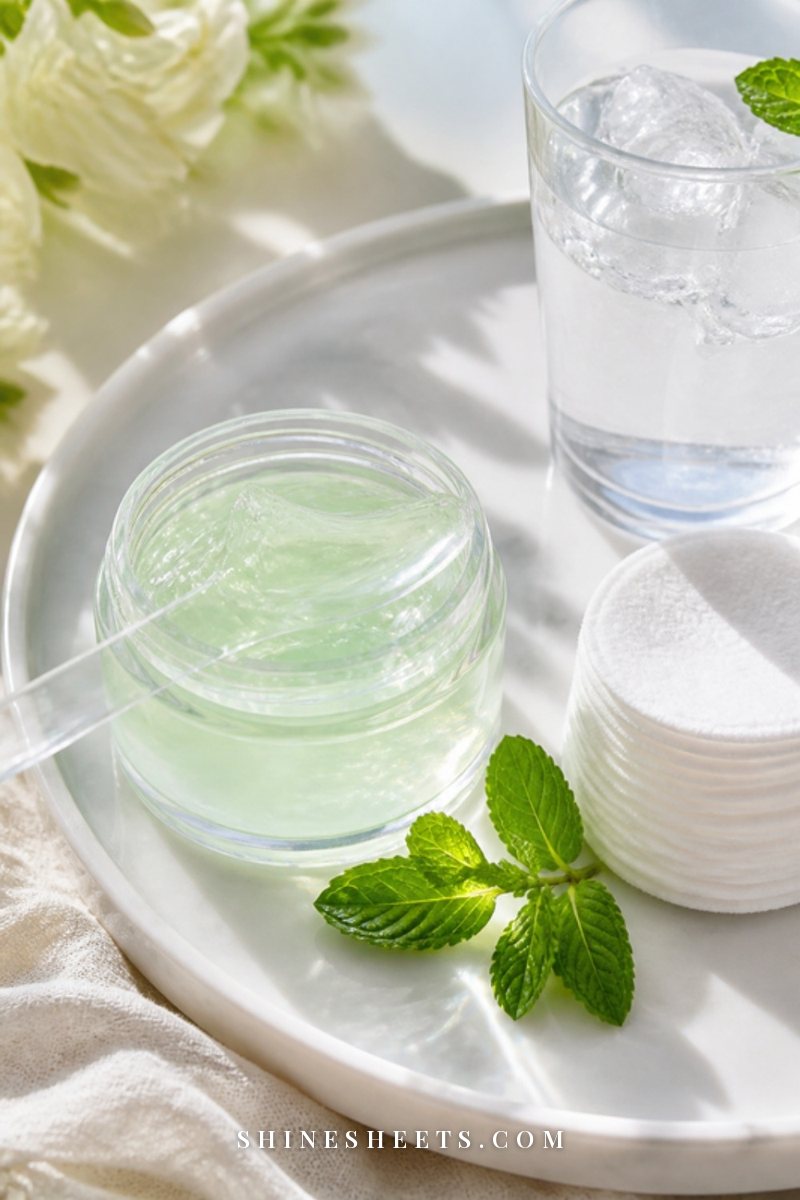
This is where aloe really shines. In warm weather, many oily skin types can use a thin layer of aloe gel as their only hydration at night, or as a light layer under sunscreen in the morning. For combination skin, use aloe alone on the T-zone and add a light moisturizer to drier areas like the cheeks. That's exactly how I'd approach my own shiny T-zone in summer.
In colder, drier months, most oily and combination skin will still want a light moisturizer on top.
Under Makeup
Apply a very thin layer, wait two to three minutes until it's fully dry, then follow with sunscreen and makeup. If your foundation pills, use less aloe or skip it on makeup days.
Aloe Vera for After-Sun Care
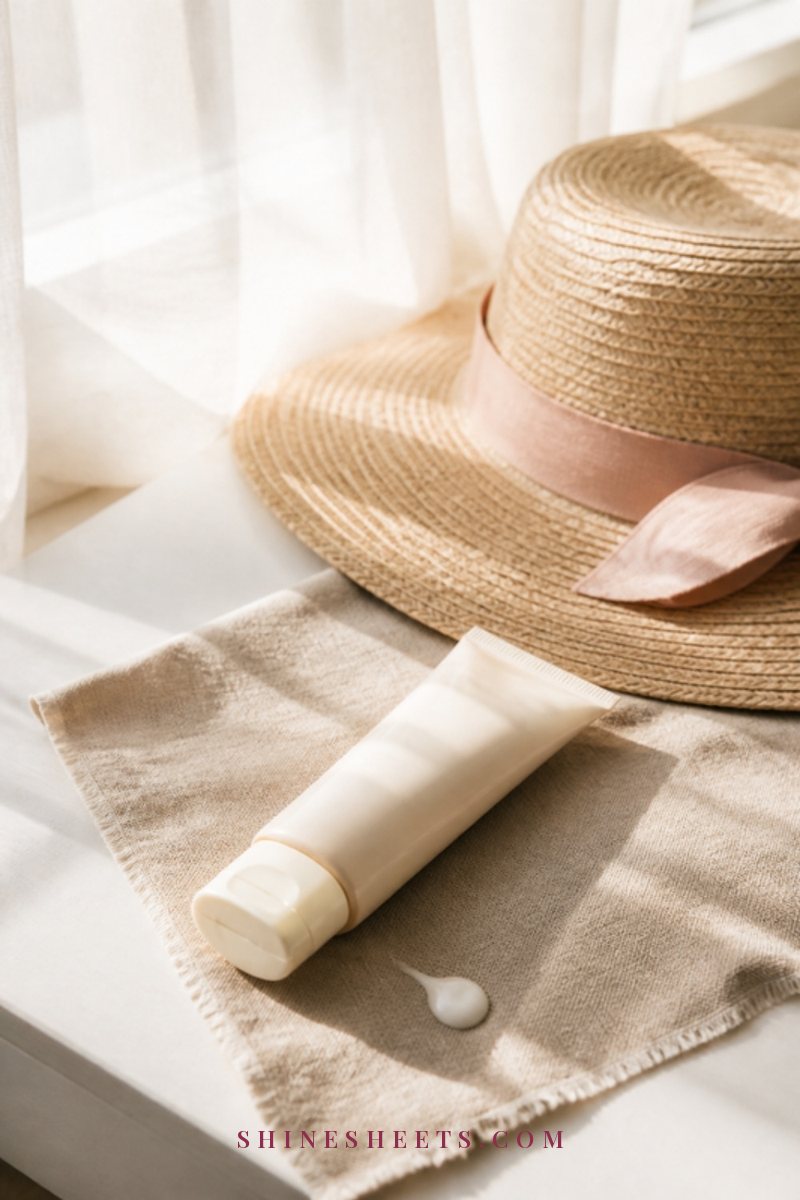
Even with careful SPF habits, a little too much sun happens. For mild sunburn, where the skin is pink, warm and tender but not blistering, here's a gentle routine:
- Get out of the sun and into the shade or indoors.
- Cool the skin with a cool (not icy) shower or a soft cloth soaked in cool water for 10 to 15 minutes.
- Pat dry gently. No rubbing.
- Apply a thin layer of fragrance-free aloe gel. Keeping the gel in the fridge makes it extra soothing. Reapply a few times a day as needed.
- Skip actives like retinoids, exfoliating acids and vitamin C until the skin is fully calm.
- Drink water and rest.
- Protect the area from further sun with clothing, shade and, once the skin isn't raw, a gentle sunscreen.
Please see a doctor or seek urgent care if the sunburn is blistering, covers a large area, or comes with fever, chills, headache, dizziness, nausea or confusion. Blistering burns need proper medical care, not just aloe, and should never be popped.
The best after-sun care is still prevention. For your face, a mineral sunscreen for the face is often a comfortable choice for sensitive skin. Apply it generously every morning and reapply every two hours when you're outdoors.
Who Should Be Careful With Aloe
Aloe is gentle for most people, but not everyone. Take extra care if:
- You're allergic to plants in the lily family or related plants such as garlic, onions or tulips. Some people with these allergies also react to aloe.
- You have very sensitive or reactive skin. The aloe itself may be fine, but added fragrance, alcohol or preservatives in a particular gel might not be.
- You've reacted to aloe before, including rashes, itching or hives.
- Your skin is broken, raw or infected. Don't apply aloe to open wounds, and ask a doctor for advice.
- You have eczema, rosacea or another skin condition. Ask your dermatologist before adding new products.
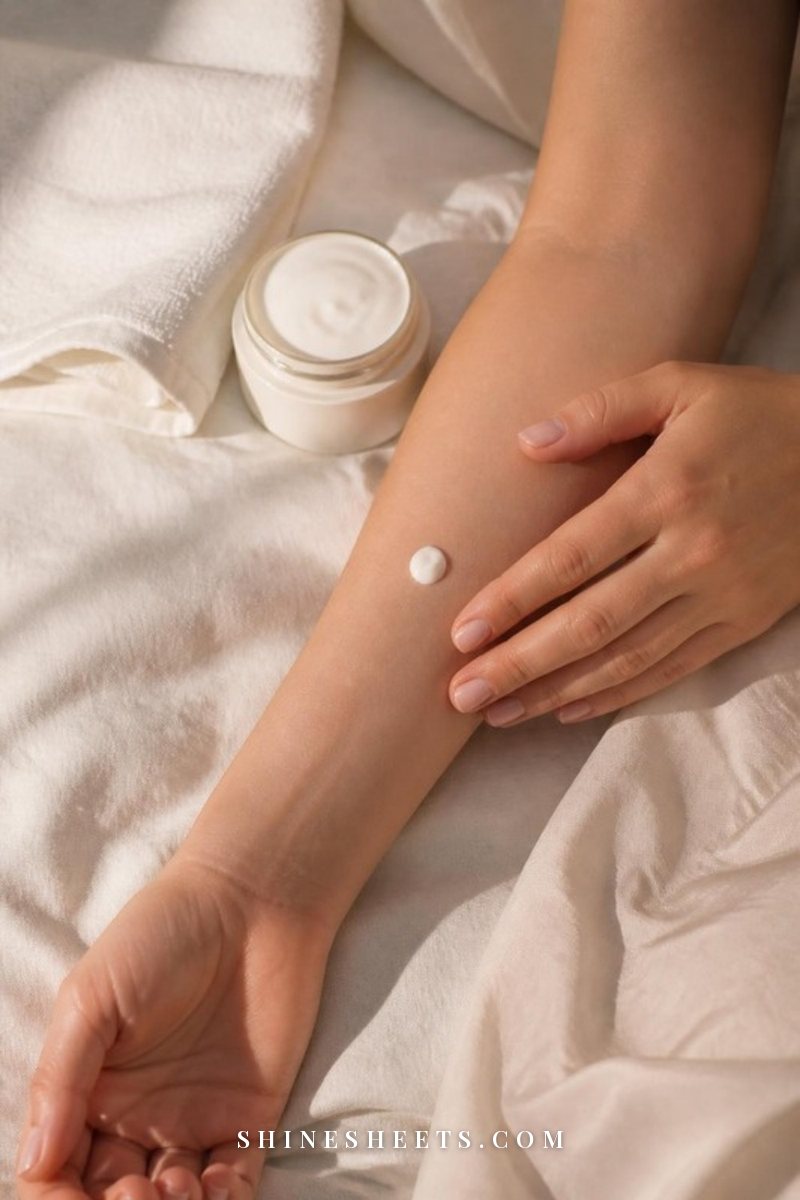
Patch test every new aloe product before using it on your whole face. Apply a small amount along your jawline or inner forearm once a day for a few days, and stop if you notice redness, itching, stinging or bumps. If your skin is calm, you're good to go.
If you often deal with flushed, reactive skin, my guides to redness on the face and a sensitive skin routine can help you build a calmer base around products like aloe. And if redness, burning or breakouts don't settle, a dermatologist can help you find out what's really going on.
How Aloe Fits With Your Other Skincare
One of the nicest things about aloe is how easily it slots into almost any routine. It's mild, it layers well and it rarely clashes with other ingredients. A few notes help it work even better:
- With retinoids: A thin layer of aloe after your retinoid (or before, if your skin is very sensitive) can make the dryness and tightness easier to live with. Always follow with moisturizer.
- With exfoliating acids: On nights you use an AHA or BHA, aloe can be a calming step afterward. If your skin stings, pause the acid rather than adding more products on top.
- With vitamin C: Fine together in the morning. Apply vitamin C first, let it settle, then aloe, moisturizer and sunscreen.
- With niacinamide, hyaluronic acid and ceramides: Lovely partners. Hydrating and barrier-supporting ingredients make aloe's light hydration last longer.
- With heavy oils or balms: Apply aloe first. Water-based layers go on before oils and balms, not after.
The general rule: thinnest to thickest, and aloe gel is one of the thinnest layers you'll own, so it usually goes early in the routine, right after cleansing or toner.
Gentle Moments When Aloe Helps
Beyond sunny days, there are a few everyday situations where a cool layer of aloe can make your skin feel noticeably better:
- After a windy or cold walk. When cheeks feel raw and tight, apply aloe to slightly damp skin and follow with a richer cream.
- After a long flight. Cabin air is very dry. Aloe under your moisturizer helps your face feel less parched when you land.
- After a workout. Once you've rinsed off sweat, a thin layer of aloe feels cooling without clogging.
- After removing facial hair. A fragrance-free gel can feel soothing after tweezing, shaving or waxing, as long as the skin isn't broken.
- When a product didn't agree with you. Stop the culprit, cleanse gently and use aloe plus a plain moisturizer for a few days while your skin settles.
Common Mistakes With Aloe
- Using too much. A thick layer feels sticky and pills under makeup.
- Using it alone on dry skin. Without moisturizer on top, dry skin can end up feeling tighter.
- Choosing a scented, colored gel for your face. Bright green, perfumed after-sun jellies are often better left for the body.
- Treating it as sunscreen. It isn't, no matter how soothing it feels on a sunny day.
- Skipping the patch test. Even gentle ingredients can surprise you.
How To Choose a Good Aloe Gel
A quick shopping guide for the aloe aisle:
- Aloe first. Look for "aloe barbadensis leaf juice" or "aloe barbadensis leaf extract" at or near the top of the ingredient list.
- Fragrance-free. Especially important for your face and for sunburned skin.
- Clear, not bright green. Real aloe gel is nearly colorless. Bright green usually means added dye.
- Low or no drying alcohol. Avoid gels where "alcohol" or "alcohol denat." appears near the top.
- A short ingredient list. Fewer extras mean fewer chances of irritation.
- Packaging you'll actually finish. Tubes and pumps keep the gel cleaner than open jars. Use it within the time shown on the open-jar symbol, usually 6 to 12 months.
Store aloe gel in a cool place, or in the fridge if you love it extra cool. If it changes color, smell or texture, let it go.
Final Thoughts
Aloe vera for your face works best when you treat it as what it truly is: a light, cooling, comforting layer. Choose a fragrance-free gel, patch test it, use a thin layer, and pair it with moisturizer and sunscreen as your skin needs.
It won't solve every skin concern, and it doesn't have to. On the days your skin feels hot, tight or tired, a cool layer of simple aloe is a small, kind way to help it feel calm again.