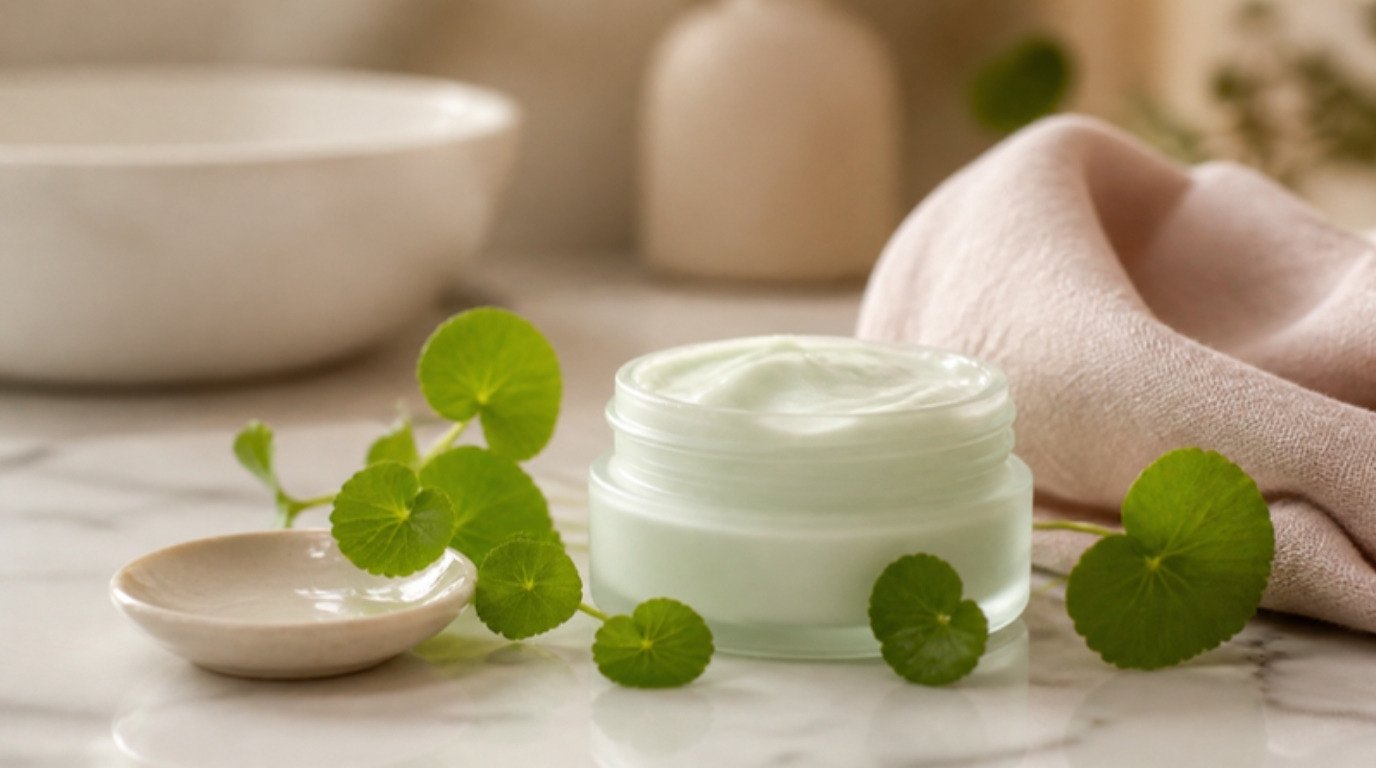
Centella asiatica is one of the few skincare ingredients that's almost universally liked by sensitive skin. It doesn't exfoliate, it doesn't sting, and it doesn't promise overnight transformations. What it does is help irritated, stressed skin calm down and recover, which is often exactly what a reactive complexion needs most.
You've probably seen it on labels as cica, centella, gotu kola, madecassoside or "tiger grass," especially in Korean skincare. All of those names point to the same plant and its soothing compounds. It shows up in toners, serums, creams, sheet masks and even sunscreens, and it pairs well with almost everything.
In this guide to centella asiatica, I'll explain what cica is and which compounds do the work, what it can (and can't) help with, who it suits best, a comparison table of cica product types, how to fit it into a routine alongside retinol, acids and vitamin C, a simple calm-skin routine and what results to expect realistically.
My skin is combination and sensitive, with a shiny T-zone and cheeks that flush easily, so calming ingredients are something I pay close attention to. Cica has earned its reputation as one of the gentlest.
What Is Centella Asiatica?
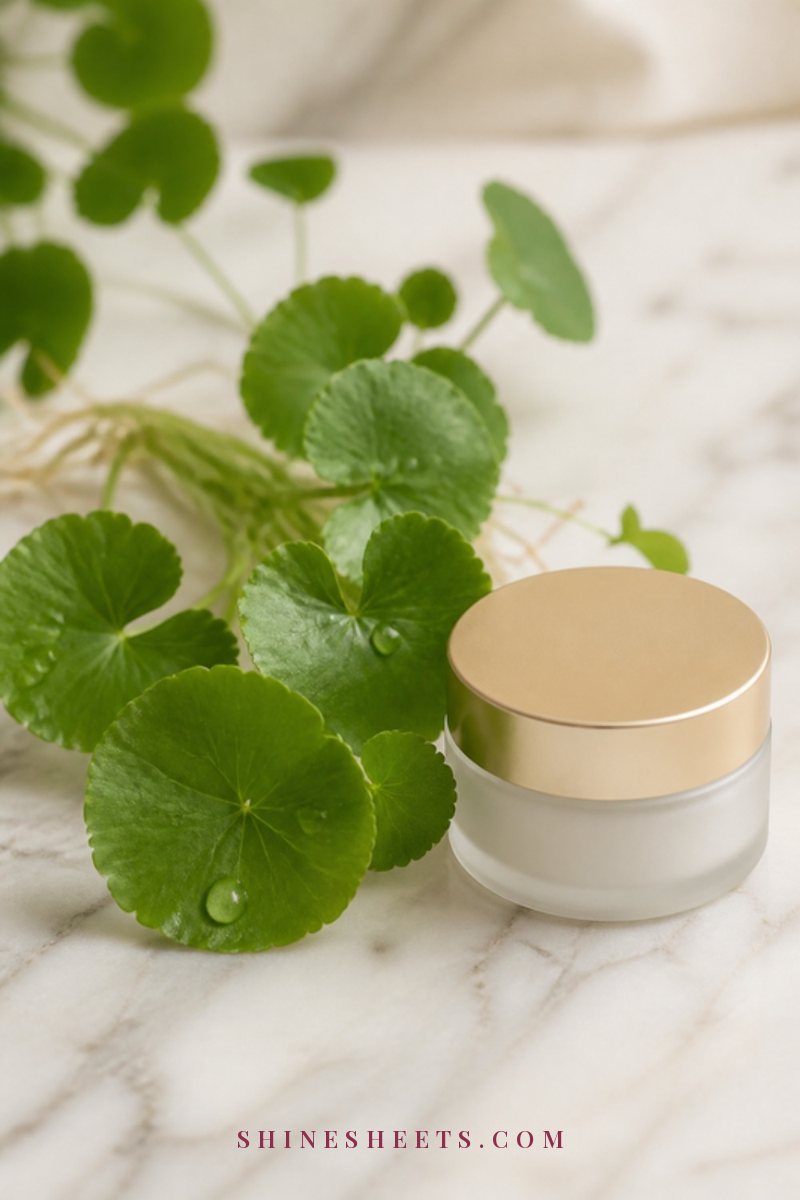
Centella asiatica is a small, leafy plant that grows in damp, tropical areas across Asia and parts of Africa. It has round, bright green leaves and has been used in traditional remedies for skin for centuries. The popular nickname "tiger grass" comes from an old story that wounded tigers rolled in it to soothe their skin.
In modern skincare, you'll see it listed in a few different ways: Centella Asiatica Extract, Centella Asiatica Leaf Water, or as its isolated active compounds. "Cica" is simply a short, catchy name brands use for products built around it.
The Key Compounds: Madecassoside, Asiaticoside and Friends
Centella's soothing effects come mainly from four compounds called triterpenoids:
- Madecassoside: the star for calming. It's often associated with soothing visible redness and supporting the skin barrier.
- Asiaticoside: linked to supporting the skin's natural repair process and hydration.
- Madecassic acid and asiatic acid: work alongside the other two, with antioxidant and soothing properties.
Products that list one or more of these compounds by name (or "TECA," a standardized blend) tend to be more concentrated than those with a simple extract far down the ingredient list. That doesn't mean extracts don't work, just that the label gives you a clue about strength.
What Cica Can Do for Your Skin
Research on centella is promising, and the experience of millions of sensitive-skin users backs it up. Here's what it's realistically good at:
- Calming irritated skin. If your skin feels hot, tight or stingy after over-exfoliating, wind, cold weather or a new product that didn't agree with you, cica helps it settle.
- Supporting the skin barrier. It helps your skin hold onto moisture and recover, especially when paired with barrier lipids like ceramides.
- Softening the look of redness from irritation. It won't change redness caused by a medical condition, but it can make temporary, irritation-related redness less noticeable.
- Adding gentle hydration. Many cica formulas are watery and light, so even oily skin enjoys them.
- Soothing skin after harsher steps. It's a lovely follow-up after retinol nights, exfoliation, shaving, a long day in the sun or a professional treatment your provider has cleared you to apply products after.
- Keeping blemish-prone skin calmer. Its soothing, antioxidant nature can make breakouts look less angry, though it's not a substitute for acne treatments.
If redness is one of your main concerns, my guide to redness on the face explains the different causes and a calming routine around them.
What Cica Can't Do
Because it's so gentle and so popular, cica sometimes gets marketed as a cure-all. Here's what to keep realistic:
- It won't treat rosacea, eczema, dermatitis or acne on its own. Those deserve a proper diagnosis.
- It won't exfoliate, fade dark spots quickly or smooth deep lines.
- It won't fix a routine that's damaging your skin in the first place. If you're over-exfoliating, cica can soothe the aftermath, but the real fix is doing less.
- It won't heal open wounds or serious burns. Those need medical care, not a cream.
Think of centella as a supportive friend in your routine, not the hero who fixes everything.
Who Cica Suits Best
Centella asiatica is one of the most widely tolerated skincare ingredients, so most skin types can enjoy it. It's especially helpful if you:
- Have sensitive or reactive skin that flushes, stings or tightens easily.
- Use retinoids or exfoliating acids and want something soothing on the other nights.
- Have combination or oily skin that still gets irritated (cica's light textures won't feel heavy).
- Deal with weather-related irritation, like windburn in winter or after-sun warmth in summer.
- Are rebuilding a damaged barrier and want to keep the routine minimal.
Who should be a little careful: anyone with a known allergy to plants in the same family (Apiaceae, which includes celery and carrots) or anyone whose skin reacts to many plant extracts. A patch test is always a good idea, and I'll show you exactly how below.
If your skin is sensitive in general, you might also find my sensitive skin routine helpful, since cica fits right into it.
Cica Product Types Compared
Cica comes in almost every format, and each one has a slightly different job. Use this table to choose the right one for your skin, or screenshot it for your next skincare order.
| Product type | Texture | Best for | When to use | How often |
|---|---|---|---|---|
| Centella toner | Watery, light | First layer of hydration and calm; oily or combination skin | After cleansing, AM and PM | Daily |
| Centella ampoule or serum | Light, slightly gel-like | A more concentrated dose for redness-prone or irritated skin | After toner, before moisturizer | Daily or on non-active nights |
| Cica cream | Light to rich cream | Barrier support, dry or stressed skin, nights after retinol | Last step at night (and AM under SPF) | Daily |
| Cica sheet mask | Soaked fabric mask | Quick soothing after sun, travel or a stressful week | After cleansing, 15–20 minutes | 1–3 times a week |
| Cica sunscreen | Light cream or fluid | Daily protection for sensitive, reactive skin | Last step in the morning | Every morning, reapply outdoors |
| Cica balm or spot cream | Thick, occlusive | Dry patches, irritated spots, around the nose during colds | Night, on small areas | As needed |
You don't need all of these. For most people, one centella product, either a serum or a cream, is plenty. Add a sheet mask for extra comfort and a cica sunscreen if regular SPF stings.
How To Use Centella in Your Routine
The beauty of cica is that it slots in anywhere. Choose the format that fits the step you already have, rather than adding new steps for the sake of it.
Centella Toner
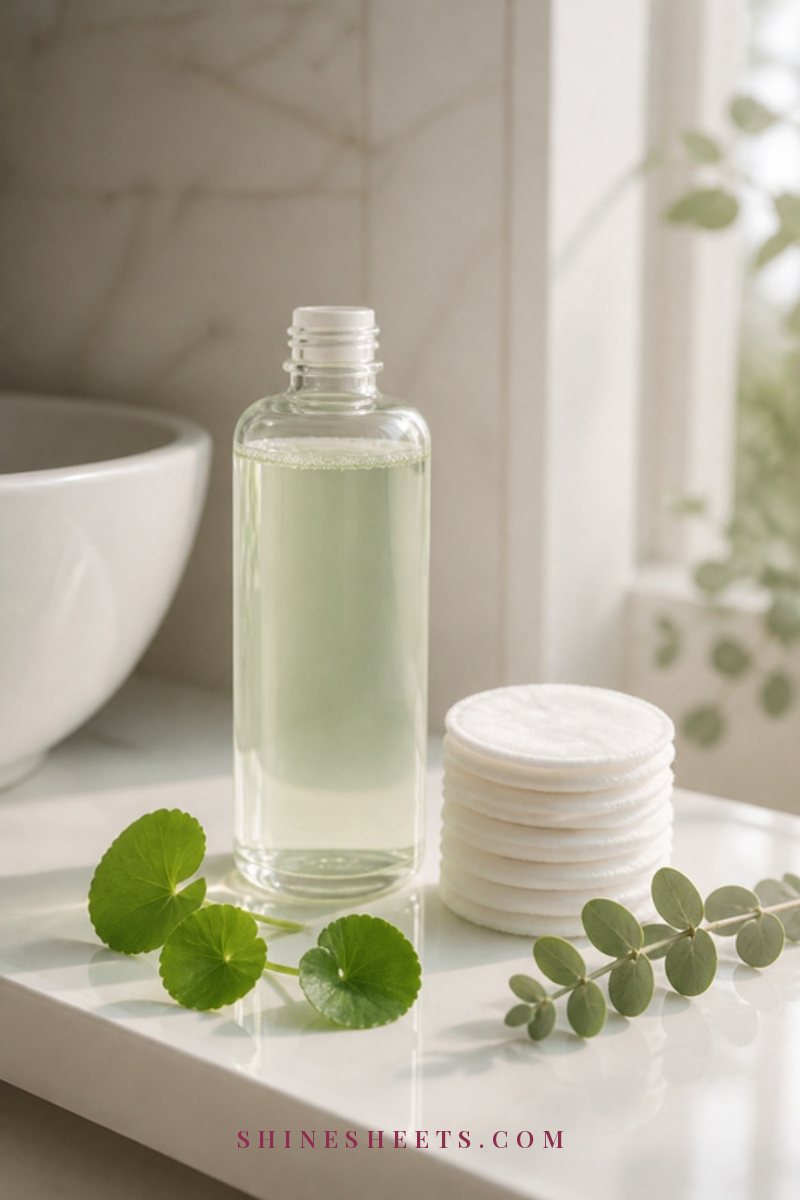
A centella toner is the easiest entry point. Pour a little into your palms and press it into clean skin, or swipe gently with a soft cotton pad. On very dry or irritated days, apply two or three thin layers instead of one.
A Korean centella toner with a short ingredient list and no fragrance is a lovely first step if your skin feels tight or stingy after cleansing. Look for centella extract or leaf water near the top of the ingredient list.
Centella Serum or Ampoule
An ampoule is basically a concentrated serum. It's the best choice if redness or irritation is your main concern, because it delivers more centella in one step. Apply 2–3 drops after toner and before moisturizer, morning or evening.
A centella ampoule with madecassoside or a high percentage of centella extract is one of the most popular Korean skincare products for a reason. It feels watery, absorbs quickly and works under makeup.
Cica Cream
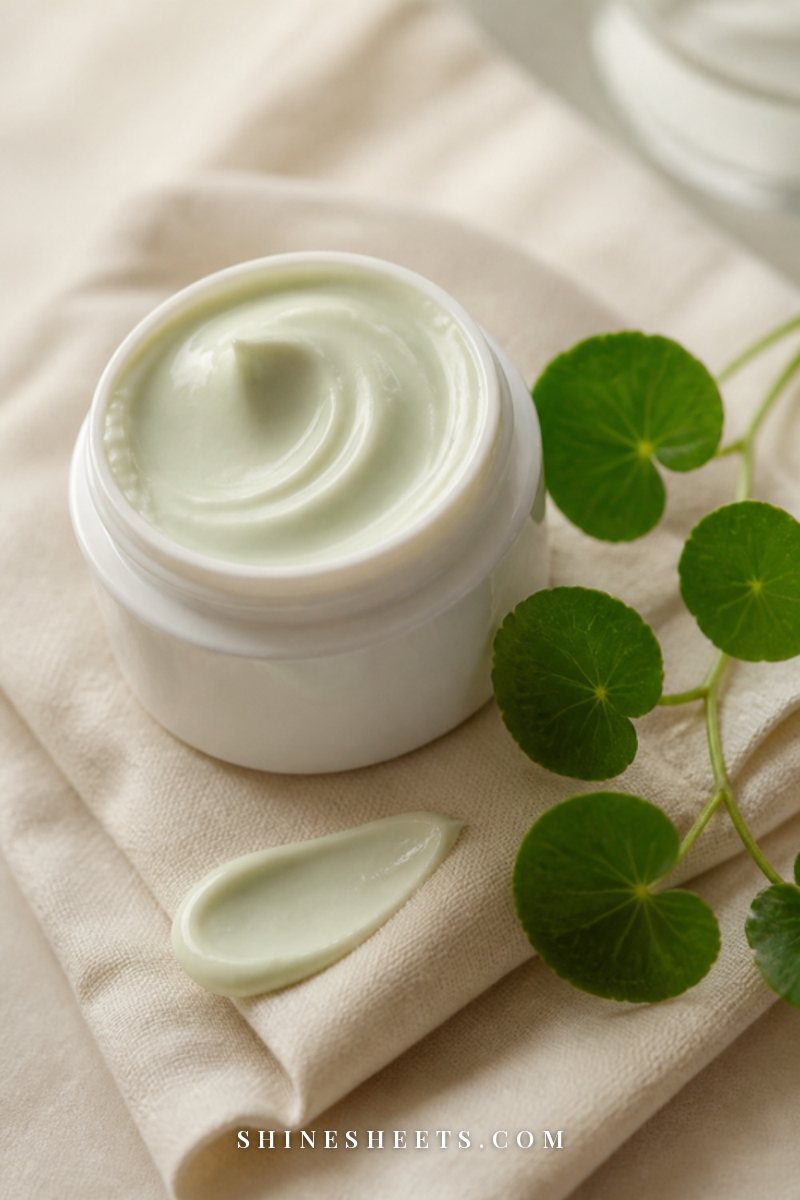
If your skin is dry, stressed or using strong actives, a cica cream gives you the calming benefits plus barrier support in one step. Many combine centella with ceramides, panthenol or allantoin, which is a lovely, gentle combination.
Use a pea-sized amount for your whole face as the last step at night. A cica cream for sensitive skin with ceramides is especially helpful on nights after retinol or exfoliation. To understand why that pairing works so well, see my guide to ceramides.
Cica Sheet Masks
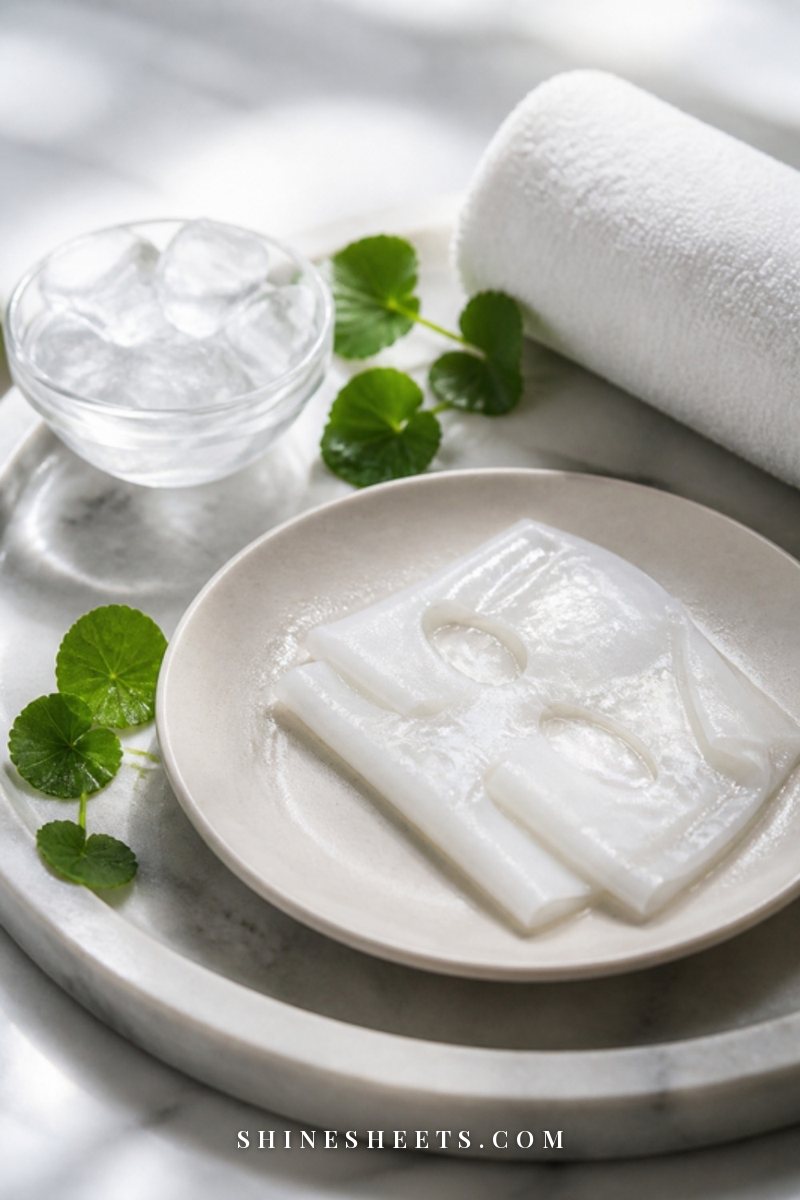
Sheet masks are the quickest comfort fix for skin that's had a rough day: after a long flight, too much sun, a windy walk or a week of stress. Keep a few cica sheet masks in the fridge for an extra cooling feel.
Apply after cleansing and toner, leave on for 15–20 minutes (not longer, or it can start pulling moisture back out as it dries), then pat the leftover essence in and follow with moisturizer.
Cica Sunscreen
If regular sunscreens sting your eyes or make your cheeks flush, a cica sunscreen can be a wonderful compromise. Many Korean formulas combine light, comfortable filters with centella to keep reactive skin calm.
A cica sunscreen with SPF 50 is a great daily choice for sensitive skin. Apply two finger-lengths for your face and neck as the last morning step, and reapply when you're outdoors for long periods.
Pairing Cica With Actives
One of cica's best qualities is how easily it plays with other ingredients. It's rarely the problem in a routine. Here's how to combine it well.
With Retinol
Cica is a perfect retinol companion. On retinol nights, apply your retinoid first, wait a few minutes, then follow with a cica cream to soften dryness and flaking. On off nights, use a centella serum and cream on their own to give your skin a recovery evening. If you're just starting out, my guide to retinol for beginners has a gentle start plan.
With Exfoliating Acids
Use AHA or BHA exfoliants on separate nights from your most soothing evenings, or follow them with a cica cream once the acid has absorbed. Exfoliating no more than two or three times a week, with cica on the other nights, keeps most sensitive skin happy.
With Vitamin C and Niacinamide
Centella works well alongside vitamin C in the morning and niacinamide at any time. A common, comfortable morning routine is vitamin C serum, then a centella serum or cream, then sunscreen. If you're unsure about any combination in your current routine, my guide to skincare ingredients not to mix covers what pairs well and what to separate.
A Simple Calm-Skin Routine With Cica
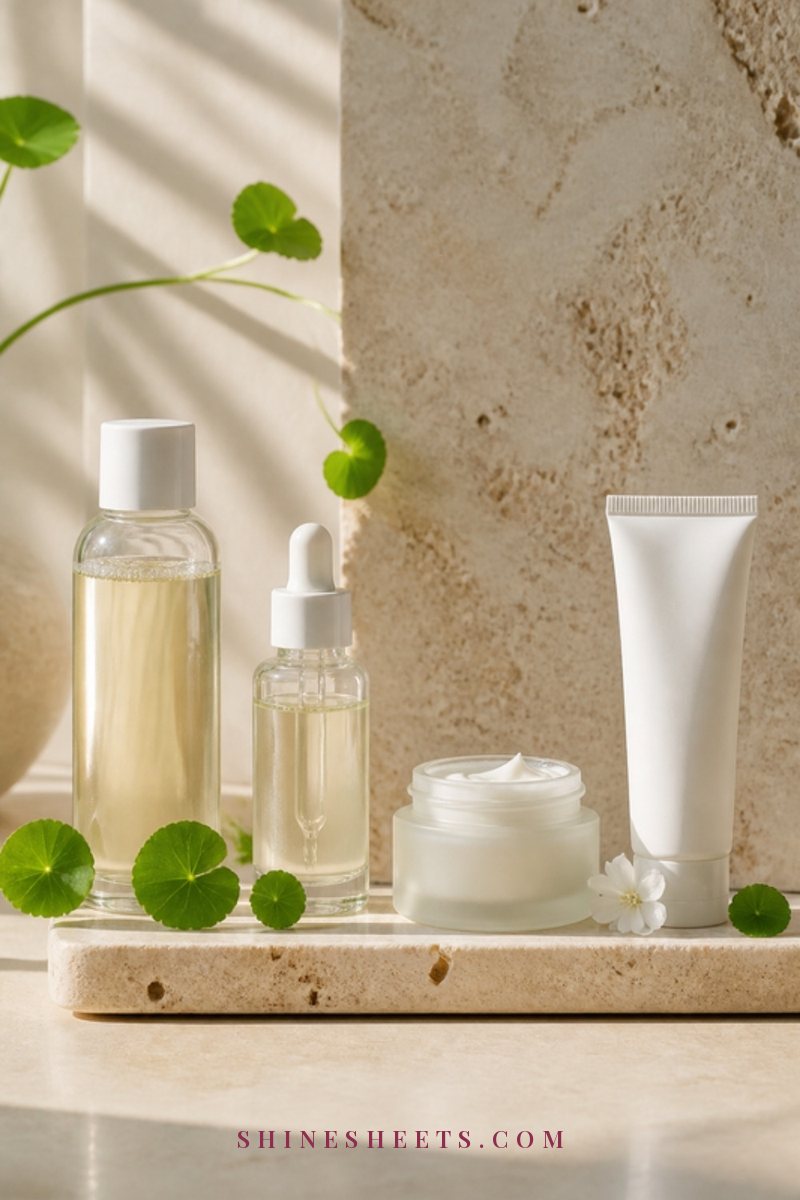
If your skin feels irritated, reactive or simply tired, try this pared-back routine for two to four weeks. It's short on purpose.
Morning:
- Rinse with lukewarm water or use a gentle, low-foam cleanser.
- Centella toner, pressed in with your hands.
- Centella ampoule (optional if your skin feels fine).
- A light moisturizer or cica cream.
- Sunscreen, ideally a cica formula if regular SPF stings.
Evening:
- Gentle cleanser (double cleanse only if you wore heavy makeup or water-resistant sunscreen).
- Centella toner.
- Centella ampoule or your active of choice (retinoid or exfoliant, no more than two or three nights a week).
- Cica cream as the final step.
Once or twice a week: a cica sheet mask after toner on a quiet evening.
During those weeks, skip new products, scrubs, strong fragrance and very hot water. Most sensitive skin starts to feel noticeably calmer within a week or two when you give it this kind of break.
How To Read a Cica Label
Because "cica" is such a popular word, some products use it more for marketing than for formula. A quick look at the ingredient list tells you a lot. Here's what to check:
- Where centella appears. Ingredients are listed roughly from highest to lowest concentration. Centella extract or leaf water in the first five ingredients usually means a meaningful amount. If it's below the fragrance or preservatives, it's a supporting player.
- Named compounds. Madecassoside, asiaticoside, madecassic acid, asiatic acid or "TECA" suggest a more targeted, standardized formula.
- Fragrance and essential oils. A calming ingredient in a heavily scented base is a mixed message for sensitive skin. Fragrance-free is the safest bet.
- Helpful partners. Ceramides, panthenol, allantoin, glycerin and hyaluronic acid work beautifully alongside centella for barrier support and hydration.
- High alcohol content. Denatured alcohol near the top of a toner's list can be drying for reactive skin, which works against the whole point.
You don't need to analyze every label in detail. Checking these five things takes less than a minute and filters out most products that won't do much for you.
Common Cica Mistakes To Avoid
Cica is very forgiving, but a few habits can make it seem like it isn't working:
- Using it to "fix" an over-exfoliated routine without stopping the exfoliation. Cica soothes, but it can't keep up with daily acids or scrubs. Pause the harsh steps first.
- Layering five cica products at once. More isn't more here. One or two well-chosen products give you nearly all the benefit.
- Leaving sheet masks on until they dry. Fifteen to twenty minutes is plenty.
- Expecting it to treat a skin condition. Persistent redness, flaking or bumps deserve a proper diagnosis.
- Giving up after a few days. Comfort shows up quickly, but a calmer-looking complexion takes several weeks of steady use.
How To Patch Test Cica Products
Centella is gentle, but individual formulas also contain other ingredients, and sensitive skin can react to any of them. A quick patch test takes a week and saves a lot of frustration.
- Days 1–3: apply a small amount to the side of your neck or behind your ear once a day.
- Days 4–7: if all is calm, apply it to a small area along your jawline.
- After a week: if there's no redness, itching, bumps or burning, use it on your whole face.
A kind safety note: if your skin becomes very red, swollen, itchy or develops a rash, stop using the product and rinse with cool water. If redness is persistent, comes with burning, bumps or visible blood vessels, or doesn't improve with a gentle routine, it's worth seeing a dermatologist, since conditions like rosacea or eczema need proper treatment.
Using Cica Through the Seasons
Your skin's needs shift through the year, and cica adapts easily. In colder months, when wind, heating and hot showers leave skin tight and flushed, lean on a richer cica cream at night and keep a balm for dry patches around the nose and mouth. In warmer months, switch to a watery toner and a light ampoule, keep sheet masks in the fridge for after-sun comfort, and let a cica sunscreen do double duty.
Transitional seasons, like right now as the air turns crisp, are often when sensitive skin reacts most. If your cheeks start to feel stingy, simplify your routine for a couple of weeks and let a centella serum and cream carry the load until your skin settles into the new weather.
What Results To Expect From Centella
Cica is a slow, steady ingredient. Here's a realistic timeline with daily use:
- Right away: skin feels more comfortable, hydrated and less tight.
- Within 1–2 weeks: less stinging and flushing from irritation, especially if you've also simplified your routine.
- After 4–8 weeks: a calmer, more even-looking complexion and a barrier that tolerates actives better.
- Not from cica alone: clearing acne, treating rosacea, fading dark spots or changing skin texture dramatically.
The biggest benefit many people notice is indirect: once your skin is calmer, you can use the ingredients you actually want (retinoids, vitamin C, exfoliants) without paying for it in redness and sting.
Final Thoughts
Centella asiatica isn't flashy, and that's exactly why it's so lovely. It quietly helps irritated skin settle, supports your barrier and makes the rest of your routine easier to live with.
Start with one cica product in the format that fits your routine best, patch test it, and give it a few calm weeks. Your skin often doesn't need more effort, just more kindness, and a little cica is a beautiful way to offer it.