A shared closet doesn't fall apart because one of you is messy. It falls apart because nobody ever decided whose space is whose. Once the lines are drawn kindly and clearly, most of the daily friction (the shirt that keeps sliding onto your side, the shoes nobody can find, the coat that lives on a chair) simply stops.
Sharing a closet is less of a storage puzzle and more of a small agreement between two people. You need enough room for both wardrobes, a few shared spots everyone understands, and a quick way to reset things before they drift. None of it needs a renovation or a big budget.
This guide to shared closet organization walks you through the whole process: the calm talk to have first, how to edit without stepping on each other's toes, six ways to divide the space, a zone table you can copy, the little tools that keep two wardrobes neat, renter-friendly add-ons, and a short monthly reset you can do together. If you want a one-afternoon sort of your own wardrobe first, my guide on how to organize a closet in one afternoon is the place to start. This one is about making the space work for two.
Start With a Calm Closet Talk
Before anything comes off a hanger, sit down together for ten or fifteen minutes. Not in the closet doorway at the end of a long day, but somewhere comfortable with a cup of tea. The goal is to understand how each of you actually gets dressed, because that tells you how the space should be split.
Here are the questions I'd cover. You can jot the answers on a notebook page so nobody has to remember them later:
- Who wears what most? The clothes you reach for every single day deserve the easiest spot, at eye level and arm's reach.
- Who needs hanging space and who needs folded space? Dresses, blouses and tailored trousers need rail length. Knits, tees and jeans are happier folded.
- Are there work uniforms or special items? Scrubs, suits, sports kit or anything that has to be ready at short notice should have a fixed home.
- What are the bulky things? Winter coats, ski jackets, boots and big bags take up more space than they look like they will.
- When do you each get dressed? If one of you is up an hour earlier, that person might need the side nearest the light switch or door.
- What bothers you right now? Keep this one gentle. "I can never find my belts" is useful. "You always leave everything on the floor" is not.
A tiny script that keeps the tone soft: "I'd love this closet to feel easy for both of us. Can we figure out what each of us needs most?" It frames the whole thing as a shared project, not a complaint. If you tend to get stuck on who gives up what, my guide on how to compromise in a relationship without losing yourself has more ideas for finding a middle that feels fair.
One small honest admission: I once believed fairness meant a perfect fifty-fifty split. It doesn't. Fair means each person has enough room for the way they live. If one of you owns three times as many dresses, an equal split will feel cramped for one and empty for the other.
Edit First: Each Person Sorts Their Own Things
The golden rule of a shared closet edit is simple: you only declutter your own clothes. No tossing a partner's old hoodie "because they never wear it", no sneaky donation bags. Even when it's well meant, it breaks trust fast, and the closet becomes a place of tension instead of calm.
Here's a gentle way to do it:
- Pick the same afternoon. Set aside 60 to 90 minutes. You each work on your own pile, side by side, which makes it feel like teamwork.
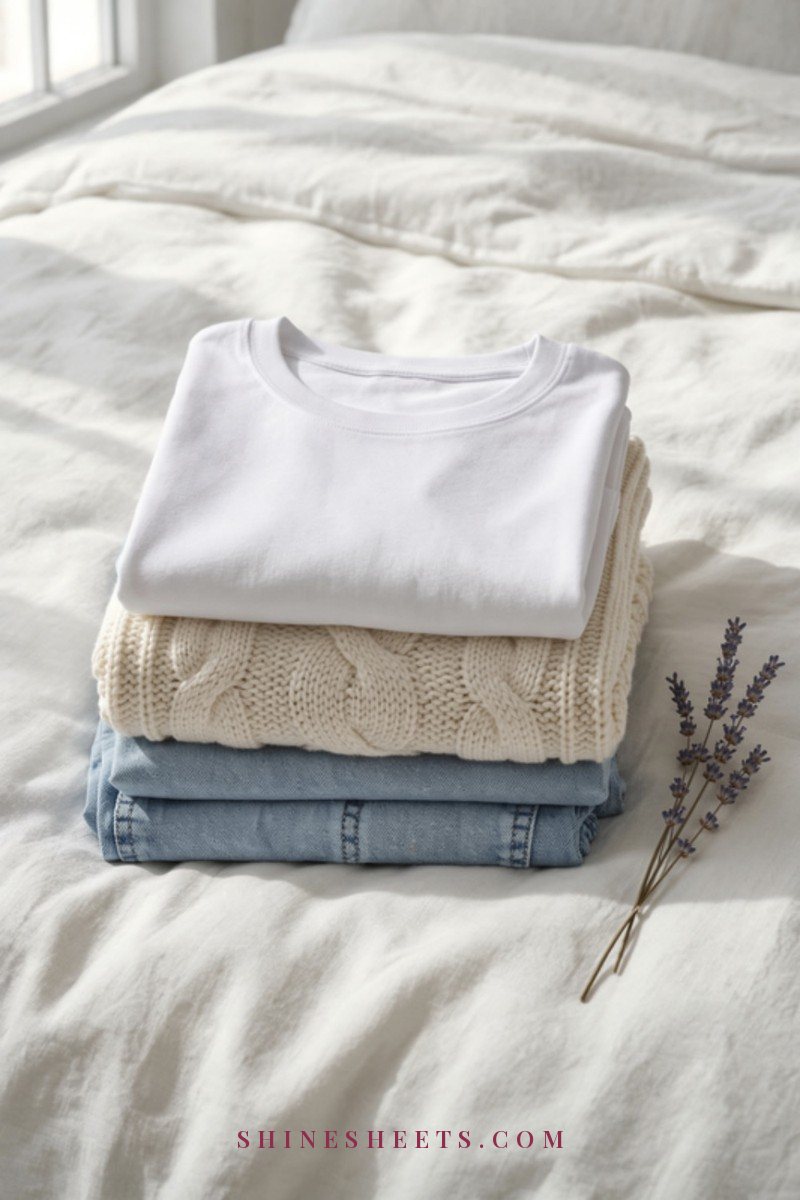
- Empty your own side onto the bed. Seeing everything at once is the quickest way to notice what you really own.
- Sort into four groups. Keep, maybe, donate, and repair. Anything that needs a button or a hem goes into the repair pile with a real deadline.
- Give the maybe pile a date. Put it in a box, write the date on a tag, and if you haven't missed anything in three months, let it go.
- Only offer opinions when asked. If your partner holds up a jacket and asks, "Keep or go?", answer kindly. Otherwise, let them decide.
If you want a calmer, step-by-step way to edit your own clothes, my guide on how to declutter your wardrobe breaks it into small decisions so it doesn't feel overwhelming. Once both of you have edited, you'll know exactly how much space each wardrobe really needs, and that makes the next part much easier.
6 Ways To Divide a Shared Closet
There's no single right layout. The best split depends on the shape of your closet, how much each of you owns, and what you both reach for. Here are six ways to divide the space. Many couples mix two or three of them.
1. Left and Right Halves
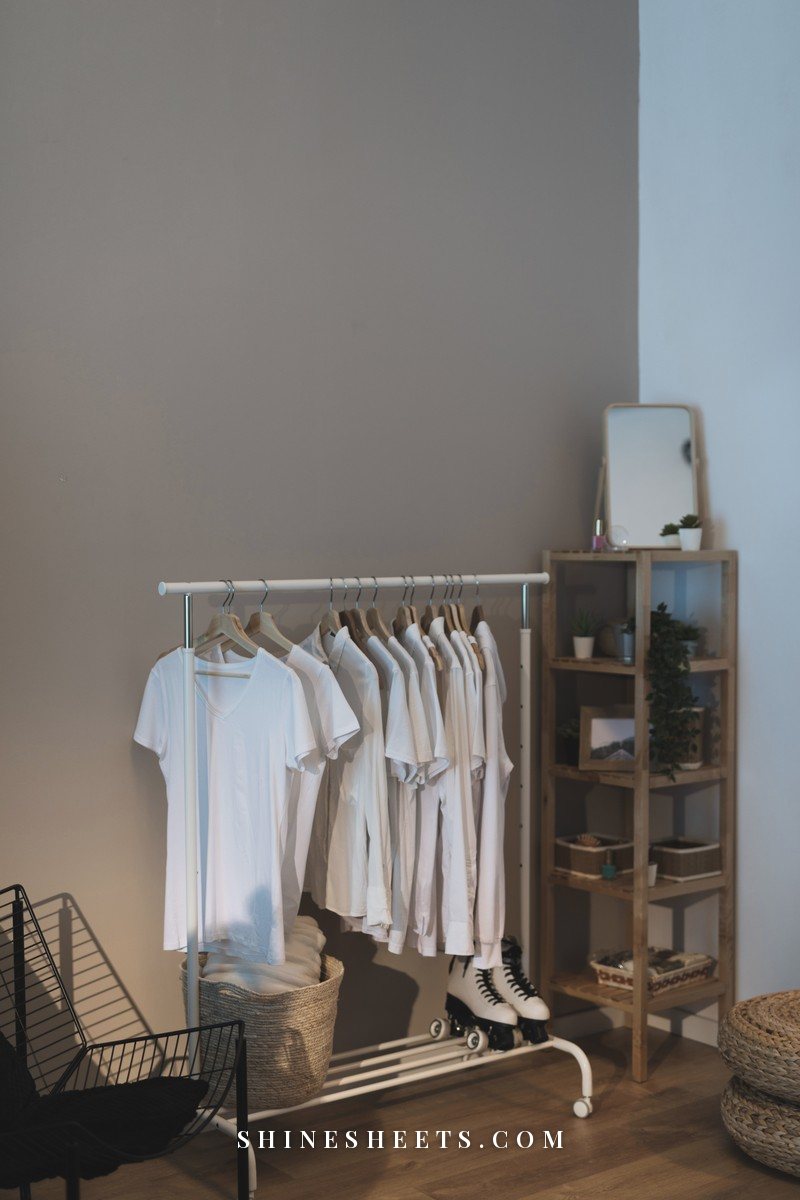
The classic split: one person takes the left side, the other takes the right. It's the easiest to understand and the easiest to keep, because nobody ever has to wonder whose shirt is whose.
Make it work by marking the middle. A small divider on the rail, a different hanger color on each side or simply a ribbon tied around the rod is enough. If one of you needs more length, move the divider rather than squeezing. Checking the split every few months keeps it honest as wardrobes change.
2. Upper and Lower Rails
If your closet has height but not width, stack the space instead of splitting it. A second rail under the first gives you two rows of short hanging space: one for shirts, blouses and folded trousers, one for skirts and jackets.
A good rule of thumb: whoever is taller usually takes the top rail, and whoever wears more short pieces takes the bottom. A renter-friendly double hang closet rod hooks onto the existing rail and doubles hanging space in seconds, with no drilling at all.
3. By Category
Some couples prefer to group clothes by type rather than by owner: all coats together, all shirts together, all trousers together. It works best when you have similar amounts of clothes and similar habits, or when the closet is small and every inch has to work hard.
Inside each category, keep your own pieces together (your shirts on the left of the shirt section, theirs on the right) so it never turns into a guessing game in the morning.
4. By Season With Off-Season Boxes
This is the secret to fitting two wardrobes into one closet. Only the clothes you'll wear in the next few months need prime space. Everything else goes into labelled boxes on the top shelf, under the bed or in a hallway cupboard.
Swap the boxes twice a year, when the weather really turns. Give each person their own boxes (one for each of you, clearly marked) so nobody has to dig through someone else's sweaters to find their own.
5. A Shared Middle Zone for Coats and Bags
Some things don't really belong to anyone's side: everyday coats, umbrellas, tote bags, a shared laundry basket. Give them a small neutral zone in the middle or closest to the door.
Keep this zone small on purpose. The more space you give it, the more it turns into a dumping ground. A few hooks or one short stretch of rail is usually plenty.
6. An Overflow Spot Outside the Closet
If the closet simply isn't big enough, stop trying to force it. Choose one overflow spot elsewhere: a slim rolling rail in the bedroom, a dresser, a chest at the end of the bed or a hallway cupboard for formal wear.
The rule that makes it work is one overflow spot, clearly assigned. Two or three random overflow piles around the home quickly undo all your hard work. A well-planned dresser can carry a lot of the folded load, and my guide on dresser drawer organization shows how to fold and divide drawers so they stay neat.
Shared Closet Zone Table
Here's a simple zone table you can adapt to your own closet. Screenshot it, then fill in your own names and zones together. Writing it down makes the agreement feel real, and it's helpful to look back at during your monthly reset.
| Closet zone | Whose it is | What goes there | Storage tool |
|---|---|---|---|
| Left rail (eye level) | Person A | Everyday tops, blouses, work pieces | Matching slim velvet hangers |
| Right rail (eye level) | Person B | Everyday shirts, trousers, work pieces | Matching slim velvet hangers |
| Lower rail | Whoever wears more short pieces | Skirts, folded trousers, jackets | Double hang rod |
| Middle zone | Shared | Everyday coats, tote bags, umbrella | Over-door hooks or a short stretch of rail |
| Top shelf | Split in half | Off-season clothes, spare bedding | Fabric bins with labels, one set each |
| Floor | Set rows | Everyday shoes | Shoe rack, one row per person |
| Small shelf or dresser top | Shared | Watches, belts, keys, sunglasses | Small catch-all tray |
| Overflow spot | Agreed together | Formal wear, bulky coats, sports kit | Rolling rail or hallway cupboard |
You don't need every zone. A small closet might only have a left rail, a right rail, one shelf and the floor. That's perfectly fine. The point is that every spot has a clear owner and a clear job.
The Small Tools That Keep Two Wardrobes Neat
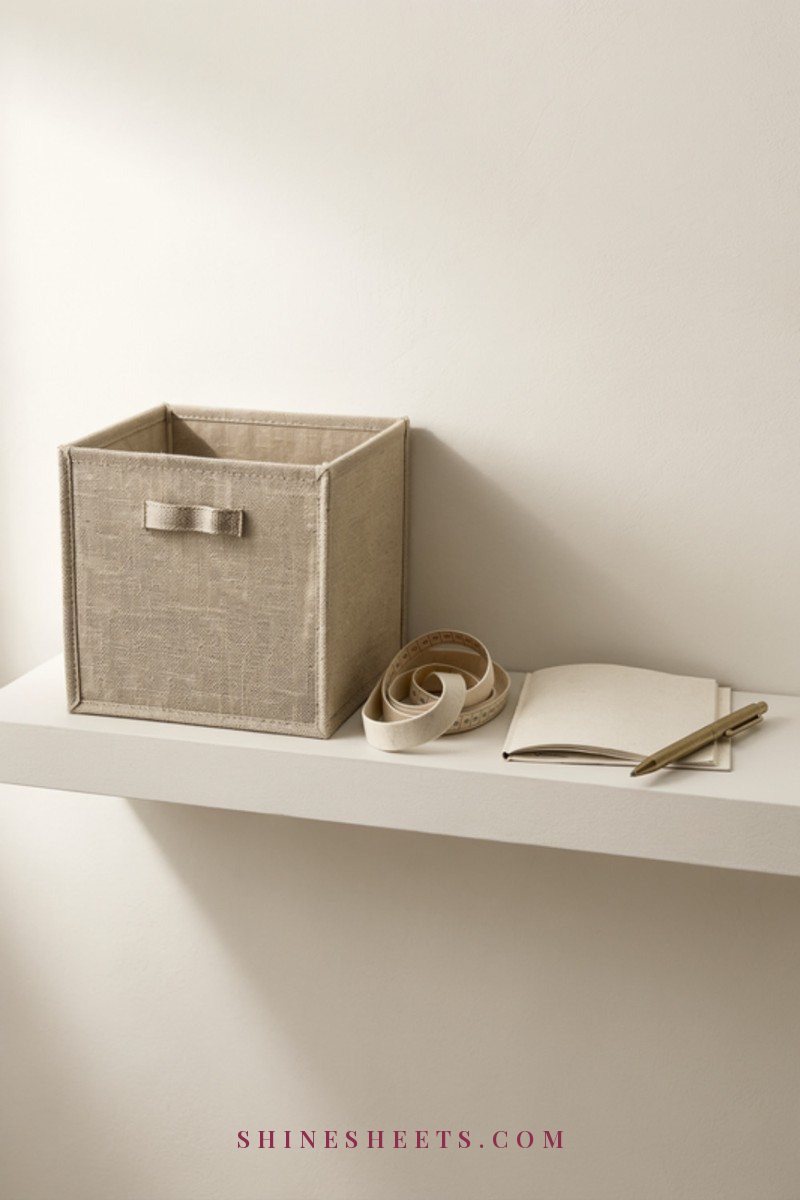
Once the zones are decided, a few simple tools keep them working. You don't need a whole system from a catalogue. Four small things do most of the heavy lifting.
Matching Hangers
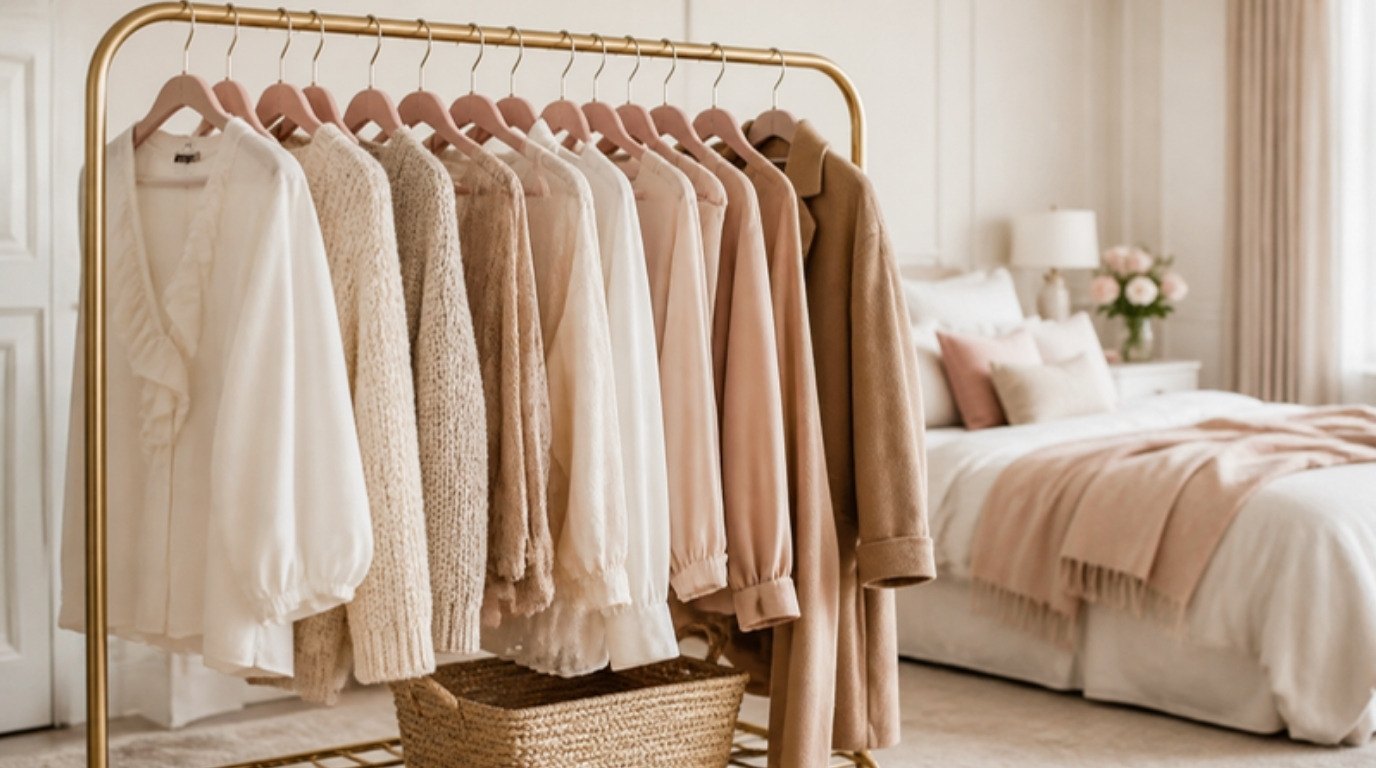
Mismatched hangers take up surprising amounts of space, and bulky plastic or wire ones tangle and slip. Switching both wardrobes to the same slim hanger can free up a third of your rail, and it instantly makes a shared closet look calm. Look for cream velvet slim hangers with a non-slip surface, so silky blouses and wide-neck tops stay put. If you want to tell sides apart, choose two soft colors (cream for one, blush for the other).
Labelled Bins
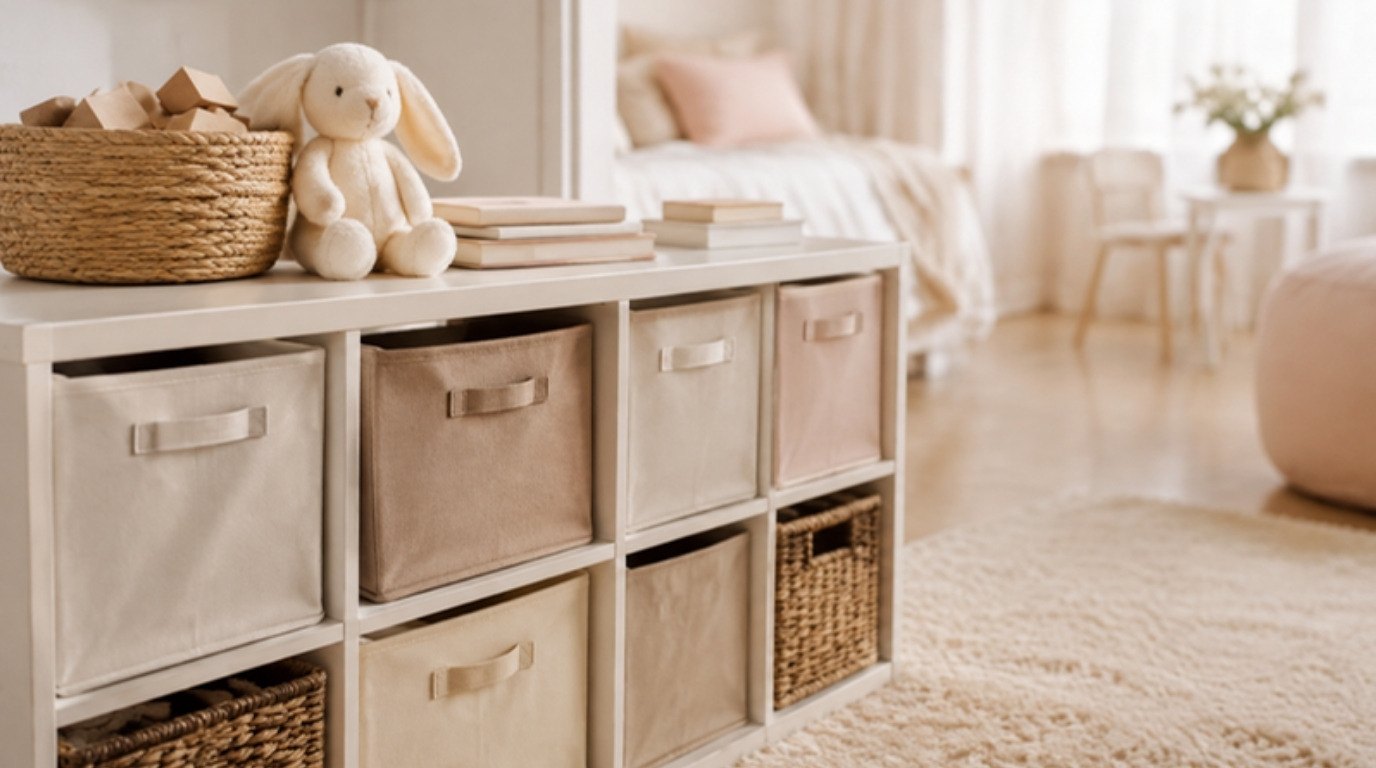
Bins keep shelves from turning into a soft mountain of sweaters. Give each person their own set and label them clearly: "A – gym", "B – scarves", "A – winter". Look for beige fabric storage bins with label holders that fit the depth of your shelf; measure before you buy, because a bin that sticks out will get knocked every morning.
A Shoe Rack With Set Rows
Shoes on the floor are the fastest way for a shared closet to look messy. A simple rack with one row per person, or the top row for one and the bottom for the other, stops the pile before it starts. An ivory two-tier shoe rack fits most closet floors and keeps everyday pairs easy to grab. For more ideas, my guide on shoe organization for small spaces covers racks, boxes and the shoes that should live somewhere else entirely.
A Small Catch-All Tray
Watches, rings, hair ties, keys, sunglasses: these are the things that quietly scatter across every shelf. One small tray on a shelf or dresser top gives them a home. A cream ceramic catch-all tray looks pretty enough to leave out and keeps the tiny things from drifting into the other person's space.
Renter-Friendly Add-Ons That Create More Space
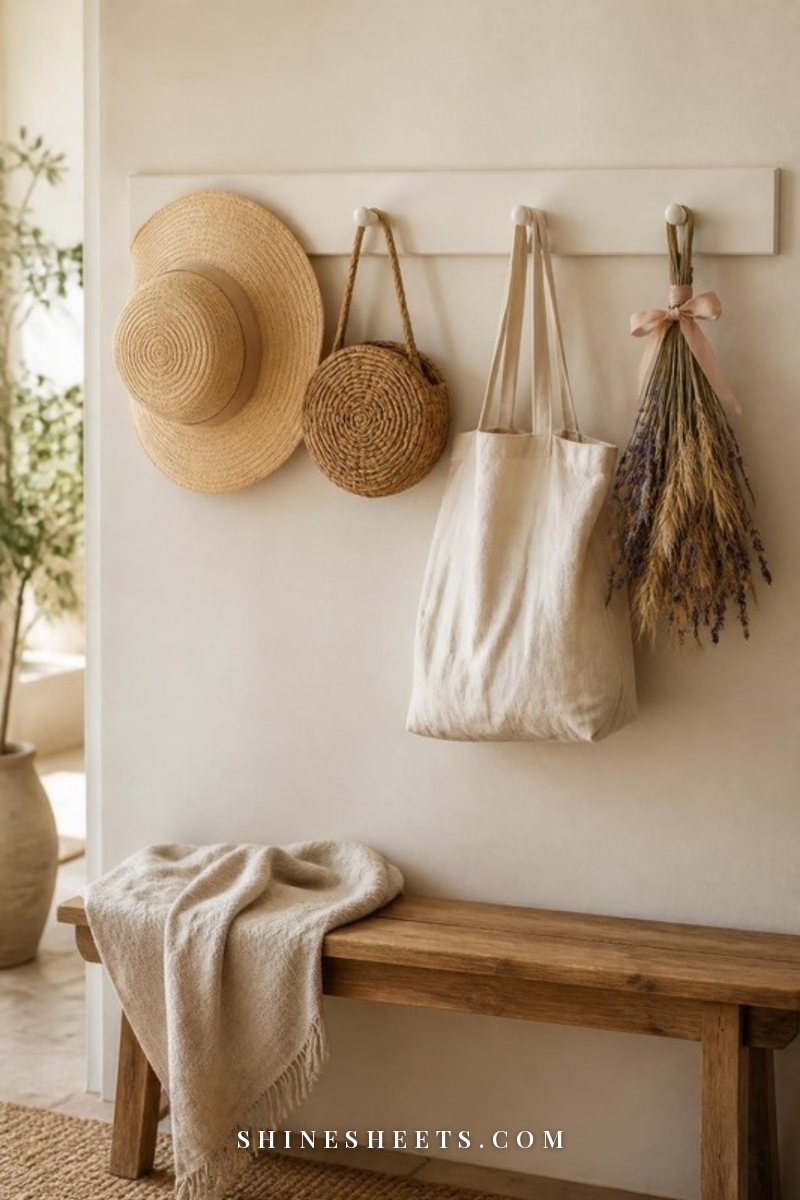
If you rent, you probably can't add shelves or rip out an old rail. The good news is that the most useful closet upgrades don't need a single screw. Always check how much weight a product can hold before you load it up.
- Tension rods. A tension rod between two closet walls creates an extra rail for short items or a narrow shelf base for bins. It twists into place and comes out without a mark.
- Over-door hooks. The back of the closet door is wasted space in most homes. A white over-door hook rack holds tomorrow's outfit, a robe, bags or belts. Look for one with a padded or rubber-lined bracket so it doesn't scratch the door.
- Freestanding drawer units. A slim set of drawers on the closet floor gives the person with more folded clothes a place of their own. Choose one that fits under the lowest rail so it doesn't steal hanging space.
- Hanging shelf organizers. Fabric shelves that hook onto the rail create cubbies for sweaters, bags or folded jeans without any installation.
- Stick-on hooks. Removable adhesive hooks inside the closet wall can hold belts, scarves or a small laundry bag. Test one on a hidden spot first, since some paints peel more easily than others.
When you move, everything comes with you. That makes these add-ons a smart little investment for both of you, wherever you end up living next.
The 15-Minute Monthly Reset for Two
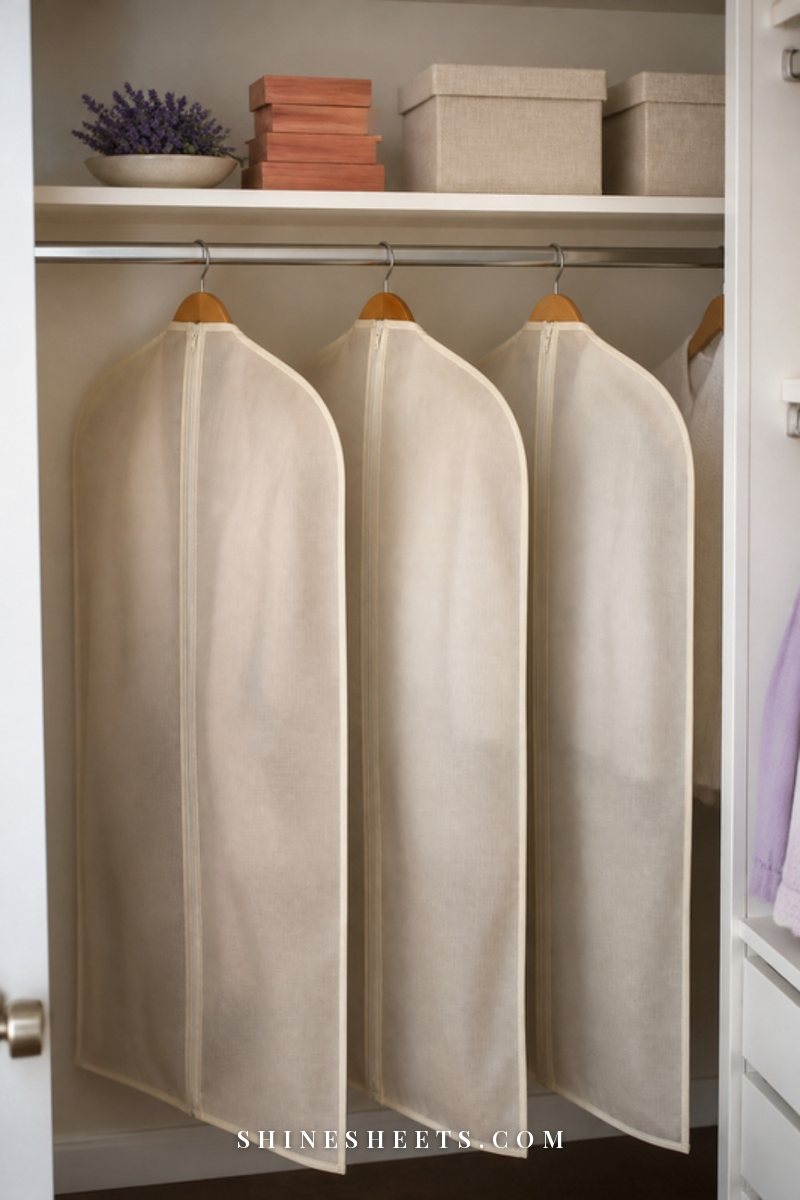
Even the best layout drifts. A sweater lands on the wrong shelf, the middle zone fills up, shoes creep off their row. A short reset once a month keeps things working without anyone having to nag.
Pick a regular time (the first Sunday of the month works well for a lot of couples) and set a timer for 15 minutes. Put on music, make it light, and work through this order:
- Minutes 1–3: Each person puts their own stray items back on their own side.
- Minutes 4–6: Clear the shared middle zone. Anything that doesn't belong there goes home.
- Minutes 7–9: Straighten shoe rows and refold the top of each bin.
- Minutes 10–12: Empty the catch-all tray and return everything to its place.
- Minutes 13–15: A quick check-in. Is anything feeling cramped? Does a zone need to move? Is there something to add to the maybe box?
That last step is the most important one. It's where you notice small problems before they turn into arguments. A simple question like "Is your side still working for you?" keeps the closet a shared project instead of a silent battleground.
When One of You Is Messier (No Blame Required)
In almost every shared closet, one person is tidier than the other. That's normal, and it isn't a character flaw. Some people simply see a chair as a perfectly good place for a half-worn sweater, and some people feel restless until every hanger faces the same way.
Instead of blaming, build the system around how the messier person actually behaves:
- Give them a "worn once" spot. A hook or a small basket for clothes that aren't dirty but aren't ready to be put away. It saves the chair.
- Make their side easier, not stricter. Open bins instead of lidded ones, hooks instead of hangers for things they wear constantly.
- Let their side be their side. If it's a little rumpled but nothing is spilling into the shared zones, let it be. Your own side can be as neat as you like.
- Talk about the effect, not the person. "When shoes are in front of the door, I trip in the morning" lands much more softly than "You're so messy."
And if you're the messier one, a little gratitude goes a long way. Noticing the effort your partner puts in, and doing your three minutes of the monthly reset without being asked, makes the whole arrangement feel kinder for both of you.
Final Thoughts
A shared closet works when both people feel they have enough room, clear spots for everything, and a quick way to set things right. Start with a calm talk, let each of you edit your own things, choose the split that fits your space, and give the shared zones a little love once a month.
It doesn't need to be perfect or look like a magazine page. It just needs to make your mornings a little easier and your home a little calmer, for both of you.