A neat dresser isn't about owning less or folding like a store display. It comes down to two decisions: putting the right things in the right drawer, and storing clothes standing up instead of stacked. Once those two are in place, you can see everything you own when you pull a drawer open, and it stays tidy far longer than a pile ever will.
Most messy drawers have the same story. Things got stacked, the item you wanted was at the bottom, you pulled it out and the stack collapsed. Repeat that a few times a week and the drawer becomes a jumble you avoid opening.
This guide to dresser drawer organization goes drawer by drawer: what goes where, the file folding method step by step, choosing dividers and bins, how to store socks, underwear, bras, pajamas, workout clothes and sweaters, how to use shallow versus deep drawers, a simple daily habit and a few ways to make your drawers smell lovely. You'll also find a "drawer map" table to plan your own dresser in five minutes.
Start With a Quick Empty-and-Edit
Organizing clothes you don't wear is wasted effort, so start with a short edit. Do one drawer at a time, not the whole dresser at once, so it never turns into a mountain on the bed.
- Empty one drawer completely onto the bed.
- Wipe the inside with a slightly damp cloth and let it dry for a few minutes.
- Sort into three piles: keep, donate, and repair or wash.
- Be honest with the "keep" pile. Socks with holes, stretched-out underwear, bras that dig in and leggings that go see-through can all go.
- Put back only what belongs in that drawer (more on that below). Anything that lives elsewhere goes to its proper spot right away.
One drawer usually takes 10 to 15 minutes. If you're short on time, do one a day for a week.
What Goes Where: Plan Your Drawers Top to Bottom
The simplest rule: the more often you reach for something, the easier it should be to reach. In most dressers, that means small, everyday items at the top and bulky, less-used things at the bottom.
- Top drawer: small daily items. Underwear, socks, tights and bras. Top drawers are usually the shallowest, which suits small things perfectly.
- Middle drawers: everyday clothing. T-shirts, tank tops, pajamas, loungewear and workout clothes.
- Bottom drawers: bulky or occasional items. Sweaters, jeans, sweatpants and off-season clothes. Bottom drawers are often the deepest and sturdiest, which handles the weight.
If you have a wide dresser with two columns, use one side for "you" items (underwear, bras, pajamas) and the other for clothing you get dressed in (tees, workout clothes, sweaters). It makes mornings faster because you're not crossing back and forth.
If you're also working on the rest of your wardrobe, my guide on how to organize a closet helps you decide what hangs and what gets folded, which makes planning your drawers much easier.
How To File Fold, Step by Step
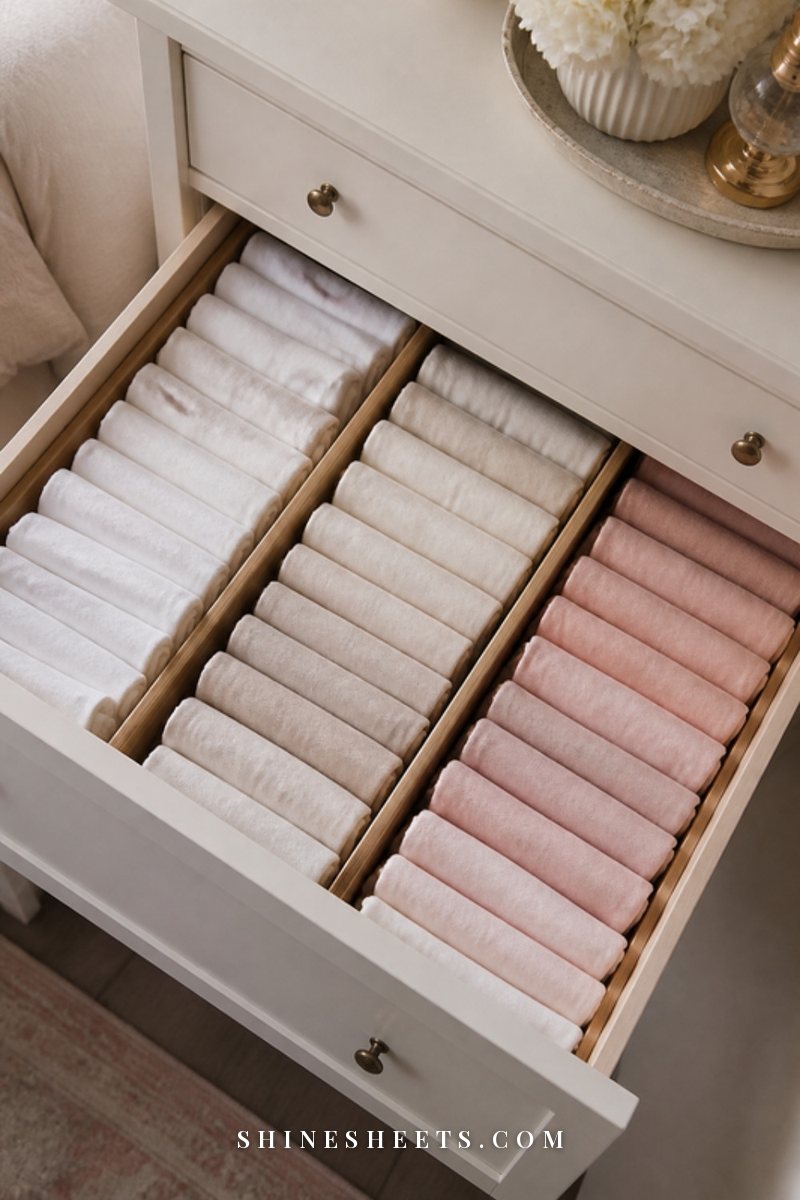
File folding means folding clothes into small rectangles that stand upright in the drawer, like files in a cabinet. When you open the drawer, you see every single item at once, and you can pull one out without disturbing the others. It's the biggest change you can make to any drawer.
Here's how to file fold a T-shirt:
- Lay the shirt face down on a flat surface and smooth it out.
- Fold one side in toward the center, about a third of the width, and fold the sleeve back along the edge.
- Repeat with the other side, so you have a long, narrow rectangle.
- Fold the rectangle in half from the top down, leaving the hem about an inch short of the collar.
- Fold it in half again (or in thirds for longer shirts) until it can stand up on its own.
- Stand it on its edge in the drawer, folded side up, so you can see the color and print.
The same method works for tank tops, leggings (fold in half lengthwise first), pajama pants, shorts and lightweight sweatshirts. A good test: if the folded item stands up on its own, the size is right. If it flops, fold it once more.
Arrange items from dark to light or by type, whatever helps you find things. A drawer of soft cream, white and blush tees lined up in rows looks calm every time you open it.
Dividers and Bins: Choosing the Right Organizers
Folding gets you halfway. Dividers keep everything standing once you start pulling items out. Without them, rows lean and slide into each other within a week.
Adjustable Drawer Dividers
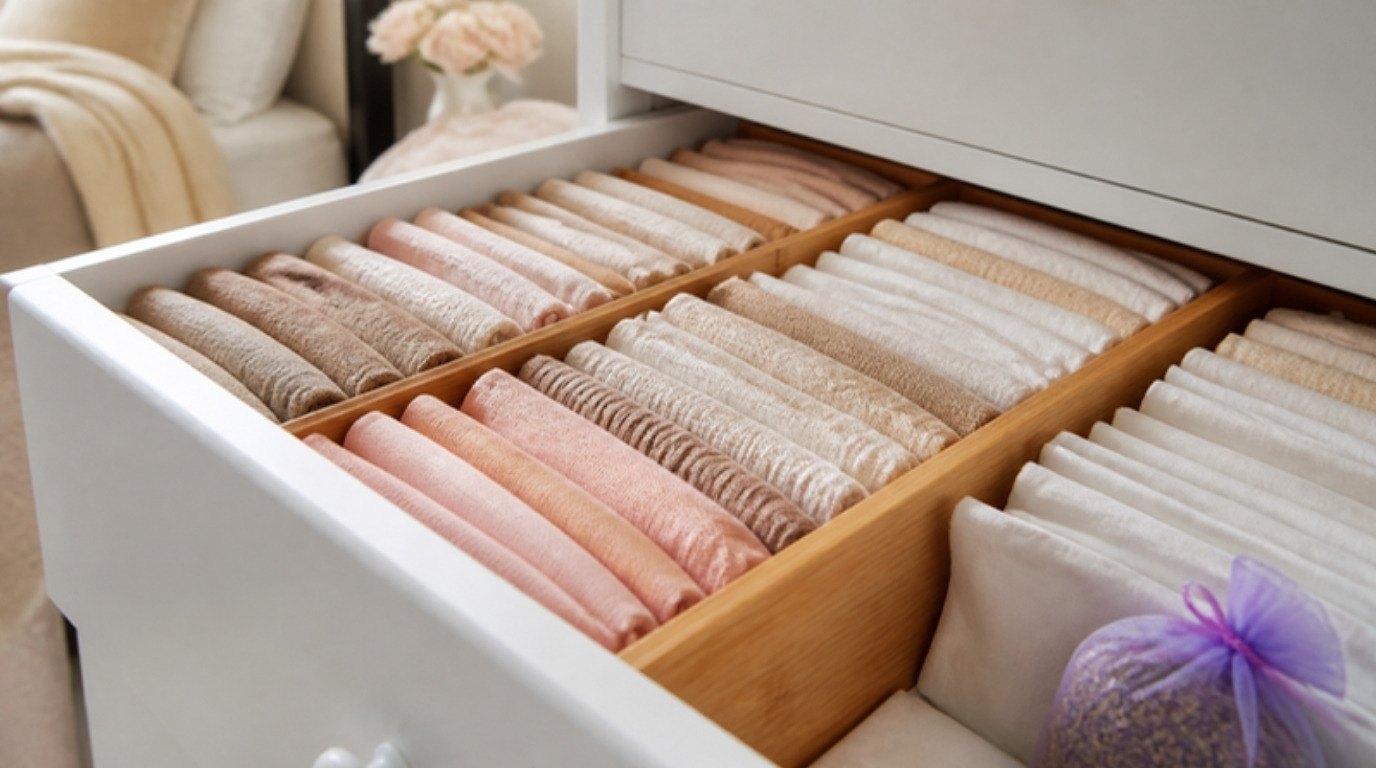
Spring-loaded dividers press against the sides of the drawer and split it into long lanes. They're perfect for file-folded tees, pajamas and leggings. Adjustable bamboo drawer dividers are a pick for most dressers: they expand to fit different widths, add a warm natural look and don't need any tools. If you prefer a brighter look, white plastic versions work just as well. Measure the inside of your drawer before buying and check the expandable range.
Drawer Bins and Boxes
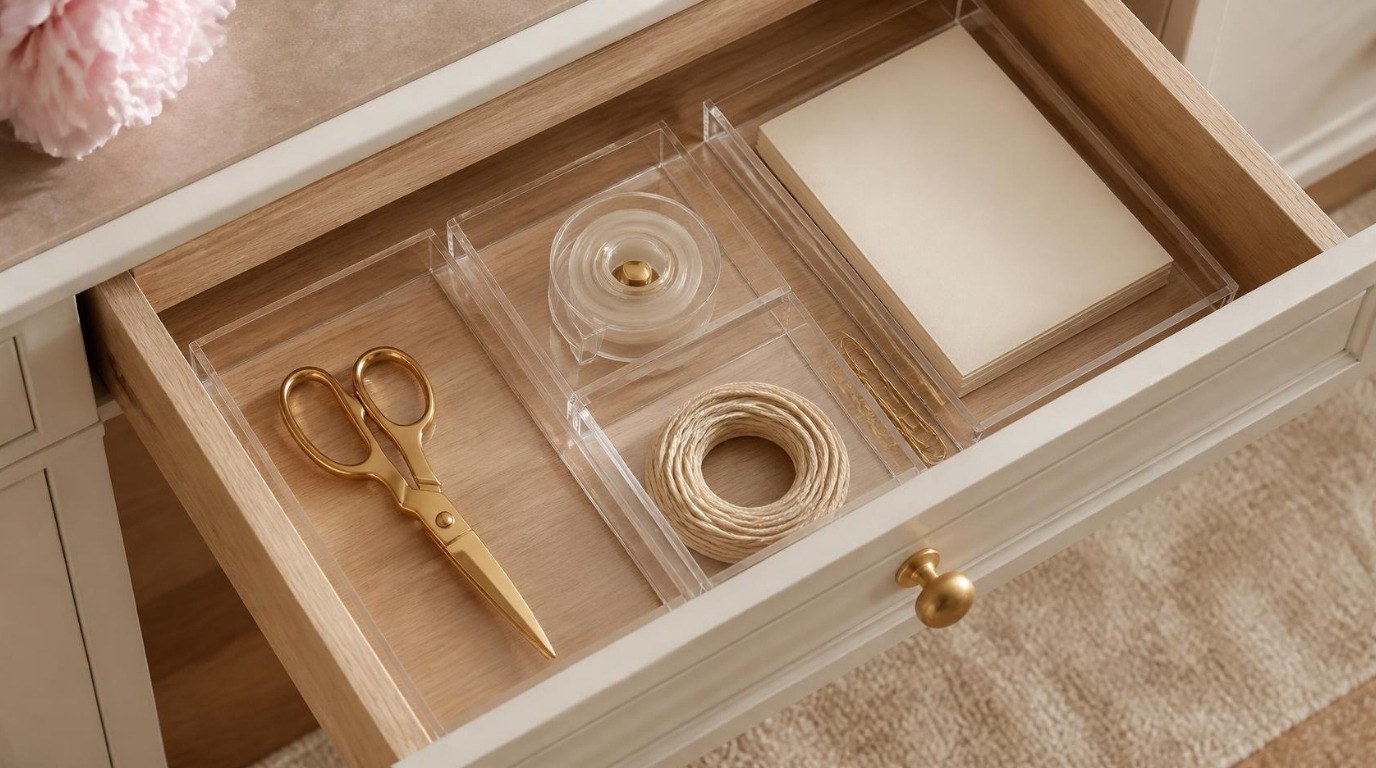
Small open bins create little compartments for socks, underwear, tights, belts and accessories. A set of drawer divider bins in mixed sizes is a pick for shallow top drawers. Look for sets that include long, square and small sizes, so you can fit them together like a puzzle with no gaps, and choose low sides so you can see inside at a glance.
Fabric Organizers
Soft fabric organizers with built-in cells are great for socks and underwear, especially in drawers where hard bins would rattle. They also fold flat if you ever reorganize.
A quick rule for choosing: lanes for long things (tees, leggings), grids for small things (socks, underwear) and nothing at all for very bulky items (sweaters, jeans), which do better with plenty of space.
Drawer by Drawer: How To Store Each Category
Every category has its own little trick. Here's what works best for each.
Socks and Tights
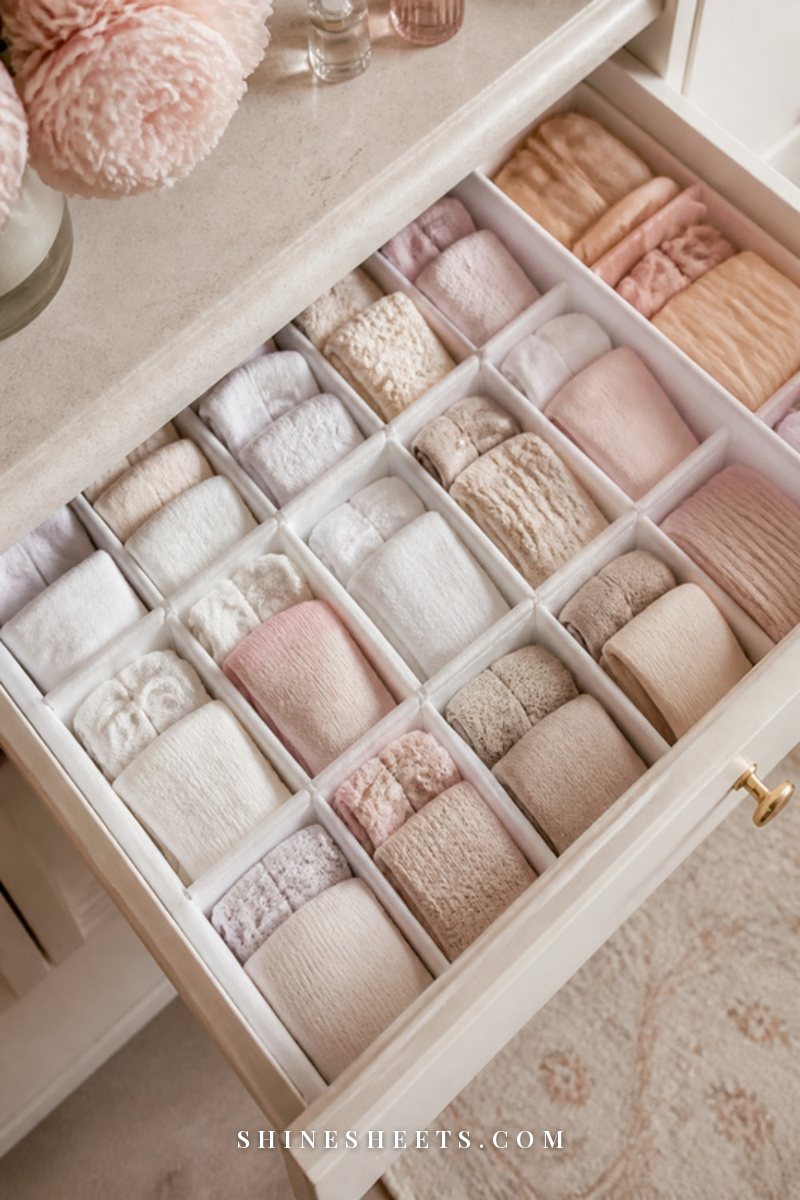
Socks are the reason most top drawers turn chaotic. Two fixes help instantly:
- Fold, don't ball. Balling socks stretches the cuffs. Instead, lay the pair flat, fold in half or thirds and stand them upright, or roll them loosely.
- Give them a grid. A sock organizer with small cells means one pair per cell, which makes it obvious when you're running low (and stops lonely singles from hiding).
Sort by type: everyday socks, workout socks and cozy socks. Tights can be folded into small squares or rolled, then kept in their own cell or a small bin so they don't snag on anything.
Underwear
Fold underwear into small rectangles or rolls and store it upright in a grid organizer or a small bin. Group by type if you have different styles (everyday, seamless, special occasion). Keep the drawer slightly underfilled, so you can see everything without digging.
A good moment to declutter: anything with stretched elastic or that's uncomfortable can go. You deserve underwear that feels good.
Bras
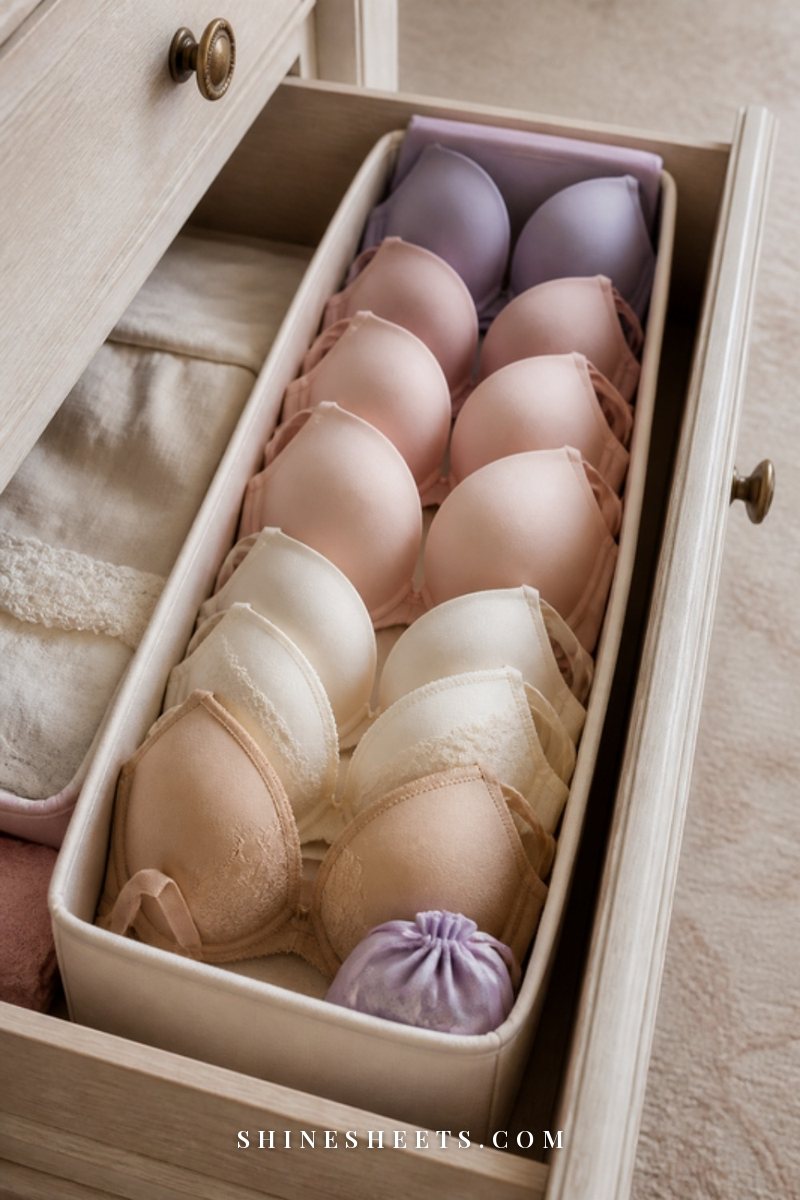
Molded bras lose their shape quickly when they're folded in half or squashed. The best way to store them is to nest them: line them up front to back, cups tucked into each other, with straps and hooks tucked inside the cups.
- Molded and padded bras: nest them in a row, never fold the cups in half.
- Soft bras and bralettes: fold in half and stand them up in a bin.
- Sports bras: fold or roll and keep them with workout clothes.
A bra organizer with long, open compartments is a pick if your drawer is wide and the row keeps tipping over. Look for one sized to your drawer depth.
Pajamas and Loungewear
File fold pajama sets and keep the top and bottoms together, either folded into one bundle or side by side in the same lane. Then you can grab a matching set in one go. Loungewear (sweatpants, soft tees, cardigans) can sit in the same drawer, sorted by type in lanes.
A small extra: keep one "reset" set at the front of the drawer, the pajamas you like most, for nights when you need a little comfort.
Workout Clothes
Workout clothes are slippery and stretchy, which makes them messy fast. Give them their own drawer or half drawer:
- File fold leggings into long rectangles and roll them if the drawer is short.
- Fold sports bras and tops and keep them in lanes next to the leggings.
- Store complete outfits together if you like grabbing a set without thinking.
- Keep workout socks and hair ties in a small bin at the front.
Only put workout clothes back once they're fully dry. Damp fabric in a closed drawer can leave a musty smell.
Sweaters: Fold, Never Hang
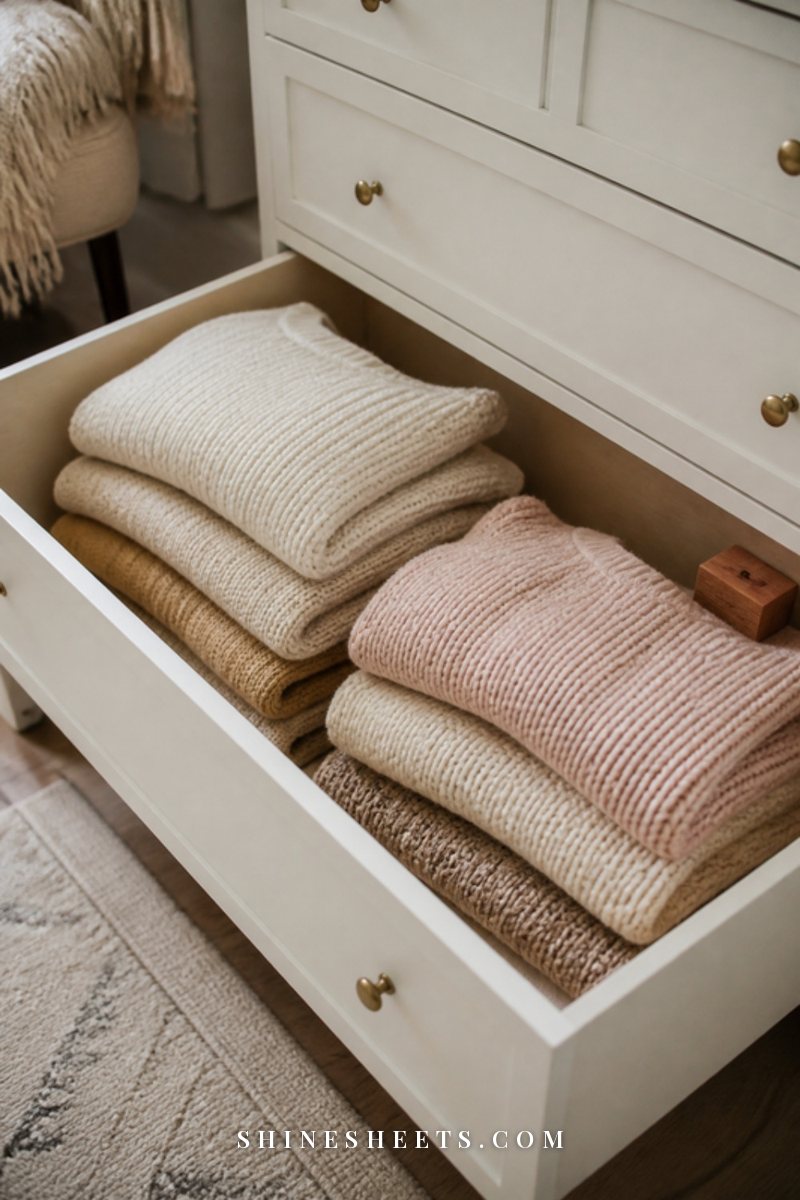
Knit sweaters stretch out of shape on hangers, getting pointy shoulder bumps and longer bodies over time. Folding is kinder.
- Lay the sweater face down and smooth it.
- Fold the sleeves across the back.
- Fold the sides in so the sweater is roughly the width of your drawer lane.
- Fold it in half or thirds from the bottom up.
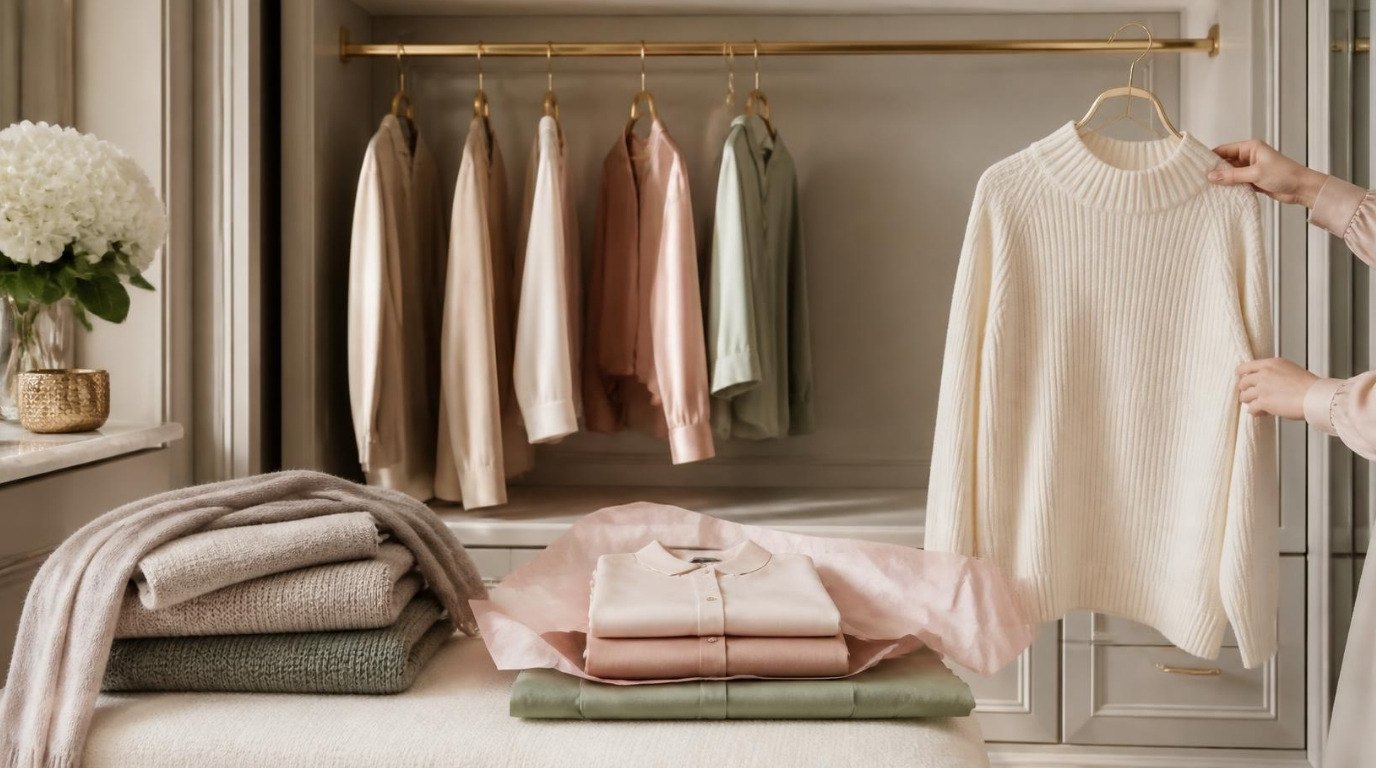
Thin knits can be file folded and stood upright. Chunky sweaters are usually too thick, so stack them loosely, no more than three or four high, in a deep bottom drawer. Fine wool and cashmere deserve a little extra care, like folding with tissue and keeping them clean before storing (my guide on how to care for cashmere covers washing and storing them properly).
T-Shirts and Everyday Tops
Tees are the easiest category to file fold, and they look the most satisfying when you do. Sort by sleeve length (tanks, short sleeves, long sleeves) in lanes, then by color within each lane. Keep basics you wear every week at the front and special pieces behind them.
Jeans and Pants
Jeans are thick, so they take up a lot of drawer space if you're not careful. Fold them in half lengthwise, fold the back-pocket "bump" inward so the edge is straight, then fold in thirds from the hem up. Stand them on the folded edge in a deep drawer, or stack two or three loosely if they won't stay upright.
Softer pants like chinos and sweatpants can be file folded the same way. Keep jeans and casual pants in the same drawer as sweaters if you're short on space, with one divider between them.
Shallow vs Deep Drawers: How To Use Each
Not all drawers are the same, and that's a good thing. Match the drawer to the item:
- Shallow drawers (about 3–5 inches deep): perfect for small items in a single layer. Underwear, socks, tights, bras, scarves, belts and accessories. Use bins and grids so nothing slides.
- Medium drawers (about 5–8 inches deep): ideal for file folding. T-shirts, pajamas, leggings and workout clothes all stand up nicely here.
- Deep drawers (8 inches or more): best for bulky items like sweaters, jeans and sweatpants, or off-season clothes. If you file fold here, items may flop over, so add a divider or stack in neat, low piles.
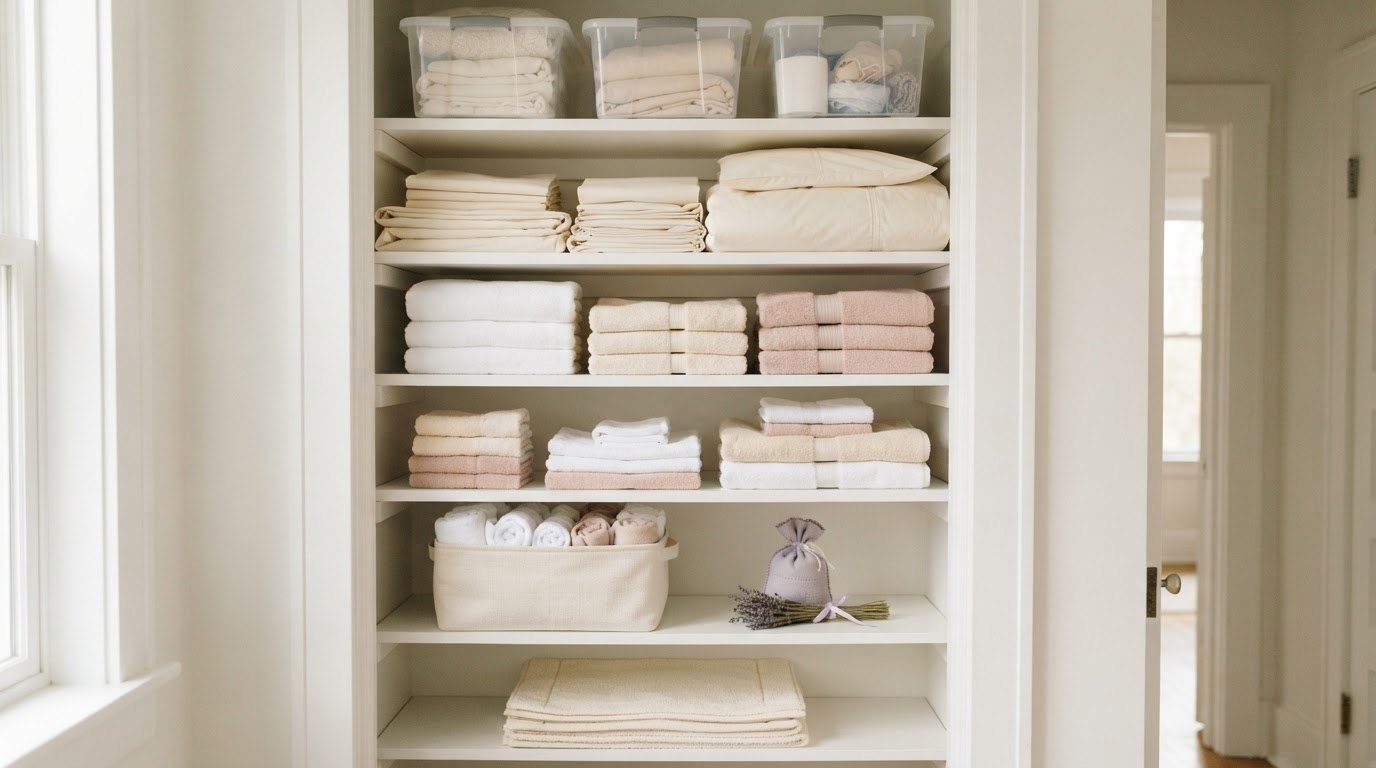
The same thinking works in other parts of the house. My guides on linen closet organization and junk drawer organization use the same "right container for the right depth" idea.
Your Drawer Map
Here's a sample map for a typical six-drawer dresser. Use it as a starting point, then adjust it to your own drawers and wardrobe. Screenshot it before you start.
| Drawer | Contents | Organizer | Fold |
|---|---|---|---|
| Top left (shallow) | Underwear, everyday socks, tights | Grid organizer or small bins | Small rectangles or loose rolls |
| Top right (shallow) | Bras, bralettes, sports bras | Long open bra organizer | Molded bras nested, soft bras folded in half |
| Middle left | T-shirts, tank tops, long-sleeve tees | Adjustable dividers in lanes | File fold, standing upright |
| Middle right | Pajamas and loungewear | Adjustable dividers | File fold, sets kept together |
| Bottom left (deep) | Workout clothes and leggings | Dividers plus a small bin for socks | File fold or roll |
| Bottom right (deep) | Sweaters, jeans, sweatpants | None or one divider | Flat fold, loose stacks of three to four |
Fewer drawers? Combine the top two into one shallow drawer with a grid, and merge pajamas with workout clothes.
Make Your Drawers Smell Lovely
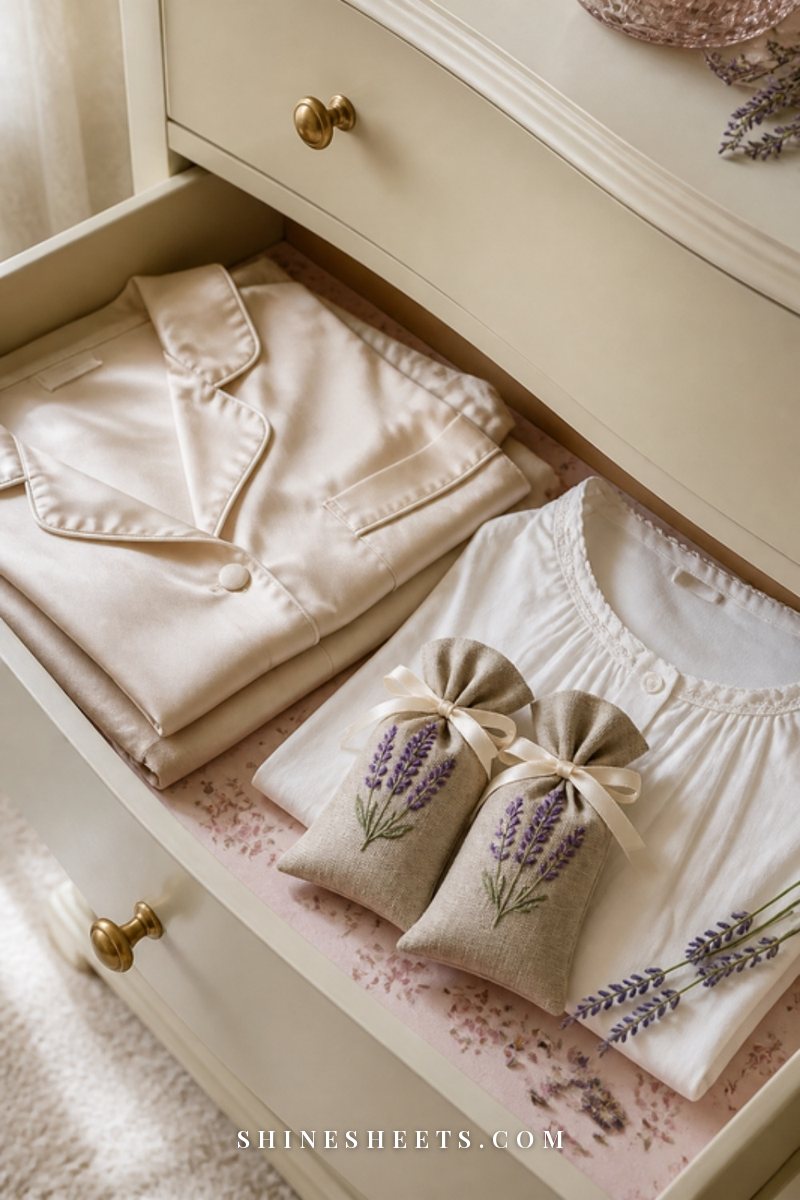
Opening a drawer and catching a soft, clean scent is one of those small daily joys. It also helps keep things fresh, especially in older dressers or humid rooms.
- Sachets: tuck a lavender sachet in the corner of each drawer. Squeeze it gently every couple of weeks to release more scent, and replace it every few months.
- Scented drawer liners: scented drawer liners add a gentle fragrance and protect the wood from snags. Cut them to size and lay them flat before you put clothes back. Look for a soft floral or clean cotton scent and a smooth, non-sticky finish.
- Cedar blocks: a classic for sweater drawers, with a warm woody scent.
- Keep it subtle: one sachet per drawer is plenty. Strong scents can transfer to clothing and clash with your perfume.
Above all, only fold clothes into drawers when they're completely dry and clean. No sachet can fix a damp sweater. If you need help with fresher laundry in general, my laundry tips are full of small fixes.
Common Drawer Organization Mistakes
If you've organized your drawers before and it didn't last, one of these is usually the reason. None of them are failures, just easy fixes:
- Overfilling. A drawer packed to the edges has no room to put things back neatly. Aim for about 80 percent full, so your hand can slip in easily.
- Buying organizers before measuring. Bins that are a half inch too wide don't fit, and bins that are too small leave gaps where things slide. Measure width, depth and height first.
- Mixing categories. A drawer with "a bit of everything" quickly becomes a junk drawer for clothes. One category per drawer or per lane keeps it clear.
- Folding everything the same way. Bulky knits don't file fold well, and tiny items don't need lanes. Match the method to the item.
- Organizing clothes that don't fit. Edit first. Folding pieces you never wear only takes up space you need for the ones you do.
The 2-Minute Habit That Keeps Drawers Neat
Organized drawers fall apart when laundry gets stuffed back in at the end of a long day. A tiny habit keeps everything in place:
- Fold straight from the basket. Fold as you put away, not later. File folding takes seconds once your hands learn it.
- Back of the lane. Put freshly washed items at the back, so you naturally rotate through everything.
- Tidy one lane. When you open a drawer, straighten the lane you just took something from. It takes five seconds.
- One in, one out. When you buy a new tee or pair of leggings, let an old one go.
- Monthly check. Once a month, pick one drawer and spend two minutes refolding anything that's slipped.
It's less about discipline and more about making the neat option the easy one. Once every item has a lane, putting things back is faster than shoving them in.
Final Thoughts
Dresser drawer organization is mostly about two small shifts: storing things standing up, and giving every category its own drawer and its own lane. Add a few simple dividers, a soft sachet and a two-minute habit, and your dresser can stay calm and pretty week after week.
Start with the drawer you open most, likely the top one, and do just that one today. Every morning after that, you'll get a tiny moment of calm the second you slide it open.