
Good compromise isn't about meeting exactly in the middle every time. It's about two people being honest about what matters to them, how much it matters, and then building an answer that respects both. Sometimes that lands in the middle. Sometimes one of you gets most of what you want this time, and the other gets it next time. Sometimes you find a third option neither of you had thought of.
What healthy compromise is not is one person quietly shrinking so the other stays comfortable. That version looks peaceful from the outside, but it builds resentment slowly, like water dripping on stone.
This guide walks you through how to compromise in a relationship without losing yourself: the difference between compromise and sacrifice, how to separate your non-negotiables from your preferences, a simple 1–10 importance method you can use on almost any disagreement, real everyday examples, and the moments when you shouldn't compromise at all.
It took me a while to understand that wanting something isn't selfish, and saying so out loud is actually a gift to the other person. They can't meet you halfway if they don't know where you're standing.
What Healthy Compromise Actually Looks Like

Healthy compromise has a few clear signs. You'll recognize it because both of you walk away feeling heard, even if neither of you got everything. Here's what it tends to look like in practice:
- Both people speak up. Nobody guesses what the other wants or assumes "they won't mind."
- Reasons get shared, not just positions. "I want to stay home" becomes "I want to stay home because this week drained me and I need quiet to recharge."
- It balances out over time. Not every single decision is 50/50, but over a month or a year, both people feel the give-and-take is fair.
- It's revisited. A compromise isn't a contract signed in ink. If it stops working, you talk again.
- Nobody keeps score. You notice fairness, but you don't keep a ledger of every favor.
The quiet goal underneath all of this is that you both feel like a team solving a problem together, instead of two opponents trying to win. If you'd like a bigger picture of how couples talk through tension, my guide to communication in relationships pairs really nicely with this one.
Compromise vs. Sacrifice: How To Tell the Difference

These two words get mixed up all the time, and that confusion causes a lot of quiet hurt. Here's the simplest way I can put it: compromise is a choice you make freely, with your needs on the table. Sacrifice is giving something up, often silently, because you feel you have to.
A little sacrifice is part of loving anyone. You'll sit through a movie you're not excited about, or skip an event because your partner is sick. That's normal and kind. The problem starts when sacrifice becomes the only mode, and it's always the same person doing it.
Ask yourself these questions after a decision:
- Did I say what I actually wanted, or did I skip straight to agreeing?
- Do I feel lighter, or do I feel a small knot of resentment?
- If my partner asked me why I agreed, could I give an honest reason other than "to avoid a fight"?
- Would I be okay making this same choice again next month?
If your answers lean toward "I skipped my needs" and "I feel resentful," that wasn't really a compromise. It was a sacrifice wearing a compromise costume. That's useful information, not a failure. It simply means the next conversation needs a bit more honesty from you.
For a lot of us, the habit of over-giving starts long before the relationship. If you're someone who finds "no" hard to say, the gentle steps in how to set boundaries make every compromise conversation easier.
Non-Negotiables vs. Preferences

Before you can compromise well, you need to know which things are flexible for you and which aren't. Most disagreements in a relationship are about preferences. A few are about values. Treating a preference like a value makes you rigid. Treating a value like a preference makes you lose yourself.
Here's a quick way to sort them. Grab a simple linen-covered notebook and draw two columns.
Non-negotiables are things that touch your values, safety, health or sense of who you are. Examples might be:
- Being treated with respect, including during arguments
- Honesty about money and big decisions
- Keeping close friendships and family relationships
- Your physical and emotional safety
- Your faith or personal beliefs, whatever they are
- Whether you want children (a big one to be honest about early)
Preferences are things you like, enjoy or are used to, but could flex on. Examples:
- How often you eat out
- What time you go to bed on weekends
- How tidy the living room needs to be
- Where you spend a free Saturday
- Decor style and paint colors
- How often you see each other's friends
Keep your non-negotiables list short, maybe three to six items. If everything ends up on it, look again and ask: "Would I truly end the relationship over this?" If the answer is no, it probably belongs in the preferences column, even if you care about it a lot.
The 1–10 Importance Method, Step by Step
This is the method I come back to again and again, because it takes the heat out of a disagreement and turns it into a puzzle. It works for small things (which restaurant) and bigger ones (how to split holidays or a budget). Give it 20–30 minutes the first time. After a few rounds, it becomes almost automatic.
Step 1: Each Person Says What Matters and Why

Take turns. One person speaks for two or three minutes without being interrupted, and the other just listens. Then swap. The key is to share the why, not just the what.
A mini formula: "I'd like ___, because ___. What I'm worried about is ___."
For example: "I'd like us to spend Saturday at home, because I've been around people all week and I'm running on empty. What I'm worried about is being tired and short with everyone if we go out."
Once you hear each other's reasons, you'll often notice you aren't as far apart as it felt five minutes ago. You both want rest, or connection, or fairness. You just had different pictures of how to get there.
Step 2: Rate How Important It Is From 1 to 10
Now each of you gives your preference a number. 1 means "I barely care, happy to go with whatever." 10 means "this really, really matters to me right now."
Be honest, not strategic. If you always say 10 to win, the method stops working and trust drops. A good rule: you only get a 9 or 10 a handful of times a month.
The numbers do something lovely. If one of you is a 3 and the other is an 8, the answer often becomes obvious and nobody feels bad about it. If you're both high, you know you need to get creative.
Step 3: Brainstorm at Least Three Options
Before you choose anything, list at least three possible solutions together. Write them all down, even the silly ones. Silly ideas often lead to good ones.
Using the Saturday example, options might be: stay in all day; go out for the afternoon and be home by 6; go out but take separate cars so one person can leave early; stay home Saturday and do the outing Sunday. Suddenly it's not "your way or my way" anymore.
A weekly planner you both can see is handy here, because so many compromises are really about time.
Step 4: Try It for a Set Time
Pick the option that feels fairest given both ratings, and agree on a trial period. For a one-off decision like a weekend, the trial is the weekend itself. For a recurring issue like chores or screen time in the evening, try two to four weeks.
Saying "let's try it for two weeks" lowers the pressure a lot. Nobody is agreeing to forever. You're both just running a small experiment.
Step 5: Review and Adjust
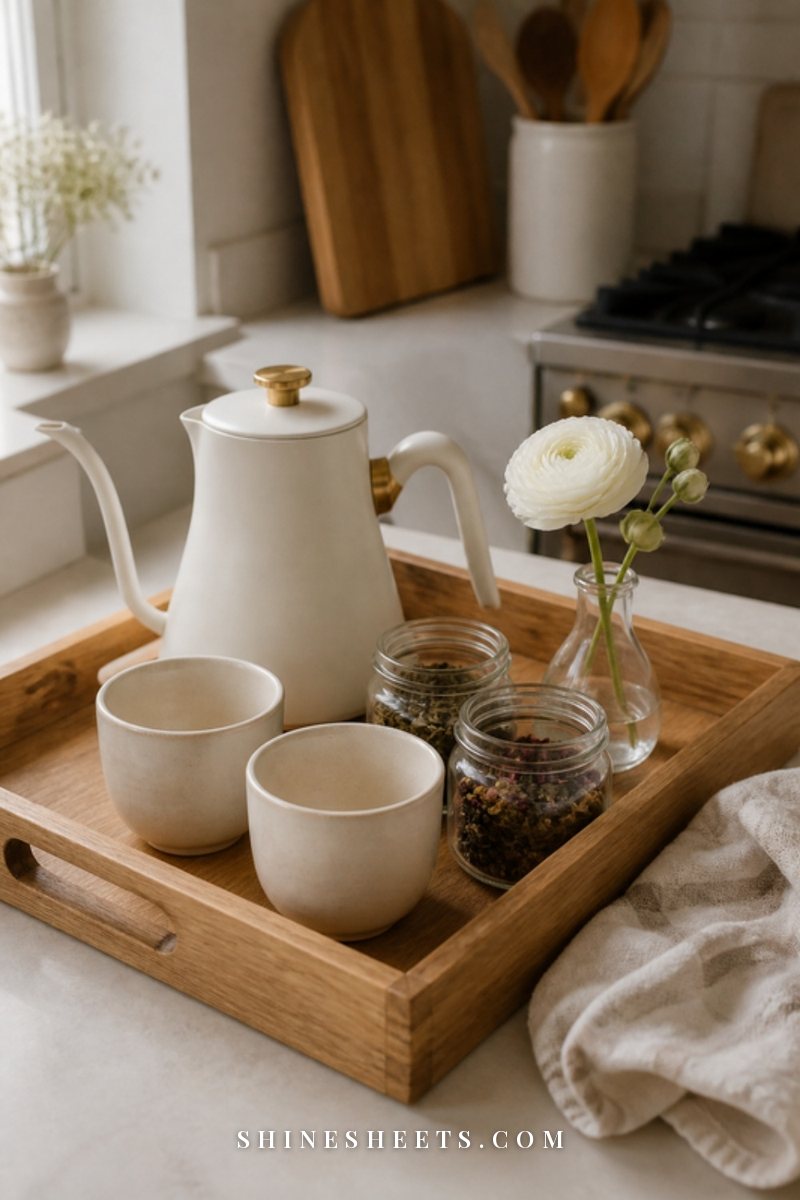
At the end of the trial, sit down for ten minutes. Make it pleasant: a pot of tea, phones away. A simple ceramic tea set for two turns this into a small ritual instead of a meeting.
Ask each other three questions:
- What worked?
- What felt unfair or hard?
- What do we want to change, keep or drop?
Then adjust. Some compromises stick for years. Others need a tweak every season, especially as work, health and life change. If you'd like more conversation starters for these little reviews, my list of relationship check-in questions is a gentle place to begin.
An Example: The 1–10 Method in Action
Here's how the method might look across a few common situations. Screenshot it if you'd like a quick reminder of how the ratings guide the choice.
| Situation | Person A wants (rating) | Person B wants (rating) | Compromise they try |
|---|---|---|---|
| Free Saturday | Quiet day at home (8) | Brunch with friends (5) | Short brunch, home by 2 pm, quiet afternoon |
| Evening dishes | Done before bed (7) | Done in the morning (3) | Dishes before bed; the other person cooks more often |
| Monthly fun budget | Save more (6) | Concert tickets (9) | Buy the tickets, skip takeout for two weeks to balance it |
| Living room decor | Soft neutrals (8) | Bold color (4) | Neutral walls, one colorful art print chosen together |
| Visiting family | Every weekend (5) | Once a month (7) | Every other weekend, with one weekend each month kept free |
| Bedtime on weeknights | 10 pm (9) | Midnight (6) | Wind down together at 10, the night owl reads in another room |
Notice that the higher rating usually gets more weight, but the other person always gets something too. That "something" is what keeps the balance fair over time.
Everyday Compromise Examples
Most compromise happens in ordinary places, not dramatic moments. Here are the areas where couples most often need to find a middle way, with ideas you can borrow.
Weekends and Free Time

One of you might be an "out and about" person, the other a "home and recharge" person. Neither is wrong. Try these:
- Split the day. Morning out, afternoon in, or the other way around.
- Alternate weekends. One weekend leans social, the next leans quiet.
- Keep one protected block. Each person gets two or three hours a week that's fully theirs, no explaining needed.
- Plan a shared "yes" activity. Something you both enjoy equally, so free time isn't always a negotiation.
Money and Spending
Money brings up feelings about safety, freedom and fairness, so go gently. A few compromises that work for a lot of couples:
- A "no questions asked" amount. Each person can spend a set amount per month on anything, without discussion.
- A check-in threshold. Anything above an agreed number gets talked about first.
- Proportional sharing. If incomes differ a lot, splitting shared costs by percentage can feel fairer than 50/50.
- One shared goal. Saving for something you both want makes small sacrifices feel meaningful.
Chores and the Household Load

Chores cause more arguments than almost anything else, mostly because the invisible work (remembering, planning, noticing) is easy to overlook. Try this:
- Write down every recurring task, including the invisible ones like "remember birthdays" and "notice we're out of soap."
- Each person rates how much they dislike each task from 1 to 10.
- Swap where you can: the person who minds laundry less takes laundry; the person who doesn't mind dishes takes dishes.
- Split the tasks you both dislike, or alternate them weekly.
- Review after a month.
Writing it all down is often the moment both people finally see the full load clearly, and that alone makes the conversation softer.
Social Plans and Friends
You don't have to love every one of your partner's friends, and they don't have to love all of yours. Some gentle middle grounds:
- Agree on a rough number of social plans per week that feels good for both.
- Give each other a heads-up before committing to plans that involve both of you.
- Have an "exit signal" for events, so the more introverted partner knows they can leave at an agreed time.
- Keep some friendships fully separate. That's healthy, not a red flag.
Living Space and Decor

Sharing a home means sharing taste. If one of you loves soft neutrals and the other loves color, try these:
- Each person gets one zone. A reading corner, a desk, a shelf that's fully theirs to style.
- Neutral base, shared accents. Keep big pieces calm and pick accent items together.
- A veto rule. Each person can veto a limited number of items, so nobody feels steamrolled.
- Shop together for the big things. Sofa, bed and rug decisions go better side by side.
Small touches that you both like, such as a clear glass jar candle on the coffee table or a blush linen pillow cover, can become little symbols of a home you made together.
Phrases That Make Compromise Easier
The words you use can open a conversation or shut it down. These are short, warm lines that keep things in "team mode":
- "Can we figure this out together?"
- "Help me understand why this matters to you."
- "On a scale of 1 to 10, how important is this for you?"
- "What would make this feel fair for both of us?"
- "I can give on this part, but this other part really matters to me."
- "Let's try it for two weeks and see how it feels."
- "I don't want to win. I want us both to be okay with it."
- "I need a little time to think. Can we come back to this tonight?"
And if a compromise conversation goes sideways and someone says something sharp, a sincere repair goes a long way. My sister guide on how to apologize to your partner has kind, simple wording for exactly those moments. For bigger, recurring arguments, conflict resolution for couples covers the full process.
When Not To Compromise
Compromise is a beautiful skill, but it isn't the answer to everything. Some things should never be on the bargaining table:
- Your safety. Physical, emotional or financial. Nothing about feeling unsafe should be "met halfway."
- Your core values. Honesty, kindness, faith or beliefs that are central to who you are.
- Your health. Medical care, mental health support, rest you truly need.
- Your important relationships. A partner who wants you to cut off friends or family isn't asking for compromise.
- Your sense of self. Hobbies, goals and parts of your personality you'd feel lost without.
If you notice that compromise in your relationship always means you giving up more of yourself, or if you feel afraid to disagree, please take that seriously. A counselor or therapist can help you sort through it, and if there's any control or abuse involved, reaching out to a domestic violence support service is a calm, brave first step.
Signs Your Compromises Have Become Lopsided
Even in loving relationships, the balance can drift without anyone meaning it to. Watch for these gentle warning signs:
- You can't remember the last time your preference won.
- You rehearse how to ask for things, because you expect a no.
- You've stopped doing hobbies or seeing friends you used to love.
- You feel tired or flat after "agreeing," instead of relieved.
- Your partner seems surprised when you say what you want, because you rarely do.
- You notice resentment showing up in small, snappy moments.
If several of these sound familiar, it doesn't mean the relationship is broken. It usually means your voice needs to come back into the room. Start small: rate one decision this week honestly, say your real number, and see what happens. A lot of partners are relieved to finally know where you stand.
Final Thoughts
Compromise works best when both people show up as their full selves: honest about what they want, curious about what the other needs, and willing to try something new for a while. You don't have to give up who you are to be a good partner. In fact, the relationship gets stronger every time you speak up kindly and get met halfway.
Be patient with yourselves as you practice. Every small, fair decision you make together is a quiet promise that there's room for both of you here.