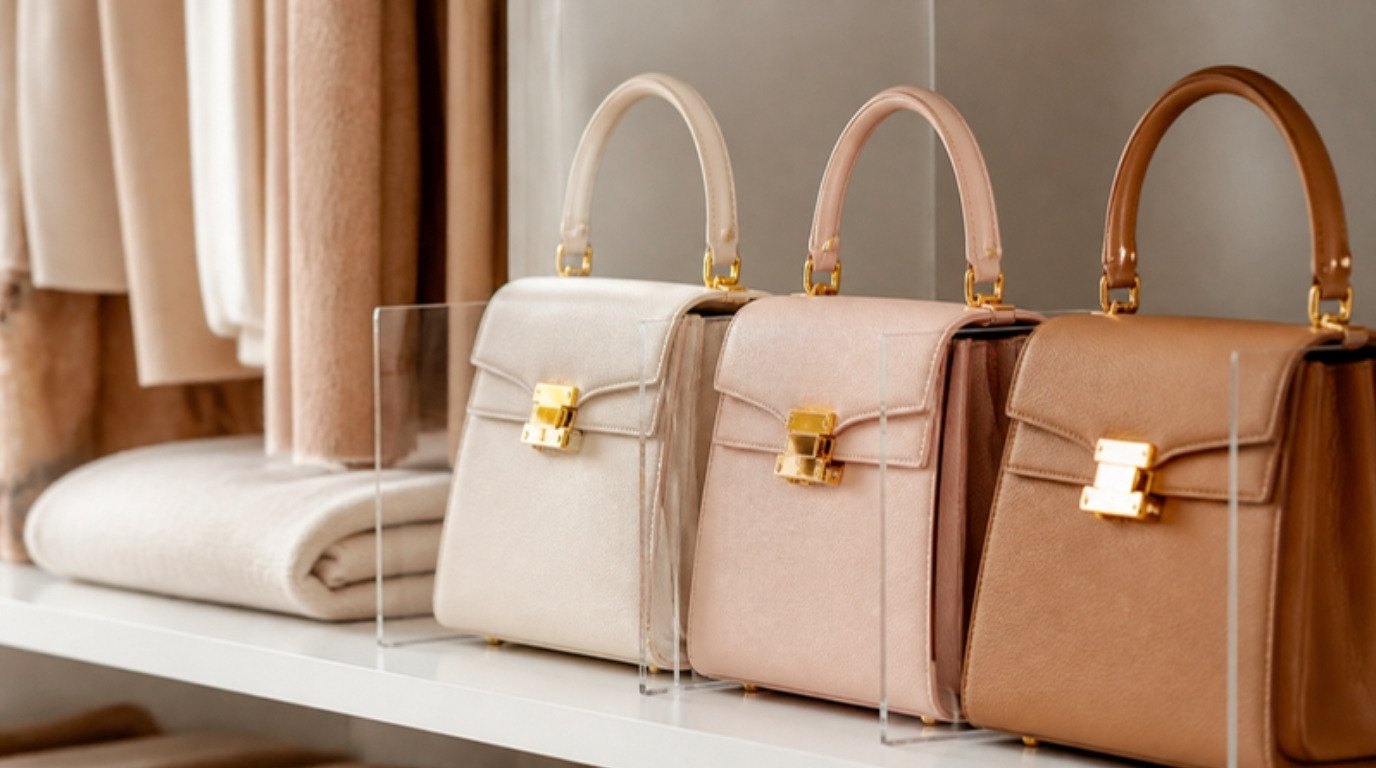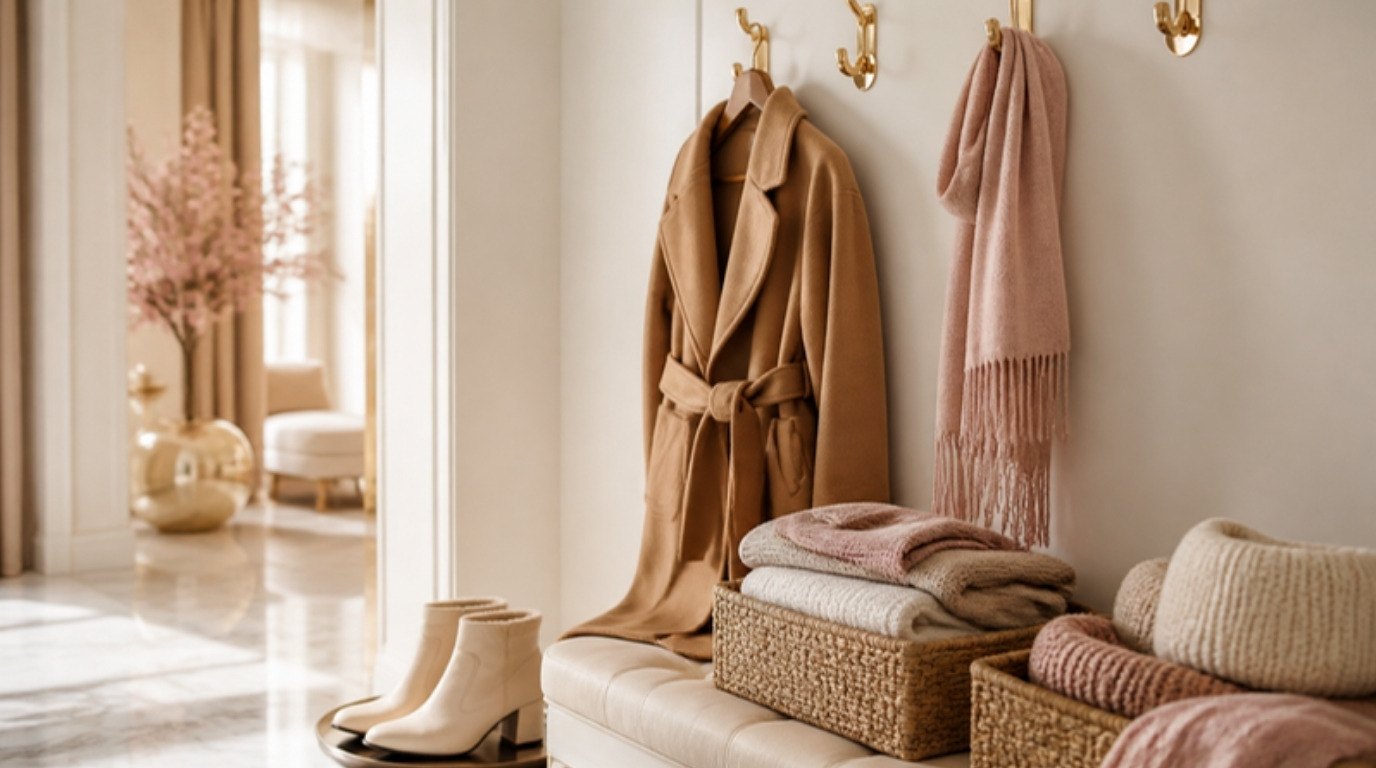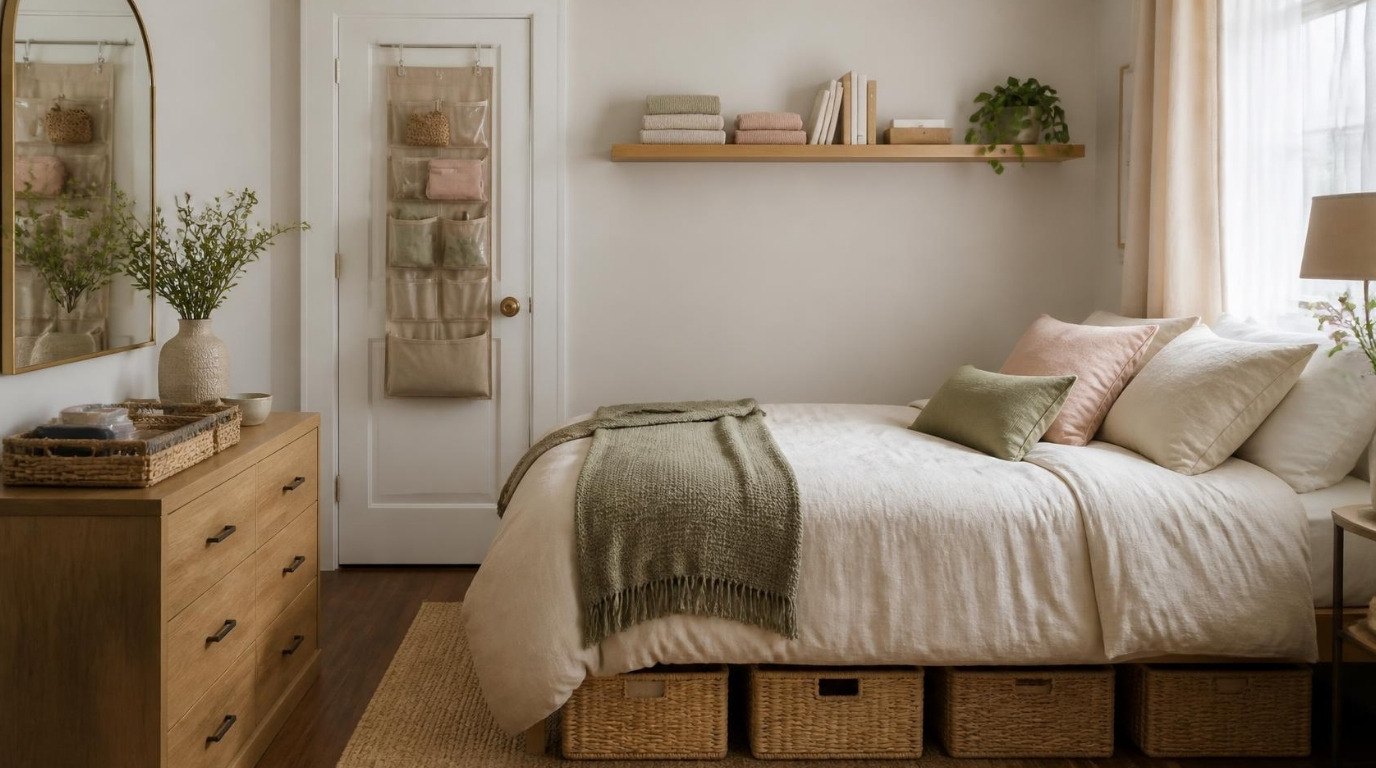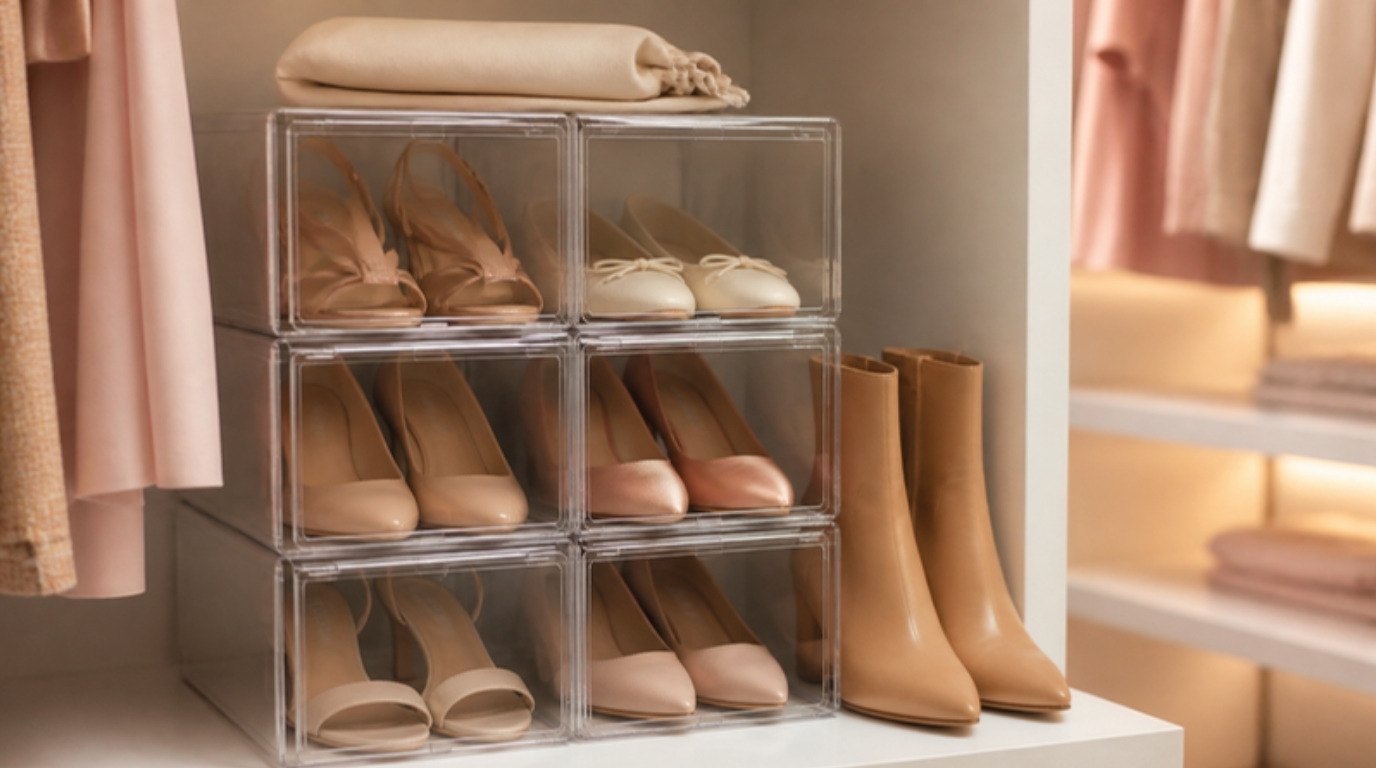
Not having a closet is less about finding one perfect piece of furniture and more about giving every type of clothing a clear, simple home. Once your hanging pieces, folded pieces, shoes, bags and off-season clothes each have a spot, a closet-free room can feel calmer and more pulled together than a stuffed closet ever did.
Studios, older rentals, tiny bedrooms and converted spaces often skip the closet entirely, and it can feel like your clothes are slowly taking over the room. The good news is that open storage, done thoughtfully, can look like part of your decor rather than a compromise. Matching hangers, soft baskets and a curtain in the right place do a lot of quiet work.
This guide covers the best clothes storage ideas without a closet: how much to keep, a comparison table to help you choose, 15 practical ideas (most of them renter-friendly), how to keep open storage looking neat and a short weekly routine to keep it that way.
First, Decide How Much You Really Need To Store
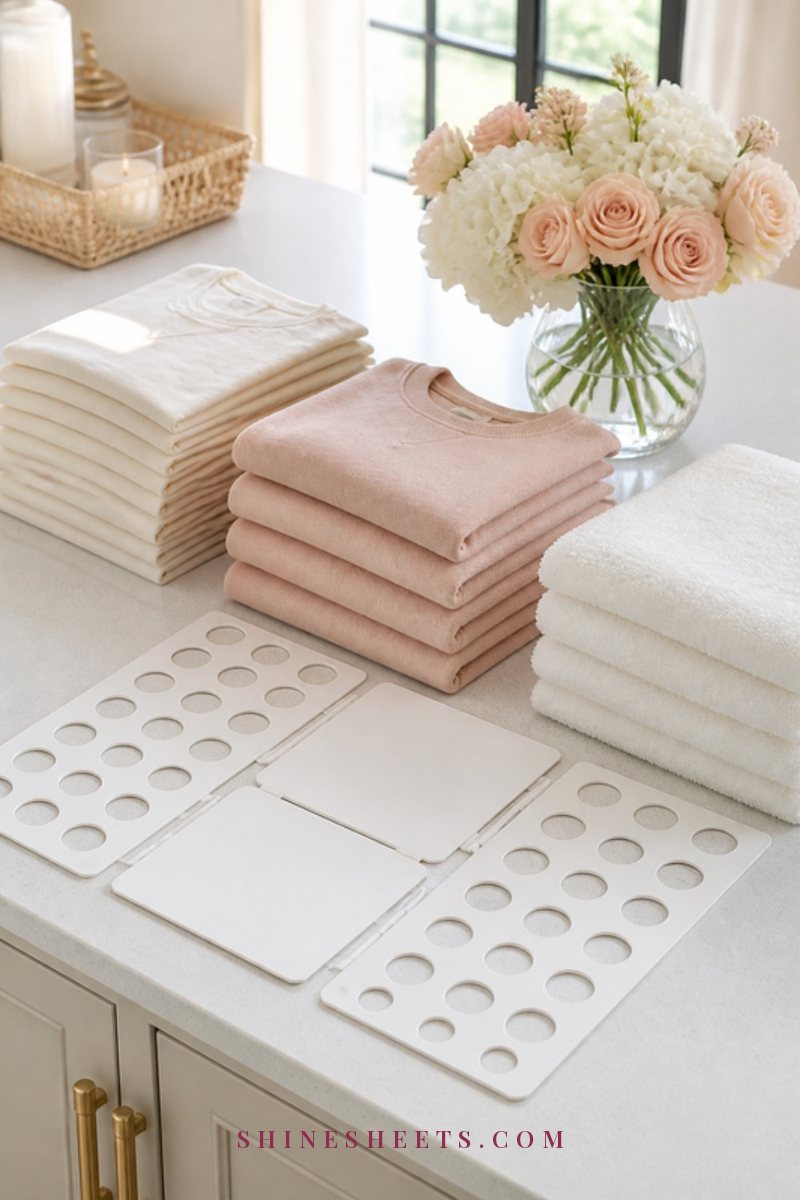
Before buying a single rack, take a quick honest look at what you own. Without a closet door to hide behind, everything you keep is visible, so a smaller, well-loved wardrobe makes everything easier.
Try this quick sort over one afternoon:
- Keep: pieces you've worn in the last few months, that fit now and that you'd happily wear this week.
- Store: true off-season pieces (heavy coats, swimsuits) that you love and will wear again.
- Let go: things that don't fit, need repairs you'll never make or only stay out of guilt.
A capsule wardrobe approach works beautifully for closet-free living, because fewer pieces that all mix and match fit on one rack and look intentional. To keep the collection from growing again, the one in, one out rule is the simplest habit I know: when something new comes in, one similar piece leaves.
A rough guide that works for many people: a rack with 40 to 60 hanging pieces, three or four drawers of folded items, one spot for shoes and one bin for off-season clothes. Adjust it to your life, but having a number in mind stops the slow creep.
The No-Closet Storage Idea Table
Use this table to choose the right mix for your space. Most rooms need two or three ideas working together: something for hanging, something for folding and something hidden.
| Idea | Best for | Renter-friendly? | Budget level |
|---|---|---|---|
| Freestanding clothing rack | Studios, bedrooms with a free wall | Yes | Low |
| Rack with a curtain | Rooms where you want things hidden | Yes (tension rod or ceiling hooks) | Low |
| Fabric wardrobe | Dusty spaces, small bedrooms | Yes | Low |
| Wooden armoire | Larger rooms, long-term homes | Yes | Medium to high |
| Rolling rack | Shared rooms, rooms that change use | Yes | Low |
| Wall-mounted rail and shelves | Alcoves, narrow walls | Only with permission | Medium |
| Under-bed storage | Off-season clothes, any room | Yes | Low |
| Bed with drawers | Very small bedrooms and studios | Yes | Medium to high |
| Dresser with baskets | Folded clothes, accessories | Yes | Medium |
| Over-the-door hooks | Robes, bags, tomorrow's outfit | Yes | Low |
| Ladder rack | Scarves, jeans, throws | Yes | Low |
| Wall hooks for bags and hats | Entry corners, small walls | Yes (adhesive hooks) | Low |
| Vacuum bags | Bulky off-season pieces | Yes | Low |
| Closet nook with a divider | Studios, open-plan rooms | Yes | Low to medium |
| File folding in drawers | Any drawer, any room | Yes | Free |
Screenshot it, circle the three that fit your room best and start there.
15 Clothes Storage Ideas Without a Closet
Here are the ideas in detail, with tips for making each one look tidy and feel like part of the room.
1. A Freestanding Clothing Rack
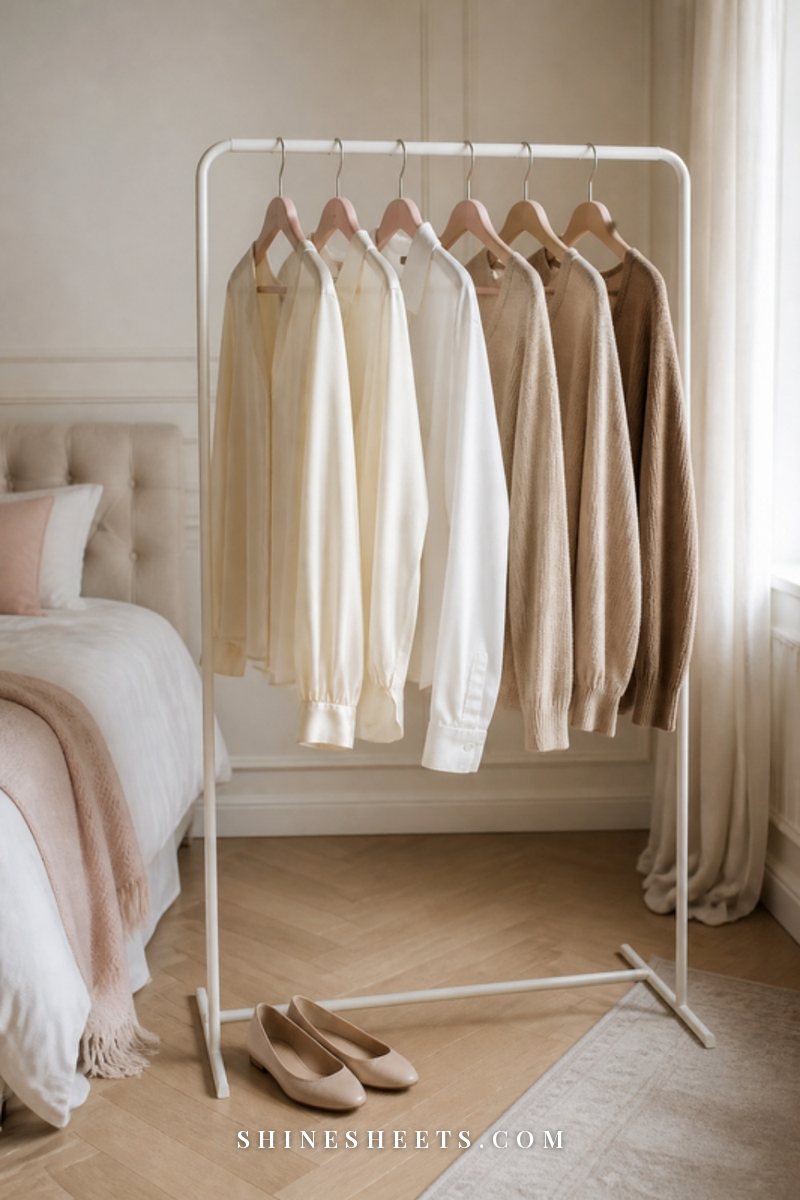
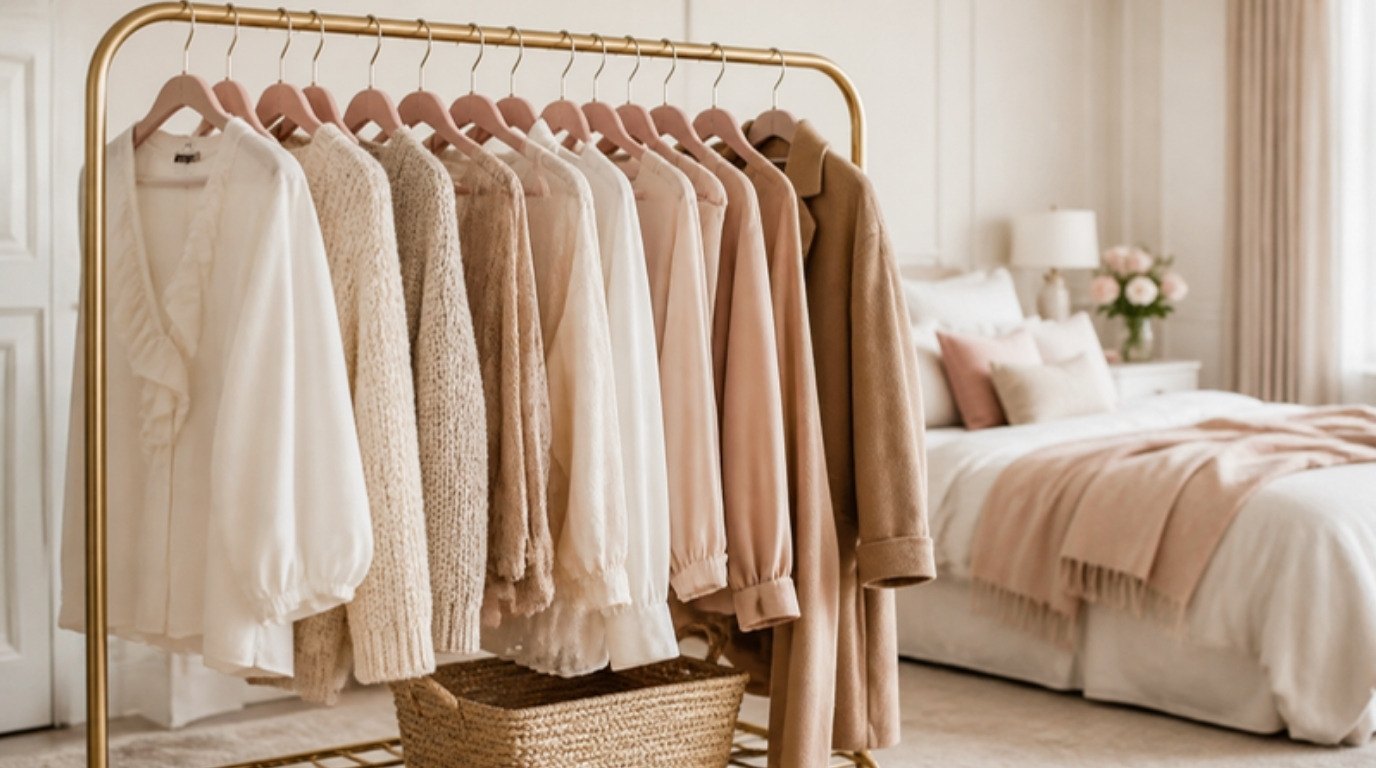
A freestanding rack is the backbone of most closet-free rooms. It needs no drilling, holds a surprising amount and can look genuinely lovely. A gold freestanding clothes rack with a shelf at the bottom gives you hanging space plus a spot for shoes or a basket.
Tips that make it work:
- Place it against a wall, not in the middle of the room, so it reads as furniture.
- Check the weight limit and spread heavy coats along the rail instead of bunching them at one end.
- Arrange clothes by type, then by color from light to dark. It instantly looks calmer.
- Leave about two finger-widths between hangers so the rack doesn't look crammed.
2. Cover the Rack With a Curtain
If you prefer your clothes out of sight, hang a curtain in front of the rack. Fix a ceiling track or two small ceiling hooks above it (ask your landlord first in a rental), or use a tension rod if the rack sits in an alcove. Choose a curtain in the same color as your walls, like white, cream or soft beige linen, so it blends in rather than shouting "storage." Make it slightly wider than the rack so it falls in soft folds when closed.
3. A Fabric Wardrobe or Armoire
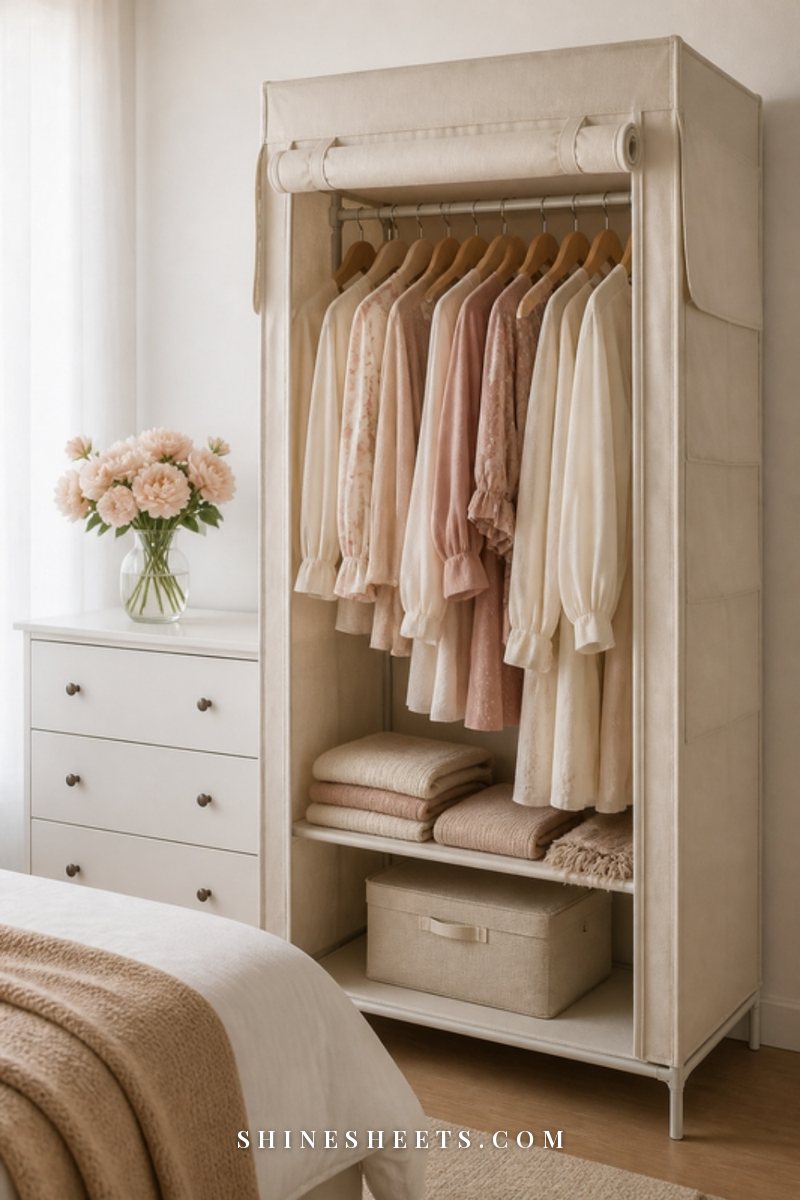
A fabric wardrobe is a light, inexpensive box with a hanging rail and shelves inside and a zip or roll-up front. It keeps dust off your clothes and hides the visual mess. Look for a beige fabric wardrobe with a sturdy metal frame and a mix of hanging space and shelves. Assembly usually takes 30 to 45 minutes.
If you're staying somewhere for the long term, a wooden armoire is the more permanent version. Secondhand ones are often solid and well-made. Whatever you choose, anchor tall furniture to the wall with an anti-tip kit, especially if anyone small visits your home. In a rental, a few small screw holes are usually acceptable for safety, but check first.
4. A Rolling Rack You Can Move
A rack on lockable wheels is perfect if your space does double duty. Roll it beside the bed in the morning, then tuck it into a corner or behind a screen when friends come over. It also makes cleaning behind it easy. Lock the wheels once it's in place so it doesn't drift, and keep the heaviest items in the middle of the rail for balance.
5. A Wall-Mounted Rail and Shelves
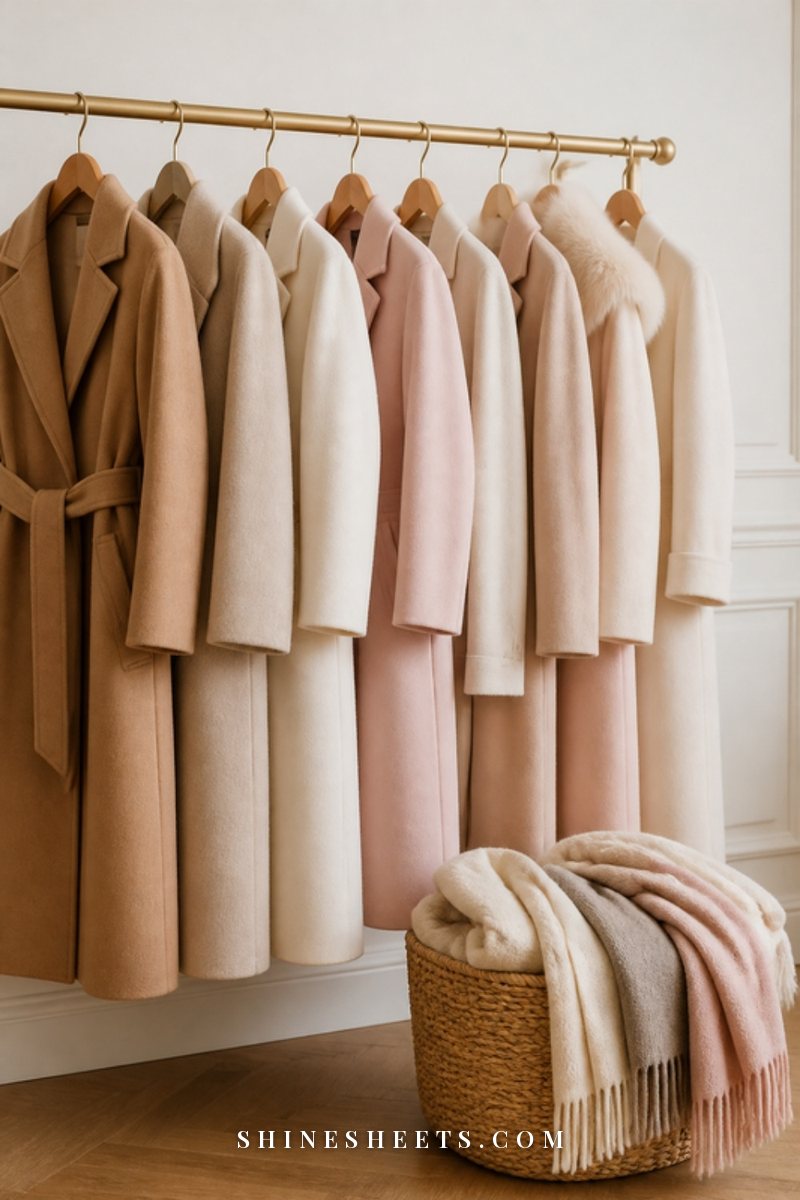
A rail mounted on the wall, with a shelf above it for folded sweaters or baskets, turns an empty alcove into a built-in-looking closet. It saves floor space because there are no legs or base. This one needs proper screws into studs or suitable wall anchors, so it's best if you own your home or have permission. For a renter-friendly alternative, a floor-to-ceiling tension pole system with hanging rails gives a similar look without drilling.
6. Under-Bed Storage
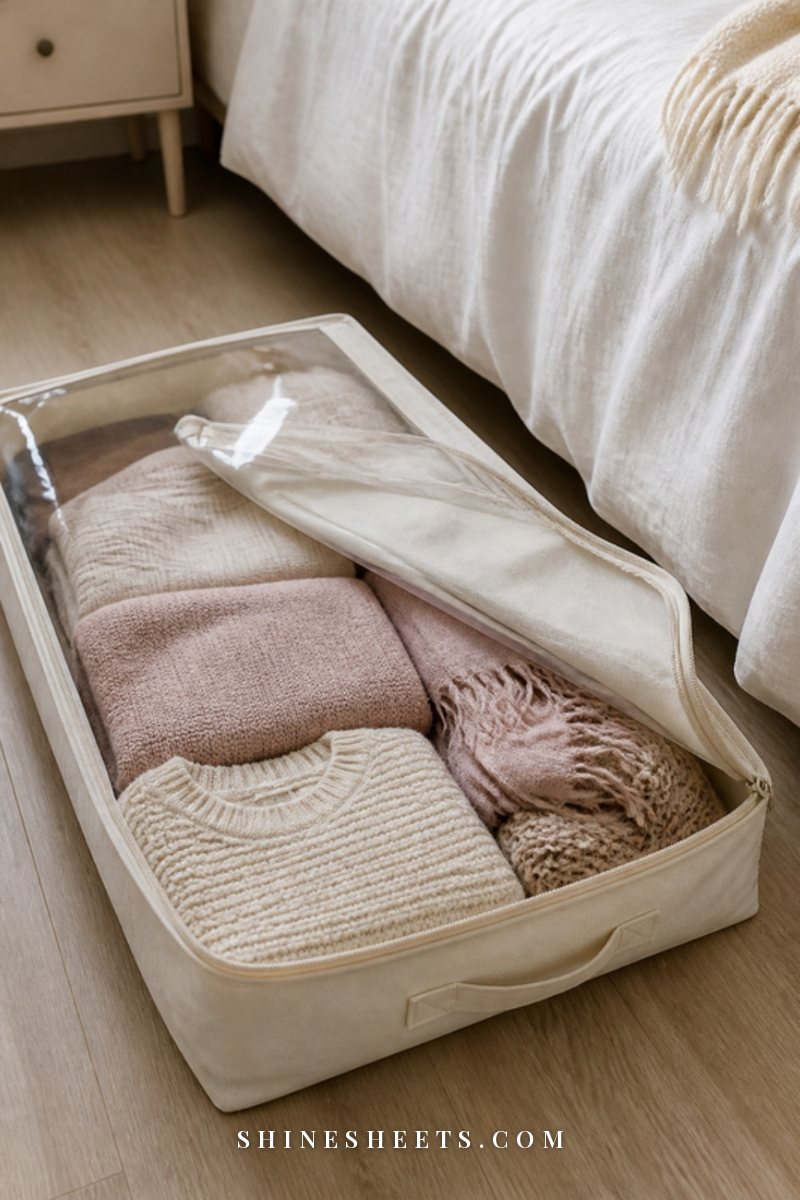
The space under your bed is perfect for things you don't need every day: off-season clothes, spare bedding, swimsuits or event outfits. Soft under-bed storage bags with clear windows let you see what's inside without unpacking. Measure the height under your bed first; many beds give 6 to 7 inches, and bed risers can add more. My guide to under-bed storage ideas covers more ways to use that space.
7. A Bed With Drawers
If you're ready to invest, a storage bed with built-in drawers or a lift-up base can replace a whole dresser. It's one of the smartest choices for studios, because it uses space you'd otherwise lose. Drawers suit everyday basics, while lift-up bases are better for bulky items you reach for once a season.
Before buying, check that drawers can open fully in your room; you'll need roughly 20 inches of clear floor beside the bed. If space is tight on one side, a lift-up base or drawers only on the open side are the better choice.
8. A Dresser With Baskets on Top
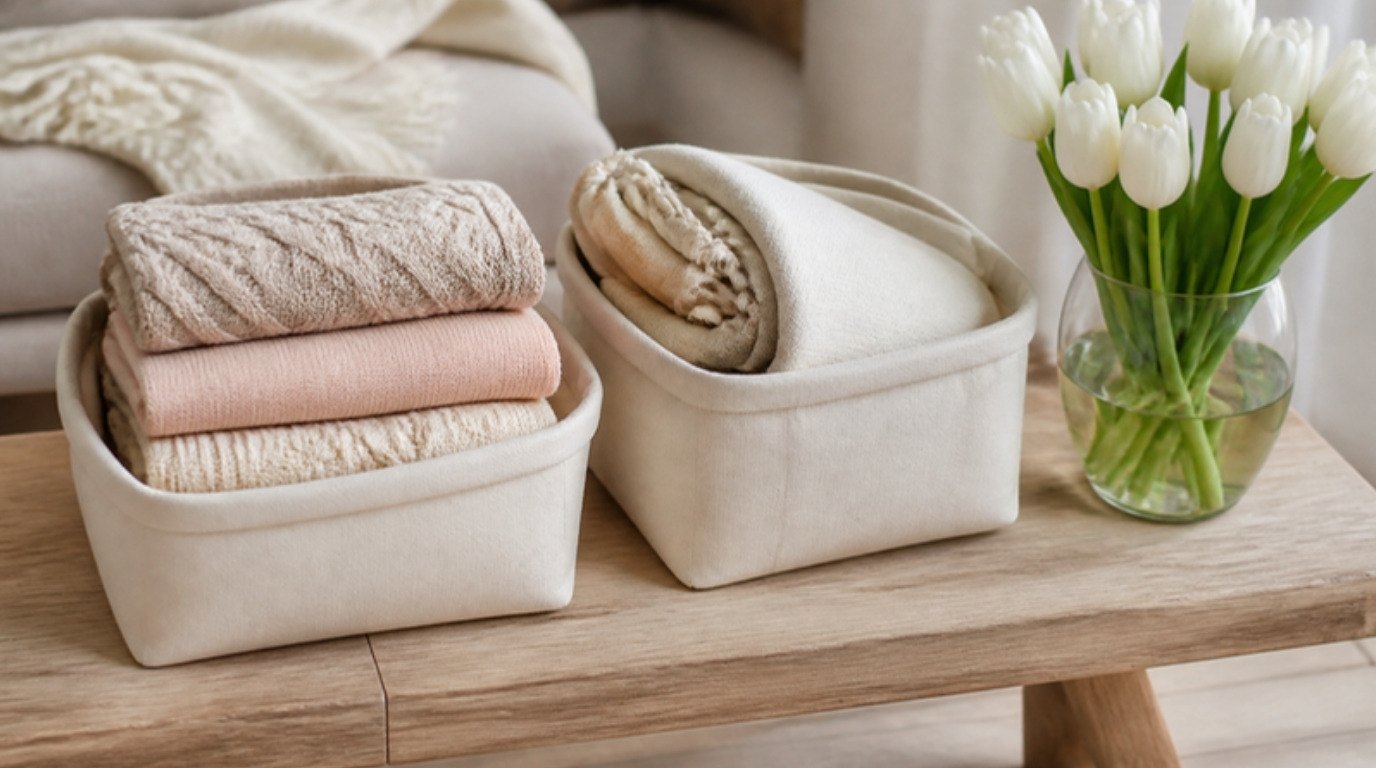
A dresser is still the best home for folded clothes: t-shirts, jeans, sleepwear, socks and underwear. Add two or three linen storage baskets on top for scarves, belts and small accessories, and suddenly the surface looks styled instead of cluttered. Inside, drawer dividers keep small items in line; my article on dresser drawer organization walks through it drawer by drawer.
9. Over-the-Door Hooks
The back of your bedroom or bathroom door is free storage. An over-the-door hook rack holds robes, a tote, tomorrow's outfit or the cardigan you wear every other day. Choose one with a padded or felt back so it doesn't scratch the door, and keep it to five or six items so the door still closes easily.
10. A Ladder Rack
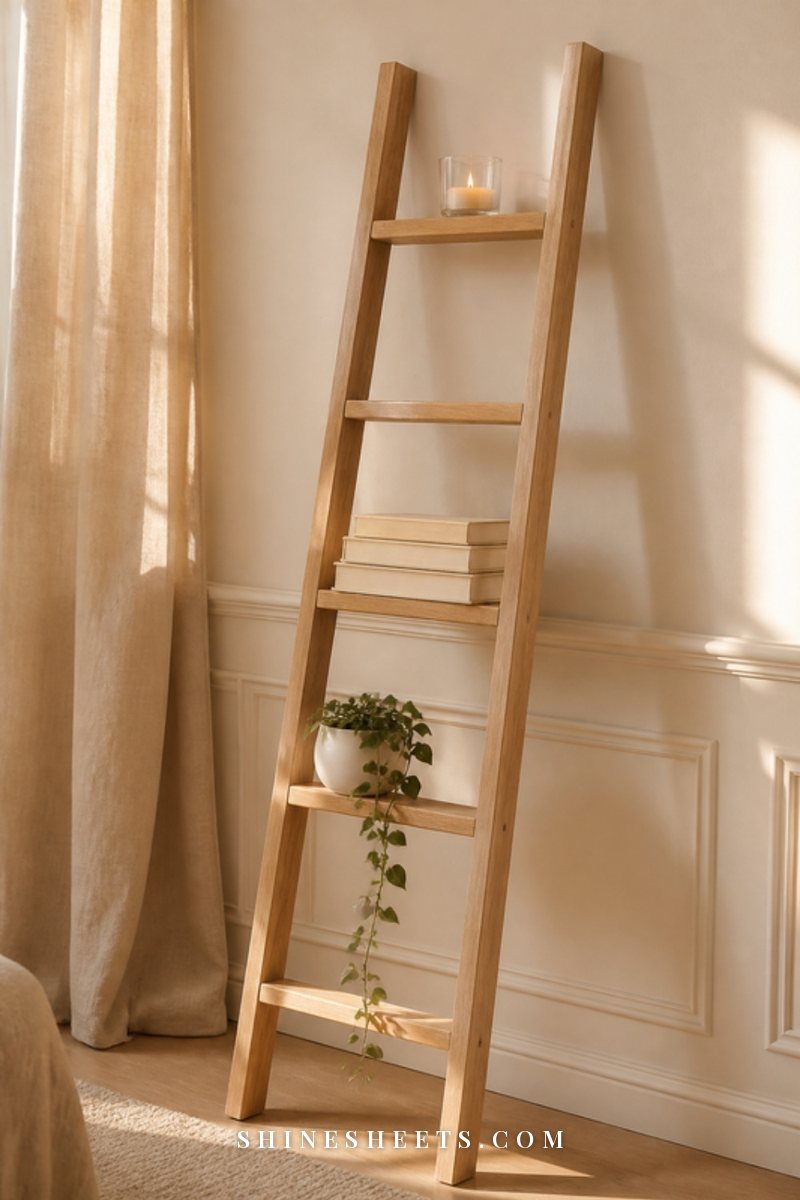
A leaning ladder is a pretty way to store things you wear often but don't want to fold every time: jeans, scarves, a soft cardigan, a throw for the evenings. Lean it at a gentle angle against a wall and place a small rubber pad under the feet so it doesn't slip. Keep it to five or six pieces; a crowded ladder looks messy fast.
11. Wall Hooks for Bags and Hats
A neat row of three to five hooks near the door is ideal for bags, hats and the coat you wear daily. Removable adhesive hooks work well for light items in rentals; check the weight rating on the pack and press each one firmly for 30 seconds after sticking it on. Heavy bags are better on screwed-in hooks.
12. Vacuum Bags for Off-Season Clothes
Vacuum bags shrink bulky sweaters, puffer coats and spare duvets down to a fraction of their size, so they fit under the bed or on top of a wardrobe. Wash or clean everything before storing it, and make sure it's completely dry. For delicate natural fibers like wool or down, don't compress them for very long periods; a breathable cotton bag is gentler for those.
13. Shoe Storage That Doesn't Take Over
Shoes are often what makes a closet-free room feel messy. Keep only the pairs you wear this season out, and store the rest in a lidded box under the bed. A slim two- or three-tier shoe rack fits under a clothing rack or beside the door. Line pairs up toe to heel so more fit on each shelf.
Boots are the trickiest. Store tall boots lying flat in a long under-bed box, or stand them up with a rolled towel or boot shaper inside so they keep their shape. For a pretty touch, keep your two or three favorite everyday pairs on a small tray by the door, so they look like a choice rather than clutter. More ideas live in my guide to shoe organization.
14. A Closet Nook With a Curtain or Room Divider
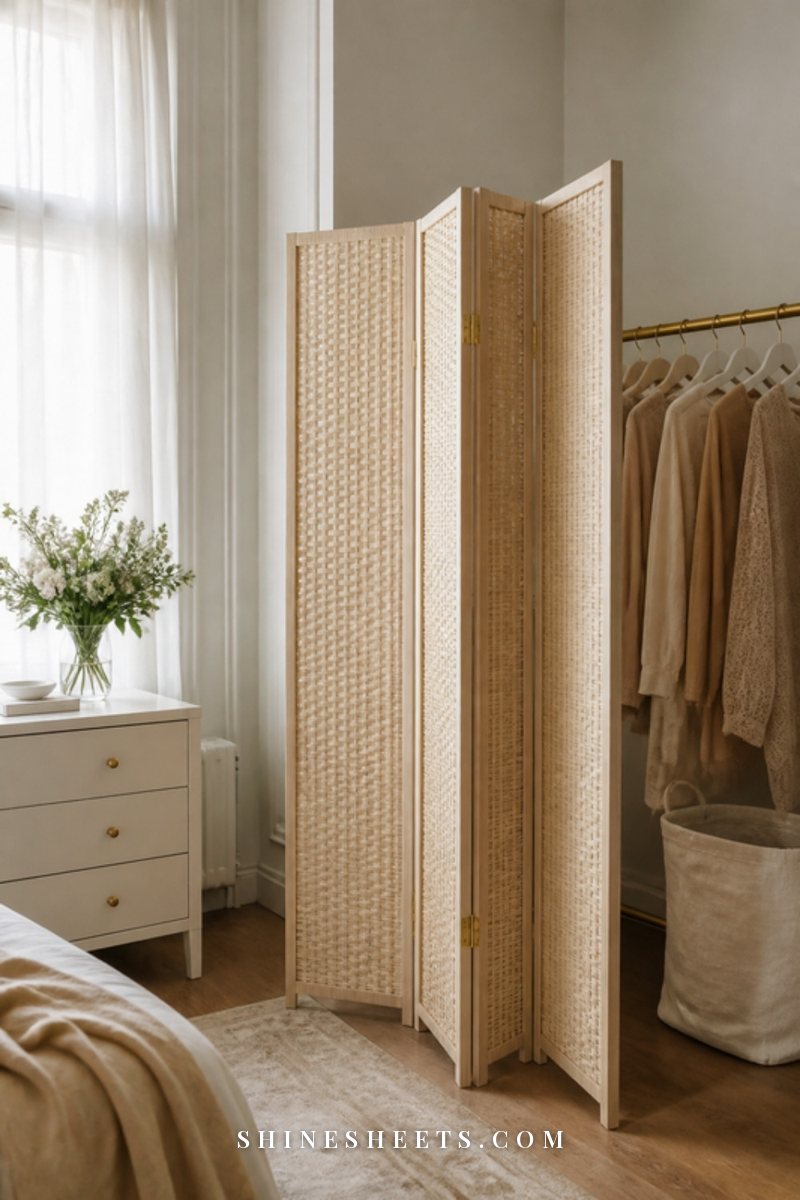
If you have a corner to spare, you can create a whole "closet" there. Place your rack, a small dresser and a basket in the corner, then close it off with a folding room divider screen or a ceiling-hung curtain. It feels like a separate dressing area and keeps the rest of the room calm, which is especially nice in a studio where you see your bed, sofa and clothes all at once.
15. File Folding in Drawers
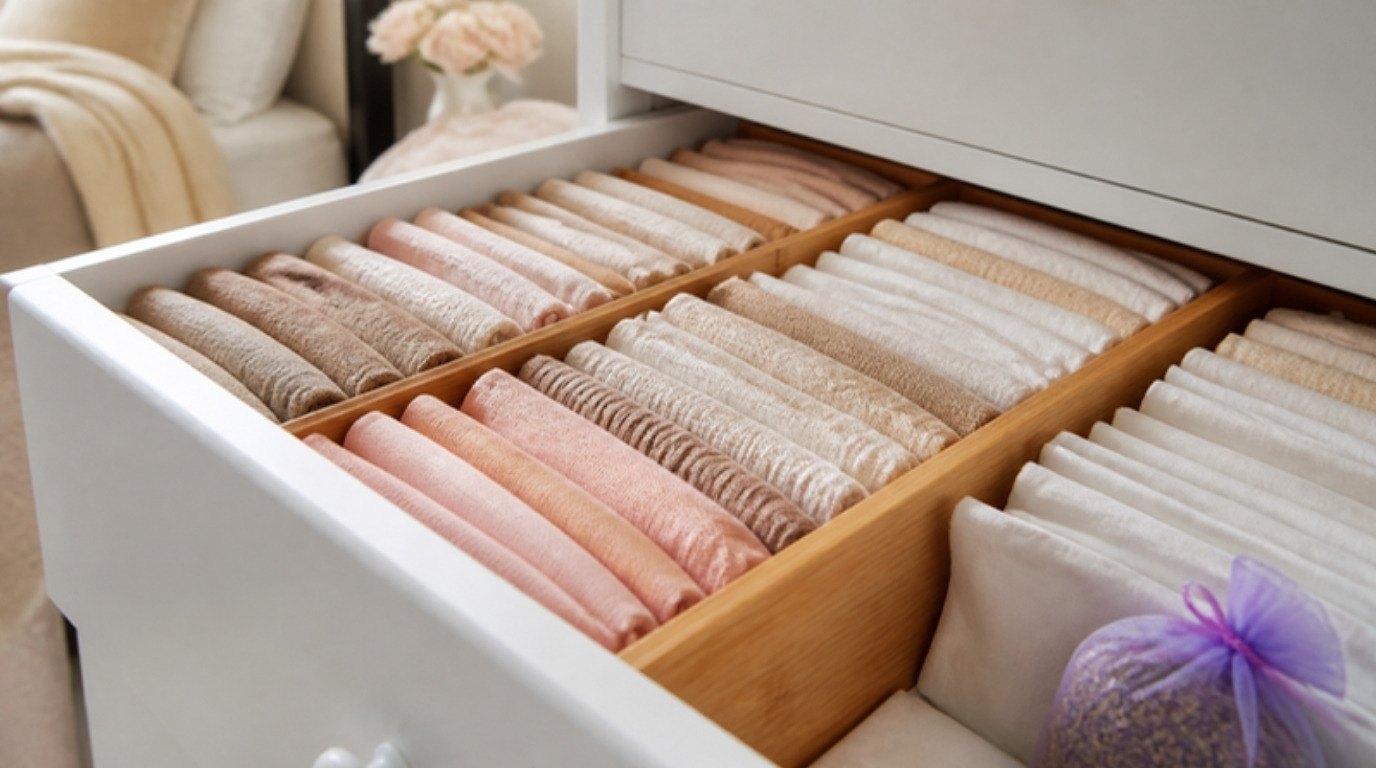
Instead of stacking clothes in piles, fold them into small rectangles that stand upright in the drawer, like files in a cabinet. You can see every piece at a glance, nothing gets crushed at the bottom and you often fit a third more into the same drawer. It takes a little practice for the first few items, then becomes second nature.
How To Keep Open Clothes Storage Looking Neat
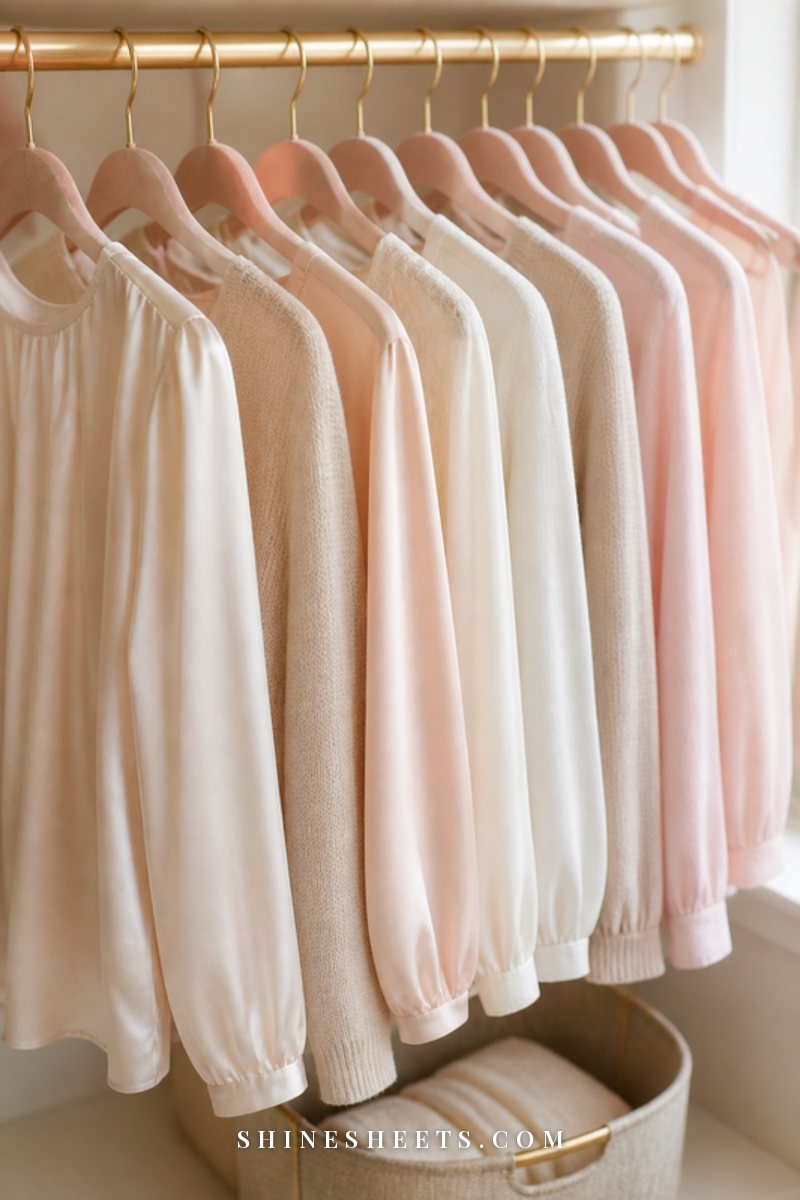
Open storage looks good when it looks intentional. A few small choices make a big difference:
- Use matching hangers. One style, one color. Blush velvet hangers are slim, so they save space, and their soft grip keeps silky tops from sliding off.
- Keep a limited color palette on display. A rack of creams, beiges, soft pinks and a few darker pieces looks curated. Brighter items can live in drawers.
- Hide small things in baskets. Socks, belts and scarves in baskets look calm; loose on a shelf, they look busy.
- Leave breathing room. Aim to fill a rack or shelf to about 80 percent so it never looks stuffed.
- Add one pretty touch. A small plant, a framed print near the rack or a pretty perfume tray on the dresser helps the area feel like part of your home.
If you'd like more ideas for small spaces overall, my small bedroom ideas are full of ways to make a tight room feel bigger and calmer.
A Simple Weekly Reset for a Closet-Free Room
Without a closet door, tidying little and often is the secret. This takes about ten minutes once a week:
- Clear the chair (2 minutes). Hang up or fold anything on the bedroom chair or bed.
- Straighten the rack (2 minutes). Turn hangers the same way and push pieces back into color order.
- Reset the shoes (1 minute). Line them up and return stray pairs.
- Tidy the baskets (2 minutes). Refold scarves and match up any lonely socks.
- Pull one thing out (1 minute). Find one piece you didn't reach for and decide if it still belongs.
- Dust the surfaces (2 minutes). Open storage gathers dust faster, so wipe the rack shelf and dresser top with a soft cloth.
Twice a year, when the seasons change, swap your off-season bin with the clothes on the rack and give everything a quick look before it goes back into storage.
Common Mistakes To Avoid
A few small missteps can make closet-free storage feel chaotic even when you have enough space. Here are the ones worth skipping:
- Buying storage before decluttering. It's tempting to fix the mess with a new rack, but you'll just end up storing clothes you don't wear. Sort first, shop second.
- Mixing too many styles of storage. A black metal rack, a white plastic drawer unit and a wicker basket all in one corner look busy. Pick one or two finishes, like gold and cream, or light wood and white, and repeat them.
- Placing the rack in direct sunlight. Strong sun through a window can fade the shoulders of your clothes over time. If the rack has to sit near a window, a sheer curtain softens the light, or cover the rack with a breathable garment cover.
- Overloading cheap racks. A bending rail or a wobbly frame is a sign it's carrying too much. Move heavy coats to wall hooks or the back of a door, and keep lighter pieces on the rack.
- Forgetting about dust. Open storage means clothes you rarely wear can collect dust on their shoulders. Breathable cotton garment covers on special-occasion pieces keep them fresh.
- Letting the "chair pile" grow. The worn-once-but-not-dirty pile is real. Give it a home, like one hook or one basket, so it doesn't spread across the room.
None of these need a big fix. Usually one small change, like matching finishes or moving the rack a few feet from the window, makes the whole area feel more settled.
Final Thoughts
A room without a closet can still be a calm, beautiful place to get dressed. Give each kind of clothing its own home, keep what you truly wear and let your storage pieces be part of the decor.
Start with one rack, one set of matching hangers and one basket, and build from there. A small, well-loved wardrobe in a tidy corner feels lighter than a full closet ever could.