Toys don't take over a small home because you're messy. They take over because most of them don't have a clear, easy place to go back to, and a child can't put something away if "away" means a lid, a high shelf and a guess. Once every toy has a spot that a small person can reach and recognize, tidying stops being a battle and starts being a little routine.
The good news is that you don't need a playroom, a big budget or a weekend of pinning to get there. A calm system for a small apartment or a shared kids' room is mostly about having fewer toys out at once, sorting them in a way that makes sense to a child, and choosing storage that works at their height.
This guide walks you through toy organization ideas that are renter-friendly and budget-friendly: a gentle toy edit you do together, how to sort by type, 12 practical storage ideas, a "what goes where" table, a plan for shared rooms, the safety basics, and a five-minute tidy routine kids can actually keep up.
Think of it as building a home for the toys, so the rest of your home can breathe again.
Why Toys Take Over Small Spaces
In a small space, toys spread for three simple reasons. There are more of them than the storage can hold, the storage is built for adults (deep, high, lidded), and nobody has decided where each kind of toy lives. Add a shared room or a living room that doubles as a play area, and every block and stuffed bunny ends up wherever it was last loved.
Kids also play in "spills." They tip a whole basket out to find one tiny figure. That's normal, and it's not something to fight. The goal is storage that makes the spill smaller and the clean-up faster: shallow bins instead of a giant toy chest, sorted categories instead of one mixed bucket, and fewer toys in rotation.
If your whole apartment is short on storage, not just the kids' corner, my guide on how to organize a small apartment with no storage has bigger-picture ideas that pair nicely with everything below.
Start With a Gentle Toy Edit Together
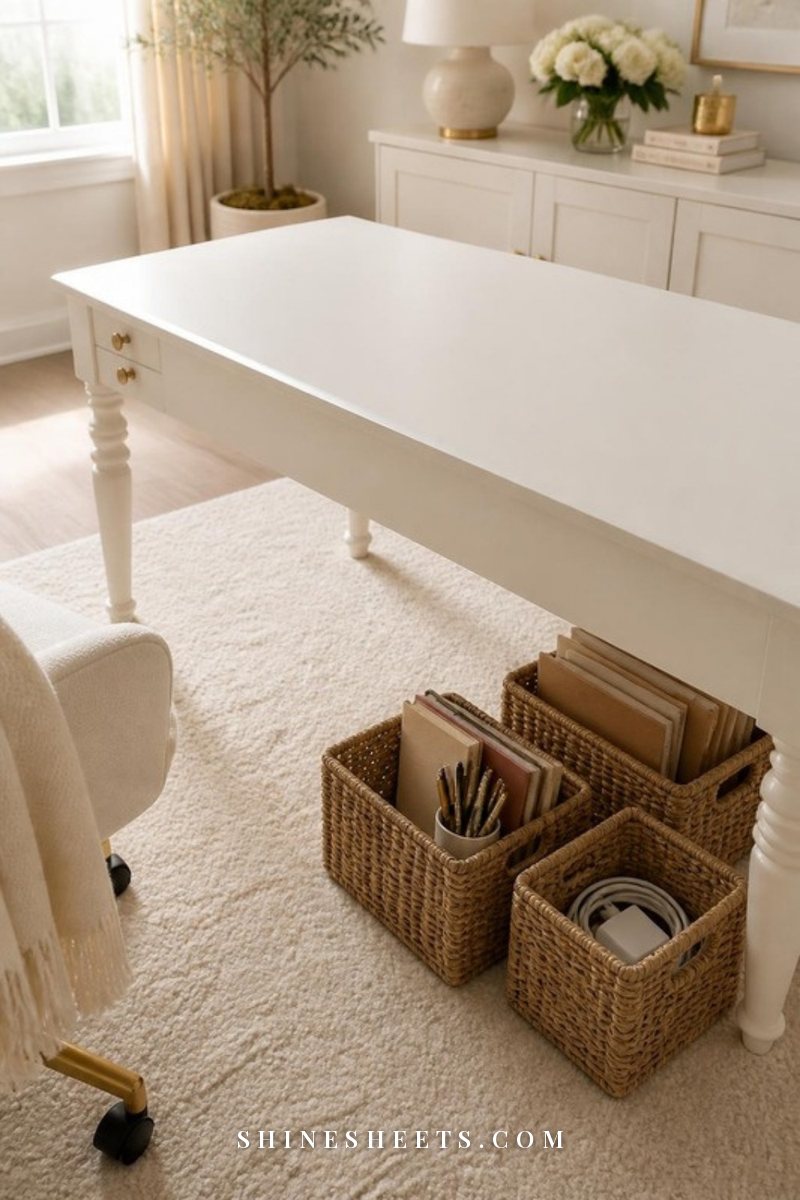
Before you buy a single bin, do a toy edit. Not a dramatic purge while the kids are out (that tends to backfire, and it can feel unfair to them), but a calm sort you do together. Give it 30 to 45 minutes for one room, with a snack break if needed.
Set out three baskets and keep the categories simple:
- Broken: missing wheels, cracked plastic, dried-out markers, puzzles with lost pieces. These go to recycling or trash.
- Outgrown: baby rattles in a big-kid room, board books nobody reads, toys that are too easy now. These can be donated or passed on.
- Duplicates: the fourth toy car that looks like the other three, five identical stacking cups. Keep the favorites, let the rest go.
Let your child make some of the calls. A good script is: "We have three of these. Which one do you love most?" Children often surprise you with how easily they let go when they feel included. Anything they're torn about can go into a "maybe" bag in the closet for a month. If nobody asks for it, it can quietly leave.
If you want a whole method behind this, my guide to decluttering methods explains a few approaches, and some of them (like the container method) work beautifully for toys.
Sort by Type Before You Choose Storage
Once the edit is done, sort what's left into play categories. This is the step most people skip, and it's the reason so many toy bins turn into mixed soup.
Typical categories for most homes: building toys, vehicles, dolls and figures, stuffed animals, pretend play (kitchen, doctor kit, dress-up), art supplies, puzzles and games, books, and outdoor or bath toys. Very small sets (tiny figures, beads, mini blocks) get their own category.
Count how many containers each category needs before shopping. A good rule of thumb is one bin per category, and if a category doesn't fit in one bin, that's usually a sign there are too many toys out, not too little storage.
12 Toy Organization Ideas for Small Spaces
Here are the ideas that do the most work in the least space. You don't need all twelve. Pick the three or four that fit your home and your kids' ages, then add more only if something is still homeless.
1. Low Open Shelves at Kid Height
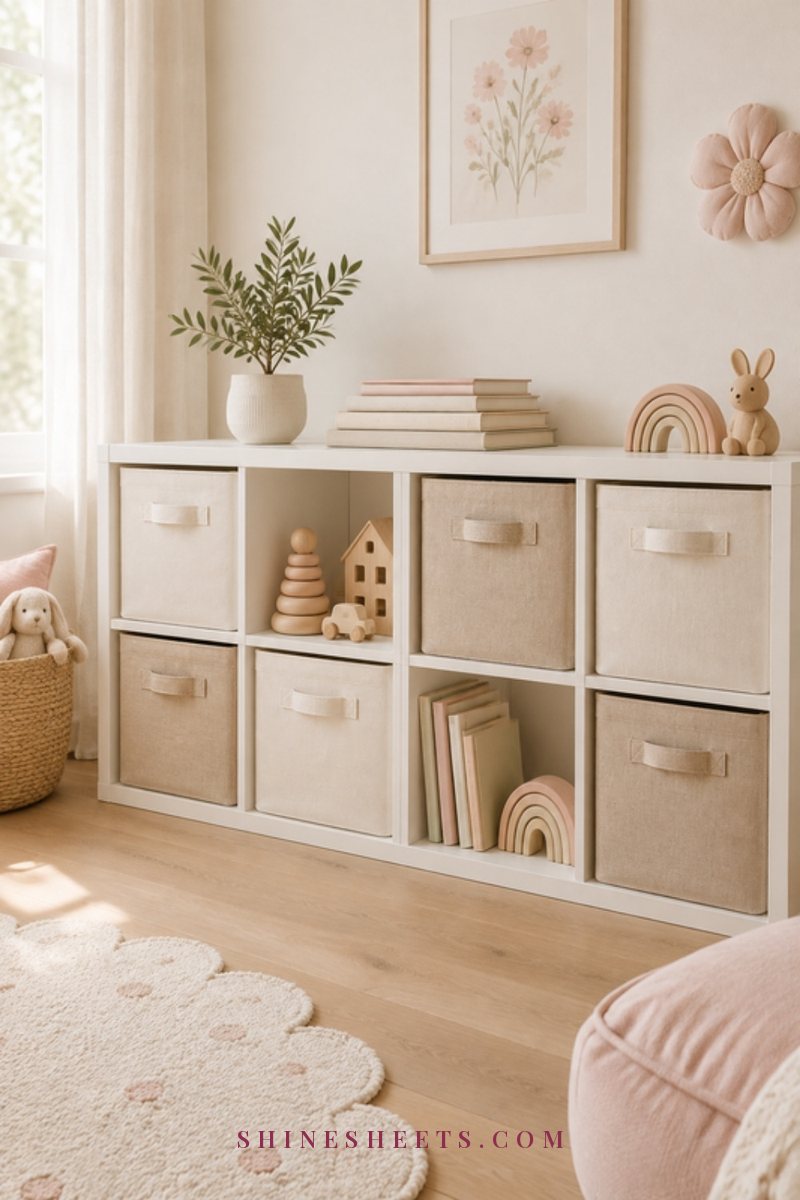
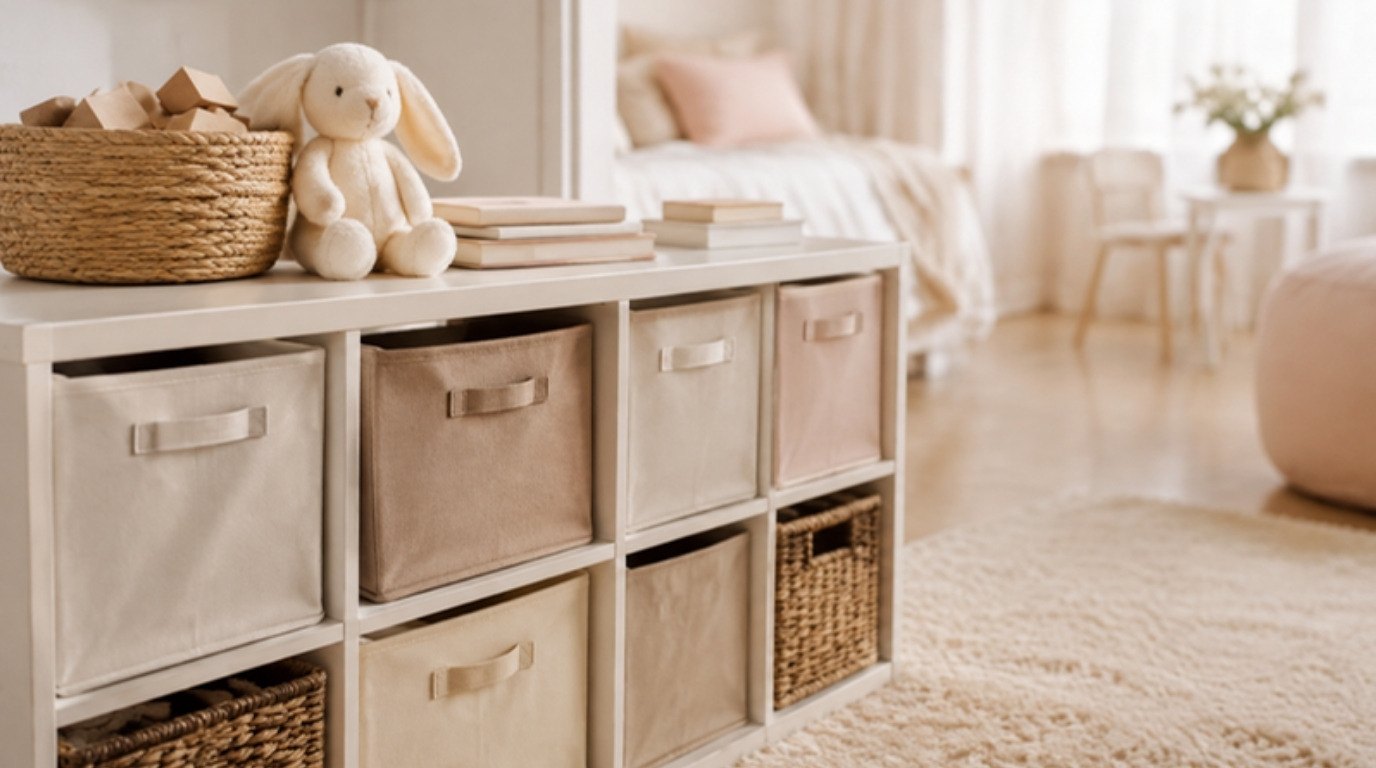
A low shelf is the backbone of most calm toy setups. Kids can see what they have, choose it and put it back without asking for help. Aim for shelves no taller than your child's shoulder, with the most-played toys on the bottom two levels.
A white cube shelf with fabric bins is a classic pick for small rooms, because the bins hide visual noise while the open cubes can show off a few favorite toys. Look for one that's sturdy, comes with a wall-anchor kit, and has bins with handles small hands can grip.
2. Bins With Picture Labels
Picture labels are the quiet hero of toy organization. A child who can't read yet can still match a photo of a car to the car bin. That's the difference between "Where does this go?" and a toy that simply goes home.
You can take photos of the toys and tape them on, draw simple pictures, or use picture label stickers made for toy bins. Look for removable labels so you can change them when categories change (and they will). Put the label on the front of the bin, at the child's eye level, not on the lid.
3. Under-Bed Rolling Boxes
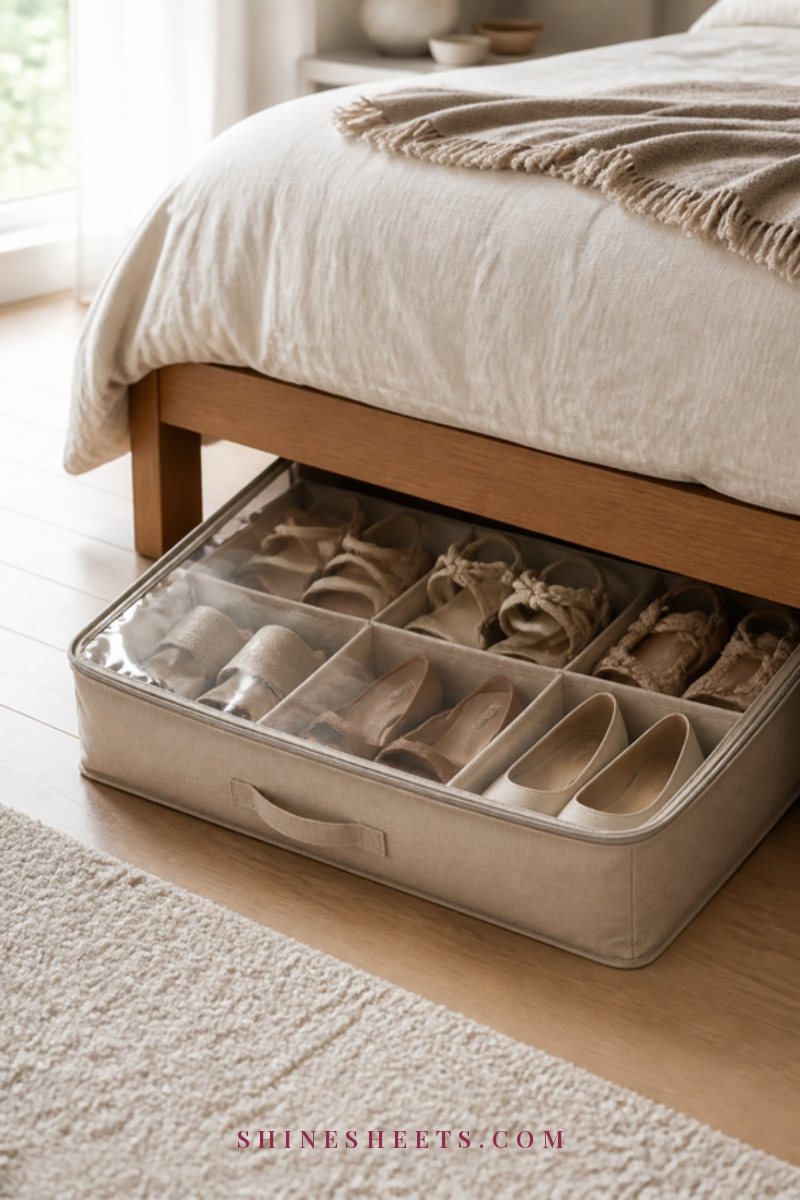
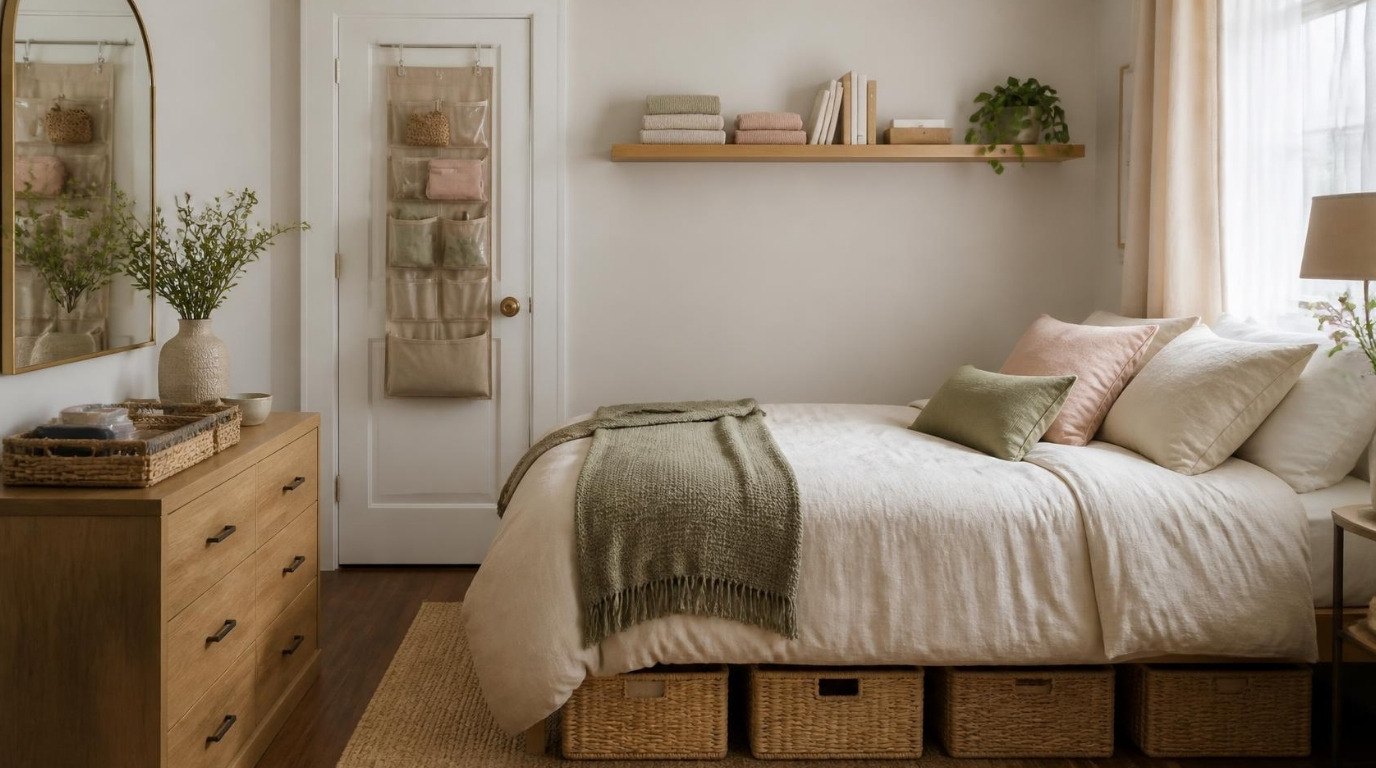
The space under a bed is often the biggest empty storage spot in a small kids' room. Shallow rolling boxes turn it into a pull-out toy drawer for blocks, train tracks, dress-up clothes or the toys you're rotating.
Choose under-bed rolling boxes on wheels that are low enough to slide in easily, with no heavy lids that can pinch fingers. Measure the clearance first (most beds need boxes under about 6 to 7 inches tall). My full list of under bed storage ideas covers more ways to use that space.
4. Over-Door Pockets
The back of a door is free real estate in a small room. Clear or fabric pockets hold small toys that usually disappear: dolls, figures, toy cars, hair clips for dress-up, small stuffed animals.
An over-the-door pocket organizer needs no drilling, so it's perfect for renters. Look for one with sturdy hooks and wide pockets. Keep the bottom rows for the child and the top rows for you (that's a smart spot for anything with small parts that younger siblings shouldn't reach).
5. Toy Rotation in a Closet
Toy rotation is the single most effective idea on this list, especially in tiny homes. Instead of having every toy out at once, keep about a third out and store the rest in labeled boxes on a closet shelf. Every two to four weeks, swap a few.
The toys that come back feel brand new, kids tend to play longer with fewer choices, and clean-up shrinks to a few minutes. A simple rotation plan: one box per "set" (for example, one vehicles box, one pretend-kitchen box, one puzzles box), and swap one or two sets at a time on a weekend morning.
6. One Basket per Room
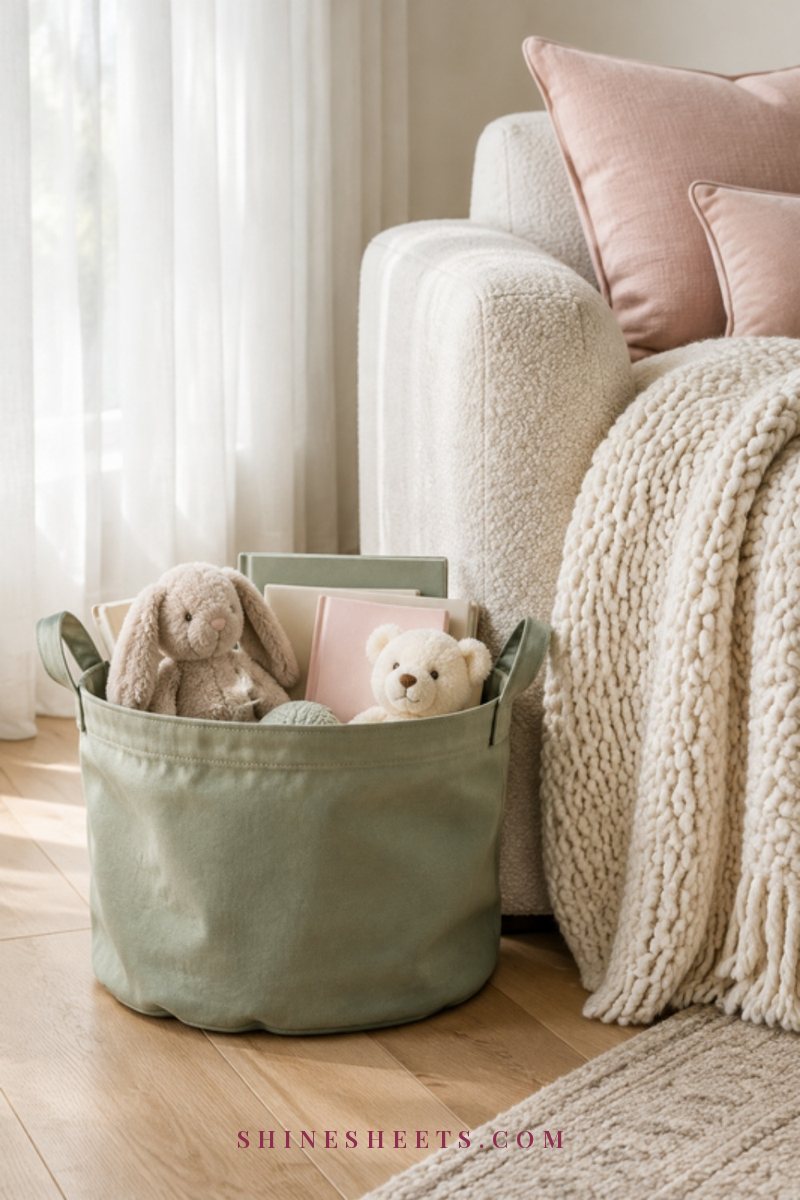
Toys travel. Instead of fighting that, give each shared room one basket. The living room basket holds the books and toys that tend to land on the sofa, the bathroom has a small one for bath toys, and so on.
Soft canvas toy baskets in sage look calm in an adult room and are light enough for a child to carry. At the end of the day, anything that belongs elsewhere gets "delivered" back to its home room. Kids usually love being the delivery person.
7. Wall-Mounted Book Ledges
Picture ledges turned into book ledges show book covers instead of spines, which is how small children choose books. They take up almost no floor space and turn a bare wall into a pretty, colorful display.
Hang them low (the bottom ledge about knee height for a toddler, hip height for older kids), and keep only 5 to 8 books per ledge. Rotate books along with toys. In a rental, check your lease first; if drilling is off-limits, a slim front-facing book rack on the floor works the same way.
8. A Rolling Cart for Art Supplies
Art supplies are messy, small and constantly in use, so they need their own mobile home. A three-tier rolling cart holds crayons, paper, stickers, play dough and safety scissors, and it can roll to the table when it's art time and back into a corner when it's done.
Use small cups or jars on the top tier for crayons and markers, and keep paints and glue on the top tier only if your child is old enough to use them supervised. The cart can live in a kitchen corner, beside a desk or in the kids' room.
9. A Storage Bench That Doubles as Seating
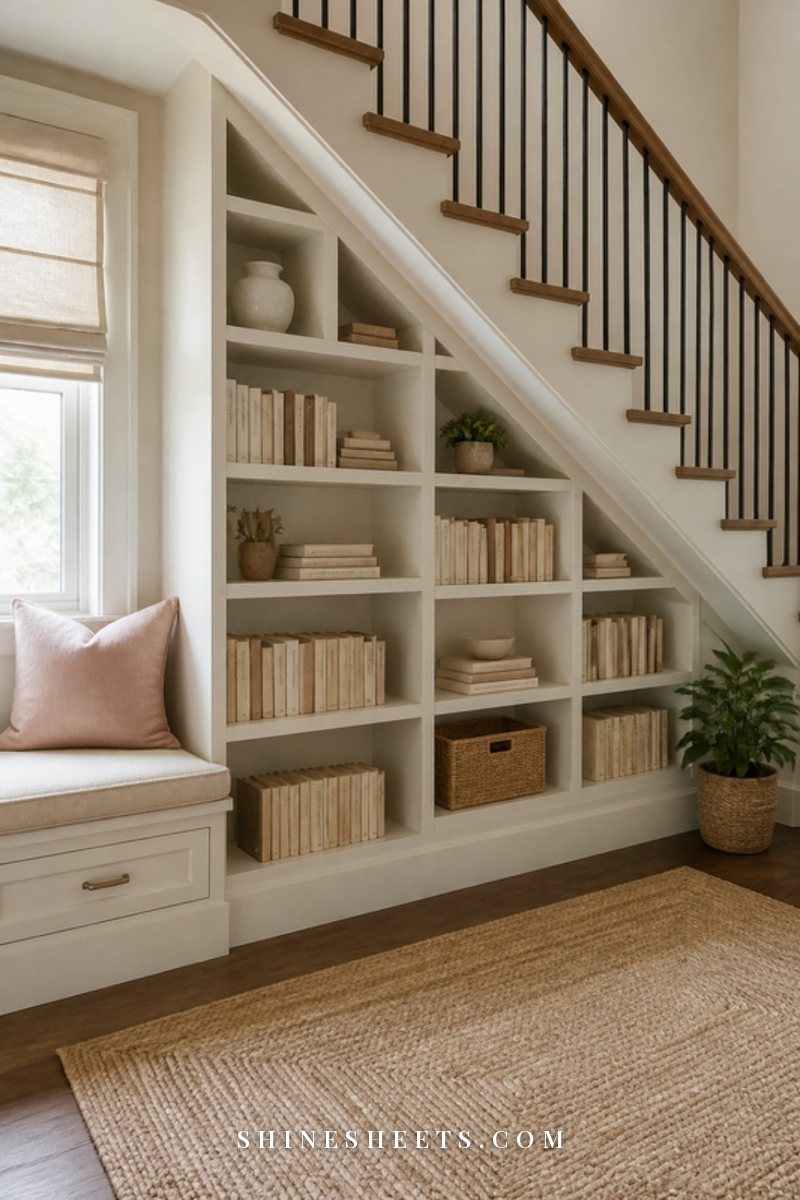
In a small living room or a kids' room, a bench with storage gives you a seat, a reading nook and toy storage in one footprint. Benches with open cubbies and baskets underneath are the easiest for kids, because there's no lid to lift.
If you choose a bench with a lift-up lid, make sure it has a soft-close or slow-close hinge so it can't slam on little fingers or trap a child. Keep the heaviest toys inside, the lightest ones in baskets underneath.
10. Clear Boxes for Small Sets
Tiny pieces need small, see-through homes. Mini figures, building bricks sorted by set, doll accessories and puzzle pieces all do best in clear boxes, so kids can see what's inside without dumping everything out.
Clear stackable boxes with easy latches are a good pick for older kids. Store them on a higher shelf if you have a toddler at home, and add a picture label to each box. One small set per box is the rule that keeps them from becoming a jumble.
11. A Corner Play Zone With a Rug
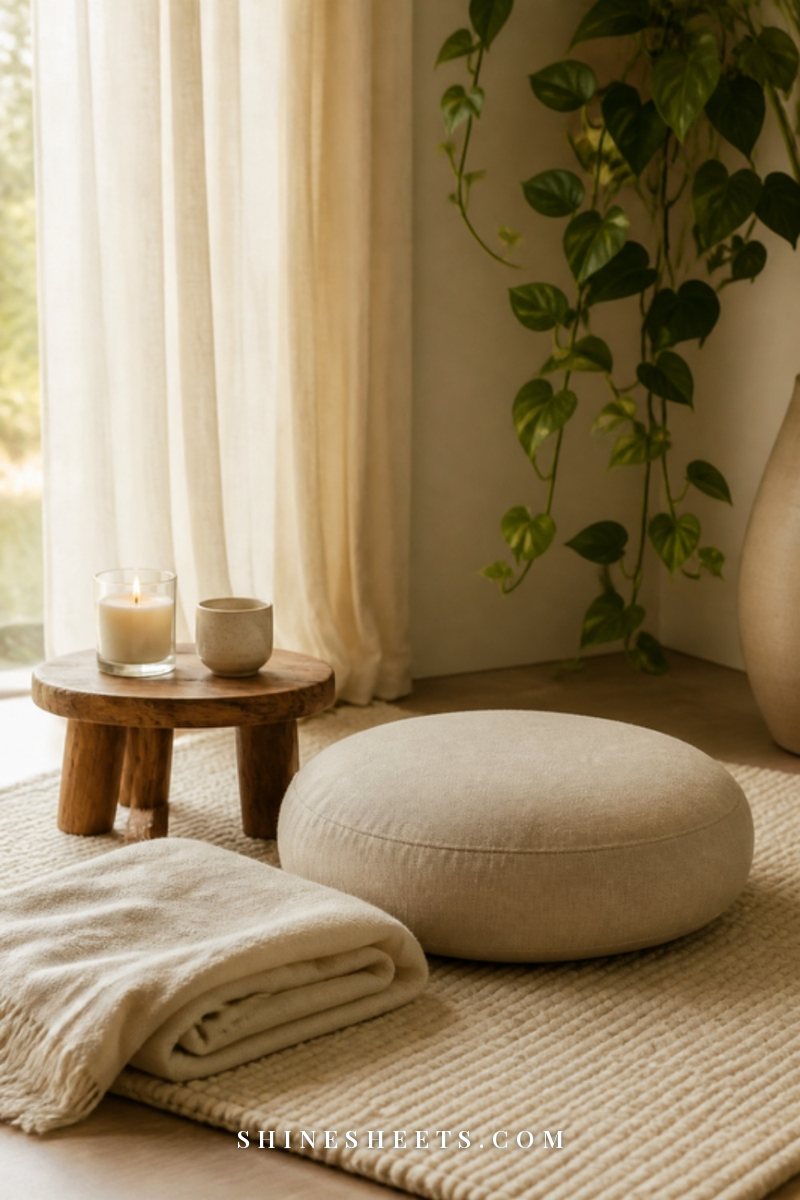
A rug quietly tells everyone where play happens. In a small apartment, a soft rug in one corner of the living room or bedroom creates a "play zone," and toys naturally stay closer to it. It also makes the edges of the room feel calmer.
A washable round rug in cream is an easy pick because it softens the floor and handles spills. Add a non-slip rug pad underneath, place one low basket or shelf at the edge, and you have a zone that feels intentional instead of chaotic.
12. One "Home" for Every Toy
This one isn't a product, it's the rule that makes every other idea work. Each toy needs one home, and everyone in the house needs to know where it is. If a new toy comes in and there's no home for it, either an older toy leaves or the new one goes into rotation.
Say it out loud: "Cars live in the blue bin on the bottom shelf." When the answer to "where does this go?" is always the same, children learn to tidy far faster than when storage keeps changing.
Toy Storage Table: What Goes Where
Use this table as a quick plan for your space. Screenshot it if you want it handy while you sort.
| Toy type | Storage idea | Space needed | Age tip |
|---|---|---|---|
| Building blocks and bricks | Under-bed rolling box or shallow bin | One box under the bed | Under three: big blocks only, no small bricks |
| Vehicles and trains | Fabric bin in a cube shelf | One cube | Keep track sets in a separate box |
| Stuffed animals | Large canvas basket or hammock net | Floor corner or wall | Keep just 5 to 8 out at a time |
| Dolls and figures | Over-door pockets | Back of a door | Accessories with tiny parts go in the top rows |
| Books | Wall ledges or front-facing rack | A strip of wall | Covers facing out for pre-readers |
| Art supplies | Three-tier rolling cart | A corner or beside a table | Paints and scissors on the top tier, supervised |
| Puzzles and games | Clear boxes or zip bags in a bin | One shelf | Tape a photo of the finished puzzle on the bag |
| Small sets and mini figures | Clear stackable boxes with latches | A high shelf | Out of reach of under-threes |
| Pretend play and dress-up | Storage bench or a low hook row | Bench footprint | Hooks at shoulder height for easy hanging |
| Bath toys | Draining basket or mesh bag | Edge of the tub | Squeeze dry and air out once a week |
Shared Rooms: Zones, Personal Bins and a Shared Middle
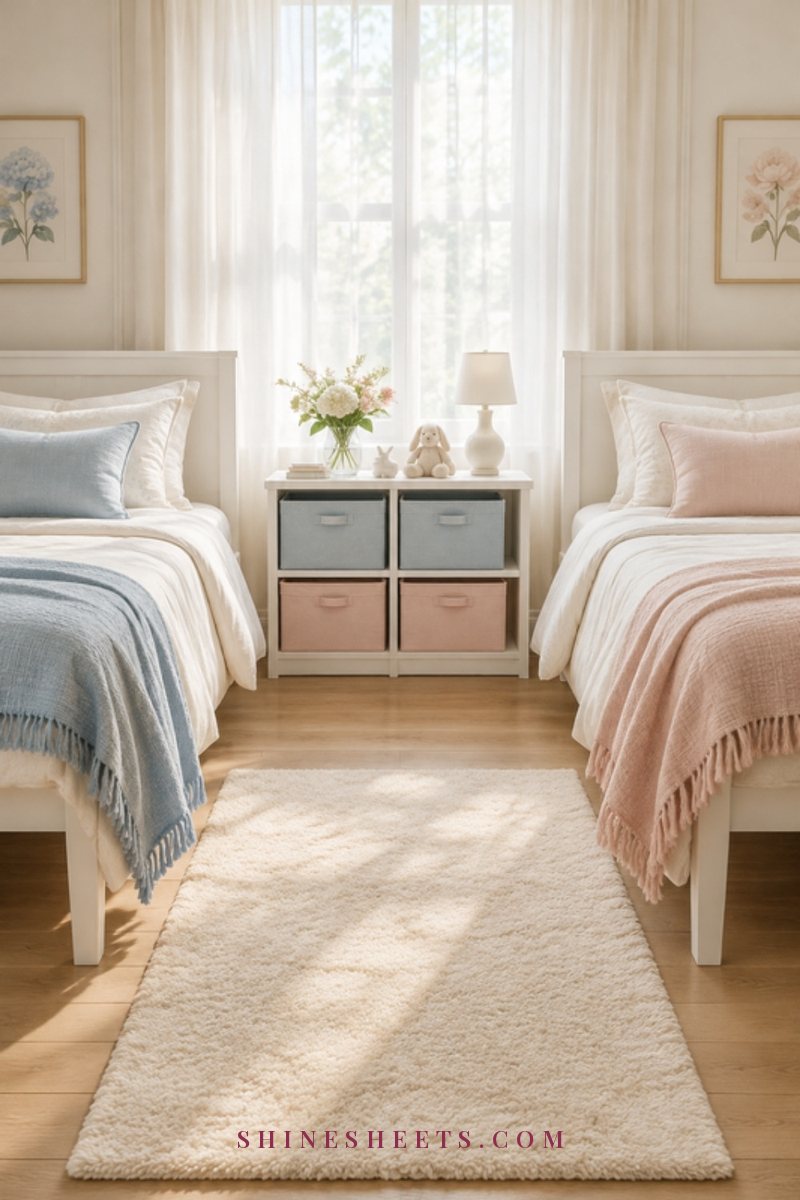
When siblings share a room, the biggest source of tension is often ownership, not mess. Kids want to know what's theirs. A simple three-part layout helps a lot.
- A zone for each child: the area around each bed belongs to that child. Their bedside basket, their wall ledge, their hooks.
- Personal bins: each child gets one or two bins for special things that nobody else touches without asking. Use different colors (baby blue and blush, sage and cream) so even a toddler can tell them apart.
- A shared middle: the toys everyone plays with (blocks, the pretend kitchen, puzzles) live in a shared shelf or play corner between the zones.
If the kids are different ages, store the older child's small-part toys up high or in their personal bin with a latch, so the younger one can't reach them. Older kids often appreciate a little "big kid" shelf that's theirs alone.
For more ways to make a tight room feel bigger, my small bedroom ideas cover layout, light and furniture choices that work for kids' rooms too, and these easy ways to organize a small bedroom are a quick place to start.
Safety Basics for Toy Storage
Pretty storage is lovely, but safe storage comes first. A few rules matter more than everything else in this guide:
- Anchor tall furniture. Shelves, dressers and cube units can tip when a child climbs or pulls on them. Use the anti-tip kit that comes with the furniture, or buy one, and attach it to the wall. Renters can ask their landlord; a small screw hole is far less trouble than a tip-over. The U.S. Consumer Product Safety Commission's Anchor It campaign explains why this matters.
- Choose lid-free or soft-close storage. Heavy, hinged toy chest lids can slam on fingers or heads. Open bins, baskets and boxes with removable lids are safer for little ones.
- Keep small parts away from under-threes. Tiny bricks, beads, marbles and accessories belong on high shelves or in latched boxes.
- Button batteries always out of reach. Store toys with button batteries up high, check that battery covers are screwed shut, and keep spare batteries in a locked or high spot.
- Heavy on the bottom. Put the heaviest bins on the lowest shelf so nothing heavy falls from above.
The 5-Minute Tidy Song Routine
A system only works if there's a habit behind it. The easiest one I know is a daily five-minute tidy with a song. Pick one upbeat song (or two short ones) and play it at the same time each day, like before dinner or before bath time. When the song plays, everyone tidies. When it ends, you're done, no matter what's left.
A few things make it work:
- Same time every day. Kids handle routines better than surprise requests.
- Give one job at a time. "Put all the cars in the car bin" is easier than "tidy your room."
- Do it with them. For little ones especially, tidying is a together activity, not a punishment.
- Let it be good enough. Five minutes of real effort beats an hour-long standoff. Whatever is left can wait for tomorrow's song.
Over a few weeks, the song becomes the cue, and you'll find you're asking less and less. That's the moment the system is really working.
Small Habits That Keep Toy Clutter Down
A few small habits keep things from creeping back. Do a quick toy edit every season, especially before birthdays and holidays when new toys arrive. Keep a donation bag in a closet so outgrown toys have somewhere to go right away. And when grandparents or friends ask for gift ideas, it's okay to gently suggest experiences, books or one specific toy you know will be loved.
Most of all, give yourself grace. A kids' space will never look like a showroom, and it isn't supposed to. Lived-in is fine. The goal is a room where toys can go home quickly and everyone, you included, can relax at the end of the day.
Final Thoughts
Good toy organization isn't about matching bins or a perfect shelfie. It's about fewer toys out at once, a clear home for each one, storage at a child's height and a little daily rhythm that makes tidying feel normal. Start with a gentle edit, pick a few ideas that fit your space, anchor anything tall, and let the tidy song do the rest. Your small space can hold a lot of play, and still feel calm.