The back of a door is one of the most overlooked storage spots in any home. It's a tall, flat surface you walk past dozens of times a day, it's already in the room, and it doesn't take a single inch of floor space. In a small bedroom, a tiny bathroom or a rental where you can't put holes in the walls, that makes it quietly priceless.
The best part is that most over-the-door organizers simply hook over the top of the door. No drills, no screws, no awkward conversation with your landlord. It took me a while to realize that the trick isn't buying more organizers, it's choosing the right one for each door and keeping it calm-looking.
This guide gathers 20 over-the-door storage ideas, grouped by room, plus what to check before you buy, a quick table that matches doors to organizers, and simple ways to keep the whole thing looking tidy instead of cluttered.
Why the Back of Your Door Is Wasted Space
Most homes use walls, shelves and floors well, and then leave every door completely bare. Yet a standard interior door is roughly 80 inches tall and 30 inches wide. That's a surface about the size of a narrow bookcase, sitting in every room, doing nothing on its back side.
Over-the-door storage is especially useful if:
- You rent and can't (or don't want to) drill into walls.
- Your floor space is tight, like in a studio, a small bedroom or a narrow bathroom.
- Your closet is small and you need extra room for shoes, bags or accessories.
- Things keep landing on chairs and counters because they don't have a home.
If you're working with one room for everything, these ideas pair beautifully with my studio apartment layout and decor tips, where every vertical surface counts.
Before You Buy: 6 Things To Check
Five minutes of checking saves you a return trip, a door that won't close and a chipped frame. Here's what to look at first:
- Door thickness. Measure the top edge of your door. Most over-the-door hooks fit standard doors around 1 3/8 to 1 3/4 inches thick. Thinner or thicker doors may need adjustable hooks, so check the product details before ordering.
- Clearance at the top. Close the door and look at the gap between the top of the door and the frame. Hooks need a little room. If the gap is very tight, look for slim, flat hooks designed for snug frames.
- Whether the door still closes. An organizer that sticks out 6 inches might bump into a wall, a towel bar or furniture. Open and close the door fully and note what's in its swing path.
- Weight limits. Every organizer has one, and the door's hinges matter too. Keep heavy things (shoes, cleaning bottles) low and spread out, and never hang more than the listed limit.
- Hinge side and handle position. The organizer goes on the side that faces into the room when the door is open. Make sure it won't block the handle or knob, and that pockets on the hinge side won't get squashed.
- Felt pads to protect paint. Metal hooks and rack backs can rub paint off over time. Small adhesive felt pads on the back of the rack and under the hooks protect the door and stop rattling. Renters, this one is for your deposit.
One small safety note: keep entry and exit doors easy to open and close quickly, and don't hang anything that stops a door from latching or that could fall on someone. Heavy items always go at the bottom.
20 Over-the-Door Storage Ideas by Room
Each idea below is renter-friendly and needs no building. Pick one or two for the room that bothers you most, rather than trying to do every door in a weekend.
Bedroom Over-the-Door Ideas
The bedroom door is perfect for the small, pretty things that tend to end up in a tangle on your dresser. For more ways to make a tight room feel spacious, see my small bedroom ideas.
1. Jewelry Organizer
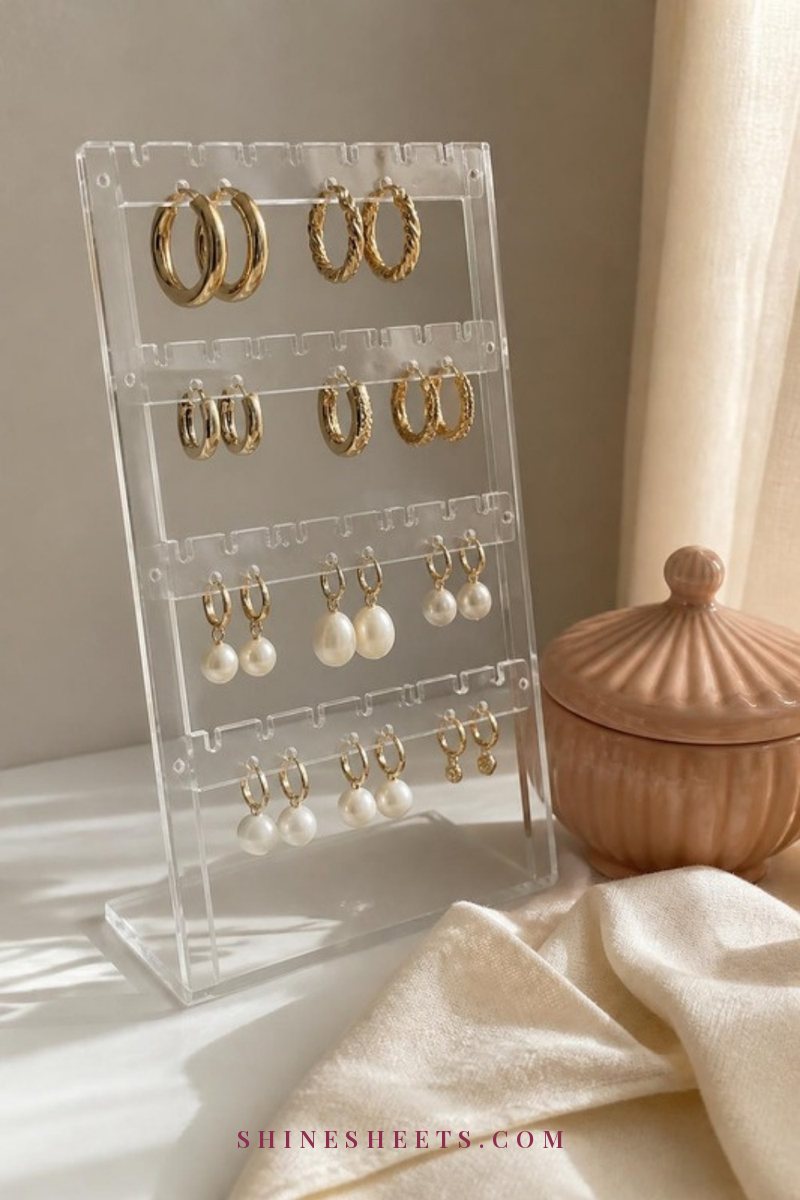
A hanging jewelry organizer with clear pockets and small hooks keeps necklaces untangled and earrings in pairs, all visible at a glance. A clear over-the-door jewelry organizer is a pick for anyone whose necklaces live in a knot. Look for one with hooks at the top for longer chains and small zip or snap pockets for studs.
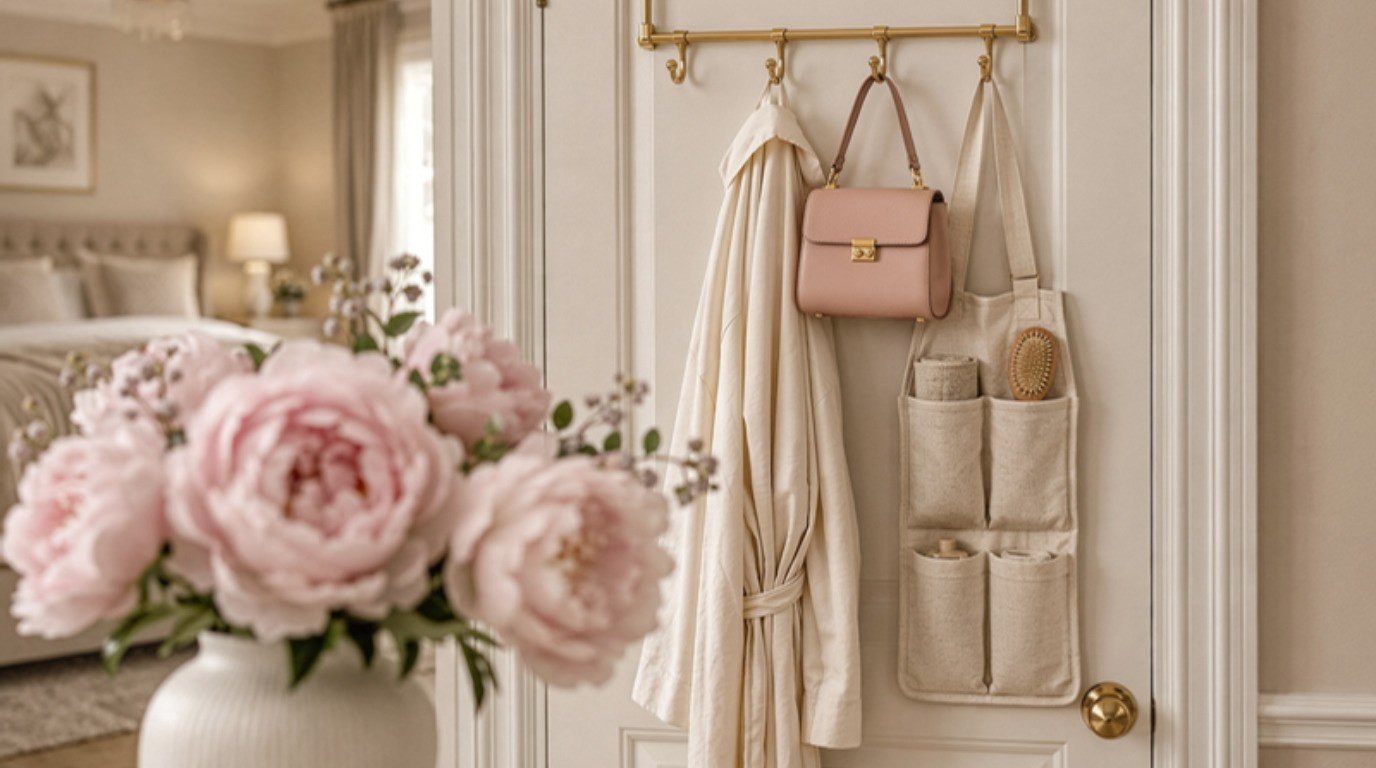
2. Bag Hooks
A simple hook rack turns the back of the door into a home for your everyday bags, tote and crossbody. A white over-the-door hook rack with five or six hooks is the most flexible organizer of all. Space bags out so straps don't pull on each other, and keep the heaviest bag on the hook nearest the hinge.
3. Scarf and Belt Rack
Scarves and belts are easy to forget when they're folded in a drawer. A slim rack with loops or bars lets you see them all, so you actually wear them. Roll belts loosely or hang them by the buckle, and drape scarves over bars rather than knotting them.
4. Mirror With Hooks
A full-length mirror that hangs over the door saves wall space and gives you a head-to-toe outfit check in the smallest room. A full-length mirror with hooks on the front or bottom adds a spot for tomorrow's outfit or a robe. Check that the mirror sits flat and add felt pads behind it so it doesn't tap the door every time it closes.
5. Accessory Pockets
A pocket organizer isn't only for shoes. Small fabric or clear pockets can hold hair accessories, sunglasses, socks, tights, chargers and the little bits that clutter a nightstand. Give each row a theme (top row hair, middle row going-out bits, bottom row cozy socks) so it stays easy to use.
Closet Door Ideas
A closet door works hard because it's right next to the things you're already storing.
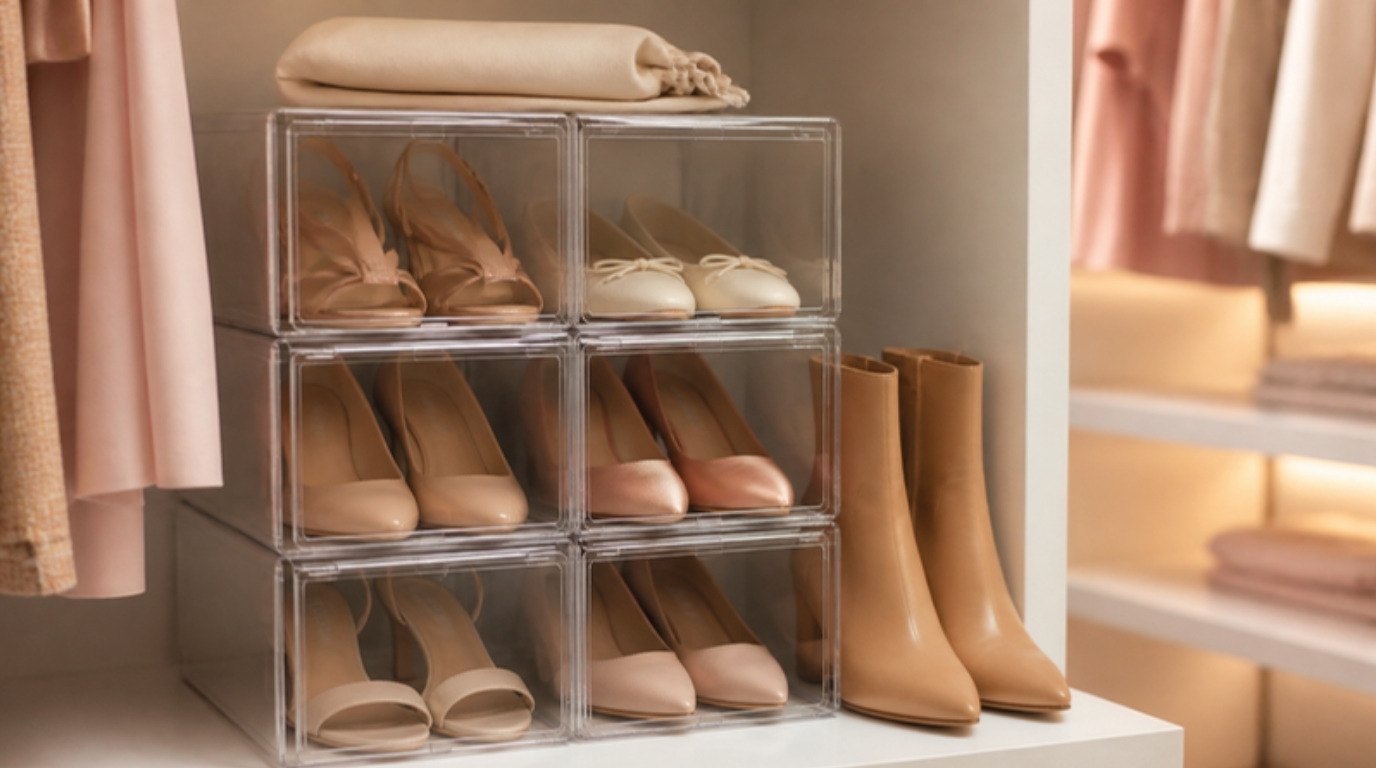
6. Shoe Organizer
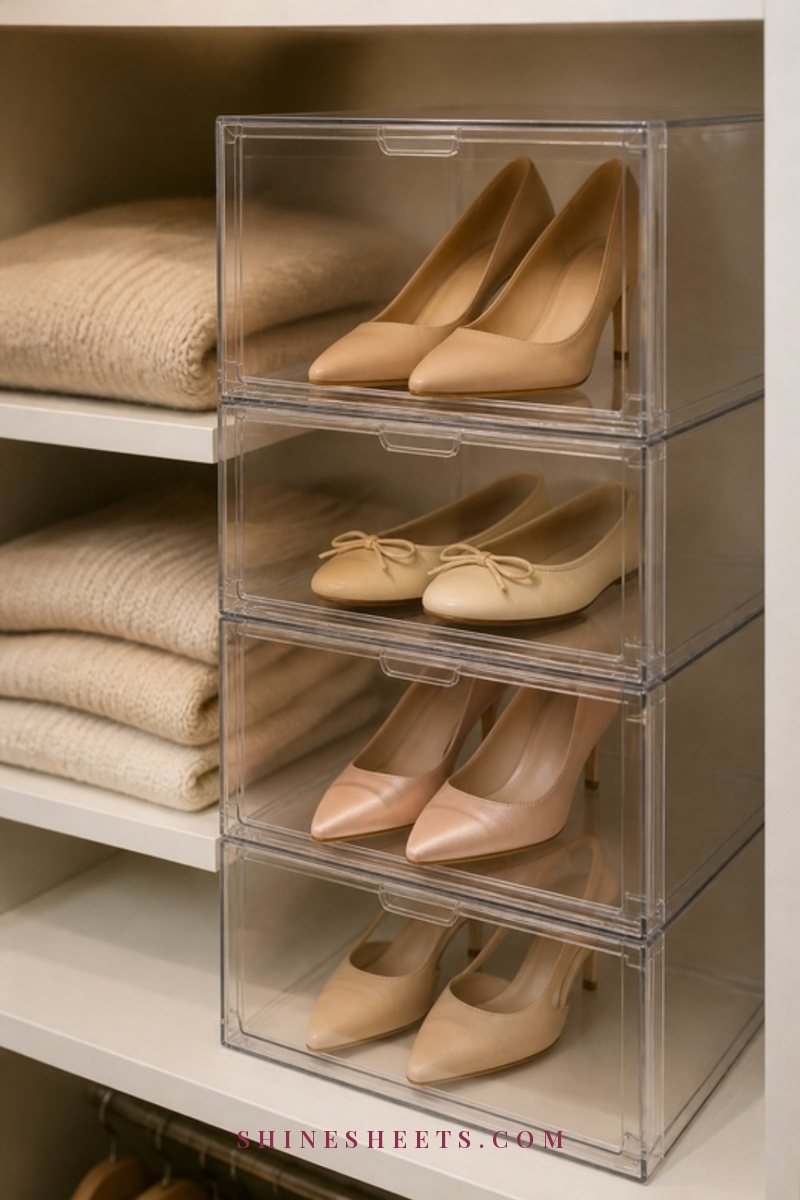
The classic, and for good reason. A clear pocket shoe organizer holds a lot of pairs in very little space and lets you see each pair. It works best for flats, sandals and sneakers. Heavy boots are better on the floor. Put the shoes you wear most at waist height. For more ideas, my guide to shoe organization for small spaces covers what to do with everything that doesn't fit.
7. Outfit-Planning Hook
One single hook (or the top hook of a rack) dedicated to tomorrow's outfit is a small habit that makes mornings calmer. Hang the full look the night before, including the bag. It also stops the "I'll just put it on the chair" pile from forming.
8. Laundry Bag
A hanging laundry bag on the closet door gets clothes off the floor without taking up floor space. Choose a soft fabric bag with a wide opening and a drawstring or zip bottom, so you can carry it to the washer and empty it easily. A second small bag for delicates is a nice extra.
Bathroom Door Ideas
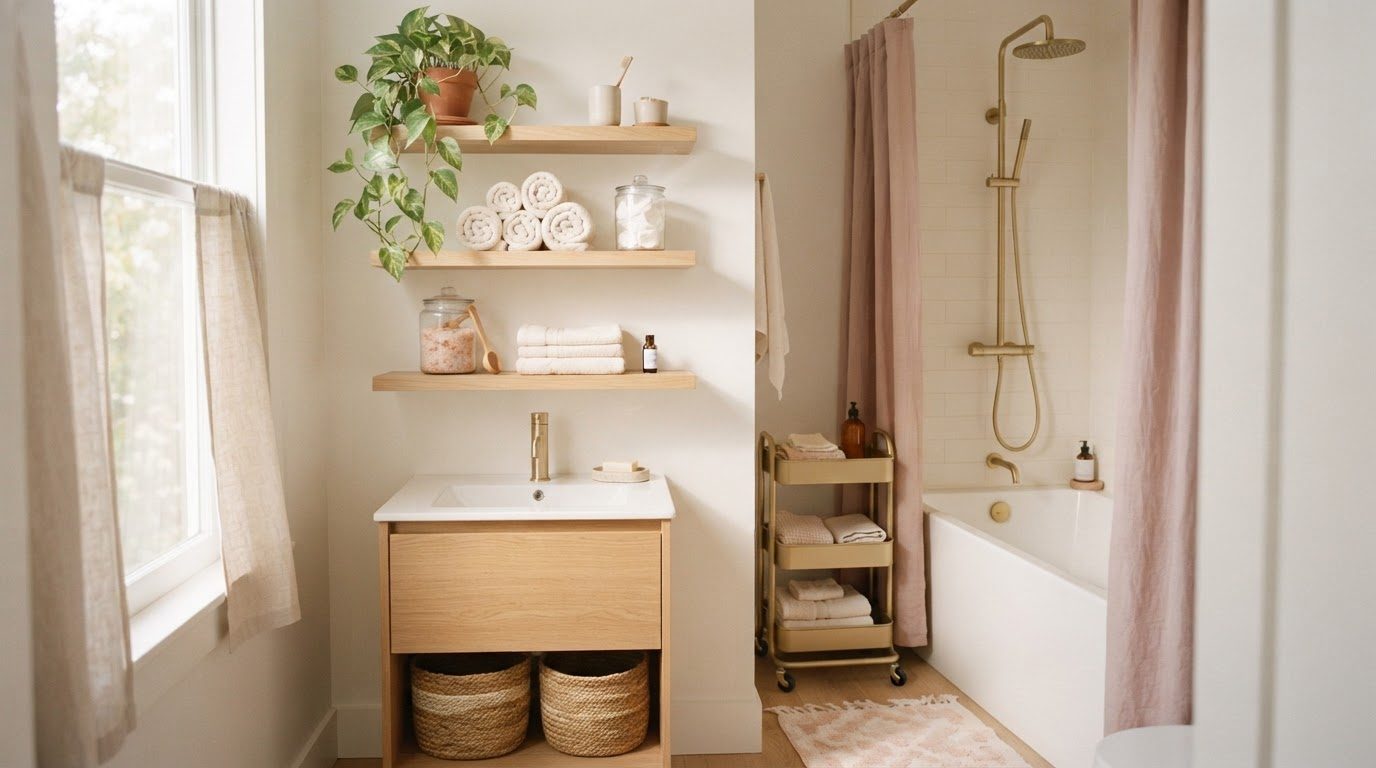
Small bathrooms are where over-the-door storage really shines. If you're updating a rental bathroom, these ideas fit right in with my rental bathroom makeover ideas.
9. Towel Rack
Bathrooms rarely have enough towel bars. An over-the-door towel bar in gold adds two or three spots instantly and looks surprisingly elegant. Hang towels fully open so they dry properly, and leave a little space between them to avoid a damp, musty smell.
10. Toiletry Caddy
A rack with shallow shelves or baskets holds extra lotion, cotton pads, spare toothpaste and backup shampoo, clearing your counter. Keep only lightweight items here, and use small clear containers inside the shelves so things don't tip when the door swings.
11. Hair Tool Holder
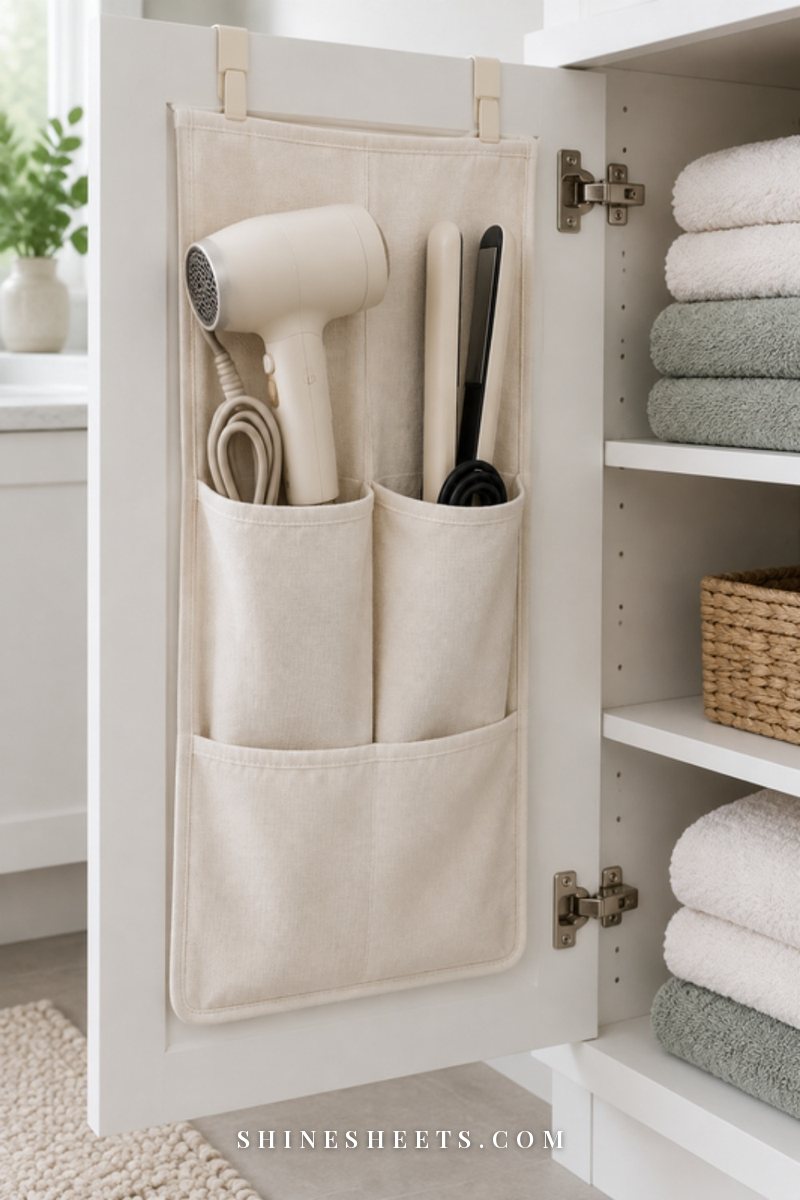
Hairdryers, straighteners and brushes take up a lot of drawer space. A hanging holder with deep pockets can hold them, but only once tools are completely cool and unplugged. Wrap cords loosely (never tightly around the tool) and choose a heat-resistant holder if you can.
12. Cleaning Supplies Pocket
A pocket organizer on the inside of the bathroom door can hold spray bottles, cloths, a toilet brush caddy and sponges. Keep cleaning products well away from toiletries, put the heaviest bottles in the bottom row, and if little ones visit, store anything harsh up high or elsewhere.
Kitchen and Pantry Door Ideas
Pantry doors and the inside of a utility cupboard door are wonderful for slim, everyday items.
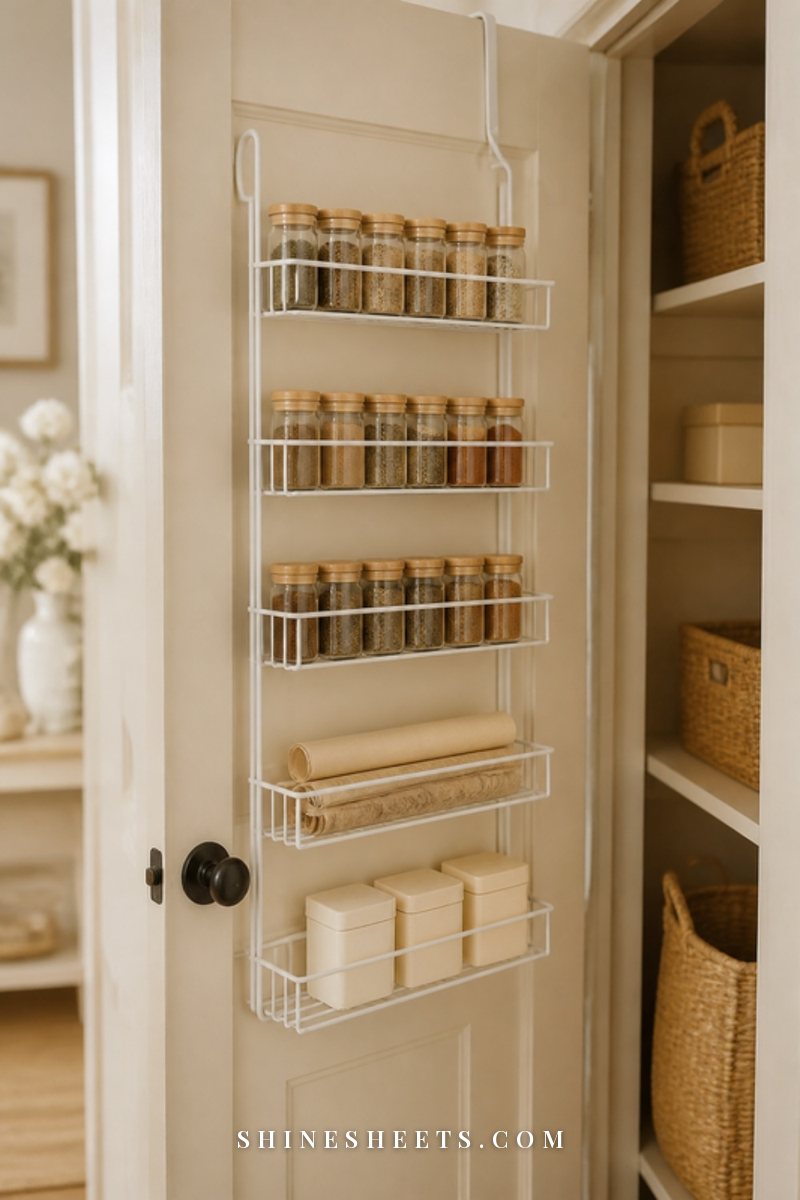
13. Spice Rack
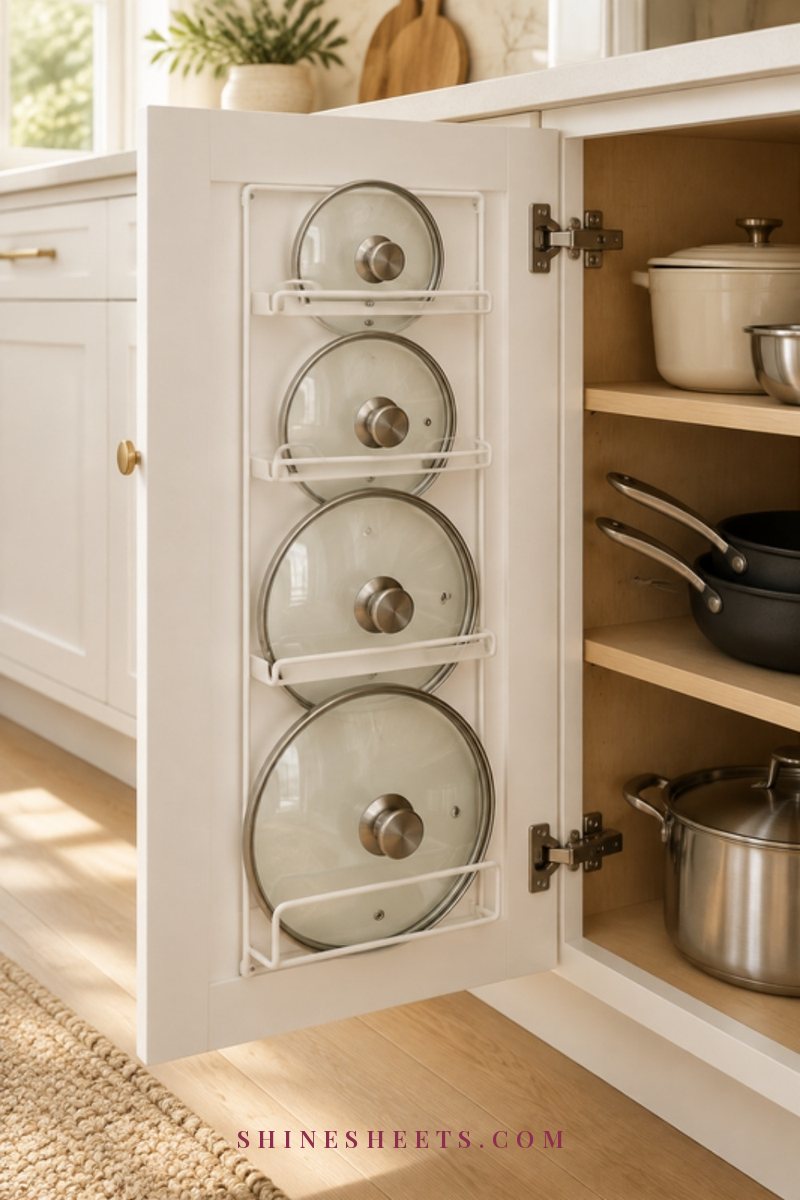
A slim over-the-door rack with narrow shelves holds spice jars in rows so you can see everything at once. Matching jars make it look calm, and labeling the lids keeps you from guessing. Check the shelf depth matches your jars before ordering.
14. Wrap and Foil Holder
Foil, baking paper, cling film and sandwich bags are awkward in drawers. A door rack with long, shallow bins keeps the rolls upright and easy to grab. Put them on the inside of a cupboard or pantry door, at a height you can reach without stretching.
15. Pantry Basket Rack
A rack with several baskets is the most versatile pantry option. A cream over-the-door basket rack can hold snack packs, tea boxes, small bottles and kitchen extras. Give each basket one category, and keep heavier items in the lowest basket.
Entryway Door Ideas
The front door is where clutter arrives first, so a little structure here goes a long way. For a full drop zone, see my guide to entryway ideas that stay tidy.
16. Coat Hooks
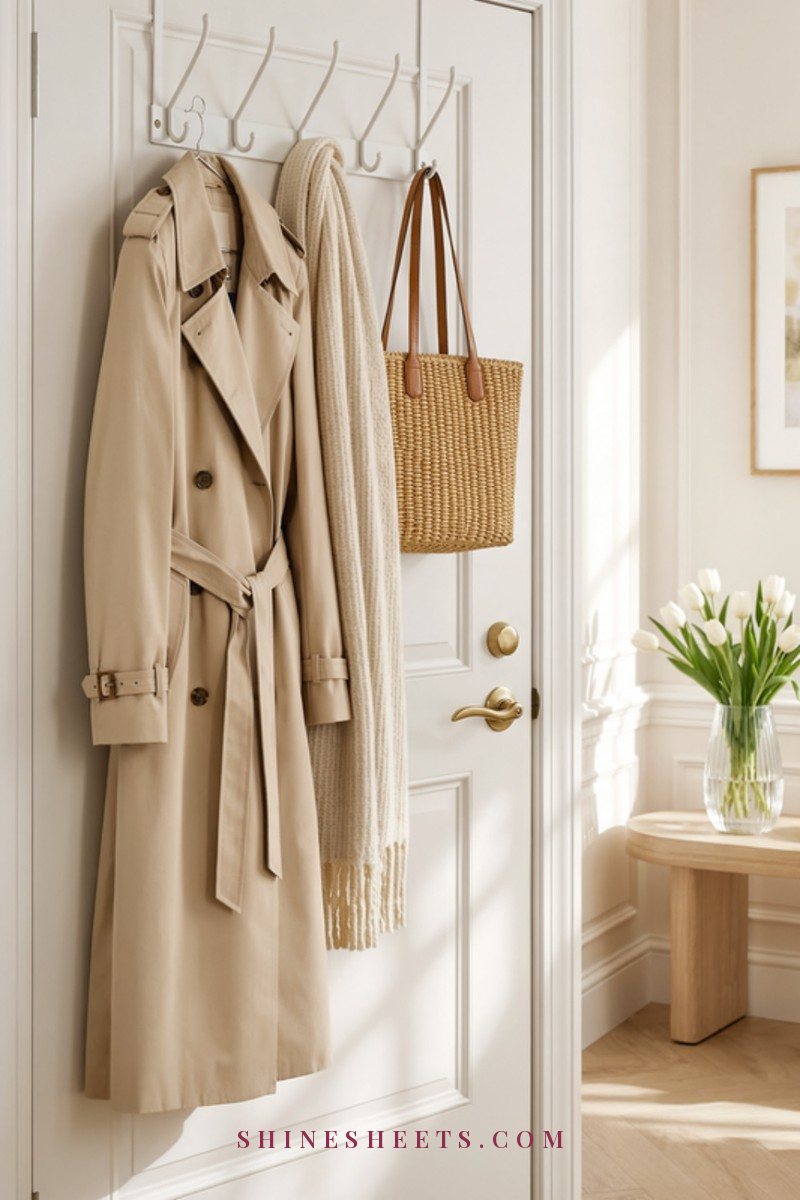
If you don't have a coat closet, an over-the-door hook rack on the entry door or a nearby closet door gives everyone a spot for jackets. Limit it to the coats you wear this week and rotate the rest elsewhere so the door can still close easily.
17. Mail and Keys Pocket
A small fabric or clear pocket organizer near the door catches mail, keys, sunglasses and earbuds. Make one pocket "to sort" for mail and empty it once a week. It's a tiny habit that stops paper from spreading across the kitchen table.
18. Umbrella and Tote Hook
One or two sturdy hooks for an umbrella and a reusable tote mean you'll actually grab them on the way out. Hang a wet umbrella only after shaking it out, and put a small tray or towel below if it drips.
Laundry and Utility Door Ideas
The laundry or utility door is a natural home for the bulky things that never quite fit anywhere.
19. Ironing Board Holder
An over-the-door ironing board holder keeps the board flat against the door instead of leaning against a wall and falling. Many have a small basket for the iron, but always let the iron cool completely before storing it, and keep the cord loosely coiled.
20. Broom and Mop Holder
A rack with grip clips holds a broom, mop and dustpan upright, off the floor. Let mop heads dry fully before hanging them, and keep this rack on a door that doesn't get opened and closed constantly, since long handles can swing.
Which Organizer for Which Door: A Quick Table
Use this table to match each door to the organizer that suits it best. Screenshot it before you shop.
| Door | Organizer type | Best for | Weight tip |
|---|---|---|---|
| Bedroom | Jewelry organizer, mirror with hooks, accessory pockets | Necklaces, earrings, outfit checks, small accessories | Light items only; add felt pads behind a mirror |
| Closet | Clear pocket shoe organizer, single hook, laundry bag | Flats, sneakers, tomorrow's outfit, laundry | Keep shoes light; boots belong on the floor |
| Bathroom | Towel bar, toiletry caddy, hair tool pockets | Towels, backup toiletries, cooled hair tools | Spread towels out; tools only when cool |
| Kitchen and pantry | Spice rack, wrap holder, basket rack | Spice jars, rolls, tea and small packs | Heaviest basket at the bottom |
| Entryway | Hook rack, mail pocket, umbrella hook | Coats, keys, mail, totes | Max one heavy coat per hook; door must close and lock easily |
| Laundry and utility | Ironing board holder, broom and mop rack | Ironing board, brooms, mops | Check the hinge side can carry it; dry mops first |
How To Keep Over-the-Door Storage Calm-Looking
Over-the-door storage can look beautifully organized or like a jumble on a hook. The difference is mostly in a few small choices:
- Match colors. Choose organizers in the same shade as the door (white on white, cream on cream) or in one soft accent like gold. Clear organizers disappear nicely too.
- One door, one job. A door that holds shoes, towels and a handbag looks chaotic. Give each door a single purpose so your brain (and your eye) knows what lives there.
- Don't overload. Leave a little empty space on every rack. If you have to squeeze something in, it's time to edit, not add another organizer.
- Use matching containers. In racks and baskets, matching jars, pouches or bins make even busy contents look intentional.
- Edit once a season. Take everything off, wipe the rack, and put back only what you've actually used recently. Ten minutes, four times a year.
- Think about the view. If the door is usually open and faces the room, keep that side the prettiest. Messier storage can go on doors that stay closed.
Honestly, the calmest homes I've seen don't have more storage, they have storage that's clearly assigned. A door with one tidy purpose feels like it belongs to the room.
Common Over-the-Door Storage Mistakes To Avoid
A few small missteps cause most of the frustration with door organizers. Here's what to watch for, and the easy fix for each.
- Buying before measuring. It's tempting to order the pretty one right away. Fix: measure door thickness, the gap at the top and the space behind the door first, and write the numbers in your phone notes so you have them while shopping.
- Hanging heavy things at the top. Weight high on a door pulls on the hooks and the hinges and makes the whole thing sway. Fix: lightest items on top, heaviest at the bottom, always.
- Ignoring the door swing. A deep organizer can hit a towel bar, a dresser or the wall, and suddenly the door won't open fully. Fix: open the door all the way after hanging anything and check nothing bumps.
- Skipping the felt pads. A rack that rattles every time the door closes gets annoying fast, and it can scuff paint. Fix: add pads to every point where metal touches the door, including the bottom of the rack.
- Using a door as a second closet. If one organizer is holding everything you couldn't fit elsewhere, it will look overloaded within a week. Fix: declutter first, then give the door only the items you use often.
- Forgetting the other side. Some hooks show a little on the front of the door. Fix: choose slim hooks in the same color as your door, so the front still looks clean from the hallway.
None of these are big problems, and all of them are easy to undo. That's the lovely thing about storage that simply hooks on: if it doesn't work, you can lift it off and try another door.
Final Thoughts
The back of a door is bonus space you already have, and with one well-chosen organizer it can hold the things that keep cluttering your counters, chairs and floors. Start with the door that bothers you most, measure it, protect it with felt pads, and give it one clear job.
Small rooms don't need big renovations to feel roomier. Sometimes they just need you to look behind the door.