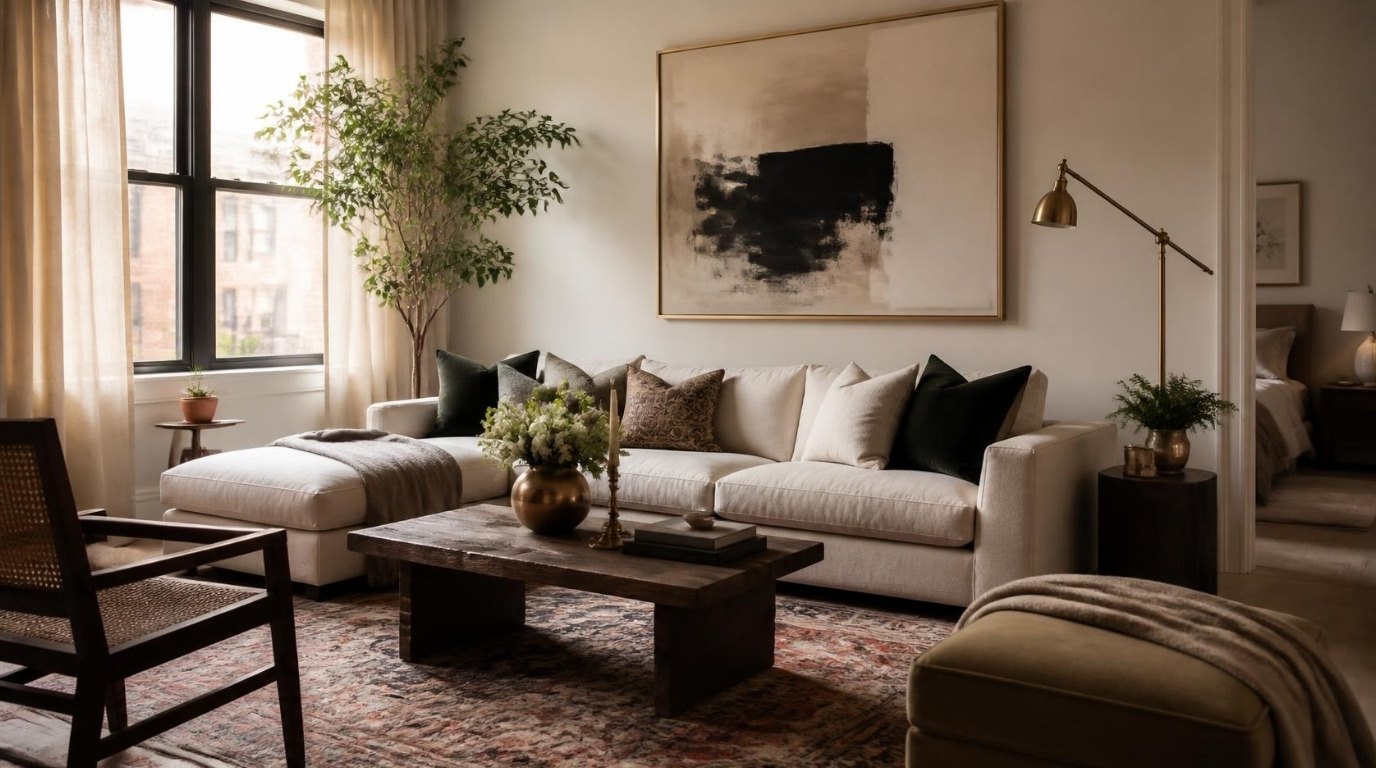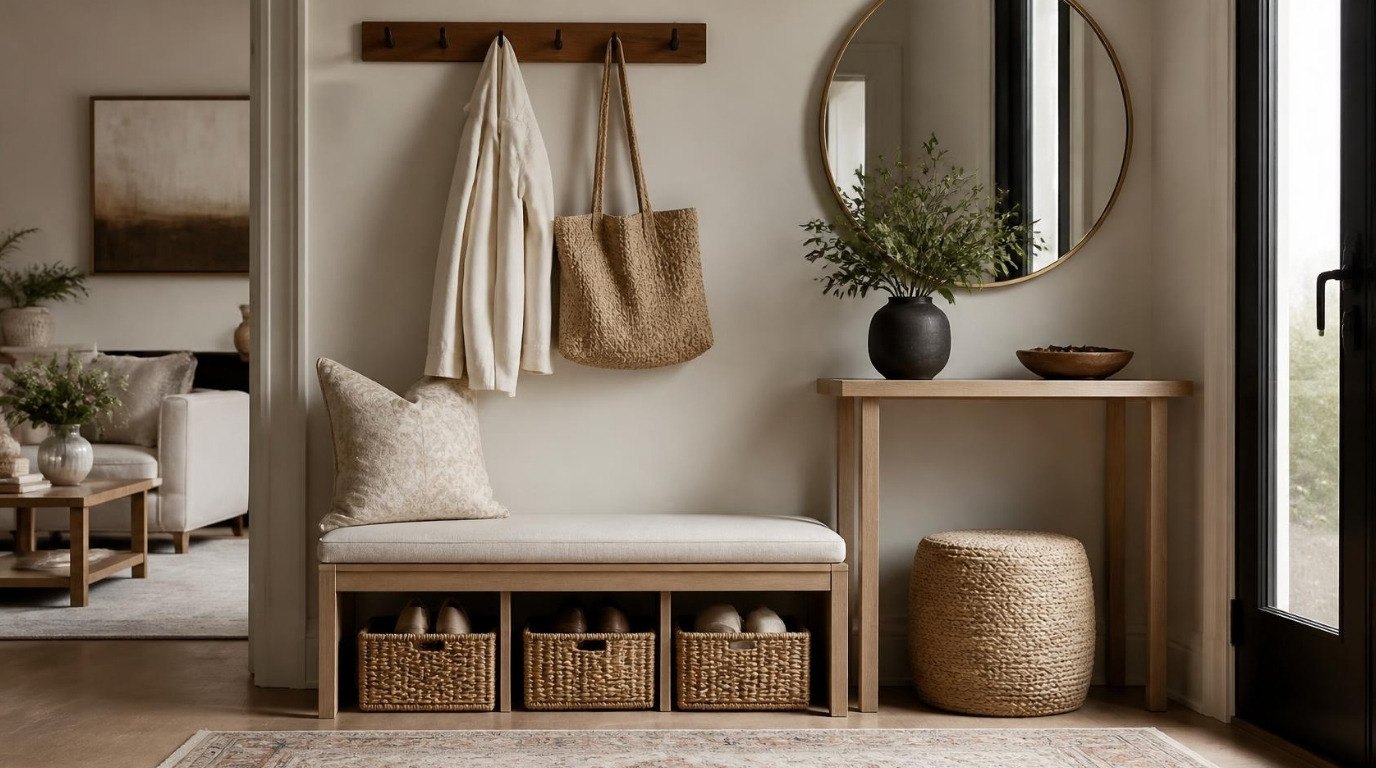
An entryway gets messy for one simple reason: the things you carry home don't have a place to land. Keys end up on the kitchen counter, mail piles on a chair, shoes collect in a heap by the door. A tidy entry isn't about having a big foyer. It's about giving every item that comes through the door one obvious, easy spot – a drop zone.
The best part is that a drop zone works in any size of home. A real foyer, a narrow hallway, even a front door that opens straight into the living room can all have one. In a small apartment it might be a single strip of wall with three hooks and a tray. That's enough, as long as it matches the way you actually come home.
This guide is all about entryway ideas that create a drop zone that stays tidy. You'll find the five jobs every drop zone needs to do, a "drop zone by space" table for tiny walls, narrow hallways and real foyers, 15 practical ideas, solutions for homes with no entryway at all and a 5-second come-home routine that keeps it all working.
Small changes here make the whole home feel calmer, because the first thing you see when you walk in sets the tone.
The Five Jobs Every Drop Zone Needs To Do
Before buying anything, think about what actually comes through your door every day. Almost every household needs a spot for these five things:
- Hang: coats, bags, scarves, umbrellas, a dog leash.
- Store shoes: the pairs you wear this week, not every pair you own.
- Catch small things: keys, sunglasses, earbuds, a lip balm.
- Sort paper: mail, receipts, things to return or sign.
- Prepare to leave: a spot to sit and put on shoes, and somewhere to place what you need to take out tomorrow.
If your entry handles all five, it stays tidy almost on its own. If one is missing, that's usually exactly where the clutter piles up. Stand by your door for a minute and notice which job has no home yet. That's your starting point.
Drop Zone by Space
Here's how the five jobs translate to three common layouts. Find the column closest to your home and use it as your shopping and setup plan. Screenshot it if you're about to rearrange.
| Job | Tiny wall (no real entry) | Narrow hallway | Real foyer |
|---|---|---|---|
| Hang | 3–4 wall hooks in a row | A hook rail at two heights | Hook rail plus a coat closet or hall tree |
| Shoes | Small tray or a two-tier rack under the hooks | Slim tip-out shoe cabinet | Bench with shoe cubbies or baskets |
| Small things | Wall shelf with a key tray | Key tray on top of the shoe cabinet | Console table with a tray and a lidded box |
| Paper | Wall-mounted mail pocket | Mail organizer above the cabinet | Drawer or a desk-style sorter in the console |
| Prepare to leave | A folding stool or the arm of the sofa | A small wall-mounted seat or narrow stool | A bench with cushions |
| Floor | Small washable mat | Washable runner | Large washable rug |
| Light | Plug-in wall sconce or a small lamp | Sconce or ceiling light on a warm bulb | Table lamp plus overhead light |
Notice that the tiny wall still covers every job. It just stacks things vertically and uses smaller pieces.
15 Entryway Ideas for a Drop Zone That Stays Tidy
1. Start With a Row of Hooks
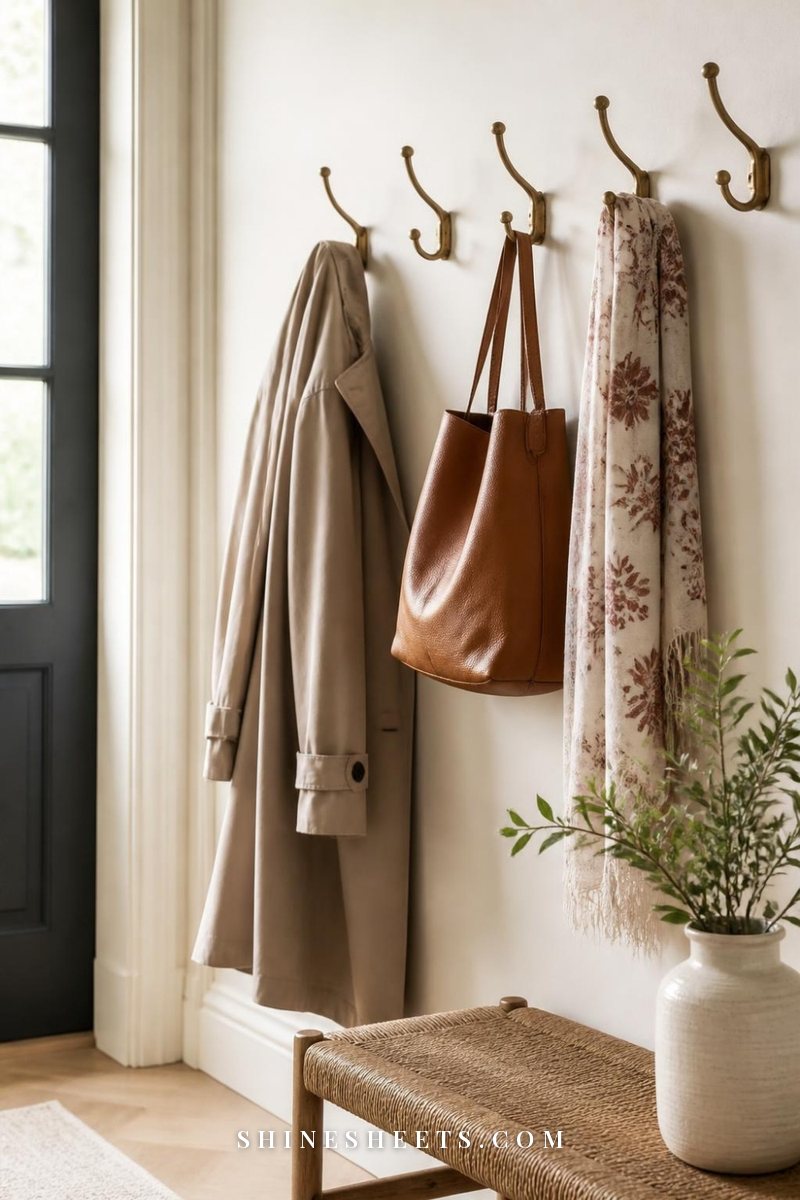
Hooks are the cheapest, most effective entryway upgrade. They're faster to use than hangers, which is exactly why things actually get hung. A set of gold decorative wall hooks or simple white ones in a neat row looks intentional and pretty. Look for hooks with a double prong (one for a coat, one for a bag) and screw them into studs or use proper wall anchors, because a full bag is heavier than it looks.
2. Hang Hooks at Two Heights
Put a top row at about 5.5 feet for coats and a lower row around 4 feet for bags, scarves and tote bags. The two heights keep long coats from covering everything underneath, and the whole wall looks less crowded.
3. Limit Each Person to Two Hooks
Hooks fill up fast. Two per person (one coat, one bag) is a rule that keeps the wall from becoming a closet. Seasonal coats rotate into a real closet when the weather changes.
4. Choose a Slim Shoe Cabinet
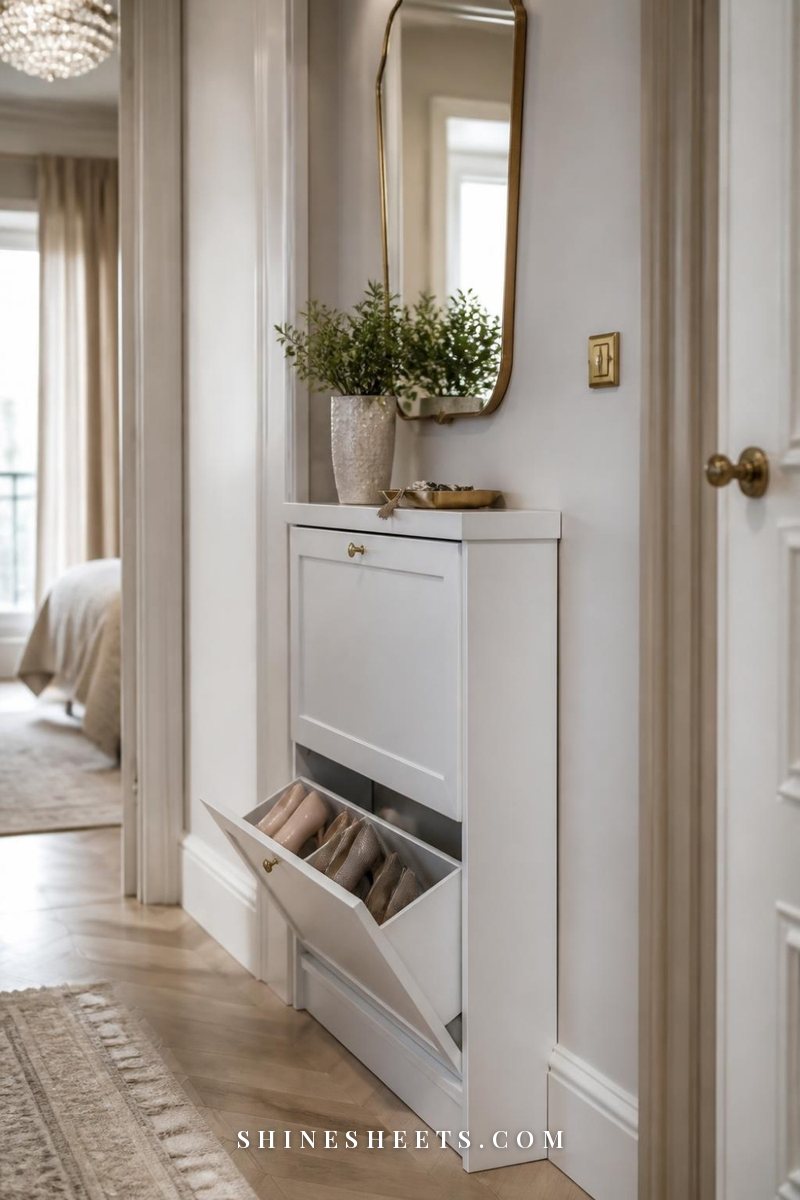
A slim white shoe cabinet with tip-out drawers holds a surprising number of pairs in just 7–9 inches of depth. Look for one that can be anchored to the wall (it's an important safety step, since slim cabinets can tip) and has a flat top wide enough for a tray. White blends into most walls and keeps a narrow hallway feeling light.
5. Keep Only This Week's Shoes by the Door
Two or three pairs per person is plenty. Everything else goes to the bedroom closet. This one habit removes most of the visual clutter in an entry.
6. Add a Key Tray
A small ceramic key tray on a shelf or cabinet gives keys, sunglasses and earbuds a home. A shallow dish with a lip works better than a bowl, because you can see everything at a glance. Choose one in white, cream or a soft blush glaze so it looks like decor, not storage.
7. Mount a Mail Organizer on the Wall
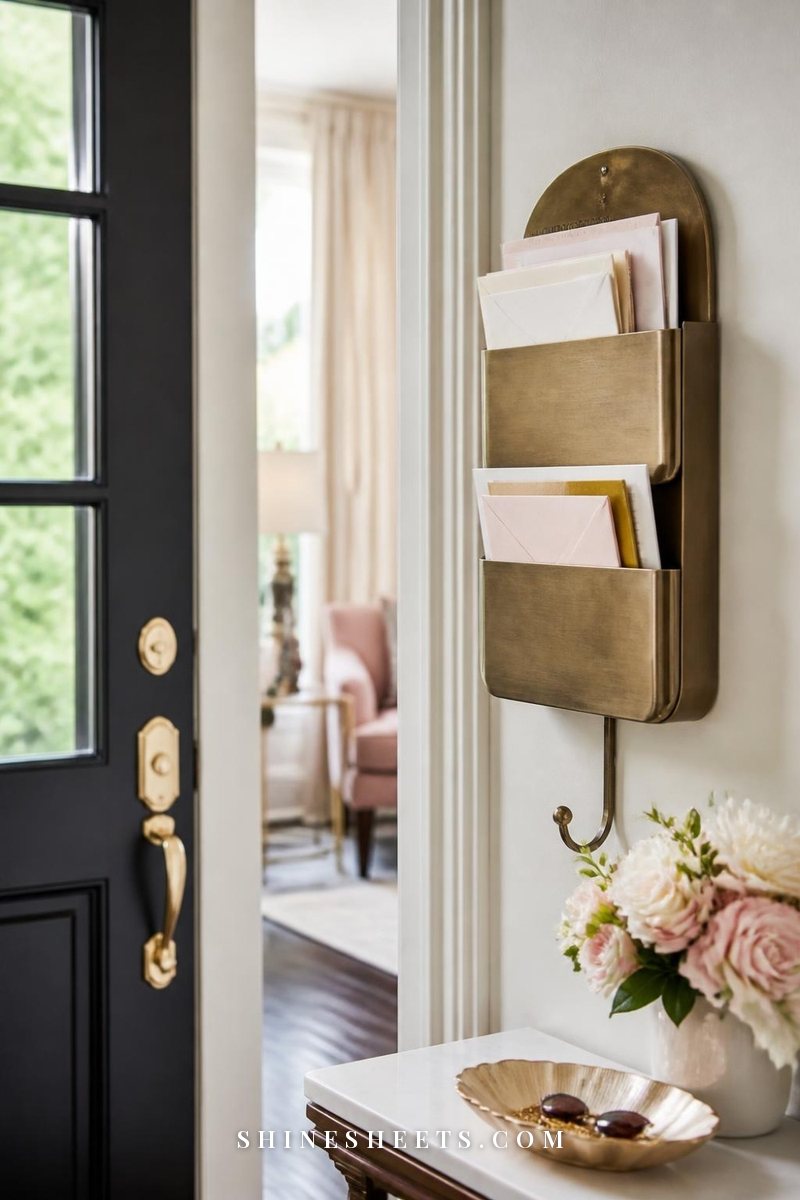
Paper is the sneakiest entry clutter. A wall-mounted mail organizer with two or three pockets (to do, to file, outgoing) stops mail from spreading across surfaces. Look for one with a small key hook row underneath and you've solved two jobs with one piece.
8. Open Mail Over the Recycling Bin
The organizer only works if paper doesn't pile up in it. Open mail standing up, recycle junk immediately and only keep what needs action. It takes under a minute a day. The same habit keeps my kitchen tidy too, especially after my 20-minute junk drawer organization fix.
9. Use a Basket for Soft Things
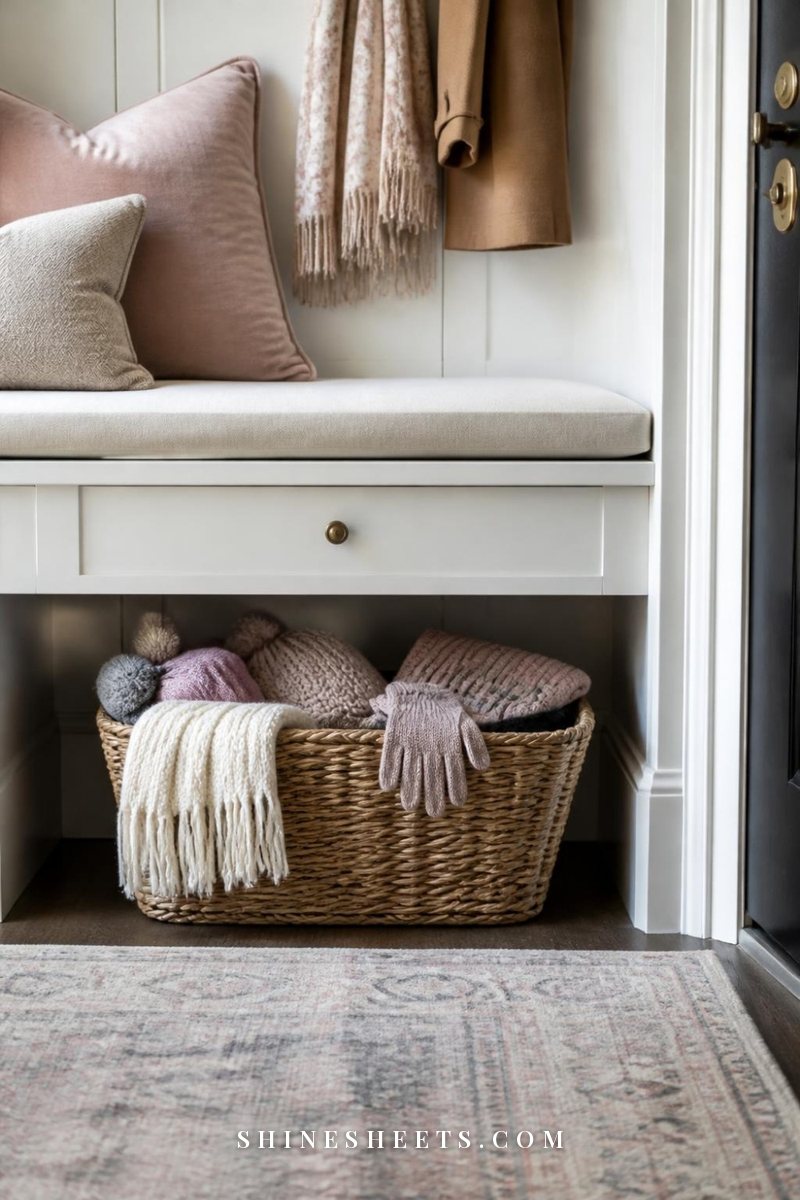
Scarves, hats, gloves and reusable shopping bags tend to slide off hooks. A lidded or open woven storage basket under a bench or on a shelf corrals them. Choose one with handles and a fabric liner so knitwear doesn't snag. In summer, swap the contents for sunscreen, sunglasses and a light scarf.
10. Put Down a Washable Runner
Entry floors take the most dirt in the house. A washable beige runner rug traps grit before it travels inside, and you can put it straight in the machine when it needs refreshing. Look for a non-slip backing and a low pile so the front door opens freely over it.
11. Add a Spot To Sit
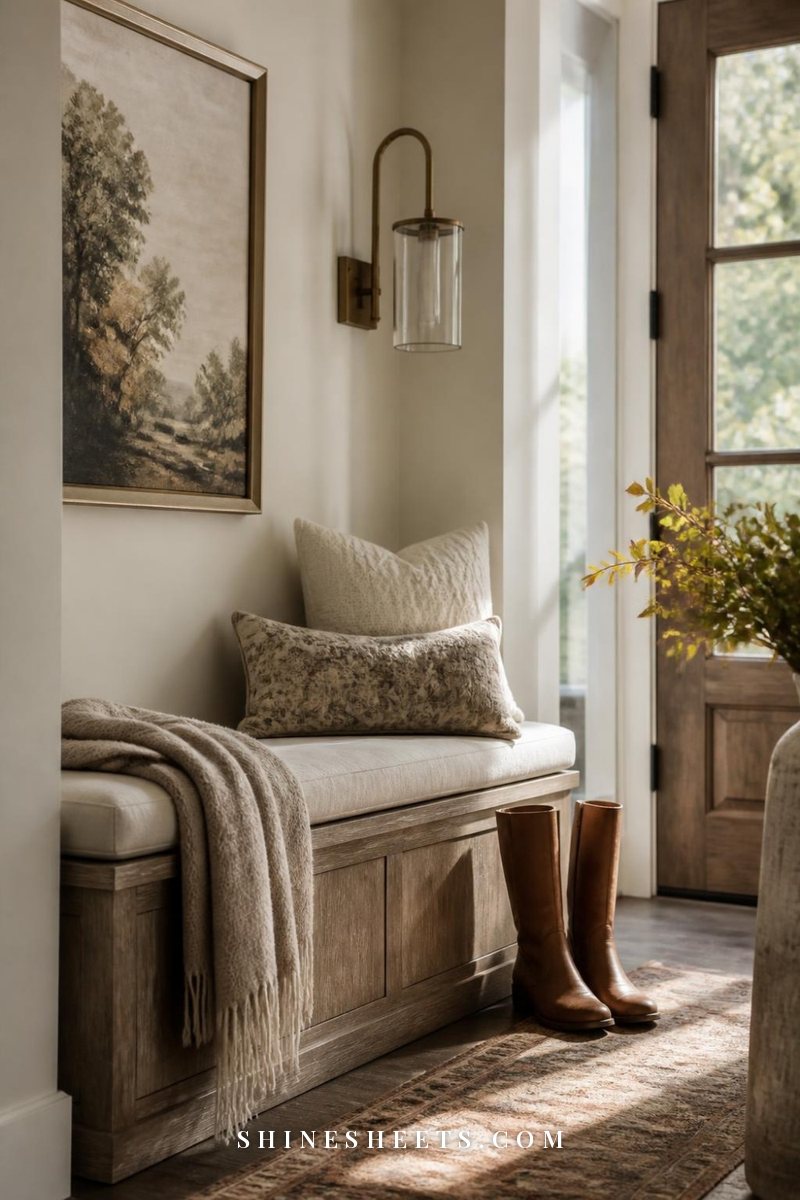
A bench, a stool or even a sturdy storage ottoman makes putting on and taking off shoes easier, and shoes are much more likely to end up in the cabinet when you're already sitting next to it. In a tiny space, a folding stool that hangs on a hook works too.
12. Create a "Leaving Tomorrow" Spot
One hook or one corner of the bench is reserved for things that need to go out: a parcel to return, a borrowed book, a gym bag. It saves the morning scramble and keeps everything else in the entry clear.
13. Light It Warmly
Coming home to a dark entry makes you drop things anywhere. A plug-in wall sconce or a small lamp on a timer means you always walk into a soft, welcoming light. Warm white bulbs look best in small spaces.
14. Add One Pretty Thing
A small vase, a framed print or a candle makes the drop zone feel like part of your home, not a storage area. One or two decorative pieces are plenty. If you have a little wall space above the hooks, a pair of small frames works beautifully.
15. Use Vertical Space Above the Door
A narrow shelf above the door frame holds off-season hats, spare umbrellas or a basket of extra reusable bags. It's out of sight, out of the way and doesn't take a single inch of floor.
Entryway Ideas When You Don't Have an Entryway
Many apartments open straight into the living room or kitchen. You can still build a drop zone, it just needs to borrow a little space. These are the most effective setups:
- The landing strip. Choose the nearest strip of wall to the door, even 2 feet wide. Mount three hooks, a small shelf with a key tray and a mail pocket stacked vertically. Put a small washable mat and a shoe tray on the floor below. That's a complete drop zone.
- The back of the door. An over-the-door hook rail or a slim hanging organizer holds bags, scarves and umbrellas without touching the wall.
- The side of a bookcase. If a bookcase sits near the door, its side panel can hold adhesive hooks or a slim mail pocket.
- The back of the sofa. A narrow console table behind a sofa that faces away from the door creates an instant entry. Add a tray, a lamp and a basket underneath. My guide to small living room ideas has more layouts that zone a single room this way.
- A rug to define the zone. Even a small mat tells your brain "this is the entry," which makes it easier to keep shoes and bags in that area.
Renting? Most of these work without drilling. Strong adhesive hooks, freestanding racks and over-the-door organizers are all renter-friendly. Just check the weight limit on adhesive hooks and keep heavy bags on screwed-in hooks or a freestanding coat rack.
How To Set Up Your Drop Zone in One Afternoon
You don't need a weekend-long project. With the basics in hand, a drop zone comes together in about two hours. This is the order I'd follow:
- Clear everything out (20 minutes). Take every shoe, bag, coat and piece of paper away from the door. Put them on the bed or the sofa so you can see what actually lives there.
- Sort into three piles (20 minutes). Daily (stays by the door), seasonal or occasional (moves to a closet), and done (donate, recycle, return to its owner).
- Clean the empty space (15 minutes). Vacuum, wipe the baseboards and the door, and wash the mat. A fresh start makes it easier to keep tidy.
- Install the wall pieces first (30 minutes). Hooks, a small shelf and the mail organizer. Measure, mark with a pencil and use a level so everything lines up.
- Add the floor pieces (15 minutes). Shoe cabinet or tray, bench or stool, basket and runner.
- Put back only the daily items (10 minutes). Two hooks per person, this week's shoes, keys in the tray.
- Add one pretty thing and a warm light (10 minutes). Then step back, walk in through the door as if you're coming home and notice whether anything feels awkward to reach.
That last step matters. If a hook is too high, a tray is behind the door swing or the bench blocks the shoe cabinet, adjust it now. A drop zone that's even slightly inconvenient won't get used.
Small Touches That Make an Entry Feel Welcoming
Once the practical side works, a few soft details make it feel like home rather than a storage wall:
- Match your hooks to other metals in the room, such as gold with brass frames or white with white trim, so the entry feels connected to the rest of your space.
- Choose baskets and trays in natural textures (rattan, seagrass, ceramic) to soften all the hard edges.
- Keep a light scent near the door, like a reed diffuser or a candle you light in the evening, so the first breath of home feels calm.
- Add a small piece of art at eye level. It gives your eyes somewhere lovely to land instead of the coats.
Entryway Storage Mistakes To Avoid
A few common setups look good on day one and fall apart within a week:
- Storage that's too closed. If putting something away takes more than one step (open a door, then a box, then a lid), it won't happen. Keep everyday items one move away.
- A bench piled with stuff. If the bench becomes a shelf, add a basket underneath and keep the top clear for sitting.
- Too many shoes. The entry isn't the shoe closet. Rotate.
- No home for paper. Mail will always find a surface. Give it one on purpose.
- Furniture too deep for the space. In a narrow hallway, keep pieces under about 12 inches deep so you can still walk through comfortably.
The 5-Second Come-Home Routine
A drop zone only works if you use it, and the trick is making it so quick that it takes less effort than dropping things anywhere else. This routine takes about five seconds once it becomes a habit:
- Keys in the tray (one second).
- Bag on its hook (one second).
- Coat on its hook (one second).
- Shoes off and into the cabinet or onto the tray (one second).
- Mail into the organizer (one second).
That's it. Same order, every time. For the first week, it can help to say it in your head as you walk in: keys, bag, coat, shoes, mail. After a couple of weeks you'll do it without thinking, and your entry will look the same at the end of the week as it did at the beginning.
A small honest admission: I don't always manage it on tired days. But because everything has an obvious spot, even a messy evening only takes thirty seconds to undo the next morning. That's the real goal, not perfection.
How To Keep Your Entryway Tidy Long-Term
Even a perfect drop zone needs a little upkeep. A few small habits keep it calm:
- Daily (one minute): sort the mail, return stray shoes to the cabinet.
- Weekly (five minutes): empty the key tray of receipts and wrappers, clear the "leaving tomorrow" spot, shake out the mat. Add it to your cleaning schedule so it happens without thinking.
- Monthly (fifteen minutes): wash the runner, wipe hooks and the shoe cabinet, process the "to file" mail pocket.
- Seasonally: swap coats, scarves and shoes, and refresh the basket contents.
The entry is usually the first space to fall apart and the first one to notice when it's fixed. If you enjoy this kind of small, satisfying organizing, the same principles (one home for everything, everyday items within easy reach) work beautifully in kitchen organization and in linen closet organization too.
Final Thoughts
A tidy entryway isn't about square footage. It's about giving the things you carry home every day one easy, obvious place to land: hooks to hang, a spot for shoes, a tray for keys, a home for paper and a place to sit. Whether you have a real foyer or a single strip of wall, a drop zone makes coming home feel calmer.
Start with the job that's missing, add one piece at a time, and practice the 5-second routine for a couple of weeks. Before long, walking through your door will feel like a soft, organized welcome every single day.