The space under your bed is probably the biggest storage spot in your bedroom, and also the easiest one to waste. Used well, it quietly holds everything you need a few times a year, so your closet, dresser and floor can finally breathe. Used badly, it becomes a dusty jumble you avoid looking at.
The difference is rarely about how much space you have. It's about what you put there, which containers you choose and whether you can reach things without lying on the floor. A few smart choices turn "the dark zone under the bed" into the most organized part of the room.
This guide gathers 15 under bed storage ideas that keep your bedroom calm: what to store there (and what not to), how to measure your clearance, the best containers for each kind of item, how to keep dust out and a simple table showing what to store where. Whether your bed sits two inches off the floor or a foot, there's something here that fits.
A calm bedroom starts with the parts nobody sees, and under the bed is the perfect place to begin.
What To Store Under the Bed (and What Not To)
The golden rule: under the bed is for things you use occasionally, not every day. If you need something more than once a week, it belongs somewhere you can reach standing up. Otherwise you'll end up pulling boxes out constantly and never putting them back.
Great Things To Store Under the Bed
- Off-season clothes: summer dresses in winter, chunky knits in summer.
- Extra bedding: spare sheet sets, a guest duvet, extra pillows and throws.
- Shoes you don't wear every week: sandals, boots, party heels.
- Gift wrap and cards: paper, ribbon, tissue and gift bags.
- Keepsakes: letters, photos, childhood treasures and memory boxes.
- Travel items: packing cubes, travel bottles, a folded weekend bag.
- Important papers in a sealed, labeled box (not originals you might need in a hurry).
Things That Don't Belong There
- Everyday clothes and shoes you reach for daily.
- Anything you'd need in an emergency, like documents you may need quickly or medication.
- Loose items without a container. They gather dust, get lost and make cleaning a nightmare.
- Food, snacks or anything that might attract pests.
- Things you're "not sure about." If you haven't decided whether to keep it, decide first and store second.
If you're working with a tiny room, my small bedroom ideas are full of ways to make the rest of the space feel bigger too.
Before You Start: Measure Your Clearance
This five-minute step saves you from buying containers that don't fit, which is the most common under bed storage mistake.
- Measure the height from the floor to the lowest point of the bed frame or slats (not the mattress). Measure in a few spots, because frames often have a center support bar.
- Measure the depth from the edge of the bed to the center, or to the wall if the bed is against one.
- Measure the width of the open space between legs, so you know how wide each container can be.
- Subtract half an inch to an inch from the height for easy sliding, especially on carpet.
- Check where the support legs are. A center leg can block long containers.
As a rough guide, 5–6 inches of clearance fits shallow bags and slim boxes, 7–10 inches fits most rolling drawers, and 12 inches or more opens up deeper bins and baskets.
15 Under Bed Storage Ideas
Pick the ideas that fit your clearance and your stuff. You don't need all 15; most bedrooms work beautifully with three or four.
1. Zippered Fabric Storage Bags
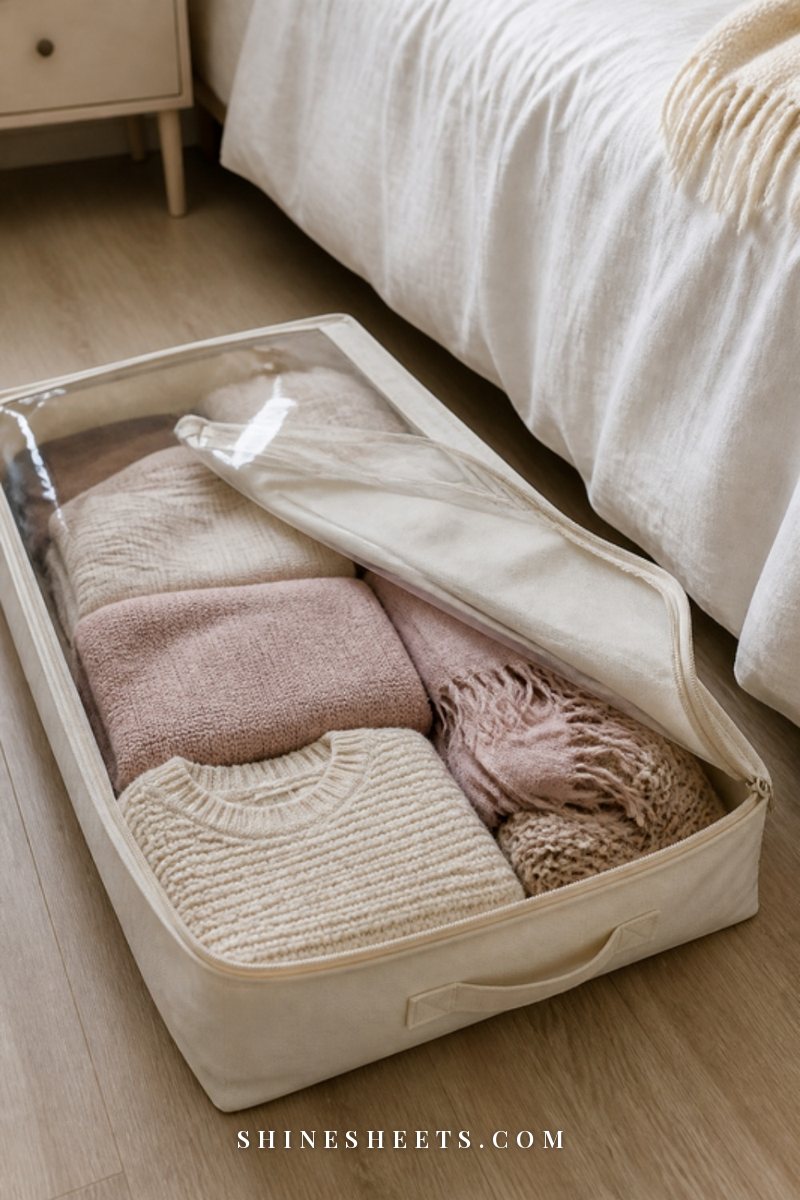
Soft, flat and forgiving, fabric bags are the easiest way to start. They squeeze into tight spaces, have handles for pulling out, and the zip keeps dust off your clothes. Look for under bed storage bags with a clear window on top so you can see what's inside without unzipping, and reinforced handles on both ends. They're perfect for sweaters, scarves and spare bedding, and they fold flat when you don't need them.
2. Rolling Under Bed Drawers
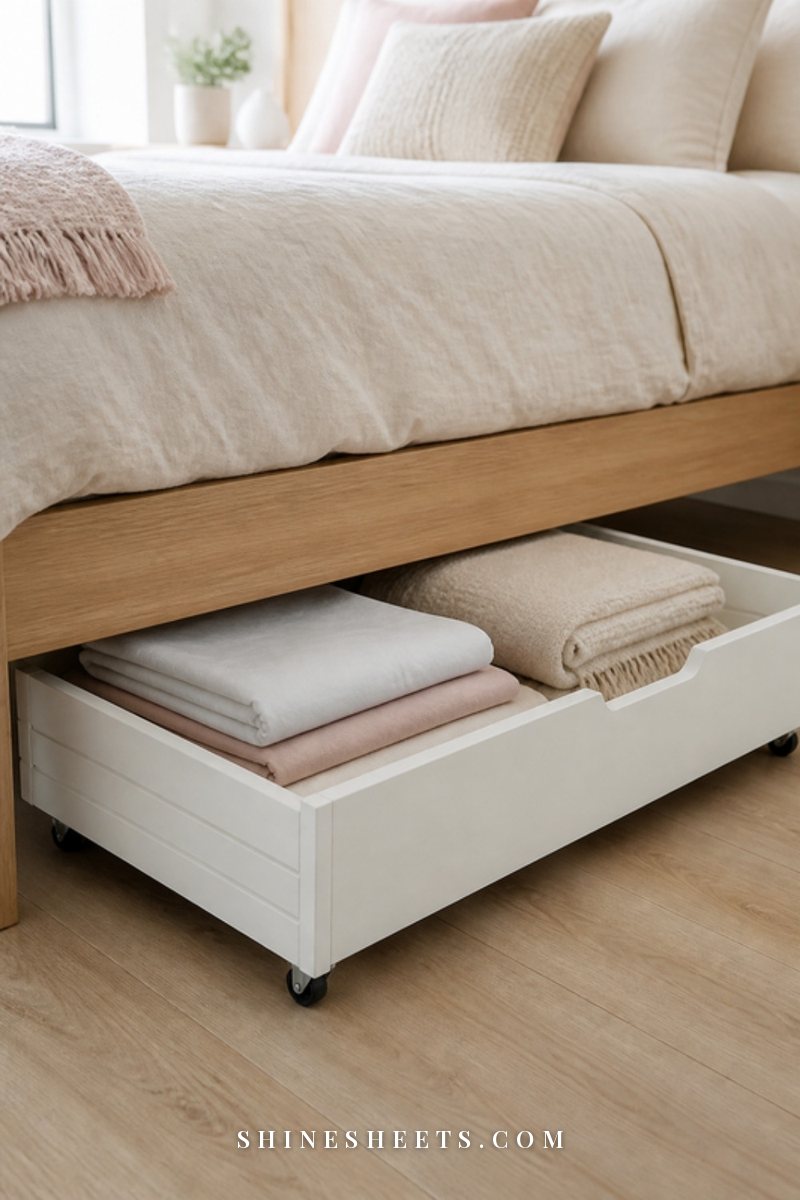
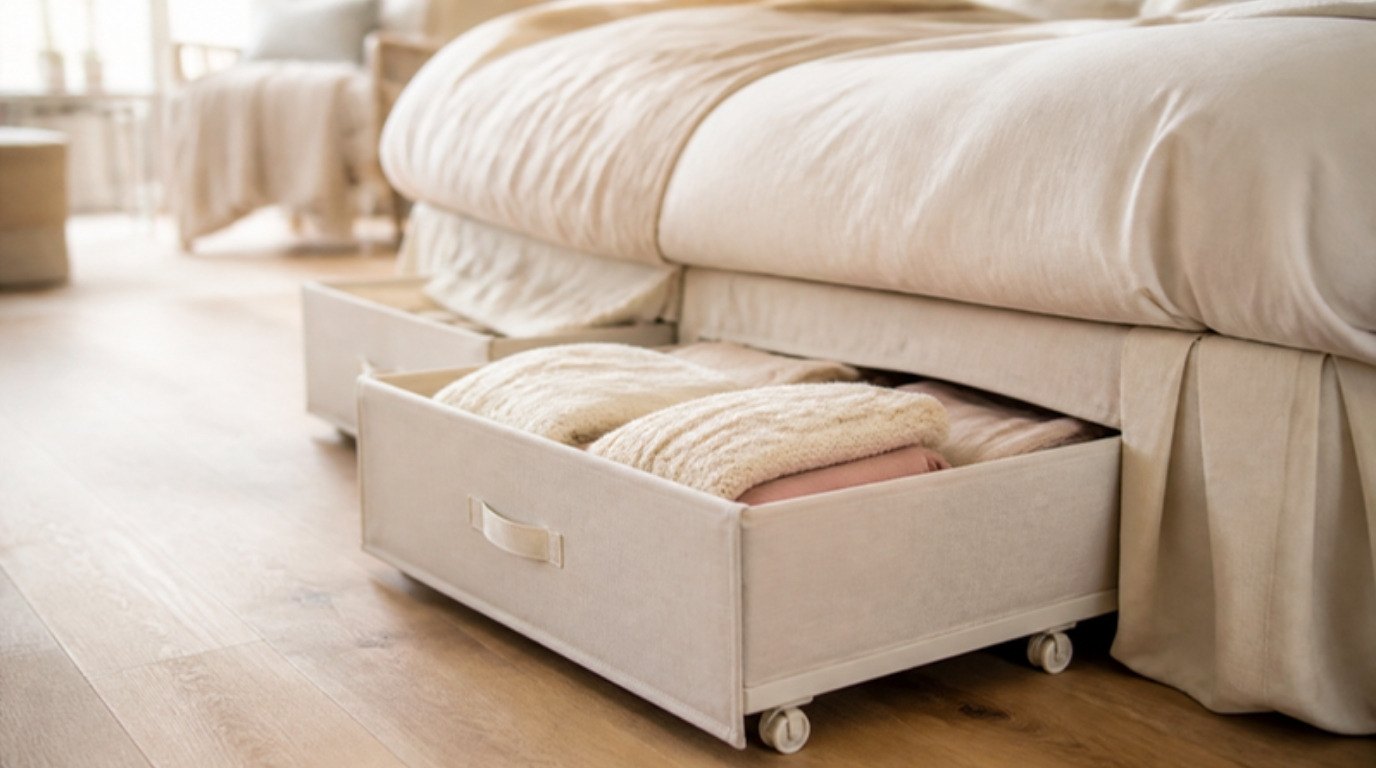
If you'll access something a few times a month, wheels change everything. Rolling under bed drawers glide out with one hand, which means you'll actually put things back. Choose ones with smooth casters that suit your floor (soft wheels for hardwood, bigger wheels for carpet) and a lid or cover if your floors get dusty. They're ideal for extra bedding, gift wrap and seasonal shoes.
3. Clear Lidded Boxes
Low, clear plastic boxes with snap-on lids are the best choice for anything you want to see at a glance: craft supplies, travel bottles, paperwork, kids' clothes in the next size. Look for boxes with latching lids, because they protect against dust and humidity much better than loose lids. Stack two if your clearance allows, but no more, or you'll never pull out the bottom one.
4. Vacuum Storage Bags for Bulky Bedding
Bulky items like duvets, pillows and winter coats take up a lot of room, and vacuum bags shrink them to a fraction of their size. Fill a vacuum storage bag, then use a vacuum cleaner to pull out the air until it's flat. A few tips: only vacuum clean, completely dry items; don't compress down or wool for many months at a time (they can lose loft); and open them every season to let them breathe. They're best for guest bedding and off-season puffers.
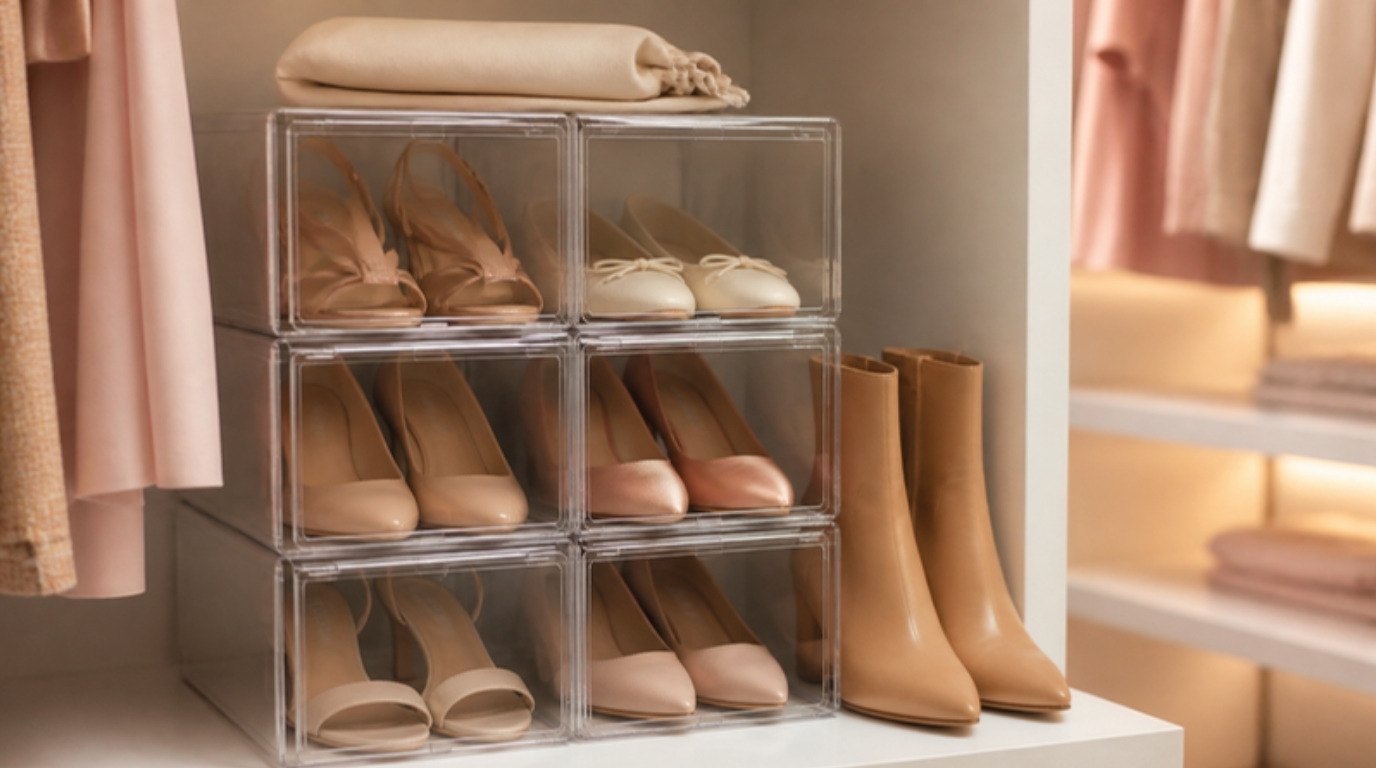
5. An Under Bed Shoe Organizer
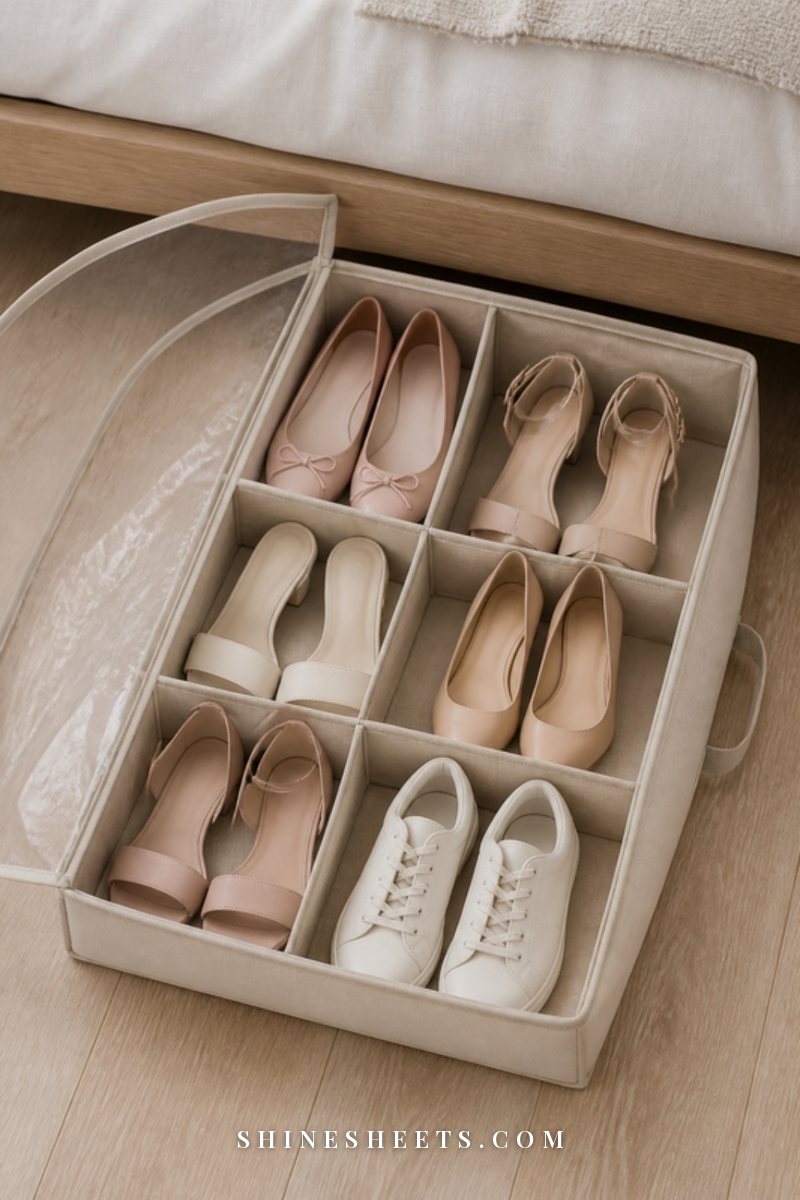
Shoes eat up closet floors fast. An under bed shoe organizer with individual compartments keeps 12 to 16 pairs flat, separated and protected, so heels don't scuff each other and you can see every pair through the clear top. Store them in pairs with the toes facing the same direction, and keep boots in their own taller box. For more ways to tame the shoe pile, my shoe organization ideas cover closets, entryways and small spaces.
6. Raise the Bed With Risers
If your bed is too low for anything useful, lift it. Sturdy bed risers add three to eight inches of height, which can double your storage. Choose risers that cup the bed legs securely and match the leg shape (round or square). Raise all four corners evenly, check that the bed feels stable before sleeping on it, and remember that a higher bed also means a slightly taller step in and out.
7. A Storage Bed With Built-In Drawers
If you're buying a new bed anyway, a frame with built-in drawers or a lift-up base is the tidiest option of all. Drawers suit everyday-adjacent items like spare sheets; lift-up (ottoman) beds swallow huge items like suitcases and duvets. They're an investment, but they replace a whole wardrobe's worth of storage in a small room.
8. Shallow Trays for Very Low Beds
Got only four or five inches? Use shallow, flat trays or wrapping-paper-style boxes. They're perfect for flat items: wrapping paper, art prints, documents, scarves and folded tees. Shallow is actually a feature here, because it stops you from overstuffing and keeps everything easy to find.
9. A Gift Wrap Station
Long, flat under bed space is perfect for gift wrap rolls, which never fit anywhere else. Use one long container for rolls, tape, scissors, ribbon and tags, and a second flat one for tissue paper and gift bags. When a birthday comes up, you slide out one box, wrap, and slide it back. No more hunting for tape on the morning of a party.
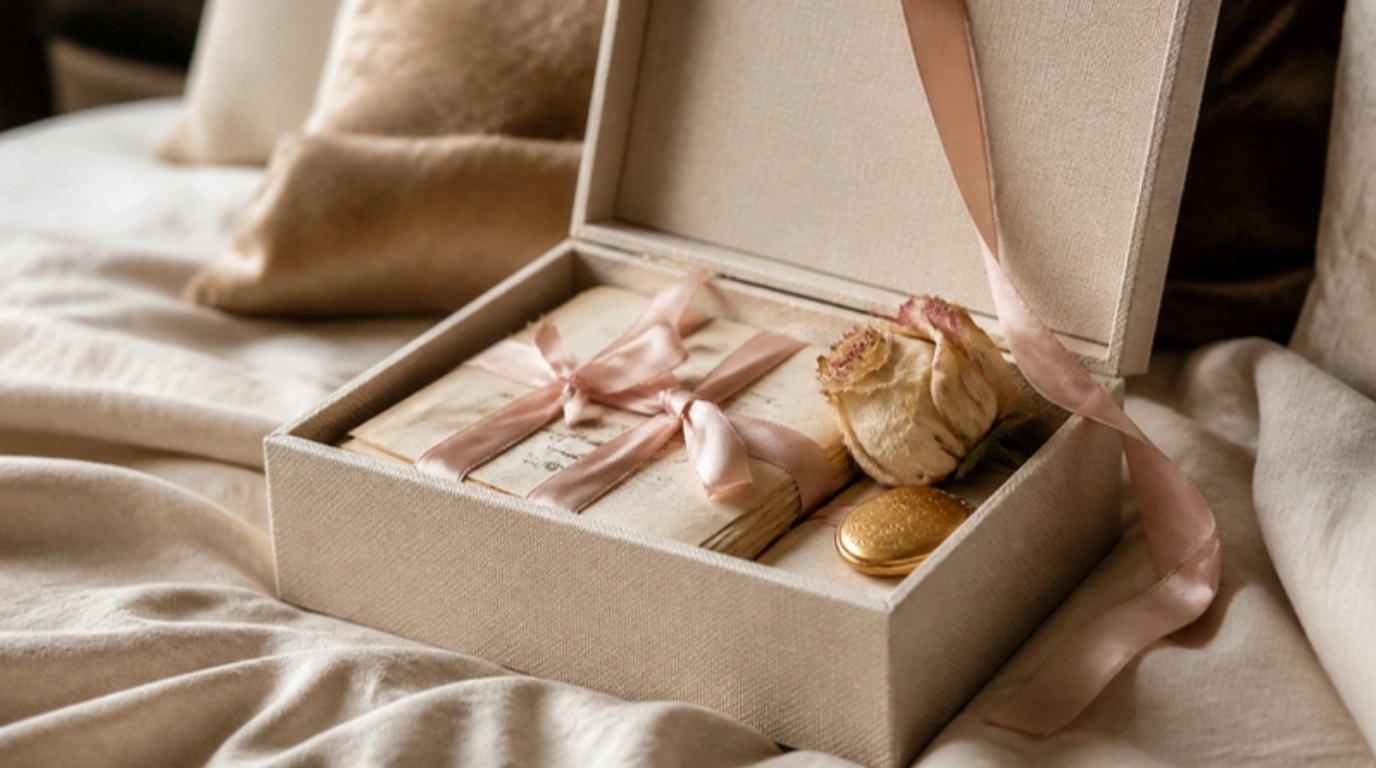
10. A Keepsake Box
Sentimental items deserve a proper home instead of being scattered around. Choose one or two sturdy, lidded boxes and keep letters, cards, photos and small mementos together. Add acid-free tissue paper between layers for photos and delicate items. If the box is overflowing, my guide to decluttering sentimental items helps you keep the meaningful pieces without guilt.
11. A Spare Bedding Kit for Each Bed
Fold one complete sheet set (fitted sheet, flat sheet and pillowcases) inside one of its own matching pillowcases, so the whole set stays together. Store one kit per bed under that bed. Changing sheets becomes a one-minute job, and guests can easily find fresh bedding without asking.
12. Hide It All With a Bed Skirt
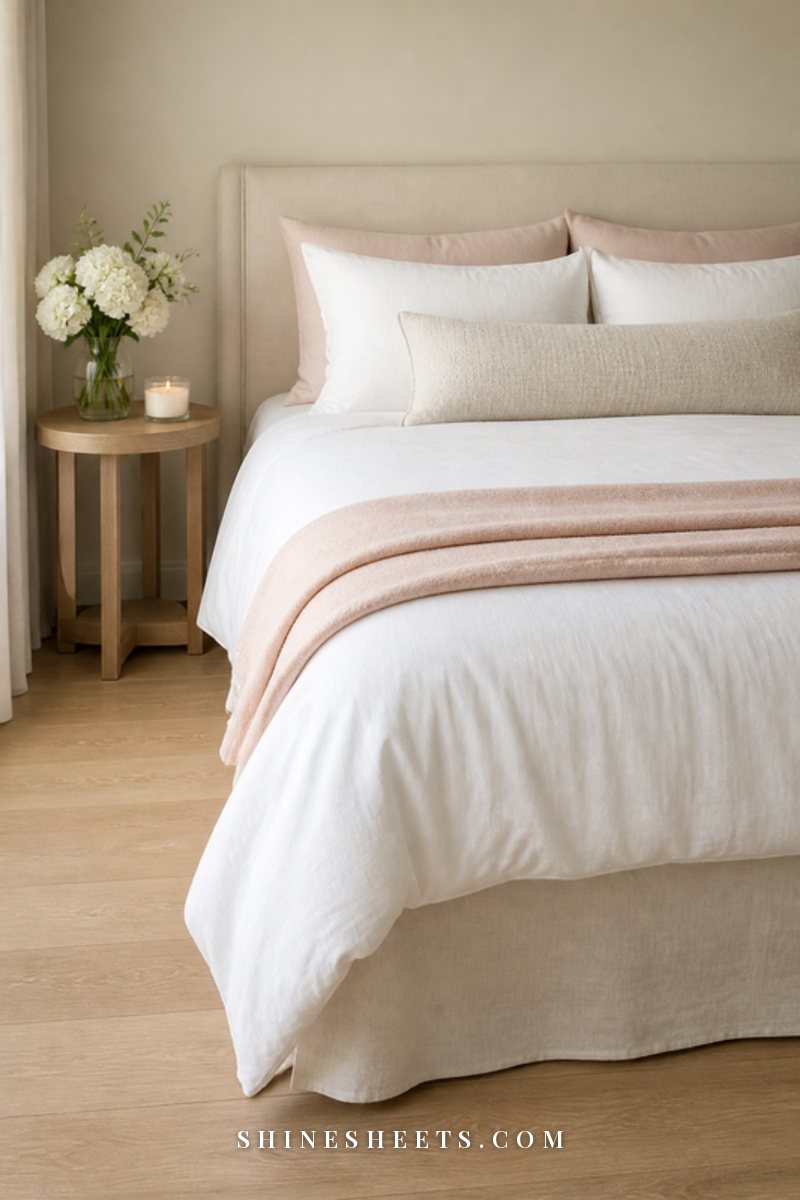
Even the most organized containers look busy when they peek out. A floor-length linen bed skirt hides everything and makes the bed look polished and hotel-like. Bonus: it also reduces how much dust settles on your containers. Choose a drop length that just skims the floor, measured from the top of your box spring or platform.
13. Woven Baskets for Open-Frame Beds
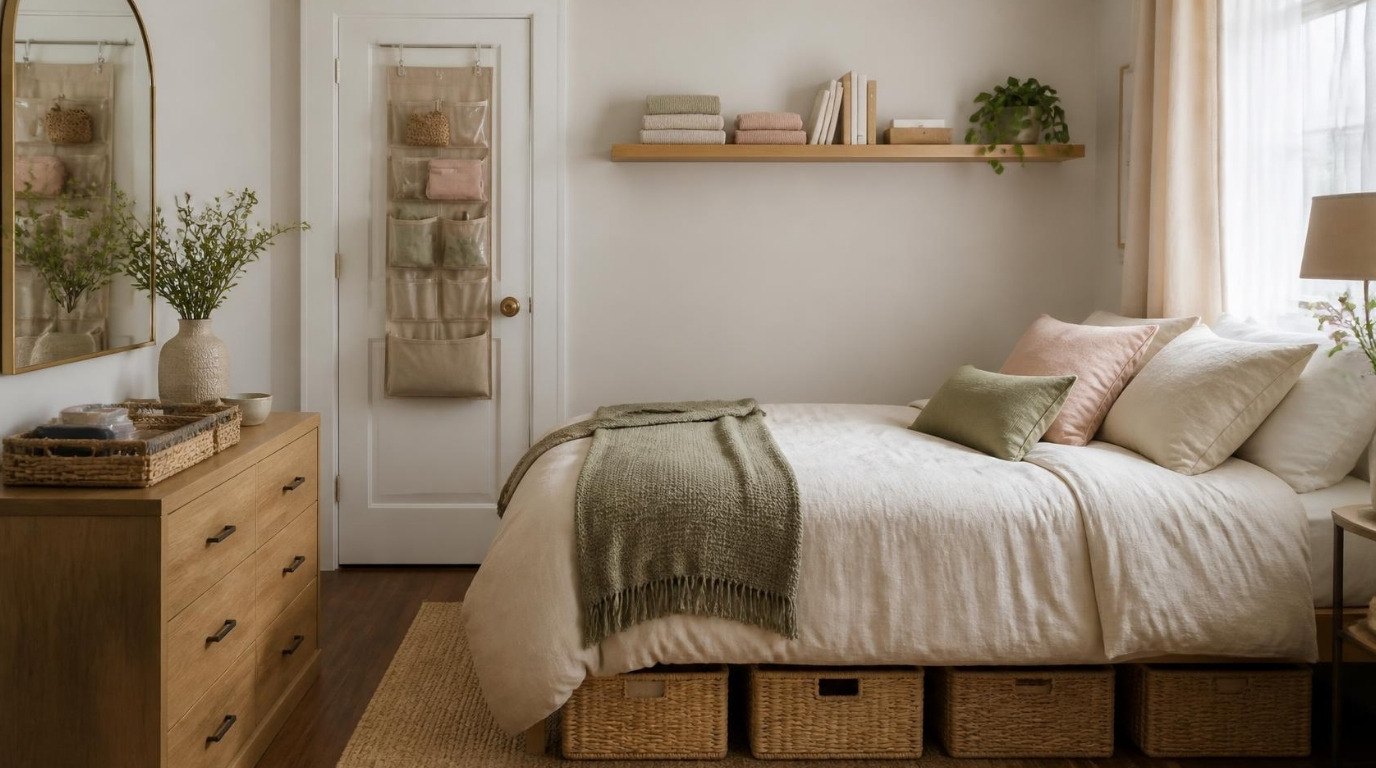
If your bed is high and you love the look of an open frame, use storage that's pretty enough to be seen. Low woven or seagrass baskets in natural or cream tones look intentional and soften the room. Keep them for things you don't mind showing (throws, extra pillows) and line them with fabric to protect delicate items from snags.
14. Labels on the Visible Side
Label every container on the short end that faces you, not on the lid. Simple labels like "summer clothes," "guest bedding" or "gift wrap" save you from pulling out every box to find one thing. For extra calm, write a quick list of contents on a card and tape it inside the lid.
15. Zone It: Left, Right and Foot
Give each part of the space a job. The side you sleep on holds the things you reach for more often (extra blankets in winter, shoes); the other side holds seasonal clothes; the foot of the bed holds the longest items like gift wrap or a flat suitcase. When everything has a zone, putting things back becomes automatic.
What To Store Where
Here's a simple overview matching common items to the best container and how often you'll realistically reach for them. Screenshot it before you shop.
| Item | Best container | How often you'll access it |
|---|---|---|
| Off-season clothes | Zippered fabric bags with a window | Twice a year (season swap) |
| Duvets, pillows, puffer coats | Vacuum storage bags | Once or twice a year |
| Spare sheet sets | Rolling drawer or fabric bag | Every week or two |
| Shoes you don't wear daily | Under bed shoe organizer | A few times a month |
| Gift wrap, ribbon, tape | Long, flat lidded box | Monthly |
| Keepsakes and photos | Sturdy lidded box with tissue paper | A few times a year |
| Papers and documents | Clear latching box with folders | Every few months |
| Travel bags and packing cubes | Flat suitcase or lift-up storage bed | A few times a year |
| Extra throws and blankets | Woven basket or fabric bag | Weekly in cold months |
The pattern is simple: the more often you need it, the easier it should be to pull out. Wheels and handles for frequent items, vacuum bags and sealed boxes for the once-a-year things.
How To Keep Dust Out
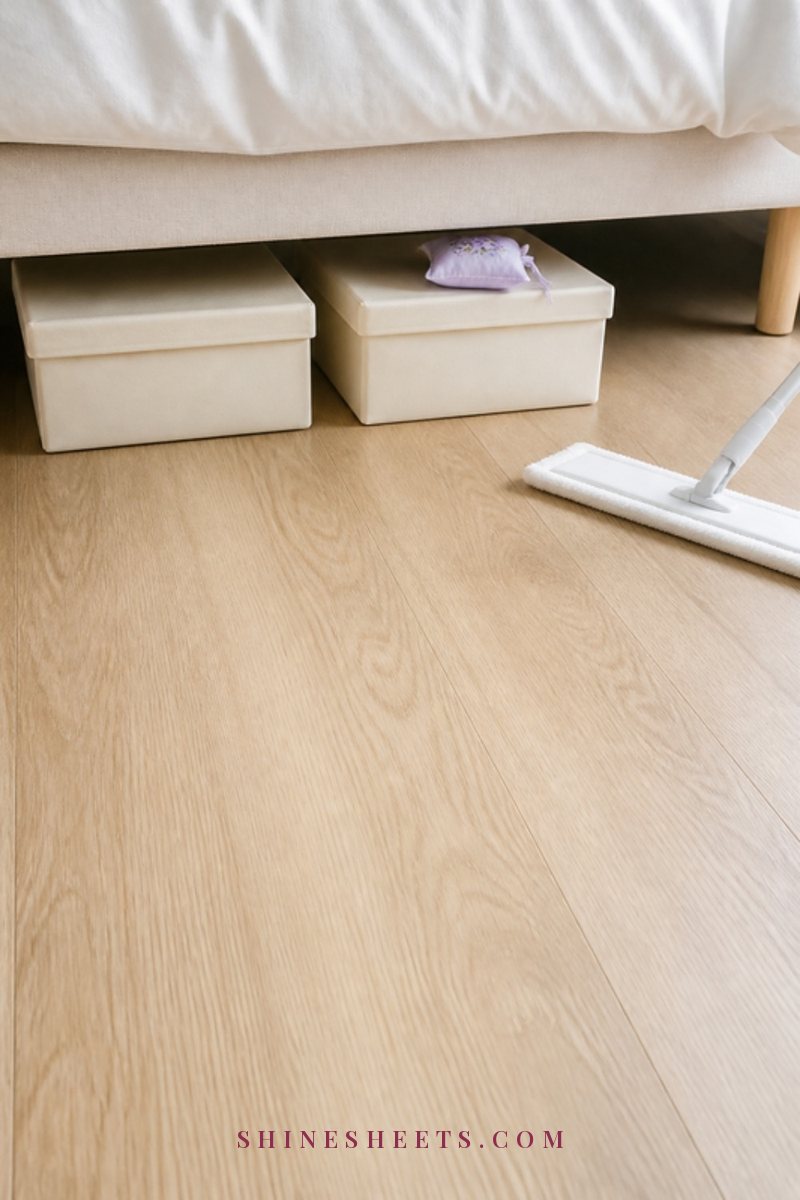
Dust is the biggest downside of under bed storage, but a few habits keep it under control:
- Always use closed containers. Zips, lids and latches keep dust off your things.
- Leave a little gap. Don't pack the space wall to wall. A few inches between containers lets you vacuum around them.
- Pull everything out once a month. Slide containers out, vacuum or dry-mop the floor, wipe the tops of boxes and slide them back. It takes about ten minutes.
- Use a bed skirt to shield the space from settling dust.
- Wash containers and fabric bags once or twice a year, following their care labels.
- Keep clothes clean before storing. Stored stains and body oils attract moths and set over time.
A small safety note: if you or anyone at home has dust allergies, closed containers and regular vacuuming make a real difference. My guide on how to reduce dust has more habits for keeping the whole bedroom fresher.
Adding a cedar block or a lavender sachet to clothing storage helps keep it smelling fresh. Just keep them from touching delicate fabrics directly.
How To Pack Clothes for Under Bed Storage
Clothes stored for months come out fresh only if they go in the right way. This short routine takes about half an hour per bag and protects your favorite pieces:
- Wash or dry clean everything first. Even clothes that look clean carry body oils and invisible spots that yellow over time and attract moths.
- Make sure everything is bone dry. Any dampness trapped in a closed bag can lead to musty smells and mildew.
- Fold, don't roll, knits. Fold sweaters loosely along their natural seams. Heavy knits keep their shape better folded than rolled.
- Put the heaviest items at the bottom and lighter, delicate pieces on top so nothing gets crushed.
- Add tissue paper between delicate fabrics like silk, satin and embellished pieces to prevent creasing and snags.
- Tuck in a cedar block or lavender sachet, wrapped in a little cotton so it doesn't touch fabric directly.
- Label the bag on the short end with the season and category, like "winter knits" or "summer dresses."
When you unpack, give stored clothes an hour or two hanging in fresh air (or a quick tumble on a cool setting) to relax any creases before you wear them.
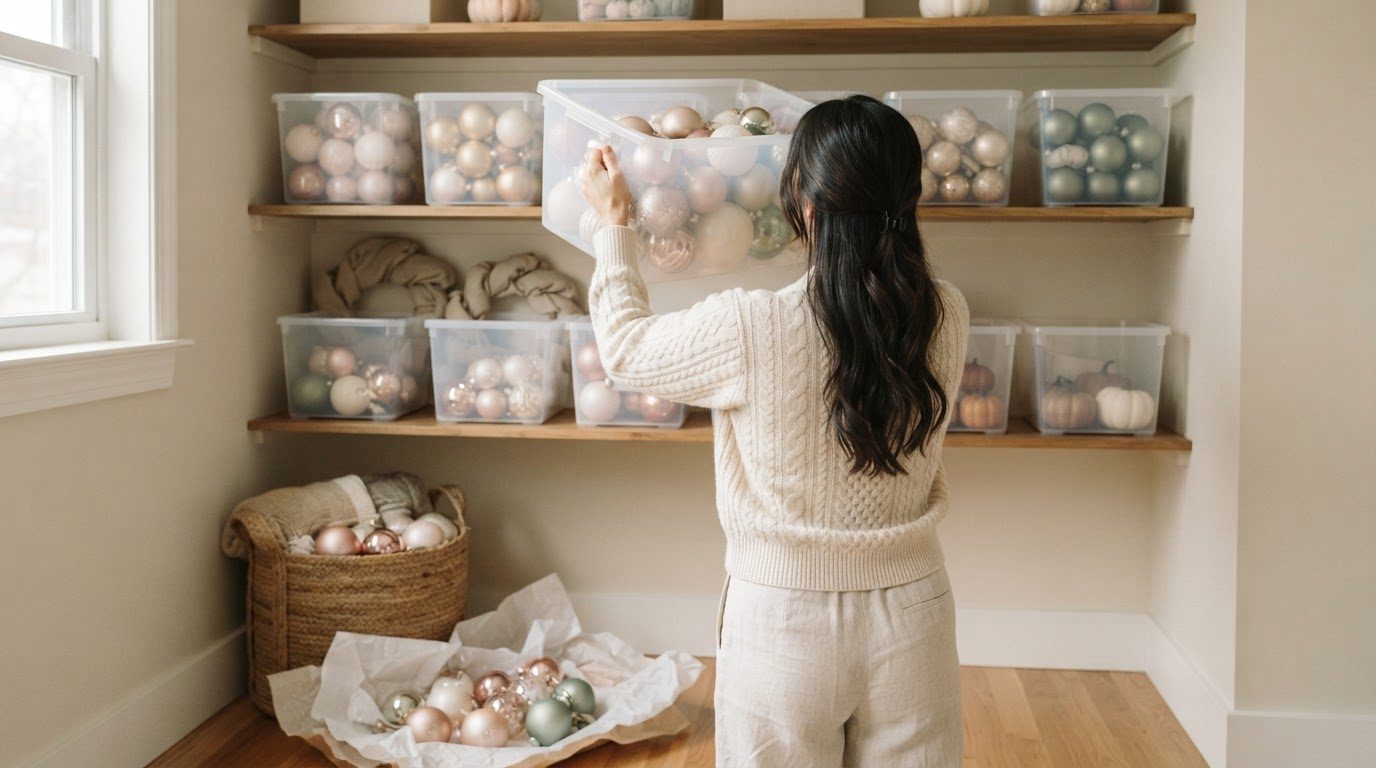
A Simple Twice-a-Year Season Swap
Under bed storage really comes into its own when you pair it with a season swap. Twice a year, usually when the weather turns in spring and fall, set aside one afternoon:
- Pull out the stored bags and lay the contents on the bed.
- Try on anything you're unsure about. If it doesn't fit, doesn't suit you or you didn't miss it, let it go.
- Move the incoming season into your closet and drawers.
- Wash and pack the outgoing season using the routine above.
- Vacuum under the bed while it's empty, then slide everything back in its zone.
It's one of the most satisfying afternoons of the year. Your closet only holds what you can actually wear right now, which makes getting dressed faster and calmer every single morning.
Under Bed Storage Mistakes To Avoid
A few common slip-ups can undo all your good intentions. Watch for these five:
- Buying containers before measuring. Bins that are half an inch too tall are the most frustrating purchase in home organization.
- Overfilling the space. Packing it wall to wall makes cleaning impossible and pulling anything out a struggle.
- Storing everyday items. If you're dragging out a box every morning, it's in the wrong place.
- Using open boxes. Without lids, everything is coated in dust within weeks.
- Forgetting what's there. Unlabeled boxes lead to buying duplicates of things you already own.
Under Bed Storage Tips for Small Bedrooms
In a small bedroom, under bed space isn't extra storage, it's essential storage. A few ways to make the most of it:
- Declutter first, store second. Don't buy containers for things you don't love. A quick edit of your clothes makes everything else easier, and my wardrobe decluttering method walks you through it calmly.
- Match your containers. Two or three matching bins look calm, even when glimpsed. A mix of random boxes looks like clutter.
- Go light and neutral. Cream, beige and white containers blend into the room instead of shouting.
- Keep the area right beside the bed clear. A free floor around the bed makes even a small room feel more open.
- Do a season swap twice a year. Swap summer and winter clothes between the closet and under the bed, and edit as you go.
How To Make Under Bed Storage Look Pretty
Storage you can glimpse should add to the room, not distract from it. A few small styling choices make a big difference:
- Stick to one material per bed. All fabric, all woven or all white wood. Mixing materials under one bed looks messy, even when it isn't.
- Pick colors from your bedding. Cream containers under cream linens disappear; a soft blush or sage bag can echo a throw or a pillow.
- Line up the fronts. Push every container in to the same depth so the edges form one neat line.
- Use matching labels. Simple handwritten tags tied with ribbon, or plain cream labels, look calm and intentional.
- Let the bed skirt or duvet do the rest. A generous drop hides the practical side and keeps the room feeling restful.
Final Thoughts
Under bed storage works best when it's simple: occasional things only, closed containers that fit your clearance, labels on the front and a quick dust-out once a month. Get those right, and the space under your bed quietly carries a surprising amount of your life.
Start with one container and one category, maybe spare bedding or summer clothes, and enjoy how much lighter your closet and your bedroom feel. A calm room really can start underneath it.