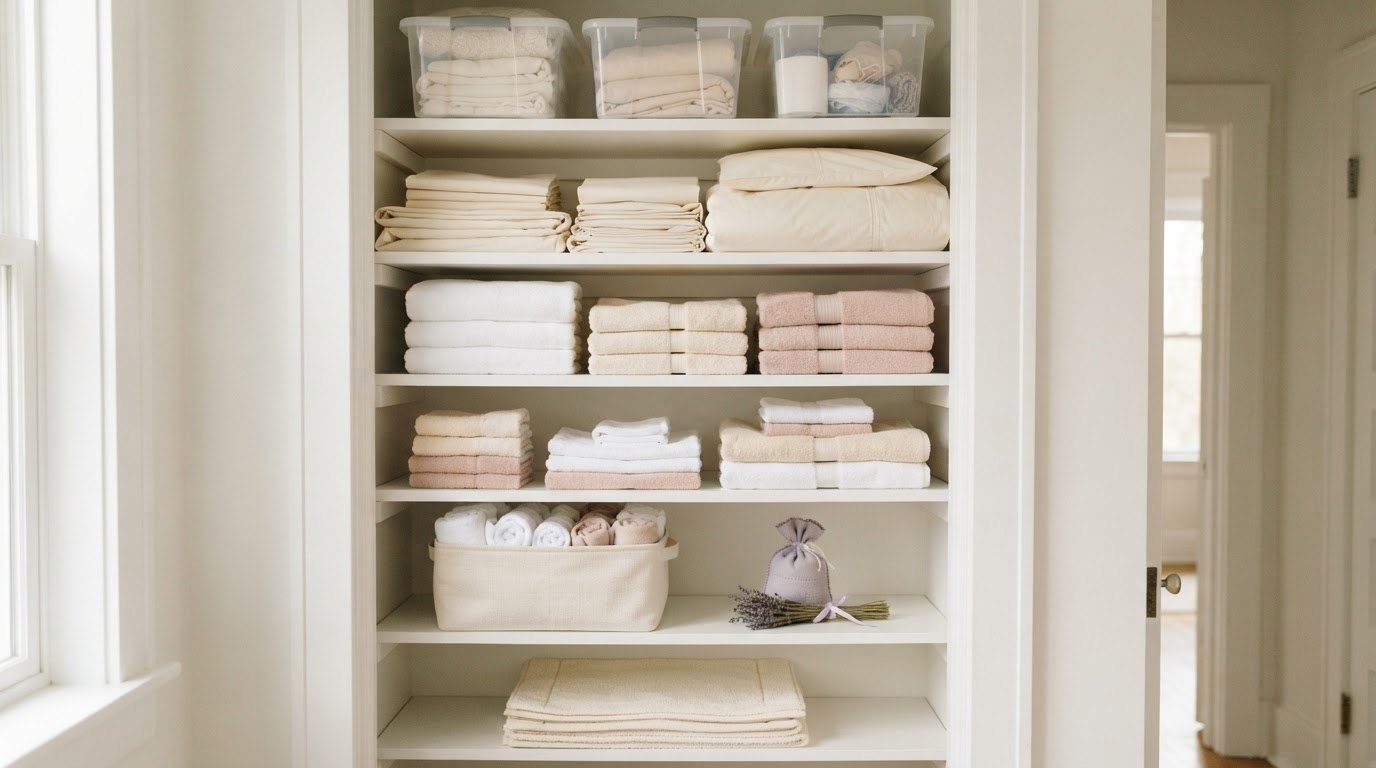
A winter entryway gets messy for one simple reason: cold-weather gear has more pieces than any other season. One trip outside can mean a coat, a hat, a scarf, gloves, boots and maybe a wet umbrella, and every single piece needs a place to land the second you walk in. When it doesn't have one, it ends up on a chair, a stair or the floor.
The fix isn't a bigger closet. It's a small system that matches how you actually come and go: the right hooks at the right height, one tray for wet boots, one basket per type of accessory, and a short list of what lives elsewhere until next winter.
This guide shows you how to organize winter coats, hats and boots in any home, from a roomy mudroom to a studio with a front door that opens straight into the living room. You'll find a quick coat edit, entryway zones, small-space ideas, boot care and drying, a wet gear station, guest coats and off-season storage, plus an entryway winter zone table you can screenshot.
I'll admit I'm someone who used to drop my scarf on the nearest surface and then search for it every morning. A few small changes ended that routine for good.
Start With a Quick Coat Edit

Before you buy a single hook, take ten minutes to edit. Every coat you keep needs space, and the easiest storage problem to solve is the one you remove.
Pull out every coat, jacket, hat, scarf and pair of gloves you own and lay them on the bed. Then ask three quick questions about each piece:
- Does it fit right now? Not "after a good month," but today, with a sweater underneath.
- Did I wear it last winter? If a coat sat untouched through a whole cold season, there's usually a reason (it's scratchy, the sleeves are short, the color never felt like you).
- Is it in good shape? Broken zippers, missing buttons and lining tears either get fixed this week or go.
Donate warm pieces that are still in good condition. Many shelters and coat drives welcome them in late fall, when they're needed most. Lone gloves without a partner can go too (I know, it's hard).
If the coat edit turns into a bigger wardrobe moment, my guide on how to declutter your wardrobe walks you through the rest of the closet without the overwhelm.
Set Up Your Entryway Winter Zones
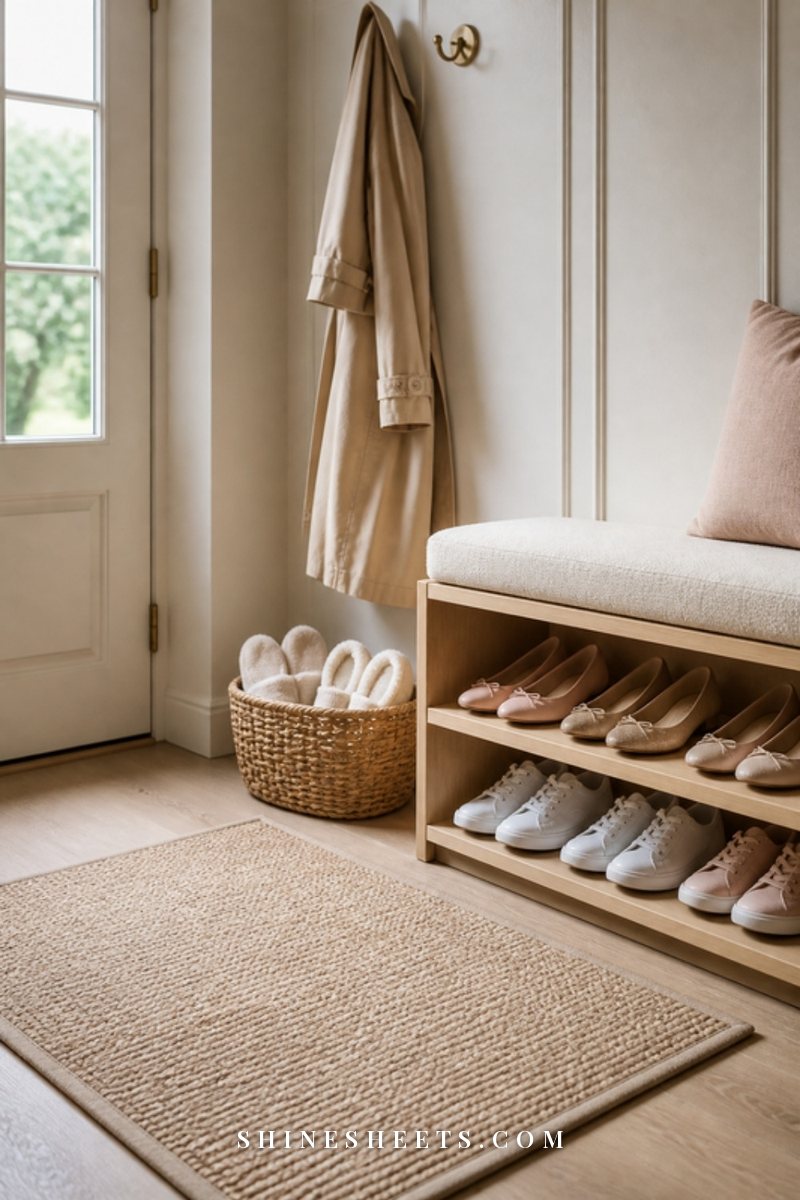
Think of your entryway as four small zones rather than one big space: something to hang, something to sit on, something to hold small items, and something to catch wet boots. Even a narrow hallway can hold all four if each one is compact.
Hooks at Two Heights
Hooks are faster than hangers, and in winter speed wins. Install one row at about 60–65 inches from the floor for long coats, and a second, lower row (or a few single hooks) for bags, scarves and shorter jackets. Space them 6–8 inches apart so coats don't pile on top of each other.
A set of gold wall coat hooks instantly makes a plain hallway feel more polished. Look for hooks with two prongs (one for a coat, one for a bag or scarf), and screw them into studs or use proper wall anchors, because a heavy wool coat is heavier than it looks.
A Bench for Boots On and Off
Sitting down to pull on boots sounds like a small luxury, but it's what keeps people from hopping around and dropping things. Any bench, stool or sturdy ottoman works. If yours has a shelf or open space underneath, that becomes a home for the boots you wear most.
Baskets for Hats, Gloves and Scarves
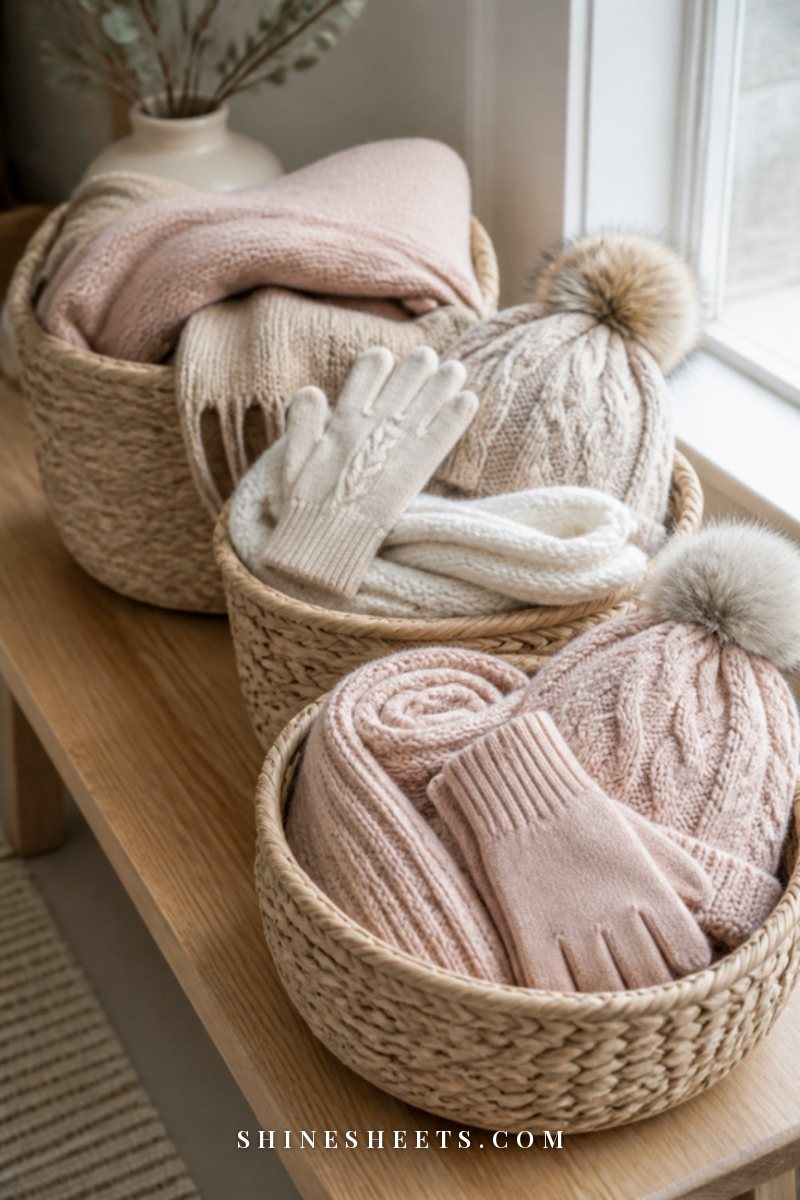
Small accessories are where entryway chaos really starts. Give each category its own basket: one for hats, one for scarves, one for gloves. A set of woven storage baskets in natural or beige tones looks calm and hides a lot of visual clutter. Choose baskets with open tops so you can toss things in with one hand, and with a lining if you store delicate knits.
Keep gloves together by tucking one inside the other, or clip each pair with a small clothespin. It takes two seconds and saves the daily "where's the other one" search.
A Boot Tray by the Door
Snow, salt and slush need somewhere to go that isn't your floor. A waterproof boot tray with a raised edge catches melting snow and keeps it from spreading. Pick one long enough for two or three pairs, and if you want it to look nicer, fill it with smooth river stones so boots sit above the water and dry faster.
Entryway Winter Zone Table
Use this as your map. Match each item to its spot and container, and the entryway almost organizes itself. Screenshot it and check it when things start to drift.
| Item | Where it lives | Container or tool | Daily habit |
|---|---|---|---|
| Everyday coats (1–2 per person) | Upper row of hooks | Two-prong wall hooks | Hang it before you take your boots off |
| Bags and totes | Lower hooks or bench end | Single hooks | Empty receipts and wrappers once a week |
| Hats | Bench or shelf | Open woven basket | Toss in, no folding needed |
| Gloves | Next to hats | Small lined basket | Tuck pairs together |
| Scarves | Shelf or hook | Basket or one scarf hook | Loosely fold, don't knot |
| Wet boots | By the door | Waterproof boot tray | Wipe salt the same evening |
| Dry boots in rotation | Under the bench | Open shelf or rack | Swap with wet pair once dry |
| Umbrellas | Corner by the door | Tall umbrella stand | Open to dry before storing |
| Off-season and spare coats | Bedroom or hall closet | Breathable garment bags | Check once a month |
7 Small-Space Coat Storage Ideas
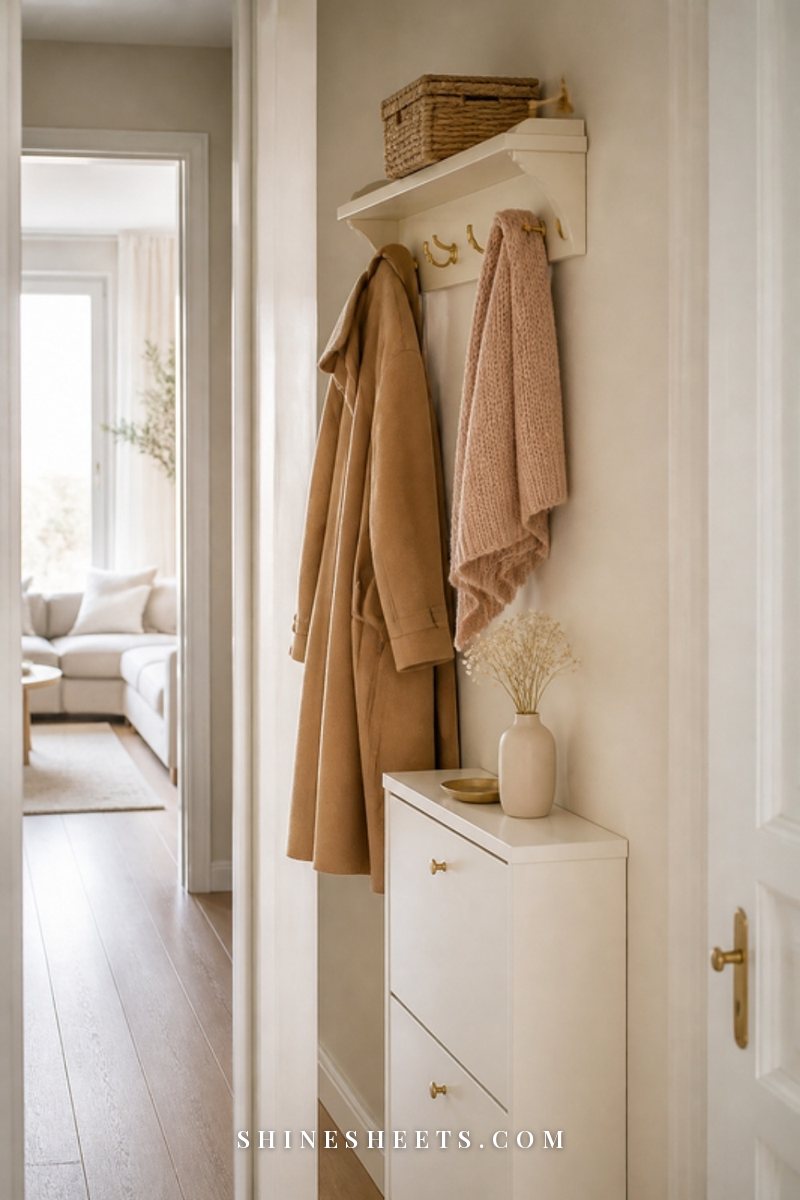
No mudroom? No problem. These ideas work in apartments, studios and homes where the front door opens straight into a room.
- Over-the-door hooks. A rack that hangs over the back of the front door or a closet door adds five or six hooks without a single screw. Felt pads on the back keep the door from scratching.
- A slim wall rack with a shelf. Hooks below for coats, a narrow shelf above for baskets of hats and gloves. One piece, two jobs, about 4 inches deep.
- A narrow shoe cabinet. The tilt-out kind is often only 7–9 inches deep and holds a surprising number of boots and shoes, with a top surface for keys.
- A freestanding coat stand. Perfect for renters who can't drill. Choose a heavy base so it doesn't tip when it's full on one side.
- A doubled closet rod. If you have a hall closet, a hanging second rod doubles space for shorter jackets below longer coats.
- Vertical boot storage. Tall boots flop over and take up floor space. Hanging them on a boot rack, or standing them on a tiered shelf, keeps them upright.
- A one-in, one-up rule. Only the coat you wore this week stays at the door. Everything else goes back to the bedroom closet, which keeps the entryway light even in a tiny space.
For more ways to make a small front area welcoming and practical, my entryway ideas guide has plenty of renter-friendly looks.
How To Care for and Dry Winter Boots
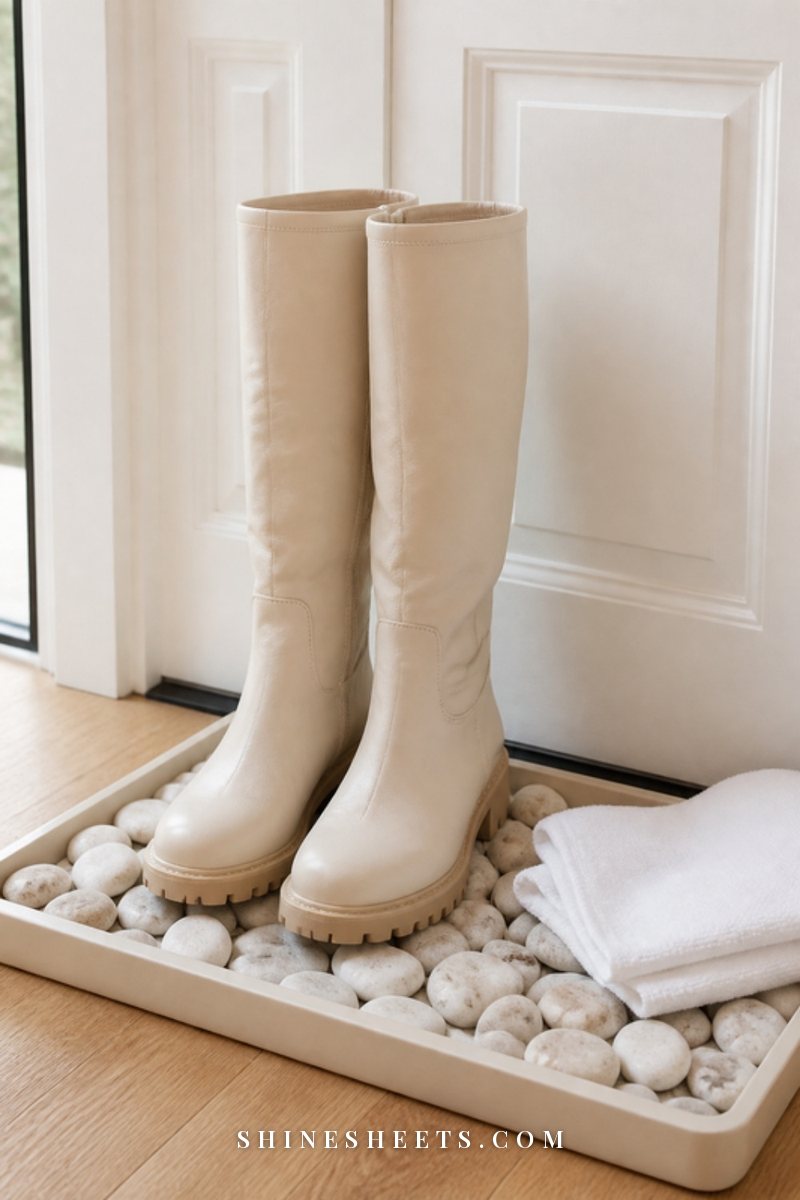
Good winter boots can last many seasons if they're dried and stored properly. Here's the simple routine:
- Wipe salt the same day. Road salt leaves white marks and can dry out leather. Wipe boots with a damp, soft cloth as soon as you're home, then let them dry.
- Dry them at room temperature. Never put boots right next to a radiator, heater or fireplace. Direct heat can crack leather and warp soles. Stuff them loosely with crumpled paper or a cotton towel to pull moisture from inside, and change it after a couple of hours.
- Keep their shape. Boot shaper inserts keep tall boots standing upright and stop the shafts from creasing and slumping. Choose a height that matches your boots so the top doesn't fold.
- Rotate pairs. If you can, don't wear the same pair two days in a row in wet weather. A full day to dry makes a real difference to how they look and smell.
- Protect leather and suede. Use a protector made for the material, following the label, and test on a small hidden spot first.
Once winter boots are dry and off the floor, my shoe organization guide helps you fit them in with everything else you own.
Create a Wet Gear Drying Station
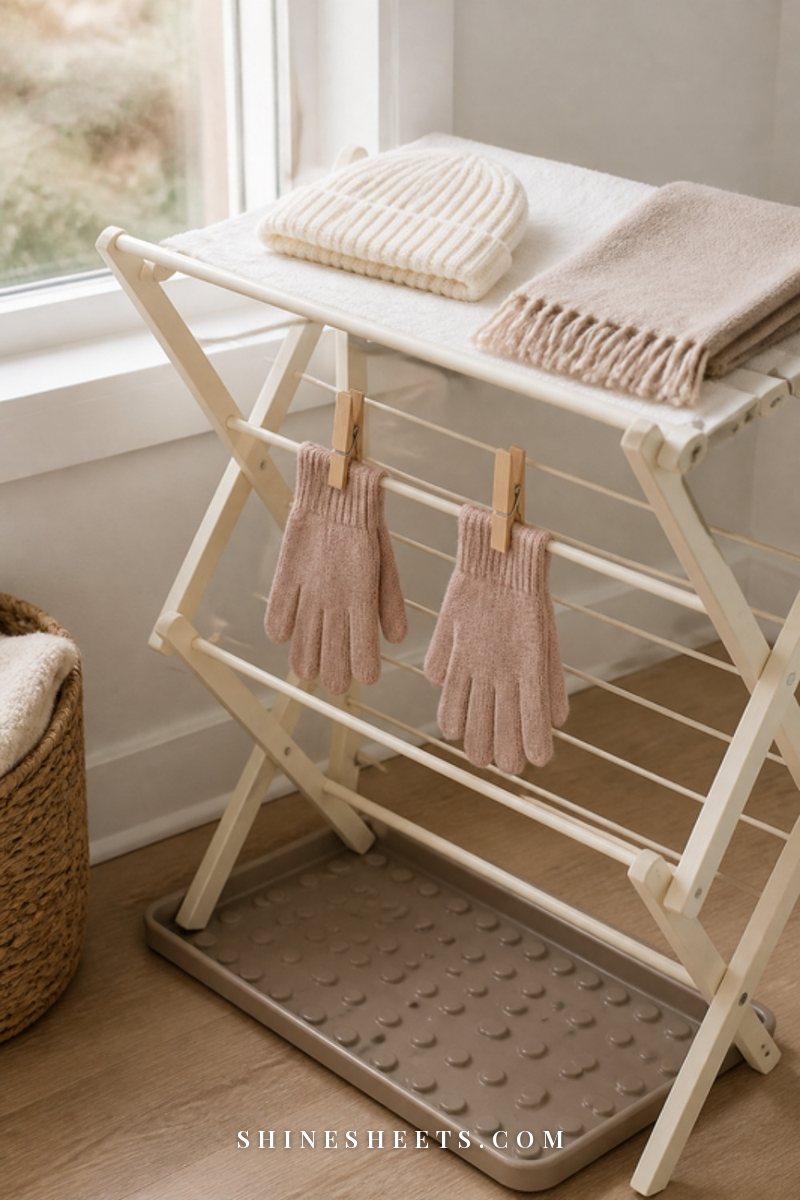
Wet gloves stuffed into a basket stay wet until the next morning, and then they smell. A small drying station keeps damp items separate until they're ready to be put away.
You don't need much: a small folding drying rack, a few clothespins and a spot near (but not on) a heat source. A laundry room, bathroom or corner of the hallway with good airflow works well. Here's how to set it up:
- Choose a spot with airflow. Near a vent or an open doorway, a few feet from a radiator.
- Lay knits flat. Wool hats and scarves can stretch when hung wet. Lay them flat on a towel on the top of the rack.
- Clip gloves fingers-up. Clothespins on the cuffs let air reach inside.
- Put the boot tray underneath. Drips land in the tray, not on the floor.
- Move dry items back the same evening. A drying station that becomes permanent storage is just a new pile.
Cashmere and fine wool need a little extra gentleness when they're wet. My guide on how to care for cashmere covers washing, drying and de-pilling in detail.
Make Room for Guest Coats
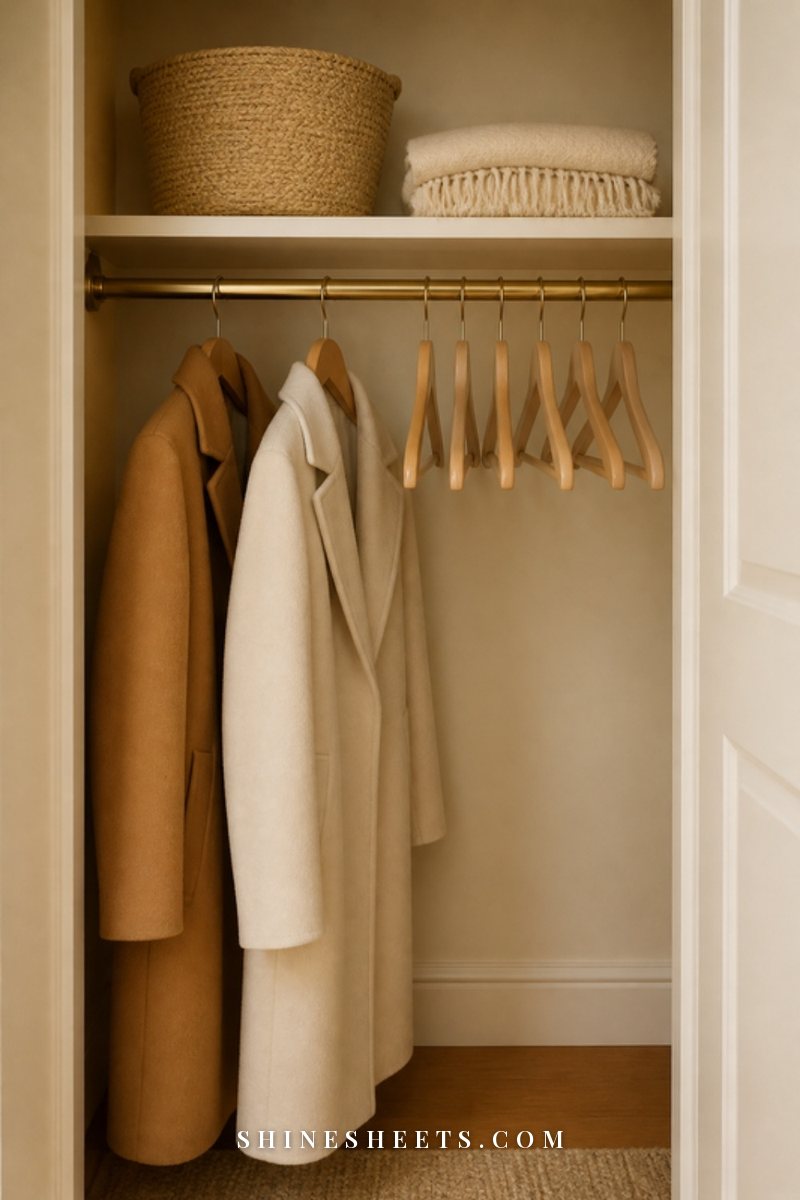
Winter gatherings come with an extra challenge: suddenly there are eight coats instead of two. A little planning means guests aren't left holding their things or piling them on your bed.
- Keep five or six empty hangers in the hall closet all season. Matching wooden or velvet hangers look tidy and make guests feel expected.
- Clear one hook row before people arrive by moving your own coats to the bedroom closet.
- Set out a basket for hats, gloves and scarves, so nothing gets lost under coats.
- Add an extra mat or tray by the door if guests will be taking off boots.
- Use the bed as a backup, with a clean throw blanket laid over it first, if the closet overflows.
Handbags often end up in the same pile. A couple of extra hooks or a cleared shelf helps, and my purse storage ideas keep your own bags out of the way when the hallway is busy.
Off-Season Storage for Winter Coats
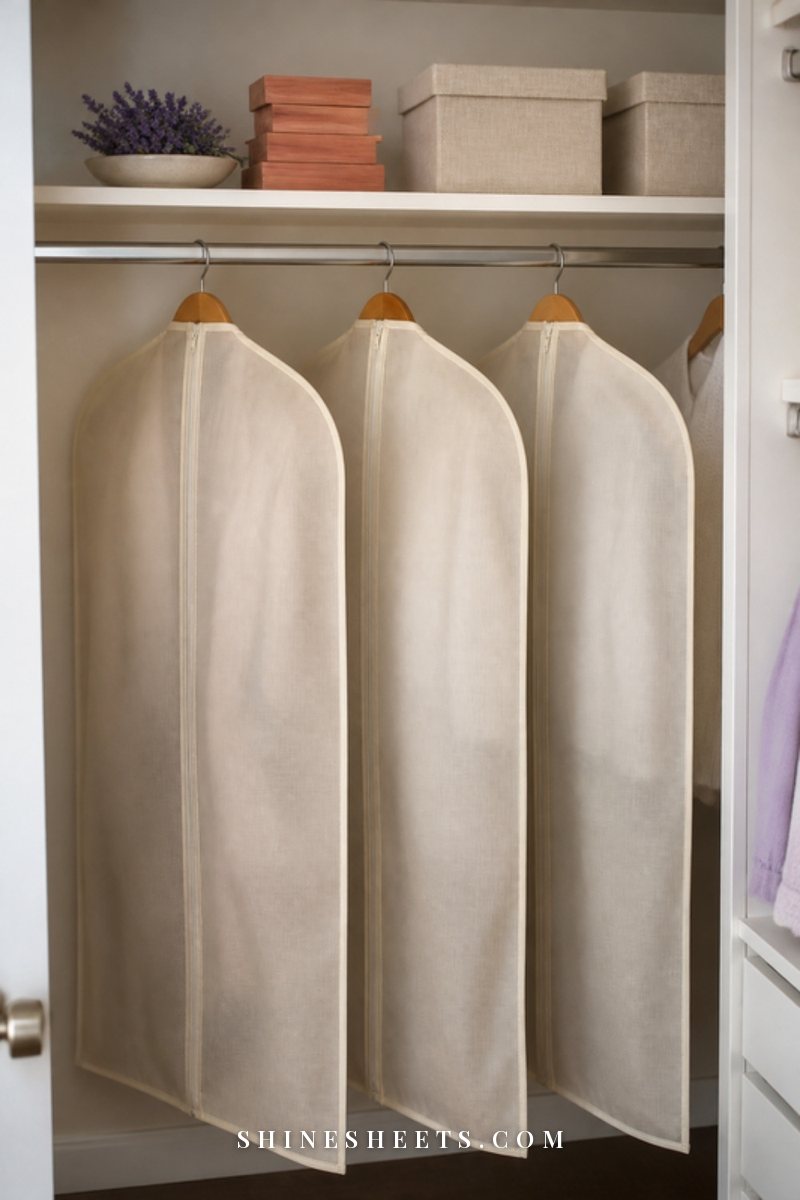
When spring finally arrives, how you put winter gear away decides how it looks next November. Stored badly, coats come out creased, musty or with tiny holes. Stored well, they come out ready to wear.
Clean Everything First
Never store a coat you've worn without cleaning it. Invisible traces of skin oils, perfume and food can attract moths and set into stains over months. Wash or dry-clean according to the care label, and make sure everything is completely dry before it goes away.
Use Breathable Bags
Plastic dry-cleaner bags trap moisture and can cause yellowing. Breathable cotton or non-woven garment bags protect coats from dust while letting them breathe. Look for full-length bags for long coats and a clear window or soft color so you can see what's inside without unzipping.
Add Cedar
Cedar has a natural scent that many people use to help discourage moths. A few cedar blocks or rings on hangers and shelves are an easy, chemical-free extra step. Lightly sand them each season to refresh the scent. Cedar helps, but clean clothes and a regular check are still the real protection.
Fold Knits, Hang Coats
Heavy coats hang on wide, shaped hangers that support the shoulders. Sweaters, scarves and knit hats fold into lidded boxes or bins, because hanging them stretches them out. Boots get cleaned, conditioned if leather, stuffed with paper and stored in their boxes or on a shelf.
Store Somewhere Cool and Dry
Basements and attics often swing between hot, cold and damp. A bedroom closet, the top of a wardrobe or under the bed is usually kinder to wool and leather. Check stored pieces once a month or so, just a quick peek, especially if you've had moths before.
Protect Your Floors From Snow and Salt
An organized entryway still struggles if every pair of boots carries half the sidewalk inside. A few small habits keep floors cleaner all winter:
- Use two mats. A rough, scraping mat outside the door catches snow and grit, and a soft, absorbent mat inside catches what's left. Together they stop most of the mess before it reaches your floors.
- Make boots-off the rule. Even for a "quick second." A small sign isn't needed. Simply placing the tray and the bench right by the door makes it the natural thing to do.
- Wipe salt marks daily in winter. Road salt leaves a white film that can dull wood and stone over time. A damp microfiber cloth and warm water usually lift it. For stubborn marks, use a cleaner made for your floor type, following the label, and test a hidden spot first.
- Keep a small cloth basket by the door. Two or three soft cloths in a basket make wiping a boot or a wet paw a five-second job instead of a trip to the kitchen.
- Wash the inside mat every couple of weeks. If it's machine-washable, wash it on a gentle cycle and let it dry flat. A fresh mat makes the whole entry feel cleaner.
How Much Winter Gear Should Live by the Door?
This is the question that quietly decides whether your entryway works. When every coat you own lives on the hooks, nothing is easy to grab and everything looks cluttered. A good rule of thumb for a calm entryway is:
- One or two coats per person: the everyday coat and, if needed, a rain or sporty layer.
- One hat, one scarf and one pair of gloves per person in the baskets, plus a spare pair of gloves for anyone who always forgets theirs.
- Two pairs of boots per person: the pair you're wearing and the pair drying.
- One umbrella per person, or one big shared one.
Everything else, from the dressy wool coat to the spare scarves, lives in a bedroom or hall closet and rotates in when you need it. Think of the entryway as a "this week" space rather than a storage space. That one mindset change does more than any new hook ever could.
A Quick Weekly Entryway Reset
Even a perfect system drifts by Friday. Once a week, take ten minutes to reset it:
- Move any coat that wasn't worn this week back to the bedroom closet.
- Match up stray gloves and put them back in their basket.
- Empty the boot tray, wipe it out and rinse the stones if you use them.
- Shake out the doormat outside.
- Check bags hanging on hooks for anything that should be thrown out.
Put on a song you love while you do it. Ten minutes, and the front door feels welcoming again.
Final Thoughts
Organizing winter coats, hats and boots doesn't need a mudroom or a weekend-long project. It needs a quick edit, a few well-placed hooks, a basket for every little thing and one tray for wet boots.
Start with the zone that annoys you most, whether that's the glove pile or the puddle by the door, and fix only that this week. The rest can follow, one small corner at a time, until coming home on a cold evening feels calm instead of cluttered.