A small bedroom doesn't need more square feet to feel spacious. It needs fewer things competing for your attention, a layout that lets you walk in without squeezing, and light that reaches the corners. When those three things work together, even a tiny room reads as calm, airy and intentionally yours.
Most small bedrooms feel cramped for the same few reasons: the bed is in the "default" spot instead of the best one, storage spreads across every surface, and the only light comes from one harsh ceiling fixture. The good news is that each of those is fixable in an afternoon, often without buying anything big.
This guide gathers 30 small bedroom ideas in five groups of six: layout, storage, light, color and textiles, and the small finishing touches. You'll also find a "bed placement by room shape" table, so you can stop guessing and start with the spot that suits your room.
Pick three ideas to start with. That's usually all it takes to feel the difference.
Bed Placement by Room Shape
The bed is the biggest thing in the room, so where it goes decides how everything else flows. Before moving anything, look at your room's shape and find your row below. If your room fits two rows, choose the one that keeps the main walking path clear.
| Room shape | Where the bed goes | What to do next | Avoid |
|---|---|---|---|
| Long and narrow | Headboard on one short wall, or push one long side against the long wall if the room is very tight | Keep a clear path along one side; use one nightstand and a wall light on the other side | Placing the bed across the middle so it blocks the room in two |
| Square | Centered on the wall facing the door | Two slim nightstands or floating shelves for symmetry; a dresser on a side wall | Tucking the bed in a corner, which can make a square room feel lopsided |
| Sloped ceiling | Headboard under the lowest part of the slope | Use the tall wall for a wardrobe or shelves; keep the headboard low and simple | A tall upholstered headboard that bumps the ceiling line |
| Window on the main wall | Headboard under the window, if the window starts above the headboard height | Hang curtains high and wide so the window becomes a backdrop; add blackout lining for sleep | Blocking the window with a tall headboard or crowding it with furniture |
| Door in the middle of a wall | On the wall opposite the door, slightly off-center if needed | Use a rug under the bed to anchor it; keep the door swing completely clear | Placing the bed so the door opens straight into its side |
Once the bed is in its best spot, everything else in this list gets easier, because you'll know exactly where you have room to work.
Layout Ideas: 6 Ways To Free Up Floor Space
Layout is where the biggest changes happen for the smallest cost, because you're working with what you already own. Before you shop for anything, try these six ideas and live with them for a week.
1. Choose the Right Bed Size, Not the Biggest One
A queen bed in a small room can leave you sidestepping around corners. If you sleep alone, a full bed often gives back 12 inches of walkway on each side, and that space makes a bigger visual difference than you'd expect.
2. Keep a Clear Path From the Door
The first three steps into a room shape how big it feels. Make sure nothing (a chair, a laundry basket, a bag) sits in that first path. Even 30 inches of open floor reads as breathing room.
3. Raise Furniture Off the Floor
Pieces on slim legs let you see the floor underneath, which tricks the eye into reading more space. Swap a heavy, skirted bed frame or a boxy dresser for versions on legs where you can.
4. Use One Large Piece Instead of Three Small Ones
Three little side tables and a stool feel busier than one generous dresser. Fewer, larger pieces with clear space around them look calmer and more intentional.
5. Let the Bed Touch a Wall
If you're the only one sleeping in the bed, pushing one side against the wall can open up a whole extra zone for a reading chair or a small desk. Add a few pillows along the wall side so it feels like a daybed.
6. Skip the Bedroom Desk if You Can
A desk in a small bedroom often becomes a clothes chair and a guilt reminder. If you must work here, use a wall-mounted fold-down desk, or set up somewhere else entirely. My guide to a cozy home office has small-space ideas for that.
Storage Ideas: 6 Ways To Hide the Everyday Clutter
Small bedrooms rarely have too little storage. They usually have storage in the wrong places. The goal here is simple: everything you use daily within reach, everything else hidden away.
7. Use the Space Under the Bed
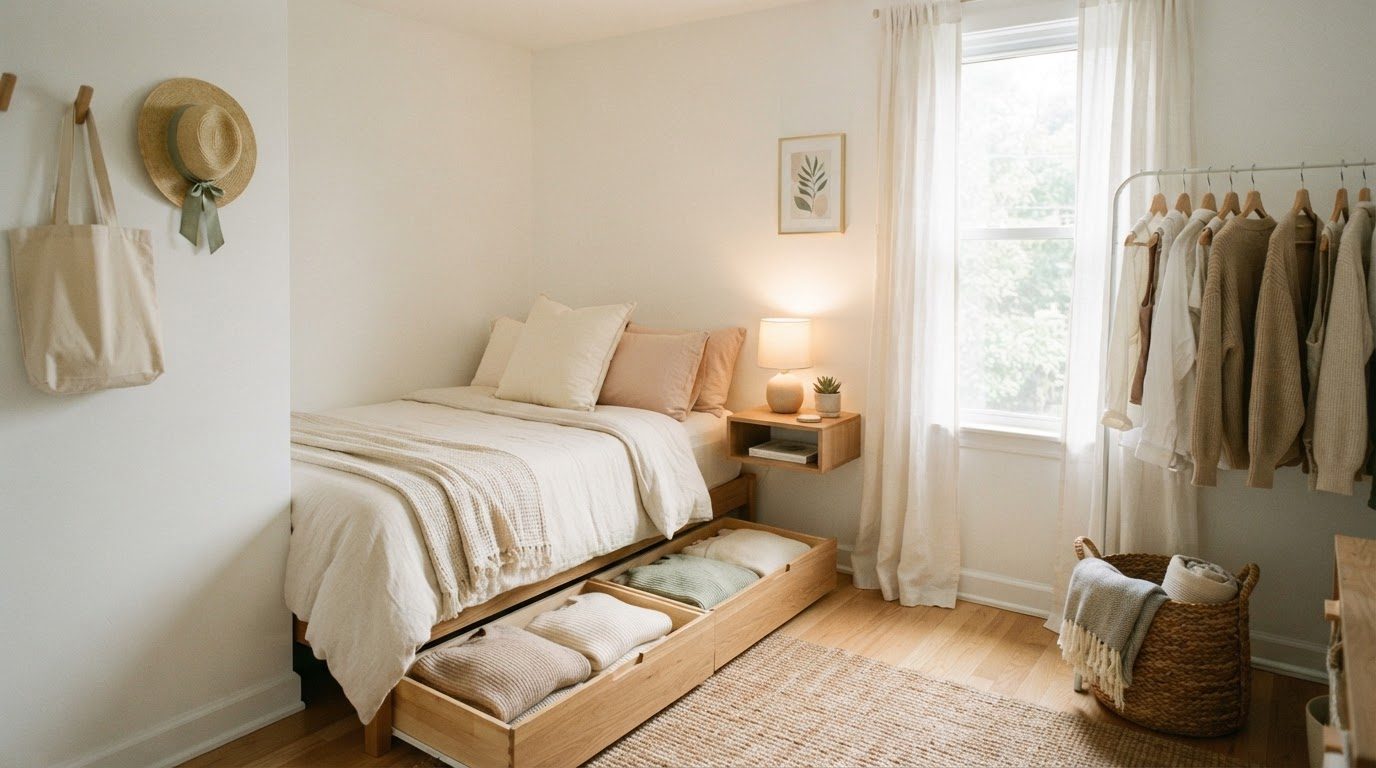
Under-bed space is the most generous storage you have. Lidded beige under-bed storage bins keep out-of-season clothes, spare bedding and shoes dust-free and out of sight. Measure the clearance first; many frames give you 6–12 inches.
8. Go Vertical With Tall, Slim Pieces
A tall, narrow bookcase or dresser draws the eye upward and holds far more than a wide, low one. Keep the top shelf for things you rarely need and the middle shelves for daily items.
9. Float Your Nightstand
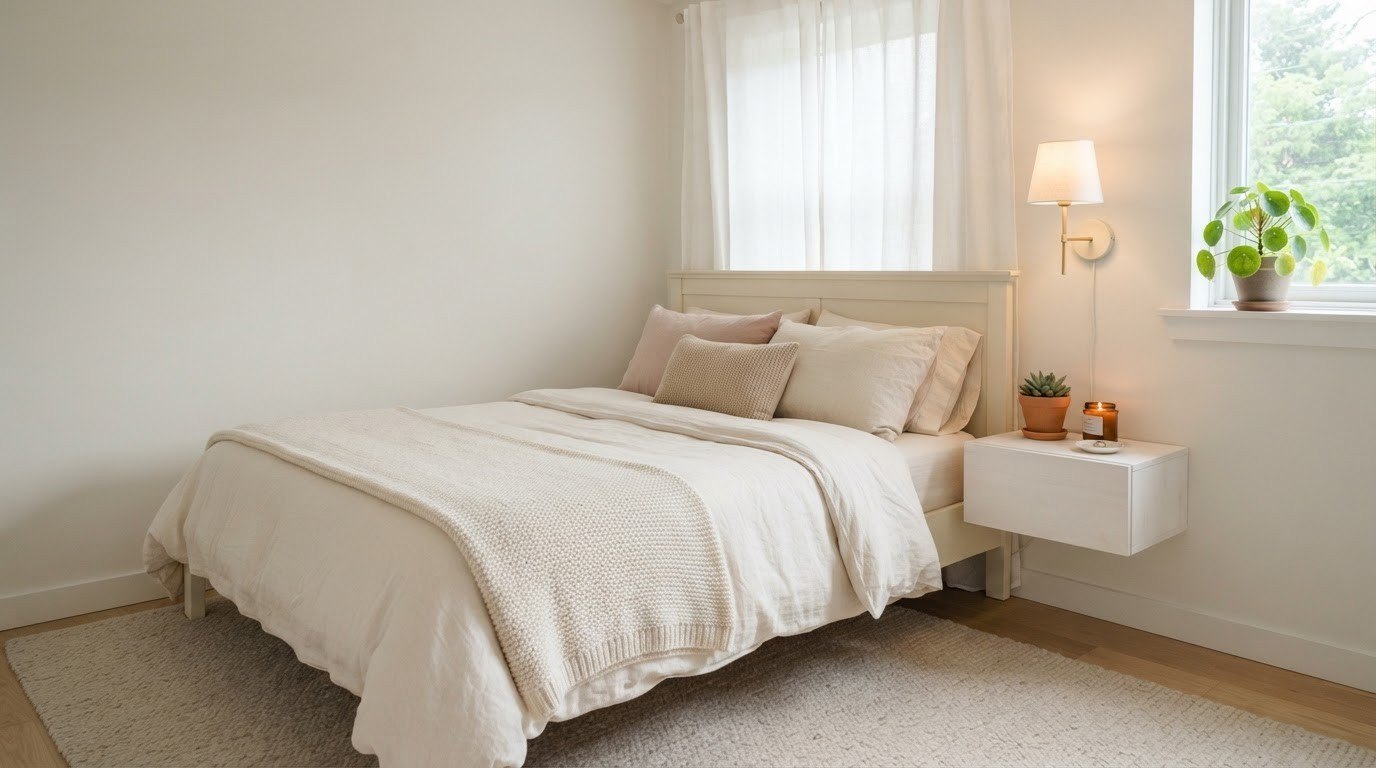
A white floating nightstand mounted at mattress height clears the floor completely, so the room instantly looks wider. Choose one with a small drawer so the lamp cord, lip balm and hand cream have a home.
10. Use the Back of the Door
The back of the bedroom door is wasted space in most homes. A set of over-door hooks holds tomorrow's outfit, a robe and a bag, so they stop landing on the bed or a chair.
11. Choose a Bed With Built-In Storage
If you're buying a new frame, a storage bed with drawers or a lift-up base is one of the smartest small-room purchases you can make. It replaces a dresser without taking up any extra floor.
12. Give Every Surface One Job
Clutter spreads when surfaces have no purpose. Decide that the dresser top is for one tray and one lamp, the nightstand is for sleep things only, and the chair is for sitting. For a deeper storage reset, my guide on easy ways to organize a small bedroom walks you through it step by step.
Light Ideas: 6 Ways To Brighten Every Corner
Light is the quiet secret of rooms that feel bigger than they are. Shadows in the corners make walls feel closer, so the aim is to bring soft light into every part of the room, day and night.
13. Swap Lamps for Wall-Mounted Lights
Bedside lamps take up precious nightstand space. A cream plug-in wall sconce gives you reading light without hardwiring, and it frees the surface below for a book and a glass of water. Mount it about 24 inches above the mattress top.
14. Layer Three Kinds of Light
One ceiling light makes a small room flat. Aim for three sources: overhead for cleaning, a wall or table light for reading, and a soft low light (a small lamp or string lights) for evenings. Layered light makes the corners glow and the walls seem farther away.
15. Hang Curtains High and Wide
Mount the curtain rod close to the ceiling and extend it 8–12 inches past each side of the window. When the curtains are open, the full window shows, and the whole wall feels taller.
16. Choose Sheer Layers for Daytime
Heavy curtains that stay half-closed swallow light. Pair light, sheer white linen curtains for the day with blackout lining or a roller blind behind them for sleep. A double curtain rod makes this easy: sheers on the front rail, blackout on the back.
17. Pick Warm Bulbs
Very cool white bulbs make a small bedroom feel clinical. A warm white (around 2700K) bulb feels softer and more restful, especially in the evening when you're winding down.
18. Use a Mirror Opposite the Window
A large mirror across from a window bounces daylight back into the room and doubles the view. Leaning a tall floor mirror against a wall works just as well as hanging one and avoids extra holes in a rental.
Color and Textile Ideas: 6 Ways To Make It Feel Calmer
Color and fabric decide the mood of a small room. Soft, light shades make walls recede, and a calm palette lets your eye rest instead of jumping from pattern to pattern.
19. Paint the Walls a Soft, Light Shade
Warm white, cream, soft greige or pale blush reflect light and make walls recede. If you love color, choose a muted version (a dusty sage rather than a bright green) so the room still feels restful.
20. Match the Ceiling or Go One Shade Lighter
A bright white ceiling against colored walls creates a hard line that "lowers" the room. Painting the ceiling the same shade (or a slightly lighter one) blurs that edge and makes the room feel taller.
21. Keep Bedding in One Calm Palette
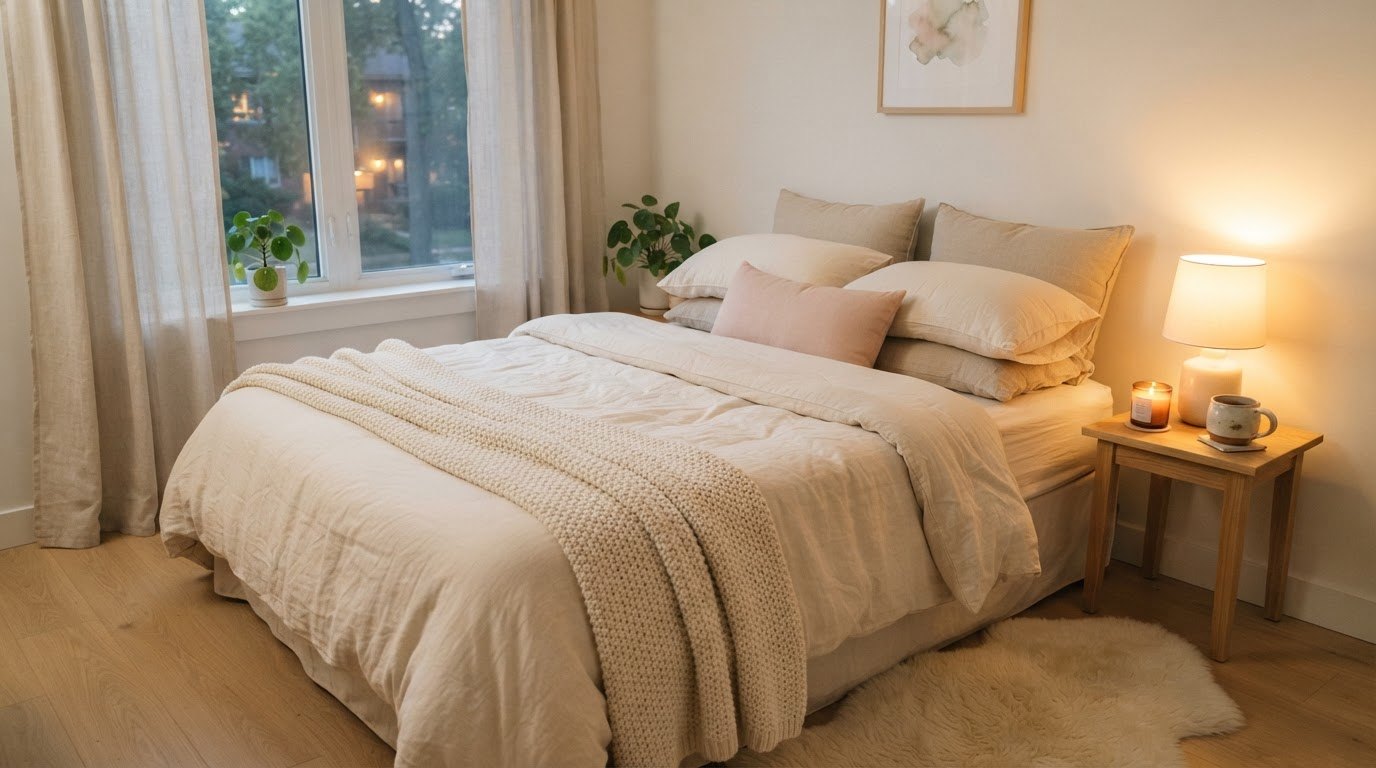
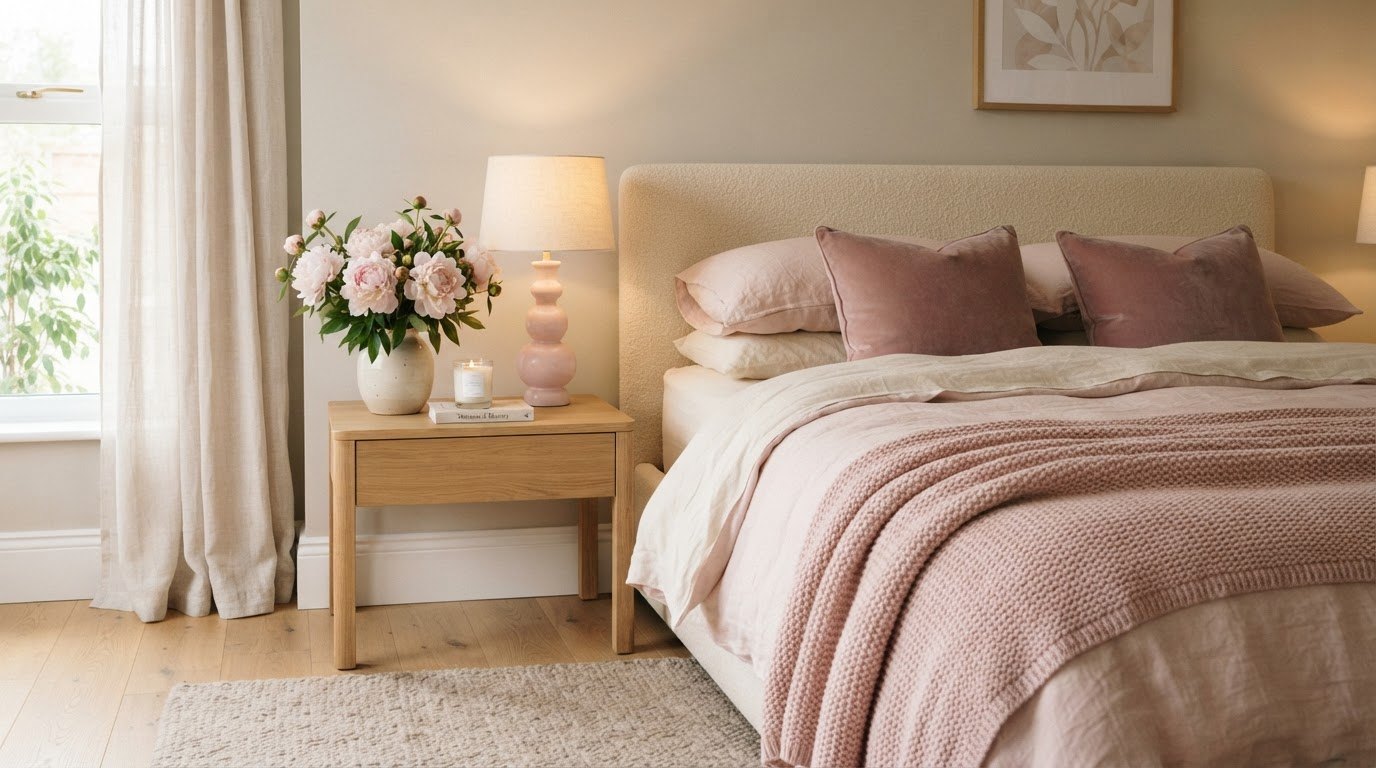
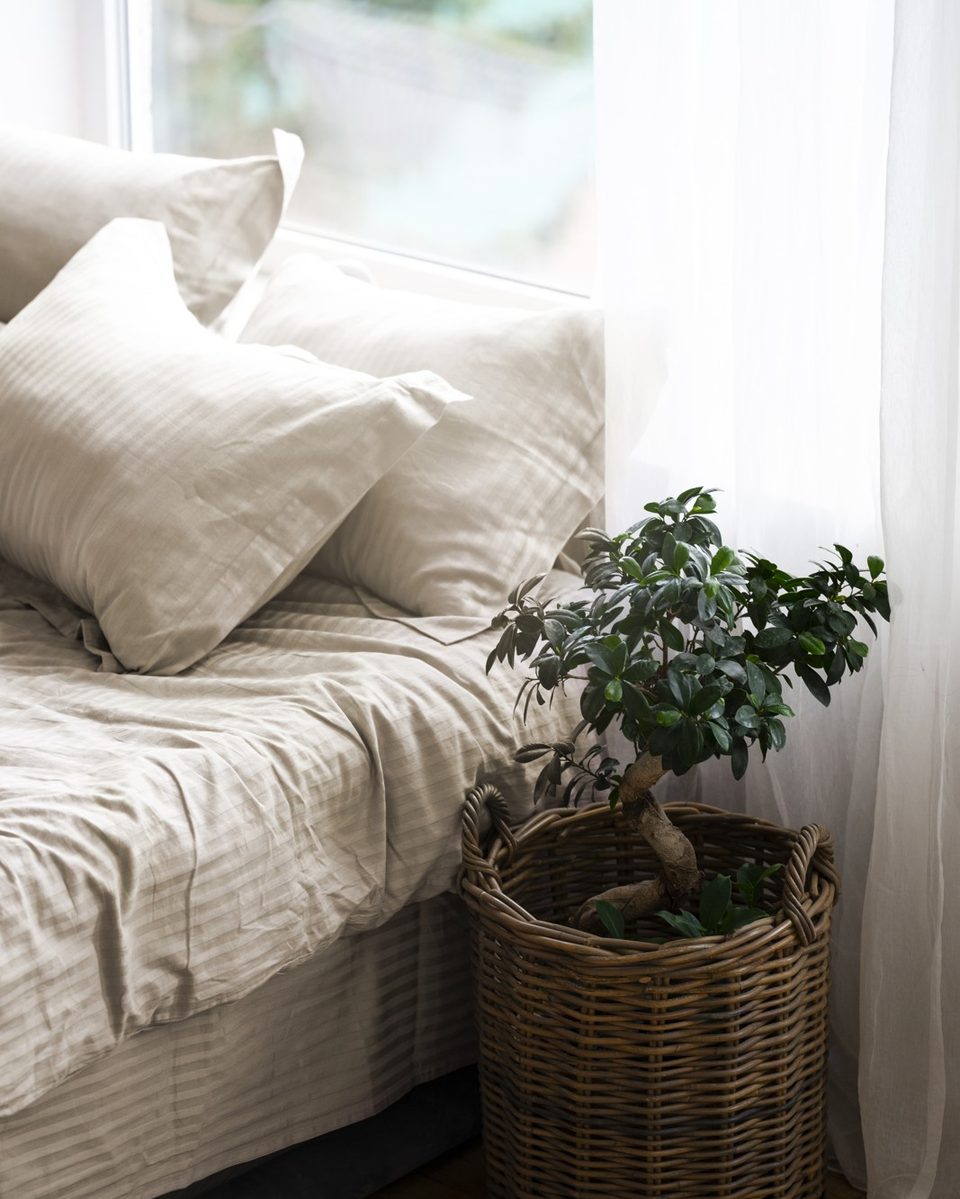
Bedding is the biggest block of color in your bedroom. A cream linen bedding set with one or two blush or beige accents looks soft and layered without visual noise. Too many patterns in a small room quickly feel busy.
22. Layer Textures Instead of Colors
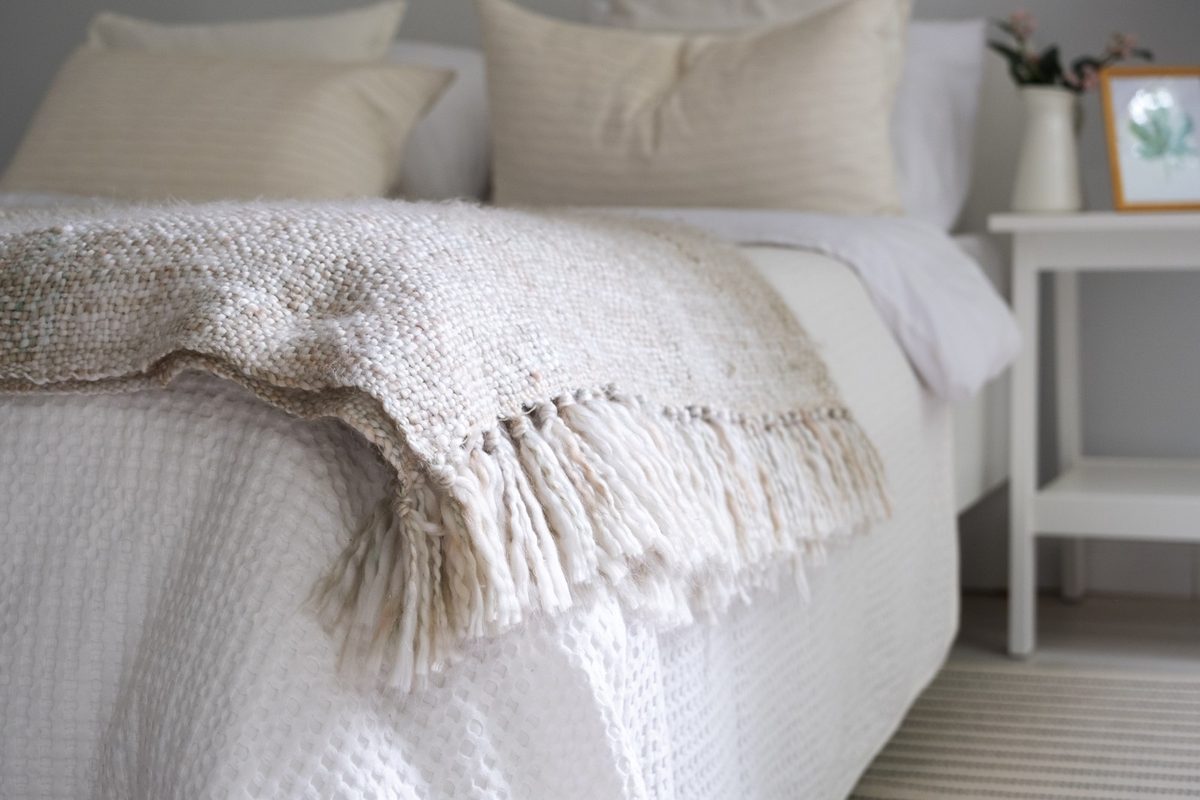
If one palette feels plain, add interest with texture: a linen duvet, a waffle or knit throw, a bouclé cushion, a wool rug. Texture makes a neutral room feel rich and inviting, no extra colors needed. For more ideas like this, my cozy bedroom ideas are full of soft layering tricks.
23. Choose a Big Rug, Not a Small One
A tiny rug floating in the middle of the floor makes a room feel smaller. Choose a rug large enough to sit under at least the bottom two-thirds of the bed, so it visually connects the whole space.
24. Match Your Curtains to Your Walls
Curtains in a similar tone to the walls disappear into the background, which makes the room feel wider. Save contrast for small accents like cushions.
Small Touches: 6 Finishing Ideas That Make It Yours
Once the big pieces work, the small details make the room feel lived in and loved. Keep these touches few and meaningful, so they add warmth without adding clutter.
25. Make the Bed a Little Like a Hotel
A neatly made bed with crisp sheets, a folded throw and two or three pillows does more for a small room than any new furniture. My guide to the hotel bed at home shows exactly how to layer it.
26. Hang Art Above the Bed, Not Everywhere
One larger print or a pair of frames above the headboard gives the room a focal point. Lots of small frames on every wall can feel cluttered in a tight space. Hang art so the bottom edge sits about 8–10 inches above the headboard, and choose soft, light-toned pieces that echo your bedding.
27. Add One Living Thing
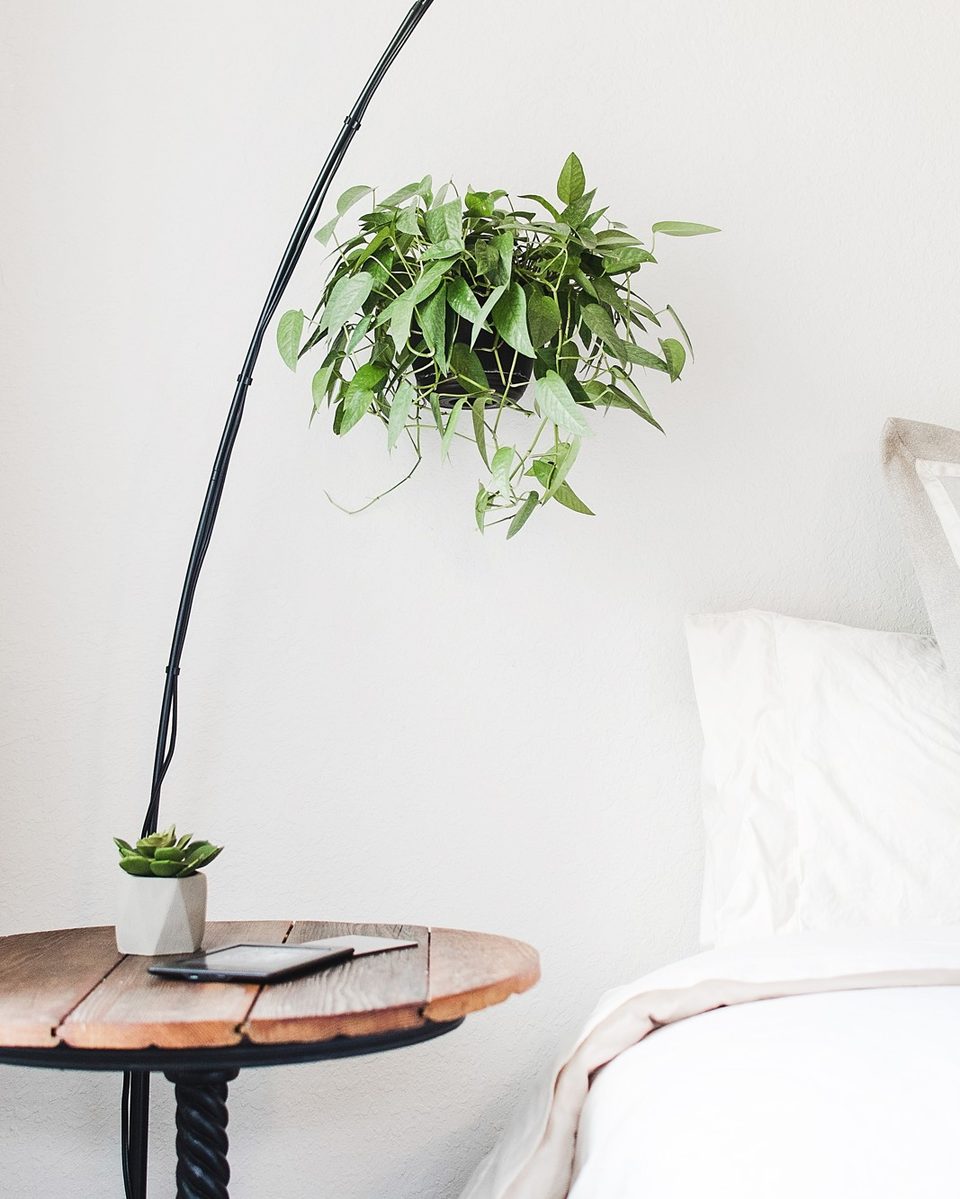
A small plant on the dresser or a few stems in a bud vase softens a room instantly. Choose an easy, low-light plant if your window is small, like a pothos or a snake plant, and water it on the same day each week so you don't forget. Dried flowers or a eucalyptus bundle work beautifully too if plants never seem to survive your care.
28. Keep Decor in Small Groups
Instead of spreading little objects across every surface, group three items together on one tray: a candle, a small dish and something personal. Grouping reads as styled; scattering reads as clutter. For more inspiration, my aesthetic room decor guide has plenty of ideas for this.
29. Bring In a Scent Ritual
A soft linen spray on the pillows or a glass candle you light while you read (and blow out before sleep) makes a small bedroom feel like a retreat. I love a glass candle in the evening, but never leave a flame burning unattended, and keep it well away from curtains and bedding.
30. Do a Two-Minute Evening Reset
Small rooms show mess faster. Before bed, put clothes away, clear the nightstand and straighten the duvet. Two minutes tonight means you wake up in a calm room tomorrow. It's a tiny habit, but it's the one that keeps every other idea on this list working long after the weekend you set it all up.
Common Small Bedroom Mistakes
A few habits make small bedrooms feel tighter than they need to. If your room still feels cramped after a few changes, check this list:
- Pushing every piece against the walls. It can leave an awkward empty middle. Sometimes floating the bed with a little space on each side looks better.
- Too many small decor pieces. Ten tiny objects read as clutter; three meaningful ones read as calm.
- Dark, heavy furniture everywhere. One dark accent is lovely. A whole room of it can feel heavy, so balance it with light walls and textiles.
- Ignoring the ceiling. The one big overhead light is often the least flattering. Add lower, warmer light sources.
- Keeping things "just in case." A small room can't store everything. Move rarely used items to another part of your home, or let them go.
Many of these same rules work in other small spaces too. If your living room feels tight as well, my small living room ideas follow the same calm approach.
A Weekend Plan for Your Small Bedroom
Thirty ideas can feel like a lot at once. Here's a gentle way to work through the most important ones in a single weekend, without turning your home upside down.
- Saturday morning (1–2 hours): Clear everything off the floor and surfaces into a basket. Find your room shape in the table above and move the bed to its best spot.
- Saturday afternoon (1 hour): Measure under the bed and the back of the door. Decide which storage ideas you need, and write a short list before you buy anything.
- Saturday evening (30 minutes): Turn off the ceiling light and notice which corners stay dark. That's where your next light source goes.
- Sunday morning (1 hour): Put things back, but only what has a home. Give each surface one job, and move anything without a place to a "decide later" box.
- Sunday afternoon (30 minutes): Make the bed with your calmest bedding, add one living thing and group your favorite small objects on a tray.
Open the "decide later" box a month from now. Anything you haven't missed can usually go, which gives your small bedroom even more room to breathe.
Final Thoughts
A small bedroom can be one of the most peaceful rooms in your home. Once the bed is in the right spot, the clutter has a place to go and the light reaches every corner, the size stops mattering much at all.
Start with your bed placement this weekend, then add one idea from each group as you go. Bit by bit, the room will feel bigger, calmer and completely like you.