A shiny T-zone is not a sign that your skin needs to be scrubbed into submission. It is usually a sign that your forehead, nose and chin are doing what they are built to do, a little enthusiastically, while your cheeks quietly ask for something gentler. The trick is to calm the shine without stripping the rest of your face.
I have combination, sensitive skin with exactly this pattern: a nose and forehead that shine by lunchtime and cheeks that feel tight after anything too harsh. It took me a while to stop treating my whole face like an oil slick and start treating it like two neighbors with different needs.
This guide focuses on the oily T-zone: why it gets shiny, why over-drying makes it worse, a balanced morning and evening routine, how to care for your T-zone and cheeks differently, a zone-by-zone table and 6 midday shine fixes that don't ruin your makeup. If your whole face is oily, my skincare routine for oily skin is the better starting point.
Why the T-Zone Gets Oily

The T-zone is the area across your forehead and down your nose to your chin. It simply has more sebaceous (oil) glands than your cheeks, and they tend to be larger and more active. That is why so many people, even those with "normal" skin, notice shine there first.
Sebum itself is not the enemy. It helps keep your skin soft and protected. The problem is when there is more than you would like, at the time you would rather look fresh. Several everyday triggers can turn the volume up:
- Heat and humidity. Warm weather, a heated office or a steamy commute all make oil spread and show more.
- Over-washing. Cleansing too often or too harshly can leave skin feeling stripped, and many people notice more shine afterwards.
- Heavy creams on the wrong area. A rich moisturizer that your cheeks love can feel greasy on your nose and forehead.
- Touching your face. Resting your chin on your hand or rubbing your forehead moves oil around and adds more from your fingers.
- Hormones and stress. Changes through your cycle and stressful weeks can affect oil levels too. You can't control these completely, but a steady routine helps.
Larger, more visible pores often come along with an oily T-zone, especially on the nose. My guide to pore care explains what you can and can't change about pore size.
Why Over-Drying Backfires
When the T-zone shines, the instinct is to dry it out: a foaming wash twice a day, an alcohol-heavy toner, a clay mask several times a week. It feels satisfying for an hour. Then the shine comes back, and your cheeks start to feel tight and flaky.
Here is what is happening. Harsh products strip oil and water from your whole face, not only the T-zone. Your already-balanced cheeks get dehydrated, and dehydrated skin can look dull and even shinier on top, because the surface is rough and uneven. Many people find their T-zone looks oilier by midday when their skin is stripped in the morning.
There is also the comfort side. Tight, stripped cheeks tend to sting when you apply anything afterwards, including the niacinamide or sunscreen that would actually help. When your skin is irritated, it is harder to stick with a good routine at all, which is why gentle steps usually win over time. If tightness after washing is part of your story, my sister guide on tight skin after washing goes deeper into the causes.
The goal is balance, not dryness. A comfortable face that shines a little less is a much better result than a matte nose with flaky cheeks.
The Oily T-Zone Routine
This routine is deliberately short. Each step has a job, and none of them are designed to strip. If you already have a routine you like, compare it with this one and adjust the steps that feel too heavy or too harsh.
Morning: Cleanse, Treat, Moisturize, Protect
- Gentle gel cleanser. A low-pH gel cleanser is a pick that removes overnight oil without that squeaky feeling. Massage for 30 to 60 seconds, focusing on the T-zone, and rinse with lukewarm water. If your cheeks are dry, a water rinse there is enough.
- Niacinamide. A few drops of a niacinamide serum over your whole face, or mostly over the T-zone if your cheeks are sensitive.
- Light gel moisturizer. Yes, even oily skin needs one. I'd choose a light, oil-free gel moisturizer that sinks in within a minute.
- Lightweight sunscreen. A fluid or gel sunscreen with broad-spectrum protection, SPF 30 or higher. Let it set for a few minutes before makeup.
Evening: Cleanse, BHA Nights and Repair
- Cleanse thoroughly. Use the same gentle gel cleanser. If you wear sunscreen and makeup, a gentle first cleanse (a cleansing balm or micellar water) followed by your gel cleanser works well.
- BHA on the T-zone, 2 to 3 evenings a week. A BHA liquid exfoliant with salicylic acid is a pick for oily areas, because it dissolves in oil and works inside the pore. Apply it to the forehead, nose and chin only, on non-consecutive nights.
- Moisturize. Your light gel on the T-zone, something a little richer on the cheeks.
On non-BHA nights, simply cleanse and moisturize. Rest nights are part of the routine, not a gap in it.
Zone Care: Treat Your T-Zone and Cheeks Differently
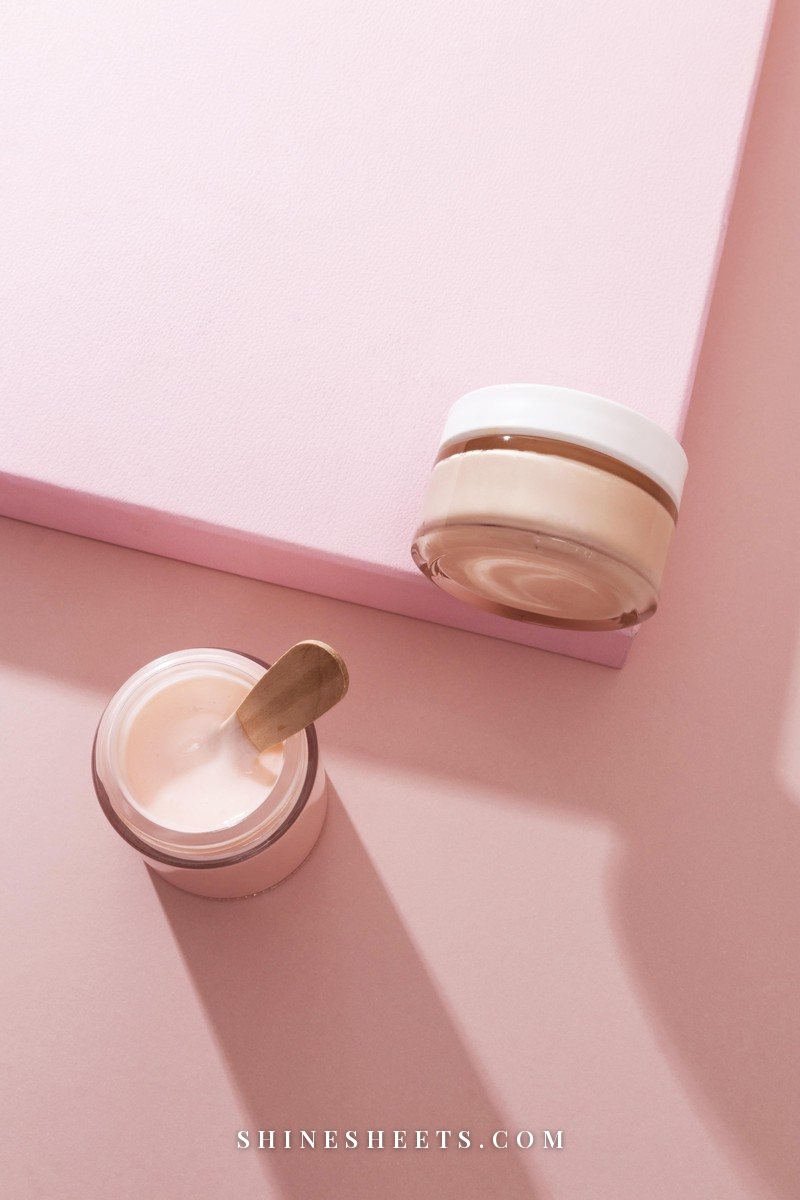
This is the part that changed things most for me. You don't need two whole routines, only a slightly different hand in each area. Think of it as zone care:
- Moisturizer: a thin layer of gel on the T-zone, a richer cream on the cheeks. If you only want one product, apply a full layer to the cheeks and a light sweep over the T-zone.
- Exfoliation: BHA on the T-zone only. Cheeks rarely need it if they are dry or normal.
- Cleansing: concentrate the massage on the T-zone, and simply let the lather pass over the cheeks.
- Masks: if you enjoy a clay mask, apply it to the T-zone only, once a week at most, and rinse before it cracks completely.
For a fuller look at balancing both sides of your face, my guide to a skincare routine for combination skin goes into product textures and layering.
Oily T-Zone Routine Table
Here is the whole routine on one screen, split by zone. Screenshot it and keep it near your sink until the steps feel automatic.
| Step | T-zone | Cheeks | Why it works |
|---|---|---|---|
| Cleanse | Gel cleanser, 30–60 seconds of gentle massage | Brief pass or water rinse in the morning | Removes excess oil without stripping drier areas |
| Niacinamide | A few drops, daily | Optional, or a thin layer | Helps regulate the look of oil and supports the barrier |
| BHA (salicylic acid) | 2–3 evenings a week | Skip | Oil-soluble, works inside pores where shine starts |
| Moisturizer | Thin layer of light gel | Richer cream | Hydrated skin looks smoother and less shiny |
| Sunscreen | Lightweight fluid or gel | Same sunscreen, full amount | Daily protection, essential when using acids |
| Midday | Blot, then powder if needed | Leave alone | Takes shine away without piling product on dry skin |
The Key Ingredients, Simply Explained
You don't need a long ingredient list to calm a shiny T-zone. Three ingredients do most of the work.
Niacinamide
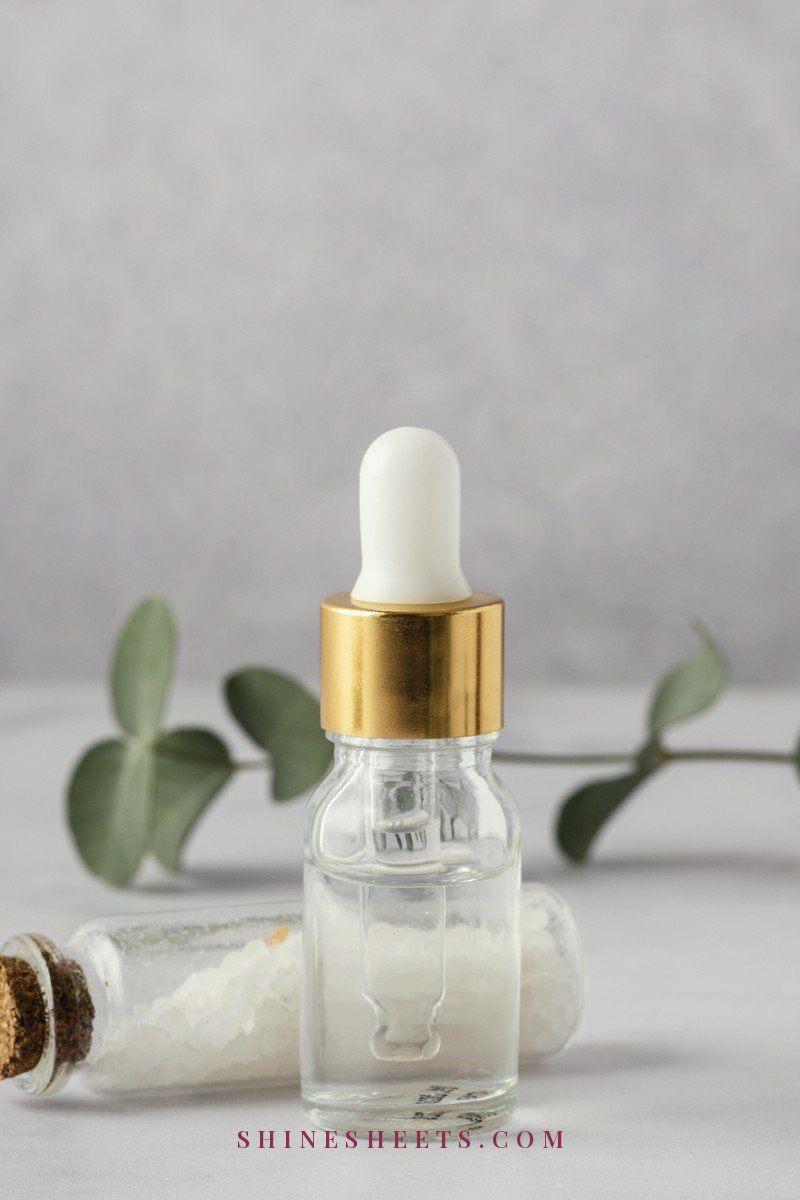
Niacinamide (vitamin B3) is one of the most widely studied skincare ingredients. It can help reduce the look of shine and the appearance of pores, and it supports the skin barrier, which makes it a good match for combination skin. Most people tolerate it well; concentrations around 4 to 5 percent are a comfortable place to start, and higher isn't automatically better. My full guide to niacinamide covers how to layer it.
BHA (Salicylic Acid)
BHA is oil-soluble, so it can get into the pore lining and loosen the mix of oil and dead skin that builds up there. That is why it suits the T-zone so well. Start with two evenings a week on non-consecutive nights. If your skin stays calm after a few weeks, you can try three.
A gentle rule while you are getting used to it: don't use BHA and a retinoid on the same night at first. Alternate them, and only consider combining them later if your skin is comfortable.
Lightweight Sunscreen
Sunscreen is non-negotiable, especially when you use acids, which can make skin more sensitive to the sun. If you skip it because it feels greasy, try a different texture: fluids, gels and "matte finish" formulas are designed for oilier skin, and many Korean and Japanese sunscreens feel almost weightless.
Apply about two finger lengths for your face and neck, and press, rather than rub, a little extra over the nose and forehead once the first layer has set. If your sunscreen pills under makeup, give it a few more minutes to settle before primer.
6 Midday Shine Fixes
Even with a balanced routine, a little shine by mid-afternoon is normal. These fixes take care of it without stripping your skin or caking your makeup.
1. Blotting Papers (Press, Don't Rub)
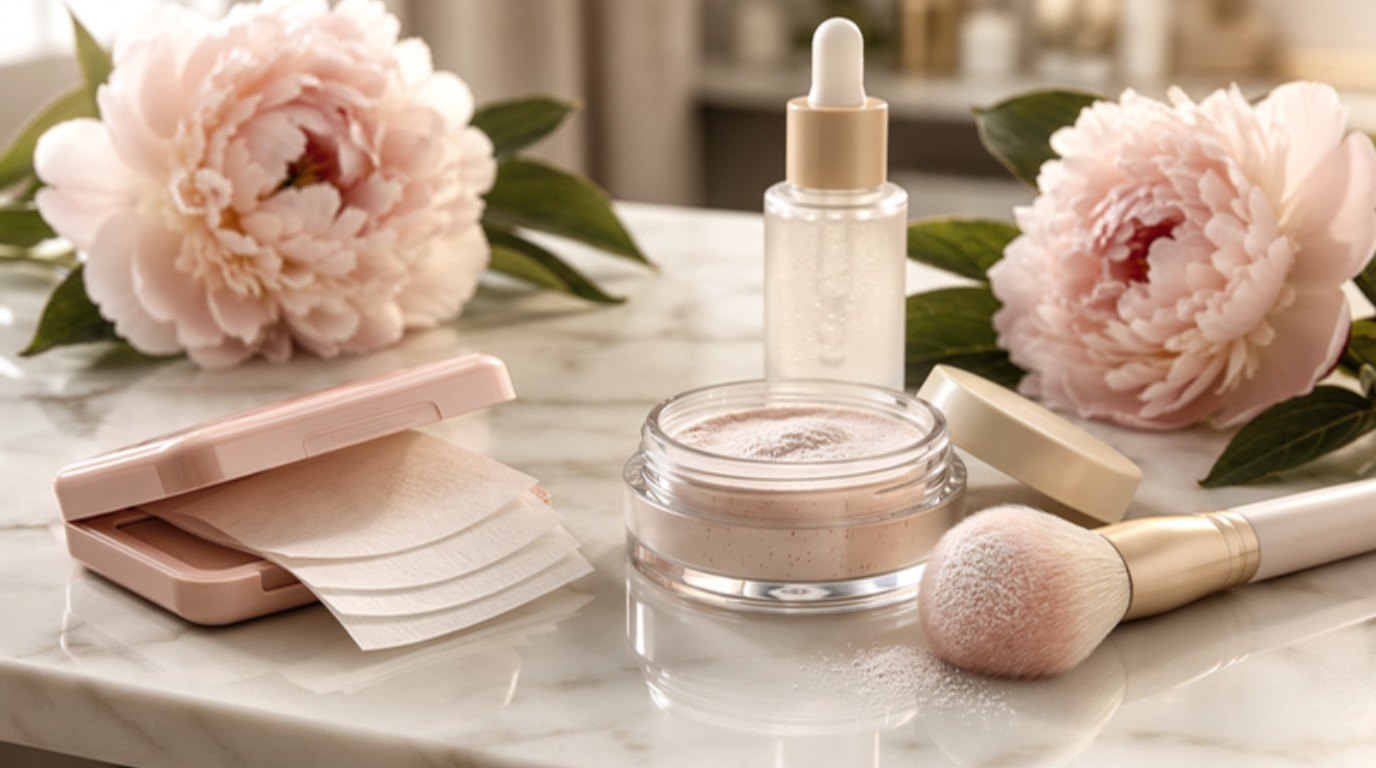
Blotting papers lift oil off the surface without disturbing makeup or adding product. Press a sheet onto your nose, forehead or chin for a couple of seconds, then lift. Don't swipe or rub, which moves makeup around and can irritate skin. One or two sheets per area is usually plenty.
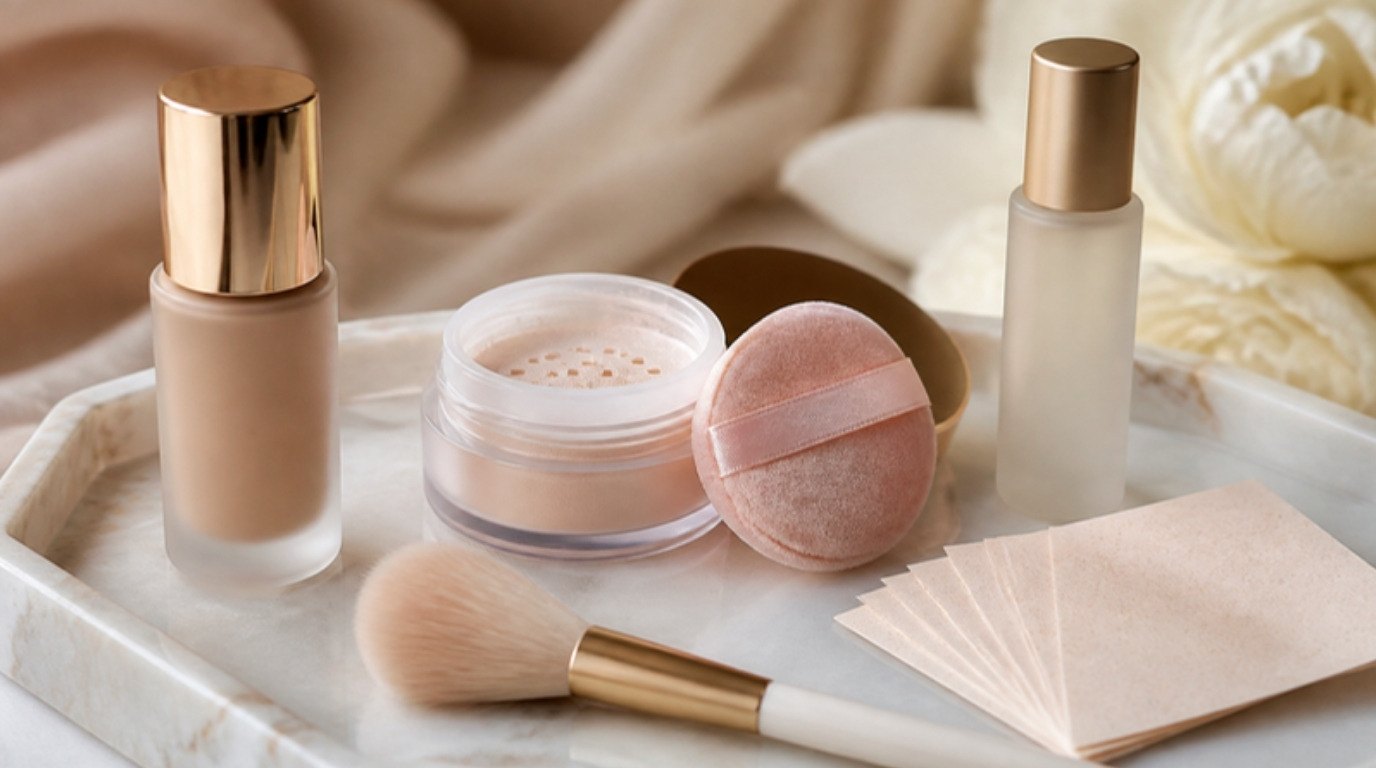
Blotting papers in a blush case are an easy pick for your bag. Look for plain, fragrance-free sheets.
2. A Mattifying Primer on the T-Zone Only
A mattifying primer helps makeup grip and slows down how quickly shine appears. Apply a thin layer only to the T-zone, after sunscreen has set. Keep it off your cheeks if they are dry, or your foundation may look patchy there. My guide to makeup for oily skin has more on making makeup last.
3. A Light Dusting of Translucent Powder
A small amount of powder goes a long way. Tap a fluffy brush or a powder puff into a translucent setting powder, tap off the excess and press it gently onto the T-zone. Always blot first, then powder; powder over oil tends to look heavy and patchy.
Keep it light. Two or three touch-ups a day is a good limit, otherwise the layers build up.
4. A Sunscreen Stick or Powder for Reapplying
Sunscreen reapplication over makeup is tricky, which is why sunscreen sticks and SPF powders exist. Blot first, then sweep a clear sunscreen stick over your face or dust on an SPF powder. They are convenient for topping up, though for a full day outdoors, reapplying a generous layer of regular sunscreen gives more reliable protection.
5. Hands Off Your Face
This one costs nothing and is surprisingly effective. Every time you rest your chin on your hand or rub your forehead, you add oil and move it around. Notice when you do it (often while reading or on calls) and rest your hands somewhere else. Clean hands before any touch-up help too.
6. A Facial Mist Only Over Set Makeup
A fine facial mist can refresh your face and soften a powdery look, but timing matters. Use it only over fully set makeup, holding the bottle at arm's length, and let it dry on its own. Misting bare skin and letting it evaporate can leave skin feeling drier, and misting over fresh oil only spreads the shine.
A Simple Weekly Rhythm for Your T-Zone
Routines are easier to keep when you know what each day looks like. Here is a calm weekly rhythm that keeps the T-zone balanced without overloading your skin:
- Every morning: gentle cleanse (or a water rinse on the cheeks), niacinamide, light moisturizer, sunscreen.
- Two or three evenings a week: cleanse, BHA on the T-zone only, then moisturizer. Spread these out, for example Monday, Wednesday and Friday, or simply every other evening.
- The other evenings: cleanse and moisturize. If you use a retinoid, these are the nights for it, never stacked on a BHA night at first.
- Once a week, if you like: a clay mask on the T-zone only, for about 5 to 10 minutes, on a night without BHA or retinoid.
- One night a week: a true rest night with nothing but cleanser and moisturizer. I think of it as a reset for my barrier.
If your skin feels tight or stings at any point, drop back to cleanse, moisturize and sunscreen for a week, then reintroduce the BHA more slowly.
How To Tell If Your Routine Is Working
Changes in oil and shine take a little time, so give a new routine at least four to six weeks before deciding. A few signs you are on the right track:
- Shine shows up later in the day. Instead of a shiny nose by 11, it appears mid-afternoon. That is a real improvement.
- Your cheeks feel comfortable. No tightness or flaking after cleansing.
- Makeup lasts longer and you reach for blotting papers less often.
- Pores on the nose look a little cleaner and smoother, especially after a few weeks of BHA.
Signs you need to scale back: stinging when you apply products, new dry patches, redness around the nose or a sudden rise in breakouts after adding something new. Usually the fix is less, not more: fewer BHA nights, a richer cream on the cheeks or a pause on your newest product.
It also helps to keep expectations kind. A T-zone with more oil glands will always produce a little more oil than your cheeks. The aim is a face that feels comfortable and looks fresh for longer, not one that never shines at all. A soft, healthy sheen on the high points of your face is something people pay highlighter for.
What To Skip
- Alcohol-heavy toners. If drying alcohol sits near the top of the ingredient list, it can leave skin tight and uncomfortable.
- Harsh scrubs. Gritty scrubs can irritate the T-zone and don't clear pores better than a gentle BHA.
- Skipping moisturizer. Dehydrated skin tends to look shinier and rougher, not more matte.
- Washing more than twice a day. If you need a midday refresh, blot instead.
- DIY mixes. Lemon juice, toothpaste or baking soda on the skin can irritate and disrupt your skin's pH.
Safety Notes: Patch Test and Go Slowly
Patch test new products, especially acids, on a small area like the side of your neck or below your jawline for a few days. Introduce one new product at a time and wait about two weeks before adding the next, so you know what is working and what isn't.
If you are pregnant or breastfeeding, check with your doctor before using retinoids or stronger acids. If your T-zone shine comes with painful breakouts, persistent redness, flaking that doesn't settle or sudden changes in your skin, please see a dermatologist. Shine is common and manageable, but some skin changes deserve a professional look.
Final Thoughts
An oily T-zone is not a problem to fight. It is a pattern to work with: a gentle cleanse, a light moisturizer, a little niacinamide, BHA a few nights a week and sunscreen every morning, with a blotting paper ready for the afternoon.
Give your skin a few weeks of this calmer routine. The shine won't disappear completely, and it doesn't need to. What you will notice is a face that feels comfortable from forehead to cheeks and looks fresher for much longer.