Most skincare frustration doesn't come from bad products. It comes from good products chosen for the wrong skin. A rich cream that's perfect for dry skin can feel heavy and clog-prone on oily skin, and a mattifying gel that oily skin loves can leave dry skin tight and flaky by lunchtime.
That's why knowing your skin type is the most useful thing you can learn before buying anything else. It takes about 30 minutes, a clean face and an honest look in good light. No gadgets, no appointments, no guessing based on one bad day.
This guide walks you through a simple skin type test you can do at home: the five skin types, why dehydrated skin is a condition rather than a type, the bare-face test, the blotting paper test, a "what you see after 30 minutes" table, signs zone by zone, how your skin can shift with seasons and hormones, and how to choose cleanser, moisturizer and sunscreen textures once you know. For the record, mine is combination and sensitive, with a T-zone that turns shiny by midday while my cheeks stay calm and a little dry, so I know exactly how confusing "in between" skin can be.
The 5 Skin Types (and One Condition That Isn't a Type)
Your skin type is mostly about how much oil your skin makes and how easily it reacts. It's largely set by genetics, though it can shift over time. Here's what each type usually looks and feels like.
Dry Skin
Dry skin makes less oil than it needs. It often feels tight after cleansing, can look a little dull or flaky (especially around the nose, cheeks and eyebrows), and rarely gets shiny, even late in the day. Pores tend to be small and barely visible. Makeup can cling to dry patches, and rich creams usually feel like relief rather than heaviness.
Oily Skin
Oily skin makes more oil than it needs. It turns shiny across the whole face within an hour or two of washing, pores look larger (especially on the nose, chin and cheeks), and makeup may slide or break up by afternoon. The upside people forget: oily skin often holds moisture well and can be slower to show fine lines.
Combination Skin
Combination skin is oily in some areas and normal or dry in others. The classic pattern is an oily T-zone (forehead, nose, chin) with normal or dry cheeks. It's one of the most common types, and it's why so many people feel like no single product works everywhere.
Normal Skin
"Normal" just means balanced. Skin feels comfortable after cleansing, gets a little shine in the T-zone late in the day at most, has few dry patches and doesn't react to much. It doesn't mean flawless. Normal skin still gets the occasional breakout and still needs sunscreen.
Sensitive Skin
Sensitive skin reacts easily: stinging, burning, redness, itching or bumps after new products, fragrance, hot water, wind or exfoliation. It can sit on top of any other type, so you can be dry and sensitive, or oily and sensitive. Some dermatologists describe sensitivity as a trait rather than a separate type, which is a helpful way to think about it. If this sounds like you, my sensitive skin routine keeps everything calm and simple.
Dehydrated Skin: A Condition, Not a Type
Dehydrated skin lacks water, not oil. Any skin type can be dehydrated, including oily skin. It shows up as tightness, fine crisscross lines when you gently pinch the cheek, dullness, and sometimes extra oil as skin tries to compensate. It usually improves within a few weeks of gentler cleansing and better hydration. I wrote a full guide on how to tell dehydrated skin from dry skin, because mixing them up is one of the most common skincare mistakes.
Before You Test: How To Prep Your Skin
A skin type test is only accurate if your skin is in its natural state. A few small things make a big difference:
- Pick a normal day. Not the day after a facial, a new exfoliant, a sunburn or a long flight.
- Skip active products the night before. Retinoids, acids and strong exfoliants can make skin look drier or redder than it really is.
- Use a gentle cleanser. A gentle cream cleanser removes makeup and sunscreen without stripping, so what you see afterwards is your skin, not the cleanser's effect.
- Use lukewarm water. Hot water can leave skin flushed and tight for a while.
- Pat dry with a clean towel. No rubbing.
- Find good light. Daylight from a window is best. Bathroom lighting can hide shine or exaggerate redness.
The Bare-Face Test
This is the simplest and most reliable at-home test. You're just watching what your skin does when it's left alone.
- Cleanse with your gentle cleanser and lukewarm water.
- Pat dry and apply nothing at all. No toner, serum, moisturizer or sunscreen.
- Wait 30 minutes. Stay indoors, keep your hands off your face and avoid very warm rooms or a workout.
- Look. In daylight, check your forehead, nose, chin and cheeks for shine, flakes or redness.
- Feel. Notice whether your skin feels tight, comfortable, itchy or slick.
Then compare what you see and feel with the table further down. If you want to be extra sure, repeat the test on a different day, ideally once in a warmer week and once in a colder one.
The Blotting Paper Test
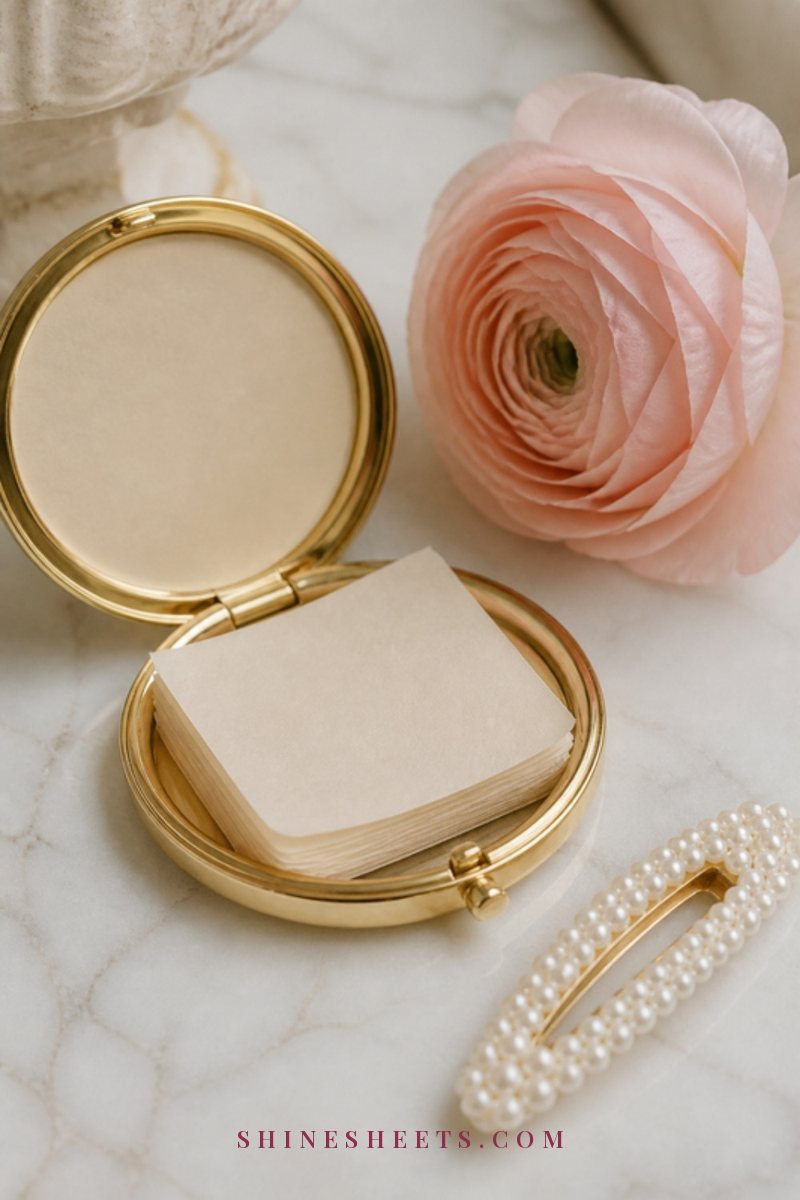
If you're unsure about shine, this test gives you something to actually look at. You'll need a few oil blotting papers.
- Do the bare-face test above and wait the full 30 minutes.
- Gently press a separate blotting sheet onto your forehead, nose, chin and each cheek. Hold each one for a few seconds.
- Hold each sheet up to the light.
Here's how to read them:
- Little or no oil anywhere: likely dry.
- Oil on every sheet: likely oily.
- Oil on forehead, nose and chin only: likely combination.
- A little oil in the T-zone, cheeks fairly clean: likely normal.
Blotting papers can't tell you about sensitivity or dehydration, so combine them with how your skin feels.
What You See After 30 Minutes: Your Skin Type Table
This is the heart of the test. Screenshot it and check it against your bare face.
| What you see and feel after 30 minutes | Your likely skin type |
|---|---|
| Tight, possibly flaky, no shine anywhere, small pores | Dry |
| Shine across the forehead, nose, chin and cheeks, visible pores | Oily |
| Shiny T-zone, cheeks comfortable or slightly dry | Combination |
| Comfortable everywhere, maybe a hint of shine on the nose | Normal |
| Redness, stinging, itchiness or blotchiness, with any level of oil | Sensitive (alongside your oil type) |
| Tight and dull but also a little shiny, fine lines when gently pinched | Dehydrated (a condition on top of your type) |
If you land between two rows, that's completely normal. Pick the one that sounds most like your skin on an average day, not your best or worst.
Signs by Zone
Looking at your face in sections makes the result clearer, especially for combination skin.
- Forehead: shine here is the earliest oil sign. Flaking along the hairline or brows can point to dryness or irritation.
- Nose: almost everyone gets a little shine here. Visible pores and shine within an hour suggest oily or combination skin.
- Chin: shine plus occasional breakouts here often goes with combination skin.
- Cheeks: this is the tie-breaker. Oily cheeks usually mean oily skin. Tight or flaky cheeks with an oily T-zone mean combination.
- Around the eyes and mouth: tightness or fine flaky lines here often point to dryness or dehydration.
- Anywhere red or stinging: a sign of sensitivity or an irritated barrier.
My own forehead and nose are shiny by lunchtime while my cheeks stay calm, which is textbook combination. If that's you too, my combination skin routine shows how to treat each zone without juggling ten products.
Everyday Clues That Confirm Your Result
Your daily life is full of little hints about your skin type. If your test result feels uncertain, check it against these everyday clues:
- How your makeup behaves. Foundation that slides off the nose by early afternoon points to oil. Foundation that clings to flaky patches around the nose and mouth points to dryness.
- How your skin feels after a shower. If you rush for moisturizer the second you step out, your skin is probably on the dry side. If you could happily skip it, you're more likely normal or oily.
- How often you blot or powder. Reaching for powder on the T-zone only is a classic combination sign. Powdering the whole face more than once a day suggests oily skin.
- What happens with rich creams. If a thick night cream leaves you with tiny bumps or a greasy pillowcase, your skin probably doesn't need that much richness. If it's gone by morning and you still feel tight, it may need even more.
- How your skin reacts to new things. If almost every new product stings for a few seconds, or your cheeks flush after a hot shower or a windy walk, sensitivity is part of your picture.
- What your skin does in different weather. Feeling tight and rough every winter but shiny every summer is a strong combination or normal-skin pattern.
When your test result and these clues agree, you can trust it. When they don't, repeat the test on a calm, ordinary day.
What About Pores and Breakouts?
Pore size and breakouts are often used to guess skin type, but they're only part of the story. Larger, more visible pores usually go with oilier skin, and they're mostly genetic, so no product can permanently shrink them (though clean, well-cared-for pores do look smaller).
Breakouts can happen with every skin type. Dry skin can break out when the barrier is irritated, sensitive skin can react with small bumps, and combination skin often breaks out on the chin while the cheeks stay clear. So treat breakouts as their own concern rather than proof that your skin is oily. If you notice breakouts mostly when you try heavy creams, that's a useful clue that your skin prefers lighter textures.
A Simple Starter Routine for Each Skin Type
Once you know your result, you don't need a ten-step routine. A gentle cleanser, a moisturizer and a daily sunscreen are enough for most people. Here's how to start:
- Dry skin: in the morning, rinse with water or use a cream cleanser, then a rich moisturizer and a creamy sunscreen. At night, cleanse gently and use a richer cream. Keep showers warm, not hot.
- Oily skin: cleanse with a gentle gel morning and night, use a light gel moisturizer, and choose a fluid sunscreen. Resist washing more than twice a day, because stripping skin can make it oilier.
- Combination skin: use a gentle gel cleanser, a light moisturizer all over, and a dab of richer cream on any dry spots. Blotting papers in your bag handle midday shine without disturbing makeup.
- Normal skin: keep it simple and consistent. A gentle cleanser, a lotion that suits the season and daily sunscreen are all you really need.
- Sensitive skin: fragrance-free everything, as few products as possible, and one new product at a time. Skip strong scrubs entirely.
- Dehydrated skin (any type): soften your cleanser, add a hydrating serum with glycerin or hyaluronic acid under your moisturizer, and drink water regularly through the day.
Give any new routine about four weeks before judging it. Skin needs time to settle, and the first week can feel a little unfamiliar.
Why Your Skin Type Can Change
Your skin type isn't a lifetime label. It tends to stay in the same family, but it can shift with:
- Seasons. Cold air and indoor heating often make skin drier in winter, and humidity can make it oilier in summer. Many combination types feel almost dry in winter.
- Hormones. Your cycle, pregnancy, hormonal contraception and perimenopause can all change oil levels and sensitivity.
- Age. Oil production usually slows over time, so skin that was oily earlier in life can become normal or dry later.
- Stress and sleep. Both can make skin oilier, more reactive or more prone to breakouts.
- Your routine. Over-cleansing or over-exfoliating can make skin both tight and oily, which looks a lot like combination skin when the barrier is actually just stressed.
- Medications and conditions. Some medications and skin conditions affect oil and dryness. A doctor or dermatologist can tell you what's likely.
A good habit: repeat the bare-face test at the start of each season and adjust textures if your skin has shifted.
How To Choose Products for Your Skin Type
Once you know your type, choosing products gets much easier. You don't need a whole new routine. You mostly need the right texture for three basics: cleanser, moisturizer and sunscreen.
Cleanser
- Dry: cream, milk or balm cleansers that don't foam much.
- Oily: a gentle gel or low-foam cleanser. Avoid very harsh foams that leave skin squeaky.
- Combination: a gentle gel-cream or low-foam gel.
- Normal: almost any gentle cleanser works.
- Sensitive: fragrance-free cream or milk cleansers with short ingredient lists.
Moisturizer
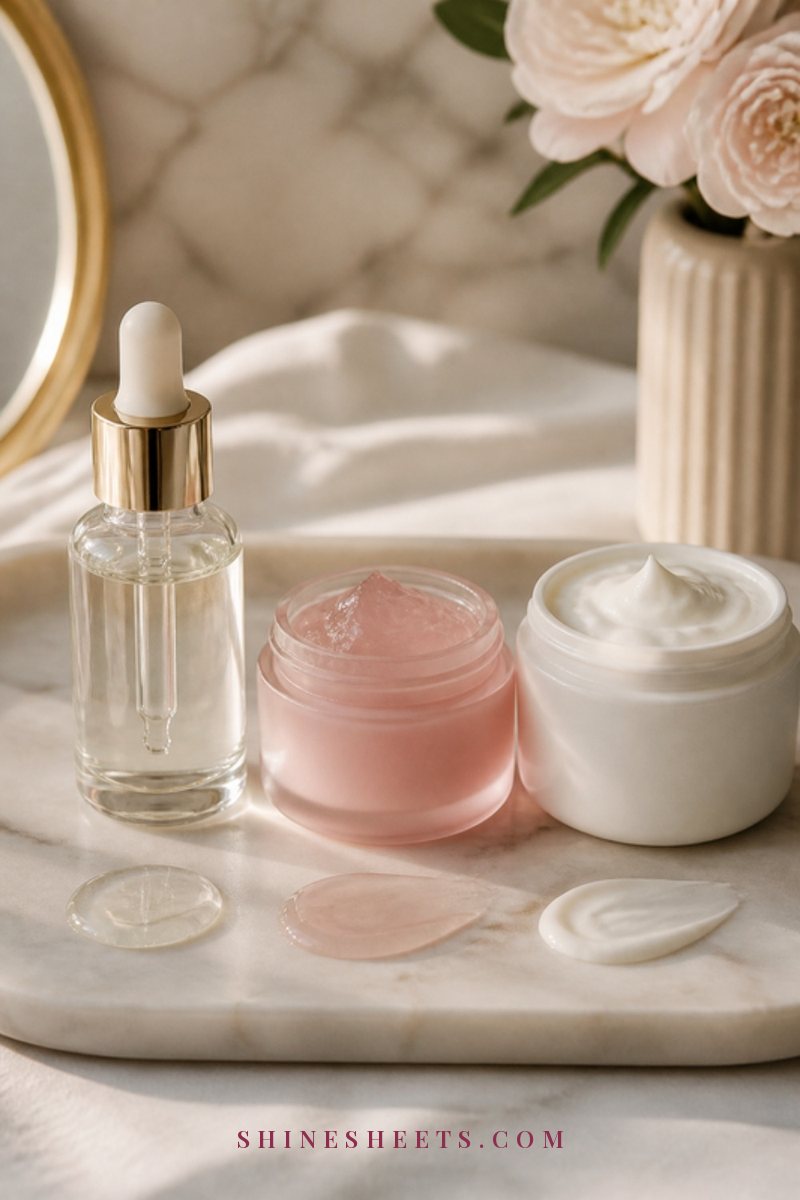
- Dry: richer creams with ceramides, glycerin and shea. A rich barrier cream is ideal at night. For the full routine, see my skincare routine for dry skin.
- Oily: a lightweight gel moisturizer that sinks in fast. Yes, oily skin still needs moisturizer.
- Combination: a gel or light lotion all over, with a little extra cream on dry cheeks if needed.
- Normal: a light lotion or cream, depending on the season.
- Sensitive: fragrance-free formulas with soothing ingredients, introduced one at a time.
My moisturizer guide goes deeper into gels, creams and balms if you're between textures.
Sunscreen
- Dry: creamy, moisturizing sunscreens that double as a light moisturizer.
- Oily: fluid, gel or matte-finish sunscreens.
- Combination: lightweight fluids, or a slightly richer one on the cheeks in winter.
- Normal: any texture you enjoy wearing daily.
- Sensitive: a mineral sunscreen with zinc oxide or titanium dioxide is often the gentlest option.
Whatever your type, introduce one new product at a time and patch test it first. Give each one about two weeks before deciding whether it suits you.
Common Skin Type Test Mistakes
- Testing right after a harsh cleanser. Every skin feels dry after stripping.
- Testing too soon. Five minutes isn't enough time for oil to show. Wait the full 30.
- Judging by one bad week. Stress, travel or a new product can throw everything off.
- Confusing breakouts with oily skin. Dry and sensitive skin can break out too.
- Confusing dehydration with dryness. Tight but shiny skin is often dehydrated, not dry.
When To See a Dermatologist
An at-home test is a great starting point, but it can't diagnose skin conditions. Please see a dermatologist or doctor if you have:
- Painful, deep or persistent acne, or breakouts that leave dark marks or scars.
- Redness, burning or stinging that doesn't settle with a simpler routine.
- Patches that are scaly, itchy, weeping or spreading.
- Sudden changes in your skin you can't explain.
- A reaction to a product that includes swelling or blistering.
Conditions like rosacea, eczema and perioral dermatitis can look like "sensitive" or "dry" skin at first, and they respond best to proper treatment.
Final Thoughts
A skin type test isn't about putting yourself in a box. It's about understanding what your skin is asking for on an ordinary day, so you can stop buying products that fight it.
Wash, wait 30 minutes, look and feel. Write down what you notice, repeat it when the seasons change, and let your routine be as simple as your skin allows. Skin that's understood is almost always calmer skin.