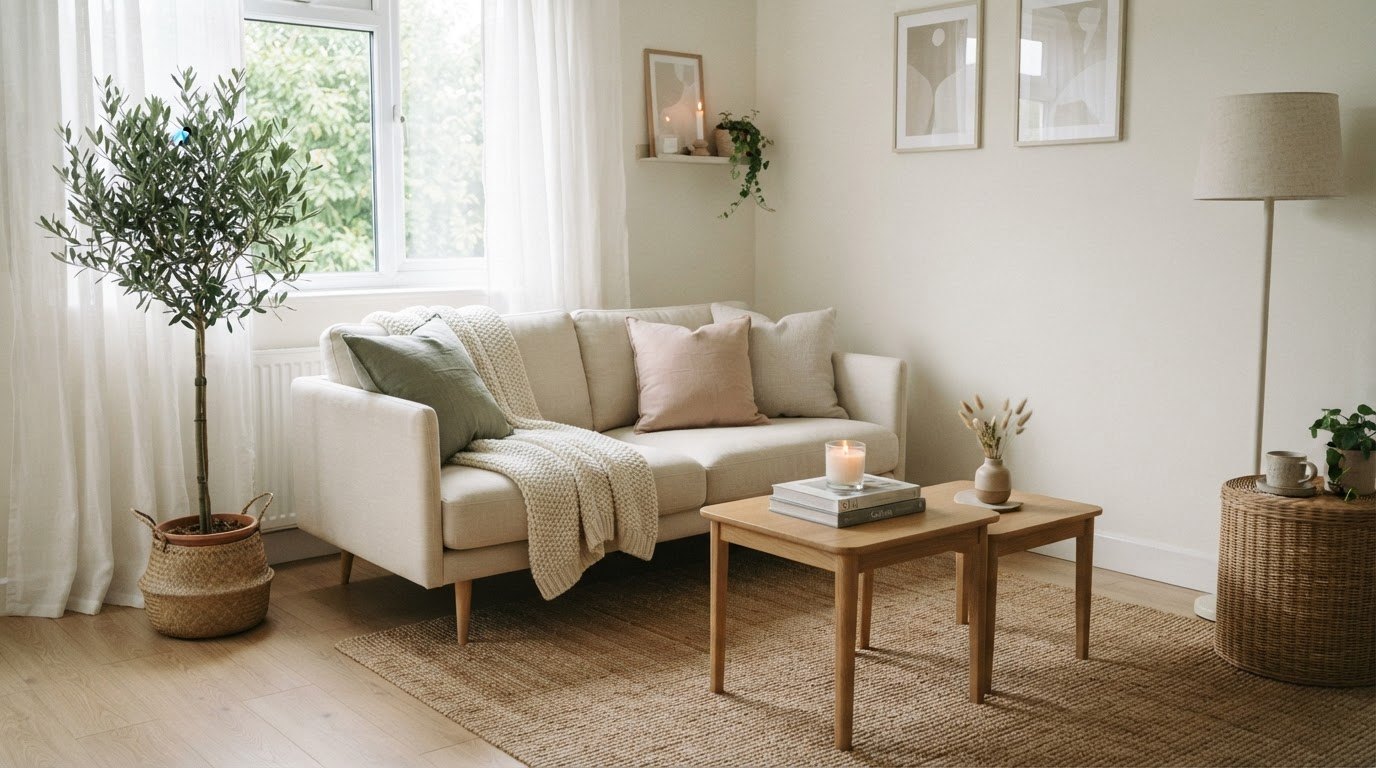
An entryway isn't really a hallway. It's a decision about where the outside world stops. When your front door opens straight into the living room or the kitchen, that decision never gets made, so shoes, bags, keys and mail drift into every corner of the home and quietly take over.
The good news is that you don't need extra square feet to fix it. You need a clearly marked landing spot, a few hardworking pieces that fit a narrow footprint, and one tiny habit that keeps it from piling up. Most of it can be done without a single hole in the wall.
This guide shows you how to create an entryway in a small apartment when there's no entryway at all: why a defined arrival zone matters, 8 renter-friendly ways to fake one, a layout table that matches each idea to your exact problem, what belongs by the door (and what doesn't), and a two-minute daily reset.
It took me a while to accept that my door didn't need a mudroom, it just needed a boundary. Once you see it that way, the whole thing gets much easier.
Why a Defined Arrival Zone Changes the Whole Home
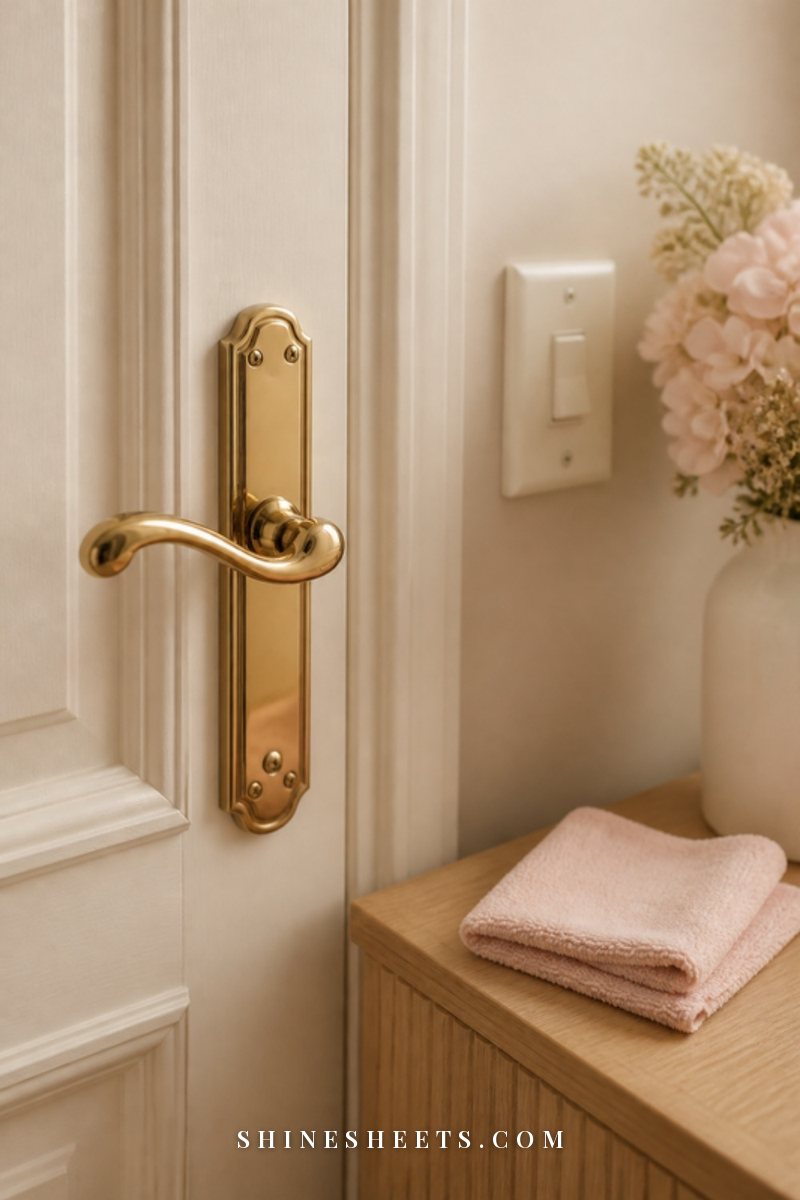
Think about what you carry through the door on an ordinary day: a bag, a coat, shoes, keys, sunglasses, mail, maybe a tote of groceries. Every one of those items needs a place to land within a few steps. If there isn't one, they land on the nearest flat surface, which is usually the sofa, the dining table or the kitchen counter.
A defined arrival zone does three quiet things for you:
- It catches clutter at the source. Things stop traveling deeper into the home, so the rest of your rooms stay calmer with zero extra effort.
- It saves you time. Keys, a bag and a coat that always live in the same 3-foot zone mean no more frantic searching before you leave.
- It creates a small mental transition. Putting your bag down in the same spot every evening is a little ritual that says "I'm home now." That sounds tiny, but it really helps on stressful days.
There's a practical bonus too. A lot of the dirt in a home comes in on shoes. When shoes come off on a washable rug right inside the door, the floors in the rest of the apartment stay cleaner for longer, and you'll vacuum the living room a little less often.
And visually, a marked entry makes an open-plan apartment look more intentional. The room reads as "entry, then living space" instead of "door, then everything at once."
Before You Start: Map Your Door Zone
Spend ten minutes on this before you buy anything. It's the part most people skip, and it decides which ideas will actually fit.
- Open the door fully and note where it swings. Anything inside that arc has to be flat (a rug) or very slim.
- Measure the wall beside the door. Write down the width and how far you can come out from the wall without blocking the walkway. In most apartments that's 10 to 14 inches.
- Find the nearest outlet. It tells you whether a lamp is easy or whether you'll want a battery-powered light.
- Collect one week of "door stuff." Everything you drop near the door goes into one basket. At the end of the week, that basket is your real list of what the zone needs to hold.
Keep a walkway of at least 30 to 36 inches clear from the door into the room. A fake entryway should make arriving easier, never make you squeeze past furniture.
8 Ways To Fake an Entryway in a Small Apartment
You won't need all eight. Most small apartments look and work best with three or four of these combined: something on the floor, something to hold things, something on the wall and a little light.
1. Mark the Zone With a Rug
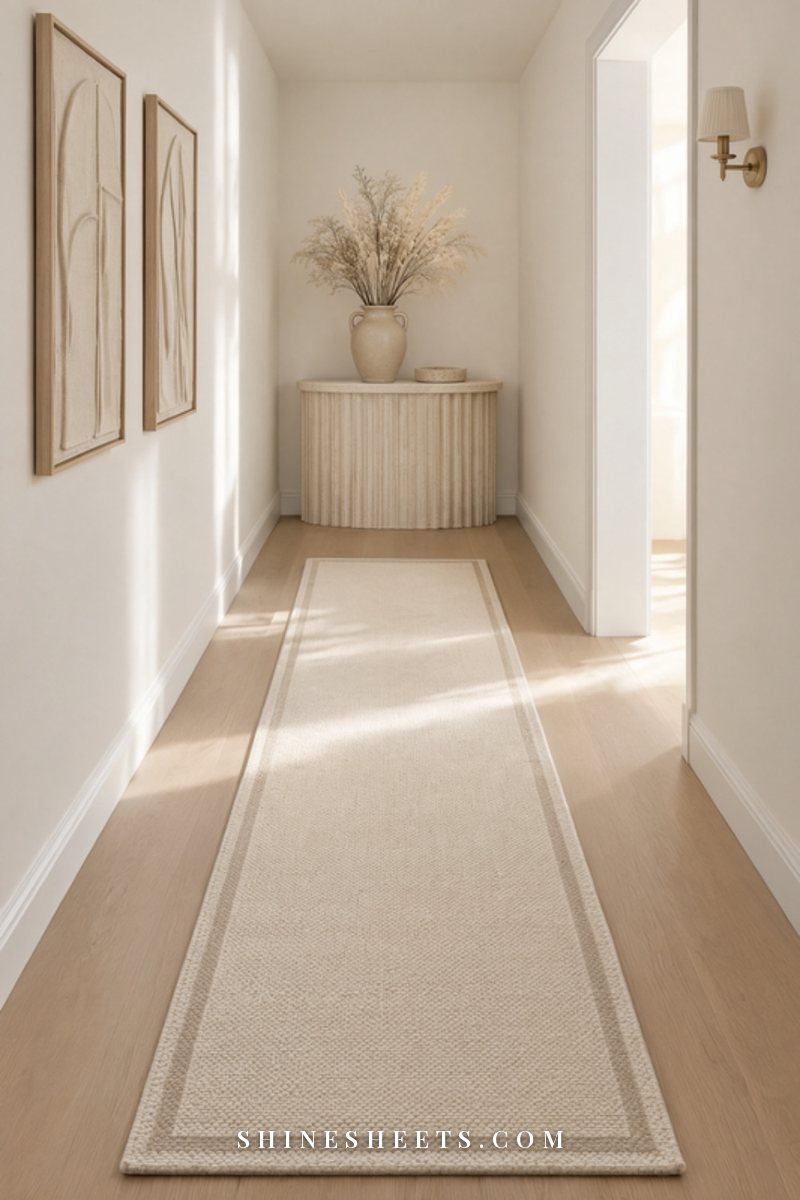
A rug is the single fastest way to say "this is the entry." It draws an invisible line on the floor, protects it from grit and gives your eye a clear starting point. Choose a runner or a small rectangle around 2 by 3 feet, placed so the door can still open over it.
For practicality, a low-pile, beige washable doormat is hard to beat. You can throw it in the machine every couple of weeks, and a soft neutral tone hides dust without looking dingy. Add a rug pad if your floors are slippery.
If the door opens straight into a living room with an existing large rug, pick an entry rug in a different texture (flat-weave against a fluffy living room rug, for example) so the two zones feel separate.
2. Add a Slim Console or Wall-Mounted Shelf
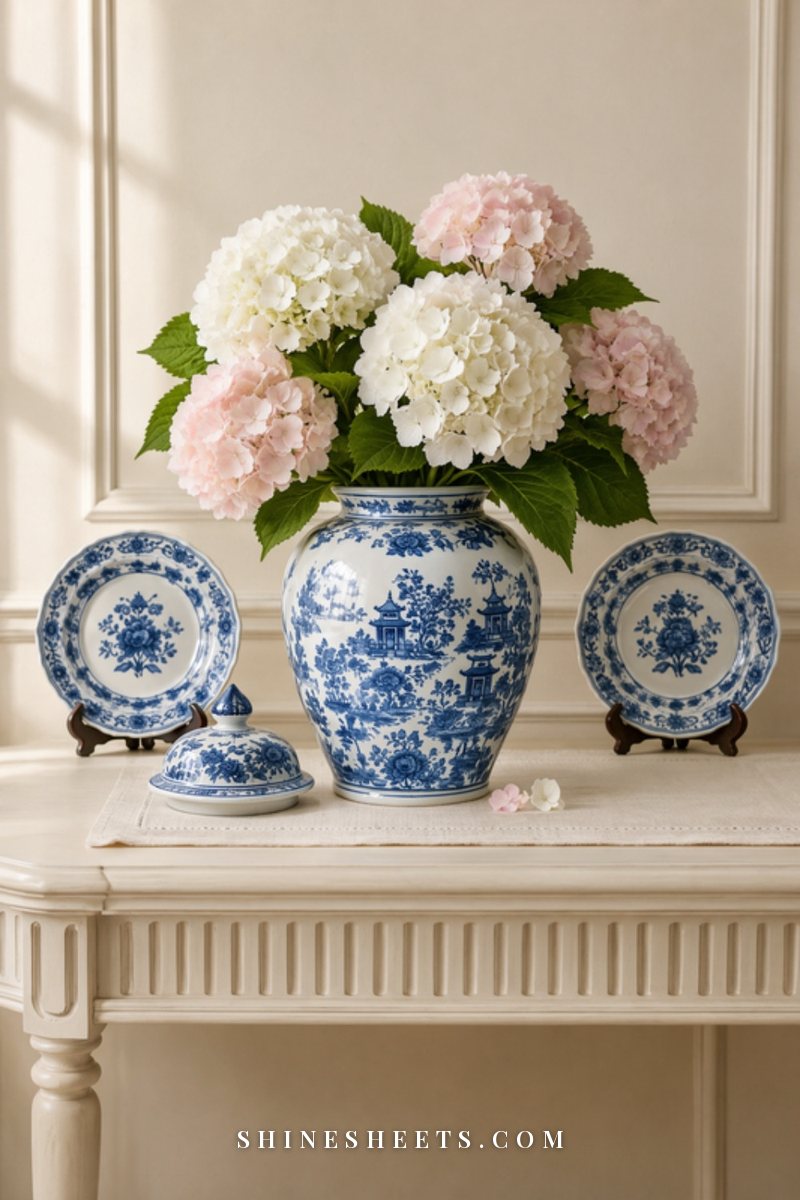
You need one surface at hand height for keys, a bag and whatever is in your hands. In a narrow space, depth matters more than width: look for something 8 to 12 inches deep.
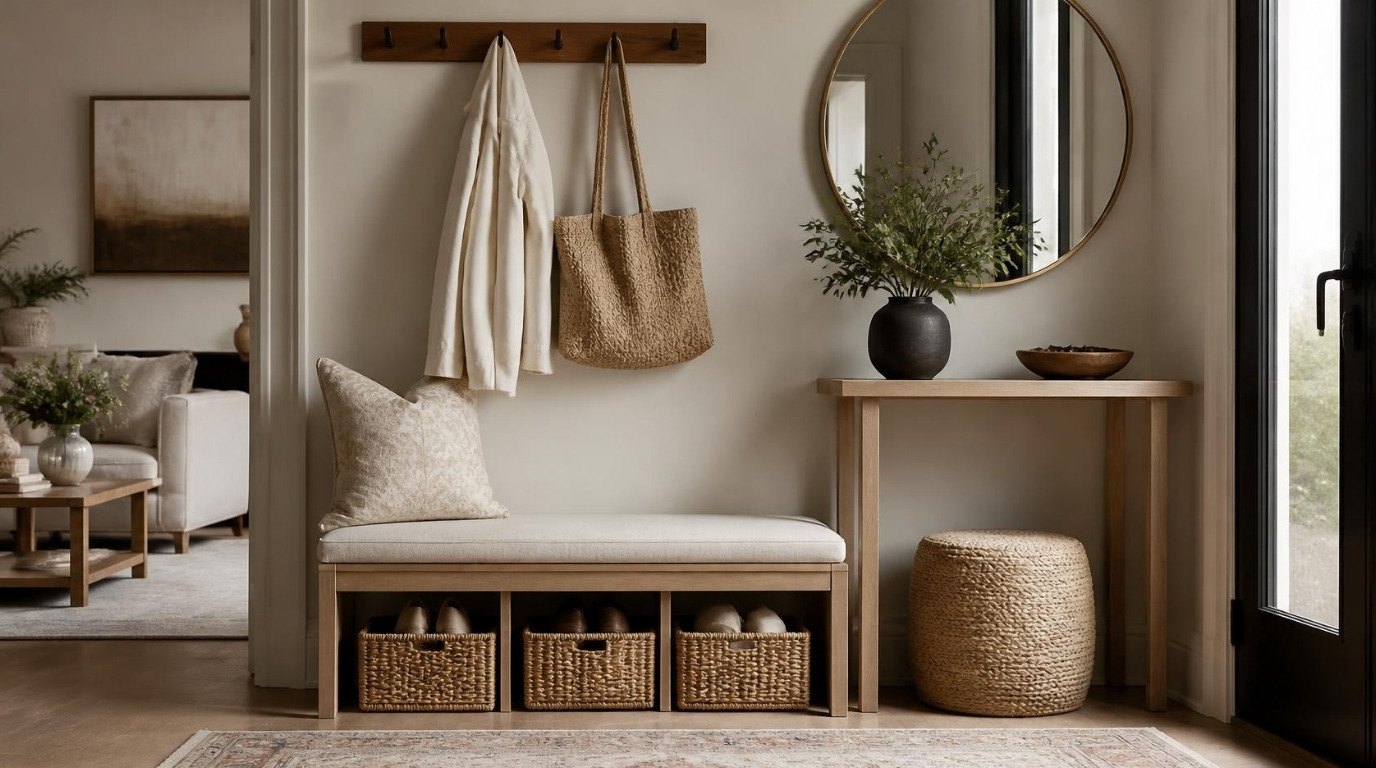
A cream slim console table works beautifully if you have a bit of wall beside the door. Look for one with a lower shelf for a basket or a pair of shoes, and rounded corners if the walkway is tight.
No floor space at all? A wall-mounted shelf or a small floating ledge does the same job with zero footprint. Mount it around 34 to 38 inches high (roughly console height) so it feels natural to drop things on. In a rental, ask before drilling, or use the tips in the landlord section below.
3. Hang Renter-Friendly Hooks or a Standing Coat Rack
Coats on the back of a dining chair are the classic sign of a missing entryway. Give them a home within arm's reach of the door.
Your two options:
- Adhesive hooks. A row of three to five heavy-duty adhesive wall hooks holds everyday coats and bags without drilling. Check the weight limit on the pack, press firmly for 30 seconds and wait the recommended time (often an hour) before hanging anything.
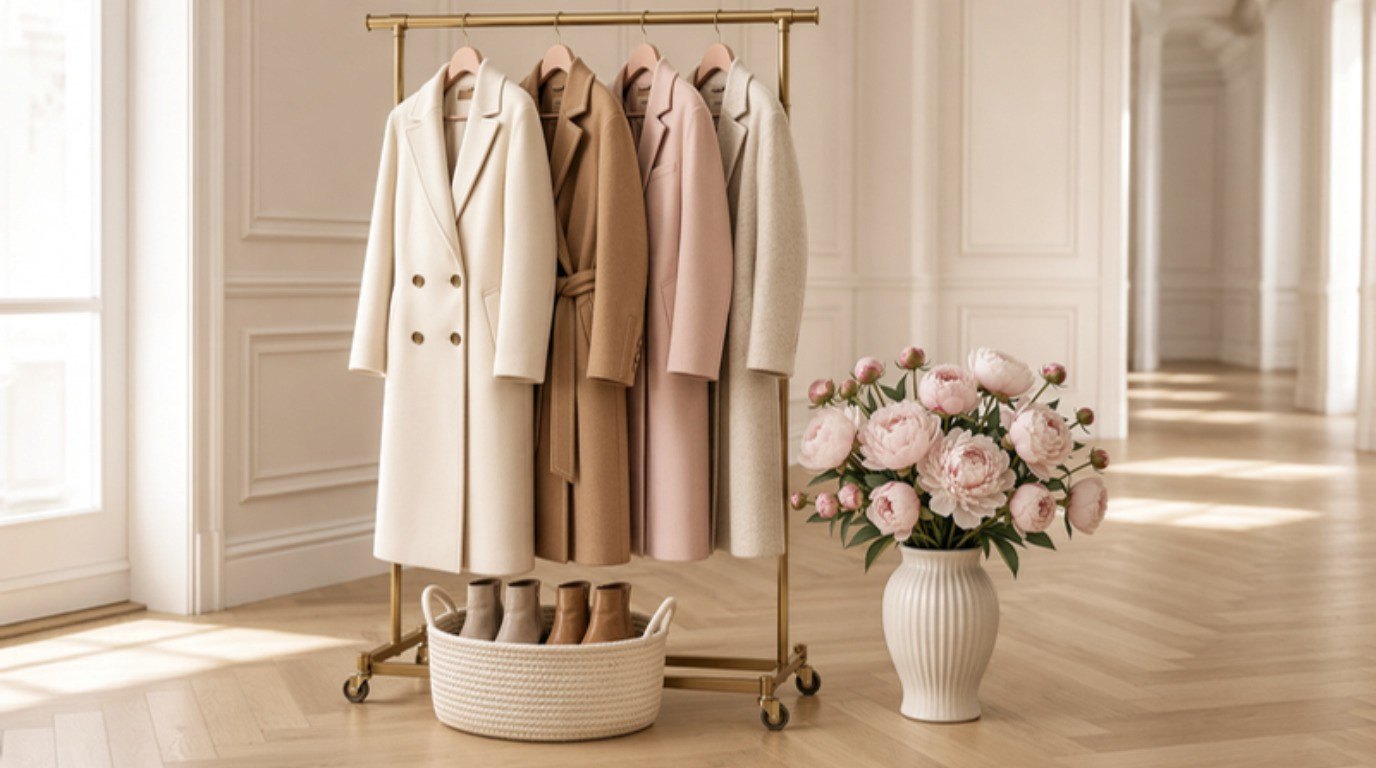
- A standing coat rack. Perfect if your walls are textured or your coats are heavy. A slim sage standing coat rack adds a soft color note and tucks into a corner beside the door.
Keep only the coats you're actually wearing this season on the hooks. One coat and one bag per person is the sweet spot; more than that and the zone starts to look like a pile again.
4. Choose a Narrow Shoe Cabinet or Storage Bench
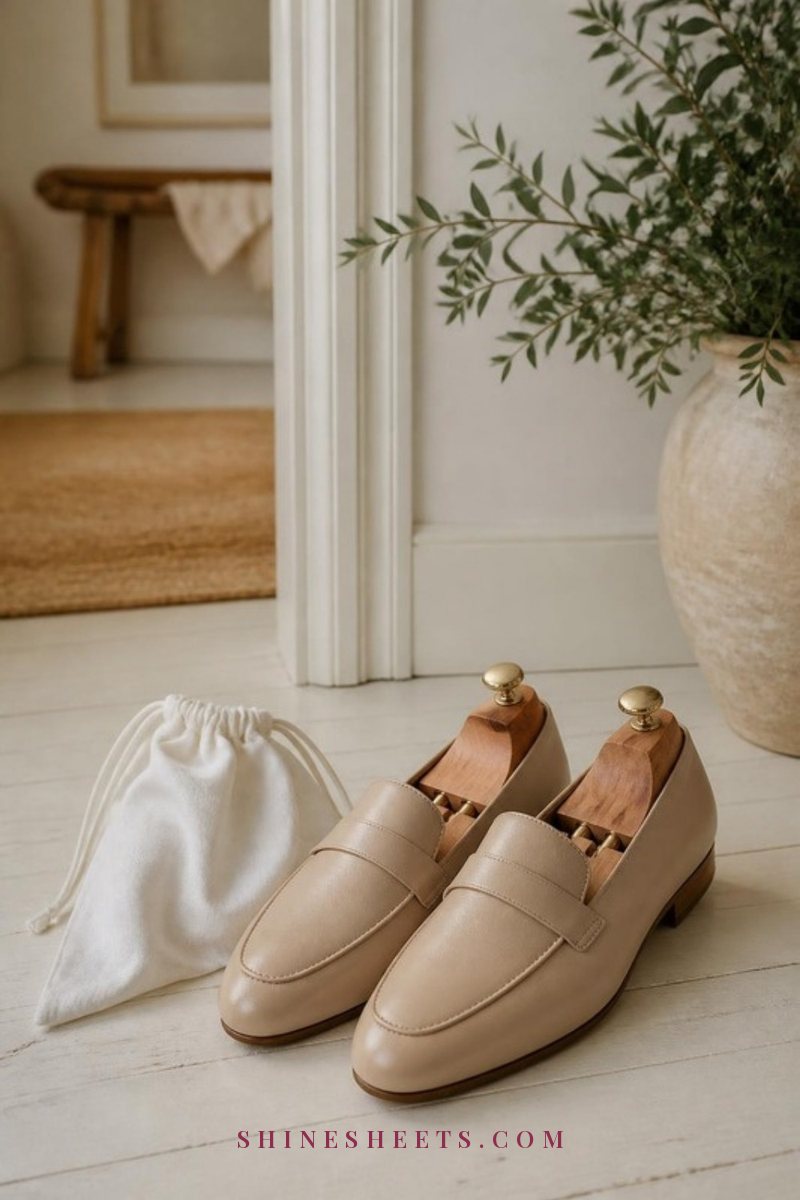
Shoes are usually the biggest offender, and they're the reason a doorway looks messy even when everything else is tidy. A closed shoe cabinet hides them completely. Tilt-out cabinets can be as shallow as 7 to 9 inches deep and still hold 8 to 12 pairs.
If you have a little more room, a bench with storage gives you a place to sit while you put on boots, plus baskets or a lift-up lid underneath. Choose one that's no deeper than about 14 inches.
Whatever you pick, set a simple limit: only the shoes you wore in the last week stay by the door. The rest live in the closet. For more ideas on that part, my guide to organizing shoes in small spaces covers racks, under-bed boxes and over-door options.
5. Hang a Mirror by the Door
A mirror makes the entry feel like an entry. It's also a lovely last-glance spot before you leave, and it bounces light around, which matters a lot in a dark corner by the front door.
A gold-frame round mirror above a console or shelf is the classic choice, and it brings a little Old Hollywood polish to even the plainest rental wall. Hang the center around 60 inches from the floor, or about 6 to 10 inches above the console.
Renter tip: lighter mirrors can go up with heavy-duty picture-hanging strips (check the weight on the pack). Heavier ones can simply lean on the console against the wall, which looks relaxed and intentional.
6. Add a Small Lamp or Plug-In Sconce
Light is what turns a corner into a place. Most apartments have one ceiling light for the whole open room, so the area by the door ends up shadowy. A small lamp on the console makes coming home in the evening feel instantly softer.
No surface for a lamp? A plug-in wall sconce hangs on a single hook or screw and runs on a cord you can tidy with an adhesive cord cover. Battery-powered, rechargeable sconces are another option if there's no outlet nearby.
Pick a warm bulb (around 2700K) and keep cords flat against the wall, out of the walkway, so nobody trips coming in with full hands. Never hardwire anything yourself; that's a job for an electrician and needs your landlord's okay.
7. Separate the Space With a Divider or Open Shelf
If your door opens directly into a living room or a studio, a light divider creates the feeling of a tiny foyer. The trick is to separate without blocking light.
- An open bookshelf placed perpendicular to the wall gives you storage on both sides and a see-through boundary. Anchor tall shelves to the wall for safety, or choose a low one (about 3 to 4 feet tall).
- A folding screen in rattan, linen or wood can stand at the edge of the entry and be moved when you have guests.
- A tension-rod curtain between the entry and the room works in alcoves and narrow spots.
My room divider ideas go into more styles and sizes, and if you're working with one open room, the studio apartment ideas guide shows how an entry zone fits into the whole layout.
8. Give Keys and Mail One Tray
This one costs almost nothing and solves the most stressful part of leaving the house. A small dish or tray on the console (or the shelf) is home for keys, sunglasses, lip balm and earbuds. A pretty blush key tray makes the habit feel like a small pleasure instead of a chore.
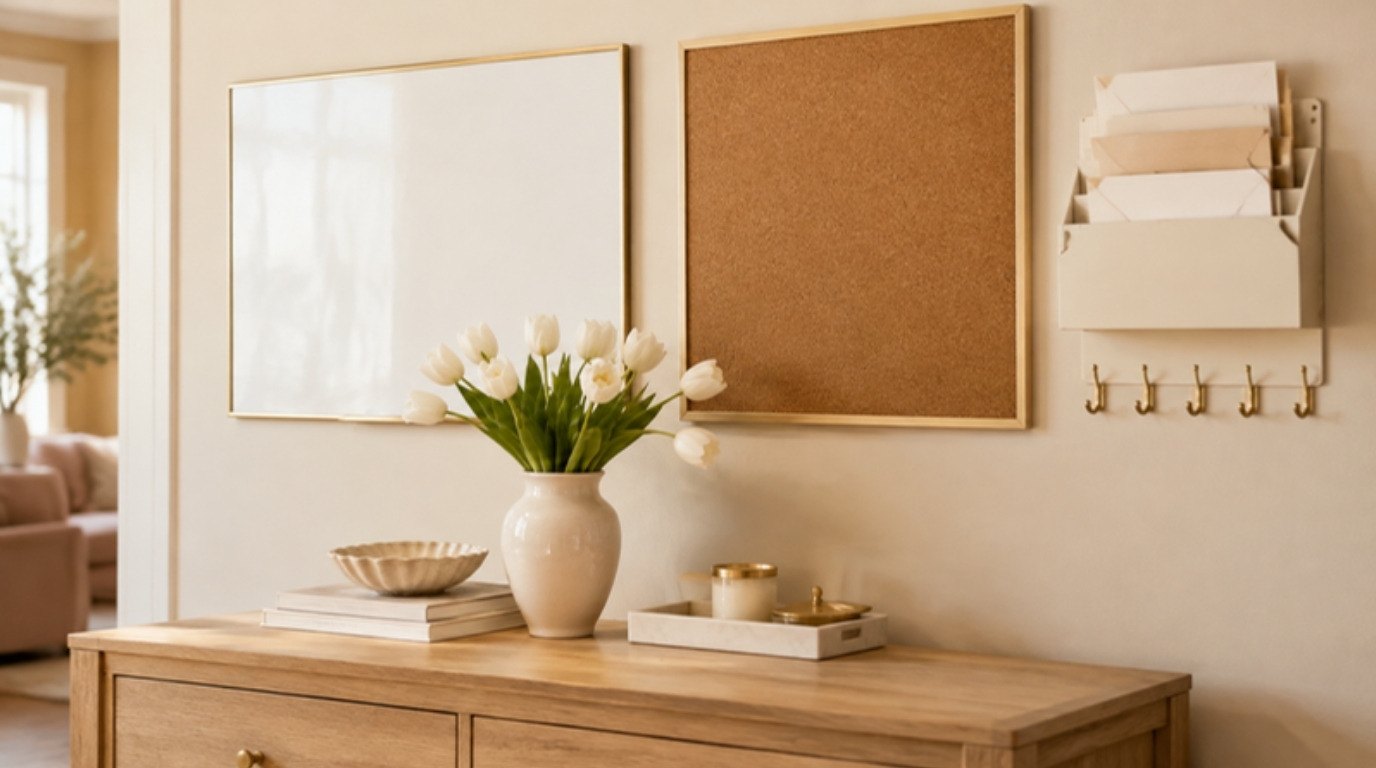
Mail gets its own spot right next to it: a slim upright holder or a single folder. The rule is simple. Mail can sit there for 48 hours maximum, then it gets opened, recycled or moved to wherever you handle paperwork.
Entryway Layout Table: Match the Idea to Your Problem
Find the row that describes your door and start with that idea. Footprint is the floor or wall space you'll need beside the door.
| Layout problem | Best idea | Footprint needed | Renter-friendly? |
|---|---|---|---|
| Door opens straight into the living room | Rug to mark the zone + open shelf as a divider | About 2 x 3 ft floor + 12 in deep shelf | Yes, no tools needed |
| Door opens into the kitchen | Wall-mounted shelf + adhesive hooks, shoes in a closet | Wall only, 8–10 in deep | Yes with adhesive; ask before drilling |
| Door is right next to a wall, no corner | Slim console + mirror above + key tray | 30–40 in wide, 10–12 in deep | Yes, mirror can lean |
| Door swings against the only free wall | Over-door hooks + flat rug + shoe cabinet on the opposite side | Back of door + 7–9 in deep cabinet | Yes |
| Studio with one open room | Folding screen or bookshelf divider + bench with storage | About 3 x 4 ft zone | Yes; anchor tall shelves |
| Dark corner, no outlet | Rechargeable sconce + mirror to bounce light | Wall only | Yes with strips or one small hook |
| Lots of shoes, tiny wall | Tilt-out shoe cabinet doubling as the "console" | 24–32 in wide, 7–9 in deep | Yes; use the anti-tip kit |
| Corner beside the door | Standing coat rack + small round rug | About 20 x 20 in | Yes, no tools needed |
If two rows sound like your apartment, combine them. A door that opens into the kitchen and sits in a dark corner, for example, works well with a wall shelf, adhesive hooks and a rechargeable sconce, all on one narrow wall.
Screenshot the table, measure your wall and pick one row. You can always add a second idea later once you see how the first one works.
What To Keep at the Door (and What To Move Away)
A small entry only stays calm if it holds the right things. Use the basket test from earlier and sort everything into two groups.
Keep by the door (daily items only):
- Keys, sunglasses and one lip balm in the tray
- The bag you use most days
- One coat per person for the current weather
- The shoes you wore this week (2 to 3 pairs per person)
- A reusable shopping bag folded small
- Incoming mail, for 48 hours only
Move away from the door:
- Off-season coats, boots and umbrellas you rarely use (closet or under-bed storage)
- Gym bags and work bags that aren't used daily
- Packages waiting to be opened (open them the same day, recycle the box)
- Decorative piles: more than three objects on a small console starts to look cluttered
If you're short on storage everywhere, my guide on how to organize a small apartment with no storage has good homes for the things you move away.
Drilling, Hooks and Your Landlord
Most of these ideas work without tools, but a few (a floating shelf, a heavy mirror, a sconce on a screw) are easier with a hole or two. Here's how to stay on good terms with your lease:
- Read your lease first. Some allow small nail holes for pictures, others ask you to request permission for anything.
- Ask before drilling. A short, friendly message works: "I'd like to hang one small shelf by the front door with two screws. I'll fill and touch up the holes when I move out. Is that okay?" Keep the reply in writing.
- Use removable options where you can. Adhesive hooks, picture-hanging strips, over-door hooks, tension rods and freestanding furniture all leave the walls untouched.
- Remove adhesives correctly. Pull the tab straight down, slowly, parallel to the wall, never outward, to avoid peeling paint.
- Anchor tall furniture. Bookshelves and tall cabinets can tip. Most come with an anti-tip kit; ask your landlord about using it, because safety is a reason most will say yes.
The Two-Minute Daily Reset
Even the prettiest fake entryway fills up if nothing ever leaves it. A daily reset takes two minutes, and it's the habit that makes all the furniture above actually work.
Do it once a day, at the same time (right after you come home works best):
- Keys and small things into the tray. 10 seconds.
- Bag on its hook, coat on its hook. 15 seconds.
- Shoes into the cabinet or onto the rack, not on the rug. 20 seconds.
- Mail sorted: recycle the junk right now, put the rest in the holder. 45 seconds.
- Anything that doesn't belong goes to its real home (the water bottle to the kitchen, the package to be opened). 30 seconds.
If you live with someone else, make the reset a shared rule rather than your private job: everyone's own keys, coat and shoes go to their spot when they come in. A hook or a basket per person makes it obvious whose things are whose.
Once a week, give it a little extra: shake out or wash the rug, wipe the console and the tray, and move any shoes or coats you haven't worn back to the closet. If you want more inspiration once your zone exists, my entryway ideas guide is all about styling and organizing an entry you already have.
Final Thoughts
An entryway is less about space and more about a clear "this is where things land." A rug, one slim surface, a few hooks and a little light can give even a door that opens straight into the kitchen a real sense of arrival.
Start with the one idea from the table that fits your door, add the two-minute reset, and give it a couple of weeks. Coming home to a calm, ready little corner is one of those small daily luxuries you'll feel every single evening.