Your morning and night skincare routines aren't two copies of the same list. They have completely different jobs. In the morning, your skin is heading out into sunlight, pollution and dry office air, so the goal is to protect. At night, your skin is resting and doing its own repair work, so the goal is to support and treat. Once you see it that way, the question of what goes when almost answers itself.
It took me a while to understand this. For a long time I put every serum I had on twice a day (and wondered why my combination, sensitive skin kept getting red and shiny at the same time). Splitting products by job was the thing that finally calmed everything down.
This guide breaks down a morning vs night skincare routine in plain language: the exact order for each, where the "any time" ingredients fit, what should stay at night only, a simple yes/no table you can screenshot, and a minimalist three-step version of each for busy days.
Why Morning and Night Skincare Do Different Jobs

Think of your morning routine as a light, breathable shield. During the day, your skin meets UV rays (even through windows and on cloudy days), pollution, wind and makeup. Antioxidants like vitamin C help defend against some of that stress, and sunscreen does the heavy lifting. Everything in the morning should be light enough to wear under makeup and play nicely with SPF.
Your night routine is the slow, repairing shift. There's no sun to worry about, nothing has to sit under foundation, and you have hours for products to work. That makes evening the natural home for stronger treatments (retinoids, exfoliating acids) and richer textures that would feel heavy or pill under makeup during the day.
A quick way to remember it:
- Morning = protect. Gentle cleanse, antioxidant, light hydration, sunscreen.
- Night = repair. Thorough cleanse, treatment, hydration, richer moisture.
If you're still figuring out the general order of thin-to-thick layering, my guide on how to layer skincare products walks through the basic rules. Below, I'll apply them specifically to each time of day.
Your Morning Skincare Routine, Step by Step

Here's the full morning order. You don't need every step every day, and I'll flag which ones are optional. Give each layer about 30–60 seconds to settle before the next one, so nothing slides around.
1. Cleanse Gently or Just Rinse
If you cleansed well the night before, your skin isn't dirty in the morning, just a little oily or sleepy. A splash of lukewarm water is enough for dry or sensitive skin. If you wake up shiny (hello, T-zone), a small amount of gentle cleanser on the oily areas only works beautifully.
Look for a low-foam, fragrance-free formula that leaves your skin soft rather than squeaky. A gentle hydrating cream cleanser is a lovely pick for normal, dry and sensitive skin, because it removes overnight oil without stripping. Massage for 20–30 seconds, rinse, and pat (don't rub) dry.
2. Toner (Optional)
Toner is the most skippable step in skincare. If you love one, choose a hydrating, alcohol-free formula and press it in with your palms. If you don't own one, nothing is missing. I'd only add it if your skin feels tight after cleansing.
3. Vitamin C Serum
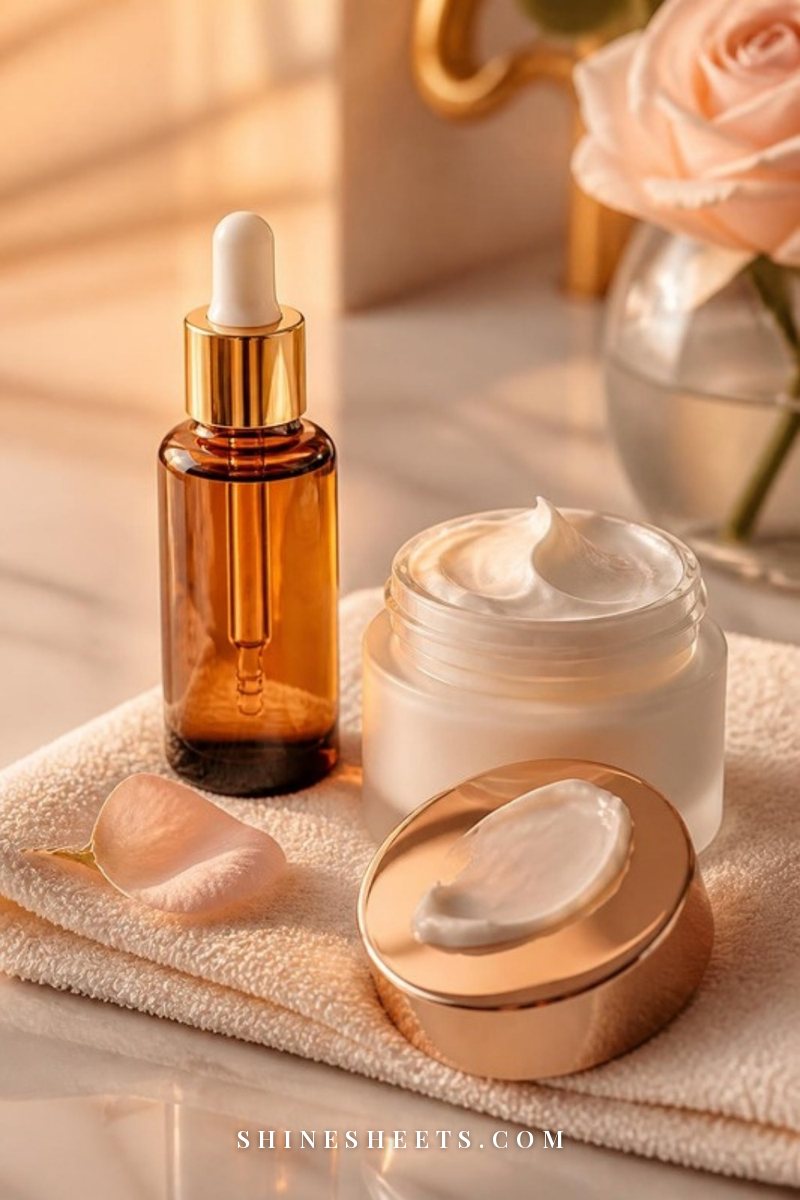
Vitamin C is the classic morning antioxidant. It helps your skin deal with daytime stress, supports a brighter-looking tone over time, and works as a teammate for your sunscreen (not a replacement). That's why most dermatology advice places it in the morning.
Use 3–4 drops on dry skin, press it over the face and neck, and wait a minute before moisturizer. A well-reviewed vitamin C serum for face in a dark or opaque bottle is the pick I'd choose, since light and air make vitamin C break down faster. If it turns dark orange or brown, it's time to replace it.
If your skin is sensitive, start every other morning for two weeks. My full guide to vitamin C serum explains the different forms and who they suit best.
4. Light Moisturizer
Morning moisturizer should be the lightest texture that keeps you comfortable until lunch. Gel-creams and lotions work well for combination and oily skin, and a soft cream suits dry skin. A pea-to-almond-sized amount is usually enough for the face.
The goal here is a smooth, hydrated base, not a thick layer. Too much moisturizer under sunscreen is one of the main reasons SPF pills or slides off by noon.
5. Sunscreen, Always Last
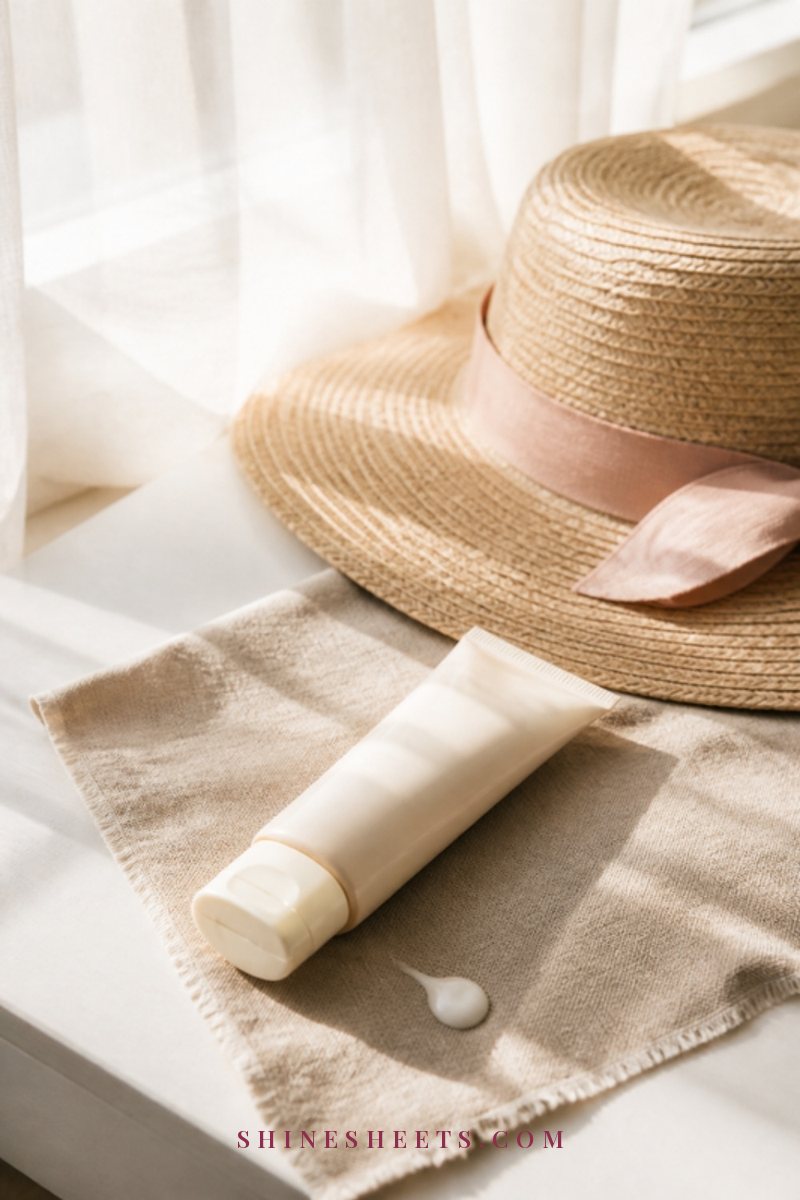
Sunscreen is the most important step of the morning routine, and it always goes last in your skincare (before makeup). Choose a broad-spectrum SPF 30 or higher. I'd reach for a lightweight broad-spectrum SPF 50 face sunscreen that feels comfortable enough to wear every single day, because the best sunscreen is the one you actually put on.
Use the two-finger rule: squeeze two full finger-length lines of sunscreen, which is roughly a quarter teaspoon for the face alone. Most people use about half that, which gives far less protection than the label promises. Add a little more for your neck and ears.
Let it set for a few minutes before makeup. If you're outdoors, reapply every two hours, and after swimming or sweating.
Your Night Skincare Routine, Step by Step

Evening is where you can take your time. This is also where most of the "results" products live, so the order matters a little more. Here's the full night routine.
1. Double Cleanse If You Wore SPF or Makeup
Sunscreen and makeup are designed to stay put, which means a single gentle cleanser doesn't always remove them completely. A double cleanse fixes that: first an oil-based cleanser or balm on dry skin (massage for about 60 seconds, then emulsify with a little water and rinse), then your regular gentle cleanser.
On days you stayed home with no SPF or makeup, one cleanse is fine. If you want the details, here's my guide to double cleansing and who really needs it.
2. Treatment: Retinoid or Exfoliating Acid

This is your "active" step, and it belongs on clean, dry skin. The two main options are:
- A retinoid (retinol, retinal or a prescription retinoid) for smoother texture, fine lines and clearer pores over time.
- An exfoliating acid (AHA like glycolic or lactic acid, or BHA like salicylic acid) for dullness, rough texture and clogged pores.
Don't use both on the same night when you're starting out. Alternate instead, with rest nights in between. A simple beginner week could be: retinoid on Monday and Thursday, a gentle acid on Saturday, and plain hydration every other night.
For a retinoid, use a pea-sized amount for the whole face, two or three nights a week at first, avoiding the corners of the nose and mouth. A gentle retinol serum for beginners with a low strength is the pick I'd choose for sensitive skin. If you get dryness or flaking, step back to fewer nights. My gentle retinol start plan has a full week-by-week schedule.
3. Hydrating Serum
After your treatment (or on rest nights, straight after cleansing), add a hydrating serum. Hyaluronic acid, glycerin, panthenol and ceramides are all comforting choices. Apply it on slightly damp skin and seal it in with moisturizer right away, so the water doesn't evaporate and leave your skin feeling tighter. The damp skin rule for hyaluronic acid explains exactly why this matters.
4. Richer Moisturizer or Night Cream

At night you can use a slightly richer texture than in the morning, because nothing has to sit under makeup. A night cream also buffers your retinoid or acid and helps your skin barrier recover overnight.
Look for ceramides, squalane, shea butter or peptides. A ceramide night cream is a classic pick for normal to dry skin and for anyone using retinol. If you're oily, a regular gel-cream is fine at night too. "Night cream" is a texture, not a rule.
5. Eye Cream
Eye cream is optional. If you use one, tap a rice-grain amount along the orbital bone (not right on the lash line) with your ring finger. Many people simply use a little of their regular moisturizer around the eyes, and that's perfectly fine if it doesn't sting.
Some people prefer eye cream before the face moisturizer so the richer cream doesn't migrate into the eye area. Either order works. Pick one and stay consistent.
The Morning vs Night Skincare Table
Here's the quick reference I wish I'd had years ago. Screenshot it and keep it on your phone for when you're standing in front of the bathroom shelf wondering what goes when.
| Product | Morning | Night | Why |
|---|---|---|---|
| Gentle cleanser | Yes (or just water) | Yes | Night cleanse removes the day; morning cleanse can be minimal |
| Oil cleanser or balm | No | Yes, if you wore SPF or makeup | Dissolves sunscreen and makeup |
| Hydrating toner | Optional | Optional | Extra hydration, never essential |
| Vitamin C serum | Yes | Optional | Antioxidant support for daytime stress, teams up with SPF |
| Niacinamide | Yes | Yes | Gentle and stable, works any time |
| Hyaluronic acid | Yes | Yes | Hydration on damp skin, any time |
| Peptides | Yes | Yes | Gentle, layer-friendly, any time |
| Retinoid (retinol, retinal) | No | Yes | Increases sun sensitivity; some forms break down in light |
| Strong AHA or BHA exfoliant | No | Yes | Makes skin more sun-sensitive; best on nights without retinoid |
| Light moisturizer | Yes | Yes (oily skin) | Comfortable base under SPF and makeup |
| Rich night cream | No | Yes | Too heavy under makeup; perfect for overnight repair |
| Eye cream | Optional | Optional | Comfort for the thin eye area |
| Sunscreen | Yes, always last | No | The main daytime protection step |
A small honest note: "optional" really does mean optional. Skincare works best when the routine is simple enough to repeat every day.
Ingredients That Work Any Time of Day
Some ingredients don't care what time it is. They're gentle, stable and easy to layer, so you can use them in the morning, at night or both.
- Niacinamide. Helps balance oil, supports the skin barrier and softens the look of redness and enlarged pores. It's especially nice for combination skin. A niacinamide serum with around 5 percent is a gentle place to start; higher strengths aren't automatically better and can sting sensitive skin. Read more in my guide to niacinamide for calm, balanced skin.
- Hyaluronic acid. Pure hydration. Use it on damp skin morning or night, always followed by moisturizer.
- Peptides. Layer-friendly and gentle. They fit nicely in a night routine on retinoid rest days, or in the morning under moisturizer.
- Ceramides and panthenol. Barrier-loving ingredients that are welcome any time, especially when your skin feels tight or irritated.
Where to place them: after cleansing (and after vitamin C in the morning or your treatment at night), before moisturizer. Thinnest, most watery textures first.
A common question is whether niacinamide and vitamin C can be used together. For most people, yes. If your skin gets flushed, simply move niacinamide to the evening and keep vitamin C in the morning.
What Stays at Night Only
A few products are night-shift workers. Keeping them in the evening protects your skin and helps them work properly.
- Retinoids. They make skin more sensitive to the sun, and some forms break down in light. Use them at night, and wear sunscreen every morning while you're using them.
- Stronger exfoliating acids. Glycolic, lactic, salicylic and mandelic acid peels or serums can increase sun sensitivity. Evening use plus daily SPF is the safe pairing.
- Rich creams, balms and facial oils. Not dangerous in daylight, just likely to make sunscreen and makeup slide. Save them for bedtime.
- Spot treatments and masks. These are easiest to use when you're not going anywhere afterward.
Even with all your actives at night, sunscreen in the morning isn't optional. Retinoids and acids can leave freshly renewed skin more vulnerable, and that's exactly when daily SPF matters most.
The Minimalist 3-Step Version of Each
Some days you have ten minutes. Some days you have ninety seconds and a bus to catch. These two short routines cover the essentials, and they're enough on their own if you're new to skincare or just tired.
Minimalist Morning Routine (3 Steps)
- Rinse or cleanse. Water or a small amount of gentle cleanser.
- Moisturize. A light lotion or gel-cream, or skip it if your sunscreen is moisturizing enough.
- Sunscreen. Two finger-lengths, broad spectrum, SPF 30 or higher.
Minimalist Night Routine (3 Steps)
- Cleanse. Double cleanse if you wore SPF or makeup, one cleanse if you didn't.
- Treat (on treatment nights). Retinoid or acid, or nothing on rest nights.
- Moisturize. A comfortable cream to finish.
That's it. Everything else in this guide is an upgrade, not a requirement. If you only add one extra product, I'd add vitamin C in the morning or a gentle retinoid at night, depending on whether your main goal is brightness or texture.
How To Adjust Both Routines for Your Skin Type
The order stays the same for everyone. What changes is the texture and how often you use the stronger steps.
- Oily skin. Gel cleanser in the morning is fine, a gel-cream moisturizer day and night, and a BHA (salicylic acid) on one or two treatment nights a week. Don't skip moisturizer; dehydrated skin often makes more oil.
- Dry skin. Water-only rinse in the morning, a cream cleanser at night, and a richer cream both times. Start retinoids just twice a week and buffer them with moisturizer if needed.
- Combination skin. Treat zones differently. A little cleanser on the T-zone in the morning, a lighter layer of moisturizer there and a slightly richer one on the cheeks. This is exactly what works for my own shiny-T-zone, sensitive-cheeks situation.
- Sensitive skin. Fewer products, fragrance-free formulas, one active at a time, and longer gaps between treatment nights. Niacinamide at a low strength and a barrier-friendly night cream are kind starting points.
Seasons matter too. In winter you might need a richer night cream and fewer acid nights; in summer a lighter moisturizer and more diligent sunscreen reapplication.
Common Mistakes When Splitting Your Routine
These are the little slip-ups I see most often (and, in fairness, a couple I've made myself):
- Putting sunscreen under moisturizer. SPF goes last in the morning, always.
- Using retinol and a strong acid on the same night. That's the fastest route to stinging and peeling. Alternate them.
- Skipping SPF because your actives are at night. Night-time retinoids still affect your skin during the day.
- Adding three new products in one week. If your skin reacts, you won't know which one caused it. Add one new product every two weeks.
- Using a heavy night cream in the morning. It often makes sunscreen pill and makeup slide.
- Over-cleansing in the morning. A harsh foaming wash twice a day can leave combination skin both tight and oilier.
Patch Testing and a Pregnancy Note
Before you add any new active (vitamin C, retinoid, acid or even a new sunscreen), patch test it. Apply a small amount behind your ear or along your jawline once a day for three to five days. If you see redness, itching, swelling or a rash, skip it. Mild tingling with acids can be normal; burning is not.
If you're pregnant, trying to conceive or breastfeeding, avoid retinoids and ask your doctor before using them or any other strong active. Many gentle ingredients like niacinamide, hyaluronic acid and mineral sunscreen are commonly considered alternatives, but your doctor or dermatologist is the right person to confirm what suits you.
And if you have persistent breakouts, eczema, rosacea or any skin condition that doesn't settle, a dermatologist can build a routine around your skin rather than around general rules.
Final Thoughts
The difference between a morning and a night routine isn't about owning more products. It's about giving each one the right moment: protection when you're heading into the day, repair when you're resting.
Start with the three-step versions, add one treatment at a time, and let sunscreen be the step you never skip. Your skin will thank you quietly, one calm, comfortable morning at a time.