For a long time my evening "cleanse" was one quick wash with whatever gel cleanser was by the sink, a towel, and straight into bed. Then one night I swiped a cotton pad with toner across my forehead and it came away beige. Foundation. Sunscreen. The whole day, still sitting there, after I'd supposedly washed my face.
That was my introduction to double cleansing, the two-step method borrowed from Korean and Japanese routines: an oil-based cleanser first to melt makeup and sunscreen, then a gentle water-based cleanser to wash everything away. It sounds like extra work, and for some people it genuinely is unnecessary. But for others (hello, combination sensitive skin with a shiny T-zone that also wears SPF every day), it can make the rest of your routine work so much better.
So let's make it simple. In this guide you'll find who actually needs double cleansing and who can skip it, a "do you need it?" decision table, a 60-second step card for busy evenings, how to choose an oil or balm for your skin type, and the mistakes that turn a lovely ritual into a stripped, tight face.
Spoiler: it's much quicker than it sounds.
What Is Double Cleansing, Exactly?
Double cleansing simply means washing your face twice in a row, with two different types of cleanser:
- An oil-based cleanser (a cleansing oil, balm or milk) that dissolves oil-based things: sunscreen, makeup, excess sebum and the general grime of the day.
- A water-based cleanser (a gentle gel, cream or low-foam wash) that removes the oil cleanser and anything water-based, like sweat and dust.
The logic is "like dissolves like." Modern sunscreens and long-wear makeup are designed to stay put, which means a single foaming wash often just smudges them around. Oil grabs onto oil, and once it's been emulsified with a little water, it rinses away easily, taking the day with it.
It's usually an evening thing. In the morning, your face only has a night of sleep and skincare on it, so one gentle wash (or even just water) is plenty.
Who Needs Double Cleansing (and Who Can Skip It)
Here's the honest truth: not everyone needs it. If you don't wear makeup or sunscreen and your skin is dry, a second cleanse can be more than your skin wants. But if you wear daily SPF, which I really hope you do, there's a good chance it will help.
This is the table I'd use to decide. Find the rows that describe your day, and if any of them say "yes," double cleansing is worth trying.
The "Do You Need It?" Decision Table
| Your situation | Double cleanse? | Why |
|---|---|---|
| You wear sunscreen every day | Yes | Water-resistant and mineral sunscreens cling to skin; an oil cleanser lifts them properly. |
| You wear foundation, long-wear makeup or waterproof mascara | Yes | One wash often leaves a film that can clog pores and make your night serums less effective. |
| Oily or breakout-prone skin | Yes, most evenings | Oil cleansers dissolve excess sebum gently, so you don't need a harsh foaming wash. |
| Combination skin | Yes, on SPF and makeup days | Clears the T-zone well without stripping drier cheeks. |
| Normal skin, light tinted SPF only | Sometimes | A good cleansing balm alone, or a single gentle wash, may be enough. Try both and see. |
| Dry skin, no makeup | Sometimes | Try an oil or balm followed by just a splash of water, or a cleansing milk on its own. |
| Sensitive or reactive skin | Sometimes | Keep both steps ultra-gentle, or use a single cream cleanser on low-makeup days. |
| Barrier feeling tight, stingy or flaky right now | Skip for now | Simplify to one mild cleanser until your skin calms down. |
| Morning routine | Skip | One gentle wash or just lukewarm water is plenty. |
My own answer, with combination sensitive skin: yes on most evenings, because I wear sunscreen daily, but I keep both steps very soft. On lazy no-makeup weekends at home, one cleanse is fine.
Your 60-Second Double Cleanse Step Card
This is the whole thing, timed. Screenshot it and keep it on your phone until it becomes second nature.
- 0–5 seconds: Start with dry hands and a dry face. This is the step everyone gets wrong. Oil cleansers work best when they meet dry skin first.
- 5–35 seconds: Massage the oil or balm. Use one to two pumps of oil, or a scoop of balm about the size of a hazelnut. Warm it between your palms and massage over your whole face in small circles for about 30 seconds, spending a little longer on the nose, chin and hairline where sunscreen builds up. Close your eyes and gently sweep over the lashes if you're wearing mascara.
- 35–45 seconds: Emulsify. Wet your fingertips and keep massaging. The oil turns milky. That's the emulsion, and it's what lets the oil rinse off cleanly instead of leaving a greasy film.
- 45–50 seconds: Rinse. Splash with lukewarm (never hot) water until your skin no longer feels slippery.
- 50–60 seconds: Second cleanse. A pea-sized amount of your water-based cleanser, lathered lightly in your hands, massaged over damp skin for about 10 seconds, then rinsed.
Pat dry with a clean towel, and move straight on to your serums and moisturizer while your skin is still slightly damp. That's it. One minute.
Step One: Choosing Your Oil Cleanser
The first step comes in a few textures. They all do the same basic job, so choose the one you'll actually enjoy using.
Cleansing Balms
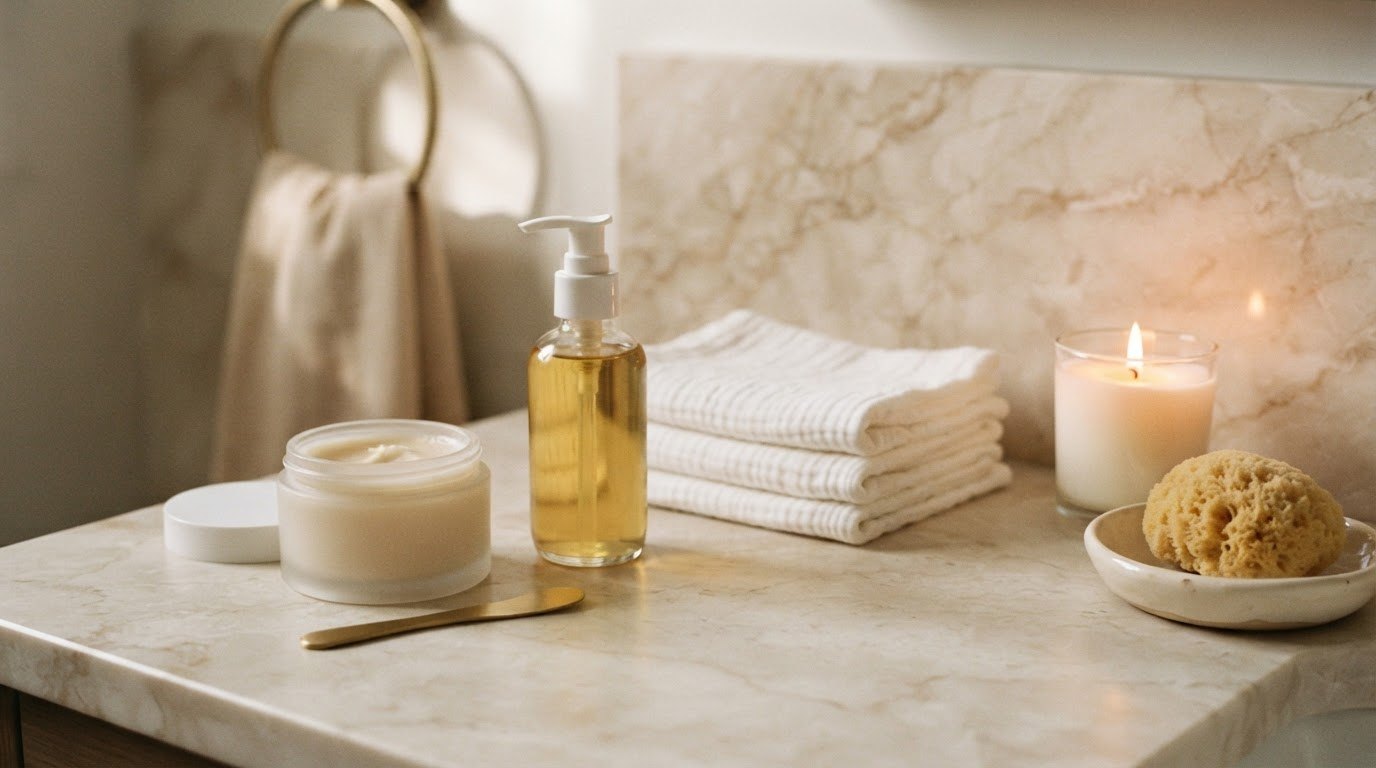
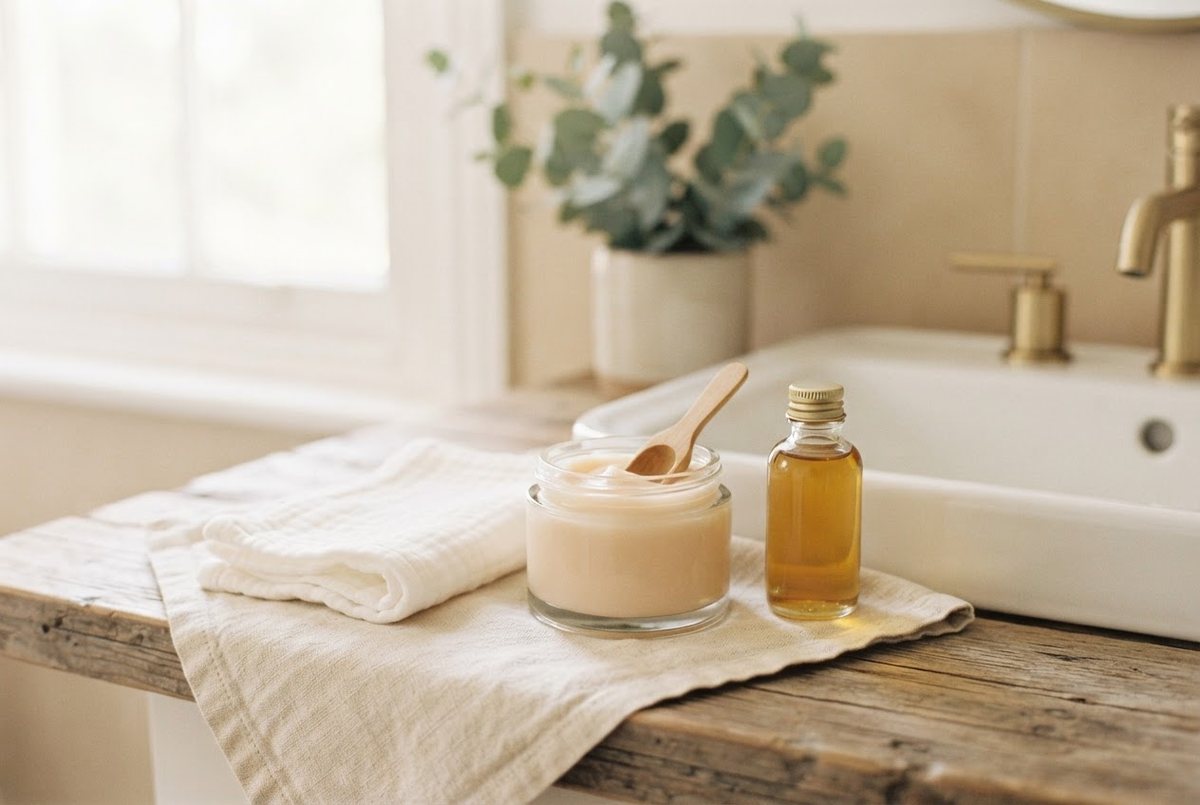
Solid in the jar, they melt into an oil the moment they touch your skin. Balms feel luxurious, travel well and are great for heavier makeup. A melt-in K-beauty balm is a lovely starting point; I'd choose a gentle sherbet-style cleansing balm that turns milky quickly with water and doesn't leave a heavy film. Use the little spatula instead of your fingers to keep the jar clean.
Cleansing Oils
Lighter and very quick to use, especially in a pump bottle. They're wonderful for oily and combination skin, because a well-formulated cleansing oil rinses off completely. Look for a lightweight cleansing oil with a "rinse-clean" or "emulsifying" formula; plain kitchen or single oils without emulsifiers don't rinse away well and can leave residue behind.
Cleansing Milks
Softer, creamier and gentler, with less oil. A good fit for dry and very sensitive skin, or for evenings when you're wearing only sunscreen. My guide to choosing between cleansing milk and face wash goes deeper on this.
Micellar Water (as a Shortcut)
Micellar water isn't technically an oil cleanser, but on low-makeup days, a gentle micellar water for sensitive skin on a cotton pad can stand in for step one. It's less effective on heavy, waterproof makeup, so I see it as a backup rather than a replacement.
Step Two: Choosing Your Water-Based Cleanser
The second cleanser should be the gentle one. Its job is just to tidy up, not to scrub or strip. Here's what I'd look for:
- A low-pH or "gentle" gel or cream. Your skin should feel clean but soft afterward, never squeaky or tight.
- Little to no fragrance. Especially if your skin is sensitive.
- No harsh sulfates or heavy foam. A light lather is fine; mountains of foam usually means a stronger cleanser than you need.
- Hydrating extras. Glycerin, ceramides, panthenol or centella make the second step feel comforting.
A low-pH gentle gel cleanser is a classic K-beauty partner for an oil cleanser and suits most skin types. If your skin is dry, a cream cleanser is lovely here instead.
How To Double Cleanse for Your Skin Type
The method is the same for everyone, but small tweaks make a big difference.
Oily Skin
A cleansing oil followed by a gentle gel cleanser most evenings. Resist the urge to use a stripping foam as your second step; oily skin that's over-cleansed often responds by making even more oil.
Combination Skin
Massage a little longer on the T-zone, and keep the second cleanse brief on the cheeks. If you want the full picture, my skincare routine for combination skin shows where double cleansing fits in the rest of the evening.
Dry Skin
A balm or cleansing milk first, then a cream cleanser, or simply a rinse with water if your skin feels tight. Two cleanses on a no-makeup day may be one too many.
Sensitive Skin
Choose fragrance-free products for both steps, use lukewarm water, and skip any washcloth scrubbing. On days your skin feels reactive, one gentle cream cleanser is perfectly fine.
Breakout-Prone Skin
Oil cleansers can actually be kind to breakout-prone skin, as long as you emulsify properly and rinse well. If you're worried, look for "non-comedogenic" on the label and patch test for a couple of weeks.
Little Upgrades That Make It Feel Like a Ritual
Double cleansing is one of my favorite ways to mark the end of the day. Pop the kettle on, light a glass candle, wash the day off, then sit down with tea and a journal. A few small things make it feel calmer and work better:
- Pull your hair back. A soft cream spa headband keeps your hairline clean and stops oil getting into your hair.
- Massage slowly. Thirty unhurried seconds of massage is relaxing and helps the oil grab every bit of sunscreen.
- Use a soft cloth only if you like it. White muslin face cloths, dampened with lukewarm water and pressed (not rubbed) over the skin, can help remove a heavy balm. Use a fresh one each time.
- Keep the water lukewarm. Hot water feels lovely in the moment but strips the skin and can leave it flushed.
- Follow up quickly. Apply your serum and moisturizer within a minute or so, while skin is still slightly damp.
7 Double Cleansing Mistakes To Avoid
- Putting oil cleanser on wet skin. Water gets in the way of the oil dissolving makeup. Start dry, then add water to emulsify.
- Skipping the emulsifying step. If you rinse straight away, the oil slides around and leaves a greasy film. Wait until it turns milky.
- Using a harsh second cleanser. If your face feels tight afterward, your second step is too strong.
- Double cleansing in the morning. Unless you woke up with makeup on, once is enough.
- Scrubbing with a rough washcloth. Friction irritates, especially on sensitive skin. Gentle pressing is plenty.
- Massaging for five minutes. Longer isn't better. Around 30 seconds for the oil and 10 for the gel is perfect.
- Adding exfoliation to the cleanse. Keep exfoliating as a separate, occasional step. If you want to build that in, my guide on how to exfoliate your face without overdoing it walks through it.
Signs Your Double Cleanse Is Too Much
Double cleansing should leave your skin feeling clean and comfortable. If you notice any of the following, it's time to ease off:
- Tightness straight after washing that lasts more than a few minutes
- Stinging when you apply serums or moisturizer
- Flaky patches around the nose, mouth or eyebrows
- More shine than usual a few hours later (skin trying to make up for being stripped)
- Redness that wasn't there before
The fix is usually simple: switch to a milder second cleanser, shorten the massage time, or go back to one cleanse on no-makeup days. If your skin feels genuinely irritated, my guide to the signs of a damaged skin barrier and how to restore it can help you get back on track.
Does Double Cleansing Help With Pores and Blackheads?
It can help, gently. Oil cleansers dissolve the sebum and sunscreen that collect in pores, and a regular, thorough massage over the nose and chin often makes the surface look smoother over time. Some people even notice tiny "grits" (little plugs of oil) coming out during a long oil massage.
What it won't do is clear stubborn blackheads on its own. For that, a leave-on BHA a few nights a week usually does more. My guide on how to get rid of blackheads and keep them at bay covers the full approach.
Double Cleansing Questions, Answered
Is coconut or olive oil from the kitchen okay?
I wouldn't. Plain oils don't contain emulsifiers, so they don't rinse away cleanly and can leave a heavy film behind, which is the opposite of what you want. Coconut oil in particular is known to clog pores for many people. A cleansing oil or balm made for the face is designed to turn milky with water and wash off completely.
Can I just wash twice with the same gel cleanser?
You can, but it's not quite the same thing. A water-based cleanser twice in a row is more likely to dry out your skin, and it still doesn't dissolve sunscreen and long-wear makeup as well as an oil does. If you don't want a second product, a single cleansing balm followed by a thorough rinse is often gentler than two gel washes.
Do I still need it if I only wear sunscreen?
Often, yes. Modern sunscreens are made to stay on through sweat and water, which is great during the day and a little stubborn at night. Mineral sunscreens with zinc oxide can be especially clingy. Try a week with an oil cleanse first and a week without, and notice how your skin feels the next morning.
What about cleansing wipes?
Wipes are handy for travel or a very late night, but the rubbing can irritate sensitive skin, and they tend to move makeup around rather than lift it. If you use one, follow it with a proper rinse or a quick second cleanse when you can.
How long does a jar of cleansing balm last?
With a hazelnut-sized scoop most evenings, a standard jar usually lasts somewhere around two to three months. Keep the lid tightly closed, use the spatula, and keep water out of the jar so it stays fresh.
Can I double cleanse if I'm using retinol or exfoliating acids?
Yes, and it can actually be a kind choice, because an oil cleanser is gentler than a stronger foaming wash. Just keep both steps fragrance-free and mild, pat (never rub) your face dry, and wait a minute before applying your active so your skin isn't damp and extra sensitive.
Double Cleansing When You're Traveling or Short on Time
Some nights, even 60 seconds feels like a lot. Here's the realistic, low-effort version:
- Decant into travel bottles. A small pump bottle of cleansing oil and a mini gel cleanser take up almost no room in a toiletry bag.
- Keep a balm by the bath or shower. Massage it in on dry skin before you step in, then rinse and do your second cleanse under the water.
- On truly exhausted nights, do just the oil cleanse and rinse well. One good cleanse is far better than sleeping in sunscreen and makeup.
A Gentle Safety Note
Double cleansing is a gentle routine for most people, but every face is different. Patch test any new cleanser along your jawline for a few days before using it all over. Be careful around your eyes; if a product stings them, rinse with cool water and choose an eye-safe formula next time.
If you have a diagnosed skin condition, persistent breakouts or very reactive skin, a dermatologist can help you find the right cleansing routine. This guide is general information and isn't a substitute for personal medical advice.
Final Thoughts
Double cleansing isn't a rule. It's a tool. If you wear sunscreen or makeup, it's one of the simplest ways to make sure your skin actually starts the night clean, and it only takes a minute.
Keep both steps soft, start with dry hands, let the oil turn milky, and listen to how your skin feels afterward. Comfortable, clean and calm is exactly what you're aiming for, and that's a lovely way to close the day.