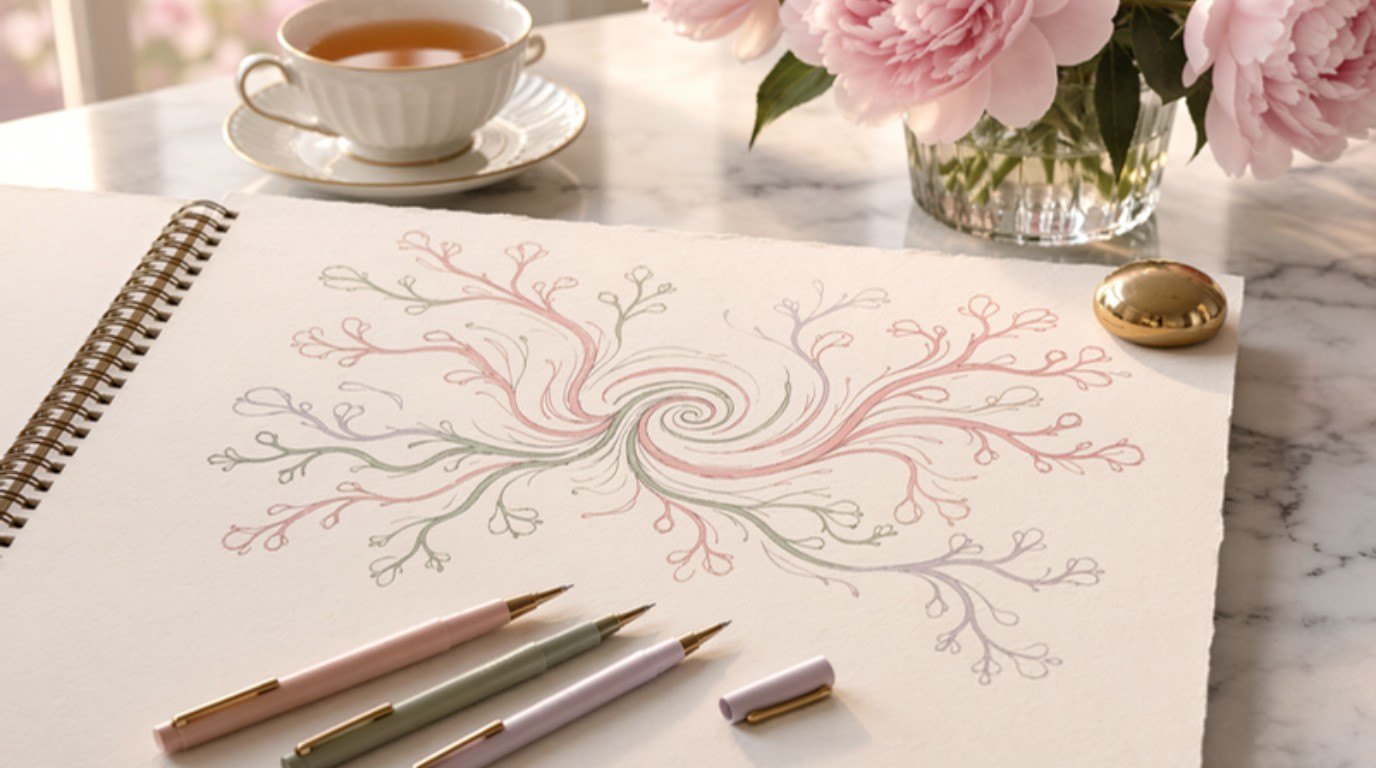
A mind map is one of the kindest tools you can give a busy brain. Instead of forcing every thought into a neat, numbered list, it lets you put the big idea in the middle and let everything else grow outward, the way thoughts actually show up. You see the whole picture on one page, and suddenly the thing that felt like a tangle starts to look like a tree.
You don't need to be artistic, organized or a "visual person" to make one. If you can write a word and draw a line, you can mind map. It took me a while to stop treating my maps like art projects (more on that mistake later), but once I did, they became my favorite way to untangle a goal or a messy week.
This guide is all about mind mapping for beginners: what a mind map is, why it works, what you need, how to make one in six simple steps, a worked example for a goal like "feel healthier", six everyday ways to use it, a quick-reference table, the most common mistakes, and how to turn your finished map into real next steps. No pressure, no productivity guilt, just a pen and a page.
What Is a Mind Map?

A mind map is a diagram with one central idea in the middle of the page and branches spreading out from it. Each main branch is a theme. Each theme has smaller sub-branches with keywords, details and ideas. The result looks a little like a tree seen from above, or a sun with rays, or (on my messier days) a friendly octopus.
The structure is simple:
- Central topic: the one thing you're thinking about, written in the middle.
- Main branches: the big themes connected to it, usually three to six.
- Sub-branches: smaller ideas, details or tasks that belong to each theme.
- Connections: arrows or dotted lines between ideas that relate to each other across branches.
That's it. There's no correct shape, no required number of branches and no rule that it has to be pretty. A mind map is a thinking tool first. If it helps you see your thoughts more clearly, it's working.
Why Mind Mapping Works for Visual Thinkers
A list is linear. It asks you to decide what comes first, second and third before you've even figured out what all the pieces are. That's fine for groceries, but for a goal, a project or a big decision, it can make you feel stuck before you start.
A mind map works differently, and here's why so many people find it easier:
- You see everything at once. Instead of reading down a long list, all your ideas sit on one page, so you notice gaps and patterns quickly.
- It matches how ideas arrive. Thoughts rarely come in order. A mind map lets you add an idea to any branch the moment it pops up.
- It shows relationships. You can see that "better sleep" connects to "less late-night phone time" and "a calmer evening routine", which a list would hide.
- Color and shape help memory. Many people remember where something was on the page and what color it was, which makes maps lovely for studying.
- It feels lighter. Keywords and doodles are less intimidating than full sentences. You're sketching, not writing an essay.
A small honest admission: I'm prone to anxiety, and long to-do lists sometimes make my chest feel tight. A mind map gives the same information a little breathing room. It's the difference between a crowded hallway and a garden path.
If you like the idea of capturing ideas visually but also want a place to keep them long term, mind maps pair nicely with a simple second brain note system, where a finished map can live alongside your other notes.
What You Need To Start
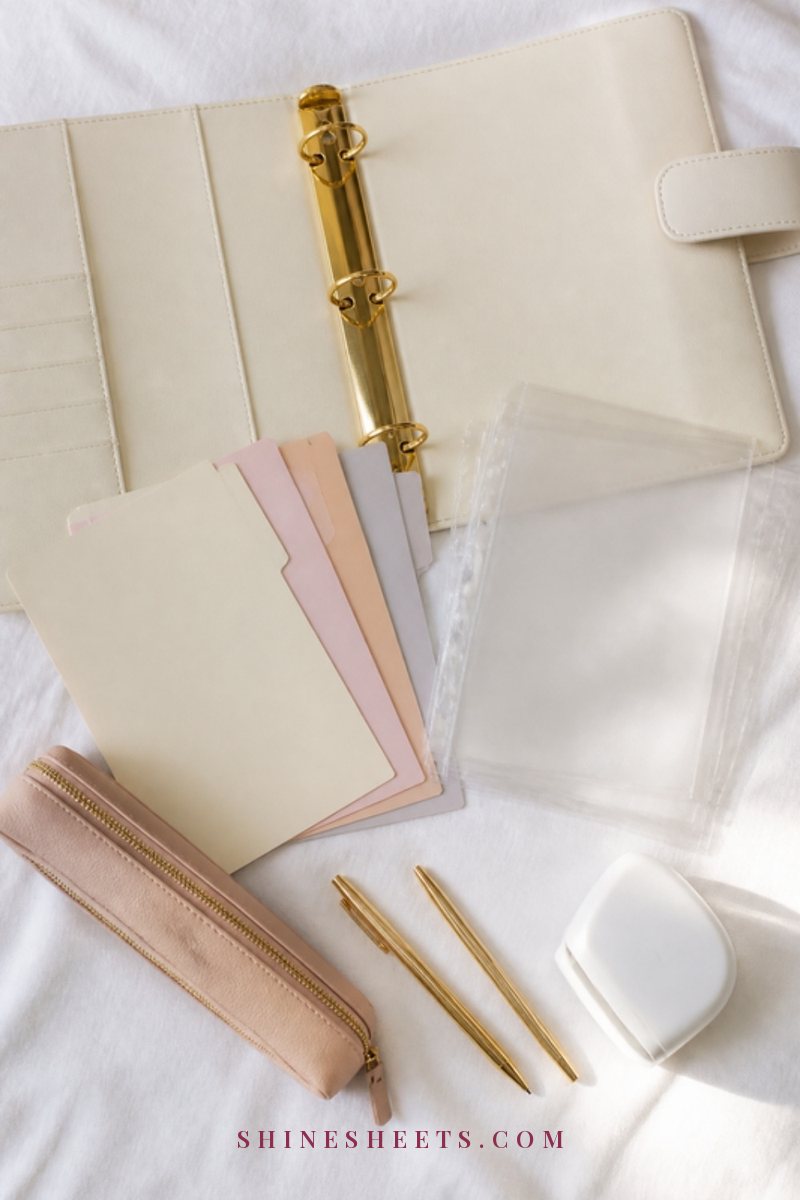
The beautiful thing about mind mapping is how little it costs. You can start with a sheet of printer paper and one pen. If you'd like a few nice tools to make it feel like a treat, here's what helps:
- Big paper, turned sideways. Landscape gives branches room to spread. A large cream sketch pad in A3 size is a pick for anyone who tends to run out of space at the edges. Look for smooth, slightly heavy paper so pens don't bleed through.
- A few colored pens. Four to six colors is plenty, one per main branch. A set of pastel fine-liner pens gives you soft, readable lines without the harshness of bright markers.
- Highlighters (optional). Useful for marking the ideas you want to act on first. Highlighters in soft colors keep the page calm instead of neon.
- A pencil and eraser (optional). Lovely if you're a perfectionist and want to sketch lightly first.
- A free app (optional). If you prefer digital, there are free mind mapping apps for phones, tablets and computers. Look for one that lets you drag branches, change colors and export a picture.
Paper or app? I'd choose paper for personal goals and decisions (the slowness of drawing helps you think) and an app for work projects you'll keep editing or share with others. Neither is better. Use whatever you'll actually pick up.
One extra tip: keep your supplies together in one spot so starting a map takes ten seconds, not ten minutes of hunting. A small lavender desk organizer with a pen cup and a slot for your pad makes the whole thing feel ready and inviting.
How To Make a Mind Map in 6 Simple Steps
Give yourself 15 to 20 minutes for your first map. Put on some quiet music, make a cup of tea if you like, and remember that this is a draft. You can always make a cleaner version later (most people don't need to).
1. Put Your Central Topic in the Middle

Turn your paper sideways and write your main idea in the very center. Keep it short, two to five words: "Move to a new city", "Spring garden project", "Feel healthier". Draw a circle, a cloud or a little box around it so it stands out.
Starting in the middle matters. It leaves equal space in every direction, so no branch feels squeezed. If your topic is fuzzy, that's okay. Write your best guess. Sometimes the map itself shows you what the real question is.
2. Add 3–6 Main Branches
Draw thick, curved lines coming out from the center, one for each big theme. Write one or two words on each line. For a home move, your main branches might be "Budget", "Packing", "New neighborhood", "Admin" and "Saying goodbye".
Why three to six? Fewer than three and you probably haven't broken the topic down enough. More than six and the page gets crowded fast. If you have more themes, ask whether two of them can share a branch. Curved lines are easier on the eye than straight ones, and they make the map feel more organic, but use whatever your hand does naturally.
3. Add Sub-Branches With Keywords, Not Sentences
Now let each main branch grow smaller lines. On each one, write a single keyword or a very short phrase. Under "Packing" you might add "boxes", "donate first", "kitchen last" and "label by room".
This is the step where most beginners slip into full sentences, and it's worth resisting. Keywords keep the map scannable and leave your brain room to make connections. A good test: if a sub-branch needs more than four words, it probably needs its own little branch underneath it instead.
Don't worry about order yet. Add ideas wherever they belong as they come to you. Jumping from branch to branch is completely normal.
4. Give Each Branch Its Own Color
Pick one color for each main branch and use it for everything on that branch, including its sub-branches. Suddenly your eye can find "all the money stuff" or "all the sleep stuff" in a second.
If you like, give colors a meaning you'll reuse: sage for health, pink for relationships, baby blue for home, lavender for rest. After a few maps, the colors become a quiet language of their own.
5. Add Small Doodles or Symbols
A tiny moon next to "sleep", a little house next to "home", a heart, a star, a coin. Doodles aren't decoration. They give your memory a second hook, and they make you smile when you look at the page again.
Keep them simple and quick, two or three seconds each. You can also use a small set of symbols that stay the same across all your maps:
- Star: most important.
- Question mark: need to find out.
- Small square: a task you can tick off.
- Heart: something that matters emotionally.
6. Connect Related Ideas With Arrows
Finally, step back and look at the whole page. Do any ideas on different branches affect each other? Draw a thin arrow or a dotted line between them. Maybe "budget" connects to "new neighborhood", or "less screen time" connects to both "sleep" and "stress".
These connections are often the most useful part of the map. They show you the small changes that help in more than one place, which are usually the best places to start.
A Worked Example: Mind Mapping a Goal Like "Feel Healthier"

"Feel healthier" is a perfect example of a goal that's too big and too vague to act on as a single line. Here's how a beginner map for it might look, branch by branch.
Central topic: Feel healthier.
- Sleep (lavender): same bedtime most nights, phone charging outside the bedroom, cooler room, evening tea instead of a late coffee, wind-down 30 minutes before bed.
- Movement (sage): 10-minute walk after lunch, stretching while the kettle boils, a dance-around-the-kitchen song, take the stairs, try one gentle class.
- Food basics (blush): water bottle on the desk, regular meal times, keep it simple on busy days, no strict rules.
- Stress (baby blue): five slow breaths before opening email, journaling after tea, one evening a week with nothing planned, say no to one extra thing, time outside.
Connections: an arrow from "phone outside the bedroom" to "stress" (less late-night phone time helps both), and one from "walk after lunch" to "sleep" (daylight and movement often make evenings easier). A star goes next to "same bedtime" because it touches the most branches.
Look at what happened: one fuzzy wish became four clear areas and about twenty small, doable ideas. You don't need to do all of them. You just need to pick one or two, which we'll do in the last section. (And of course, if you have specific health worries, your doctor is the right person to help you plan around them.)
If you want to go a step further and give your favorite idea a clear shape, my guide to SMART goals with simple examples shows you how to turn "walk after lunch" into something specific and realistic.
6 Ways To Use a Mind Map in Everyday Life
Once you've made one or two, you'll start seeing uses everywhere. Here are six of the most helpful.
1. Planning a Goal
Put the goal in the middle and the areas of life it touches as branches. This works beautifully for gentle, whole-life goals. If you're thinking even bigger, a map is a lovely first step before you create a vision for your life, because it shows you which areas you care about most.
2. Brainstorming a Project
Starting a blog, redecorating a room, planning a small business idea, organizing a community event. Write the project in the center and branches for "ideas", "people", "budget", "timeline" and "questions". Mind maps are especially good at loosening up stuck thinking. For more ways to get ideas flowing, here are some small ways to be more creative every day.
3. Planning a Move or an Event
Moves, birthdays, weddings, a holiday trip. Anything with lots of moving parts benefits from seeing every part at once. Branches like "before", "on the day" and "after" help you notice the forgotten bits, like canceling subscriptions or thanking helpers.
4. Studying
Put the chapter or topic in the middle and key concepts on the branches. Redrawing a map from memory is a gentle way to test yourself. Color-coding by theme helps many people recall where an idea "lived" on the page.
5. Sorting Out a Big Decision
Write the decision in the middle as a question, like "Change jobs?" or "Move closer to family?" Then add branches for each option, plus "how I feel", "what I'd gain", "what I'd miss" and "what I need to find out". Seeing feelings next to facts is often what finally makes a decision feel clear.
6. A Brain Dump When You Feel Overwhelmed
When your head feels like a browser with forty tabs open, write "Everything on my mind" in the center and let branches form on their own: home, work, people, worries, errands. A brain dump to clear your mind is usually a list, but doing it as a map sorts the chaos into groups as you go, which can feel calming all by itself.
Mind Map Ideas: Topics, Branches and Next Steps
Use this table as a quick starting point. Screenshot it if you want it on hand the next time you sit down with a blank page.
| Use | Central topic | Example branches | A good first next step |
|---|---|---|---|
| Planning a goal | Feel healthier | Sleep, movement, food basics, stress | Pick the one starred idea that touches the most branches and try it for a week |
| Brainstorming a project | Cozy reading corner | Space, light, seating, budget, books | Measure the corner and write down the size |
| Planning a move | Moving in spring | Budget, packing, admin, new area, goodbyes | Book a date to declutter one room |
| Planning an event | Friend's birthday dinner | Guests, place, gift, decor, timing | Send the save-the-date message today |
| Studying | One chapter or topic | Key ideas, examples, dates, questions | Redraw the map from memory tomorrow |
| A big decision | Change jobs? | Option A, option B, feelings, gains, unknowns | Answer one "need to find out" question |
| Brain dump | Everything on my mind | Home, work, people, worries, errands | Circle three things to handle this week and let the rest wait |
Common Mind Mapping Mistakes (and Easy Fixes)

Every one of these is normal, and every one has a simple fix.
- Too many words. If your branches look like paragraphs, the map turns back into a list in disguise. Fix: one to four words per line. If you need to explain something, add a tiny note on the side or in your journal.
- Cramming everything into one corner. This usually happens when you start writing at the top left out of habit. Fix: always start in the center of a sideways page, and space your main branches out evenly before adding details.
- Too many main branches. Eleven branches is a forest, not a map. Fix: group similar themes together, or make a second map for one big branch.
- Perfectionism. This was my big one. I'd redo a map three times because the lines weren't even, and lose the thinking in the process. Fix: call your first version a draft, use a pencil if it helps, and remember that messy maps work just as well. Nobody is grading this.
- Making the map and never looking at it again. A map that lives in a drawer can still help (the thinking happened), but you'll get more from it if you turn it into action. Fix: the next section.
- Trying to map everything at once. "My whole life" is a big central topic for a first try. Fix: start with something small and concrete, like this weekend or one room.
How To Turn Your Mind Map Into Next Steps

A finished map is a beautiful overview. The final, gentle step is to choose what to do with it. Here's a simple way that takes about ten minutes:
- Star your top three. Look across the whole map and star the three ideas that feel most important or most exciting. Ideas with lots of arrows pointing at them are often good candidates.
- Make each one tiny. Rewrite each starred idea as the smallest possible action. "Better sleep" becomes "phone on the hallway charger at 10 p.m." "Pack" becomes "buy boxes on Saturday."
- Give each a day. Write those three actions into your week. An undated weekly planner works well here because you can start any week without wasting pages.
- Keep the map visible. Pin it above your desk or tuck it into the back of your planner. A glance reminds you of the bigger picture when the week gets noisy.
- Revisit in a week or two. Tick off what you did, add new sub-branches, cross out what no longer matters. A mind map is allowed to change as you do.
That's the whole system: map, star, shrink, schedule, revisit. You'll notice there's no step called "do everything on the page". The map shows you all the options so you can choose a few with a clear head, not so you can feel behind on the rest.
If you love that slow, thoughtful feeling, try making a map with your evening tea once a week, perhaps on a Sunday. It's a calm way to see where you are and what you'd like to tend to next, without any pressure to optimize your life.
Final Thoughts
A mind map doesn't need to be neat, clever or colorful to help you. It only needs one idea in the middle and a little curiosity about what grows from it. The first one might feel awkward, and by the third you'll likely reach for it whenever your thoughts start to tangle.
Grab a big sheet of paper, write down the thing that's been circling in your head, and let it branch. You might be surprised by how much clearer everything looks once it's all on one page, in your own handwriting, in your own colors.