A clean home rarely comes from one heroic Saturday. It comes from giving every part of your home its turn, so nothing gets ignored for months and nothing has to be scrubbed all at once. That is the quiet magic of zone cleaning: you stop trying to clean everything, everywhere, every week, and you start caring for one area properly while the rest simply stays tidy.
I like this method because it feels so much lighter on the brain. Instead of a long list that resets every Monday and makes you feel behind by Wednesday, you only need to know two things: which zone is "yours" this week, and what your short daily basics are. Everything else can wait its turn without guilt.
This guide walks you through zone cleaning step by step: how to map your zones (with an exact five-zone setup for a small apartment), a four-week rotation table you can screenshot, what to actually do during a zone week, a 10-minute daily baseline, a portable cleaning caddy, and gentle ways to adapt the whole thing for roommates and busy weeks. It works in rentals, studios and bigger homes, and it never asks you to give up a whole weekend.
What Is Zone Cleaning?
Zone cleaning means dividing your home into a handful of areas (zones) and giving each one a deeper clean on a rotating basis, usually one zone per week. While one zone gets the full attention, the rest of the home only gets light daily basics: dishes, a quick wipe, a reset of the main surfaces.
The result is a home where every room gets a proper top-to-bottom clean roughly once a month, but you never spend more than about 40 minutes a week on deep cleaning. Dust doesn't have time to build up into a project, and the bathroom grout never becomes a "someday" job.
It's also wonderfully forgiving. If you skip a week, the next zone simply waits. You haven't failed a long list of tasks; you've just paused a rotation, and you pick it up where you left off.
Zone Cleaning vs. a Regular Cleaning Schedule
A classic cleaning schedule is organized by task frequency: these jobs daily, these weekly, these monthly. It's a great system (I've written a whole guide on the daily, weekly and monthly cleaning schedule if you love lists), but it can feel scattered, because on any given week you're touching every room a little bit.
Zone cleaning is organized by place. You go deep in one area and stay shallow everywhere else. Here's the simplest way to see the difference:
- A task schedule asks: "What needs doing this week?" and gives you a list across the whole home.
- Zone cleaning asks: "Where am I this week?" and gives you one area to finish properly.
Many people actually blend the two: a short daily routine for everything, plus a zone rotation for the deeper work. That combination is what this guide builds. If you've ever stood in the middle of your home not knowing where to start, zone cleaning answers that question before you even pick up a cloth.
How To Map Your Zones

Before anything else, take five minutes to map your home. Walk through it with a notebook and write down the areas that naturally belong together. A zone should be big enough to matter and small enough to finish in one or two short sessions.
A few simple rules make mapping easier:
- Group spaces you walk through together, like an entry and a hallway.
- Keep "wet" rooms (kitchen, bathroom) as their own zones, because they need the most detail.
- Small rooms can share a zone; big rooms usually shouldn't.
- Aim for zones that each take roughly 30 to 45 minutes to deep-clean.
The 5 Zones for a Small Apartment
For most apartments, studios and small homes, these five zones cover everything without overlap:
- Kitchen: counters, cabinets, appliances, sink, floors and the small corners around the fridge and stove.
- Bathroom: shower or tub, toilet, sink, mirror, storage, floor and the bath textiles.
- Bedroom: bed and bedding, nightstands, dresser tops, closet floor, under the bed and window areas.
- Living area: sofa, cushions, coffee table, shelves, lamps, rugs and any dining corner.
- Entry and hallways: front door, shoe area, hooks, light switches, baseboards and the hall floor.
In a studio, the "bedroom" and "living area" might technically be one room. That's fine. Keep them as two zones anyway (the sleeping corner and the sitting corner), because splitting them keeps each session short.
Stretching It to 6 Zones in a Larger Home
If you have more space, add a sixth zone instead of making the existing ones bigger. Good candidates for zone six are a second bedroom, a home office, a laundry area or a second bathroom. If you have several extra rooms, group them by floor (for example, "upstairs bedrooms and hall") so the rotation stays at six weeks rather than growing into something you can't remember.
A six-zone home simply runs a six-week rotation. Each room still gets its turn about every month and a half, and the daily baseline keeps everything pleasant in between.
The 4-Week Zone Cleaning Rotation
Here is the rotation I'd suggest for a small space. Five zones fit into four weeks by pairing the two lightest areas, the living area and the entry, in week four. Screenshot it, or copy it into your planner, and adjust the timings to your own home.
| Zone | Week | Deep-clean tasks | Forgotten spot | Time needed |
|---|---|---|---|---|
| Kitchen | Week 1 | Wipe cabinet fronts, degrease the stovetop, clean the microwave, clear and wipe the fridge shelves, scrub the sink, mop the floor | Top of the fridge and the gap beside the stove | 40–50 minutes |
| Bathroom | Week 2 | Scrub the shower or tub, clean grout lines, descale the faucet and showerhead, wipe storage inside and out, wash the bath mat, mop behind the toilet | Exhaust fan cover and the base of the toilet | 35–45 minutes |
| Bedroom | Week 3 | Wash all bedding including the duvet cover, flip or rotate the mattress, dust nightstands and lamps, vacuum under the bed, tidy the closet floor | Headboard and the top of the wardrobe | 35–45 minutes |
| Living area | Week 4 | Vacuum sofa cushions and underneath, wash throw blankets, dust shelves and decor, wipe the coffee table and remote controls, vacuum the rug on both sides if you can | Lampshades and the space behind the sofa | 30–40 minutes |
| Entry and hallways | Week 4 | Wipe the front door and handle, sort and clean the shoe area, wipe hooks and switches, wash the doormat, wipe baseboards | Door frame tops and light switch plates | 15–20 minutes |
| Zone 6 (larger homes) | Week 5 (then 6 if needed) | Dust surfaces, wipe the desk or machines, wash any textiles, vacuum edges and under furniture | Behind the washer or under the desk | 30–45 minutes |
If week four feels too full, split it: living area on the weekend, entry on a quiet weeknight. And if you'd rather give the entry its own week, you simply run a five-week rotation. The method bends; it doesn't break.
What To Do During Your Zone Week
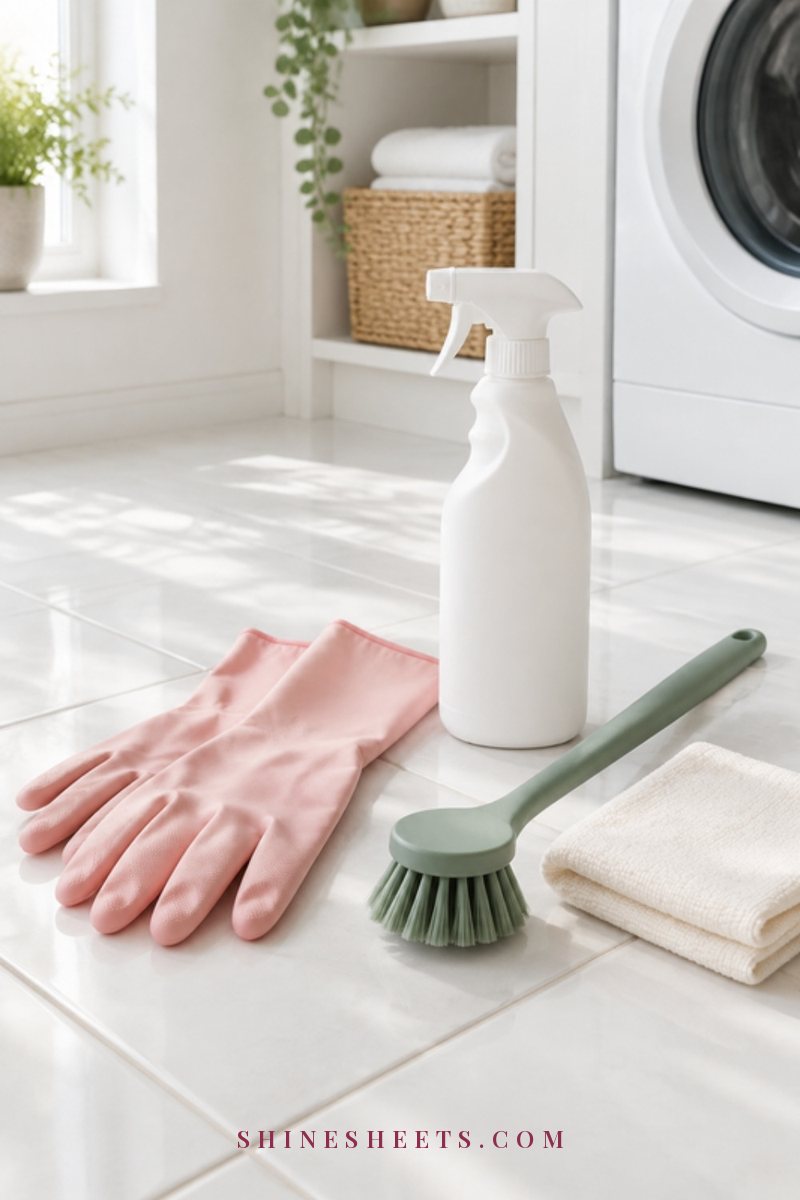
Every zone week follows the same five steps, which is exactly why this method feels so calm. You don't have to invent a plan each time. You just repeat the order.
1. Work Top to Bottom
Start with the highest point in the zone and finish with the floor. Dust and crumbs fall down, so cleaning the floor first only means cleaning it twice. In the kitchen, that looks like: top of the cabinets and fridge, then upper cabinet fronts, then counters and appliances, then lower cabinets, then the floor.
An extendable duster makes the high places much less annoying. Look for one with a washable microfiber head and a handle that reaches ceiling corners, like this extendable microfiber duster, so you're not balancing on a chair.
2. Declutter One Surface
Pick one surface in the zone and clear it completely: a nightstand, the bathroom counter, the shelf by the door. Take everything off, wipe it, and only put back what you actually use. Everything else goes where it belongs, into a donation bag or into the trash.
Just one surface. Not the whole room. This small limit is what keeps zone cleaning from turning into a three-hour decluttering spiral, and it adds up quickly: over a year, that's more than 50 surfaces calmly sorted.
3. Wipe and Detail
Now do the detail work that daily cleaning skips: cabinet handles, light switches, door frames, the edges of the mirror, the base of the faucet. These are the spots that quietly collect fingerprints and grime and make a room look tired even when it's tidy.
A color-coded cloth system helps a lot here. I'd choose a set of sage microfiber cloths and keep one shade for kitchen surfaces and another for the bathroom, so nothing from around the toilet ever ends up on the counter where you make tea. Microfiber picks up dust with just a little water, which means fewer products overall.
For grout lines, sink drains and the corners of the shower, a gentle brush does more than any spray. A soft-bristle scrub brush set with a few sizes (a small detail brush, a hand brush and a grout brush) covers almost every zone.
4. Wash the Textiles
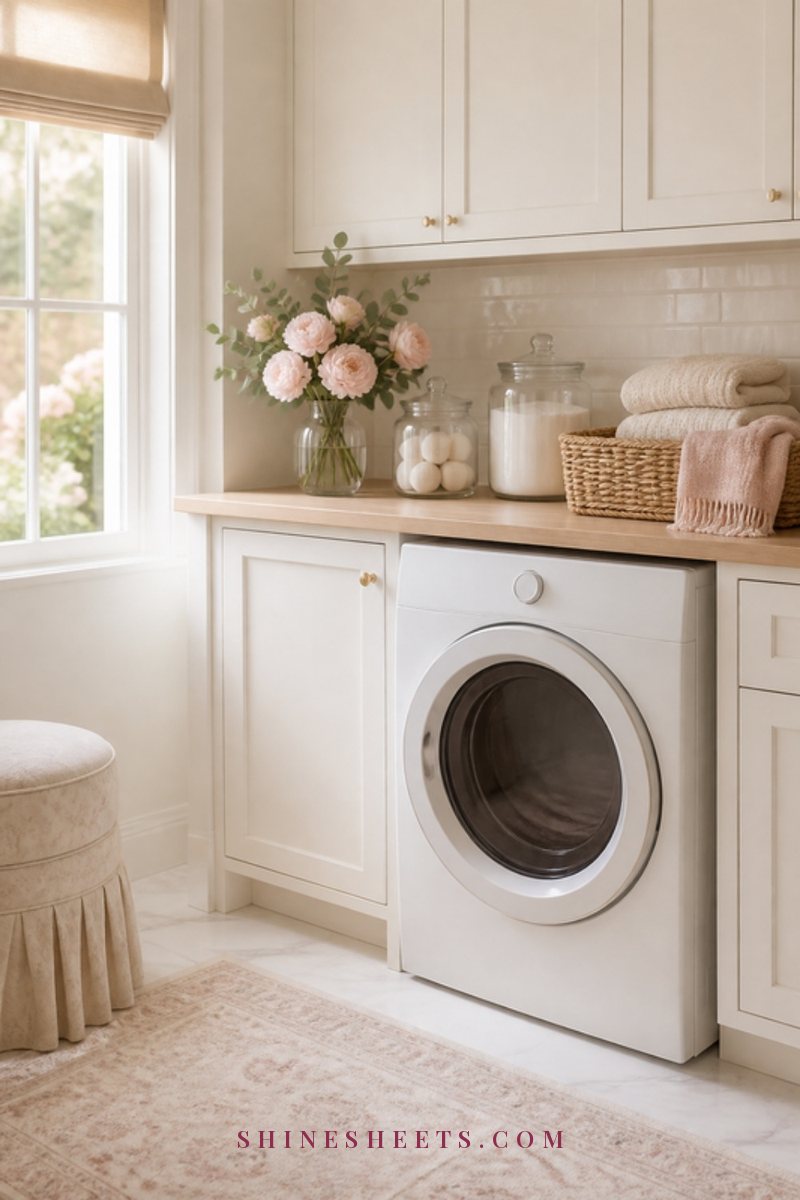
Every zone has fabric that holds dust and smells: bath mats, kitchen towels, cushion covers, throws, curtains, the doormat. During your zone week, wash whatever belongs to that zone. Bedroom week means the full bedding set, including the duvet cover and pillow protectors. Living area week means throws and cushion covers. Kitchen week means towels, oven mitts and any small rugs.
Start the laundry at the very beginning of your session, so the machine works while you clean. By the time you've reached the floor, the first load is ready to dry.
5. Find the Forgotten Spot
Each zone has at least one place nobody ever looks at: the top of the fridge, the exhaust fan cover, under the sofa cushions, the tops of door frames. I've listed one per zone in the table above, but you'll discover your own. Give it two or three minutes at the end of each zone week.
This is honestly my favorite step, because it's where the "how is it so clean in here" feeling comes from. Guests never notice a forgotten spot. You do, every time you sit down.
Your Daily 10-Minute Baseline
Zone cleaning only works if the rest of the home doesn't slide while you're focused elsewhere. That's what the daily baseline is for. It's deliberately tiny, around 10 minutes, so it fits even on the busiest day:
- Dishes (3 minutes): load the dishwasher or wash what's in the sink, so you never wake up to a pile.
- Kitchen counter wipe (2 minutes): one clear swipe of the main counter and the stovetop.
- Bathroom quick wipe (2 minutes): sink and faucet with a cloth after your evening routine.
- Ten-item reset (2 minutes): put ten things back where they live, anywhere in the home.
- Floor spot check (1 minute): sweep or vacuum only where crumbs or hair are visible.
If you want more ideas to make these small things automatic, my guide to simple habits that help you keep a clean house pairs beautifully with this baseline. And for the bathroom specifically, this little five-minute daily bathroom routine keeps your bathroom week much lighter.
I like doing my baseline in the evening, right before I make my tea and light a glass candle. The home feels reset, and that alone takes the edge off a busy mind.
Build a Portable Cleaning Caddy
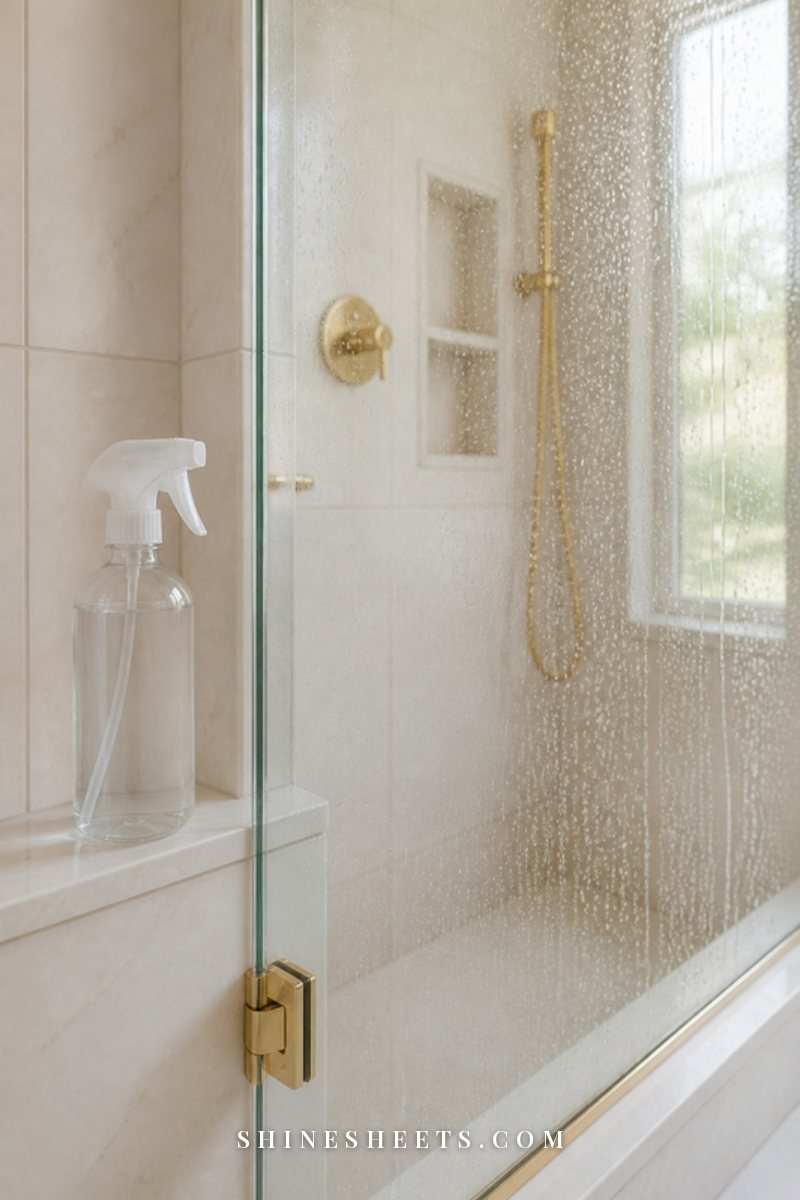
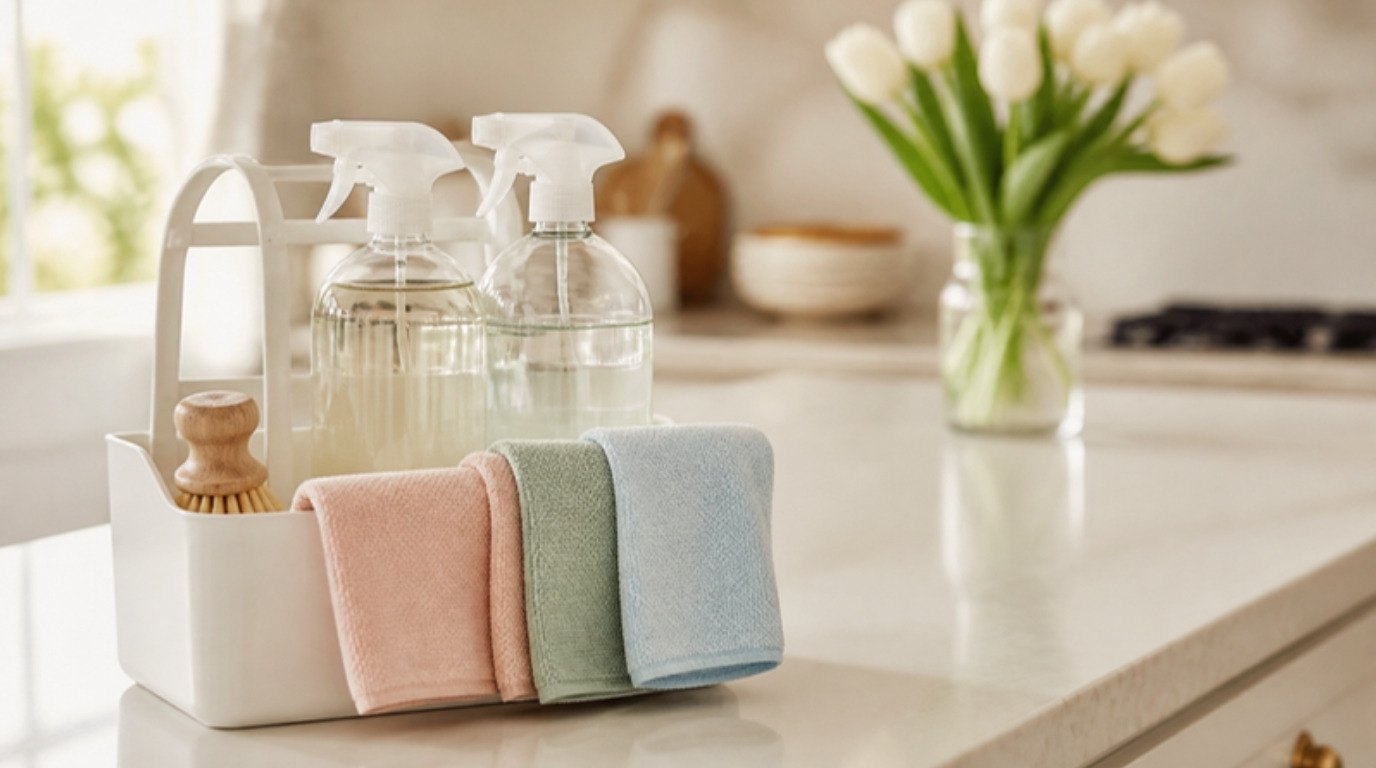
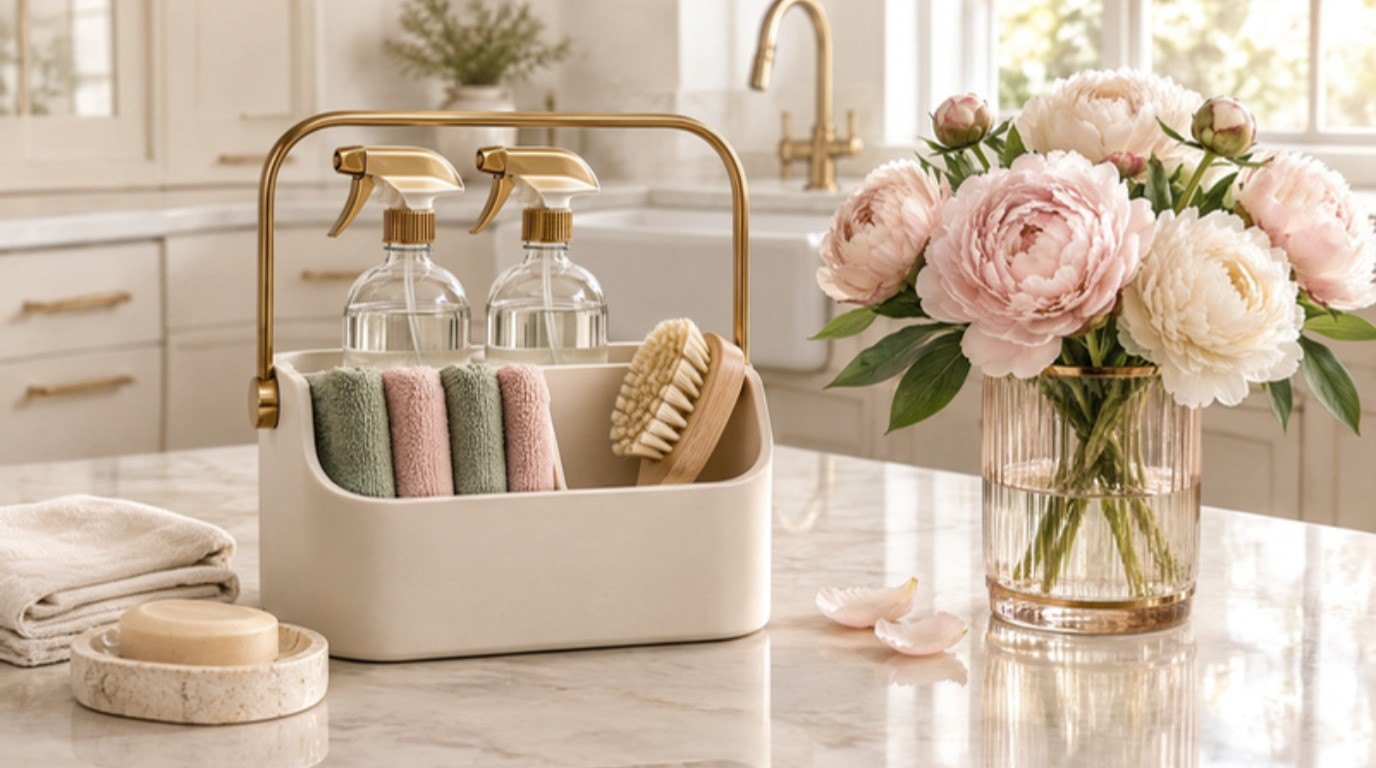
One of the best things you can do for zone cleaning is to stop walking back and forth for supplies. A caddy that carries everything for one session means you can start the moment you're ready, in any zone.
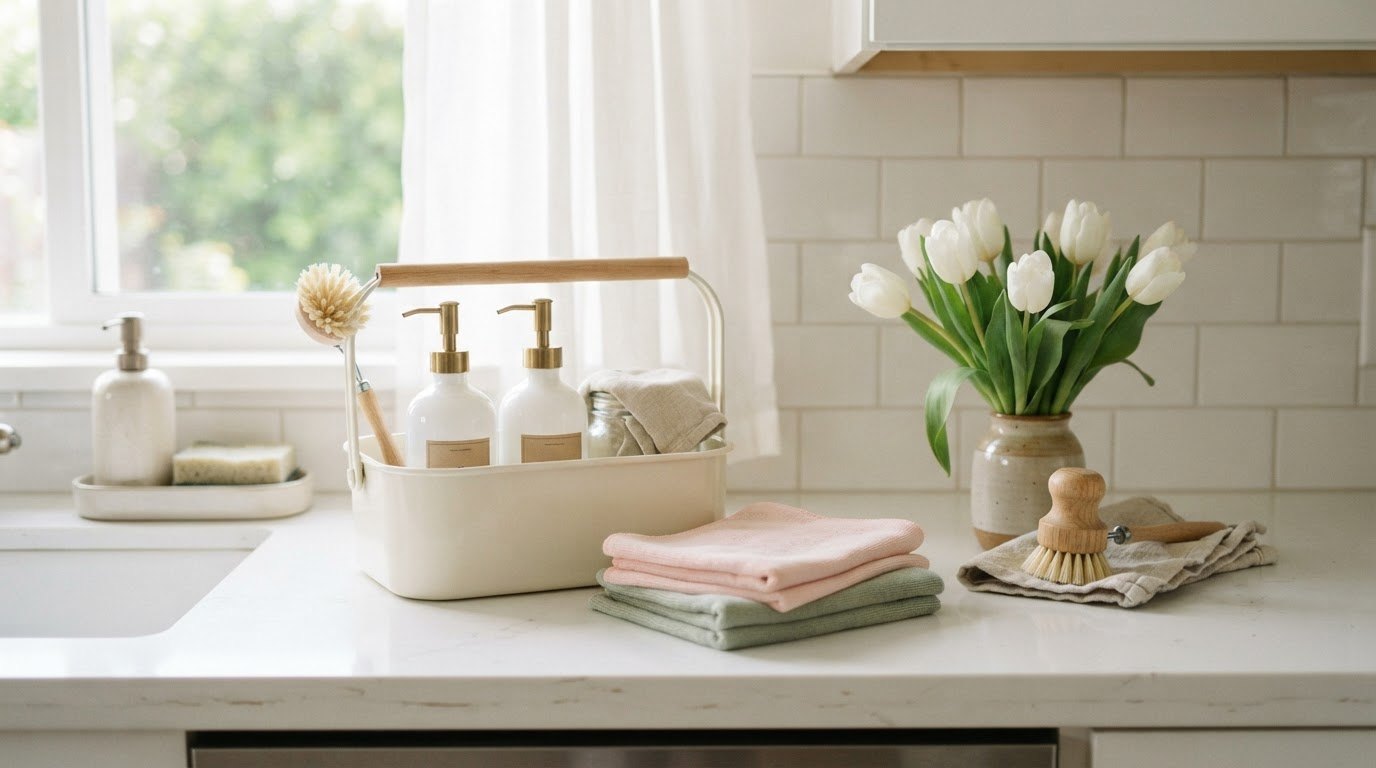
Look for a cream cleaning caddy with a sturdy handle and two or three compartments. Inside, you only need a few things:
- An all-purpose cleaner and a glass cleaner
- Four to six microfiber cloths
- One scrub brush and one small detail brush
- A pair of rubber gloves
- A small trash bag for the decluttering step
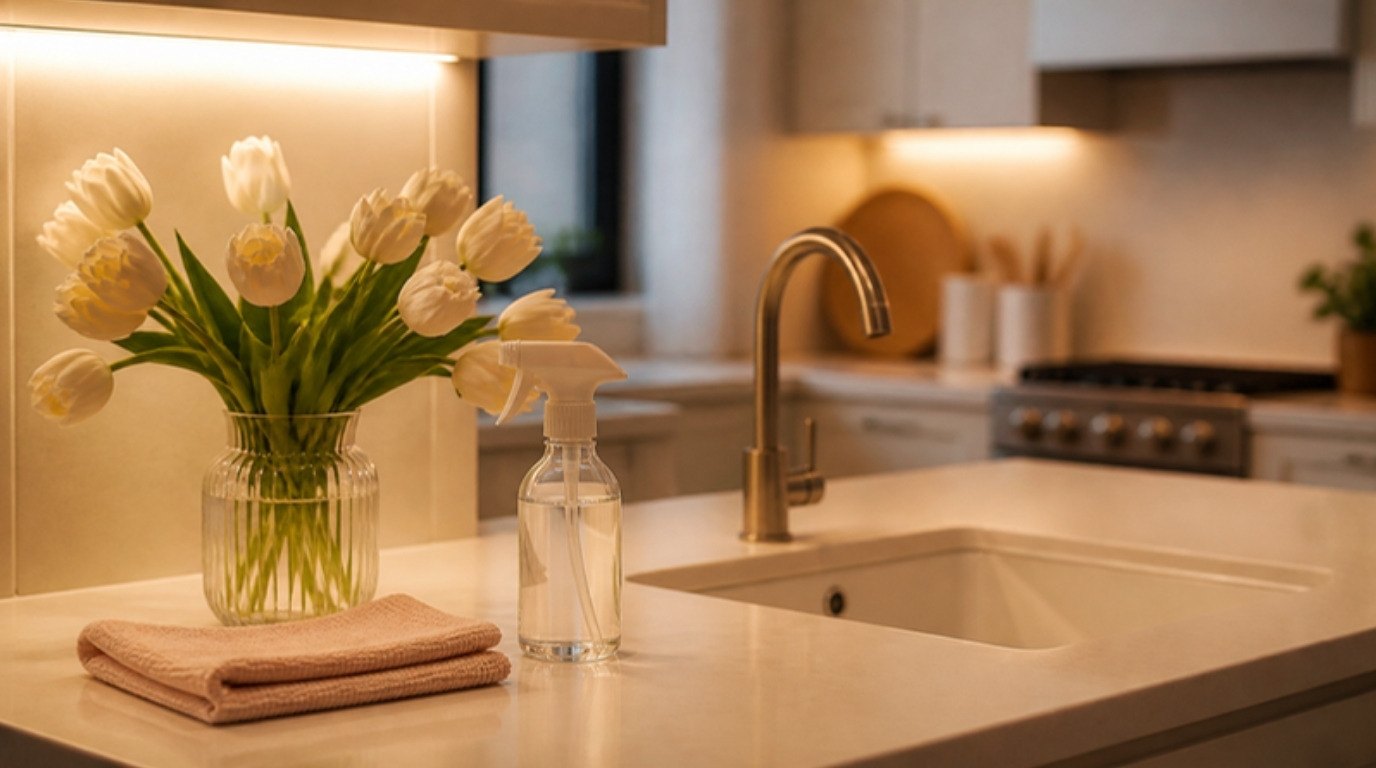
If you mix your own simple cleaners or refill from larger bottles, reusable glass spray bottles look lovely and last for years. Just label each one clearly with what's inside, so you never have to guess. My guide to natural cleaning swaps and the combinations never to mix has the details if you like a gentler approach.
Store the caddy somewhere central, like a hallway closet or under the kitchen sink, so it's equally easy to grab for every zone.
Timing: Why Two 20-Minute Sessions Beat One Long Day
You might be tempted to do your whole zone in one go. You can, of course. But I'd gently suggest splitting each zone week into two sessions of about 20 minutes, for a few reasons:
- Energy stays high. Most of us clean carefully for the first 20 minutes and then start rushing.
- Products get dwell time. Spray the shower or the stovetop in session one, let it sit 5 to 10 minutes while you do something else, and the scrubbing is far easier.
- Laundry fits naturally. Wash textiles in session one, put them back in session two.
- It's easier to start. "Twenty minutes" sounds doable on a weeknight in a way that "clean the whole kitchen" never does.
A simple split: session one covers top to bottom down to the counters, plus starting the laundry. Session two covers the lower half, the floor, the forgotten spot and folding the textiles. Set a timer, put on music or a podcast, and stop when it rings, even if you're not quite done. Whatever is left becomes next month's head start.
For kitchen week, if your kitchen hasn't had a real deep clean in a long while, do a one-time reset first with this top-to-bottom kitchen deep-clean plan, and then let the rotation maintain it from there.
Adapting Zone Cleaning for Roommates and Busy Weeks
Real life rarely matches a neat four-week table, and that's completely okay. Zone cleaning is flexible enough to bend around other people and around hard weeks.
Sharing Zones With Roommates
Shared homes do best when everyone keeps the same daily baseline for shared spaces and the zones rotate between people. With two people, one takes the kitchen and bathroom weeks, the other takes the bedroom and living area weeks, and you swap every month so nobody is stuck with the bathroom forever. With three or four people, give each person one zone per week and rotate.
Each person always cleans their own bedroom on their own schedule. Shared zones are the kitchen, bathroom, living area and entry. Write the rotation somewhere everyone sees it (a note on the fridge works perfectly), and agree on what "done" means for each zone, using the table above as your shared standard. That one conversation prevents most roommate tension about cleaning.
When a Week Falls Apart
Some weeks there's simply no room for even 20 minutes. On those weeks, do only the daily baseline and the forgotten spot from your current zone. Five minutes, done. The zone rolls over to the next week, and the rotation shifts by a week. Nothing collapses.
If you're traveling, unwell or just tired, give yourself permission to pause the rotation entirely. Small admission: I used to treat a skipped week like a broken promise, which made me avoid the whole system. Now I treat it like a bookmark. The home waits, and so does the next zone.
Safety Basics While You Clean
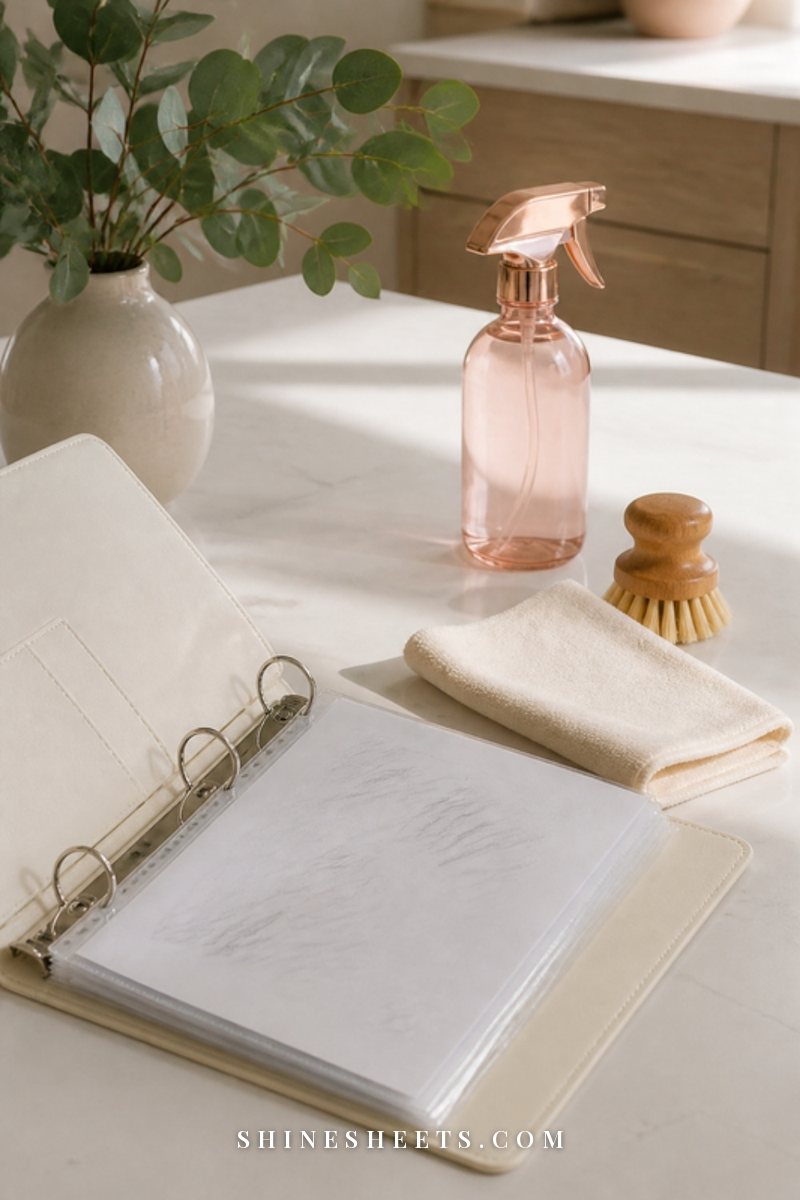
Deep cleaning means stronger products and longer sessions, so a few safety habits matter:
- Never mix bleach with vinegar or ammonia. These combinations release harmful gases. Use one product, rinse the surface with water, and only then use another.
- Ventilate. Open a window or run the exhaust fan, especially in a small bathroom.
- Wear gloves. A pair of reusable white rubber gloves protects your hands from both cleaners and hot water, and it makes scrubbing much more comfortable.
- Test on a hidden spot first. Natural stone, wood and painted surfaces can react to some cleaners, so try a small corner before you do the whole surface.
- Follow the label. Use products as directed, including dwell times, and store them out of reach of children and pets.
Renter tip: if you're unsure whether a surface (like a marble-look counter or old grout) can handle a product, stick to warm water, a drop of mild dish soap and a microfiber cloth. It's gentle, safe and surprisingly effective for regular zone cleans.
Final Thoughts
Zone cleaning isn't about having a perfect home. It's about having a home that's always being cared for, a little at a time, so it never feels like it's getting away from you. One zone a week, ten minutes a day, and a caddy that's ready when you are.
Start with whichever zone bothers you most this week, even if that breaks the order. Once it's done, the rotation can take it from there, and you'll find that a calm, clean home was never about more effort. It was about giving every corner its turn.