Creativity isn't a gift a few lucky people were born with. It's a habit, much more like stretching than like magic: the more often you do small creative things, the more easily ideas come. People who seem "naturally creative" are usually just people who give themselves lots of tiny chances to make, notice and play.
That's good news if you've ever said "I'm just not a creative person." You don't need a studio, a big talent or hours of free time. You need regular input, a way to catch ideas before they float off, permission to make things that aren't good yet, and a few minutes a day. I spent years waiting to feel inspired before starting anything, and it took me a while to notice that the inspiration usually showed up after I started, not before.
This guide is all about how to be more creative in everyday life. You'll find why creativity works like a habit, how to fill your creative well, simple ways to capture ideas, why limits help, 25 small daily ideas, a weekly creativity menu you can follow, and gentle ways through creative blocks and perfectionism.
Creativity Is a Habit, Not a Talent
Think about the last time you had a good idea. It probably didn't arrive while you were staring at a blank page trying hard. It came in the shower, on a walk, while washing dishes, or halfway through a conversation about something else. Ideas grow out of two things: input (what you take in) and connection (your brain linking those inputs in new ways).
You can't force the connection part, but you can absolutely feed it. That's what a creative habit does. It gives your mind more material to work with, more quiet moments to make links, and more practice turning a little idea into something real.
A useful way to think about it:
- Input: books, music, walks, art, conversations, new places.
- Capture: a notebook or note where ideas land before they disappear.
- Output: small, regular making, without needing it to be good.
- Rest: boredom and quiet time where the connections happen.
If one of these four is missing, creativity feels stuck. Most of us have plenty of input (hello, phones) but very little rest and almost no low-pressure output.
Fill the Well With Daily Inputs
You can't pour from an empty cup, and you can't make from an empty well. Creative people collect beautiful, interesting and surprising things to take in, on purpose. Not mindless scrolling, but input you actually notice.
A few ways to fill the well:
- Read outside your usual lane. If you always read novels, try a book about architecture, gardens or the history of perfume.
- Walk without headphones once a week. Let yourself notice colors, shop windows, the way light hits buildings.
- Visit a museum, gallery or old library. Even 30 minutes in one room is enough. Pick three pieces and really look.
- Listen to music from another decade or country. New sounds shake up old thinking.
- Watch an old film. I have a soft spot for Old Hollywood movies, and the costumes, lighting and set design are pure inspiration.
The aim isn't to consume more. It's to consume more deliberately, so that your mind has interesting pieces to play with later.
Capture Every Idea Before It Floats Away
Ideas are slippery. You think you'll remember that great thought about repainting the hallway or that story idea, and by evening it's gone. Creative people aren't necessarily having more ideas, they're just losing fewer of them.
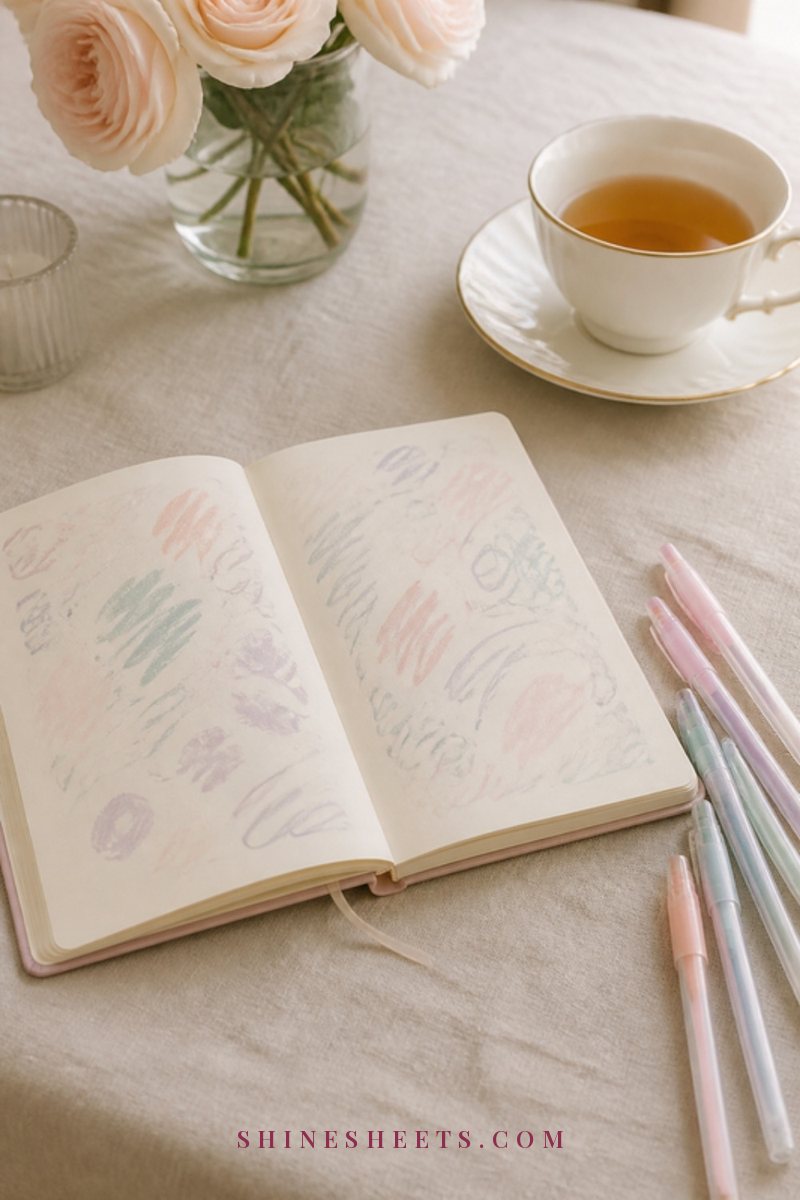
Keep a small notebook in your bag and one by your bed. Write down anything that sparks even a flicker of interest: a color combination you saw, a phrase from a conversation, a "what if…" question. Don't judge or organize, just catch. A set of soft pastel gel pens makes the habit feel more like play than homework, which honestly matters more than it should.
Once a week, flip back through your notes over a cup of tea. You'll be surprised how often two random notes connect into a real idea.
Why Limits Make You More Creative
It sounds backward, but too much freedom can freeze you. "Make anything you want" is overwhelming. "Draw your breakfast using only three colors in ten minutes" is fun. Constraints give your brain a puzzle to solve, and puzzles are where creativity wakes up.
Try adding one limit to any creative task:
- Time: 5, 10 or 15 minutes, with a timer.
- Materials: only a pencil, only three colors, only what's on your desk.
- Theme: everything this week is about "blue" or "morning" or "things that are round".
- Format: a poem of exactly six words, a photo from the floor up, a sketch without lifting your pen.
The smaller the box, the more inventive you'll get inside it.
Try Morning Pages
Morning pages are a simple practice: as soon as you can after waking up, write three pages by hand of whatever is in your head. Worries, to-do lists, dreams, complaints, half-ideas. You don't reread them right away, and they don't need to make sense.
It works because it clears out the mental clutter that sits between you and your more creative thoughts. Once the "I need to buy dish soap" and "why did I say that yesterday" are on paper, there's room for something new. If three pages feels like too much, start with one. Any plain linen-covered journal is perfect, and if you'd like more prompts for the days you feel stuck, my journaling ideas are a lovely companion to this habit.
Play With No Goal
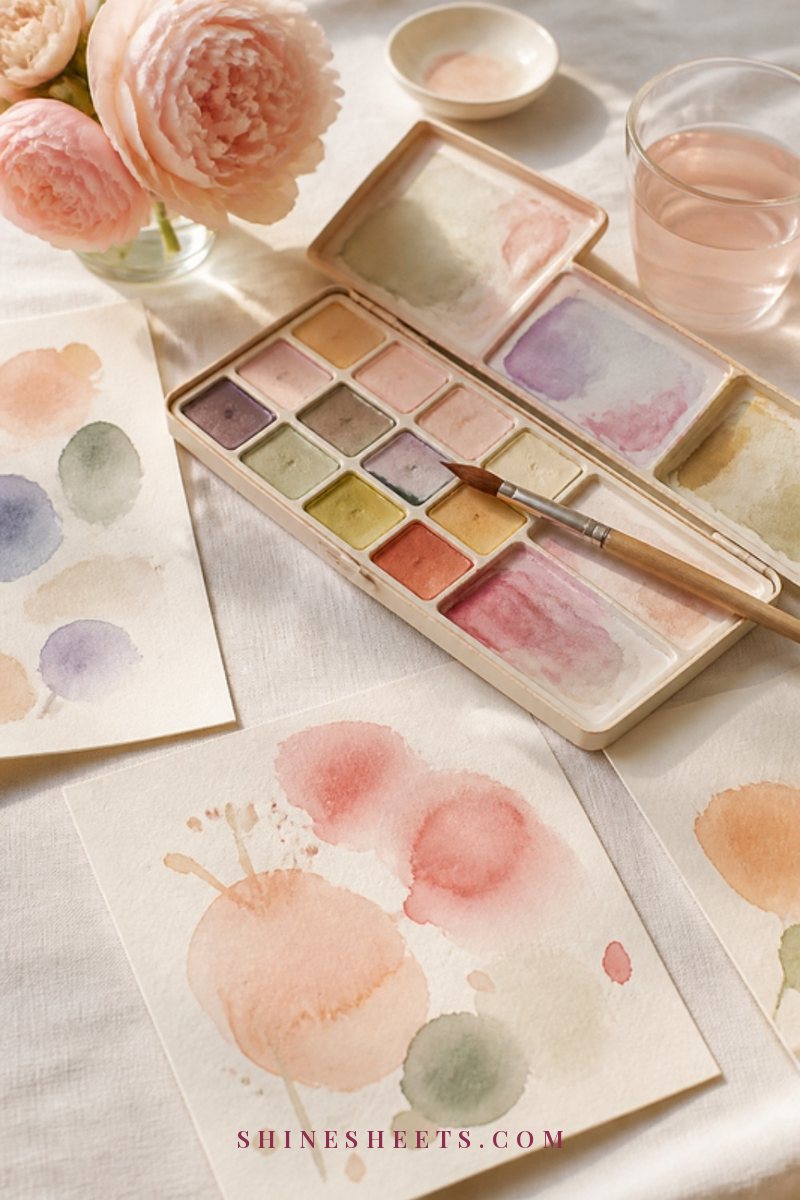
Somewhere along the way, most of us stopped playing. Everything has to be productive, useful or shareable. But creativity grows best in play, where nothing is at stake and nothing has to turn out well.
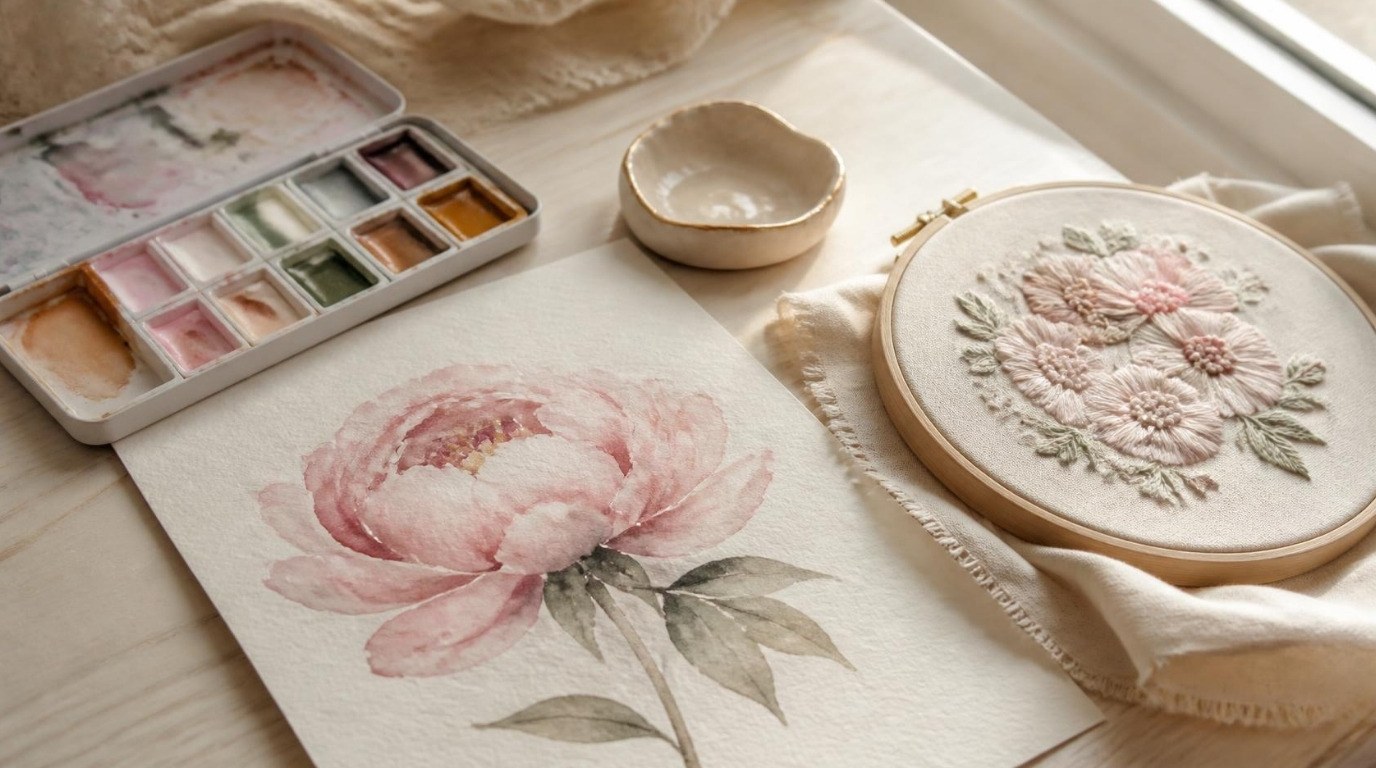
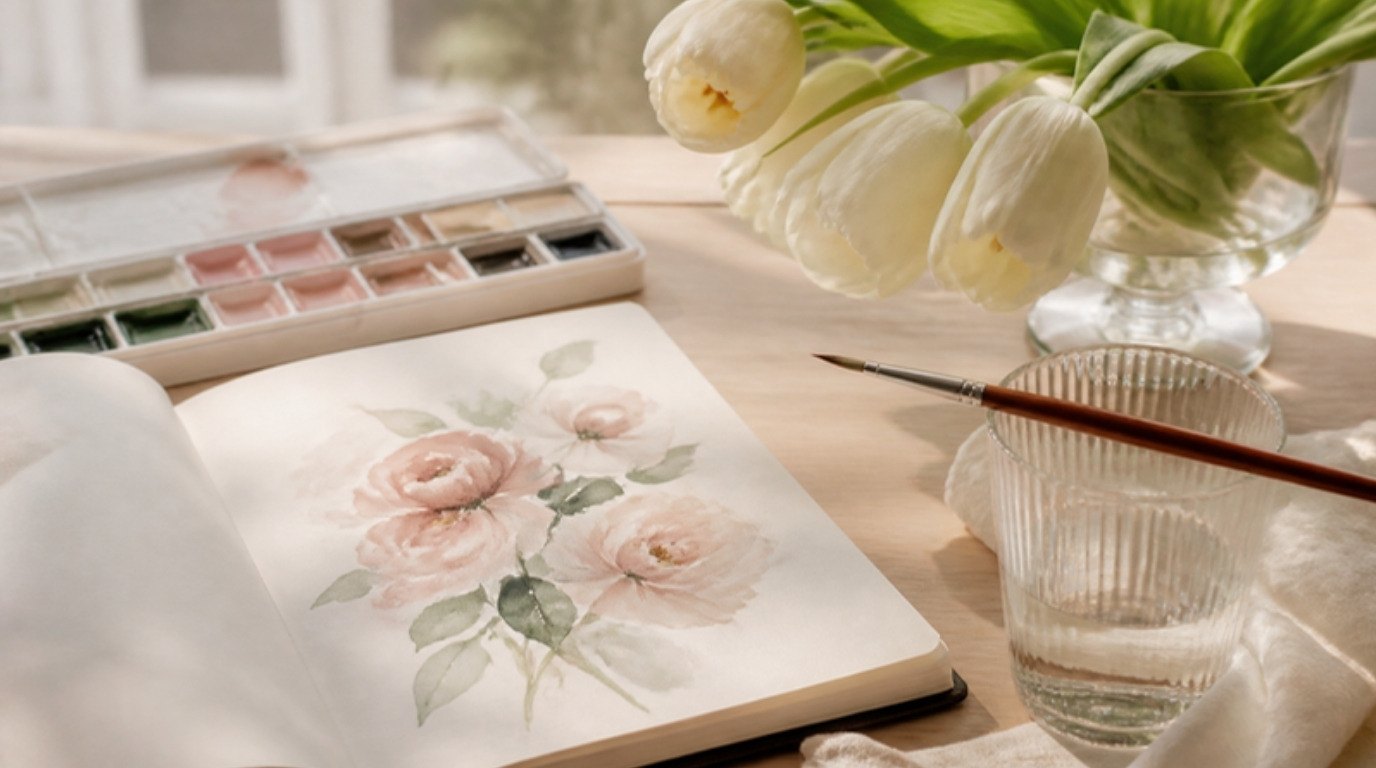
Give yourself one goal-free creative session a week. Open a pastel watercolor set and just mix colors to see what happens. Doodle shapes. Arrange flowers in five different ways. Play with words. The rule is simple: you're not allowed to try to make it good. You're only allowed to explore.
If you're looking for new things to try just for fun, my list of hobbies for fun, creativity and relaxation is full of ideas, and many of them cost almost nothing.
25 Small Daily Ideas To Be More Creative
These take between two and fifteen minutes. Pick one a day, or keep a few favorites on rotation. The point is the tiny, regular practice, not the result.
- Do a five-minute sketch. Draw whatever is in front of you: your mug, your shoes, your hand. Set a timer and stop when it rings.
- Take a photo walk. Walk for 15 minutes and take five photos of one theme, like "things that are pink" or "shadows".
- Take a new route. Walk, drive or bike a different way to a place you go often and notice three new things.
- Write six-word stories. Sum up your day, a memory or a feeling in exactly six words.
- Rearrange one small surface. Restyle a shelf, nightstand or tray using only what's already in your home.
- Make a color palette from nature. Pick a leaf, flower or stone and match its colors with pencils or paint.
- Write a letter you'll never send. To your younger self, a favorite author or a city you love.
- Try blind contour drawing. Draw an object without looking at the paper. The wonky results are the fun part.
- Brainstorm 10 uses for an ordinary object. A paper clip, a ribbon, a teacup. Push past the obvious ones.
- Listen to a song and draw what you hear. Shapes, colors, lines, no rules.
- Make a mini mood board. Cut images from old magazines and glue five into your notebook around one feeling.
- Stitch for ten minutes. A simple beginner floral embroidery kit is calming, portable and very satisfying to watch grow.
- Write a description of a stranger's outfit. Just the colors, fabrics and the mood it gives.
- Write a tiny poem about the weather. Three short lines about today's sky, rain or light. No rhyming required.
- Take one instant photo a day. A pastel instant camera makes you slow down and choose one moment carefully, because each shot counts.
- Write your own "what if" question. "What if my home was a café?" "What if I spent a whole day without speaking?" Then follow it for five minutes.
- Collect three beautiful words. Note words you love the sound of, and use one in a sentence today.
- Try a new font in your handwriting. Copy a quote slowly in a style you've never used.
- Design your dream room on paper. Just a rough sketch with arrows and color notes.
- Arrange a tiny still life. Three objects, one surface, nice light. Look at it from four angles.
- Retell a fairy tale in modern life. One paragraph, any characters you like.
- Make a playlist for a feeling. "Rainy Sunday," "first spring walk," "brave." Name it and pick five songs.
- Doodle during a call. Patterns, flowers, repeating shapes. It often helps you listen better too.
- Swap one routine for a creative version. Write your grocery list as a little illustrated menu or set the table like a little café.
- End the day with one idea. Before bed, write down one idea, however silly. Tomorrow-you might love it.
A Weekly Creativity Menu
If choosing what to do every day feels like one more decision, try this simple menu. Each day has a focus, a five-minute version for busy days and a longer version for when you have time. Screenshot it and stick it somewhere you'll see it.
| Day | Focus | 5-minute version | 30-minute version |
|---|---|---|---|
| Monday | Capture | Write down three things you noticed today | Flip through your idea notebook and connect two old notes |
| Tuesday | Draw | Five-minute sketch of an object on your desk | A small watercolor of the view from your window |
| Wednesday | Words | A six-word story about your day | A one-page letter you'll never send |
| Thursday | Notice | One instant photo or a phone photo with a theme | A photo walk on a new route |
| Friday | Hands | Ten minutes of stitching or doodling | An embroidery session with a podcast or music |
| Saturday | Fill the well | Listen to an album you've never heard | A gallery, museum, library or market visit |
| Sunday | Play | Mix colors with no goal | A goal-free creative session: paint, collage or arrange flowers |
Don't worry about doing every day perfectly. Even three days out of seven will change how creative you feel within a month.
Creativity Myths That Quietly Hold You Back
A lot of people never start because of beliefs they picked up years ago, often in a school art class. Here are five of the most common ones, and what's actually true.
Myth 1: "You're either creative or you're not."
Creativity isn't a fixed trait you either have or don't. It's a set of skills (noticing, connecting, experimenting) that grow with practice. Someone who sketches for five minutes a day for a year will be far more creative than someone "talented" who never picks up a pencil.
Myth 2: "Creativity means art."
Painting and writing are only a small part of it. Styling an outfit, rearranging a room, solving a tricky problem at work, planning a lovely evening for a friend, finding a new way to organize your week: all of these are creative acts. You're probably already more creative than you give yourself credit for.
Myth 3: "I need big blocks of free time."
Big blocks are nice, but small, regular sessions are what build the habit. Ten minutes a day adds up to more than an hour a week, and short sessions are much easier to keep going than an ambitious plan you never start.
Myth 4: "If it's not good, it's a waste."
Every bad sketch and clumsy sentence is practice. The playful, imperfect work is where your style slowly shows up. Nothing you make with curiosity is wasted, even if nobody ever sees it.
Myth 5: "Real creatives wait for inspiration."
Most people who make things regularly don't wait. They show up at the same time, start with something small, and let inspiration catch up. Starting is the spark, not the other way around.
Getting Through Creative Blocks and Perfectionism
Every creative person gets stuck. The difference is that they expect it and have a few ways through. Here's what helps when the ideas dry up or everything you make feels wrong:
- Lower the bar on purpose. Tell yourself you're going to make something bad today. It's surprisingly freeing.
- Switch mediums. If writing feels stuck, draw. If drawing feels stuck, take photos. Different tools wake up different parts of you.
- Go back to input. A block often means the well is empty. Read, walk, look at art for a few days without pressure to make anything.
- Make a tiny version. Instead of a whole painting, do a two-inch square. Instead of a story, write one sentence.
- Rest. Sometimes the block is just tiredness. A good night's sleep solves more creative problems than any technique.
Perfectionism deserves its own mention, because it's the quiet reason so many of us don't start. If you're waiting until you can do something perfectly, you'll wait forever. My sister post on perfectionism goes deeper into why "good enough" is often the bravest choice. In creative work, finished and a bit imperfect almost always beats perfect and imaginary.
Make Space and Time for Creativity
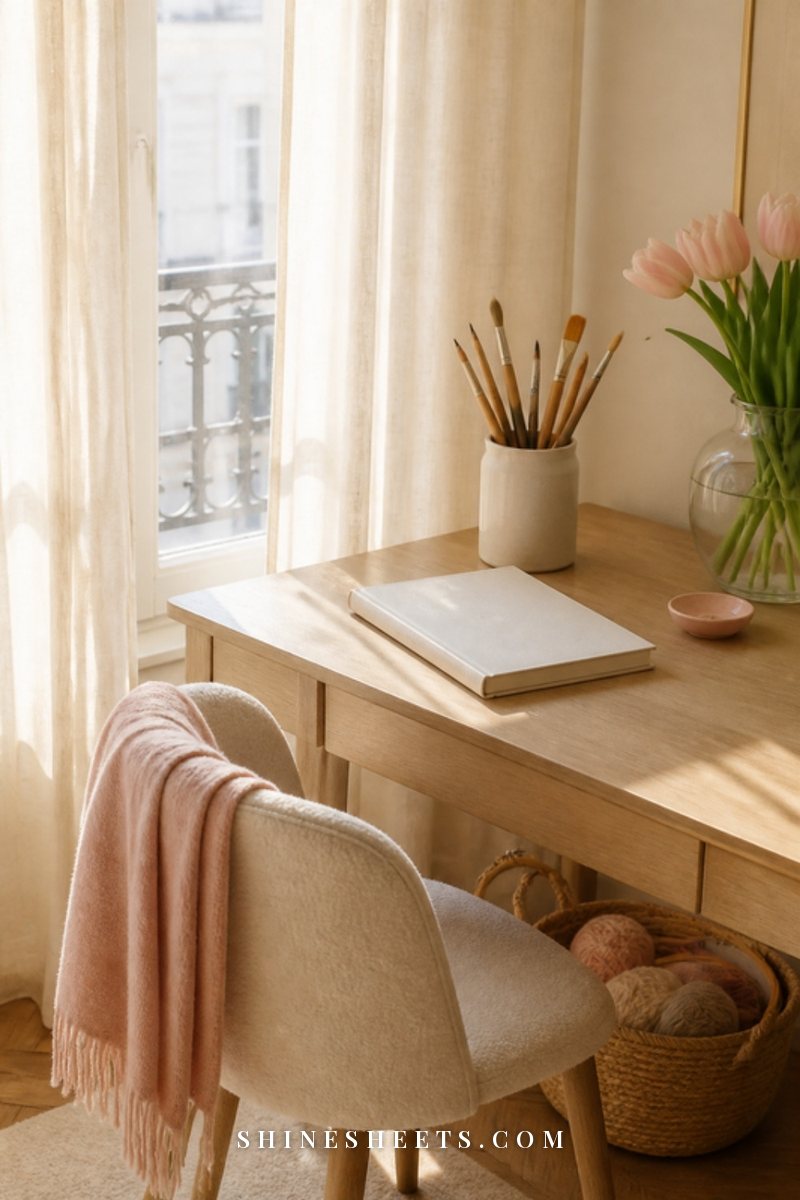
Creativity needs a little room, both physically and in your schedule. You don't need a studio. A corner works beautifully.
Set up a small creative spot: a tray, a basket or a shelf where your materials live so they're ready when you are. Keep a cream hardcover sketchbook, a few pens, your paints and your current project there. When everything is out and inviting, starting takes seconds instead of a whole search through drawers.
For time, think small and regular rather than big and rare:
- Attach it to a habit. Five minutes of sketching while your tea steeps, or a six-word story right after dinner.
- Protect one longer slot a week. A Sunday morning hour, for example, written in your calendar like an appointment.
- Leave room for boredom. Some of your best ideas need empty minutes. Not every wait needs your phone.
If cost is holding you back, my guide to cheap hobbies has plenty of creative options that need little more than paper and curiosity.
Sharing Your Work (When You're Ready)
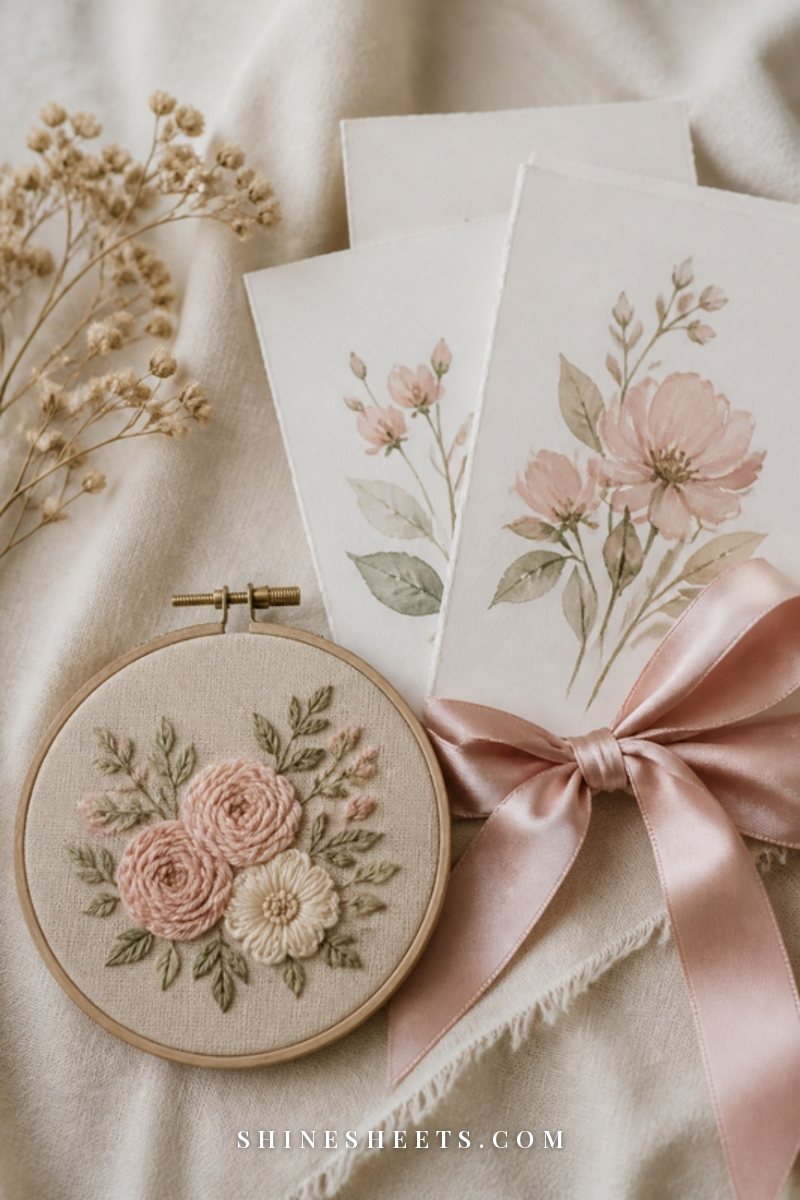
You never have to share anything you make. Creativity is worth it just for the joy and calm it brings. But sharing, gently and on your terms, can give your practice a little extra spark.
Start small and safe:
- Give a hand-painted card to a friend.
- Show one sketch to someone you trust.
- Gift a small embroidery hoop or a framed photo you took.
- Join a beginner class or club where everyone is learning together.
Sharing reminds you that your ideas can bring joy to other people too. And sometimes a friend's delighted reaction is exactly the push you need to keep going. If creativity starts to feel like something bigger, a direction you'd like to follow, my guide on how to find your passion can help you explore it.
Final Thoughts
Learning how to be more creative isn't about becoming a different person. It's about giving the creative part of you, the one that's already there, a few minutes of attention every day. Feed it with good input, catch your ideas, play without a goal, and let small, imperfect things be enough.
Start with one idea from the list today. A five-minute sketch, a six-word story, a new route home. Creativity grows quietly, one small act at a time, and you're far more creative than you think.