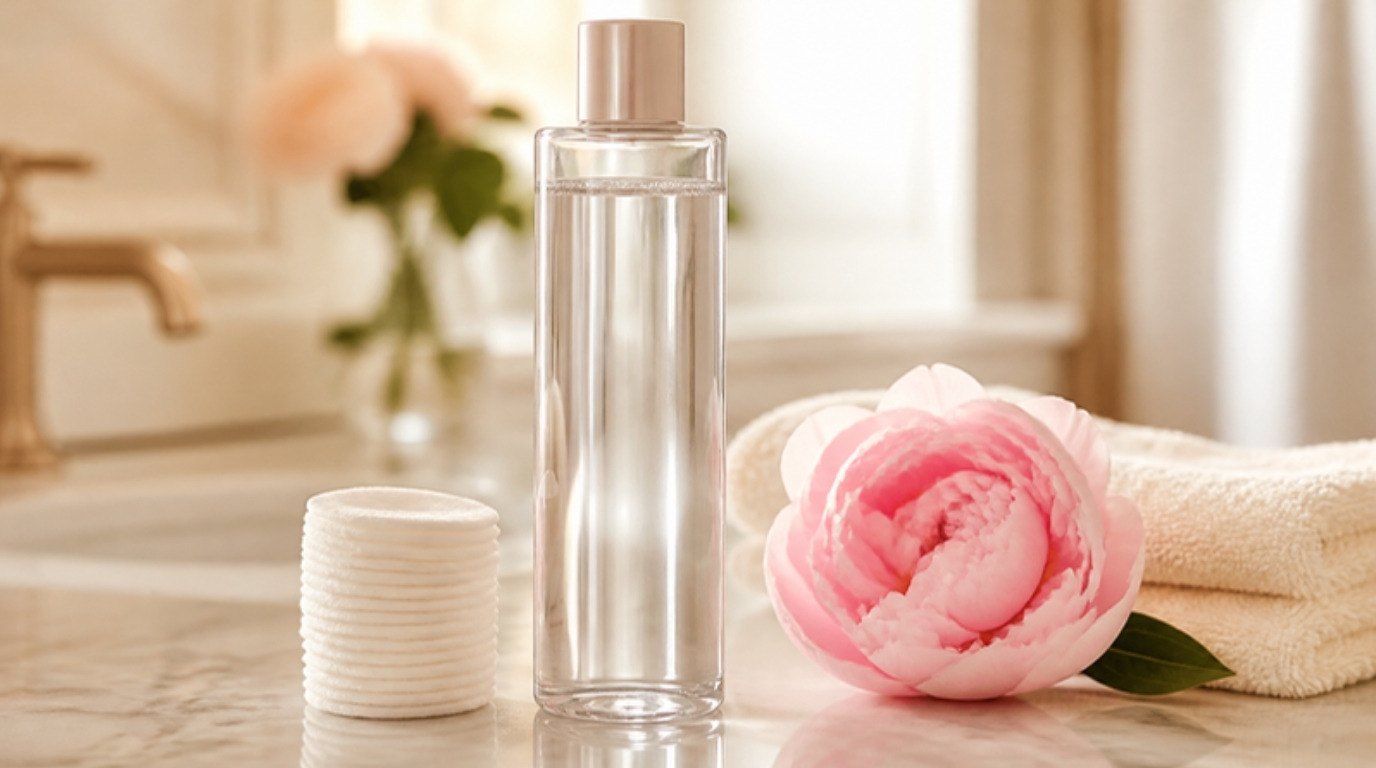
Micellar water looks like plain water and feels almost too gentle to do anything, which is exactly why so many people use it wrong. It isn't a toner, it isn't a full face wash for every situation, and it definitely doesn't want to be scrubbed across your skin. Used the right way, though, it's one of the kindest makeup removers you can keep on your bathroom shelf.
The secret is technique. Micellar water works by soaking and lifting, not by rubbing, so the way you hold the pad matters almost as much as what's in the bottle. A few small changes, like pressing instead of swiping or knowing when to rinse, can be the difference between calm, clean skin and a red, irritated face at the end of the night.
This guide covers how to use micellar water properly: what it is, who it suits, a step-by-step method, eye makeup removal, whether you need to rinse, how it fits into double cleansing, on-the-go uses and the common mistakes. You'll also find a simple comparison table of micellar water, cleansing balm and gel cleanser, so you know which one to grab and when.
What Micellar Water Actually Is
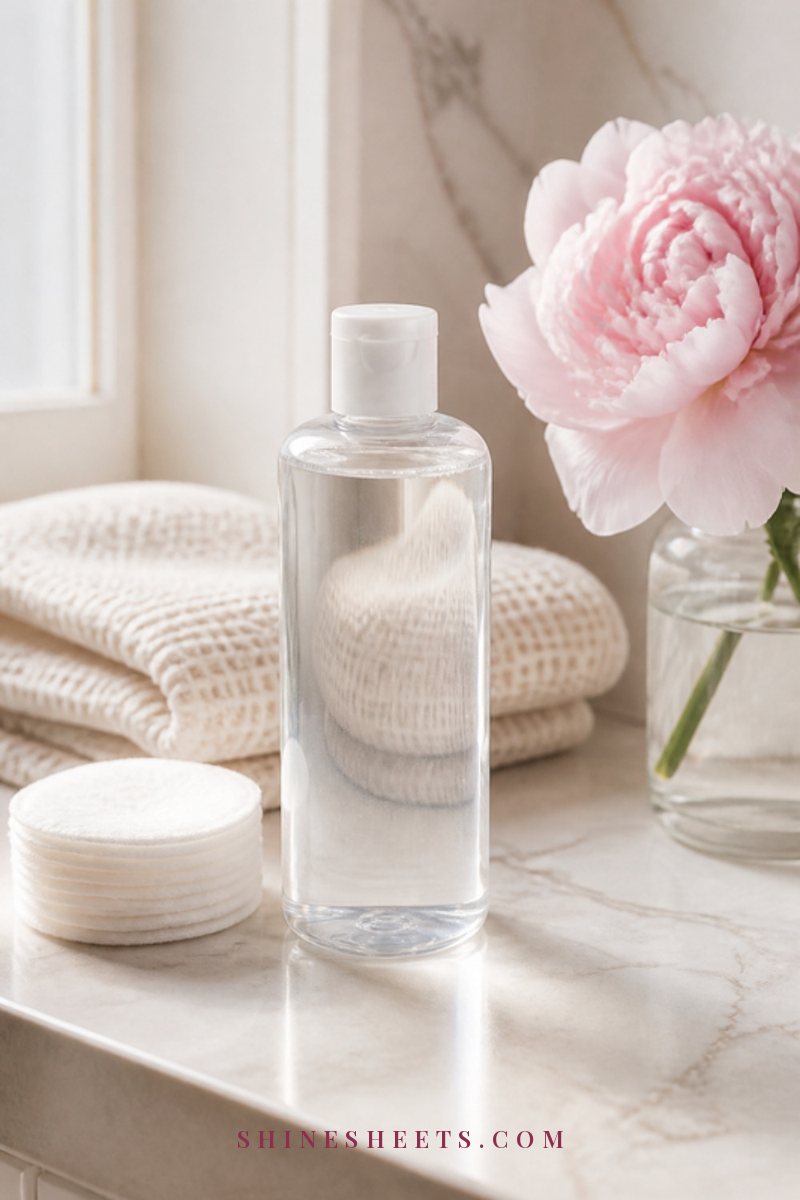
Micellar water is mostly purified water with very mild cleansing ingredients called surfactants. In water, these surfactants group into tiny balls called micelles. One end of each micelle is attracted to water, the other end to oil. When you press a soaked cotton pad on your skin, the oil-loving side grabs makeup, sunscreen and sebum, and the pad lifts it away.
That's why micellar water can remove makeup without any lather and, for many people, without rinsing. It's essentially a no-foam cleanser in liquid form.
There are a few main types you'll see on the shelf:
- Classic micellar water: clear, very gentle, good for light makeup and everyday cleansing.
- Micellar water for sensitive skin: fragrance-free, often with soothing ingredients like glycerin or niacinamide.
- Micellar water for oily or blemish-prone skin: may contain a small amount of zinc or a gentle acid to help with shine.
- Bi-phase (two-phase) micellar water: a layer of oil sits on top of the water, and you shake it before use. This one is made for waterproof mascara and long-wear makeup.
Who Micellar Water Suits
Almost everyone can use micellar water in some way. The question is whether it should be your whole cleanse or just one part of it.
- Dry and sensitive skin: often loves micellar water, because it cleans without the tight, stripped feeling some foaming washes leave behind. If your skin reacts easily, a fragrance-free formula is the safest pick. My sensitive skin routine shows where it fits in a calm, minimal routine.
- Normal and combination skin: a great evening first step and a quick morning refresh. With combination, sensitive skin and a shiny T-zone like mine, a gentle formula on the cheeks plus a proper cleanse on the T-zone at night is a nice balance.
- Oily and acne-prone skin: can use it as a makeup remover, but it's usually best followed by a gel cleanser so no residue stays behind on the skin.
- Beginners: it's one of the easiest first steps if you're just building a routine, which is why it's in my skincare routine for beginners.
If you're starting out, a fragrance-free micellar water for sensitive skin is a good default. Look for a short ingredient list, no added fragrance and no alcohol high on the list.
How To Use Micellar Water: Step by Step
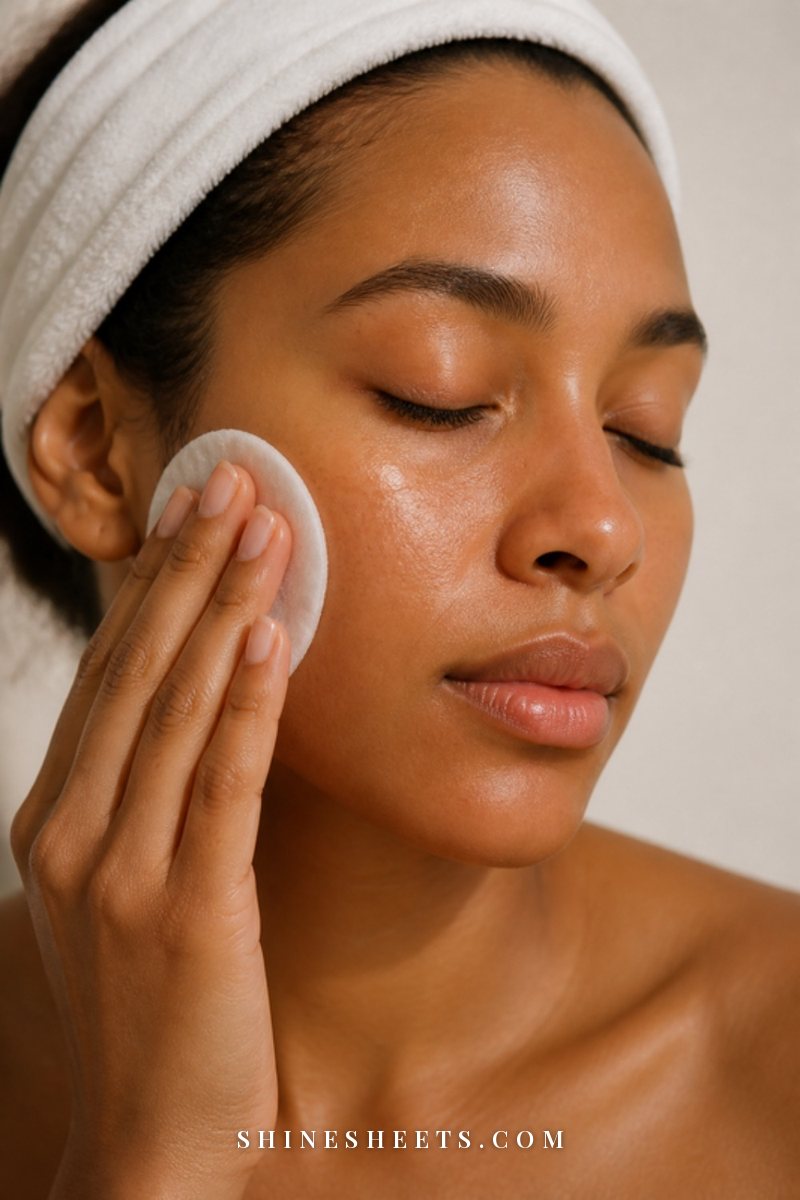
This is the method that makes the biggest difference. It looks slow written out, but in practice it takes two or three minutes for a full face of makeup.
- Start with clean hands. Wash your hands first, especially if you're cleansing after a long day.
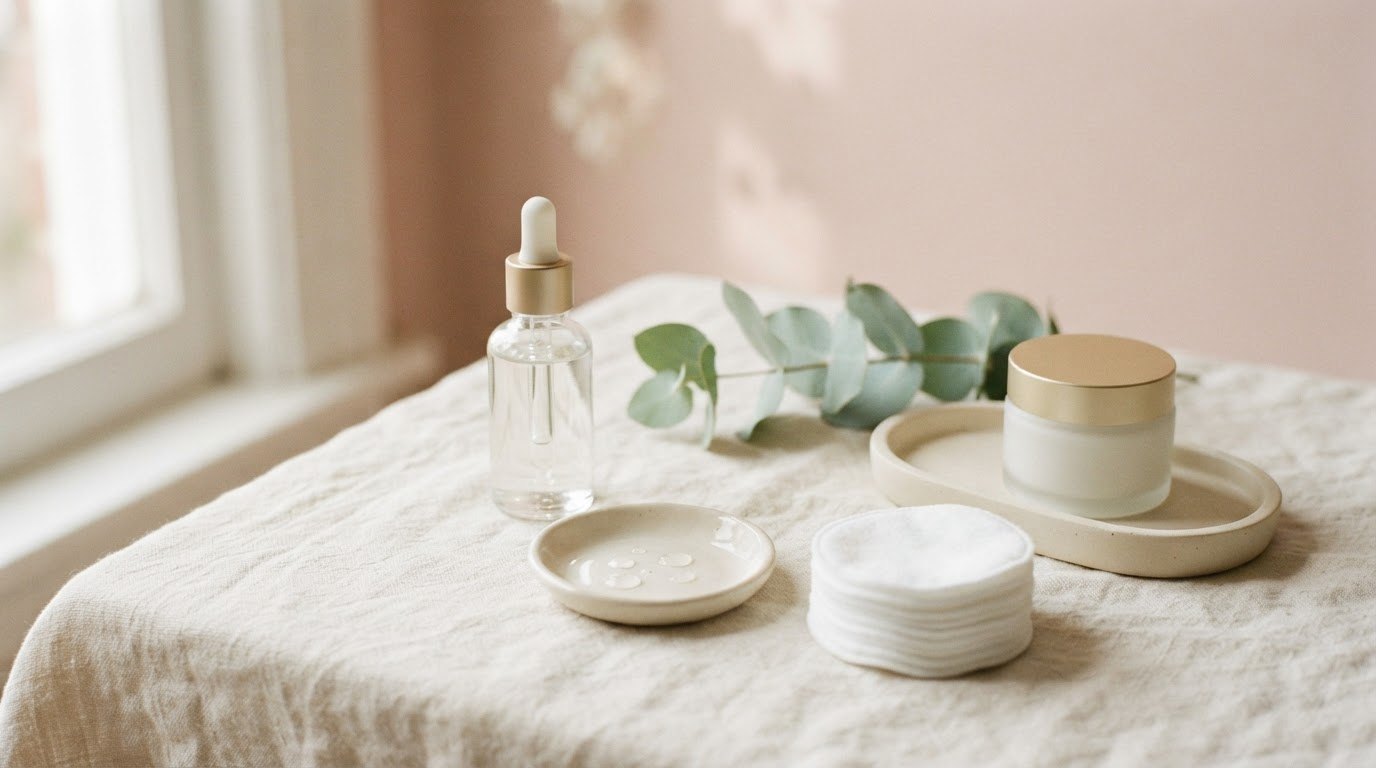
- Soak the pad properly. Saturate a cotton pad until it feels wet, not damp. A half-dry pad drags across the skin and makes you rub harder. Pressing the pad over the bottle opening and tipping it twice usually does it.
- Press and hold for about 10 seconds. Place the soaked pad on one area (forehead, one cheek, chin) and hold it there. This gives the micelles time to dissolve makeup and sunscreen.
- Swipe gently in one direction. After the hold, glide the pad outward, from the center of your face toward your hairline. No back-and-forth scrubbing.
- Fold or switch pads. Once a side looks dirty, fold the pad or take a fresh one. You don't need a mountain of pads, but you do need a clean surface.
- Finish around the edges. Go along your hairline, jawline and the sides of your nose, where foundation and sunscreen like to hide.
- Check with a final pad. One last pass with a fresh pad should come away almost clean. If it doesn't, repeat on that area only.
Soft organic cotton pads are a good choice for this, because they hold more liquid and shed fewer fibers. Look for a smooth side and a slightly textured side, and use the smooth side around your eyes.
How To Remove Eye Makeup With Micellar Water
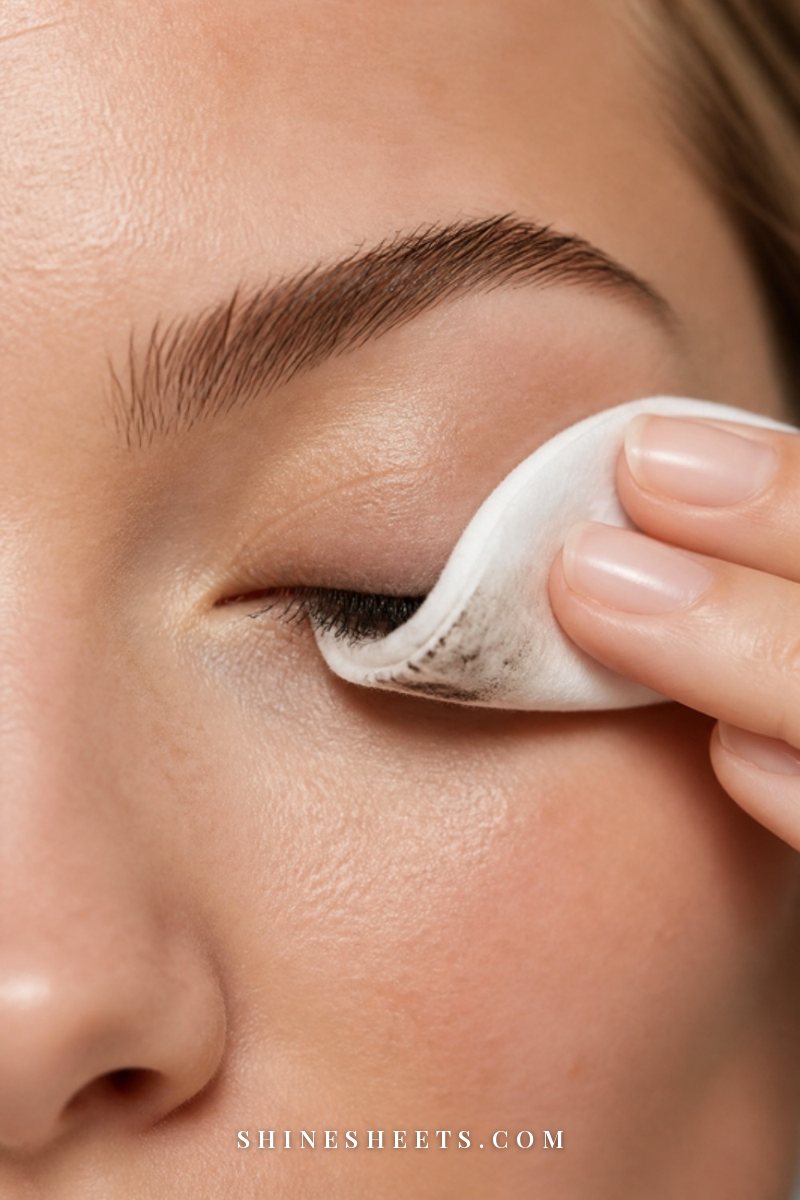
The skin around your eyes is thinner and more delicate than the rest of your face, so this is where pressing really matters.
- Fold a soaked cotton pad in half and close your eye.
- Rest the pad over your lid and lashes, holding it lightly in place for 15 to 20 seconds (mascara needs a little longer than foundation).
- Glide the pad down and outward along the lashes, in the direction they grow.
- For the lower lash line, tilt your head down, look up and sweep gently with a clean corner of the pad.
- If any eyeliner is left in the lash line, use a cotton swab dipped in micellar water and roll it along the lashes, never across the eye.
If you wear eye makeup daily, the guide to eye makeup for beginners has tips for choosing formulas that come off more easily in the first place.
When You Need a Bi-Phase Remover
Regular micellar water struggles with waterproof mascara, long-wear eyeliner and smudge-proof liquid lipstick. Instead of scrubbing harder, switch tools. A bi-phase makeup remover has an oil layer that breaks down waterproof formulas quickly. Shake it well until the layers mix, use the same press-and-hold method, then follow with your regular micellar water or cleanser to remove the slightly oily film it can leave.
Should You Rinse Off Micellar Water?
Micellar water is marketed as "no rinse," and for many people that works fine. Still, it does leave a light layer of cleansing ingredients on the skin. Whether that matters depends on your skin.
- Rinse or follow with a cleanser if: your skin is sensitive, acne-prone or easily congested, you notice tightness, itching or small bumps, or you've removed heavy makeup or sunscreen.
- No rinse is usually fine if: your skin is dry or normal, you're doing a quick morning refresh, or you're removing light makeup and you'll apply toner or serum straight after.
A simple rule: if your skin feels comfortable and calm the next morning, your routine is working. If it feels itchy, tight or bumpy, add a splash of lukewarm water or a gentle cleanser after micellar water and see if things settle.
Using Micellar Water as Your First Cleanse
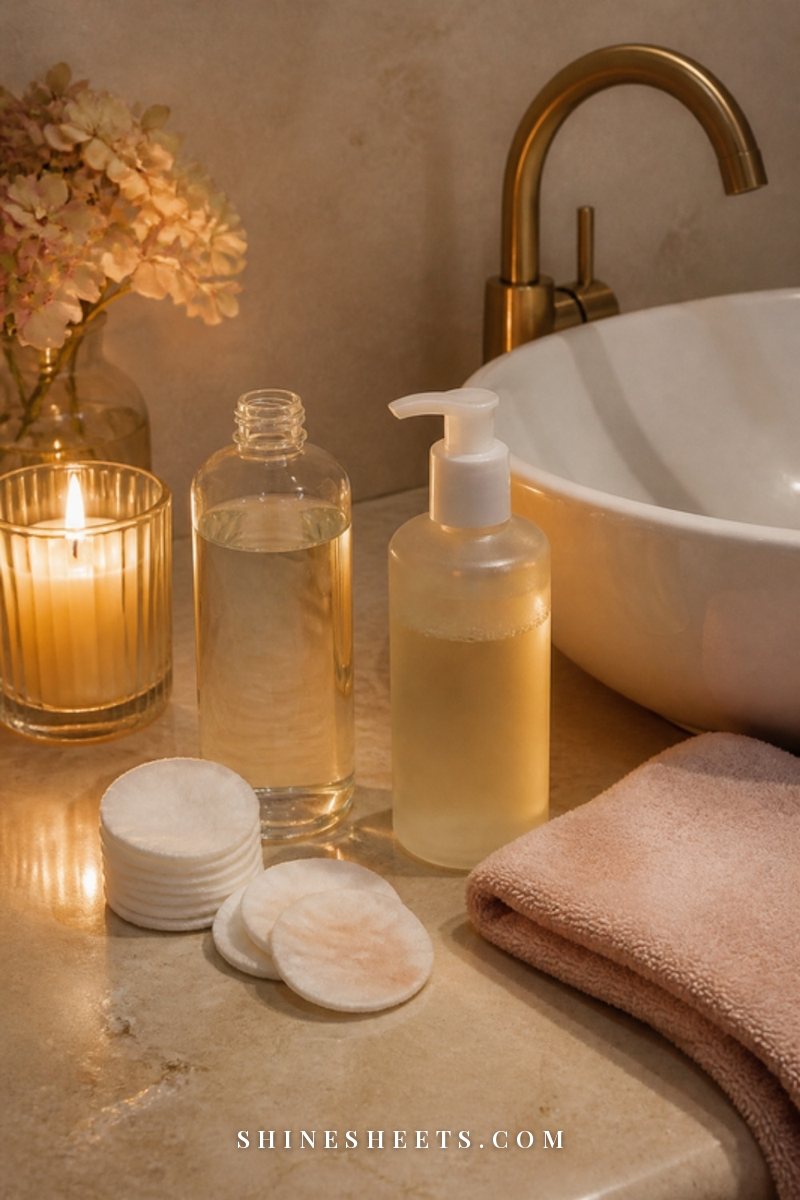
Micellar water makes a lovely first step in a double cleanse, especially if cleansing balms and oils feel too heavy for you. The first cleanse removes makeup and sunscreen, and the second cleanse cleans the skin itself.
- First cleanse: micellar water with the press-and-hold method until your pads come away mostly clean.
- Second cleanse: a gentle gel cleanser massaged in for about 30 to 60 seconds, then rinsed with lukewarm water.
- Pat dry and continue with your usual toner, serum and moisturizer.
This is the combination I'd choose on evenings when you've worn sunscreen and makeup all day. For the full picture, including when a balm is the better first step, my guide to double cleansing walks you through both options.
Micellar Water vs Cleansing Balm vs Gel Cleanser
All three clean your face, but they do different jobs. This table helps you decide which to reach for (screenshot it if you like to keep notes on your phone):
| Micellar Water | Cleansing Balm | Gel Cleanser | |
|---|---|---|---|
| Texture | Water-light liquid | Solid balm that melts into oil | Light gel that lathers slightly |
| Best at removing | Light makeup, everyday sunscreen, oil | Heavy and long-wear makeup, water-resistant sunscreen | Leftover residue, sweat, oil, dirt |
| Skin types | Dry, sensitive, normal, combination | Dry, normal, mature; can feel heavy for oily skin | Oily, combination, acne-prone, normal |
| Rinse needed | Optional (recommended for sensitive or acne-prone skin) | Yes, emulsify with water and rinse | Yes |
| Role in double cleansing | First cleanse (light days) | First cleanse (heavy days) | Second cleanse |
| Best moments | Quick mornings, travel, eye makeup, gentle evenings | Full-glam evenings, after long sunscreen days | Every evening after the first cleanse, post-workout |
| Watch out for | Rubbing, using too few pads | Not rinsing enough | Over-washing, very hot water |
The short version: micellar water is your gentle, flexible friend; a balm is for heavy-duty removal; a gel cleanser is the finishing step that leaves skin truly clean.
Smart On-the-Go Uses
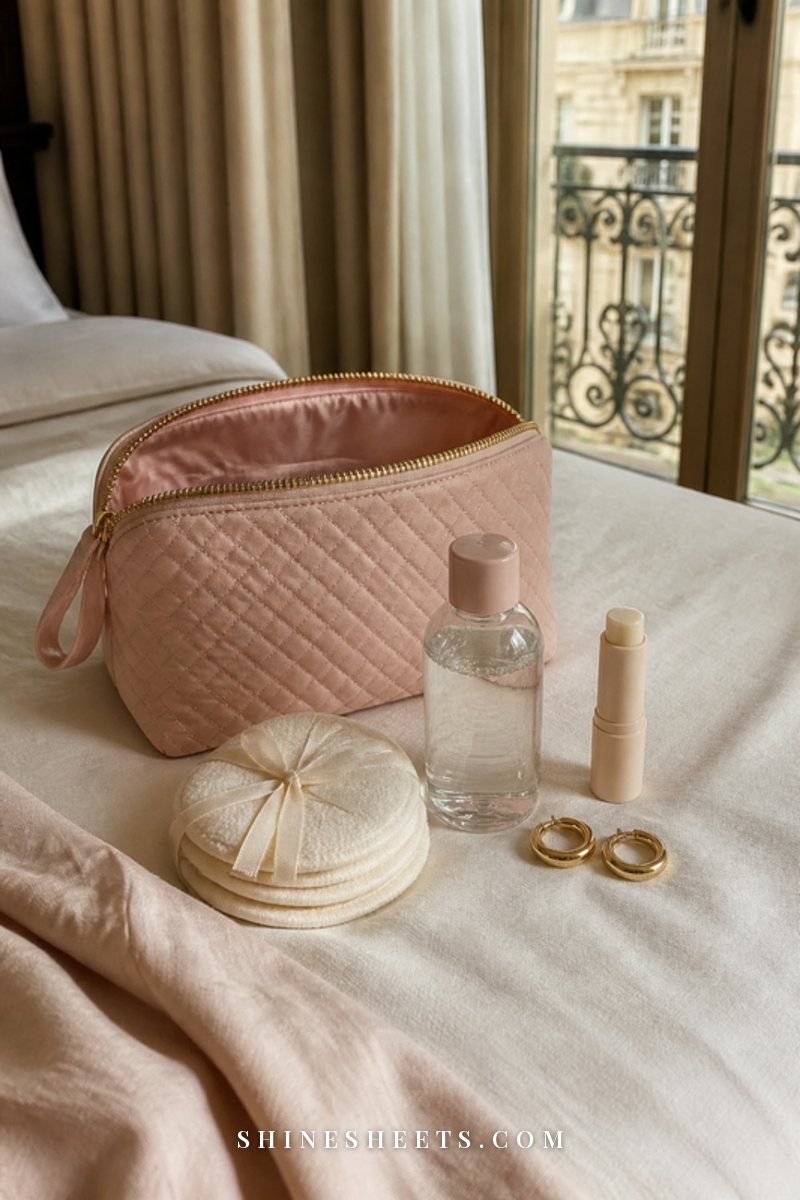
Micellar water is wonderfully practical outside your usual routine, because it doesn't need a sink. A few ways it earns a spot in your bag:
- Travel: a small bottle and a few pads replace makeup wipes on flights and long days, and they're far gentler on the skin.
- After the gym: a quick wipe-down removes sweat and oil before you can get to a proper wash.
- Makeup fixes: a cotton swab dipped in micellar water cleans up smudged liner or mascara flecks without ruining the rest of your face.
- Morning refresh: if your skin is dry or sensitive, a soaked pad in the morning can replace a full cleanse.
- Exhausted nights: when you truly can't face the whole routine, micellar water by the bed is so much better than sleeping in makeup. Rinse or cleanse properly the next morning.
Reusable cotton rounds are perfect for travel and for everyday use if you like less waste. Wash them in a mesh laundry bag after each use and keep a small stack in your makeup pouch.
7 Micellar Water Mistakes To Avoid
Most problems with micellar water come from habits, not from the product itself. If your skin feels irritated, tight or not quite clean, one of these is usually the reason.
1. Scrubbing
Rubbing back and forth creates friction, and friction is what causes redness, especially around the eyes and on the cheeks. The whole point of micellar water is that it does the work for you. Press, hold for about 10 seconds, then glide once in one direction. If makeup is still there, repeat the hold rather than pressing harder.
2. Using a Half-Wet Pad
A pad that's only damp soaks up the little liquid it has and leaves nothing for your skin. You end up dragging dry cotton across your face. Saturate the pad until it feels properly wet, and add more liquid as soon as it starts to feel draggy.
3. Using Too Many Pads (or Too Few)
Going through ten pads usually means you're not holding them long enough, so each one only removes a little. Using a single pad for your whole face just moves makeup around. For a full face of makeup, two or three pads for the face plus one for each eye is typical. On a bare-skin morning, one pad is plenty.
4. Relying on It Alone on Heavy Sunscreen Days
Water-resistant sunscreen and long-wear foundation are designed to stay put, and a gentle micellar water may not fully remove them. On those days, use it as a first cleanse and follow with a gel cleanser, or start with a cleansing balm instead.
5. Skipping the Rinse on Reactive Skin
If you notice small bumps, itchiness or a slightly filmy feeling the next day, the cleansing ingredients left on your skin may be the reason. Try a splash of lukewarm water or a gentle second cleanse for a week and see whether your skin calms down.
6. Choosing a Fragranced Formula for Sensitive Skin
Fragrance is one of the most common triggers for sensitive skin, and micellar water sits directly on your face (and near your eyes) for a while. Fragrance-free is the safer choice, especially if you plan to skip rinsing.
7. Treating It as a Toner
Micellar water is a cleanser, even though it looks like a toner. Patting it on after washing your face just adds more surfactant to clean skin. If you want hydration afterward, reach for a hydrating toner or essence instead.
How To Choose the Right Micellar Water
All micellar waters look the same in the bottle, but formulas differ more than you'd think. A few things to check on the label before you buy:
- Fragrance-free: the most important point for sensitive skin and for anyone who uses it around the eyes.
- Soothing extras: glycerin, panthenol, allantoin or niacinamide help skin feel comfortable rather than squeaky.
- Low or no alcohol: denatured alcohol high on the ingredient list can feel drying, especially if you don't rinse.
- Matched to your skin type: a formula for oily skin may contain a little zinc or a mild acid, which can sting dry or reactive skin. A formula for dry skin may feel slightly slippery on an oily T-zone.
- Eye-friendly claims: if you'll use it on your lashes, look for one described as suitable for the eye area and for contact lens wearers.
Combination skin can split the difference: a gentle, fragrance-free formula for the whole face, followed by a gel cleanser where you get shiny. That way the drier parts of your face stay comfortable and the oilier parts still get a thorough clean.
Quick Answers About Micellar Water
Can You Use Micellar Water Every Day?
Yes, for most skin types. It's one of the gentlest cleansing options, so morning and evening use is usually fine. If your skin starts to feel tight or itchy, cut back to evenings only and rinse afterward.
Does Micellar Water Replace Face Wash?
Sometimes. On a bare-skin morning or a no-makeup day, it can be your only cleanse, especially for dry or sensitive skin. On makeup and sunscreen days, think of it as the first step rather than the whole job.
Can You Use It on Your Lips?
Yes. Press a soaked pad on your lips for a few seconds to soften lipstick, then glide outward from the center. Long-wear liquid lipstick usually needs a bi-phase remover instead.
Is Micellar Water Good for Acne-Prone Skin?
It can be, as long as you follow it with a gentle gel cleanser or a good rinse. Pick a fragrance-free, oil-free formula, change pads often so you're not moving oil around, and keep friction low on active breakouts.
Two Simple Micellar Water Routines
Morning (Dry, Normal or Sensitive Skin)
- Micellar water on a soaked pad, pressed and gently swiped.
- Hydrating toner or serum.
- Moisturizer.
- Sunscreen.
Evening (Makeup and Sunscreen Days)
- Bi-phase remover for waterproof eye makeup, if needed.
- Micellar water as your first cleanse.
- Gentle gel cleanser as your second cleanse.
- Toner, treatment serum and moisturizer.
A quick safety note: micellar water is gentle, but you can still react to any formula. Patch test a new product on your jawline for a couple of evenings first, keep it out of your eyes as much as possible, and if you notice stinging, swelling or a rash that doesn't settle, stop using it and check with a dermatologist or doctor.
Final Thoughts
Micellar water rewards patience more than effort. Soak the pad, press and hold, glide instead of scrub, and rinse or follow with a gentle cleanser when your skin asks for it. Those small habits keep your skin calm while it still comes out perfectly clean.
Think of it as the soft first step of your evening, the moment the day comes off before everything else goes on. A kind cleanse is a lovely way to tell your skin, and yourself, that the day is done.