Sensitive skin rarely needs a clever new product. It needs fewer products, gentler habits and a lot more patience than the internet tends to recommend. When your face stings, flushes or feels tight after almost everything, the answer is usually to take things away, not to add another "miracle" serum on top.
I know this from my own face: my skin is combination and sensitive at the same time, which means a shiny T-zone that tempts me toward strong products and cheeks that protest the moment I listen to that temptation. It took me a while to accept that calm skin comes from a short, boring routine done consistently.
This guide walks you through a sensitive skin routine that's calm, simple and gentle: how to tell truly sensitive skin from temporarily sensitized skin, the barrier basics in plain words, a minimal morning and evening routine, which ingredients usually soothe and which ones commonly trigger, how to patch test, how to add actives without a flare, and a flare-day reset plan you can screenshot for the days when your skin is having a hard time.
Be kind to yourself while you read. Reactive skin isn't a failure of discipline, and you haven't "ruined" anything. Your skin is simply asking for a softer approach.
Sensitive vs. Sensitized Skin: How To Tell the Difference
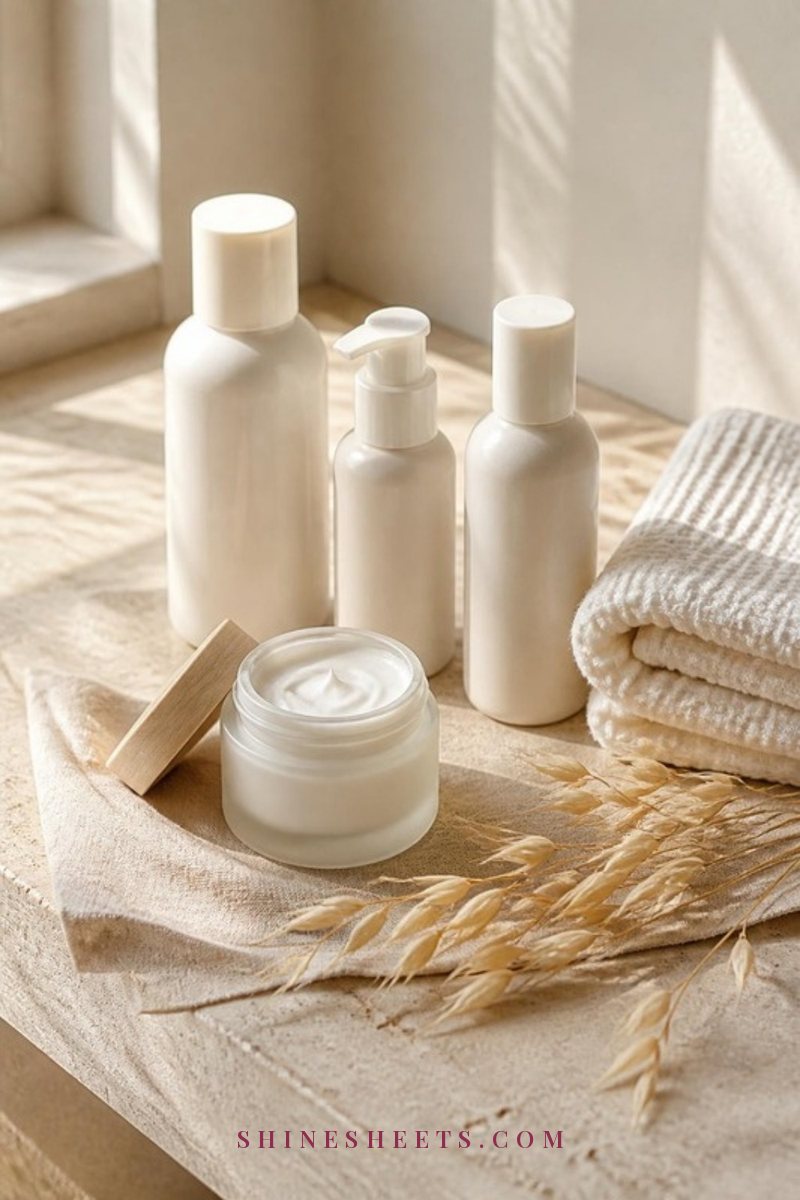
These two words sound the same, but they describe different situations, and knowing which one you're dealing with changes your plan.
Sensitive skin is more of a long-term tendency. You've probably always had it: your skin reacts easily to fragrance, wind, heat or new products, it flushes quickly, and it often runs in the family. People with a tendency toward rosacea or eczema often describe their skin this way.
Sensitized skin is temporary. Something has worn your barrier down: too many exfoliating acids, a strong retinoid started too fast, harsh scrubs, over-cleansing, a dry heated apartment or a stressful month. The good news is that sensitized skin usually settles once you remove the cause and give your barrier time to repair.
Common signs that your skin is reacting, whichever group you're in:
- Stinging or burning when you apply products that never bothered you before (or that bother you every time).
- Redness or blotchy flushing, especially on the cheeks, around the nose or on the chin.
- Tightness after cleansing, as if your face is a size too small.
- Flaky or rough patches next to areas that still look oily.
- Itching or tiny bumps after trying something new.
- Reacting to almost every new product, even "gentle" ones.
A quick self-check: if your skin was fairly easygoing until you started a new routine, a stronger acid or a retinoid, you're most likely dealing with sensitized skin. If it has always been reactive, you're probably in the sensitive camp. Both groups follow the same gentle routine below. The sensitized group simply gets to loosen the rules a little once things calm down.
Your Skin Barrier, in Plain Words
Picture the top layer of your skin as a brick wall. The skin cells are the bricks, and a mix of lipids (ceramides, cholesterol and fatty acids) is the mortar holding them together. When that wall is intact, it keeps water in and irritants out.
When the mortar wears thin, water escapes more easily, so your skin feels dry and tight, and irritants slip in more easily, so products that used to feel fine suddenly sting. That's why a damaged barrier can make you feel oily and dehydrated at the same time, which is confusing, especially with a combination face like mine.
Almost everything in a sensitive skin routine is about protecting that mortar: cleansing without stripping, adding back moisture and lipids, shielding the skin from UV, and avoiding the things that keep chipping away at it. If your skin is clearly in a rough patch right now, my guide to the signs of a damaged skin barrier and how to restore it goes deeper into the repair phase.
One honest note: barrier repair isn't instant. Skin renews itself over a few weeks, so give any calming routine at least two to four weeks before deciding whether it works.
The Simple Sensitive Skin Routine
The best routine for reactive skin has as few steps as possible, with each product doing one clear job. Fewer steps means fewer ingredients, and fewer ingredients means fewer chances for something to irritate you. Here's the minimal version I'd recommend to anyone starting over.
Morning Routine: 4 Gentle Steps
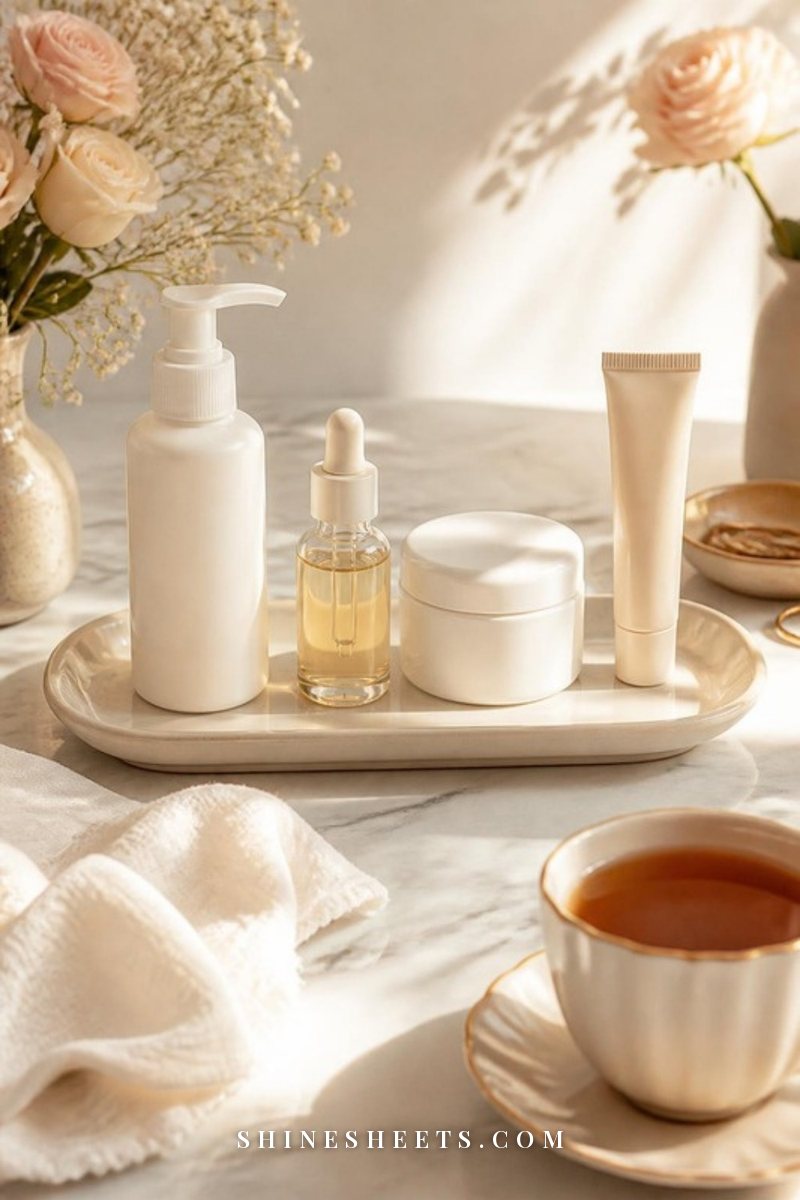
- Rinse or cleanse lightly. If your skin feels comfortable in the morning, a splash of lukewarm water is often enough. If you wake up oily (hello, T-zone), use a small amount of a fragrance-free, low-foam gentle cleanser only where you need it. Massage for about 30 seconds and rinse with lukewarm, never hot, water.
- Soothing serum (optional). On damp skin, press in two or three drops of a soothing panthenol serum. Look for short ingredient lists with panthenol, glycerin or centella near the top, and no fragrance.
- Barrier moisturizer. A pea-to-almond-sized amount of a ceramide barrier moisturizer, warmed between your fingertips and pressed in rather than rubbed. Choose a lighter lotion if you're oily, a richer cream if you're dry.
- Mineral sunscreen. Finish with a mineral sunscreen made for sensitive skin with zinc oxide and/or titanium dioxide, SPF 30 or higher. Use about two finger-lengths for your face and neck, and reapply if you're outdoors for long.
That's it. If you want makeup, apply it after your sunscreen has set for a few minutes, and keep it simple on reactive days.
Evening Routine: 3 Gentle Steps
- Cleanse once, gently. Use the same mild cleanser for about 30–45 seconds, then pat (don't rub) dry with a clean, soft towel. If you wear long-wear makeup or water-resistant sunscreen, a gentle oil or balm first can help, as long as you rinse it off well. My guide to double cleansing and who actually needs it explains when that extra step is worth it and when it's just extra friction.
- Treat only if your skin is calm. On calm nights, this is where a gentle active can go (more on that below). On reactive nights, skip straight to step three.
- Moisturize generously. Use your barrier moisturizer, a little more than in the morning. If you're very dry, press a thin layer of a richer cream over the driest spots.
Notice what isn't on the list: toners full of alcohol, weekly scrubs, peel pads, five-step layering. Many of those can be lovely for resilient skin. For sensitive skin, they're usually where the trouble starts.
5 Ingredients That Usually Soothe Sensitive Skin

No ingredient suits absolutely everyone, but these five tend to be well tolerated and helpful for calming and supporting the barrier. Scan for them near the top of the ingredient list:
- Ceramides. They're part of your skin's natural "mortar," so adding them back helps the barrier hold water. Most effective in moisturizers alongside cholesterol and fatty acids.
- Panthenol (pro-vitamin B5). A humectant that draws in moisture and is widely used to soothe dryness and irritation. Lovely in serums and calming creams.
- Centella asiatica (cica). A plant extract loved in Korean skincare for calming redness. On flare days, a centella cica cream can be a comforting replacement for your usual moisturizer.
- Colloidal oat. Finely ground oat that leaves a soft, protective film on the skin and is a classic in products for itchy, dry skin.
- Glycerin. The quiet hero. Simple, inexpensive and in countless formulas, it pulls water into the skin and is very rarely irritating.
A good rule of thumb: when a product's marketing talks mostly about "calming," "comfort" or "barrier" and the ingredient list is short, you're usually in the right aisle.
Common Triggers To Watch For
These don't bother everyone, but they're the usual suspects when sensitive skin reacts. If you're in a rough patch, remove them first and see what changes:
- Fragrance ("parfum"). One of the most common causes of skin reactions. "Unscented" isn't always the same as fragrance-free, so check the ingredient list.
- Essential oils. Natural doesn't mean gentle. Lavender, peppermint, citrus and tea tree oils can all irritate reactive skin.
- High-strength acids. Strong glycolic acid, peel pads and leave-on exfoliants used daily can strip the barrier quickly.
- Alcohol-heavy toners. Denatured alcohol high on the list can feel refreshing but often leaves skin tight and stingy afterward.
- Physical scrubs and tools. Gritty scrubs, rough washcloths and harsh brushes create micro-friction your skin doesn't need.
- Too many actives at once. Retinoids, vitamin C, acids and benzoyl peroxide layered together can overwhelm even sturdy skin.
How To Patch Test a New Product
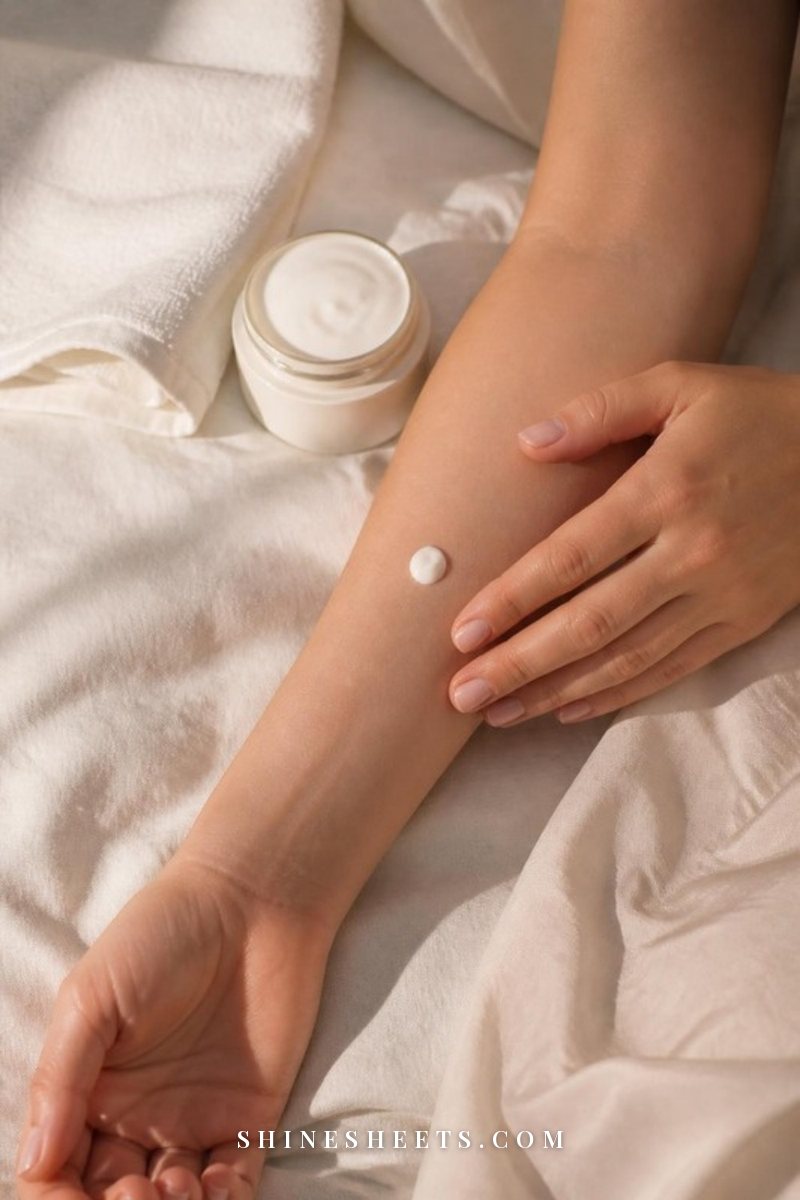
Patch testing feels tedious, but it's the single most useful habit for reactive skin. It turns a whole-face disaster into a small, easy-to-calm spot. Here's a simple way to do it:
- Pick one product at a time. Never introduce two new things in the same week, or you won't know which one caused a reaction.
- Test on a discreet spot first. Apply a small dab to your inner forearm or behind your ear, twice a day, for three to five days.
- Move to your face carefully. If your arm stays calm, apply a small amount to one area of your face, like along the jawline, for another three to five days.
- Watch for signs. Redness, itching, stinging that lasts more than a minute, bumps or swelling mean stop and rinse it off.
- Go full face slowly. If all is well, use it on your whole face, starting every other day for the first week.
A tiny bit of tingling that fades within seconds can happen with some products. Burning, lasting redness or itching is your skin saying no, and it's always fine to listen.
How To Introduce Actives Without a Flare
Having sensitive skin doesn't mean you can never use actives. It means you choose gentler ones, start at lower strengths and go much slower than the packaging suggests. Only start when your skin has been calm for at least two weeks.
Gentle Actives That Often Work for Sensitive Skin
- Niacinamide at a low percentage. Around 2–5% is usually plenty and tends to be better tolerated than the very high strengths. It can help with redness, oiliness and barrier support. My niacinamide guide covers how to use it well.
- Azelaic acid. Often recommended for redness and bumps, including in skin that's prone to rosacea. It may tingle at first, so start a few evenings a week. Read more about why azelaic acid is so good for skin.
- Retinoids, only much later. If you want one, choose a gentle, low-strength formula and apply it over moisturizer (the "sandwich" method) twice a week to start.
The Slow-Start Formula
Here's the formula I'd follow for any new active: one new active + two nights a week + four weeks before increasing. If your skin stays calm, go to three nights a week for another few weeks, then every other night. If anything stings or flushes, drop back a step and stay there longer. There's no prize for getting to nightly use quickly.
7 Everyday Triggers Beyond Your Products

Sometimes the routine is fine and the problem is everything around it. These small daily habits can make a noticeable difference:
- Hot water. Hot showers feel wonderful but strip the barrier and dilate blood vessels. Keep water lukewarm on your face and, if you can, finish your shower with your face out of the spray.
- Weather swings. Cold wind, dry indoor heating and strong sun all stress sensitive skin. In winter, a richer moisturizer and a humidifier help, and my winter skincare routine has more ideas for heating season.
- Rough towels. Use a soft, clean towel just for your face and pat, never rub. Soft white muslin cloths are gentle for removing cleanser if you prefer a cloth, as long as you use a fresh one each time.
- Pillowcases. Change yours at least once or twice a week and wash it with a fragrance-free detergent. A smooth fabric can reduce friction for some people, and my post on silk pillowcase benefits shares what it can and can't do.
- Laundry products. Fragranced detergents and fabric softeners can leave residue on towels and pillowcases that touches your face for hours.
- Touching your face. Resting your chin in your hand, picking and rubbing your eyes all add friction. Keep a gentle eye on it rather than scolding yourself.
- Stress and sleep. Many people notice their skin flares during stressful, sleepless weeks. A calmer evening routine is good for your skin and the rest of you, too.
The Flare-Day Reset Plan
When your skin is red, stinging and angry, you don't need to think. You need a plan. This is my flare-day reset: follow it for three to seven days, then slowly bring your usual routine back one product at a time. Screenshot it for the next rough day.
| Time | What to do | What to pause |
|---|---|---|
| Morning | Lukewarm water rinse only (or gentle cleanser if needed). Soothing serum on damp skin. Barrier moisturizer or cica cream. Mineral sunscreen. | Vitamin C, toners, exfoliants, foundation if it stings, any new product. |
| During the day | Hands off your face. Stay out of strong sun and wind where you can. Drink water and keep things calm. | Face mists with fragrance, blotting papers rubbed hard, heavy makeup touch-ups. |
| Evening | One gentle cleanse for 30 seconds, pat dry. Generous layer of barrier moisturizer or cica cream. | Retinoids, acids, azelaic acid, niacinamide if it tingles, clay masks, sheet masks with fragrance. |
| Lifestyle | Fresh pillowcase, soft clean towel, lukewarm showers, an early night. | Hot showers, saunas, scrubs, facial tools, at-home peels. |
| After 3–7 calm days | Add back one paused product at a time, a week apart. | Reintroducing everything at once. |
If your skin doesn't improve after a week of this reset, or if it gets worse, that's a sign to check in with a professional rather than keep experimenting.
When To See a Dermatologist
A gentle routine helps most reactive skin, but it can't replace a proper diagnosis. Sometimes what feels like "sensitive skin" is actually a condition that responds best to professional treatment. Please book an appointment with a dermatologist or your doctor if:
- Redness, flushing or visible tiny blood vessels on your cheeks and nose keep coming back, or you get bumps that look like acne (this can be rosacea).
- You have itchy, dry, scaly or cracked patches that don't settle with moisturizer (this can be eczema or dermatitis).
- You suspect an allergy to a specific ingredient. A dermatologist can do proper patch testing to pinpoint it.
- Your skin swells, blisters, oozes or burns, or a reaction spreads.
- Nothing has improved after four to six weeks of a simple, gentle routine.
Asking for help isn't overreacting. A good diagnosis can save you months of guessing and a cabinet full of products that never suited you.
Final Thoughts
A sensitive skin routine isn't exciting, and that's exactly why it works. A mild cleanser, a soothing serum if you like it, a barrier moisturizer, sunscreen and a lot of patience will do more for reactive skin than any trendy ten-step lineup.
Go slowly, change one thing at a time and treat your face the way you'd treat a friend who's having a hard week: softly, kindly and without rushing. Calm skin is built quietly, one gentle day after another.