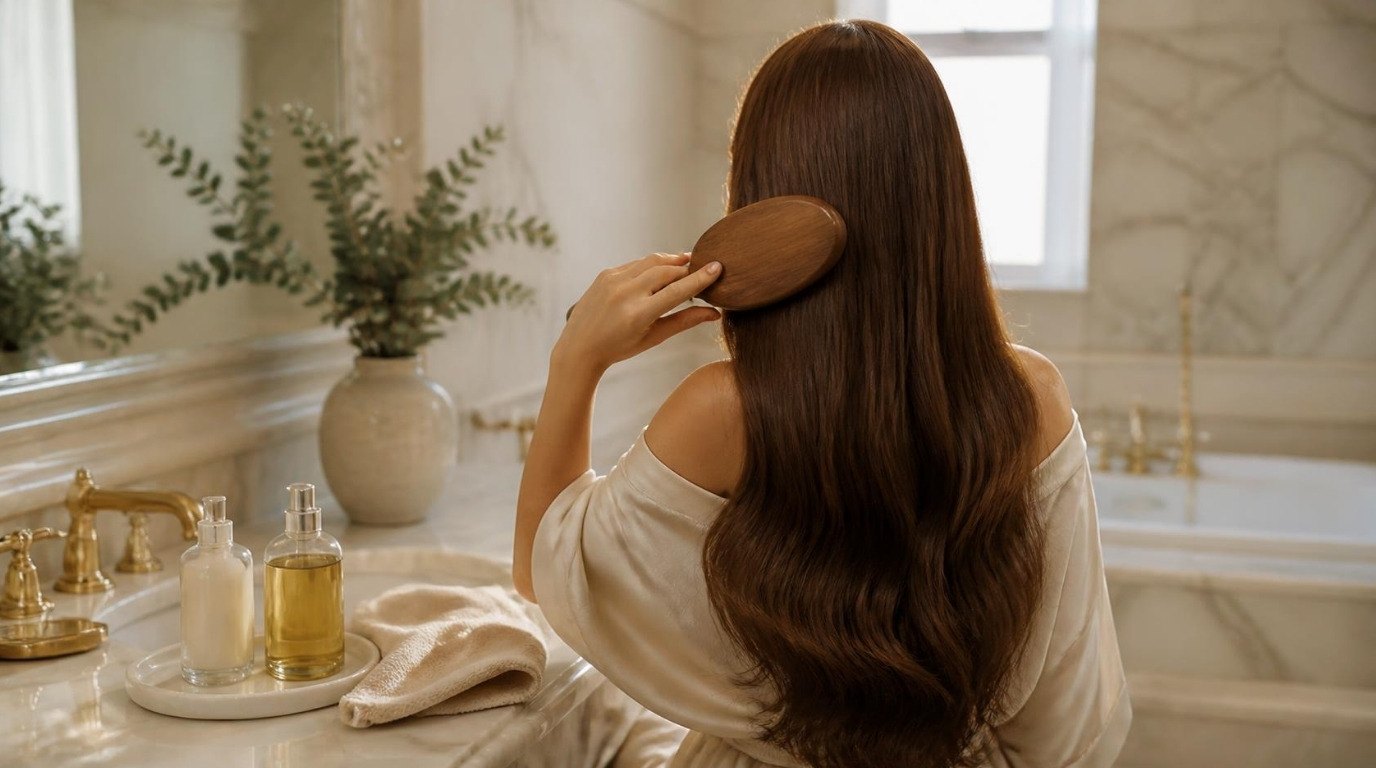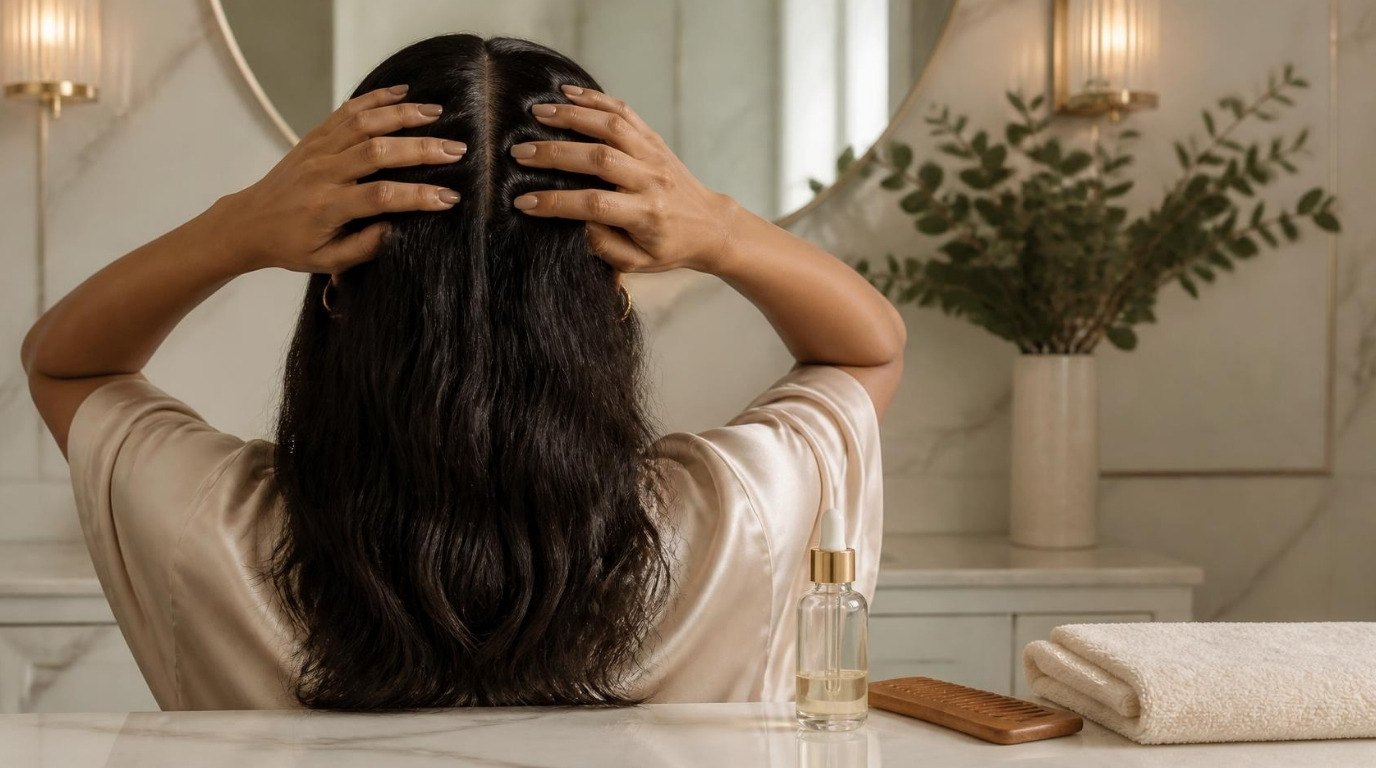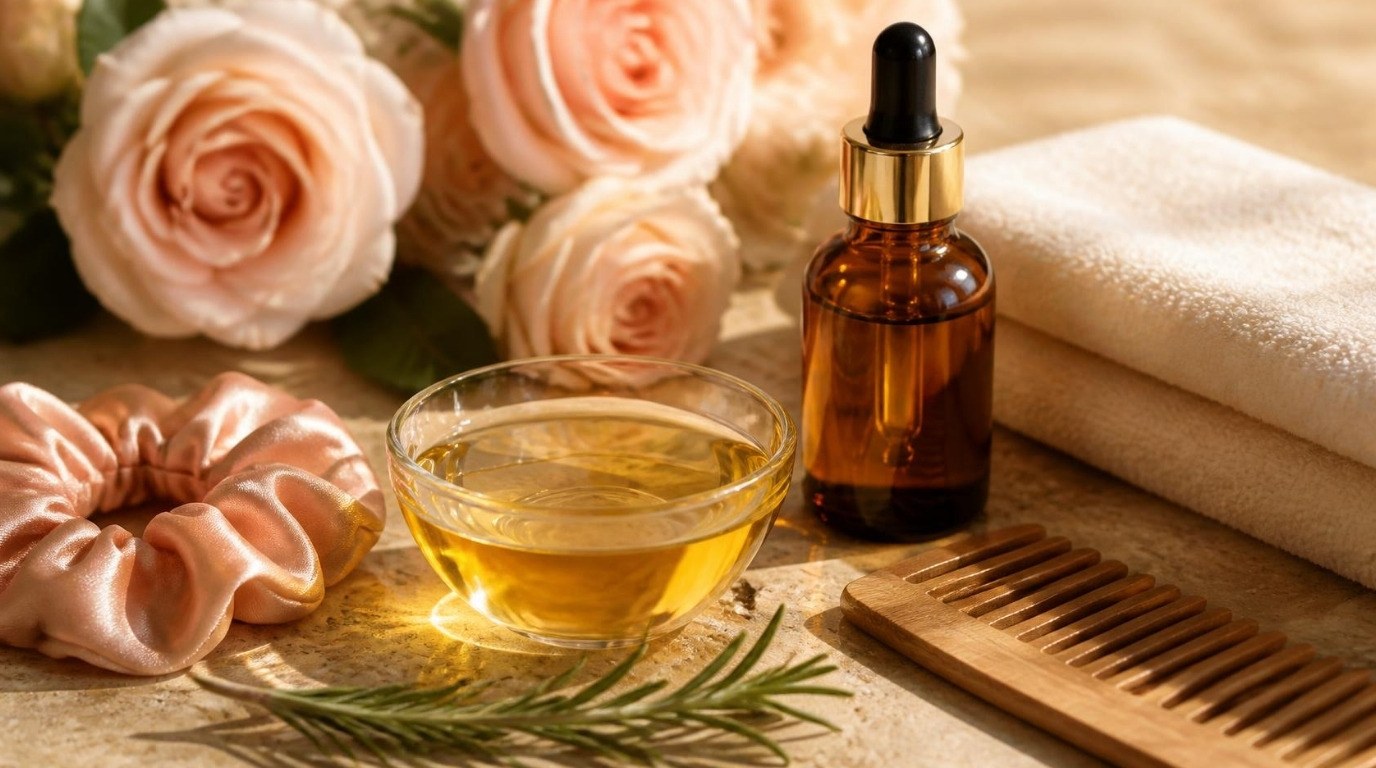
Long hair isn't one age. The hair at your roots might be a few weeks old, while the ends brushing your shoulder blades could be two, three or even five years old. Those ends have been through hundreds of washes, countless brushings, summers of sun and every hair tie you've ever owned. No wonder they feel different from the top.
That's the real secret of long hair care: you're not caring for one head of hair, you're caring for three zones that each need something a little different. The scalp wants to be clean and calm. The lengths want moisture and slip. The ends want protection, because they're the oldest, most fragile part of you.
This guide covers long hair care from root to tip: how to treat each zone, a simple table with how often to do what, ten everyday habits that keep breakage low, and a weekly rhythm you can actually stick to. No hairstyles here, just care.
It took me far too long to accept that long, healthy hair is mostly about what you stop doing to it. I'll show you what I mean.
Why Long Hair Needs Different Care
Hair is not living tissue once it leaves the scalp. It can't heal itself. Every bit of wear simply adds up along the strand, which means the longer your hair gets, the more history the ends carry.
- Old ends are more porous. The protective outer layer (the cuticle) gets lifted and worn over time, so the ends lose moisture faster and tangle more easily.
- Natural oils don't travel far. The oil your scalp makes coats the first few inches nicely, but it rarely reaches the bottom of long hair. Roots can feel oily while ends feel like straw.
- Weight and friction add up. Long hair rubs against clothes, bag straps, seat belts and pillows all day. It also catches in zippers and jewelry more often.
- Small damage travels. A split end doesn't stay put. Left alone, it can keep splitting up the strand, which is why trims matter even when you're growing your hair.
None of this means long hair is hard. It just means a one-size routine (same shampoo everywhere, same brush, same heat) tends to fail somewhere around the shoulders.
Long Hair Care by Zone
Think of your hair in three parts: the scalp and first couple of inches, the mid-lengths, and the last few inches. Each one gets its own job in your routine.
The Scalp: Clean, Calm and Comfortable

A healthy scalp is the base of everything, and it's the only part of your hair that's alive. It just wants to be cleaned gently and regularly.
- Shampoo the scalp, not the lengths. Massage a coin-sized amount into the roots with your fingertips for about 60 seconds. When you rinse, the suds that run down are enough to clean the lengths.
- Wash as often as your scalp needs. Oily scalps may like every day or every other day. Drier scalps are often happy with two or three times a week. Long hair doesn't automatically need fewer washes; it needs gentler ones.
- Massage, don't scratch. Use the pads of your fingers in small circles. Nails can irritate the scalp and tangle the roots.
- Rinse well. Leftover shampoo or conditioner at the roots can feel itchy and flat.
If your scalp is itchy, flaky, red or sore for more than a couple of weeks, a dermatologist is the right next step rather than another new shampoo.
The Lengths: Conditioner Is Your Best Friend
The mid-lengths are where tangles start and where most of your conditioner should go. This is the zone that gives long hair its smooth, swingy look.
- Use more conditioner than you think. For hair past the shoulders, start with a palmful and smooth it from the ears down.
- Give it time. Leave it on for two to three minutes while you do something else in the shower.
- Detangle while it's in. This is the moment when hair has the most slip and the least friction.
- Finish with a leave-in. A light leave-in spray or cream on damp lengths keeps them soft until the next wash and makes brushing much easier.
The Ends: Protect the Oldest Hair
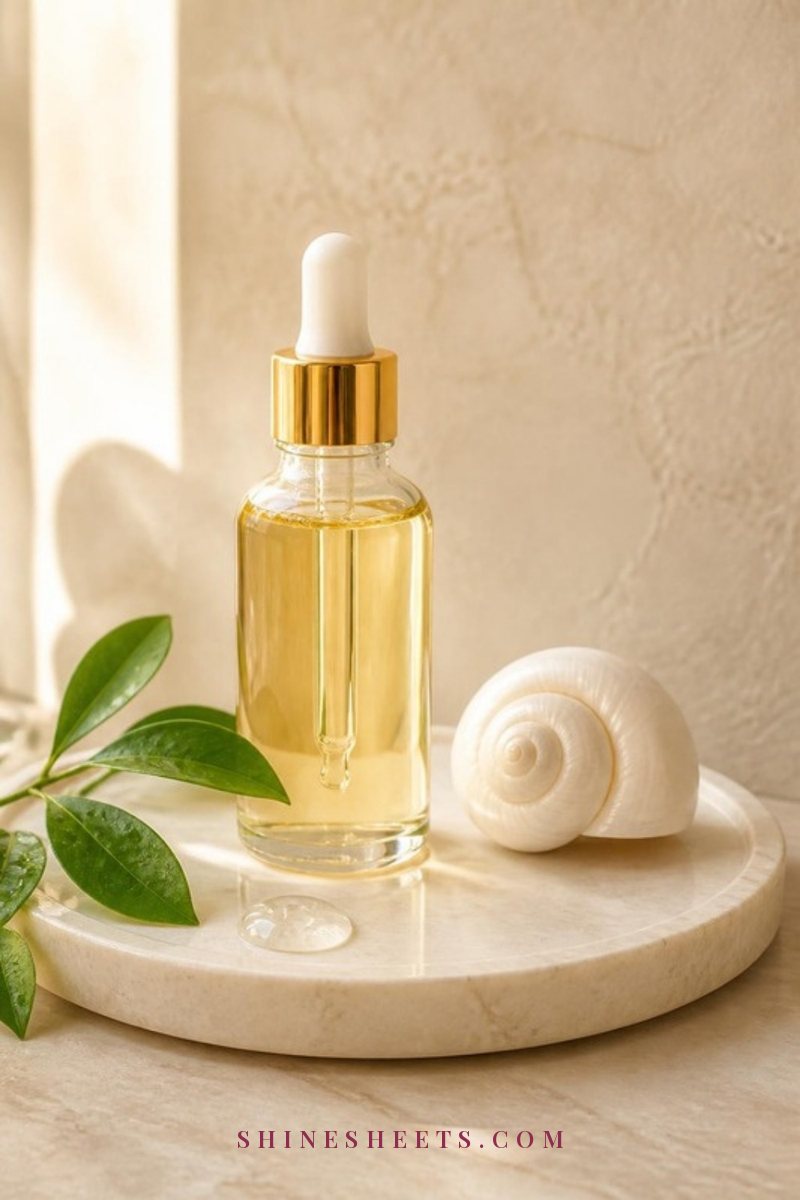
The last few inches deserve the most tenderness. They're thin, dry and full of years of wear, so they need sealing and shielding rather than scrubbing.
- Seal with a little oil. Rub two or three drops of a lightweight hair oil between your palms and press it into damp or dry ends. Thicker hair might need a few more drops.
- Keep shampoo away. Ends rarely need direct washing.
- Trim regularly. Even a quarter to half an inch every few months keeps splits from creeping upward.
If your ends are already frayed, my guide on how to fix split ends explains what you can smooth temporarily and what only scissors can solve.
Long Hair Care Zone Table
Here's the whole root-to-tip routine at a glance. Screenshot it and keep it next to your shower plan.
| Hair zone | What it needs | How often | Best product type |
|---|---|---|---|
| Scalp | Gentle cleansing, fingertip massage, thorough rinsing | Every wash (daily to 3 times a week) | Mild shampoo, light scalp serum if dry |
| Roots (first 2 inches) | Lightness, no heavy residue | Every wash | Shampoo only, no conditioner here |
| Mid-lengths | Moisture, slip, easy detangling | Every wash plus as needed | Conditioner, light leave-in spray or cream |
| Ends | Sealing, protection from friction and heat | Daily or every other day | A few drops of lightweight oil or serum |
| Whole length | Deep moisture | Once a week | Hair mask, 5 to 20 minutes |
| Whole length | Heat shield | Every time you use heat | Heat protectant spray or cream |
| Ends | Removing splits | Every 8 to 12 weeks | A trim (a quarter to half an inch) |
10 Habits That Keep Long Hair Healthy
Products help, but habits do most of the work. These ten are small, and together they make a real difference to how much length you keep.
1. Detangle From the Ends Up
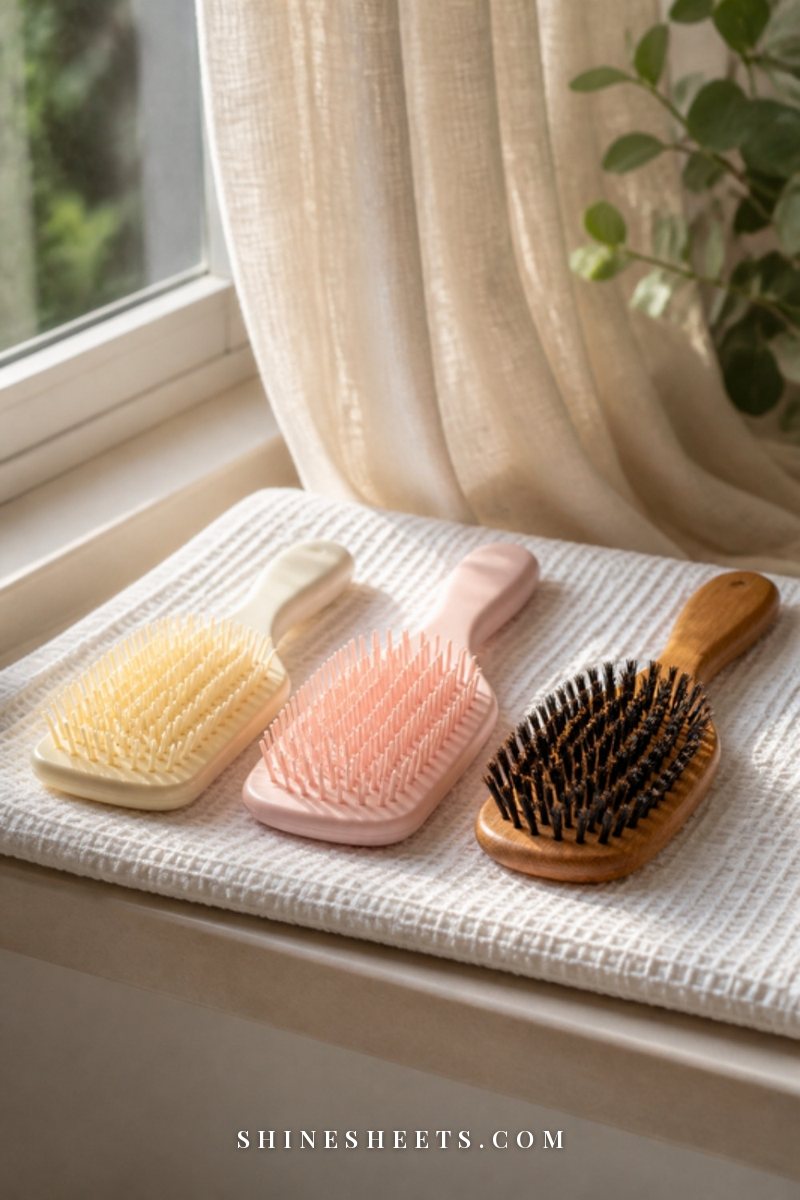
Start at the bottom two or three inches, gently work out any knots, then move up a few inches and repeat until you reach the roots. Starting at the top pushes all the tangles down into one big knot at the ends, and that's where hair snaps. Hold the hair above the section you're working on so the pull doesn't reach your scalp.
2. Use a Wide-Tooth Comb on Wet Hair
Wet hair stretches and breaks more easily than dry hair. A wide-tooth detangling comb glides through damp lengths with much less tension than a fine brush. Comb in the shower while conditioner is still in, or right after with a leave-in. Save fine brushes for dry hair.
3. Blot With a Microfiber Towel
Rough rubbing with a regular bath towel roughs up the cuticle and causes frizz and tangles. Instead, squeeze the water out with your hands, then press and blot with a microfiber hair towel. Wrap it loosely for 10 to 15 minutes, not for hours, so your hair isn't pulled or twisted for too long.
4. Use Heat Protectant Every Time
Every single time a blow dryer, straightener or curling tool touches your hair, use a heat protectant first. A lightweight heat protectant spray is the easiest kind for long hair, because it spreads evenly from mid-lengths to ends without weighing anything down. Mist it evenly on damp or dry hair, comb it through and let it settle before you start. Not sure which kind to pick or how much to use? My guide to heat protectant covers sprays, creams and the right timing.
5. Turn the Heat Down
Most hair doesn't need the highest setting. Try medium heat on your dryer and a lower temperature on hot tools (many people with fine or long fragile ends do well at a moderate setting). Let your hair air-dry about 70 to 80 percent before blow-drying, and keep the nozzle moving and pointed down the strand.
6. Do a Weekly Mask

Once a week, replace your regular conditioner with a mask. After shampooing, squeeze out excess water, apply the mask from mid-lengths to ends, and leave it on for 5 to 20 minutes (check the instructions). A warm towel around your hair while it sits can make it feel extra soft. Then rinse with lukewarm water.
7. Choose Soft Ties That Don't Snag
Elastic bands with metal joins, and anything that tugs when you take it out, can break long strands right where the tie sits. A silk scrunchie set or soft fabric ties hold hair with less friction. Also try not to tie your hair in exactly the same spot every day, so the pressure doesn't always land on the same few inches.
8. Sleep on Silk or Satin

Long hair moves a lot at night, and a cotton pillowcase creates friction every time you turn. A silk pillowcase or satin pillowcase is smoother, so hair glides instead of catching. It won't work miracles, but many people notice fewer morning tangles. My post on silk pillowcase benefits goes into what it can and can't do.
9. Secure Hair Loosely for Sleep and Sport
Loose, long hair tangles while you sleep or exercise, but tight hold causes tension and breakage. The middle ground: gather it softly at the nape with a scrunchie, loose enough that you can't feel any pull at your scalp. For workouts, keep it secured but comfortable, and take the tie out once you're done so your hair can rest.
10. Trim Every Few Months
It sounds backward when you're growing your hair, but regular trims protect your length. Every 8 to 12 weeks, ask for a "dusting" or a quarter to half an inch off. You'll keep the ends thick and healthy-looking, and you'll lose far less length overall than you would to splits and breakage. If you see a lot of short snapped pieces, my guide to hair breakage can help you find the cause.
Adjusting Long Hair Care for Your Hair Type
The zones stay the same for everyone, but the amounts and textures shift depending on your strands. A few gentle adjustments:
- Fine long hair: keep conditioner well below the ears, choose spray leave-ins over creams and use just one or two drops of oil on the very ends. Fine strands are the most fragile when wet, so be extra patient with the comb.
- Thick or coarse long hair: work in four to six sections so conditioner and leave-in reach every strand. You may need a richer mask and a few more drops of oil, and air-drying can take hours, so start early in the evening.
- Wavy, curly or coily long hair: detangle only when hair is soaked with conditioner, skip dry brushing, and seal moisture into the lengths with a cream plus oil. Curls hide breakage well, so check the ends closely when you trim.
- Color-treated long hair: the ends have often been lightened several times, so treat them as the most delicate part of all. Weekly masks and low heat matter even more here.
Common Long Hair Mistakes To Stop Making
Most long hair damage comes from a handful of everyday habits that seem harmless. If you recognize a few of these, you're in very good company.
- Piling hair on top of your head to shampoo. Scrubbing everything into a knot creates tangles and friction. Let your hair hang down and wash the scalp only.
- Brushing soaking wet hair with a fine brush. It stretches strands right when they're weakest. Comb gently, ends first, or wait until hair is damp.
- Sleeping with wet hair tied up tight. Damp hair plus tension plus friction is a recipe for breakage. Let it dry most of the way first, or tie it very loosely.
- Skipping trims to "save length." Splits travel, and in the end you lose more than you saved.
- Using the same amount of product as on short hair. Long hair usually needs more conditioner, but less product near the roots.
- Forgetting the friction points. Wool scarves, backpack straps and seat belts quietly rub the same section every day. Tuck hair inside a soft scarf or move it to the front when you can.
A Simple Weekly Long Hair Routine
You don't have to do everything every day. Here's an easy rhythm to start with, which you can adjust to your scalp and schedule.
- Wash days (2 to 4 times a week): shampoo the scalp, condition mid-lengths and ends for 2 to 3 minutes, detangle with the comb, blot with microfiber, apply leave-in and a few drops of oil to the ends.
- Once a week: swap conditioner for a mask and give yourself a 3-minute scalp massage before shampooing.
- Every day: gently brush dry hair from the ends up, refresh the ends with one or two drops of oil if they feel dry, and secure hair loosely for bed.
- Every 8 to 12 weeks: a small trim.
If you'd like a fuller picture of a weekly plan for every hair type, my hair care routine guide has a complete schedule to borrow from.
The Honest Truth About Growing Long Hair
Here's the part that changed my whole approach: hair grows at roughly the same speed whether you treat it well or badly, on average around half an inch a month. Most products can't make it grow faster, whatever the label suggests.
What decides how long your hair actually gets is how much of that growth you keep. If your ends break as fast as your roots grow, your length stays the same for years, and it feels like your hair "just stops" at a certain point. When you protect the ends, the length finally starts to show.
A few gentle reminders:
- Everyone has a natural growth cycle, so some people's hair reaches a maximum length sooner than others. That's genetics, not failure.
- Sudden or patchy shedding, or a lot more hair loss than usual, is worth a visit to a dermatologist or doctor.
- Patience is the most underrated long hair product of all. Look back every three months, not every morning.
Signs Your Long Hair Routine Is Working
Progress with long hair is slow, so it helps to know what to look for besides length. After four to eight weeks of gentler care, you might notice:
- Fewer short, snapped pieces on your towel, comb and shoulders.
- Ends that feel softer and look less see-through.
- Detangling that takes minutes instead of a small battle.
- Less frizz along the lengths, especially after sleep.
- Trims that remove less, because there's less damage to cut away.
If you see even two of these, keep going. That's what healthy length looks like in the early weeks.
Final Thoughts
Long hair care is really about respect for time. The ends you're wearing today have been with you through a lot, and they deserve the softest treatment in your routine.
Clean the scalp gently, give the lengths moisture, protect the ends, and let the ten small habits do their quiet work. Your hair will thank you slowly, inch by inch, and that slow kind of progress is the kind that stays.