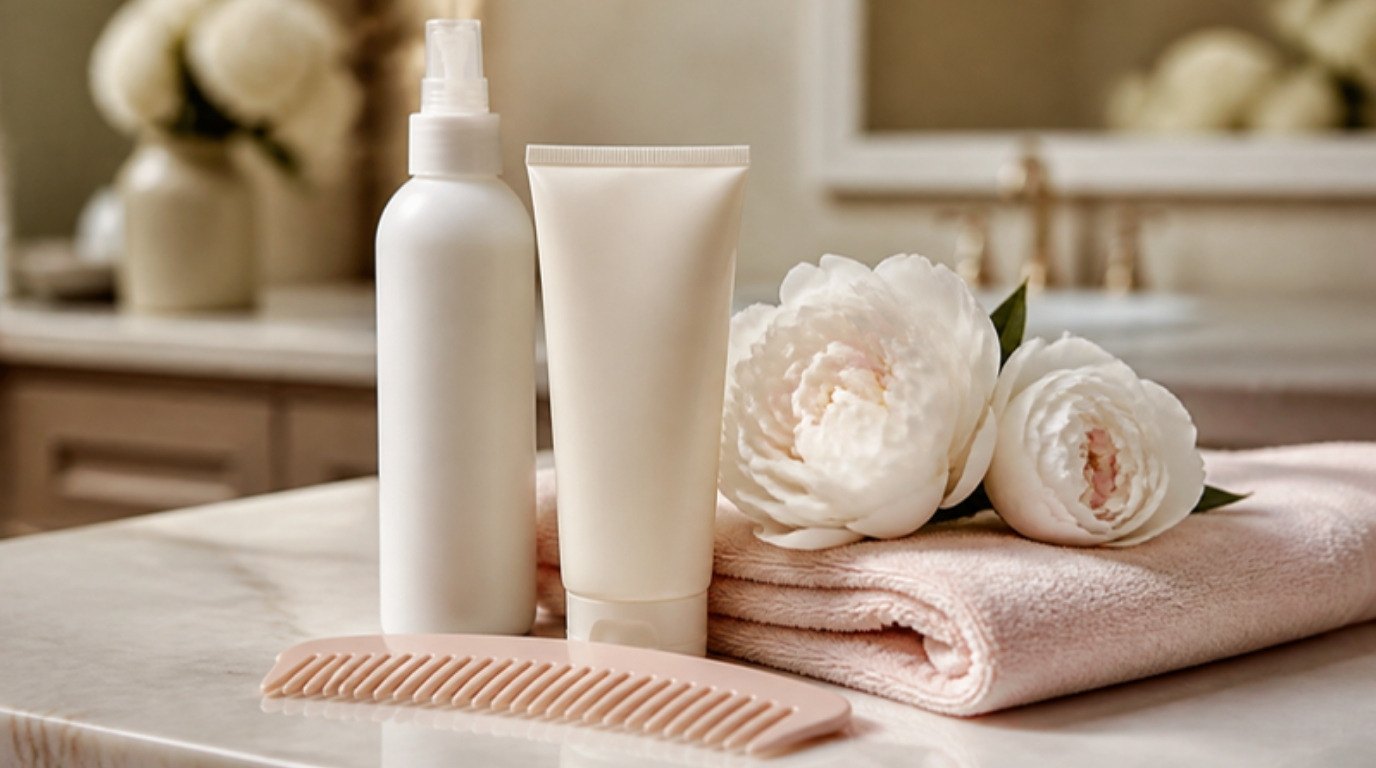
Leave-in conditioner is the quiet step that makes everything else in your hair routine work better. Your rinse-out conditioner does its job in the shower and then mostly washes down the drain. A leave-in stays put, so your hair keeps getting softness, slip and a little protection for hours after you've towel-dried.
The catch is that the wrong formula, or the right formula in the wrong place, can leave hair limp, greasy or crunchy. That's why so many people try one bottle, decide leave-ins "aren't for them" and give up. Usually it's not the idea that failed. It's the texture, the amount or where it went.
This guide covers exactly how to use leave-in conditioner for soft, smooth hair: what it actually does, the four main types, how to choose one for your hair type (with an easy table), a step-by-step application method, how it compares to rinse-out conditioner and hair oil, the heat protection question and the most common mistakes.
Once you find your match, it's one of those small steps you'll never want to skip again.
What Does Leave-In Conditioner Actually Do?
A leave-in conditioner is a light conditioning product you apply after washing and don't rinse out. It's usually much thinner than a regular conditioner, so it can sit on your hair without weighing it down. Here's what a good one does:
- Adds slip for detangling. Knots slide apart instead of snapping, which means less breakage and fewer hairs in your brush.
- Softens and smooths. It coats the outer layer of the hair (the cuticle) so strands lie flatter, feel softer and reflect more light.
- Helps hold on to moisture. Many formulas contain humectants and light emollients that keep hair from feeling dry and straw-like as it air-dries.
- Tames frizz. Smoother strands are less likely to puff up in humid weather.
- Gives a light layer of protection against everyday friction from brushing, scarves, coat collars and pillowcases.
What it can't do is repair split ends or change your hair's structure. Once an end has split, only a trim fixes it. A leave-in just helps the hair you have stay softer and stronger-looking for longer.
Types of Leave-In Conditioner
Leave-ins come in four main textures. The texture matters more than the brand, because it decides how much weight sits on your hair.
Spray Leave-In Conditioner
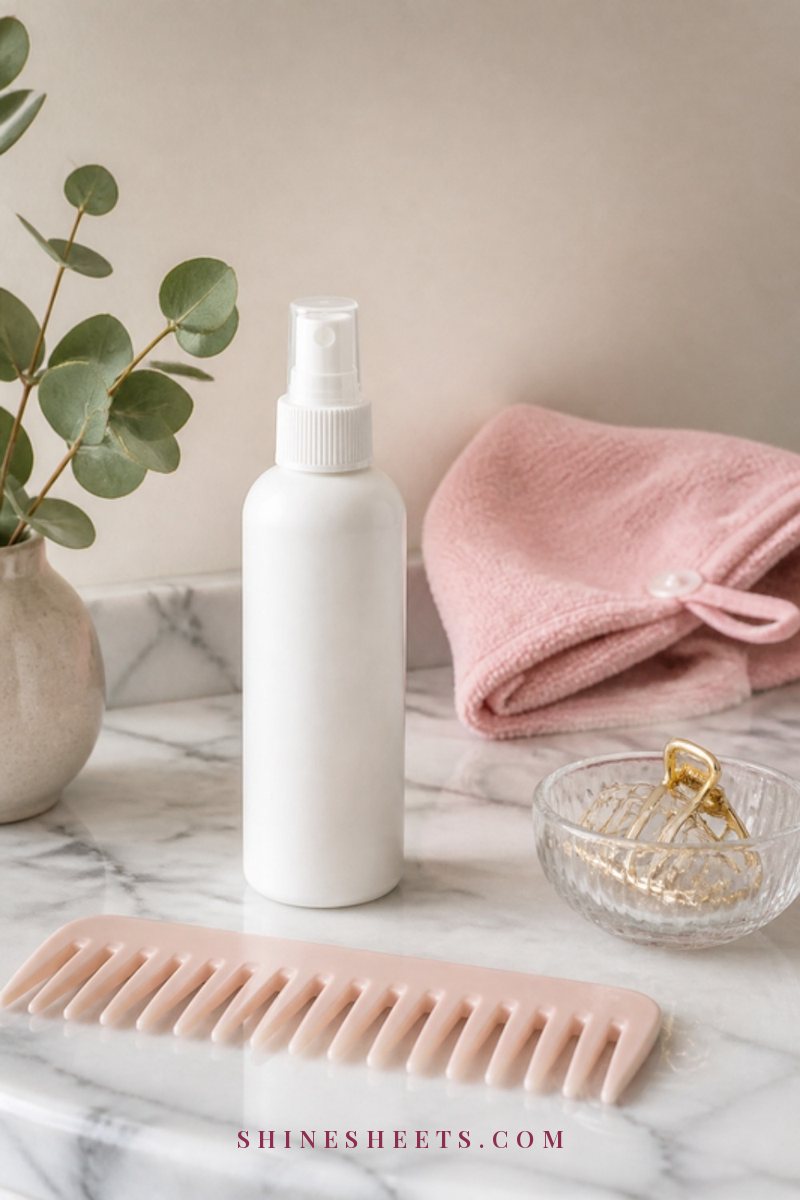
The lightest option. A watery mist that spreads easily and adds slip without much weight. Sprays are ideal for fine or thin hair, oily scalps, children's tangles and quick refreshes between washes. A lightweight leave-in conditioner spray is the easiest place to start if you've never used a leave-in before, because it's hard to overdo.
Cream Leave-In Conditioner
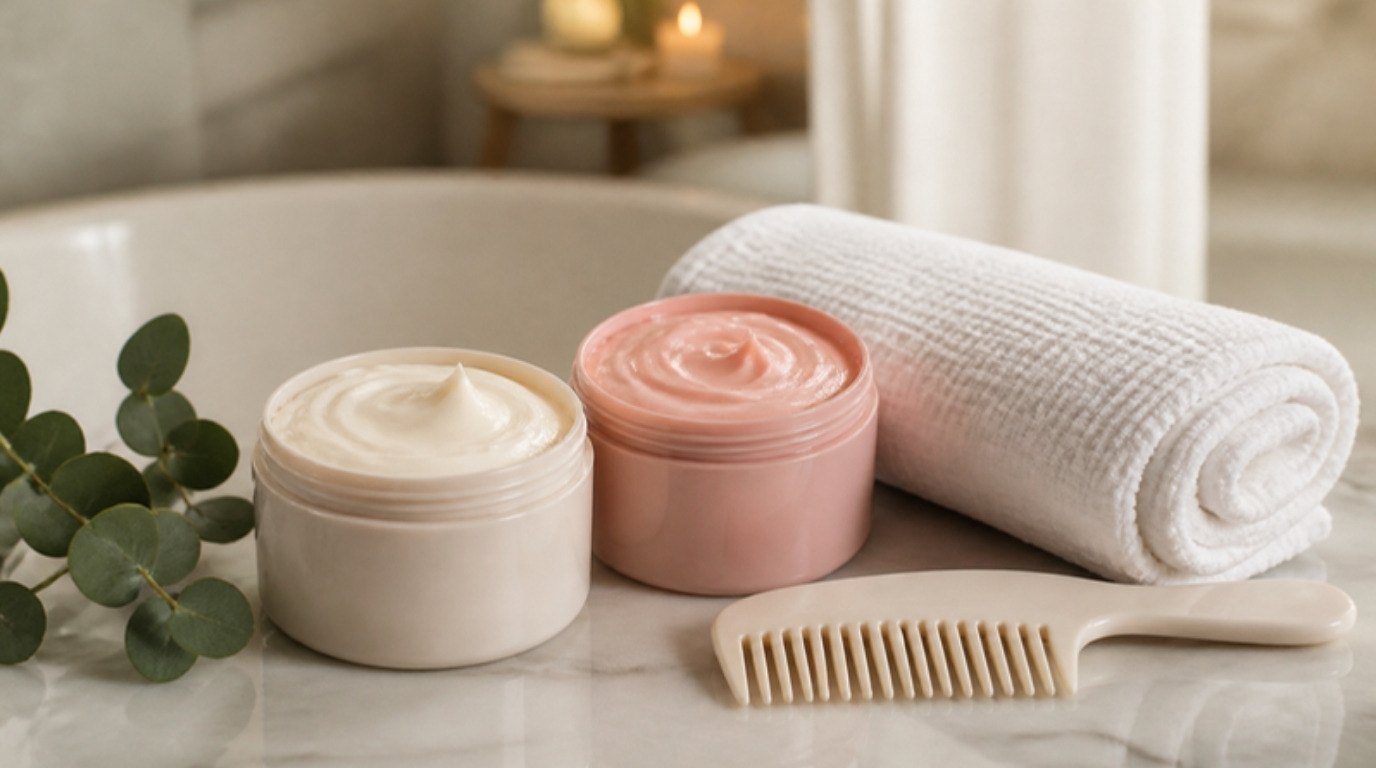
Richer and thicker, a bit like a light lotion. Creams give more softness, more frizz control and more moisture, which makes them great for thick, coarse, curly, coily or very dry hair. If your hair drinks up products and still feels rough, a leave-in conditioning cream is worth trying.
Milk Leave-In Conditioner
A middle ground between spray and cream: fluid, but with a creamier feel. Milks are lovely for medium-thick, wavy or color-treated hair that needs moisture but falls flat under heavy creams.
Oil-Based or Balm Leave-In
Some leave-ins are built around oils or butters. They're the heaviest option, best for very dry, coarse or coily hair and for ends that feel rough. Fine hair usually finds these too much, except for a tiny dab on the very tips.
How To Choose a Leave-In Conditioner for Your Hair Type
This table is the shortcut. Find your hair type, start with the suggested texture and amount, then adjust after a week. Screenshot it for your next shopping trip.
| Hair type | Best texture | Starting amount (shoulder length) | Where to apply | Look for |
|---|---|---|---|---|
| Fine or thin | Spray | 4–6 spritzes | Mid-lengths and ends only | "Lightweight," "weightless," "volumizing" |
| Thick or coarse | Cream or milk | A nickel-sized dollop | Mid-lengths to ends, a little higher if very dry | "Smoothing," "frizz control," richer creams |
| Wavy | Milk or light cream | A pea- to nickel-sized dollop | Scrunched into damp lengths | Light, non-greasy formulas that don't weigh down waves |
| Curly or coily | Cream or balm | A quarter-sized dollop or more | Section by section, roots to ends if needed | "Curl," "moisture," "defining" |
| Color-treated | Milk or spray | 5–8 spritzes or a pea-sized dollop | Mid-lengths and ends | "Color-safe," UV filters, sulfate-free routine |
| Damaged or bleached | Cream with protein | A nickel-sized dollop | Lengths and ends, extra on the most damaged parts | "Repair," "bond," "strengthening" |
| Oily scalp, dry ends | Spray | 3–5 spritzes | Bottom half of hair only | Lightweight, silicone-light formulas |
A quick note on damaged hair: some leave-ins focus on protein, some on moisture, and the balance matters. If your hair feels mushy and stretchy, it may want more protein; if it feels stiff and brittle, it may want more moisture. My guide on protein vs moisture explains how to tell which one your hair is asking for.
How To Use Leave-In Conditioner, Step by Step
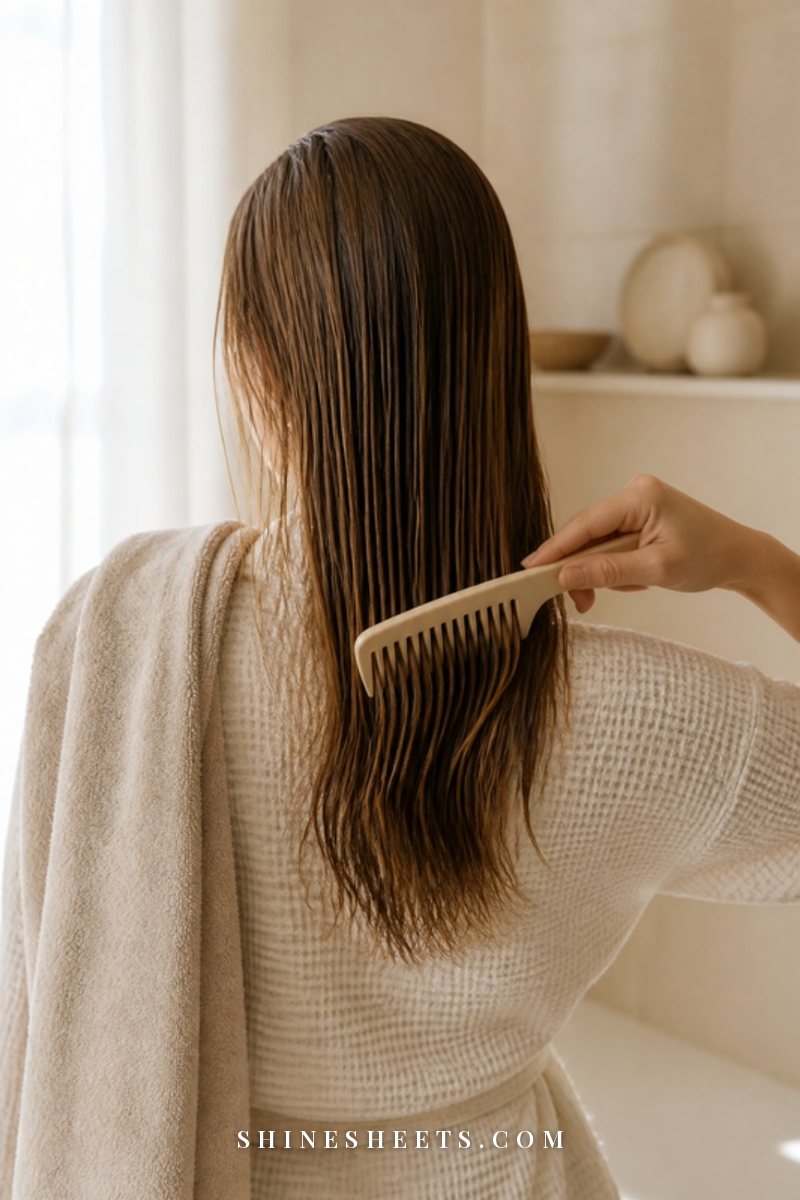
The method below works for almost everyone. Small changes for curly hair are at the end.
- Wash and condition as usual. Use your normal shampoo and rinse-out conditioner. A leave-in doesn't replace that step; it builds on it.
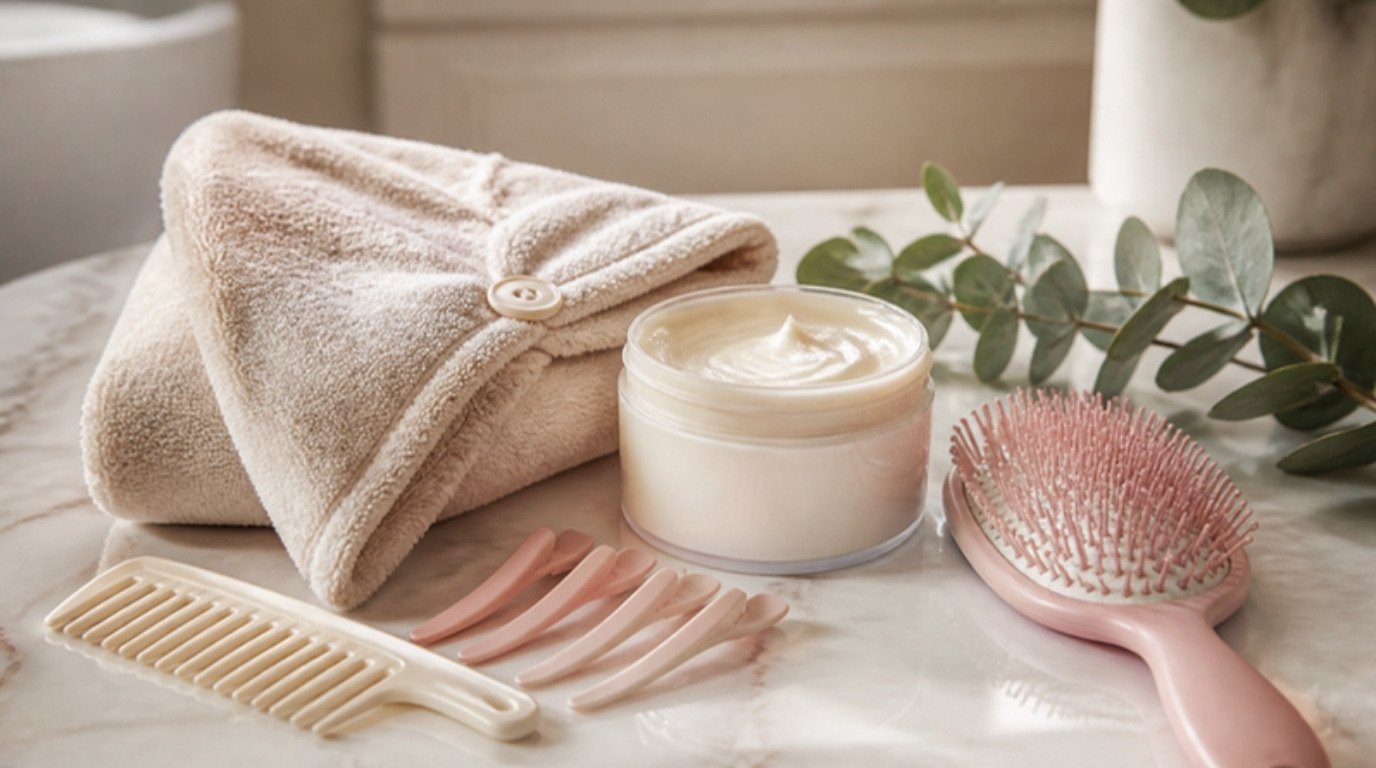
- Gently remove extra water. Squeeze and blot instead of rubbing. A soft microfiber hair towel absorbs water quickly with less friction than a regular bath towel, which means less frizz before you've even started. Wrap for 5 to 10 minutes.
- Aim for damp, not dripping. Hair should feel wet to the touch but not drip. Too wet and the product slides off; too dry and it doesn't spread evenly.
- Start with less than you think. Use the starting amount from the table. You can always add a little more; taking it out means washing again.
- Apply from the ends up. Ends are the oldest, driest part of your hair, so they get the product first. Work up to your mid-lengths and stop a few inches from the scalp (unless your hair is very coarse or curly).
- Distribute evenly. For sprays, mist each section from about 6 inches away. For creams and milks, rub the product between your palms, then glide your hands down the hair in sections, front and back.
- Detangle gently. Use a wide tooth comb, starting at the ends and working your way up in small sections. Never rip through a knot from the top down.
- Style as usual. Air-dry, diffuse or blow-dry. If you're using heat, add a heat protectant (more on that below).
For curly and coily hair: apply to soaking wet hair instead of damp, in four to eight sections, using praying hands or scrunching to work it in. Many curly routines layer a gel or cream on top to hold the curl pattern. My curly hair routine walks through the full wash day.
How Much Leave-In Conditioner Should You Use?
Amount depends on length, thickness and the formula. As a simple rule for medium-thick hair:
- Short hair (chin length or shorter): 2–4 spritzes or a pea-sized amount.
- Shoulder length: 4–8 spritzes or a nickel-sized amount.
- Long hair (past the shoulder blades): 8–12 spritzes or a quarter-sized amount.
Go lighter if your hair is fine and heavier if it's thick, curly or very dry. If your hair feels sticky, stringy or looks wet hours after drying, use less next time. If it still feels rough or tangled, add a bit more or switch to a richer texture.
Leave-In vs Rinse-Out Conditioner vs Hair Oil
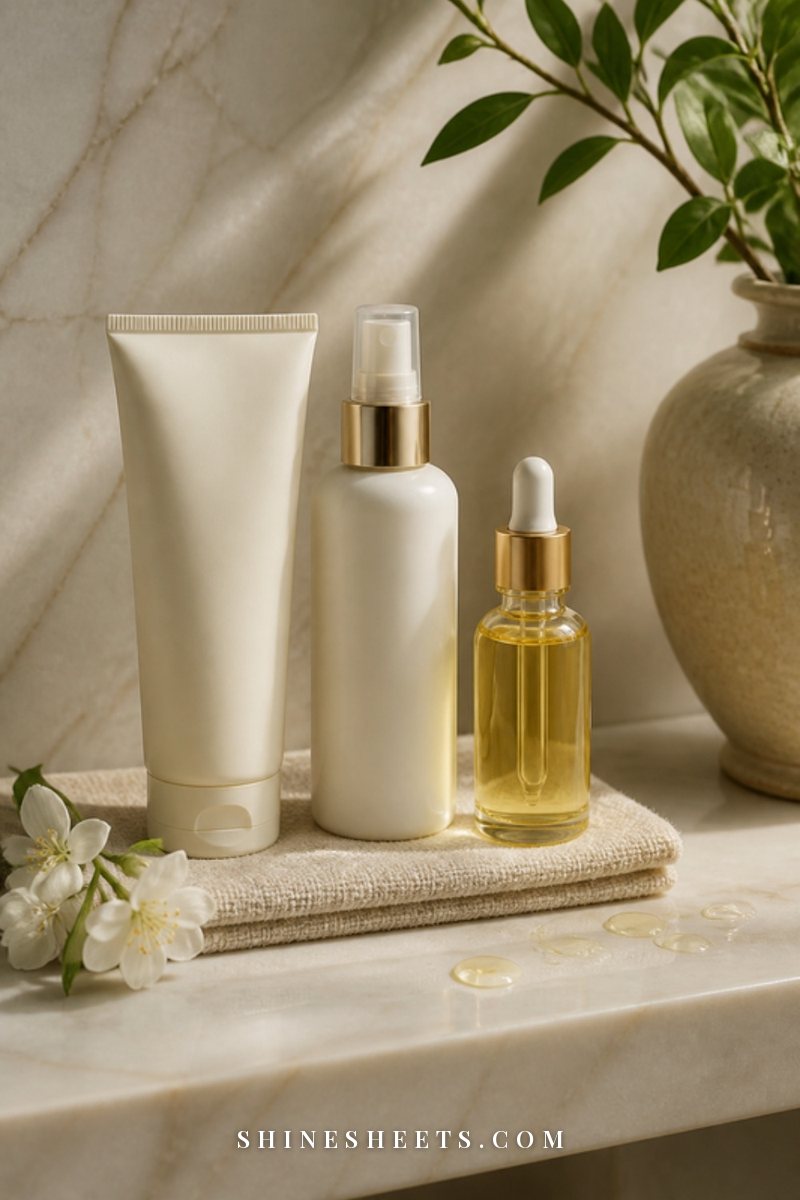
These three get confused all the time, but they do different jobs and work well together.
- Rinse-out conditioner is the heavy lifter. It's used in the shower, sits for one to three minutes, smooths the cuticle after shampoo and then gets rinsed away. Almost everyone benefits from it.
- Leave-in conditioner is a lighter, water-based layer that stays on damp hair. It adds ongoing softness, slip and moisture between washes.
- Hair oil is a finishing or treatment step. It seals the surface, adds shine and softens dry ends. It doesn't add water to the hair, so it works best on top of a leave-in, not instead of it.
The order for most people is: shampoo, rinse-out conditioner, leave-in on damp hair, then a few drops of oil on the ends once the hair is almost dry. If you want to go deeper, hair oiling before washing is a separate, more intensive treatment. For the full weekly picture, my hair care routine shows how all the steps fit together.
Can Leave-In Conditioner Protect Against Heat?
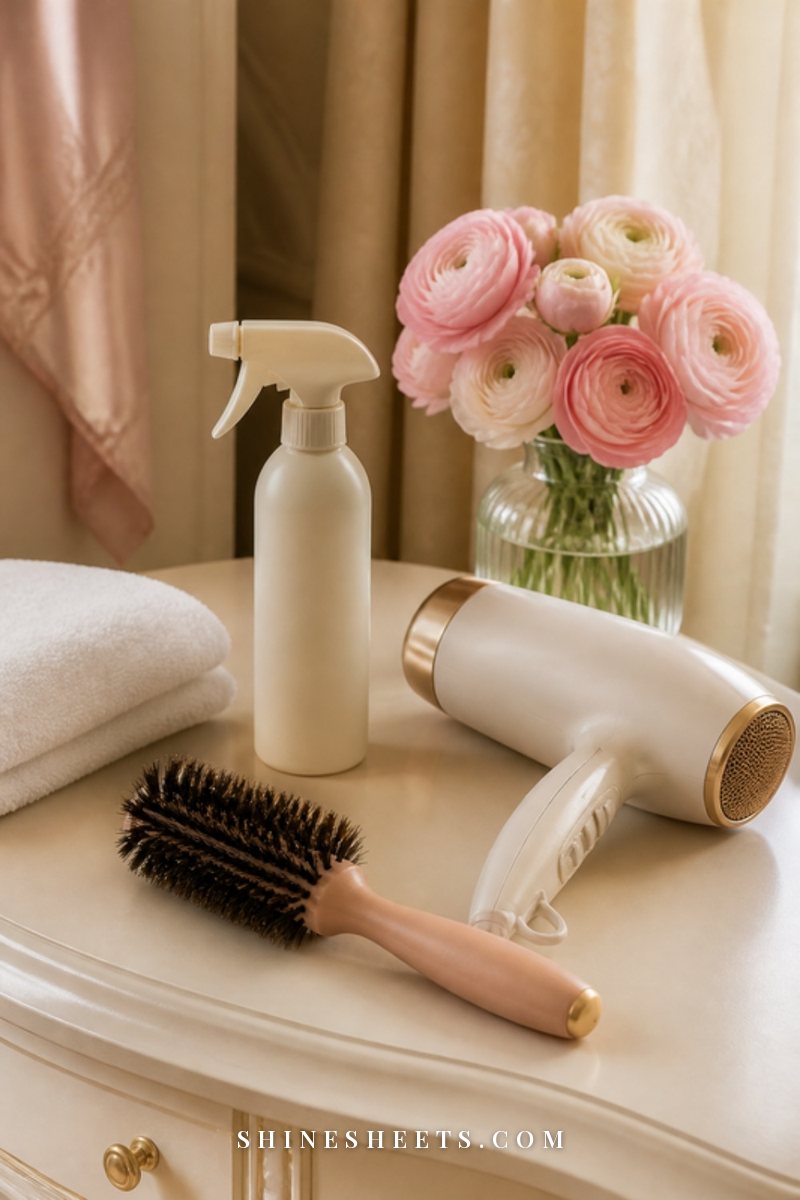
Only if the label says so. Some leave-ins include heat-protecting ingredients and are tested for it, and they'll clearly say "heat protectant" or list a temperature, such as "up to 450°F." Most regular leave-ins don't, and a moisturizing formula alone won't shield your hair from a flat iron.
If you blow-dry, curl or straighten often, use a dedicated heat protectant spray on top of your leave-in, or choose one product that's clearly labeled as both. Apply it evenly to damp hair before the hair dryer and again lightly to dry hair before hot tools if the product instructions allow it. Keep tools at the lowest temperature that works for you: around 300–350°F is plenty for fine or color-treated hair.
Color-treated hair especially benefits from this extra layer, because heat fades color faster. My guide on how to make hair color last has more ways to keep your shade fresh.
How To Read a Leave-In Conditioner Label
You don't need to be a chemist to pick a good leave-in. A quick look at the first five or six ingredients tells you most of what you need to know, because ingredients are listed from the highest amount to the lowest.
Ingredients That Usually Help
- Water (aqua) listed first. This is normal and good: it means the formula is light and hydrating.
- Humectants like glycerin, panthenol (pro-vitamin B5) and aloe. They help hair hold on to water, so it feels softer and more flexible.
- Conditioning agents such as behentrimonium chloride, cetrimonium chloride or cetearyl alcohol. Despite the word "alcohol," fatty alcohols like cetearyl and cetyl are softening, not drying.
- Light silicones like amodimethicone or cyclopentasiloxane. They add slip, shine and frizz control, and the lighter ones wash out easily with regular shampoo.
- Hydrolyzed proteins (wheat, rice, keratin, silk). Helpful for bleached, colored or heat-styled hair that feels weak and overly stretchy.
- Light oils such as argan, jojoba or sunflower, ideally further down the list so the formula doesn't turn heavy.
Ingredients To Be Careful With
- Heavy butters and oils near the top of the list if your hair is fine. Shea butter or coconut oil as the second ingredient is lovely for coily hair and far too much for fine, straight hair.
- Drying alcohols (alcohol denat or SD alcohol) listed high up. A little helps a spray dry quickly, but a lot can leave hair feeling rough.
- Strong fragrance if your scalp is sensitive. Fragrance-free or lightly scented formulas are kinder when you have an itchy or reactive scalp.
- Lots of protein if your hair already feels stiff and brittle. More protein can make that worse; look for a moisture-focused formula instead.
How To Refresh Hair With Leave-In Between Washes
Leave-in conditioner isn't only for wash day. It's also one of the easiest ways to revive second or third day hair without starting from scratch.
- Mix a refresh mist. In a fine-mist spray bottle, combine roughly one part spray leave-in with three parts water. Shake before every use.
- Lightly dampen the lengths. Mist the frizzy, flat or tangled parts until they feel just slightly damp, not wet. Skip the roots.
- Smooth or scrunch. For straight hair, smooth with your palms and comb through. For waves and curls, scrunch upward to wake the pattern back up.
- Let it dry fully before heading outside in the cold, or use a diffuser on low.
- Finish with a tiny bit of cream or oil on the very ends if they still feel dry.
Make a fresh mix every few days and keep it out of direct sun. A water-based mix without the full preservative system of the original bottle shouldn't sit around for weeks.
A Simple Weekly Routine With Leave-In Conditioner
Here's how a leave-in fits into an easy week for medium-length hair washed two or three times a week. Adjust the number of wash days to suit your hair.
- Wash day: shampoo, rinse-out conditioner for two to three minutes, blot with a microfiber towel, leave-in on the lengths, detangle, then air-dry or blow-dry with heat protectant.
- Day two: nothing at all, or a light mist of your refresh spray on the ends.
- Day three: refresh mist plus a tiny bit of cream on dry ends, or a second wash day if your scalp needs it.
- Once a week: swap your rinse-out conditioner for a deeper mask, then follow with your leave-in as usual.
- Every two to four weeks: a clarifying wash to remove buildup, followed by a mask and your leave-in.
During cold, dry months, many people find their hair wants a slightly richer leave-in than in summer. It's completely fine to keep two textures on the shelf, a spray for humid days and a cream for heated, dry indoor air, and switch as needed.
Common Leave-In Conditioner Mistakes
If a leave-in hasn't worked for you so far, one of these six is usually the reason:
- Putting it on your roots. Unless you have very coarse or curly hair, product near the scalp makes hair look greasy and flat by the afternoon. Keep it on the lengths and ends.
- Using too much. More product doesn't mean more softness. It means weighed-down, sticky hair and faster buildup.
- Choosing the wrong texture. A rich cream on fine hair or a light spray on thick, coily hair will disappoint both ways. Match texture to hair type first.
- Applying to dry hair only. Most leave-ins spread best on damp hair. On dry hair, use just a mist to refresh, or a tiny amount smoothed over frizz.
- Skipping the clarify. Leave-ins, oils and styling products build up over time. If your hair starts feeling coated or dull, a clarifying wash every two to four weeks resets it.
- Relying on it for heat protection when the label doesn't promise it. Check the bottle.
Fine hair has its own rules for staying light and full; my fine hair care guide covers how to keep volume while still conditioning well.
How Often Should You Use Leave-In Conditioner?
For most hair types, use it every time you wash. That's when hair is damp, freshly cleansed and most ready to take it in.
- Fine or oily hair: every wash, sprayed lightly on the ends. Some people find every other wash is enough.
- Normal or wavy hair: every wash.
- Thick, curly, coily or very dry hair: every wash, plus a light refresh mist on second or third day hair.
On days between washes, a few spritzes of a spray leave-in mixed with water in a fine-mist bottle can revive curls or smooth flyaways. Keep it to the lengths, and let it dry before you head out.
A small comfort note: if a product ever makes your scalp itchy, red or flaky, rinse it out and stop using it. A hidden-spot patch test behind the ear is a sensible first step with any new hair product if your skin is sensitive.
Do You Actually Need a Leave-In Conditioner?
Not everyone does, and that's worth saying. If your hair is short, fine and naturally smooth, detangles easily after a good rinse-out conditioner and never feels dry, a leave-in may just add weight you don't need. Your routine is already doing its job.
You'll probably notice a real difference with a leave-in if any of these sound familiar:
- Your hair tangles easily, especially at the nape of your neck or after wearing a scarf.
- Your ends feel rough, dry or look a shade lighter and duller than the rest.
- Frizz shows up as soon as your hair dries or the air turns humid.
- You color, bleach or heat style regularly.
- Your hair is wavy, curly, coily, thick or longer than your shoulders.
If you're unsure, try a light spray on your ends for two weeks and pay attention to how your hair brushes out, how it feels by the evening and how it looks on day two. That small experiment tells you more than any label.
Final Thoughts
Leave-in conditioner isn't complicated. It's simply the right texture, in the right amount, in the right place: lighter for fine hair, richer for thick and curly hair, always more on the ends than near the roots.
Start small, give it a week, adjust, and you'll find the version that makes your hair feel soft, smooth and easy to brush every single day. That small step adds up to hair that feels cared for, wash after wash.