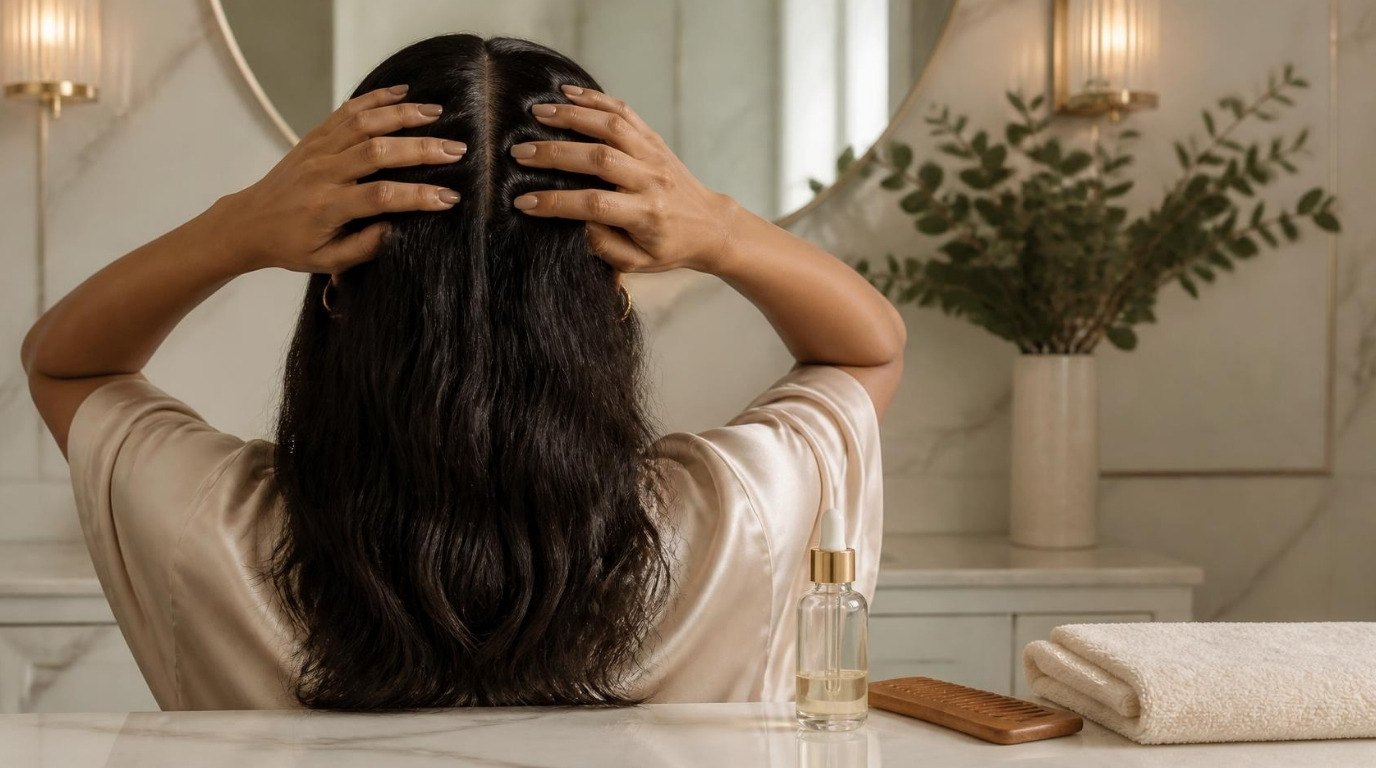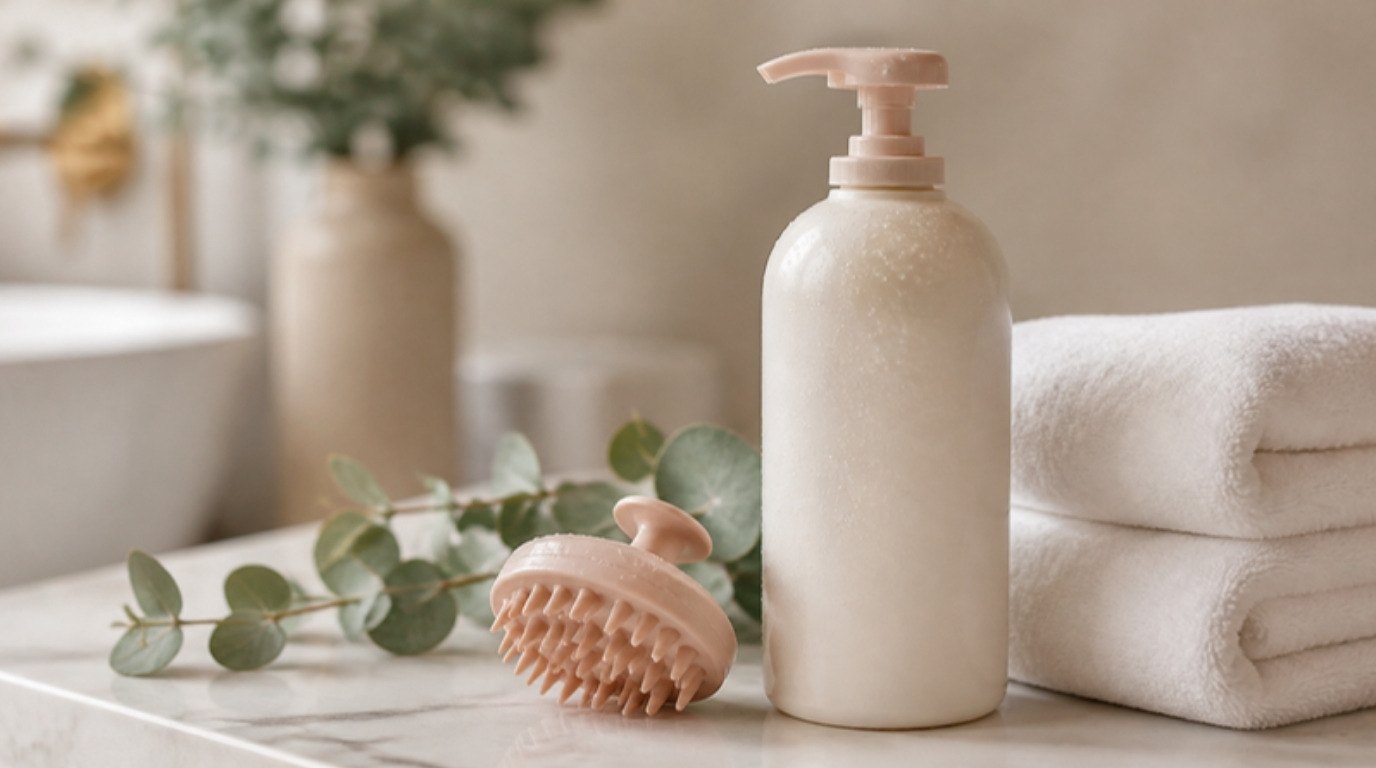
When your hair suddenly looks dull, feels heavy and stops responding to the products you love, the problem usually isn't your hair. It's everything sitting on top of it. Silicones, styling creams, dry shampoo, natural oils and minerals from your tap water build up slowly, wash after wash, until your strands are wearing a thin invisible coat.
A good clarifying wash removes that coat in one go. It's one of the simplest resets in hair care, and it can make your regular routine work again almost overnight. The catch is that clarifying is strong stuff, so the timing and the aftercare matter just as much as the shampoo itself. Used too often, it can leave hair dry and color faded. Used at the right rhythm, it's a quiet little miracle.
This guide covers everything you need to know about clarifying shampoo: what it does, the signs you need it, the difference between clarifying and chelating formulas, how often to use it for your hair type and lifestyle, exactly how to use it step by step, how to protect color-treated hair, and gentle alternatives if your hair is delicate.
What Clarifying Shampoo Actually Does
Everyday shampoos are designed to be gentle enough for frequent use. They clean the scalp and lift light oil, but they often leave a little behind, especially if they contain conditioning agents. That's lovely for softness and not so lovely after a few weeks of layering leave-ins, oils, heat protectants and hairspray.
A clarifying shampoo uses stronger cleansing agents to remove what regular shampoo misses:
- Product buildup from silicones, waxes, butters, styling creams, gels and dry shampoo.
- Excess sebum that has turned sticky and heavy along the roots.
- Environmental residue such as pollution, sweat, chlorine and sunscreen.
- Some mineral deposits from hard water (although a chelating formula handles these better, more on that below).
Think of it as a deep clean for your hair, not a daily cleanser. You'd wipe your kitchen counters every day and scrub them properly once in a while. Same idea.
If you're still figuring out which everyday formula suits you best, my guide to choosing the right shampoo walks through it by hair and scalp type.
7 Signs Your Hair Needs a Clarifying Wash
Buildup creeps up slowly, which is why it's easy to blame the wrong thing. Watch for these signs:
- Your hair looks dull even right after washing, with very little shine.
- It feels limp and heavy, and volume disappears within hours.
- Strands feel coated, waxy or slightly sticky when you run your fingers through them.
- Your favorite products stop working. The mask that used to soften your hair now just sits on top.
- Your roots get greasy faster than they used to, even though nothing else changed.
- Color looks muddy or brassy, or toner fades strangely fast.
- Your hair takes forever to dry and feels slightly rubbery when wet.
Even two or three of these usually mean it's time. If your scalp is flaky, tight or itchy rather than oily, the cause might be dryness instead of buildup, and my article on dry, itchy scalp is a better place to start.
Clarifying vs Chelating Shampoo, Simply Explained
These two get mixed up all the time, and honestly the labels don't help. Here's the simple version:
- Clarifying shampoo removes oily and product buildup. It's about the stuff you put on your hair (and the oil your scalp makes).
- Chelating shampoo contains ingredients (often EDTA or similar) that bind to minerals like calcium, magnesium, iron and copper and help rinse them away. It's about the stuff your water and pool put on your hair.
Many chelating shampoos also clarify, but not every clarifying shampoo chelates. If you live in a hard-water area, swim often or notice an orange or greenish tint in light hair, a chelating formula is usually the better pick. If your problem is mostly too many styling products, a classic clarifying shampoo is enough. My guide on hard water hair goes deeper into the mineral side of things.
How Often To Use Clarifying Shampoo
There's no single right answer, because it depends on how much you put on your hair, how oily your scalp is and what your water is like. This table is a friendly starting point. Screenshot it and adjust by how your hair feels.
| Hair type and lifestyle | How often to clarify | Notes |
|---|---|---|
| Fine, oily or flat hair | Every 1 to 2 weeks | Buildup shows fastest on fine hair. Keep conditioner to the ends. |
| Normal hair, light styling | Every 3 to 4 weeks | Clarify when shine fades or products stop working. |
| Thick or coarse hair | Every 3 to 4 weeks | Focus on the scalp; follow with a rich mask. |
| Curly or coily hair | Every 4 to 6 weeks | Heavy creams build up, but curls dry out easily. Always deep condition after. |
| Dry, damaged or bleached hair | Every 4 to 6 weeks at most | Choose a gentler clarifying formula and keep it on the scalp. |
| Color-treated hair | Every 4 to 6 weeks, or before a color appointment | Clarifying can fade color. Ask your colorist what suits your shade. |
| Heavy dry shampoo or styling product users | Every 1 to 2 weeks | The more you layer, the more often you clarify. |
| Hard-water area | Every 2 to 4 weeks (chelating) | A shower filter can stretch the time between washes. |
| Regular swimmers | Weekly in swimming season | A chelating formula helps lift chlorine and minerals. |
If you're not sure where you fit, start with once a month. If your hair feels squeaky and dry afterwards, stretch the gap. If buildup comes back within days, shorten it a little.
How To Use Clarifying Shampoo, Step by Step
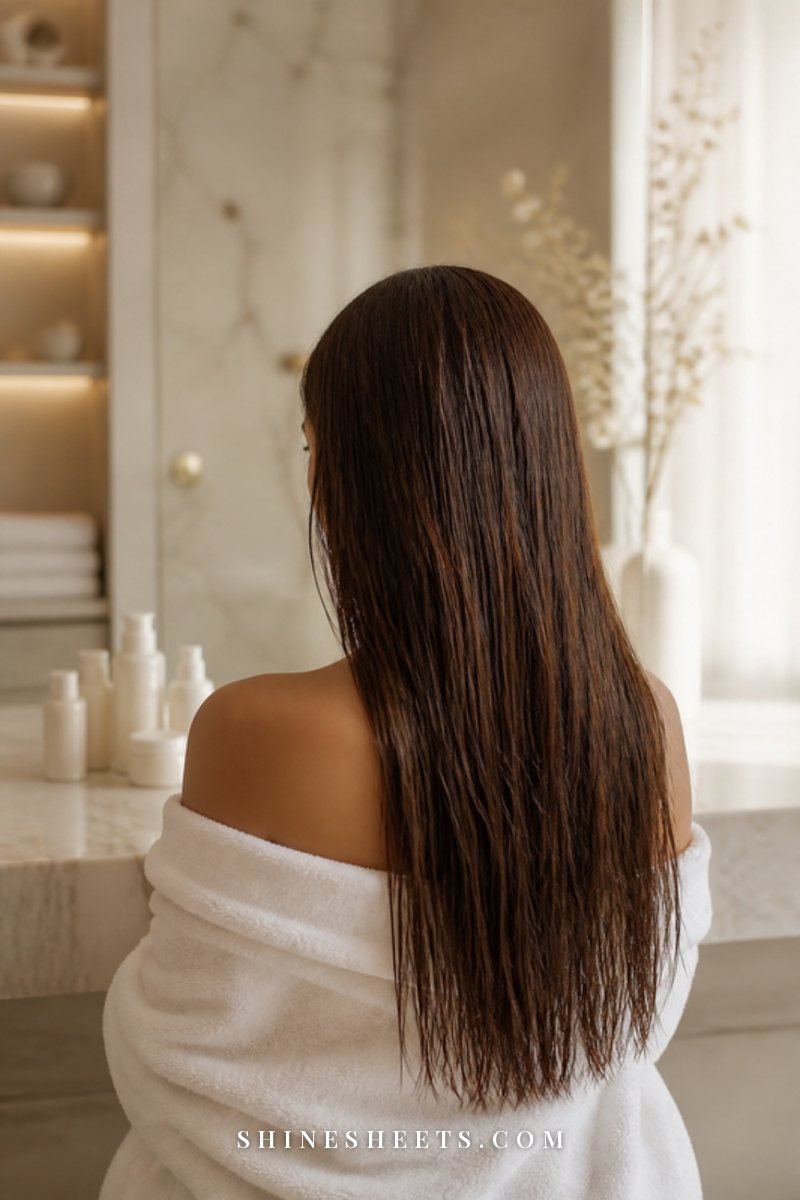
The technique matters more than most people think. Here's the routine I'd follow:
- Wet your hair thoroughly. Warm (not hot) water for a full minute helps loosen oils and lets the shampoo spread evenly.
- Use a coin-sized amount. Start with about a teaspoon for shoulder-length hair; add a little more for long or thick hair. A good clarifying shampoo for buildup lathers well, so you don't need much.
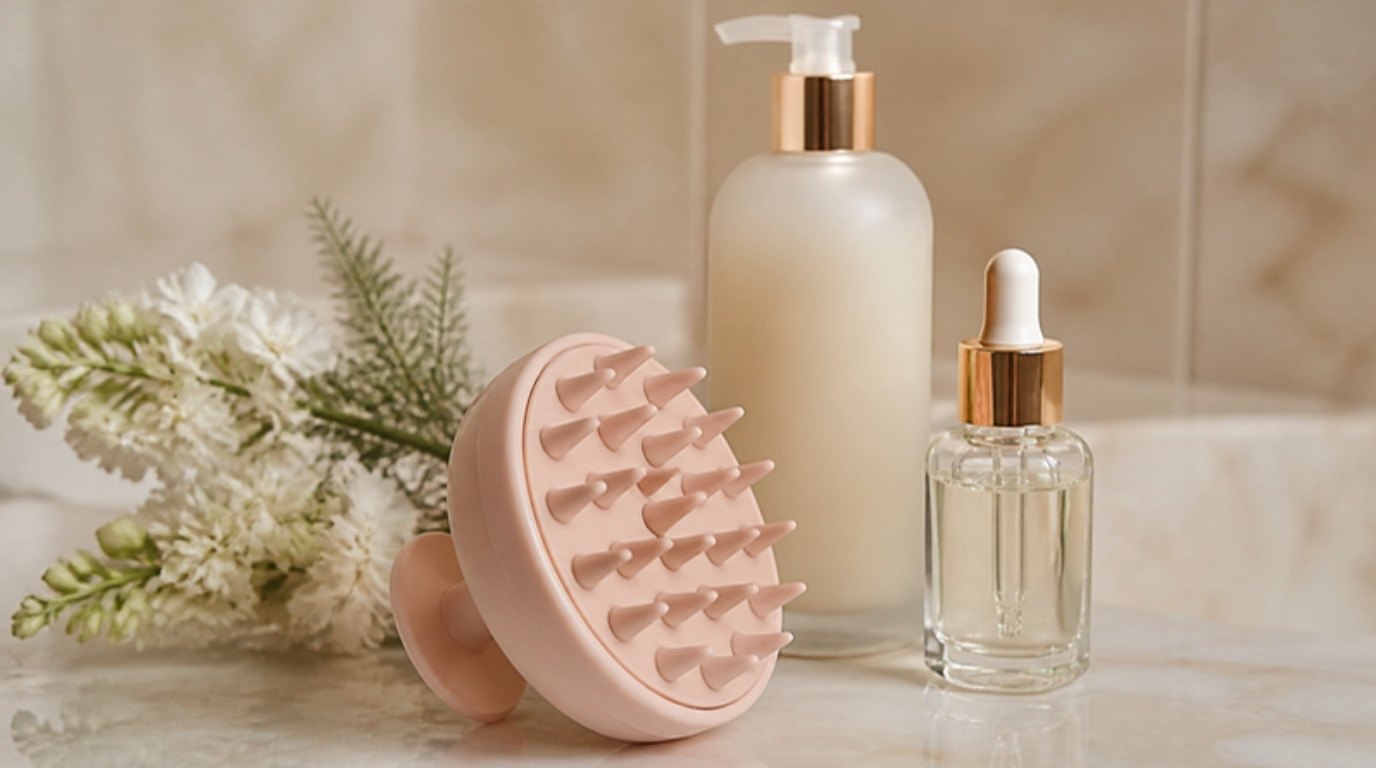
- Focus on the scalp and roots. Massage with your fingertips (never nails) for 60 to 90 seconds. A soft silicone scalp massager brush helps lift buildup around the hairline and crown without scratching.
- Let the lather run through the lengths. You rarely need to scrub the ends directly. The suds rinsing down are enough for most hair.
- Rinse well, then decide on a second wash. If your hair still feels coated, shampoo once more with a smaller amount. Very heavy buildup often needs two rounds.
- Follow with a mask or rich conditioner. This step is not optional. Clarifying lifts everything, including some of the moisture your hair likes to keep. Leave a hydrating hair mask on the mid-lengths and ends for 5 to 10 minutes.
- Rinse with cooler water and dry gently. Squeeze out water and wrap your hair in a microfiber hair towel instead of rubbing with a rough bath towel. Freshly clarified hair is more prone to frizz and tangles for a few hours.
Then, the fun part: style with a lighter hand than usual. You'll likely need less product to get the same result, which also slows down the next round of buildup.
Color-Treated Hair: Clarify With Care
Clarifying shampoo can fade color faster, especially vivid shades, reds and fresh toner. That doesn't mean you can never use it. It means using it with a plan:
- Clarify before your color appointment, ideally one to three days before. Clean hair often takes color and toner more evenly.
- Wait after coloring. Give fresh color at least two weeks (or what your colorist recommends) before clarifying.
- Choose gentler formulas labeled color-safe, or use a chelating shampoo only on the roots.
- Skip the second lather unless your hair truly needs it.
- Always deep condition afterwards to help seal the cuticle.
Some colorists actually use clarifying shampoo on purpose to fade a tone that came out too dark or too warm, so if your color feels off, ask before you try that at home. For everyday color protection, my guide on how to make hair color last has the full routine.
Clarifying Tips by Hair Type
The basic routine works for everyone, but a few small adjustments make a big difference.
Fine or Oily Hair
Fine hair shows buildup first and benefits the most from regular clarifying. Use it every week or two, keep conditioner to the last few inches of your hair and choose lightweight styling products. A good rhythm is clarifying on a day you'd like extra volume, because hair is at its bounciest right after.
Curly and Coily Hair
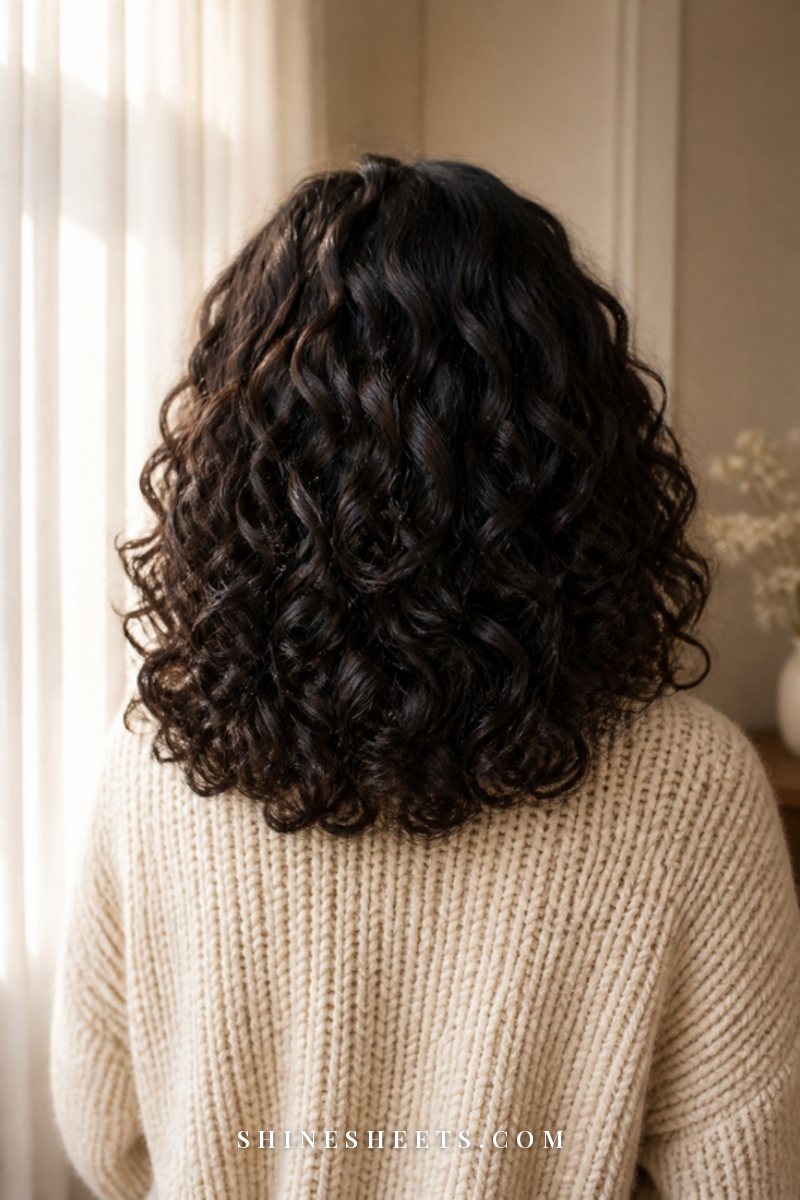
Curls love rich creams, butters and gels, which means buildup is almost guaranteed, but curly hair also loses moisture easily. Clarify every four to six weeks, work only on the scalp and let the rinse handle your lengths, then follow with a generous mask under a warm towel for 10 to 15 minutes. If your curl pattern looks looser or frizzier than usual, buildup is often the reason, and a clarifying wash can bring the definition back.
Dry, Damaged or Bleached Hair
Fragile hair needs the gentlest approach. Look for a milder clarifying formula, use it on the scalp only and never more often than every four weeks. Before your next wash, comb through gently with a wide-tooth comb so you start with fewer tangles. Pre-coating your ends with a little conditioner before you shampoo can protect them. If your hair feels like straw after clarifying, switch to a gentler alternative from the list below.
Thick or Coarse Hair
Thick hair can hide a lot of buildup near the scalp. Section your hair into two or four parts while washing so the shampoo actually reaches the roots, and give yourself extra rinse time, at least a full minute. A rich mask afterwards keeps the ends soft.
Gentle Alternatives to Clarifying Shampoo
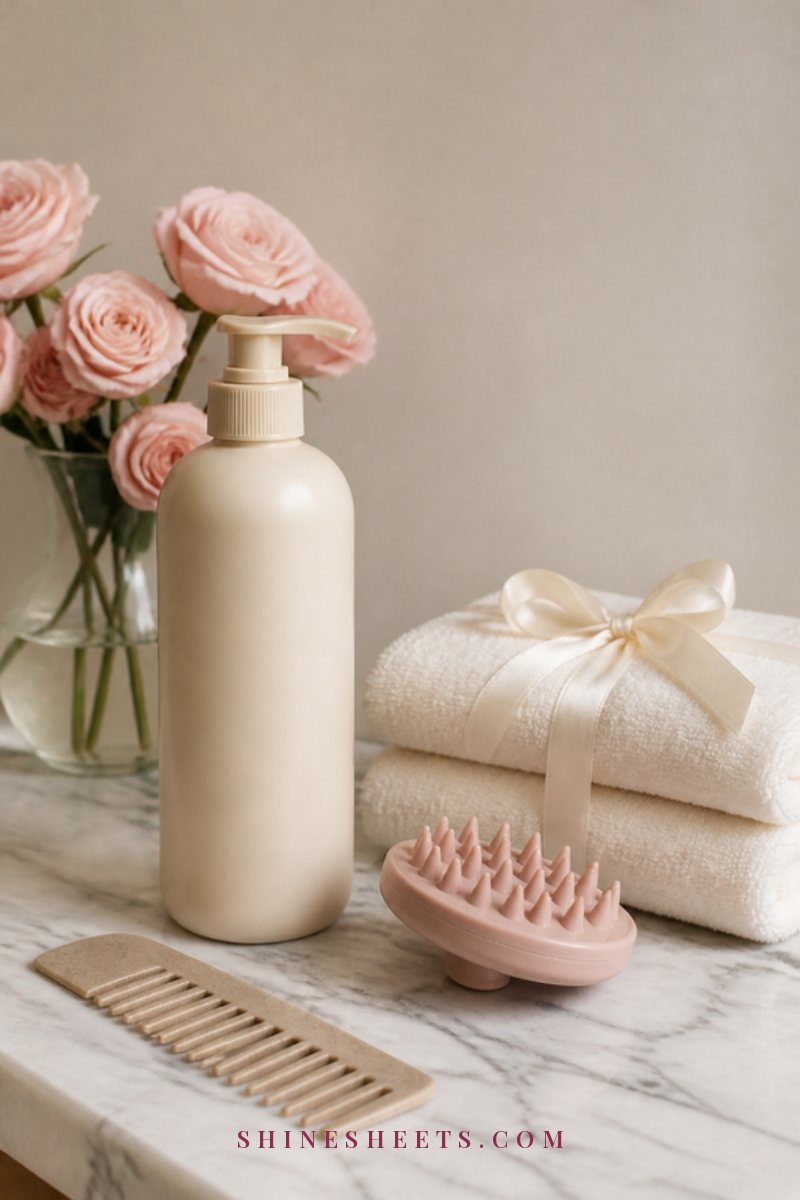
If your hair or scalp is sensitive, or you just want to clarify less often, these options help:
- A double wash with your regular shampoo. Two rounds of a normal shampoo remove more than one, and for light buildup that's often enough.
- A gentle sulfate-free shampoo for everyday washing. A mild sulfate-free shampoo causes less residue than heavily conditioning formulas and is kind to color.
- Scalp scrubs or exfoliating scalp treatments once every week or two, especially around the hairline. My scalp care routine explains how to fit them in.
- A diluted apple cider vinegar rinse for mild residue (about one tablespoon in a cup of water, poured over after shampoo, then rinsed). Patch test first, and skip it if your scalp is irritated.
- Lighter products. Fewer layers of heavy cream, oil and dry shampoo simply means less to remove.
- A shower filter if you have hard water, so minerals don't build up so quickly in the first place.
What To Look For in a Clarifying Shampoo
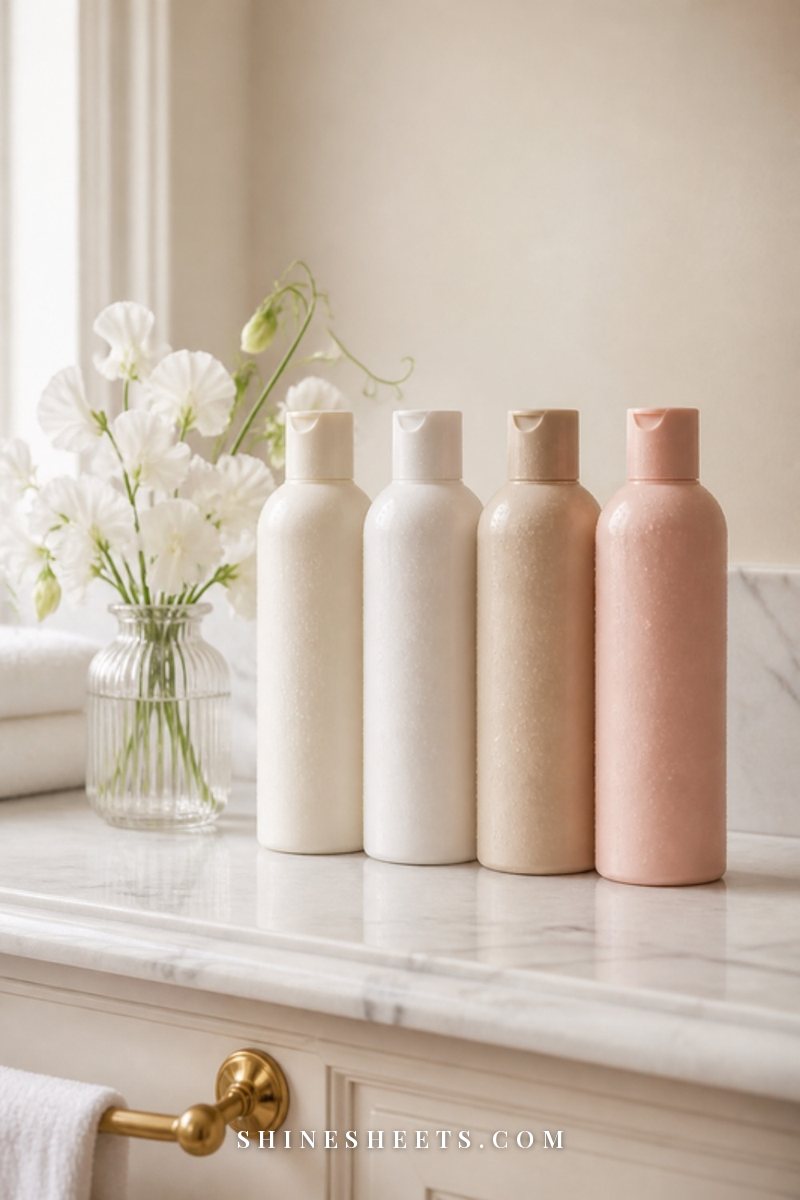
Clarifying shampoos range from very strong to surprisingly gentle, and the right one depends on your hair. A few things to check on the bottle and ingredient list:
- The word "clarifying" or "detox". Brands use both. "Deep cleansing" and "residue removing" usually mean the same thing.
- Chelating ingredients such as disodium EDTA, tetrasodium EDTA or sodium phytate if you have hard water or swim often.
- Color-safe claims if your hair is dyed, highlighted or toned. These formulas still clarify, just more gently.
- Few or no heavy conditioning agents. A clarifying shampoo full of silicones and oils is working against itself.
- A fragrance level you're comfortable with. If your scalp is sensitive, a lightly scented or fragrance-free option is kinder.
- Size. Since you'll use it every few weeks, a smaller bottle often makes more sense than a large one that sits in your shower for a year.
If you're torn between two, I'd choose the gentler one first. You can always wash twice, but you can't take back a formula that leaves your hair feeling stripped.
How To Tell Your Clarifying Wash Worked
Right after rinsing, clarified hair often feels a bit squeaky, and some people panic at that point. Wait until after your mask and the first dry. Signs it did its job:
- Your hair feels lighter and moves more freely.
- Shine comes back, especially in natural light.
- Roots stay fresh noticeably longer than before.
- Your conditioner and styling products suddenly work again, often with half the amount.
- Hair dries faster and holds a blow-dry or curl pattern better.
If your hair feels rough, tangly or straw-like even after conditioning, the formula was likely too strong for you, or you clarified too soon after the last time. Give it a gentle week with masks and leave-in, then try a milder option next time.
How To Slow Down Buildup Between Washes
The less buildup you create, the less often you need to clarify, which is good news for dry and colored hair. A few simple habits help:
- Use less product, more strategically. Apply leave-ins and oils to mid-lengths and ends only, never the roots.
- Brush dry shampoo out well before bed instead of layering a fresh dose the next morning.
- Rinse longer. Most residue comes from conditioner that wasn't fully rinsed. Give it an extra 30 seconds.
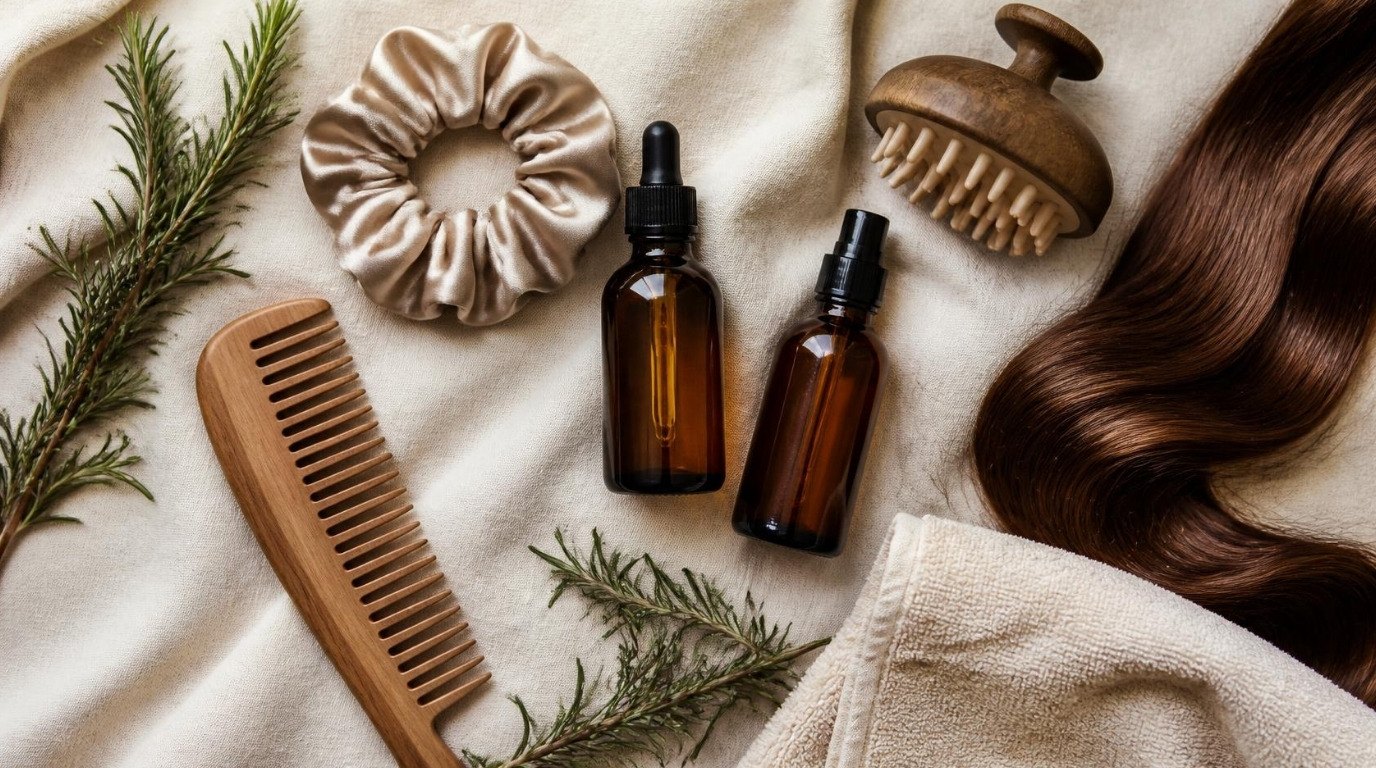
- Wash your tools. Brushes, combs and hair ties hold oil and product and put it right back on clean hair. Rinse them weekly in warm, soapy water.
- Change your pillowcase often, ideally twice a week, because face and hair products collect there too.
- Protect hair before swimming by wetting it with clean water and adding a little conditioner first, so it absorbs less pool water.
Small habits like these can turn a weekly clarifying wash into a monthly one, and your ends will thank you.
Quick Answers About Clarifying Shampoo
Can you use clarifying shampoo on dry hair?
Yes, just less often and more carefully. Keep it on the scalp, choose a milder formula and always follow with a mask. Dry hair often looks even drier when it's coated in buildup, because moisture can't get in, so an occasional clarifying wash can actually help it feel softer afterwards.
Does clarifying shampoo cause hair loss?
No. You may see a few more strands in the drain after a thorough scalp massage, but those are hairs that were already ready to shed. If you notice a lot of sudden shedding, that's worth mentioning to a doctor or dermatologist, because it usually has a different cause.
Should you clarify before a hair mask or treatment?
It's a lovely idea. Clean hair absorbs treatments more evenly, so clarifying right before a deep-conditioning mask or a bond-repair treatment helps you get the most out of it.
Can you clarify more than once in a day?
Two lathers in the same wash are fine for heavy buildup. Clarifying again on the following day is too much for most hair. Give it at least a week before the next round.
Do you still need your regular shampoo?
Yes. Your regular shampoo handles everyday cleansing; the clarifying one is your occasional reset. Keep both in the shower and simply reach for the stronger one on reset days.
Common Clarifying Mistakes To Avoid
A few small habits can turn a helpful reset into a dry, frizzy week:
- Using it as your daily shampoo. It's a treatment, not an everyday cleanser.
- Skipping conditioner afterwards. This is the most common reason people say clarifying "ruined" their hair.
- Scrubbing the ends. Your ends are the oldest, most fragile part of the strand. Let the lather do the work.
- Using very hot water. It strips even more moisture. Warm is plenty.
- Clarifying right after a color or keratin treatment. Wait for the time your stylist recommends.
- Expecting it to fix damage. Clarifying removes buildup. It can't repair split ends or breakage, it simply lets your treatments work again.
If you have a scalp condition like persistent dandruff, psoriasis or eczema, or your scalp stings or burns after washing, check with a dermatologist before adding stronger cleansers to your routine.
Final Thoughts
A clarifying shampoo is one of those quiet tools that makes everything else in your routine work better. Used every few weeks, with a good mask afterwards and a gentle hand on your ends, it brings back shine, bounce and that "just left the salon" lightness.
Start with once a month, watch how your hair responds and adjust from there. Your hair was never really dull. It just needed a fresh start.