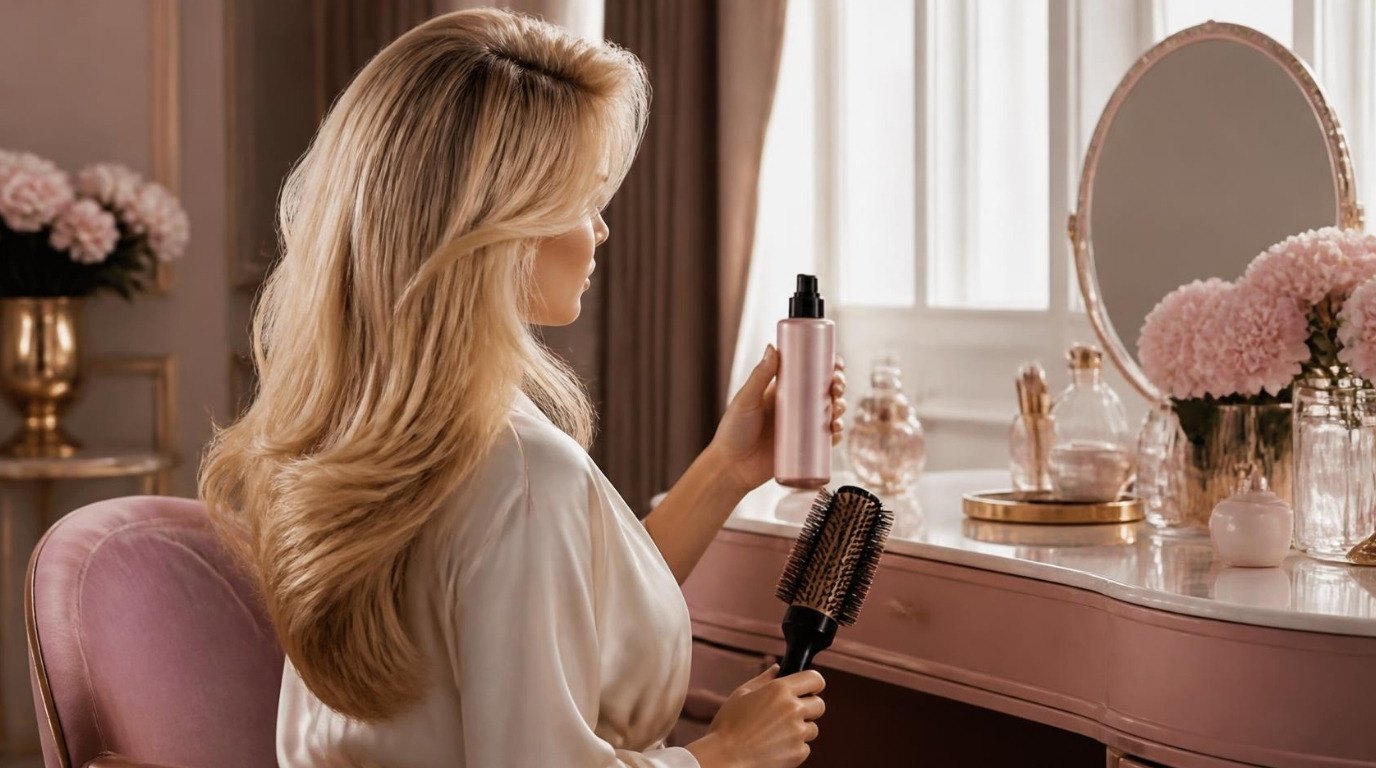
Fine hair isn't difficult hair. It's just hair that notices everything – every drop of extra conditioner, every heavy oil, every rough brush stroke. Once you start treating it as lightweight and delicate rather than something to wrestle into volume, it becomes surprisingly easy to work with.
The biggest shift is this: with fine hair, less product almost always gives you more volume. Most flat, limp days come from too much of the wrong thing, not too little of the right one.
This guide covers fine hair care from start to finish: what makes fine hair different, a heavy-versus-light ingredient table you can screenshot before your next shopping trip, a gentle washing routine, how to get root lift without frying your ends, how to protect fine strands from breakage, and the small habits that flatten hair without you realizing.
No complicated hairstyles, no hour-long blowouts. Just a routine that lets your hair look full, soft and healthy.
What Makes Fine Hair Different
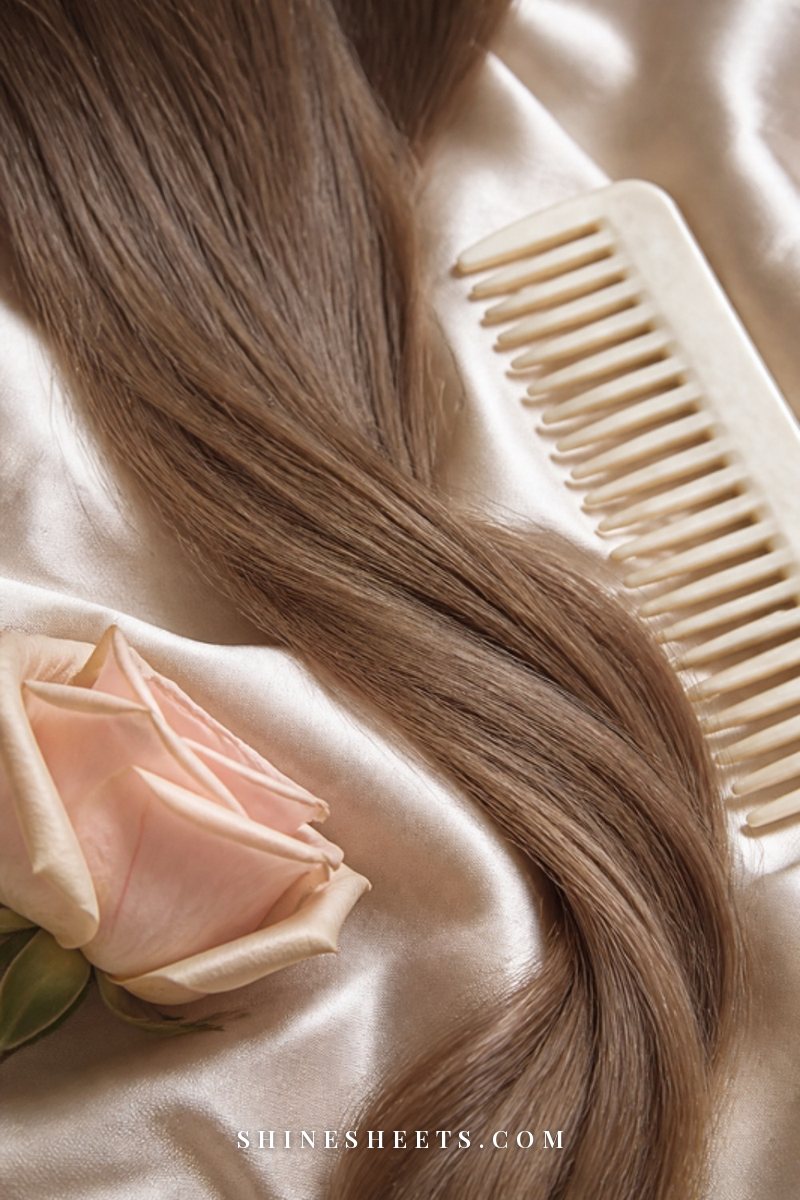
"Fine" describes the width of each individual strand. Fine strands are thinner in diameter than medium or coarse ones, which makes them softer and silkier, but also lighter, more fragile and quicker to go flat. You can have fine hair and still have lots of it – that's different from "thin" hair, which means fewer strands on your head overall.
A quick way to check: take a single strand and roll it between your fingers. If you can barely feel it, it's probably fine. If you can feel a distinct thread, it's medium or coarse.
Fine hair tends to:
- get oily faster, because natural oil travels down smooth, thin strands quickly
- go flat at the roots under any weight
- tangle and knot easily, especially at the nape
- break more easily from heat, tight ties and rough handling
- show product buildup within days
If your hair is both fine and thinning, you'll find extra tricks in my guide on how to make thin hair look thicker. Everything below works for both.
Heavy vs Light: The Fine Hair Ingredient Table
This is the part I wish everyone with fine hair had in their back pocket. Ingredients aren't "good" or "bad," but some sit heavily on fine strands and some don't. Use this table as a quick filter when you're reading product labels.
| Usually Too Heavy for Fine Hair | Usually Light Enough | Why It Matters |
|---|---|---|
| Shea butter, cocoa butter | Aloe, glycerin in small amounts | Butters coat strands and weigh down roots |
| Coconut oil, castor oil (on lengths) | Argan, jojoba or squalane (a drop or two on ends) | Thick oils flatten hair and build up quickly |
| Heavy, non-water-soluble silicones like dimethicone in rich formulas | Lightweight or water-soluble silicones, or silicone-free formulas | Heavy silicones layer up wash after wash |
| Rich "repair" or "smoothing" masks used all over | Lightweight protein or "volume" masks on ends | Rich masks leave roots limp |
| Cream leave-ins and styling butters | Spray leave-ins and mousse | Sprays and foams spread thinly and evenly |
| Wax, pomade, strong-hold gel | Root lifting spray, texturizing spray, light mousse | Waxes clump fine hair together |
| Products labeled "smoothing," "intense moisture," "ultra rich" | Products labeled "volumizing," "lightweight," "weightless" | Label words are a decent first clue |
A small honest note: the "too heavy" column isn't forbidden. A rich mask once a week on very dry ends can be lovely. It's about where you put it and how much.
The Fine Hair Care Routine, Step by Step
Here's a gentle washing routine designed around lightness. Follow it for two or three weeks before judging the results – hair often needs a few washes to lose old buildup.
1. Wash as Often as Your Scalp Needs
Many people with fine hair are told to wash less, but fine hair usually looks best clean. Oil spreads down fine strands fast, and a slightly greasy root is the quickest way to lose volume.
For most people with fine hair, washing every day or every other day with a gentle shampoo is perfectly fine. If your scalp feels tight or itchy, stretch it to every other day and use dry shampoo in between. A little guidance on frequency by hair type is in my post on how often to wash your hair.
2. Shampoo the Scalp, Not the Lengths
Choose a volumizing shampoo for fine hair – ideally one that's gentle and clear rather than creamy and pearly. Clear shampoos often contain fewer conditioning agents that can weigh hair down.
Apply a coin-sized amount to your scalp only, and massage with your fingertips (not nails) for 30 to 60 seconds. The lather that runs down your lengths while rinsing cleans them enough. If your hair feels heavy, try a quick second shampoo: the first wash lifts oil, the second actually cleans.
3. Condition Only the Ends
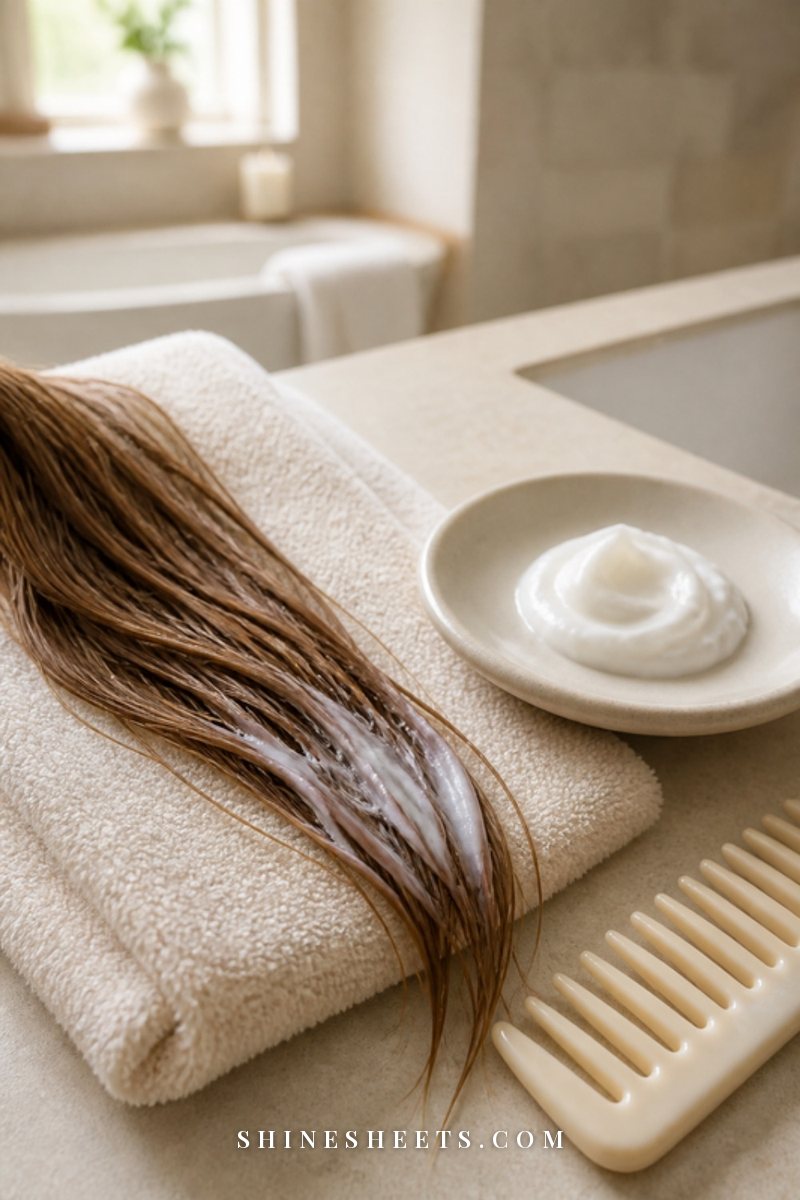
This is the single most important habit in fine hair care. Conditioner belongs on the bottom third of your hair, where it's oldest and driest – never on the roots.
Squeeze excess water out first so the conditioner doesn't slide off, then smooth a small amount of lightweight conditioner from roughly the ears down. Leave it on for 1 to 2 minutes. If your ends feel dry but your roots go flat, try the "reverse wash" sometimes: condition the ends first, then shampoo the scalp, then rinse. The lengths stay soft and the roots stay light.
4. Rinse Longer Than Feels Necessary
Leftover conditioner is a quiet volume killer. Rinse for a full 30 to 60 seconds after you think you're done, lifting sections of hair so water reaches underneath. Finish with a cooler rinse if you can, which helps the cuticle lie smooth and adds shine.
5. Blot Gently and Detangle With Care
Fine hair is at its weakest when wet. Squeeze water out gently, then press the hair with a soft towel or old cotton T-shirt instead of rubbing.
Detangle with a wide-tooth comb or a soft, flexible detangling brush, starting at the ends and working upward in small sections. If you hit a knot, hold the hair above it so you're not pulling on the root.
6. Use Styling Products in Tiny Amounts
Fine hair needs a fraction of what the instructions suggest. A good rule: start with half the amount, then add only if needed. Spray products should be misted from 15 to 20 centimeters away, not concentrated on one spot.
A light leave-in spray on the ends, a few sprays of root lift product, and a heat protectant are usually all you need. More than three products in one styling session tends to flatten fine hair.
How To Get Root Lift Without Damage
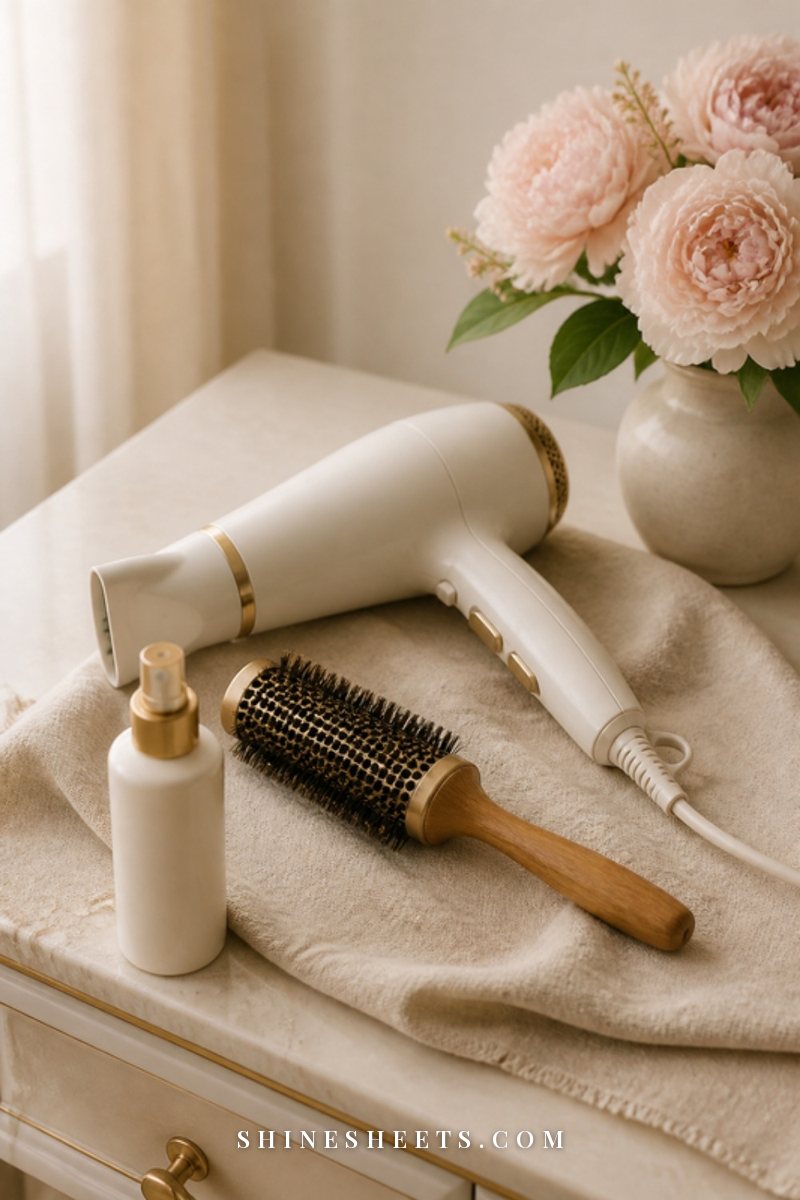
Volume at the roots makes the biggest visual difference for fine hair. These techniques add lift without high heat or harsh teasing.
Blow-Dry in the Opposite Direction
Mist a root lifting spray directly at the roots on damp hair. Then flip your part to the opposite side, or tip your head forward, and rough-dry the roots on medium heat until they're about 80 percent dry. Drying the roots against the way they naturally fall gives them a little lift that holds once you flip your part back.
Keep the dryer moving and the nozzle pointed down the hair shaft. Medium heat and a strong airflow dry fine hair quickly without overheating it.
Use a Round Brush Only at the End
Once your hair is mostly dry, a medium ceramic round brush can smooth the lengths and add a soft bend. Lift each section up and away from the scalp as you dry the root area, hold for a few seconds, then let it cool before releasing. You don't need to round-brush every section – the top and crown are where volume shows most.
Try Velcro Rollers While You Get Ready
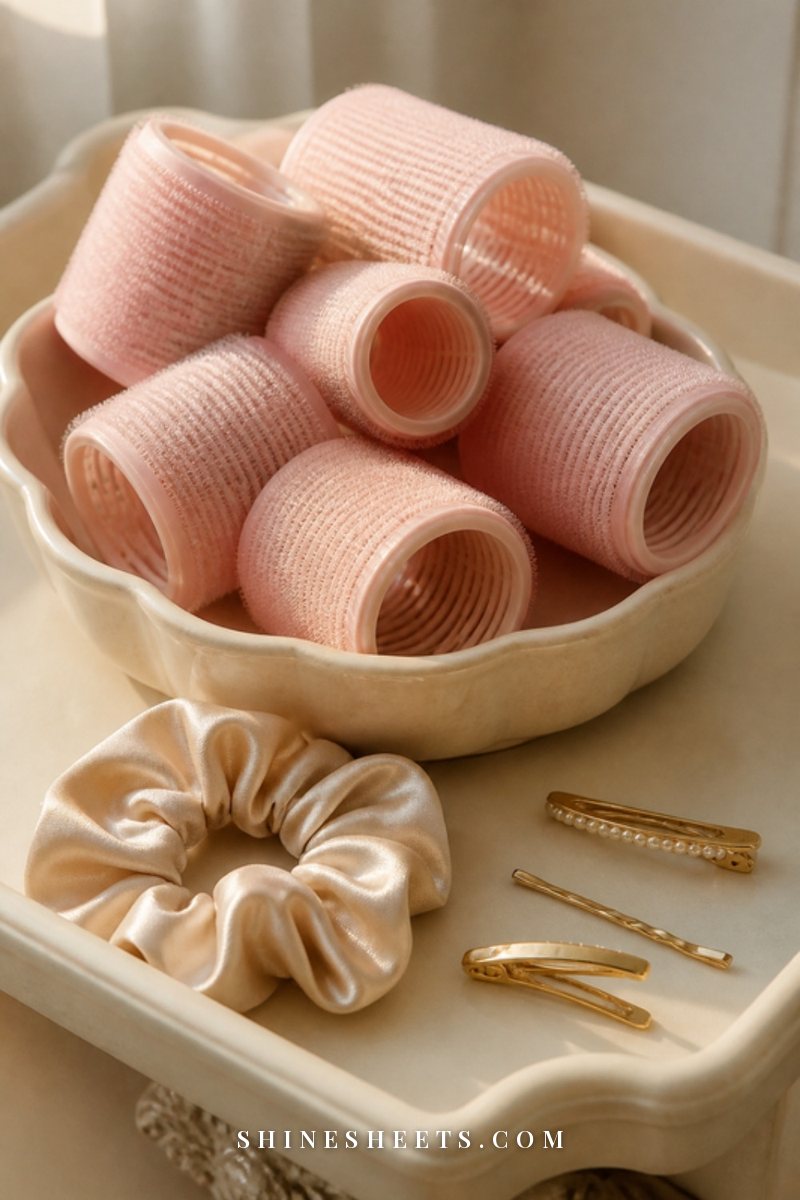
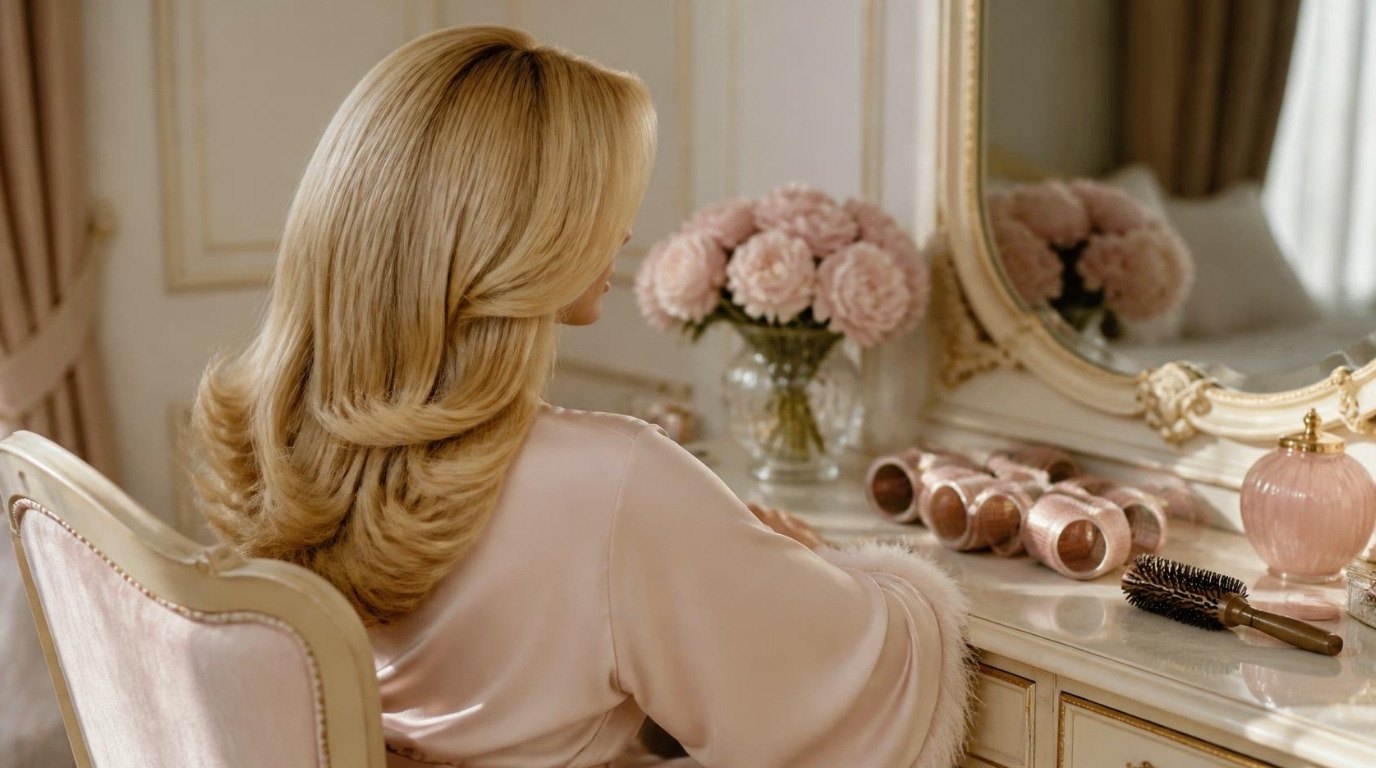
This is one of the easiest volume tricks for fine hair, and it uses no extra heat. Right after blow-drying, while your hair is still warm, roll two to four large sections at the crown and top of your head onto large velcro rollers, rolling away from your face. Leave them in for 10 to 20 minutes while you do your skincare or get dressed, then gently unroll.
The warmth from the dryer sets the shape as the hair cools, giving you that soft, lifted, Old Hollywood bounce at the roots without curling irons.
Finish With Texture, Not Heavy Hairspray
Fine, smooth strands slide against each other and fall flat. A light texturizing spray adds a bit of grip so the hair holds its shape. Mist it through the mid-lengths and roots from a distance, then gently shake your hair with your fingers. Skip heavy, wet hairsprays, which can make fine hair stick together in strands.
Dry shampoo works as a volumizer on clean hair too. A light mist at the roots adds instant body. If you're new to it, my guide on how to use dry shampoo covers the right distance and timing.
Protecting Fine Hair From Breakage
Because each strand is thinner, fine hair breaks more easily. Volume means very little if your ends are snapping off.
Go Easy on Brushing
The old "100 strokes a night" idea isn't kind to fine hair. Brush only to detangle and style, using a soft-bristle or flexible brush. Never brush hair that's soaking wet with a stiff brush; use a wide-tooth comb instead.
Choose Gentle Hair Ties
Tight elastics and ponytails pulled in the same spot every day cause breakage and stress at the hairline. Choose soft scrunchies, spiral ties or claw clips, and vary where you place them. Keep ties loose, especially at night. If you're already seeing short broken pieces, my guide to hair breakage explains what helps them grow out healthier.
Keep Heat Low and Always Protect
Fine hair heats up faster than thick hair, so it simply doesn't need high temperatures. Keep flat irons and curling tools around 150–170°C (300–340°F), use a lightweight heat protectant spray every time, and try to give your hair two or three heat-free days a week.
Be Gentle With Chemical Treatments
Bleach, perms and strong straightening treatments are harder on fine strands. If you color your hair, ask your stylist about bond-building treatments and give your hair time to recover between services. A weekly lightweight protein treatment on the ends can help fine hair feel stronger without weighing it down.
Clarifying and Scalp Health

Fine hair shows buildup faster than any other hair type. If your hair suddenly feels heavy, dull, stiff or won't hold any volume no matter what you do, buildup is the most likely reason.
Use a gentle clarifying shampoo every one to two weeks if you use styling products often, or every three to four weeks if your routine is minimal. Lather twice, focus on the scalp, and follow with your lightweight conditioner on the ends. If your hair is color-treated, clarify less often, as clarifying can fade color.
A healthy scalp also matters for how full your hair looks. Fine hair sits best when the roots aren't coated in oil or flakes. A soft scalp massage while shampooing, a weekly gentle scalp scrub or serum if you like, and keeping the scalp clean and calm all help. My scalp care routine walks through a simple weekly plan.
A kind note: if you notice sudden shedding, patchy thinning or a sore, itchy scalp, please check in with a doctor or dermatologist. Changes in hair density can have many causes, and a professional can help you find the right one.
Talking to Your Stylist About Cuts and Layers
The right cut does a lot of the volume work for you, and you don't need to know styling techniques to ask for one. A few helpful things to mention at your next appointment:
- "My hair is fine and goes flat easily." This one sentence changes how a good stylist approaches the cut.
- Ask for blunt or lightly textured ends rather than heavily thinned ones. Fine hair often looks fuller with a solid baseline.
- Ask about soft, long layers around the face or crown rather than lots of short, choppy layers, which can make fine hair look sparse at the ends.
- Trim regularly – every 8 to 12 weeks. Split ends travel up fine strands quickly and make the ends look wispy.
- Ask them to show you how they dry the roots for lift, so you can repeat it at home.
Most stylists love clear information like this, and it saves you from leaving the salon with a cut that only works with a professional blowout.
Fine Hair Mistakes That Flatten Your Hair
Small habits can quietly undo a good routine. These are the most common ones:
- Putting conditioner or oil on the roots. Even a little goes a long way on fine strands.
- Using too many products at once. Three is usually the limit before hair starts to collapse.
- Touching your hair all day. Oils from your hands travel straight to fine strands.
- Air-drying flat against your head. If you skip the dryer, at least flip your part or clip the crown up while it dries.
- Sleeping on wet hair. It dries flat, tangled and creased.
- Choosing "smoothing" and "anti-frizz" products by default. They're often designed for thick hair and add weight.
- Skipping heat protectant because "it's just a quick blow-dry." Fine hair is quick to dry but also quick to get damaged.
Night and Seasonal Care for Fine Hair
Fine hair reacts quickly to its surroundings, so a few small adjustments for nighttime and changing seasons keep it looking its best.
- Sleep on a smooth pillowcase. Silk or satin reduces friction, so you wake up with fewer tangles and less breakage at the nape.
- Loosely gather your hair before bed. A soft scrunchie at the top of your head (a loose "pineapple") keeps the roots from being crushed flat overnight.
- Fight static in cold, dry months. Fine hair gets flyaway easily when the air is dry. A drop of light hair oil rubbed between your palms and pressed over the surface, or a quick mist of leave-in spray, calms it without weight.
- Watch out for hats. Wool hats flatten fine roots and add static. A satin-lined hat or a quick flip and shake when you take it off helps a lot.
- Adjust for humidity. In humid weather, fine hair can go limp rather than frizzy. A light mousse or texturizing spray gives it the grip it needs.
- Refresh your products with the seasons. You might need a slightly richer conditioner on your ends in winter and an even lighter one in summer.
None of these require extra time. They're small swaps that help fine hair stay soft and full whatever the weather is doing.
A Simple Weekly Plan for Fine Hair
If you'd like to see how this all fits together, here's an easy week:
- Monday: Wash with volumizing shampoo, condition ends only, root lift spray, blow-dry roots in the opposite direction.
- Tuesday: Dry shampoo at the roots, a quick shake of texture spray.
- Wednesday: Wash, light conditioner, velcro rollers at the crown while you get ready.
- Thursday: Heat-free day: dry shampoo and a soft scrunchie.
- Friday: Wash with a lightweight protein mask on the ends for 5 to 10 minutes.
- Weekend: One wash, plus a gentle clarifying wash every other weekend if you use lots of styling products.
Adjust the number of washes to your scalp. The pattern matters more than the exact days.
Final Thoughts
Fine hair care is really about lightness: gentle shampoo on the scalp, conditioner only where it's needed, a few smart root-lift tricks and careful handling so every strand stays strong. When you stop piling on heavy products, fine hair often surprises you with how soft and full it can look.
Start with the heavy-versus-light table and the "conditioner on the ends only" rule. Those two changes alone can make your hair feel like a completely different texture within a couple of weeks.