Laundry rarely piles up because you're lazy or disorganized. It piles up because most homes have a washing plan but no finishing plan. The washing machine does its job beautifully. It's the drying, folding and putting away that quietly stall, and that's where the mountain on the chair is born.
A good laundry routine fixes the whole cycle, not just the first step. It decides when you wash, how clothes are sorted before they ever reach the machine, and what "done" actually means. Once that's in place, laundry stops being a weekend-eating monster and becomes a small, predictable task that fits around your life.
This guide is all about building a laundry routine that never piles up: why the pile happens in the first place, how to choose between a load a day and set laundry days, the start-to-finish rule, a simple folding station, bedding and towel days, a stain habit, a weekly schedule table by household size, and versions for shared homes, small apartments and laundromats.
No perfection needed. Just a system that's a little kinder to your future self.
Why Laundry Always Piles Up
Before changing the routine, it helps to know where yours gets stuck. For most people, it's one (or more) of these:
- One giant laundry day. Five loads in one day sounds efficient, but it's exhausting. By load four, the folding is abandoned and the clean pile moves to the bed, then the chair.
- No sorting system. One big hamper means sorting on laundry day, which adds friction every single time.
- Washing without finishing. A load goes in at night, sits damp until morning, gets rewashed, then waits in the dryer for two days.
- Nowhere to fold. If folding means clearing a space first, it won't happen.
- Too many clothes in rotation. When there's always something clean left to wear, there's no urgency, so the pile grows quietly.
- One person doing it all. In shared homes, laundry often lands on whoever cares the most, which is a recipe for resentment.
Small honest admission: my sticking point is always the putting-away part. Clean, folded clothes can sit in a basket for days. If that's you too, the start-to-finish rule below is going to help.
Step 1: Pick Your Laundry Rhythm
There are two rhythms that work well. Neither is better. The right one is whichever fits your week and your energy.
The Load-a-Day Method
One load, every day (or most days), from start to finish. You might start it before breakfast and fold it after dinner, or wash in the evening and move it to the dryer before bed.
- Best for: families, people who work from home, in-unit washers, anyone who hates big chores.
- Time: about 15 to 20 minutes of active work per day.
- Watch out for: it only works if you actually finish each load. One unfinished load turns into two quickly.
The Set-Days Method
Two or three fixed laundry days a week, with one or two loads each time. For example, Monday for clothes, Thursday for clothes and towels, Saturday for bedding.
- Best for: singles and couples, busy weekdays, shared laundry rooms, people who like batching.
- Time: about 45 to 60 minutes of active work per laundry day.
- Watch out for: skipping a day can push everything back, so keep a flexible backup day.
How To Choose
Count how many loads your household makes in a typical week. If it's more than five, the load-a-day method usually feels lighter. If it's three or fewer, set days are simpler. Somewhere in between? Try one rhythm for two weeks and notice how it feels. There's no prize for sticking with a method that doesn't suit you.
Step 2: Pre-Sort With a Divided Hamper
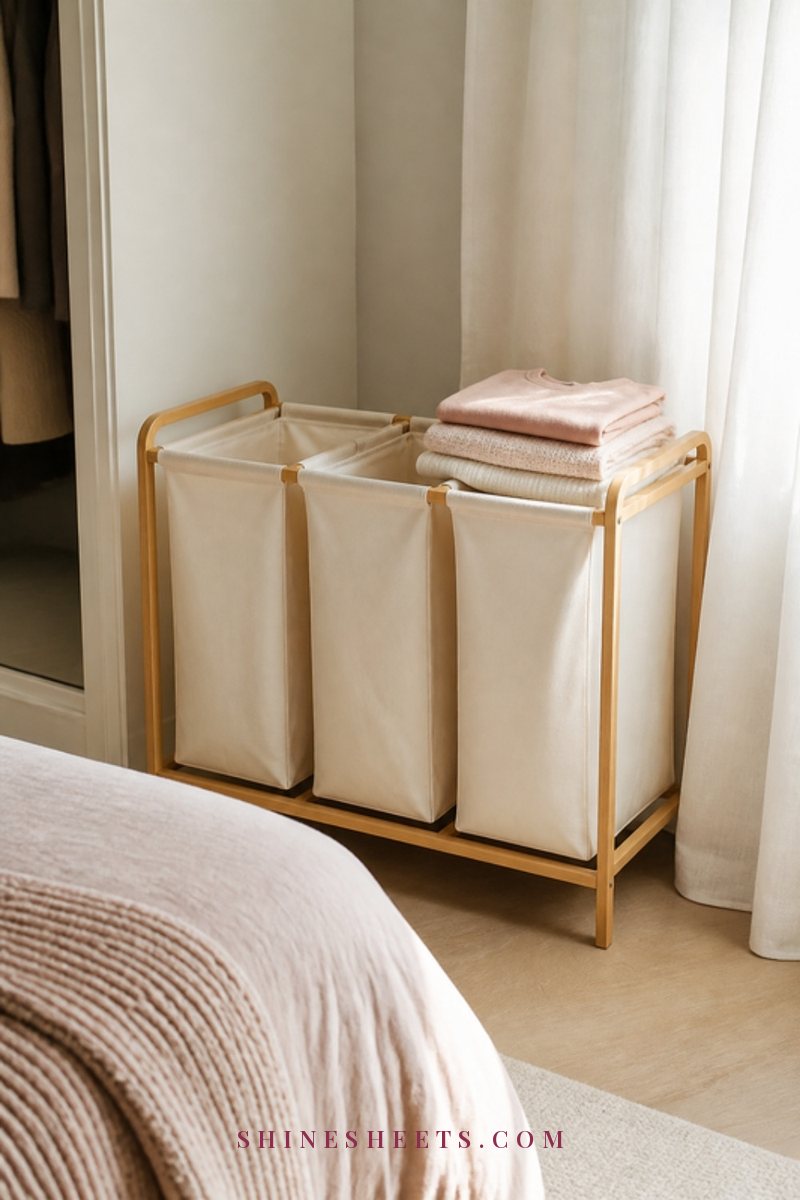
Sorting on laundry day is one of the sneakiest time-wasters. Pre-sorting moves that work to the moment you take clothes off, when it takes about two seconds.
A three-section laundry hamper is the easiest way to do this. A common setup is:
- Section one: lights and whites.
- Section two: darks and colors.
- Section three: towels and heavy items, or delicates.
When one section is full, that's a load, and the decision of what to wash next has already been made. For delicates, bras and anything with straps or hooks, keep a couple of mesh laundry bags hanging on the hamper. Drop items straight in and wash them in the bag. My guide on how to wash delicates covers the right cycles and water temperatures for silk, lace and fine knits.
If space is tight, two smaller hampers or one hamper with a removable liner bag work just as well. The point isn't the furniture. It's not sorting a mountain later.
Step 3: Follow the Start-to-Finish Rule
This is the single habit that stops laundry from piling up: a load isn't done until it's put away. Wash, dry, fold and put away, all on the same day.
It sounds strict, but it actually makes things easier, because you never face more than one load at a time. A few ways to make it work:
- Start loads when you'll be home to finish them. Before breakfast or right after work is better than right before bed.
- Set a timer on your phone for the end of the wash cycle, so wet clothes don't sit and turn musty.
- Fold straight from the dryer or drying rack. Clothes folded warm wrinkle less, and you skip the "clean pile" stage entirely.
- Put away immediately. Carry the folded stack to the closet before you do anything else. Five minutes, then it's truly done.
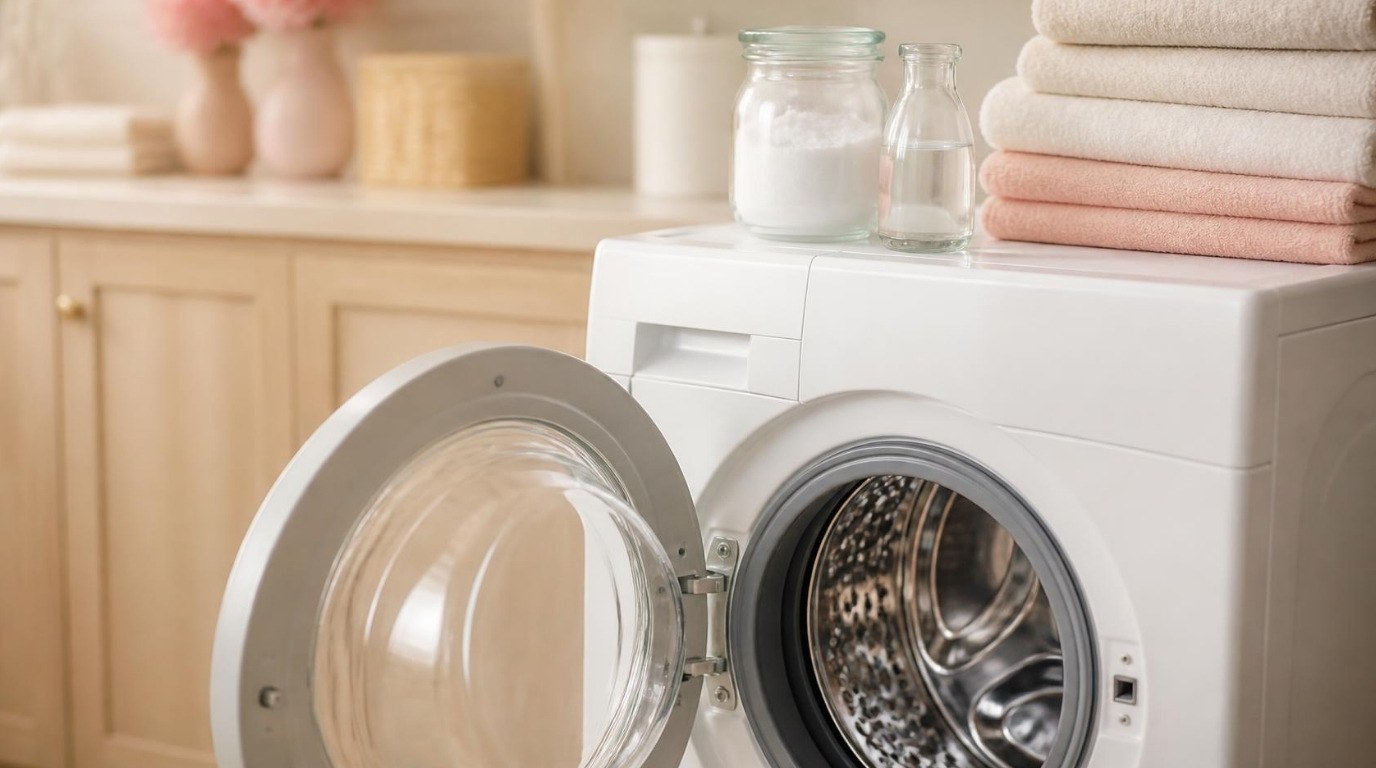
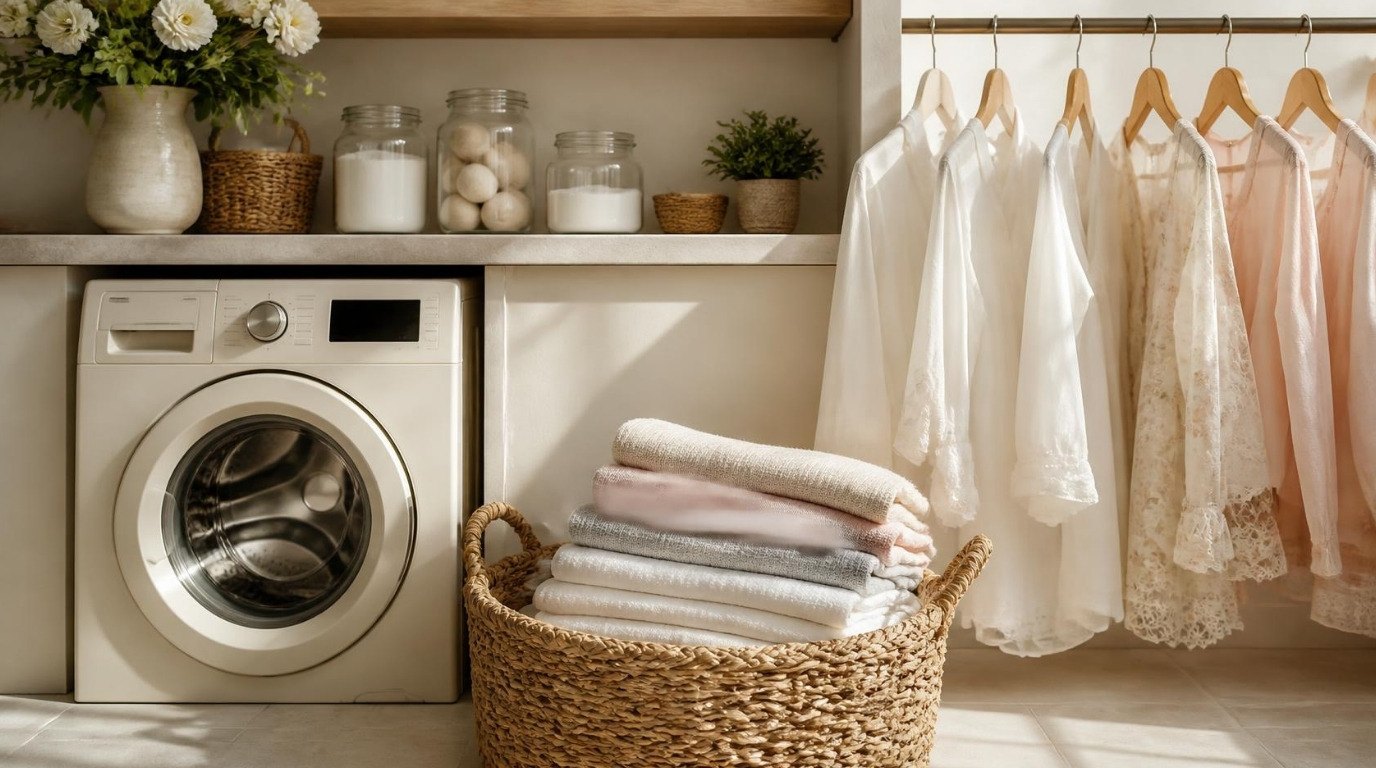
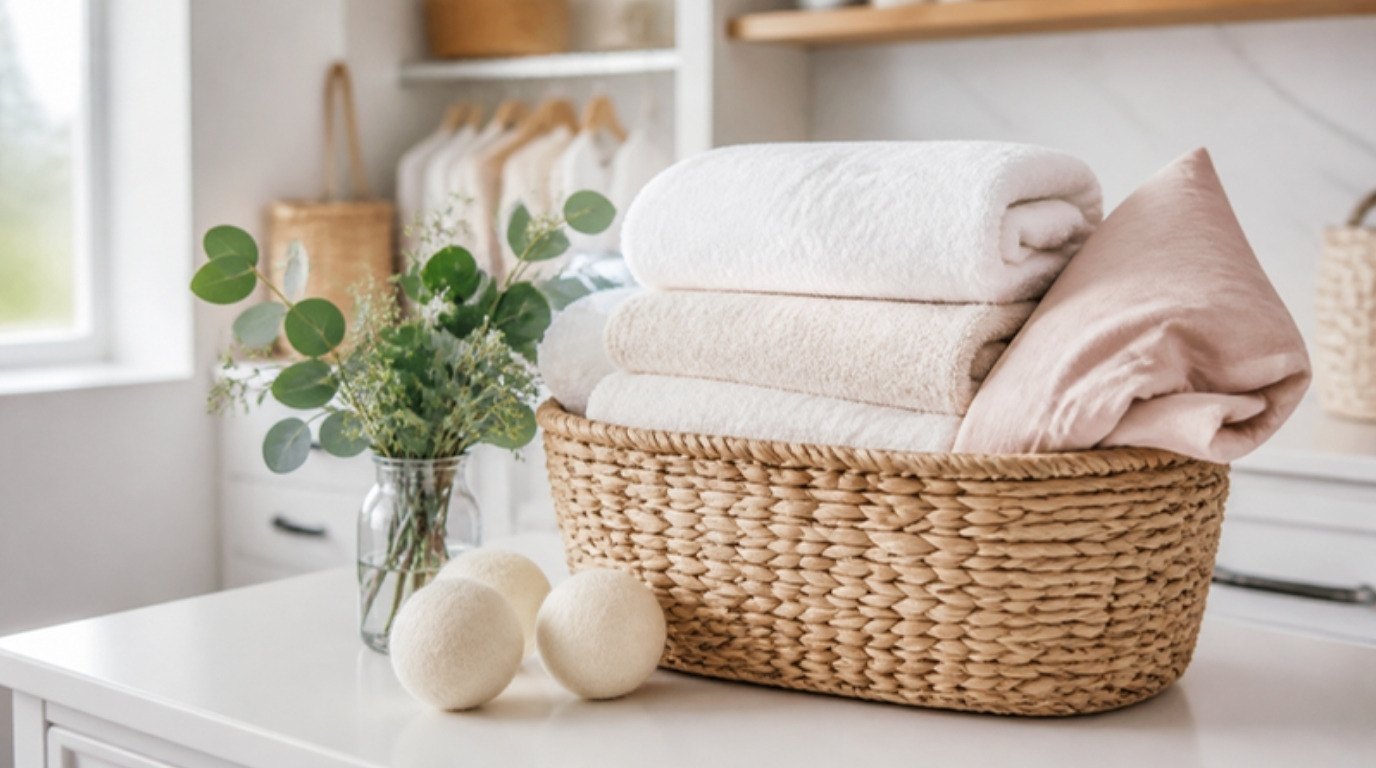
To speed up drying and soften clothes without extra products, toss three or four wool dryer balls into the dryer. They help separate items so air moves through them, which can shorten drying time a little. Always clean the lint filter before each load, both for efficiency and because lint buildup is a fire risk.
If a load does sit too long and smells a little off, rewash it right away with a normal cycle and dry it completely. Don't try to cover the smell, because it only comes back once the fabric warms up.
Step 4: Set Up a Folding Station
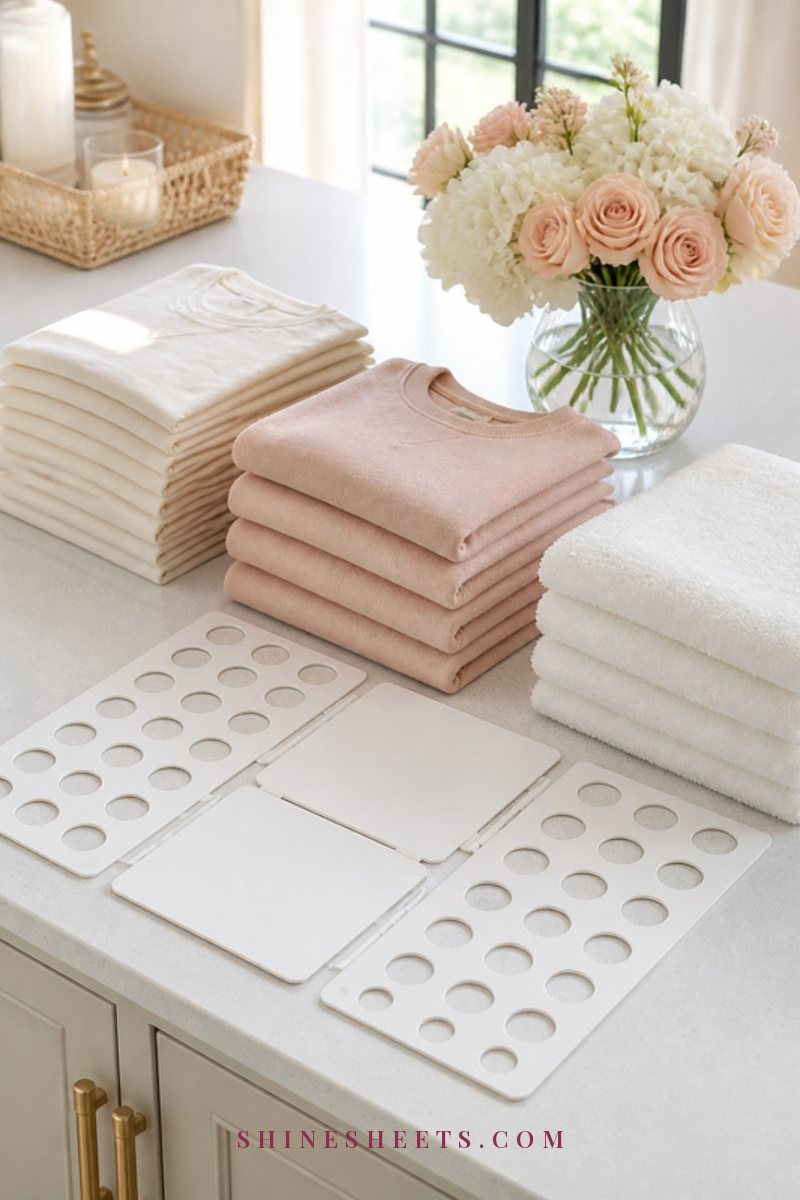
Folding is much faster when there's a clear, permanent place to do it. It doesn't have to be fancy: a cleared section of countertop, the top of the dryer, a table you keep empty or a corner of the bed that's always available.
- Keep it clear. The station only works if you don't need to tidy it first.
- Use a folding board if you want neat, identical stacks quickly. A clothes folding board takes T-shirts and sweaters from crumpled to drawer-ready in seconds, and it's surprisingly satisfying.
- Fold by person or by room. Make one stack per person or one per drawer, so putting away is a single trip.
- Add something nice. A podcast, an audiobook or a favorite playlist turns folding into a small break instead of a chore.
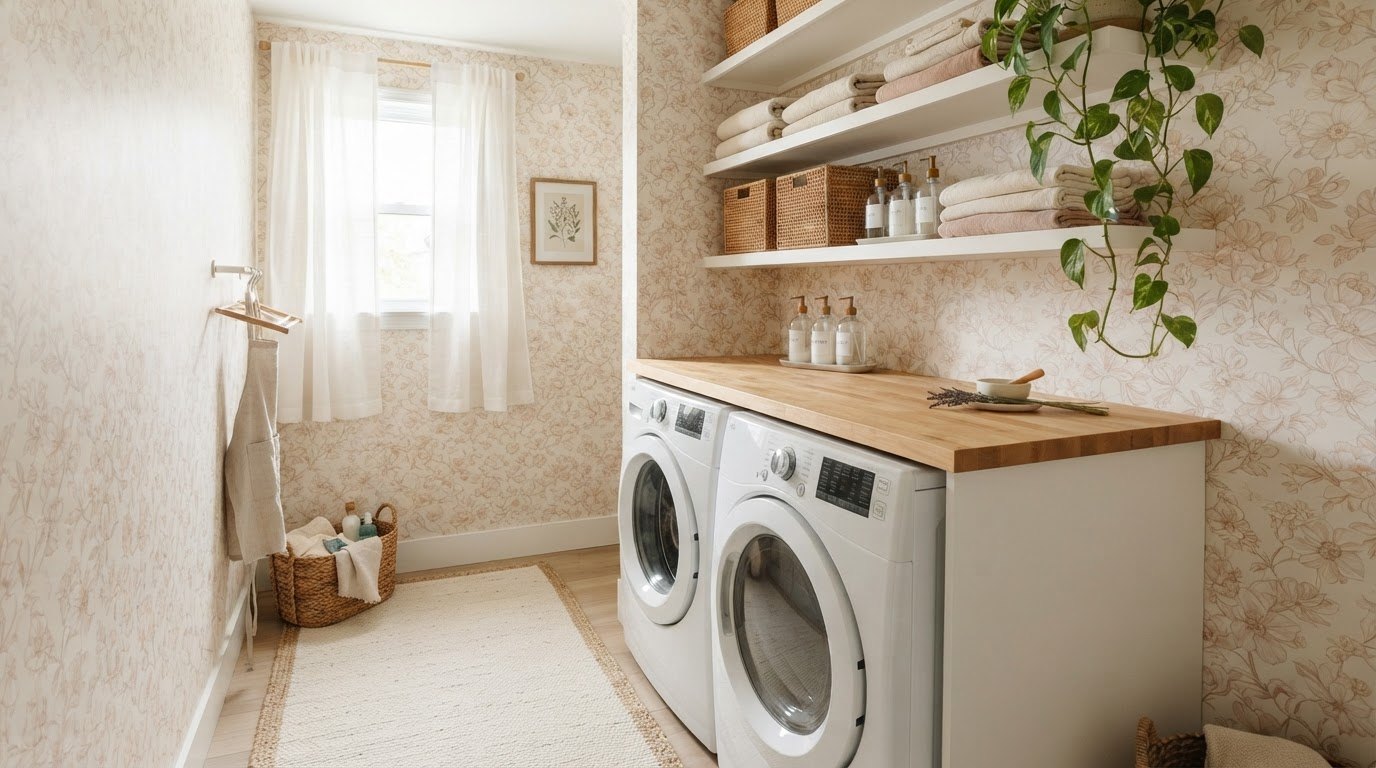
If you'd like to make the whole space feel lovely, my laundry room ideas are full of simple, renter-friendly upgrades.
Step 5: Give Bedding and Towels Their Own Day
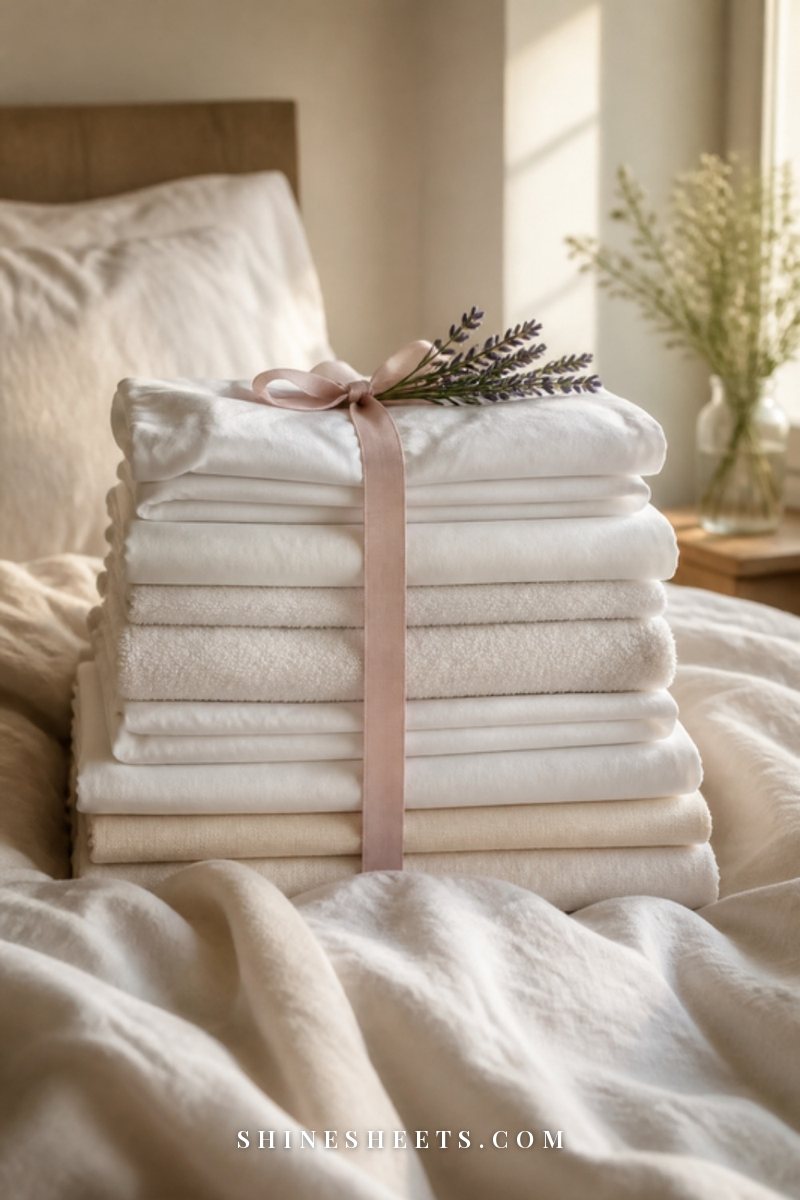
Bedding and towels are bulky, take longer to dry and don't mix well with everyday clothes. Giving them a fixed day keeps them from crowding out your regular loads.
- Sheets: once a week is a good standard, or every one to two weeks if that's more realistic. Strip the bed in the morning so it can air out while the sheets wash.
- Bath towels: every three to four uses, and always if they stay damp or smell musty. Hand towels every couple of days.
- Kitchen towels: often, ideally every one to two days.
Many people like a Sunday "fresh home" load: sheets and bath towels together. Keep a second set of sheets folded inside one of its own pillowcases, so you can remake the bed right away instead of waiting for the dryer. For water temperatures and how to keep white sheets bright, see my guide on how to wash sheets.
Step 6: Build a Stain Treatment Habit
Most stains are easy to remove when they're fresh and almost impossible after a trip through a hot dryer. A tiny habit makes all the difference.
- Treat right away. Blot (never rub) and rinse the back of the stain with cold water as soon as you can.
- Keep a stain pen close. A stain remover pen in your bag and one by the hamper means you can treat on the spot.
- Flag it. Put stained items on top of the hamper section, or clip a clothespin to them, so you remember to check them before washing.
- Check before drying. Heat sets stains. If the stain is still there after washing, air-dry the item and treat it again.
Always test stain products on a hidden spot first, especially on delicate or brightly colored fabrics, and never mix bleach with vinegar or ammonia-based products, since that creates harmful fumes. For specific stains like makeup, wine or grease, my guide on how to remove stains from clothes walks you through each one.
Step 7: Make Putting Away Effortless
Putting away is the step most routines forget, and it's often the one that decides whether the pile comes back. The trick is to make the final step so easy that it takes less effort than leaving the basket on the floor.
- Create space first. If drawers are stuffed, clean clothes have nowhere to go. A quick wardrobe edit makes putting away faster every single week.
- Give everything a home. Socks in one drawer, T-shirts in another, workout clothes in a small bin. When everything has a spot, you don't have to think.
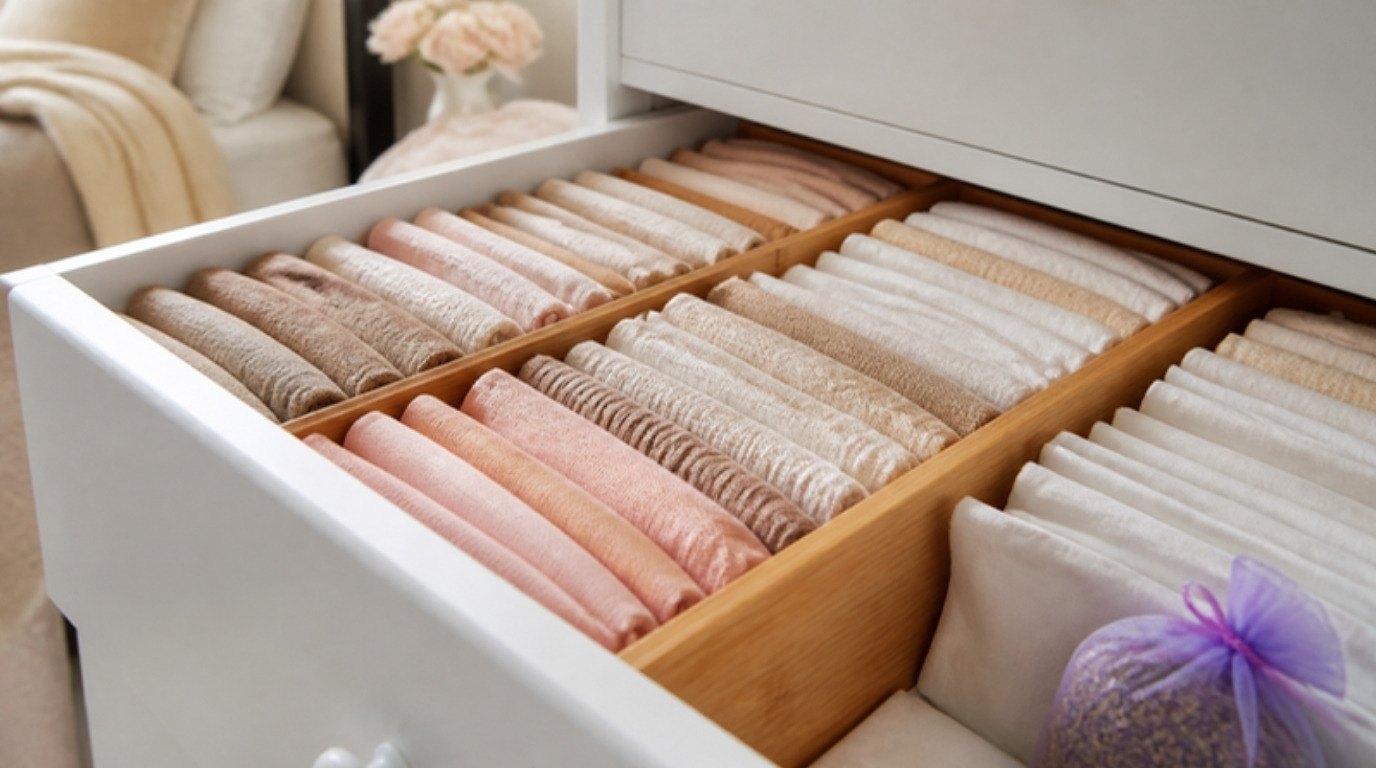
- Fold the way you store. If you file-fold T-shirts upright in drawers, fold them that way straight from the dryer. If sweaters live on a shelf, fold them to the shelf's width.
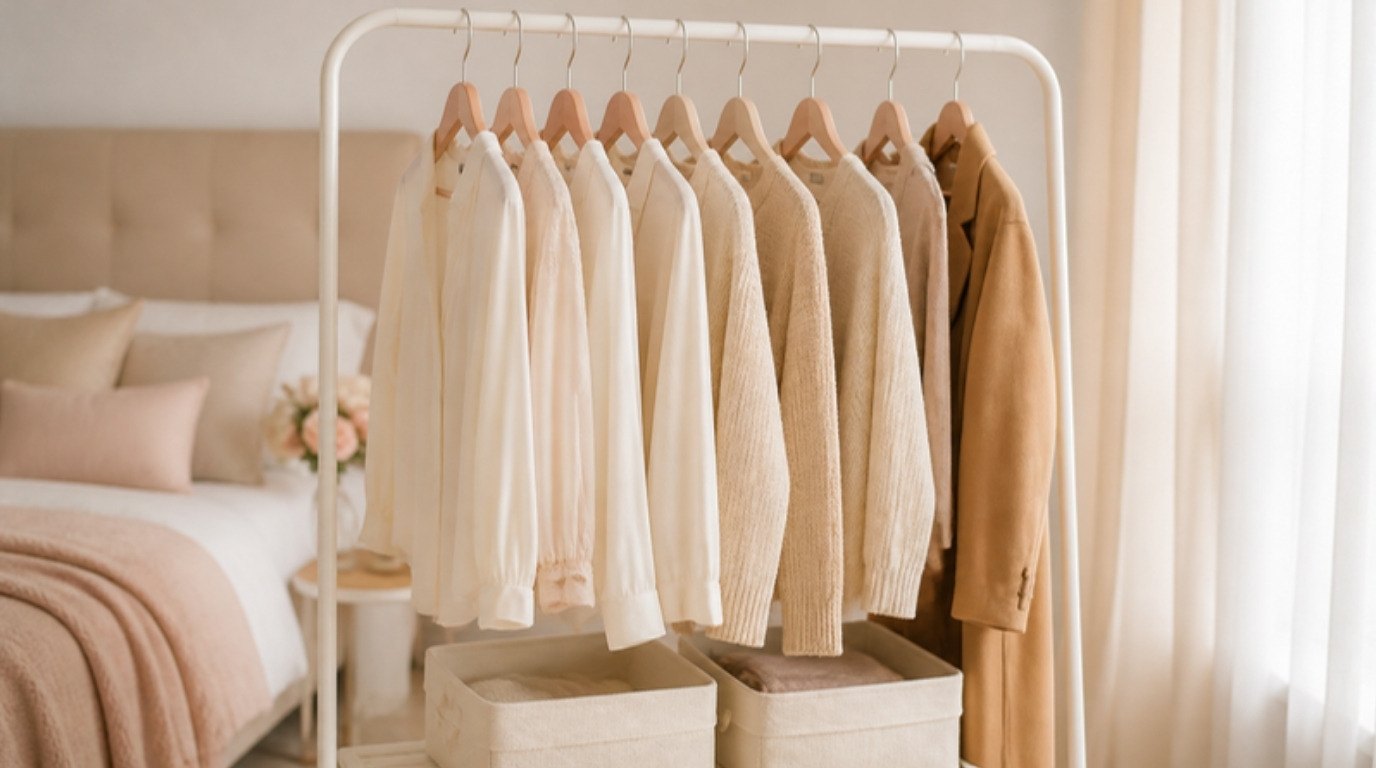
- Hang straight from the dryer. Keep a few empty hangers near the machine for blouses, dresses and anything that wrinkles easily.
- Use the basket as a timer. The basket goes back to the laundry area empty. If it's still full at bedtime, that's the one five-minute job to finish before you rest.
Small Laundry Habits That Save Time Every Week
Beyond the main steps, a handful of tiny habits quietly make laundry lighter:
- Empty pockets as you undress. Tissues, receipts and lip balm are much easier to catch before the wash than after.
- Turn clothes the right way out before they go into the hamper, or wash dark jeans and printed tees inside out on purpose and leave them that way.
- Close zippers and unhook bras to protect other items from snags.
- Wear things more than once. Jeans, sweaters and pajamas rarely need washing after a single wear. Airing them on a hook overnight is often enough.
- Use the right amount of detergent. More soap doesn't mean cleaner clothes. Too much leaves residue that makes fabric stiff and machines smelly.
- Wash cold most of the time. Cold water is gentle on colors and fabrics and works well for everyday loads. Save warm or hot water for towels, sheets and heavily soiled items.
None of these take more than a few seconds, but together they mean fewer rewashes, fewer ruined favorites and less time standing at the machine.
The Weekly Laundry Schedule by Household Size
Here's a simple starting schedule you can adjust. Screenshot it and tape it inside a cupboard door if that helps.
| Household | Rhythm | Weekly schedule | Loads per week |
|---|---|---|---|
| Single, small apartment | Set days | Wed: clothes (lights + darks if needed). Sun: sheets and towels. | 2–3 |
| Couple | Set days | Mon: darks. Thu: lights and delicates. Sat: sheets and towels. | 3–4 |
| Roommates (2–3) | Assigned days | Each person has 1–2 fixed days for their own loads. Shared towels and kitchen linens rotate weekly. | 4–6 |
| Family of 3–4 | Load a day | Mon: darks. Tue: lights. Wed: kids' clothes. Thu: towels. Fri: darks. Sat: sheets. Sun: off or catch-up. | 6–7 |
| Family of 5+ | Load a day, plus one extra | One morning load every day, plus an evening load on two busy days. One person's clothes per day can also work well. | 8–10 |
| Laundromat users | One trip a week | One fixed trip with everything pre-sorted at home. Fold at the laundromat before you leave. | 3–5 (in one trip) |
Treat this as a starting point. If your week is unpredictable, keep one "floating" catch-up day so a busy Tuesday doesn't throw off everything.
Laundry Routines for Shared Homes
Laundry gets much lighter when it isn't one person's job. A few ideas that work for partners, families and roommates:
- Everyone has their own hamper. Each person (or each bedroom) has a small hamper, so clothes stay sorted by owner and putting away is quick.
- Older kids put away their own clothes. Even young kids can carry a folded stack to their room and put socks in a drawer.
- Split the steps. One person washes and dries, the other folds and puts away. Or alternate weeks.
- Agree on the rules for shared machines. Roommates do well with a simple rule: if your load is finished, move it within 30 minutes. A small basket next to the machine for "someone else's finished load" helps keep the peace.
- Write it down. A short laundry plan on the fridge or inside the laundry cupboard removes the "I didn't know it was my turn" conversations.
The Small Apartment and Laundromat Version
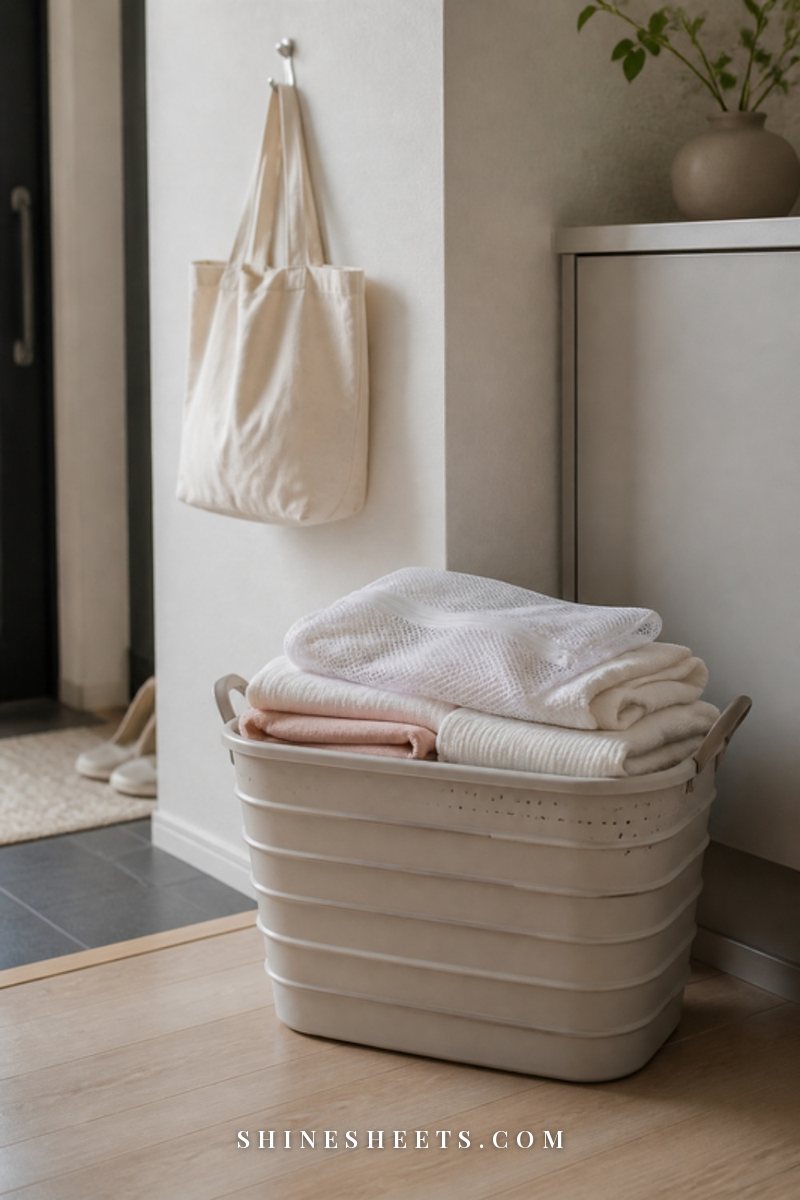
No washer at home? A laundry routine still works, it just needs to be portable and planned.
- Pick one fixed trip a week. Same day, same time. Early weekday mornings and late evenings are often quieter.
- Pre-sort at home. Use a divided hamper or separate bags so you can load machines straight away.
- Carry it the easy way. A collapsible laundry basket folds flat when you're not using it, which is a gift in a small apartment. A large laundry bag with shoulder straps works well if you're walking.
- Bring a small kit. Detergent in a smaller refillable bottle, dryer balls, a stain pen, mesh bags and quarters or a payment card, all in one tote that lives by the door.
- Fold before you leave. It's tempting to stuff everything into a bag and fold at home, but folding at the laundromat means you walk in the door finished.
In a tiny apartment with an in-unit washer and no dryer, a folding drying rack that stands in the shower or by a window keeps clothes off radiators and chairs. Open a window or run the bathroom fan while things dry to prevent damp smells.
How To Keep the Laundry Area Calm
A laundry space that feels pleasant gets used more happily. You don't need a dedicated laundry room for this, even a closet or a corner of the bathroom can feel calm.
- Decant and contain. Keep detergent and supplies in one bin or on one shelf, so the space looks clear.
- Keep a small trash can for lint and dryer sheets right by the machine.
- Add a lost-sock basket. Once a month, match them up or let them go.
- Wipe the machine weekly. A quick wipe of the door seal and detergent drawer prevents musty smells. Every month or so, run a cleaning cycle (my guide on how to clean a washing machine walks you through it).
- Bring in something lovely. A plant, a soft rug or a framed print makes the space feel like part of your home, not a forgotten corner.
What To Do When Laundry Has Already Piled Up
If you're reading this next to a mountain, please don't feel bad. Here's a gentle catch-up plan that gets you back to zero without losing an entire weekend:
- Sort everything into loads (10 minutes). Lights, darks, towels, sheets, delicates.
- Wash the most urgent load first, usually the clothes you need this week, not the towels.
- Do two loads a day until the pile is gone, one in the morning and one in the afternoon, finishing each completely.
- Fold the clean pile in short bursts. Fifteen minutes with a timer, then stop. Repeat tomorrow.
- Declutter as you go. If you fold something and realize you never wear it, put it straight into a donation bag.
- Start your new rhythm the day after the pile is gone.
For more simple shortcuts that make every load easier, my roundup of laundry tips is a helpful next read.
Final Thoughts
A laundry routine that never piles up isn't about doing more laundry. It's about finishing what you start, sorting before you wash and choosing a rhythm that matches your real life.
Pick your rhythm today, set up a divided hamper and try the start-to-finish rule for one week. The empty chair in your bedroom will be the nicest little reward, and your mornings will feel lighter for it.