Curtains are basically giant, beautiful dust filters. They sit next to open windows, catch everything that drifts in, soak up cooking smells and gently release it all back into the room every time you open or close them. Because they hang quietly and look fine from a distance, most of us forget about them for months, sometimes years.
The good news is that keeping curtains fresh rarely means wrestling them off the rod. Most of the work can happen right where they hang: a shake, a quick vacuum, a pass with a steamer. Only every so often do they need a proper wash, and when they do, the fabric decides whether that means the washing machine, the bathtub or a trip to the dry cleaner.
This guide covers how to clean curtains the easy way: how to read the care label, how to clean curtains without taking them down, when and how to machine wash cotton, polyester, linen and sheers, what should always go to the dry cleaner, how to care for blackout curtains, how to clean rods and tracks, and how often to do it all. There's a curtain fabric care table near the end for quick reference.
Why Curtains Get Dirty Faster Than You Think
Even in a tidy home, curtains collect a surprising amount:
- Dust and pollen drifting in through open windows and settling into the folds.
- Cooking residue, especially in kitchens and open-plan living rooms, which leaves a faint greasy film that attracts more dust.
- Condensation on cold glass in winter, which can leave the hem damp and lead to musty smells or mildew spots.
- Pet hair and skin cells clinging to the lower part, especially if pets love to nap by the window.
- Sun fading and odors from smoke, candles or fireplaces.
Clean curtains make the whole room feel brighter and smell fresher, and they're one of the most overlooked ways to reduce dust at home.
Start With the Care Label

Before anything else, find the label. It's usually sewn into a side hem or the top heading at the back. Look for:
- A washtub symbol (machine washable; dots show the maximum temperature, a hand means hand wash only).
- A crossed-out washtub (do not wash in water).
- A circle (dry clean), sometimes with a letter for the solvent type.
- A square with a circle (tumble dry) or a crossed-out version (air dry only).
- An iron symbol with dots for heat level.
If there's no label, or you've cut it off (no judgment, most of us have), treat the fabric as delicate. Test any method on a hidden corner first, like the back of the hem, and choose cold water and air drying.
What You'll Need
- A vacuum with a soft brush attachment, or a light cordless handheld vacuum that's easy to lift high
- A lint roller or rubber pet-hair brush
- A handheld or upright garment steamer
- A mild, gentle liquid detergent
- A large mesh laundry bag for sheers and delicate panels
- Clean white cloths for spot cleaning
- A sturdy step stool (never a wobbly chair)
How To Clean Curtains Without Taking Them Down
This is the routine that keeps curtains fresh for months between proper washes. It takes about 10 to 15 minutes per window.
1. Shake Them Out
Open the window if you can, then gently shake each panel from about halfway down. Grip the fabric in both hands and give a few soft flicks to release loose dust. Do this before you vacuum, not after, so the dust falls to the floor and you can clean it up last.
2. Vacuum With a Brush Attachment
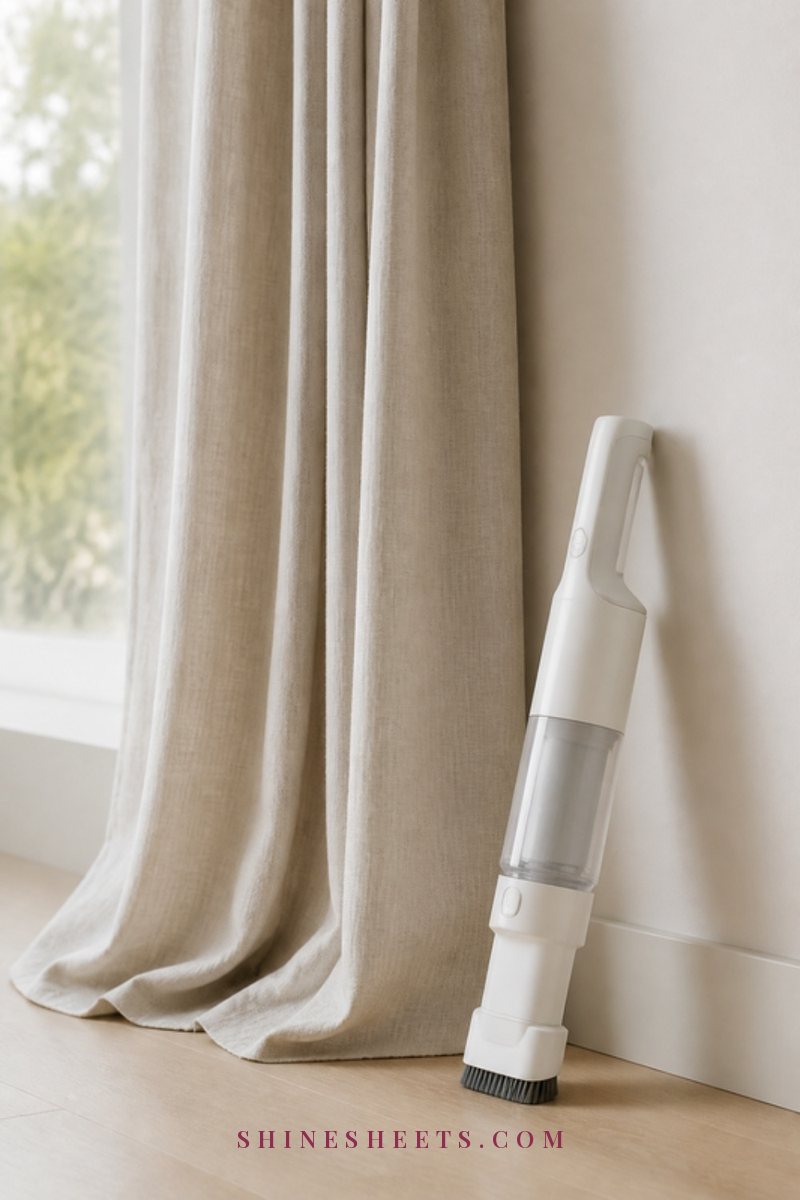
Set your vacuum to low suction (high suction can pull light fabrics into the nozzle) and attach the soft brush. Start at the top of each panel and work down in long, vertical strokes, overlapping slightly as you go. Pay extra attention to the top heading, the pleats and the hem, which collect the most dust.
For sheers and lightweight fabrics, hold the bottom of the panel gently taut with one hand, or place a piece of clean nylon mesh over the nozzle so the fabric doesn't get sucked in. Vacuum both sides if you can reach the back.
3. Lint Roll the Spots That Collect Hair
The lower third of a curtain is where pet hair, lint and fuzz gather. A lint roller works faster than a vacuum here, especially on velvet and textured weaves. Roll downward in one direction to avoid crushing the pile.
4. Steam Them in Place
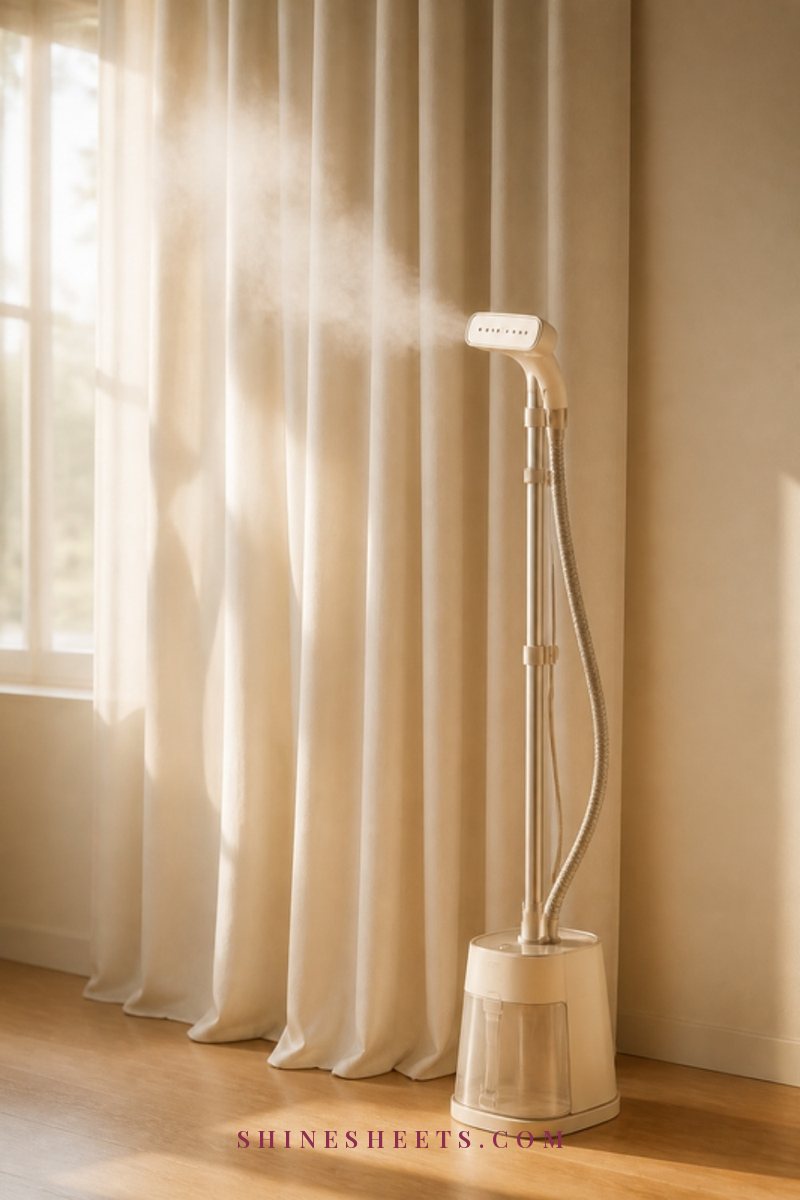
A handheld garment steamer is the single most useful curtain tool. Steam relaxes wrinkles, refreshes fabric, helps lift odors and makes curtains hang beautifully, all without taking them down.
- Fill the steamer with distilled or filtered water if you have hard water, so it doesn't leave mineral spots.
- Test on a hidden spot first.
- Hold the steamer a few inches from the fabric and work from top to bottom in slow vertical passes.
- Keep it moving; holding it in one spot can leave water marks.
- Steam velvet from the back only (if the label allows), and skip silk unless the label says steam is safe.
- Let the curtains dry fully, about 20 to 30 minutes, before closing them.
Safety note: steam is very hot, so keep your face and hands away from the nozzle, and unplug the steamer as soon as you're done.
5. Spot Clean Small Stains
For small marks, mix a few drops of mild detergent into a cup of cool water. Dip a clean white cloth, wring it out until just damp and blot the stain from the outside in. Then blot with a second cloth dampened with plain water to remove the soap, and finally with a dry towel. Never rub, which can spread the stain and damage the weave.
Always test on a hidden area first, and never mix cleaning products. In particular, never mix bleach with vinegar or ammonia, which releases dangerous fumes. Most curtain stains respond well to plain mild detergent anyway.
6. Freshen Smells
Open the windows on a dry, breezy day and let the curtains air for a few hours. Steaming also helps release trapped odors. For stubborn smells, a light mist of a fabric refresher from at least 12 inches away (tested on a hidden spot) can help, but airing and washing do far more than any spray.
When To Machine Wash Curtains
Many curtains are perfectly happy in the washing machine. It's usually time for a full wash when:
- They look gray or dingy even after vacuuming.
- There are stains or spots spread over a large area.
- They smell musty, smoky or like cooking even after airing.
- They hang in a kitchen or bathroom.
- Someone in your home has allergies.
Check the label first. Cotton, polyester and many linen and sheer curtains are usually machine washable. Velvet, silk, wool, lined and heavily pleated curtains usually aren't (more on those below).
How To Machine Wash Curtains Step by Step
- Take them down carefully. Use a sturdy step stool, and ask someone to hold the other end of heavy panels. Remove all hooks, rings and clips (put them in a bowl so nothing goes missing).
- Shake and vacuum first. Removing loose dust before washing keeps the water cleaner and the result brighter.
- Pre-treat stains with a little detergent and leave for 10 minutes.
- Wash in small loads. One or two panels at a time is enough. Curtains need room to move.
- Use a mesh bag for delicates. Sheers, lace and lightweight panels do best in a large mesh laundry bag.
- Choose cold water and a gentle cycle with a gentle, fragrance-free detergent. Cold water helps prevent shrinkage and fading.
- Skip the long spin. A low or short spin causes fewer creases.
- Remove promptly and shake out each panel right away.
- Hang to dry. The easiest trick of all: re-hang curtains while slightly damp. Their own weight pulls the wrinkles out as they dry, and you'll rarely need to iron.
If you're tackling curtains as part of a bigger laundry day, my laundry tips can help you plan the loads.
Cotton Curtains
Cotton is generally easy to wash, but it can shrink. Wash cold on a gentle cycle and avoid the dryer unless the label explicitly allows it (then use the lowest heat, and remove while still damp). Iron on medium from the back if needed, or simply steam once they're hung.
Polyester Curtains
Polyester is the most low-maintenance fabric. Wash cold or lukewarm on a gentle cycle, then tumble dry on low for a few minutes or hang to dry. Avoid high heat, which can set wrinkles permanently.
Linen Curtains
Linen softens with every wash and looks lovely with a little natural texture. Wash cold on a gentle cycle, skip fabric softener, and hang while damp. Some linen does shrink, especially the first time, so check the label carefully. If you want them extra smooth, steam once they're hung.
Sheer and Voile Curtains

Sheers are delicate but usually washable. Wash one panel at a time in a mesh bag on the delicate cycle with cold water. For very fine or vintage sheers, hand washing in a clean bathtub is gentlest: soak in cool water with a little mild detergent for 15 to 20 minutes, swish gently, rinse twice and press out water without wringing. Re-hang damp to dry. Fresh, bright sheers make a room look instantly lighter, and they pair beautifully with freshly cleaned glass; my guide on how to clean windows makes it an easy two-in-one job.
Curtains You Should Dry Clean
Some fabrics simply don't belong in water at home. Choose a professional cleaner for:
- Velvet: water can crush the pile and leave permanent marks. Between cleanings, vacuum and lint roll in the direction of the pile, and steam from the back if the label allows.
- Silk: it can water-stain, fade and lose its sheen.
- Wool and wool blends: risk of shrinking and felting.
- Lined curtains: the face fabric and lining often shrink at different rates, leaving the panel puckered or uneven.
- Interlined, pleated or pinch-pleat drapes: washing can ruin the structure and the stiffened heading.
- Anything labeled dry clean only, or with beading, embroidery or delicate trims.
Many dry cleaners offer take-down and re-hang services for heavy drapes, which is worth asking about if your curtains are large or tall.
How To Care for Blackout Curtains

Blackout curtains have a special coating, usually acrylic or foam, on the back that blocks light. That coating can crack, peel or flake if it's washed too hot or too roughly, so they need a lighter touch:
- Clean them mostly in place. Vacuum both sides with a soft brush and spot clean marks with mild soapy water.
- Machine wash only if the label allows, on a cold, gentle cycle with mild detergent, one panel at a time.
- Never tumble dry on heat. Hang to dry, ideally re-hanging them on the rod while slightly damp.
- Never iron the coated side. Steam lightly from the fabric side if needed.
- Avoid harsh stain removers and bleach, which can damage the coating.
If you notice the coating starting to crack or let light through, the curtains are reaching the end of their life, and gentler care can only slow that down. For styling ideas when it's time for new ones, my curtain ideas guide has plenty.
Kitchen and Bathroom Curtains
Curtains in these two rooms work harder than anywhere else. Kitchen curtains catch a fine layer of cooking grease that turns sticky and grabs dust, and bathroom curtains deal with steam every single day, which makes them prone to musty smells and mildew spots along the hem.
- Choose washable fabrics for these rooms, like cotton, polyester or linen blends, and keep velvet and silk for drier spaces.
- Wash more often, every three to six months, or sooner if they feel tacky or smell.
- Pre-treat greasy areas on kitchen curtains with a drop of mild detergent worked in gently with your fingertips, left for 10 minutes before washing.
- Keep bathroom curtains dry by running the extractor fan during and after showers and opening the window when you can.
- Act fast on mildew. Small spots on washable white cotton can often be lifted with a normal wash and a sunny line dry. For colored or delicate fabric, test any treatment on a hidden spot first, and never combine products.
Shorter café-style or tie-up curtains are easier to keep fresh in these rooms, because they stay further from steam and splashes.
Don't Forget Rods, Rings and Tracks
A clean curtain on a dusty rod will pick up grime the moment you hang it back. While the curtains are down (or once a season if they stay up):
- Dust the rod with a microfiber cloth, then wipe with a cloth dampened in warm, mildly soapy water. Dry immediately to prevent water spots or rust on metal.
- Clean rings and hooks by soaking them in warm soapy water for 10 minutes, then drying thoroughly.
- Vacuum curtain tracks with a crevice tool, then wipe with a damp cloth. A little silicone spray on a cloth (not sprayed directly) helps runners glide smoothly again.
- Check finials and brackets while you're up there and tighten anything loose.
If your rings are worn or noisy, a set of gold curtain clip rings is a simple swap that makes curtains easier to take down for the next wash, and gold accents look lovely against cream or blush fabric.
Curtain Fabric Care Table
Screenshot this for quick reference. The care label always comes first, but this is a reliable general guide.
| Fabric | Regular care | Deep clean | Dry | Avoid |
|---|---|---|---|---|
| Cotton | Vacuum, steam | Machine, cold, gentle | Hang damp | Hot water, hot dryer |
| Polyester | Vacuum, steam | Machine, cold or lukewarm | Low tumble or hang | High heat |
| Linen | Vacuum, steam | Machine, cold, gentle | Hang damp | Fabric softener, hot water |
| Sheer and voile | Shake, low-suction vacuum | Mesh bag, delicate, or hand wash | Hang damp | Wringing, crowded loads |
| Velvet | Lint roll, brush vacuum with the pile | Dry clean | Not applicable | Water, direct steam on the front |
| Silk | Gentle vacuum, airing | Dry clean | Not applicable | Water, sun, steam unless labeled safe |
| Wool blends | Brush vacuum, airing | Dry clean | Not applicable | Hot water, agitation |
| Lined or pleated | Vacuum, steam in place | Dry clean | Not applicable | Machine washing |
| Blackout (coated) | Vacuum both sides, spot clean | Cold gentle wash if label allows | Hang only | Dryer heat, ironing the coating, bleach |
How Often To Clean Curtains
- Every 1 to 2 weeks: a quick shake, especially in high-traffic rooms.
- Monthly: vacuum and lint roll.
- Every 2 to 3 months: steam to refresh and relax wrinkles.
- Every 3 to 6 months: wash kitchen and bathroom curtains, which collect grease and moisture.
- Every 6 to 12 months: wash or dry clean bedroom and living room curtains.
- Seasonally: clean rods, rings and tracks.
If anyone in your home has allergies or you have pets, lean toward the shorter end of each range.
How To Keep Curtains Fresh Longer
- Open windows regularly on dry days so air moves through the fabric.
- Wipe condensation off windows in cold months so hems don't stay damp.
- Keep a small gap between curtains and cold, damp glass if mildew is an issue.
- Dust higher surfaces first (shelves, window frames, sills) and the curtains last, so nothing falls onto them.
- Use the kitchen extractor fan every time you cook to reduce grease on nearby fabric.
- Rotate panels every few months if one side gets more sun, so fading is even.
- Freshen the whole room together: curtains, cushions and throws all hold dust and smells, and my guide on how to clean throw pillows and blankets covers the rest of the soft furnishings.
Mistakes To Avoid
- Washing lined or pleated curtains at home. Uneven shrinkage is almost impossible to fix.
- Using hot water. It causes shrinkage and fading in most curtain fabrics.
- Overloading the washer. Curtains need space, or they come out creased and not properly rinsed.
- Tumble drying on high. It can shrink natural fibers and damage blackout coatings.
- Leaving washed curtains in the drum. Creases set fast, and damp fabric can start to smell.
- Standing on a chair. Use a proper step stool, and get help with long or heavy panels.
- Skipping the test spot. Every new method or product deserves a quick hidden test first.
Final Thoughts
Learning how to clean curtains is one of those small home skills that makes an outsized difference. A quick monthly vacuum, a steam every few months and a gentle wash once or twice a year are usually all it takes to keep them soft, bright and fresh.
Pick the window you look at most, give its curtains ten minutes of care this week and notice how much lighter the whole room feels. Fresh curtains have a quiet way of making a home feel cared for.