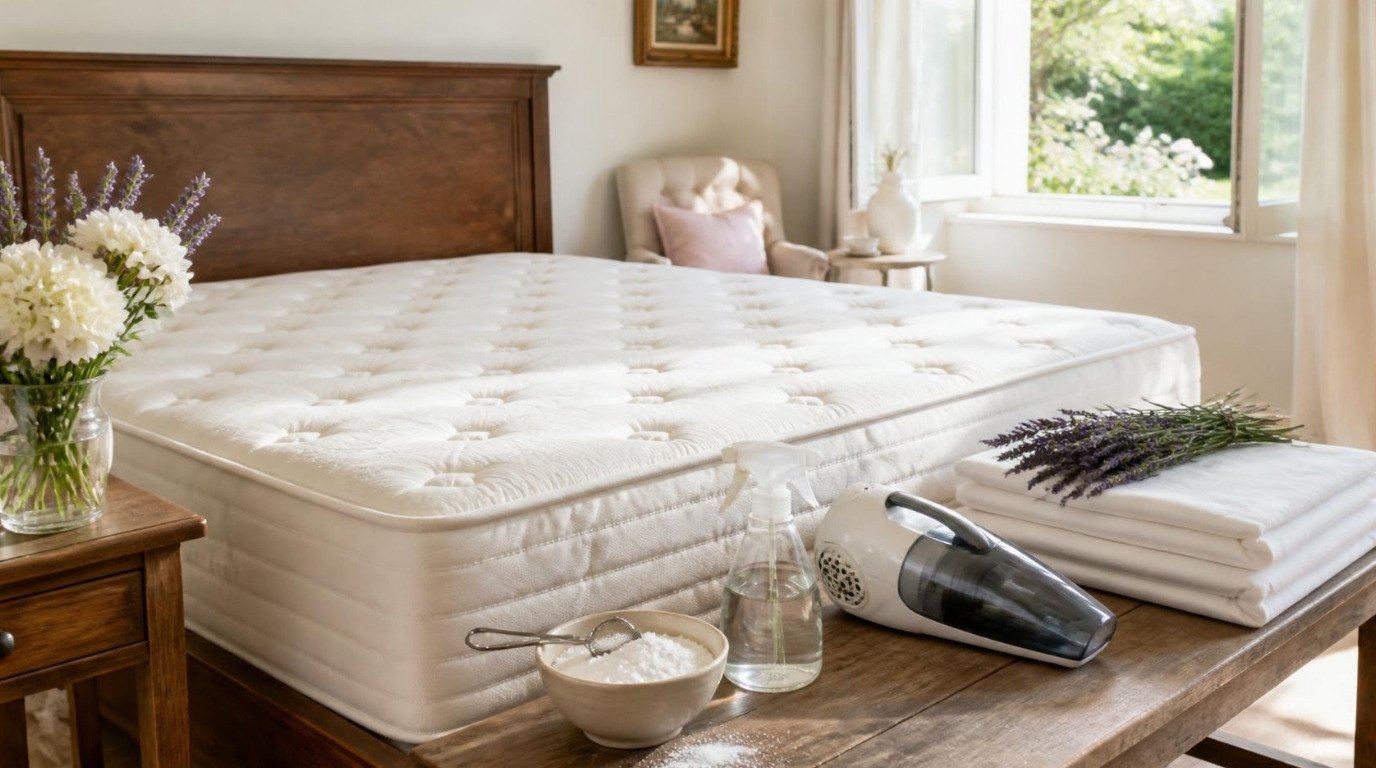
A clean mattress isn't about scrubbing. It's about a simple routine you repeat a few times a year: strip, vacuum, spot clean, freshen, air and protect. Most of the work is done by time and fresh air, not elbow grease, and once you know the order it takes far less effort than you'd expect.
Your mattress quietly collects dust, skin flakes, sweat and the occasional coffee drip, even when your sheets are spotless. You can't throw it in the washing machine, which is exactly why so many of us just… don't think about it. The good news is that a little attention goes a long way, and your bed will feel noticeably fresher afterward.
This guide shows you how to clean your mattress step by step, how to handle common stains like sweat, makeup and coffee with gentle methods, how often to do each task, and a simple four-times-a-year mattress calendar so it never turns into a giant project again.
It took me a while to accept that "out of sight" doesn't mean "clean." Once I started treating the mattress like part of the bedding routine, the whole bed felt more like a fresh hotel bed.
What You'll Need
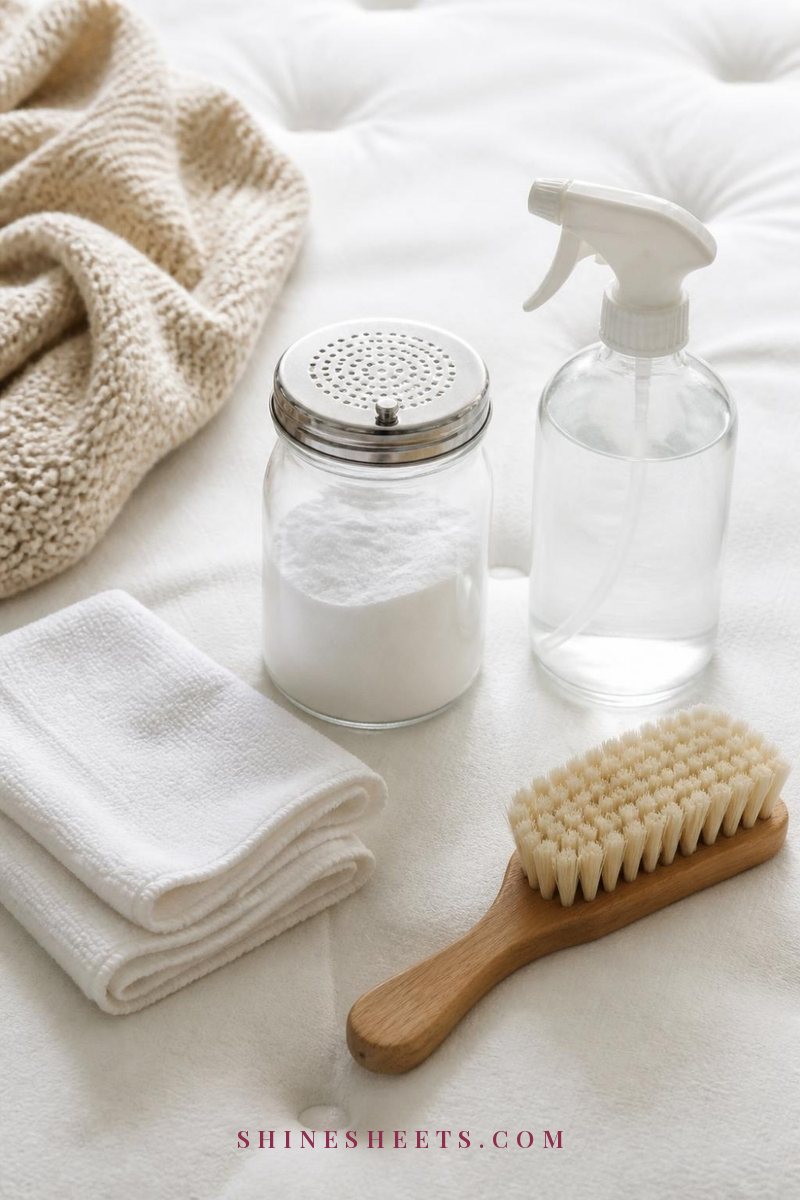
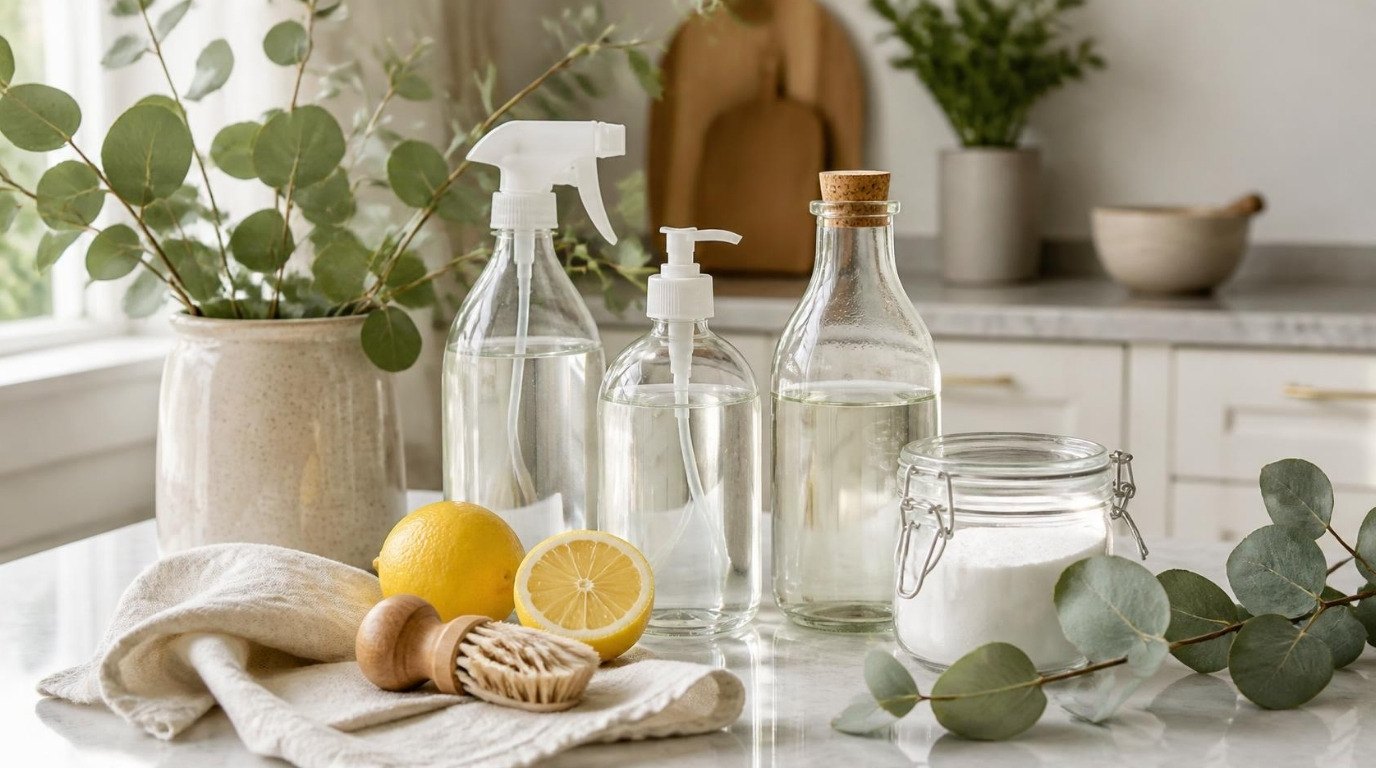
You don't need special machines or harsh chemicals. Most of this is already in your cupboard:
- A vacuum with an upholstery attachment, or a handheld vacuum
- Baking soda (a full box for a queen or king mattress)
- A fine sieve or a clean shaker jar for sprinkling
- Mild dish soap and cool water
- An enzyme stain remover for sweat and other organic stains
- A spray bottle for your homemade solutions
- A few white microfiber cleaning cloths (white so no dye transfers)
- A waterproof mattress protector for afterward
A cordless handheld vacuum makes the vacuuming step quick, especially around seams and corners, and it's handy for crumbs on the sofa too. For mixing gentle solutions, look for a glass spray bottle that you can label and reuse.
Before you start, check your mattress care label. Some memory foam and latex mattresses have specific instructions about moisture, flipping and cleaning products, and following them protects your warranty.
How To Clean Your Mattress in 7 Steps
Plan this for a dry day when you'll be out of the bedroom for a few hours. The actual hands-on time is about 45 minutes. The rest is waiting while baking soda and fresh air do their thing.
1. Strip the Bed and Wash Everything
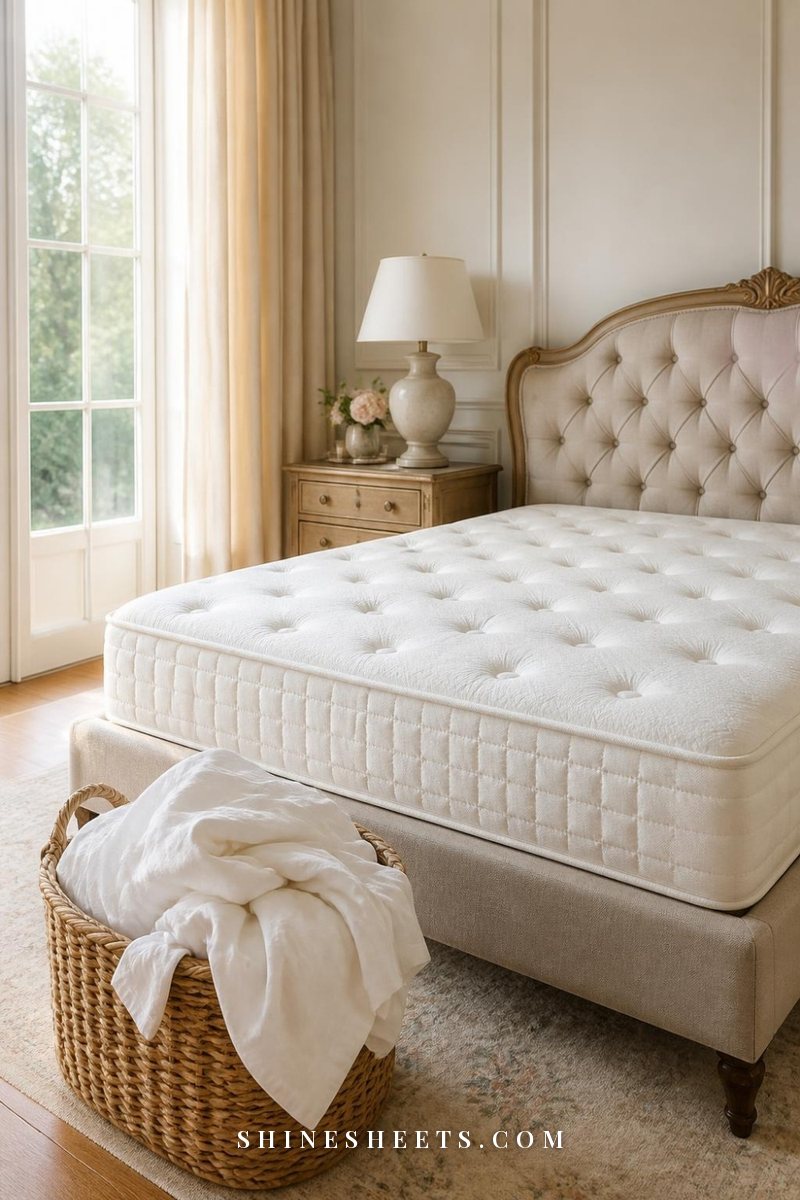
Take off all the bedding: sheets, pillowcases, duvet cover, mattress pad and any protector. Wash them on the hottest setting the care labels allow. While the laundry runs, you'll work on the mattress, so the timing works out nicely. While the machine is busy, my step-by-step guide on how to wash pillows of every type helps the whole bed feel fresh.
This is also a good moment to wash your pillows if they're machine-washable, or to fluff and air them by an open window. My laundry tips cover how to get sheets truly fresh without wearing them out.
2. Vacuum the Whole Surface
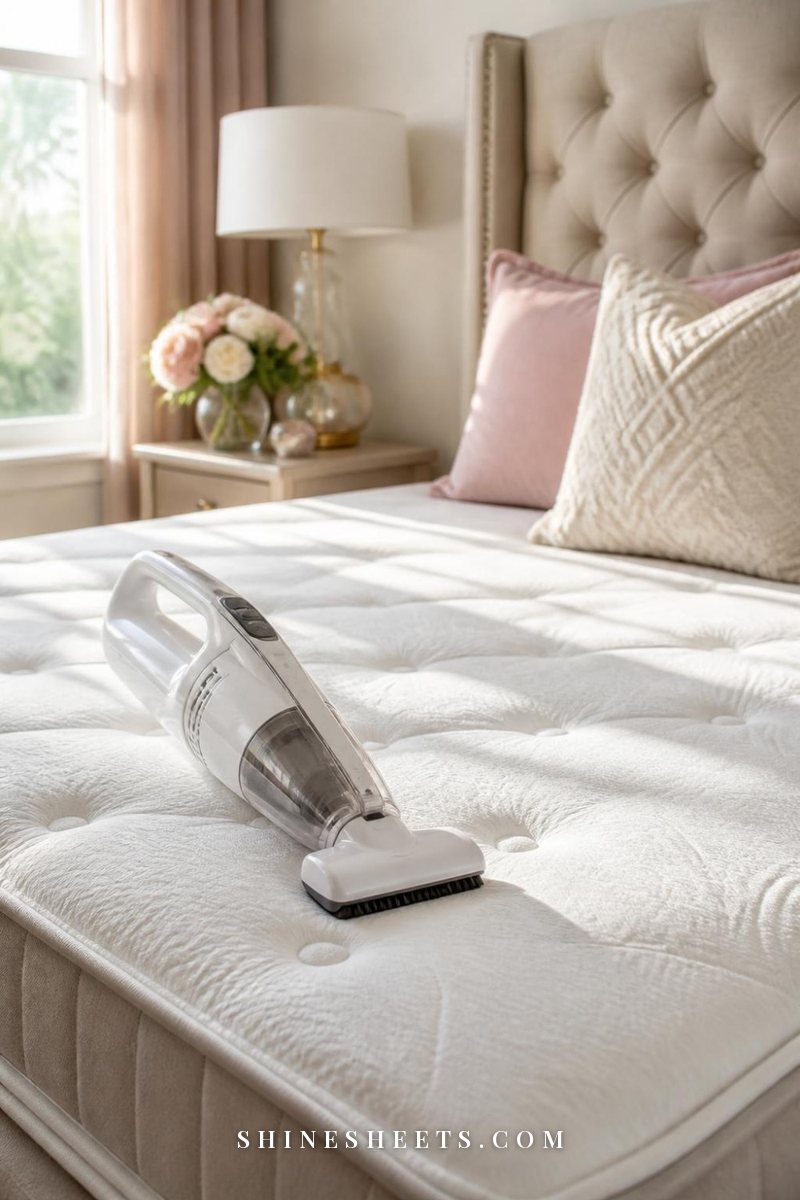
Using the upholstery attachment, vacuum the top of the mattress slowly in overlapping rows, the way you'd mow a lawn. Then go over the sides. Spend extra time on the seams, piping and any tufted buttons, because that's where dust and skin flakes collect.
Go slowly. A quick pass picks up the surface, but a slower one pulls up more of what's settled into the fabric. Aim for around five minutes per side for a queen mattress.
3. Spot Clean Any Stains
Now look for marks. The golden rules for mattress stains:
- Always test first on a hidden spot, like the side near the bottom corner.
- Blot, never rub. Rubbing pushes the stain deeper and can damage the fabric.
- Use as little liquid as possible. A mattress that gets soaked can take days to dry and may develop mildew. Lightly mist or dab, don't pour.
- Use cool water. Hot water can set protein stains like sweat and blood.
- Work from the outside in so you don't spread the stain.
For organic stains like sweat, an enzyme stain remover is the gentle workhorse. Mist it lightly, let it sit for the time on the label, then blot with a clean, damp white cloth and finally a dry one. The stain table below covers specific marks.
4. Deodorize With Baking Soda
Once any damp spots have mostly dried, sprinkle a thin, even layer of baking soda over the entire top of the mattress. A fine sieve makes this easy and stops clumps from forming. For a queen, a full box is about right.
Leave it for at least an hour, and longer if you can. Several hours, or even a full day if you have somewhere else to sleep, gives it more time to absorb odors and leftover moisture. Then vacuum it all up slowly, using the same overlapping rows as before.
If you'd like a light scent, you can mix a few drops of lavender essential oil into the baking soda before sprinkling. Keep it subtle, and skip it if anyone in your home is sensitive to fragrance or you have pets.
5. Air It Out (Sun If You Can)

Fresh air is the most underrated part of mattress care. Open the windows and let the room breathe for a few hours. If the weather is dry and you have the space, you can prop a lightweight mattress near a sunny window. Sunlight and moving air help dry out any remaining moisture and leave the bed smelling fresher.
Keep memory foam and latex out of long, hot, direct sun, since heat can affect some foams. Indirect light and a breeze are perfect.
6. Flip or Rotate
Before you remake the bed, rotate the mattress 180 degrees so the head end is now at the foot. This evens out wear and helps prevent dips where you usually sleep.
Only flip it over if it's a double-sided mattress. Many modern mattresses, including most memory foam and pillow-top styles, are designed with one sleeping side, so check the label before turning it upside down. Ask someone to help with this step, because mattresses are heavier and floppier than they look.
7. Protect It and Remake the Bed
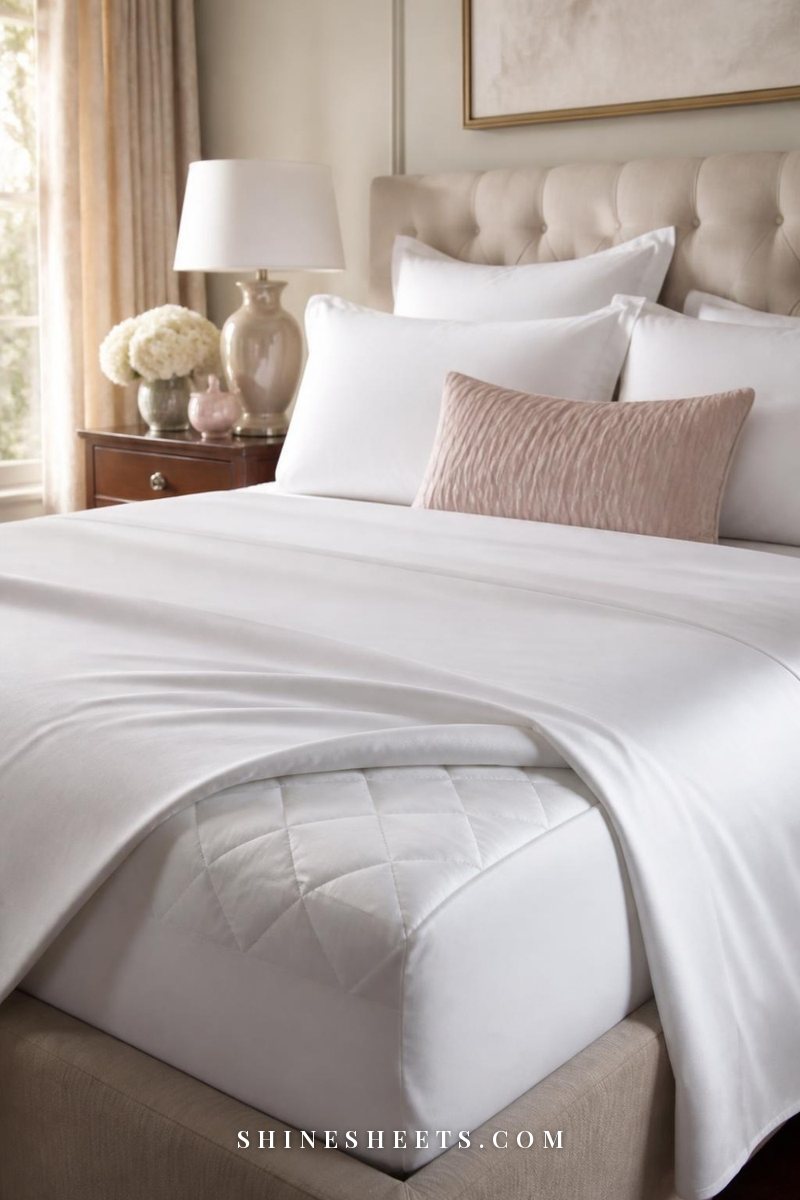
A mattress protector is the single best thing you can do to keep all your hard work intact. It catches sweat, spills and dust before they reach the mattress, and it goes in the washing machine with your sheets.
Look for a waterproof mattress protector that's quiet (no crinkly plastic feel), breathable and fitted like a sheet so it stays put. Then remake the bed with freshly washed sheets. If you want that hotel-fresh finish, my guide to creating a hotel bed at home walks you through the layering.
Mattress Stain Guide: What To Use and What To Avoid
Here's a quick reference for the most common mattress marks. Always test on a hidden spot first, use the smallest amount of liquid possible, and let the area dry completely before putting sheets back on.
| Stain | What to use | What to avoid |
|---|---|---|
| Sweat and yellowing | Enzyme stain remover, or a light mist of cool water with a drop of dish soap. Blot, then sprinkle baking soda once damp. | Hot water, soaking, scrubbing hard |
| Makeup and foundation | A small amount of mild dish soap in cool water on a white cloth. Blot gently, then rinse with a clean damp cloth. | Oily makeup removers, which can leave a ring |
| Coffee or tea | Blot up as much as possible right away. Then a mix of cool water and a little white vinegar, dabbed on and blotted dry. | Rubbing, hot water, heavy soaking |
| Blood | Cool water only at first, blotting from the outside in. Then an enzyme cleaner if a mark remains. | Warm or hot water, which sets the stain |
| Body lotion or oil | Sprinkle baking soda or cornstarch, leave 30 minutes to absorb, vacuum, then dab with mild soapy water. | Adding water first, which spreads the oil |
| Pet accidents or urine | Blot thoroughly, then an enzyme cleaner made for pet stains. Finish with baking soda once dry. | Ammonia-based cleaners, which can smell similar to pets and invite repeat accidents |
| Mystery spot | Start with the gentlest option: cool water and a drop of dish soap. Step up to enzyme cleaner if needed. | Bleach, or mixing any cleaning products together |
A quick safety note: never mix bleach with vinegar, ammonia or other cleaners, as the fumes can be harmful. Hydrogen peroxide can lighten some fabrics, so if you use it on a stubborn stain, test it first and keep it diluted. Open a window while you work, and keep children and pets out of the room until everything is dry.
If you prefer simple, gentle products around the house, my guide to natural cleaning covers how to use baking soda, vinegar and dish soap safely on other surfaces too.
Cleaning Tips for Different Mattress Types
The seven steps work for almost every mattress, but a few types need slightly different handling. Your care label always wins, but here's a general guide:
Memory Foam
Memory foam is like a sponge, so moisture is its biggest enemy. Use the lightest possible mist when spot cleaning, blot thoroughly and give it extra drying time before you remake the bed. Most memory foam mattresses shouldn't be flipped, but rotating head to foot is usually fine. Avoid long, hot, direct sun, and skip steam cleaners unless the manufacturer says they're safe.
Innerspring and Hybrid
These are the most forgiving. They handle vacuuming and spot cleaning well and tend to dry faster because air moves through the springs. Rotate every three months, and flip only if the mattress is labeled as double-sided. Pay extra attention to the seams and edges when vacuuming, where dust likes to gather.
Latex
Natural latex is fairly resistant to dust mites, but it doesn't love harsh cleaners or strong sunlight. Stick to mild dish soap and water for stains, use very little liquid, and dry it with good airflow rather than heat.
Pillow-Top
The soft top layer can hold onto moisture and body impressions. Vacuum it gently (use a lower suction setting if your vacuum has one) and never flip it, since the pillow-top is designed to stay on top. Rotating regularly is especially helpful here to keep the comfort layer even.
Not sure what type you have? Check the label sewn onto the side or the end of the mattress. It usually lists the materials and any cleaning do's and don'ts.
How Often To Clean Your Mattress
You don't need to deep clean every week. A light, steady rhythm is what keeps a mattress fresh:
- Weekly: Wash your sheets and pillowcases.
- Every 2 to 4 weeks: Wash your mattress protector.
- Monthly: A quick vacuum of the mattress top when you change the sheets, if you have time.
- Every 3 months: The full seven-step clean, plus a rotation.
- Right away: Any spill or accident, blotted as soon as possible.
If you have allergies, pets that sleep on the bed or tend to sleep warm, you may want to vacuum the mattress more often. It's a small habit that makes a noticeable difference. For a bigger-picture plan for the whole home, my cleaning schedule fits mattress care neatly into a weekly and monthly rhythm.
Your 4-Times-a-Year Mattress Calendar
Linking mattress care to the seasons makes it easy to remember. Screenshot this and set a reminder for the first weekend of each season.
| Season | Main tasks | Little extra |
|---|---|---|
| Spring | Full seven-step clean, rotate head to foot | Air the room for a full afternoon and wash pillows |
| Summer | Full clean with a longer baking soda rest, rotate | Dry the mattress near a sunny window (indirect light for foam) |
| Fall | Full clean, rotate, check the protector for wear | Wash or swap to warmer bedding and air out stored blankets |
| Winter | Full clean on a dry day, rotate | Open windows for at least 30 minutes, since closed-up rooms hold moisture |
Four times a year, roughly an hour of hands-on work each time. That's all it takes to keep your mattress feeling fresh between replacements.
A 15-Minute Mattress Refresh for Busy Weeks
Some weeks there's no time for the full routine, and that's completely fine. When you're changing the sheets anyway, this quick version keeps things fresh until your next seasonal clean:
- Strip the bed (2 minutes) and put the sheets straight into the wash.
- Quick vacuum (5 minutes) over the top surface and along the seams.
- Check for spots (3 minutes) and blot anything new with cool water and a drop of dish soap.
- Open the window (5 minutes or more) and leave the mattress bare while you do something else.
Then put the protector and fresh sheets back on. It's not a deep clean, but it stops dust and small marks from building up, which makes the full routine much quicker when its turn comes around.
Little Habits That Keep Your Mattress Fresh
A few everyday habits mean your quarterly cleans stay quick and easy:
- Let the bed breathe in the morning. Pull the duvet back for 20 to 30 minutes after you get up so overnight moisture can escape before you make the bed.
- Shower before bed when you can. Less sweat, oil and lotion end up on your sheets.
- Remove makeup before sleep. Your pillowcase and mattress will thank you.
- Keep drinks on the nightstand, not the bed. A tray on the bed for tea is lovely, but it's also the most common source of mattress spills.
- Freshen between washes. A light mist of lavender linen spray on your sheets (not soaking the mattress) makes the bed feel inviting between laundry days. Let it dry for a few minutes before lying down.
- Keep the room aired. A few minutes with the window open each day helps prevent musty smells.
These small things also support better rest. If you're working on your sleep, my sleep hygiene checklist pairs perfectly with a freshly cleaned bed.
When It's Time for a Professional or a New Mattress
Home cleaning handles everyday freshness, but some situations need more help:
- Signs of bed bugs (small rust-colored spots, tiny bites in lines, or live bugs in seams): call a professional pest control service rather than trying to treat it alone.
- Mold or mildew (dark spots, a musty smell that won't go away): a mattress with mold usually needs replacing, especially if anyone has allergies or breathing sensitivities.
- Large or deep stains that home methods haven't lifted: a professional upholstery cleaner can sometimes help.
- Sagging, lumps or waking up sore: no amount of cleaning will fix a worn-out mattress. Many last somewhere around seven to ten years, depending on the type and how it's used.
Final Thoughts
Learning how to clean your mattress is really about building a small, steady habit: strip, vacuum, spot clean, freshen, air and protect. Do it with the seasons and it never becomes a dreaded chore.
Pick a dry weekend, open the windows and give your bed a little care. There's something quietly lovely about slipping into fresh sheets on a mattress you know is clean, and that feeling is well worth an hour of your time.