Natural cleaning works best when you stop expecting one magic potion to do everything. Vinegar is brilliant on limescale and useless on grease. Baking soda scrubs beautifully but won't shine a window. Castile soap lifts everyday grime but leaves a film if you pair it with the wrong thing. Once you know what each simple ingredient is actually good at, a small kit handles almost the whole home.
There's also one part of natural cleaning that gets skipped far too often: safety. "Natural" doesn't mean "harmless," and a few common combinations – some involving the very products people mix to make them "stronger" – can release fumes you really don't want to breathe.
This guide covers natural cleaning that actually works: a simple starter kit, a "what cleans what" table, the 5 combos you should never mix, 12 easy swaps room by room and a short list of safety rules for homemade sprays. Nothing fancy, nothing complicated – just a calmer, simpler way to keep your home fresh.
What Natural Cleaning Can (and Can't) Do
Let's set honest expectations first, because that's what keeps you from getting frustrated and going back to a cupboard full of harsh sprays.
Natural cleaning is great at: everyday dirt, fingerprints, grease on counters, limescale, soap scum, smells, sticky floors, stained grout and most of the weekly wipe-down that keeps a home feeling fresh.
Natural cleaning is not the right tool for: disinfecting after raw meat juices, cleaning up after someone in the home has been sick, or dealing with mold that covers a large area. Vinegar and baking soda clean, but they aren't registered disinfectants. For those moments, use a registered disinfectant exactly as the label says (including how long the surface needs to stay wet), and call a professional for big mold problems.
Most homes need real disinfecting far less often than ads suggest. Cleaning – physically lifting dirt and grime away – does most of the work. That's where natural ingredients shine.
It also helps to think of natural cleaning as a habit rather than a product. Little and often – a quick wipe after cooking, a squeegee after a shower – means grime never builds up to the point where you feel you need something harsh.
Your Natural Cleaning Starter Kit
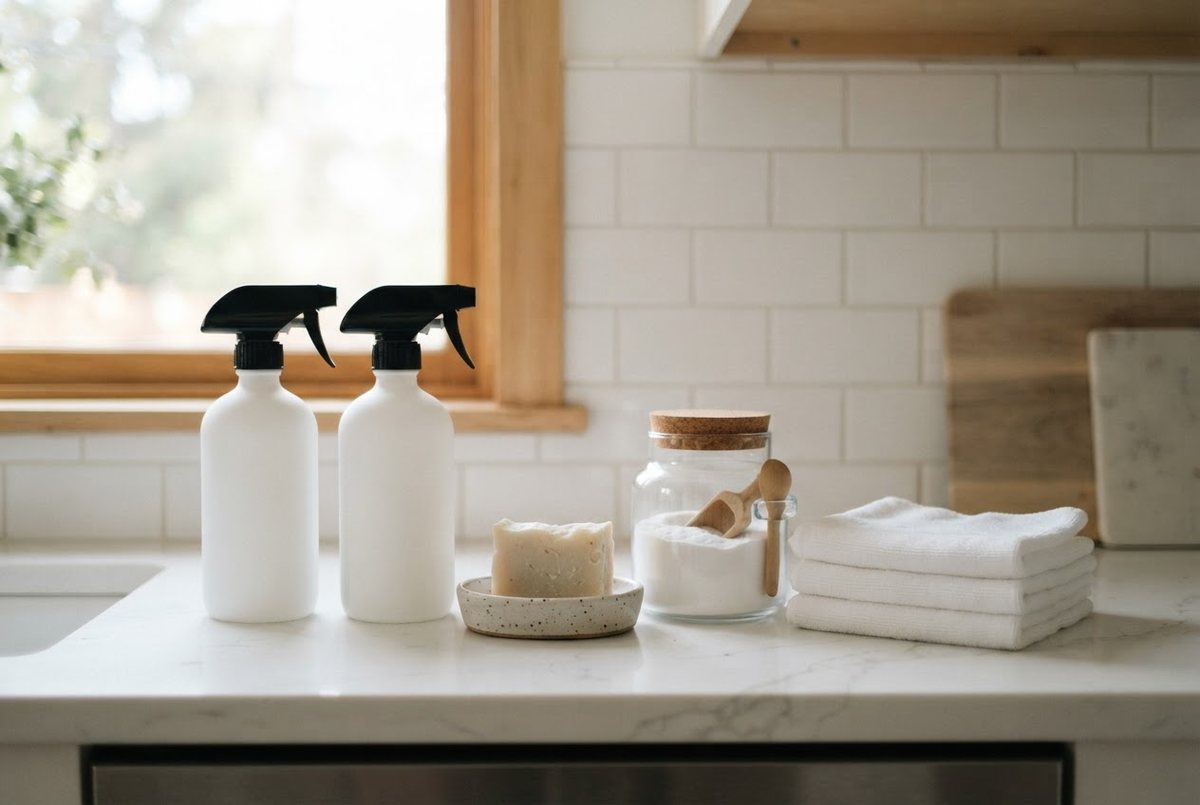
You don't need a dozen products. These few basics cover almost every room, and they look lovely lined up under the sink:
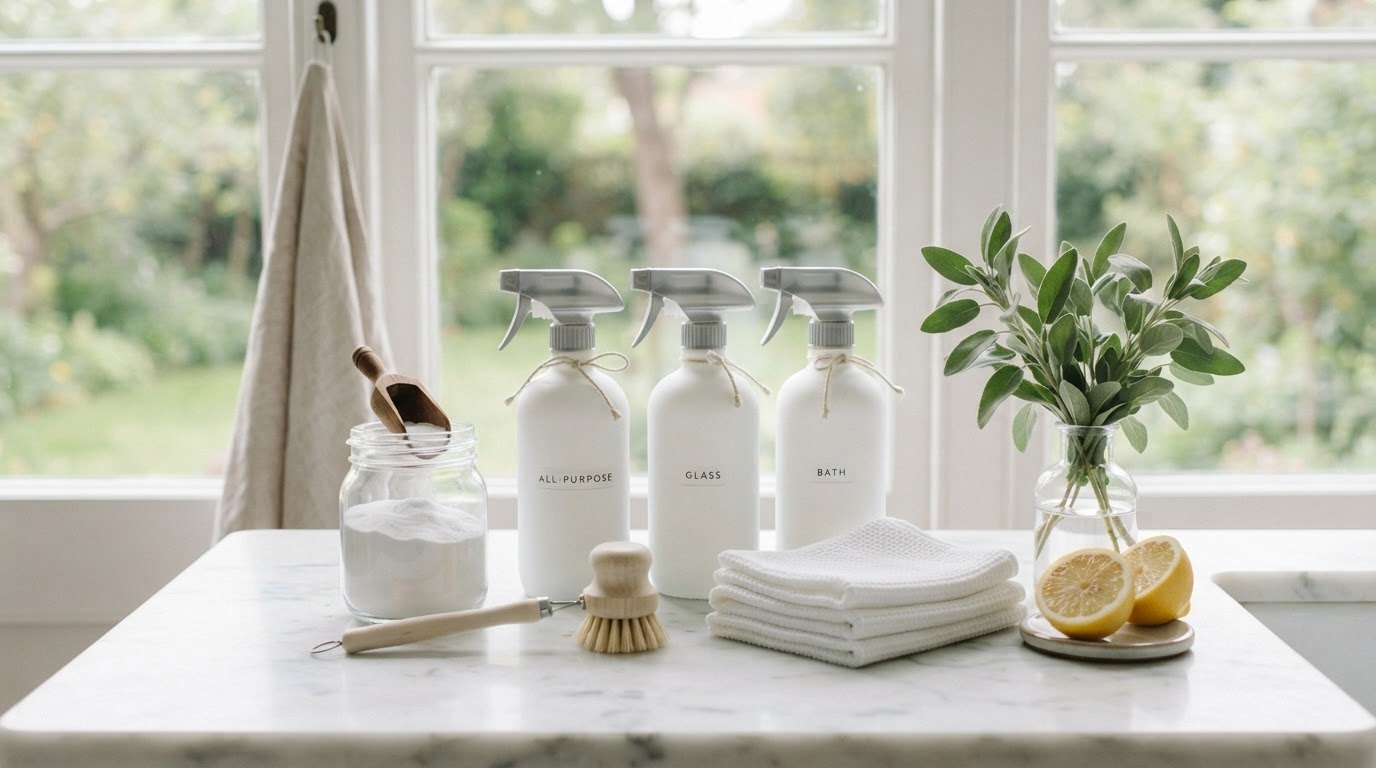
- Refillable spray bottles. Look for white glass spray bottles with sturdy trigger sprayers. Glass doesn't hold onto smells, and you'll want at least three: one for an all-purpose soap spray, one for a vinegar glass spray, one plain water bottle for rinsing.
- Liquid castile soap. A plant-based soap that cleans counters, floors and dishes. I'd choose an unscented castile soap so you can decide on a scent yourself (or skip it entirely).
- Baking soda. A gentle scrubbing powder and deodorizer. A large bag of baking soda kept just for cleaning is cheaper than lots of small boxes. Decant some into a shaker jar for easy sprinkling.
- Distilled white vinegar. For glass, limescale and soap scum. Regular 5% acidity is all you need.
- 3% hydrogen peroxide. For whitening grout and tackling mildew spots. Keep it in its original brown bottle – light breaks it down.
- Microfiber cloths. These do a huge share of the work. A pack of white microfiber cleaning cloths picks up dust and grime with just water, and you can see at a glance when they need a wash.
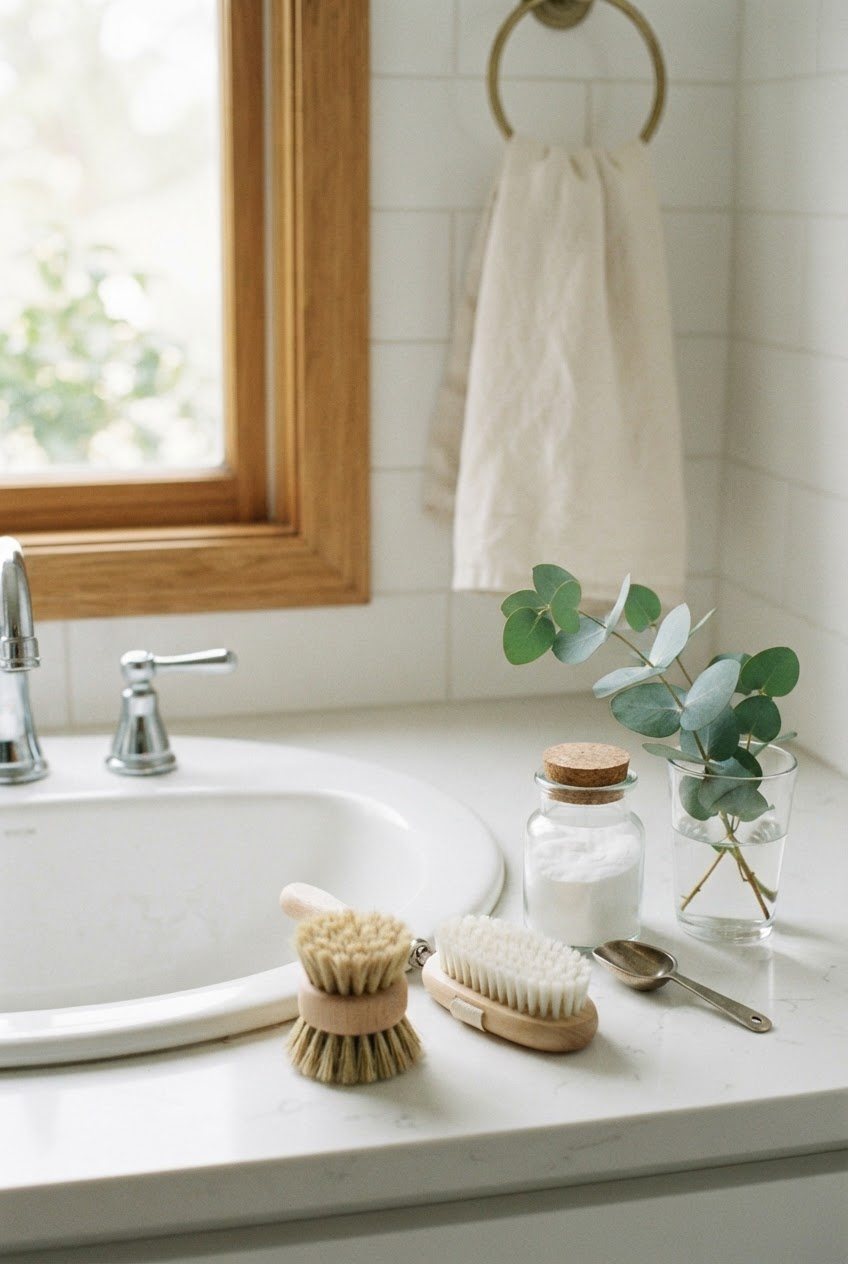
- A few brushes. A cream scrub brush set with a large brush, a small detail brush and a bottle brush covers grout, sinks, tile corners and narrow vases.
- A caddy to carry it all. A white cleaning caddy with a handle means you can move room to room without making ten trips back to the cupboard.
Add a roll of waterproof labels or a marker and you're set. Every homemade spray gets labeled with what's inside and the date – more on why in the safety section.
What Cleans What: A Quick Reference Table
This is the table I wish I'd had when I first switched to simpler cleaning. Screenshot it and keep it on your phone, or tape a copy inside the cupboard door.
| Ingredient | Best for | Never use on | Simple way to use it |
|---|---|---|---|
| White vinegar | Glass, limescale on taps and kettles, shower screens, soap scum, hard-water spots | Marble, granite and other natural stone; waxed or unsealed wood; cast iron; electronic screens | 1 part vinegar to 1 part water in a labeled spray bottle |
| Baking soda | Scrubbing sinks, tubs and stovetop grime; deodorizing fridges, bins and carpets | Aluminum pans (can discolor), gold-plated finishes, high-gloss or delicate surfaces | Paste of 3 parts baking soda to 1 part water, or sprinkle dry and scrub with a damp brush |
| Castile soap | Counters, sealed floors, dishes, painted walls, everyday wipe-downs | Mixed with vinegar (it separates into a greasy film); glass and windows (streaks) | 1 teaspoon in 2 cups of warm water in a spray bottle |
| Hydrogen peroxide (3%) | Whitening grout, toilet bowls, mildew spots, white sink stains | Colored fabrics and carpets (it can bleach them); mixed with vinegar in one bottle | Spray straight from a dark bottle, leave 10 minutes, scrub and rinse |
One thing you'll notice: plain warm water and a good microfiber cloth handle more than you'd expect. For dusting, fingerprints on doors and light kitchen splashes, that's often all you need.
5 Combos Never To Mix
This is the most important section of the whole article. Some of these combinations are common mistakes made by people trying to clean "extra well." Mixing them – in a bottle, in a bucket or even one right after the other on the same surface – can create irritating or harmful fumes.
| Never mix | What happens | Do this instead |
|---|---|---|
| Bleach + vinegar | The acid in vinegar makes bleach release chlorine gas, which irritates eyes, nose, throat and lungs | Choose one. If you've used bleach, rinse the surface thoroughly with water and air the room before anything else touches it |
| Bleach + ammonia | Produces chloramine vapors, which are seriously harmful to breathe. Ammonia hides in some glass cleaners and is also present in urine, so be careful with bleach in toilets and litter areas | Read labels before combining anything. Never pour bleach into a toilet that still has another cleaner in it |
| Bleach + rubbing alcohol | Can form chloroform and other harmful compounds | Use one product per job and rinse in between |
| Hydrogen peroxide + vinegar in one bottle | Combined and stored, they form peracetic acid, which is corrosive and can irritate skin, eyes and lungs | Keep them in separate bottles. If you use both on a surface, wipe and rinse with water between them |
| Two different drain cleaners | Products can react with each other, causing heat, splattering or fumes in a small, enclosed pipe | Use one product, follow the label, and never follow a commercial drain cleaner with vinegar or another product – call a plumber instead |
A small myth while we're here: baking soda and vinegar together aren't dangerous, but they mostly cancel each other out. The fizz looks impressive and is fun, but what's left is largely salty water. Use them separately and you'll get much better results.
A kind safety note: if anyone breathes in fumes from a mix and feels unwell, get them into fresh air right away. In the US, Poison Control is available at 1-800-222-1222 and online at poison.org. For trouble breathing or anything that feels serious, call emergency services.
12 Simple Natural Cleaning Swaps That Actually Work
Here's how the kit comes together around the home. Each swap replaces a single-purpose product with something you already have on the shelf.
1. All-Purpose Spray for Counters
Mix 1 teaspoon of castile soap into 2 cups of warm water in a spray bottle. Spray, wipe with a damp microfiber cloth, then buff dry with a second cloth. It's safe for sealed stone counters too, which vinegar is not. Make a fresh batch every couple of weeks.
2. Streak-Free Glass Spray
Equal parts white vinegar and water. Spray onto the cloth rather than the glass (less drip, fewer streaks), wipe in a "Z" pattern from top to bottom, then buff with a dry microfiber cloth. If you see streaks the first few times, it's usually old wax or residue from a previous cleaner – it clears after two or three cleanings.
3. Baking Soda Paste for Sinks and Tubs
Mix 3 parts baking soda with 1 part water until it feels like toothpaste. Spread it over the sink or tub, leave for 10 minutes, scrub with a brush and rinse well. For a stubborn ring, add a drop of castile soap to the paste.
4. Limescale Off Taps
Soak a paper towel or cloth in undiluted white vinegar, wrap it around the tap base and leave it for 30 to 60 minutes. Remove, scrub gently with an old toothbrush, rinse and dry. Skip this if your taps sit on natural stone – vinegar drips can etch it.
5. Kettle Descaling
Fill the kettle halfway with equal parts water and white vinegar, let it sit for an hour (no need to boil), pour out and rinse. Then boil a full kettle of plain water once or twice and pour it away so no vinegar taste lingers.
6. Grout Whitening
Spray 3% hydrogen peroxide directly onto grout lines, leave for 10 minutes, scrub with a small stiff brush and rinse with water. For heavy stains, apply baking soda paste first, then spray peroxide over it – this pair is fine together. Open a window while you work.
7. Shower Glass and Soap Scum
Spray the vinegar glass mix on shower glass and tiles, leave for 5 minutes, then wipe. For thick buildup, warm the vinegar slightly first (it works faster), and keep a squeegee in the shower so you can wipe the glass in 20 seconds after each use. Prevention beats scrubbing.
8. Microwave Steam Clean
Place a microwave-safe bowl of water with a few lemon slices (or a splash of vinegar) inside and heat it for about 3 minutes. Leave the door closed for another 5 minutes so the steam loosens splatters, then carefully remove the bowl (it'll be hot) and wipe everything with a damp cloth.
9. Fridge Deodorizer
Leave an open jar of baking soda on a back shelf and swap it every three months. When you clean the shelves, use the castile soap spray and a soft cloth rather than anything scented, so nothing transfers to your food.
10. Floors Without Sticky Residue
For sealed floors, add 1 tablespoon of castile soap to a bucket of warm water. Mop with a well-wrung mop – floors should dry within a few minutes. Too much soap is the main reason floors feel sticky, so start with less. On hardwood, follow your floor's care instructions; vinegar can dull some finishes over time.
11. Gentle Laundry Helpers
Half a cup of baking soda in the drum freshens musty towels. A splash of white vinegar in the fabric softener compartment helps rinse out detergent residue (check your washing machine manual first). Never add vinegar in the same cycle as bleach. For more fabric-saving habits, my laundry tips cover washing, drying and stain basics.
12. Fresh Air Instead of Air Freshener
Open windows for 10 minutes each morning, even in winter, and sprinkle baking soda on carpets and upholstery 20 minutes before vacuuming. If you want a scent, a simmer pot on the stove is a gentle option – I've gathered some lovely ones in my simmer pot ideas. Be careful with essential oil diffusers if you have pets; cats in particular can be sensitive, so ask your vet first.
Safety Rules for Homemade Cleaning Sprays
Simple ingredients still deserve respect. These rules keep natural cleaning calm and safe for everyone in your home:
- One mix per bottle. Never pour leftovers from one spray into another.
- Label everything. Write what's inside and the date on every bottle. Unlabeled bottles are how accidental mixing happens.
- Ventilate. Open a window or switch on the fan, especially in small bathrooms, even with gentle ingredients.
- Keep sprays out of reach. Store all cleaners – natural or not – high up or in a locked cupboard away from children and pets.
- Never use vinegar or lemon on natural stone. Acids etch marble, granite, limestone and travertine. Use the castile soap spray instead.
- Patch test first. Try any new mix on a hidden spot and wait a day before cleaning the whole surface.
- Wear gloves for longer jobs. Vinegar and peroxide can dry out or irritate your hands, especially in winter.
- Make small batches. Mixes with water don't last forever. Make what you'll use in two weeks.
- Store peroxide in the dark. Keep it in its original brown bottle and use a spray nozzle that screws straight on.
- Rinse between products. If a surface has had a store-bought cleaner on it, rinse it with water before anything else touches it.
4 Natural Cleaning Mistakes To Avoid
Most frustration with natural cleaning comes from a handful of small habits. Fix these and everything starts working better:
- Using too much product. More castile soap doesn't mean cleaner – it means residue, streaks and sticky floors. Start with the amounts in this guide and only add more if you really need it.
- Not giving it time. Natural ingredients often need a few minutes to loosen grime. Spray, wait 5 to 10 minutes, then wipe. Scrubbing straight away just tires your arms.
- Using dirty cloths. A grimy cloth moves dirt around instead of lifting it. Rinse cloths often while you clean, and wash microfiber in warm water without fabric softener, which clogs the fibers.
- Expecting one mix to do everything. Vinegar won't cut grease and soap won't remove limescale. Match the ingredient to the job using the table above, and you'll rarely need anything stronger.
A Gentle Weekly Natural Cleaning Rhythm
Natural cleaning feels easiest when it's a rhythm rather than a marathon. Here's a light weekly flow that keeps things fresh without taking over your weekend:
- Daily (5 minutes): wipe kitchen counters with the castile spray, squeegee the shower, open a window.
- Twice a week: quick bathroom sink and toilet clean, sweep or vacuum high-traffic floors.
- Once a week: mop floors, clean glass and mirrors with the vinegar spray, wash microfiber cloths, change towels.
- Once a month: descale the kettle and taps, whiten grout, refresh the fridge baking soda, make new spray batches.
If you like to bundle chores into one calm session, my Sunday reset routine slots these in nicely. And when guests are on their way and you only have an hour, the pre-guest cleaning checklist tells you exactly what to tackle and what to skip. For a tidier space under the sink, a few ideas from my kitchen organization guide help keep the kit within easy reach.
Final Thoughts
Natural cleaning doesn't have to be complicated or perfect. A few good basics, a clear sense of what each one does and a healthy respect for the combos that should never meet will carry you through almost every room.
Start with one swap this week – maybe the all-purpose spray or the glass mix – and let the rest follow when it feels easy. A fresh home made with simple, honest ingredients is a quietly lovely thing to come back to.