Fresh sheets don't come from more detergent, hotter water or a stronger scent. They come from the opposite: the right temperature for the fabric, a lighter hand with the soap, a proper rinse and drying everything all the way through. Most "my sheets feel stiff and smell a little off" problems are really "too much product, too little rinsing" problems.
The good news is that once you know what each piece of bedding wants, washing it becomes one of those quiet little routines that takes almost no thought. And there are few small pleasures quite like slipping into a bed that smells like nothing but clean cotton.
This guide covers how to wash sheets, pillowcases, duvet covers and the duvet itself: how often, what temperature for every fabric, how much detergent, what to do about yellowing and makeup marks, how to wash a bulky comforter without ruining it, and how to dry everything soft without touching an iron. There's also a bedding wash cheat sheet table you can screenshot and keep by the machine, plus a simple weekly rhythm so you never have to wonder when you last changed the bed.
Grab your evening tea, and let's make your bed feel brand new again.
How Often To Wash Sheets, Pillowcases and Duvets

Every night you leave behind sweat, skin cells, body oil and whatever was on your skin (night cream, lotion, hair oil). None of it is visible at first, which is why "I'll wash them this weekend" so easily turns into three weeks. Here's a realistic rhythm:
- Sheets (fitted and flat): once a week is the gold standard. Every two weeks is fine if you shower before bed, sleep in pajamas and live in a cool climate.
- Pillowcases: once a week at minimum. If you have acne-prone or combination skin like mine, swap them twice a week. Pillowcases sit right against your face, hair products and night skincare, so they get grimy faster than anything else on the bed.
- Duvet cover: every one to two weeks. If you sleep without a flat sheet, treat it like a sheet and wash it weekly.
- Duvet or comforter insert (with a cover): two to three times a year.
- Comforter without a cover: roughly once a month, which is honestly a strong argument for getting a cover.
- Mattress protector: every one to two months, and right away after any spill or sick day.
Wash more often when you've been sick, after a hot and sweaty stretch, if pets sleep with you, or if you go to bed with self-tanner or a heavy body oil. Pillows themselves need their own routine too, and I've covered every type in my guide on how to wash pillows.
Your Bedding Wash Cheat Sheet
This is the table I'd want taped inside the laundry cupboard. Screenshot it and you'll never have to look up a temperature again. Always let the care label have the final word, but these defaults work for most bedding:
| Item | How often | Water temperature | Cycle | How to dry |
|---|---|---|---|---|
| Cotton sheets (percale) | Weekly | Warm; hot after illness | Normal | Medium heat or line dry |
| Cotton sateen sheets | Weekly | Warm | Gentle or permanent press | Low heat, remove promptly |
| Linen sheets | Weekly | Cool to warm | Gentle | Line dry or low heat, slightly damp |
| Silk pillowcases and sheets | Weekly (pillowcase twice) | Cold | Hand wash or delicate, in a mesh bag | Air dry flat, out of the sun |
| Microfiber sheets | Weekly | Cold to warm | Normal or gentle | Low heat, no softener |
| Flannel sheets | Weekly | Cold to warm | Gentle | Low heat, take out while barely damp |
| Pillowcases (cotton) | 1–2 times a week | Warm | Normal | Medium heat |
| Duvet cover | Every 1–2 weeks | Match the fabric | Normal, closed and inside out | Medium or low heat |
| Down or feather duvet | 2–3 times a year | Warm | Gentle or bulky, extra rinse | Low heat with dryer balls, 2–4 hours |
| Synthetic (down-alternative) duvet | 2–3 times a year | Warm | Gentle or bulky, extra rinse | Low heat with dryer balls, 1–3 hours |
| Mattress protector | Every 1–2 months | Warm | Gentle | Low heat (waterproof backing hates high heat) |
One thing the table can't tell you: "warm" on most machines means around 30–40°C (roughly 85–105°F), and "hot" is usually 50–60°C (120–140°F). Hot water is lovely for killing germs and lifting body oil, but it also fades colors and wears fibers faster, so I'd save it for white cotton and for weeks when someone's been ill.
Start With the Care Label (Yes, Really)
I know. Nobody reads the care label until something has shrunk. But bedding labels are surprisingly useful, because two sheet sets that look identical can be completely different fabrics underneath. Here's how to read the important bits:
- The tub with dots: one dot means cold (about 30°C/85°F), two dots warm (40°C/105°F), three dots hot (50°C/120°F) and up. A hand in the tub means hand wash only.
- Lines under the tub: one line means permanent press, two lines means gentle or delicate. No line means a normal cycle is fine.
- The triangle: an empty triangle means any bleach is okay, a triangle with diagonal lines means oxygen (non-chlorine) bleach only, and a crossed-out triangle means no bleach at all.
- The square with a circle: that's tumble drying. Dots inside the circle show the heat level, and a cross through it means skip the dryer.
If the label has long since been cut off (we've all done it), go by feel: cool, smooth and crisp is usually percale cotton; silky with a slight sheen is sateen; slightly rough with natural creases is linen; very smooth, light and almost slippery is microfiber.
The Right Water Temperature for Every Sheet Fabric
Temperature is where most bedding damage happens: too hot and sheets shrink, too cold and they never quite feel clean. Here's what each fabric prefers.
Cotton Percale and Sateen
Cotton is the most forgiving bedding fabric. Percale (crisp and matte) handles warm water and a normal cycle every week without complaint, and white percale can go hot when you want a deeper clean. Sateen has a softer, shinier weave that can pill or snag, so wash it warm on a gentle or permanent press cycle and pull it out of the dryer as soon as it's done. If you're thinking of upgrading, look for long-staple cotton and a percale weave if you sleep warm, sateen if you love that silky drape.
Linen
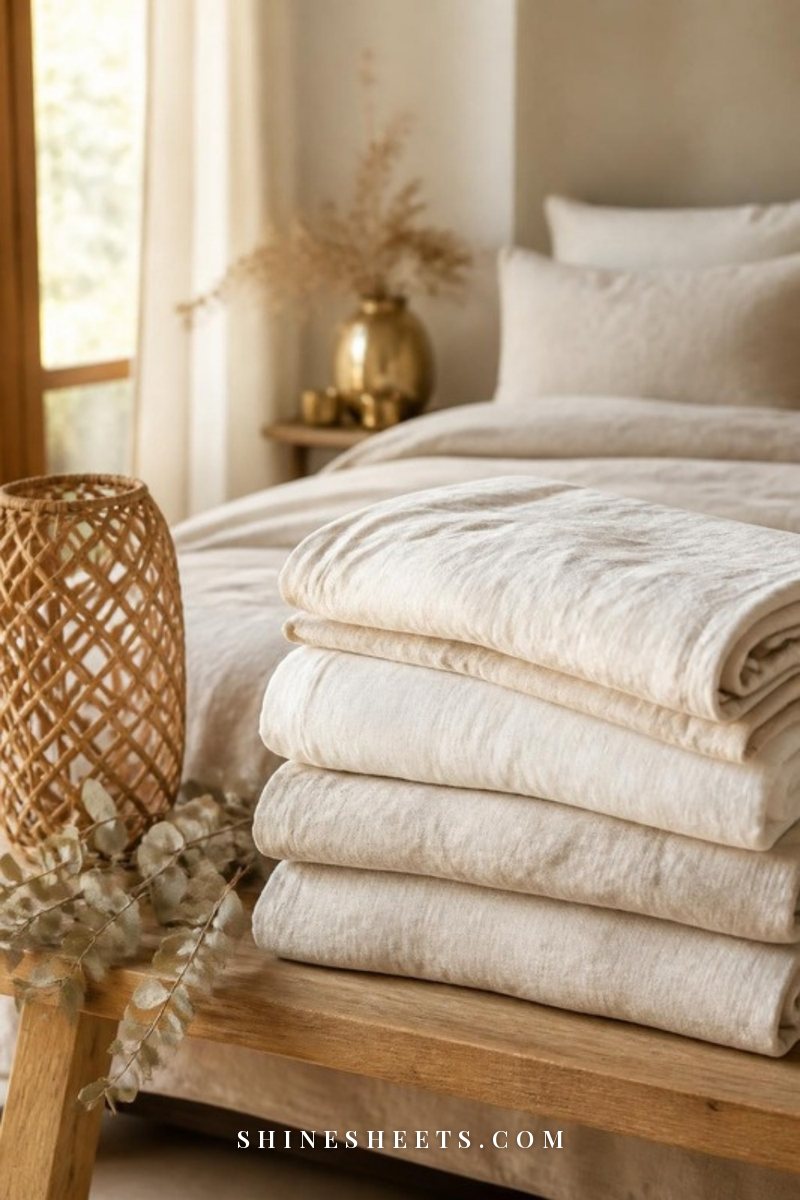
Linen loves cool to warm water (no more than 40°C/105°F), a gentle cycle and plenty of room in the drum. It actually gets softer with every wash, so the slightly stiff feel of new linen is temporary. Skip chlorine bleach entirely, since it weakens the fibers, and avoid overdrying, which makes linen brittle and extra wrinkly. Take it out while it's still a tiny bit damp and let it finish on the bed or a drying rack. If you're shopping for a set, I'd choose a stonewashed linen sheet set in a soft cream, because stonewashing gives you that lived-in softness from the very first night.
Silk
Silk wants cold water, a pH-neutral or silk-specific detergent and as little agitation as possible. Hand wash it, or use the delicate cycle with the pillowcase zipped into a mesh bag. Never wring it; roll it in a towel to press out the water and dry it flat away from direct sun. If you're still deciding whether silk is worth the extra care, my post on silk pillowcase benefits walks through what it can and can't do for your skin and hair.
Microfiber
Microfiber is polyester, which means it holds onto body oil more stubbornly than cotton and hates high heat. Wash it cold to warm, use a little less detergent than you think and skip fabric softener completely (more on that below). Dry it on low; high heat can make the fibers feel rough and shiny over time.
Flannel
Flannel sheets feel heavenly in winter, but they pill and shrink easily. Wash them cold to warm on gentle, ideally on their own, so rough items like jeans or towels don't rub against the fluffy surface. Dry on low and take them out while they're barely damp.
How To Wash Sheets: Step by Step
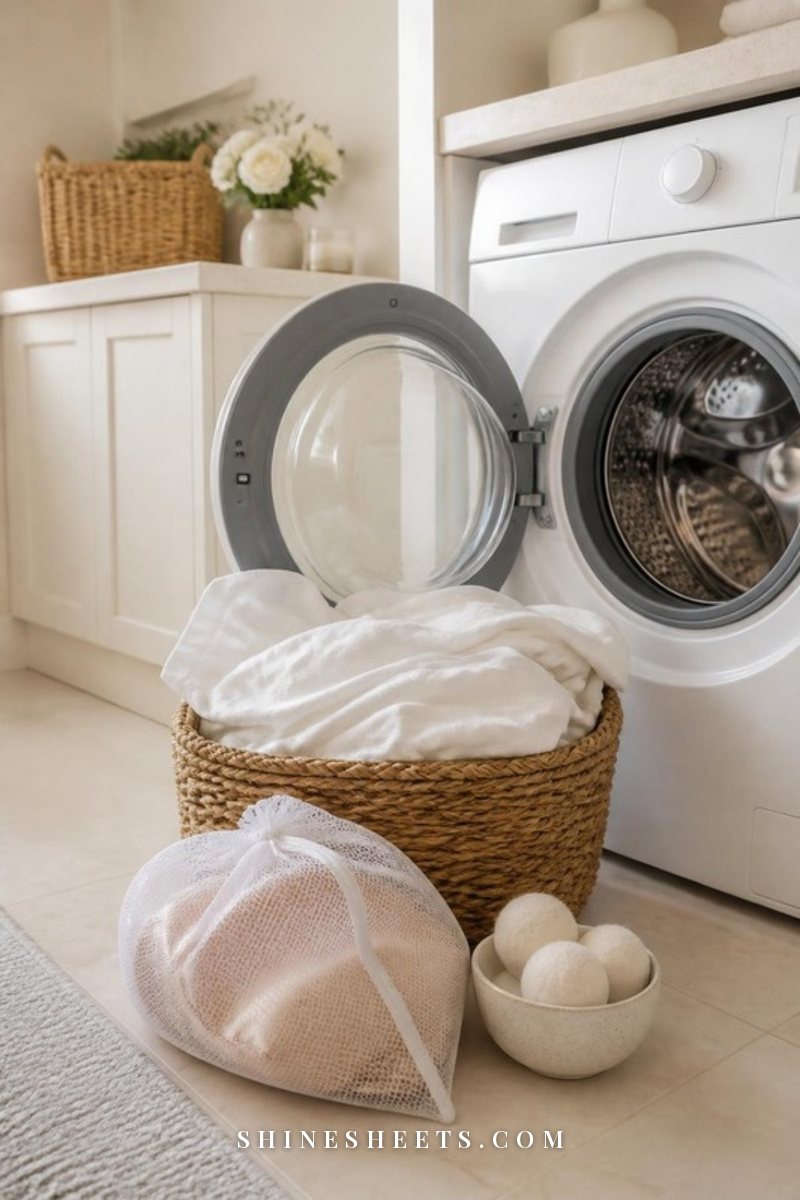
Once you know your fabric, the actual washing is simple. These eight steps work for a normal weekly load of cotton or linen sheets:
- Strip the bed and give everything a shake. Do it outside or over the bath if you can, so hair, crumbs and stray earrings don't end up in the drum.
- Check for stains first. Look at the pillowcases and the top edge of the flat sheet, where face and hands touch. Pretreat any marks now (see the stain section below), because a dryer cycle can set them for good.
- Close everything up. Zip or button the duvet cover closed and turn it inside out. Otherwise smaller items crawl inside it and come out damp and wrinkled.
- Wash bedding on its own. Towels shed lint onto sheets and their rough texture wears smooth weaves down. Wash towels in a separate load.
- Don't overload. Sheets need room to move. A queen set plus two pillowcases is a full load in most machines; the drum should be about three-quarters full at most.
- Measure the detergent. Use the line for a normal load, not a heavy one, even if the bedding feels heavy. Delicate pillowcases can go in a mesh bag.
- Pick the temperature and cycle for the fabric. Check the cheat sheet above. Add an extra rinse if you have sensitive skin or hard water.
- Move everything to the dryer or line right away. Sheets left sitting wet in the drum for hours get that sour, musty smell fast.
Fitted sheets that twist into a giant ball in the drum? Before washing, tuck the elastic corners into each other so the sheet stays flatter, or drop a mesh bag with the pillowcases into the same load to break up the tangling. For pillowcases and anything delicate, a set of white mesh laundry bags in a few sizes keeps them from wrapping around the agitator.
Detergent, Fabric Softener and the Vinegar Question
The instinct is always "more equals cleaner." With bedding, it's the reverse.
Less Detergent Is More
Extra detergent doesn't rinse out completely. It stays trapped in the fibers, attracts more dirt, makes sheets feel stiff or slightly waxy and can irritate sensitive skin. If your sheets smell musty soon after washing, leftover detergent residue is a likely culprit. Use the amount for a normal load (or even a little less with soft water and high-efficiency machines). For anyone with combination or sensitive skin, I'd choose a gentle, fragrance-free laundry detergent; your bed should smell clean, not perfumed, and fragrance is one of the most common skin irritants in laundry.
Go Easy on Fabric Softener
Fabric softener works by coating fibers with a thin waxy layer. On cotton sheets that can feel nice for a while, but it builds up, reduces breathability and makes bedding less absorbent, which is the opposite of what you want on a warm night. On microfiber it clogs the tiny fibers entirely, and on towels it kills absorbency. My rule: skip it on microfiber, towels and anything moisture-wicking, and use it rarely (or not at all) on cotton and linen. Wool dryer balls soften naturally without any coating.
Vinegar and Baking Soda: What They Do and Don't Do
There's a lot of laundry folklore here, so let me separate the useful from the myth:
- White vinegar in the rinse (about half a cup in the softener compartment) can help dissolve detergent buildup and leave sheets feeling softer. Your bedding won't smell like vinegar once it's dry. It's a nice occasional reset, not something every load needs.
- Baking soda (about half a cup in the drum) can help freshen bedding and boost a mildly smelly load.
- Myth: using both together works twice as well. Vinegar is an acid and baking soda is a base. Put them in the same load and they mostly neutralize each other, leaving you with salty water and a bit of fizz. If you want to try both, use them in separate washes.
- Never mix vinegar with chlorine bleach. The combination releases chlorine gas, so keep them in completely separate loads.
- Myth: vinegar disinfects bedding. It helps with residue and odor, but it isn't a substitute for proper water temperature and a full drying cycle.
How To Wash a Duvet or Comforter at Home
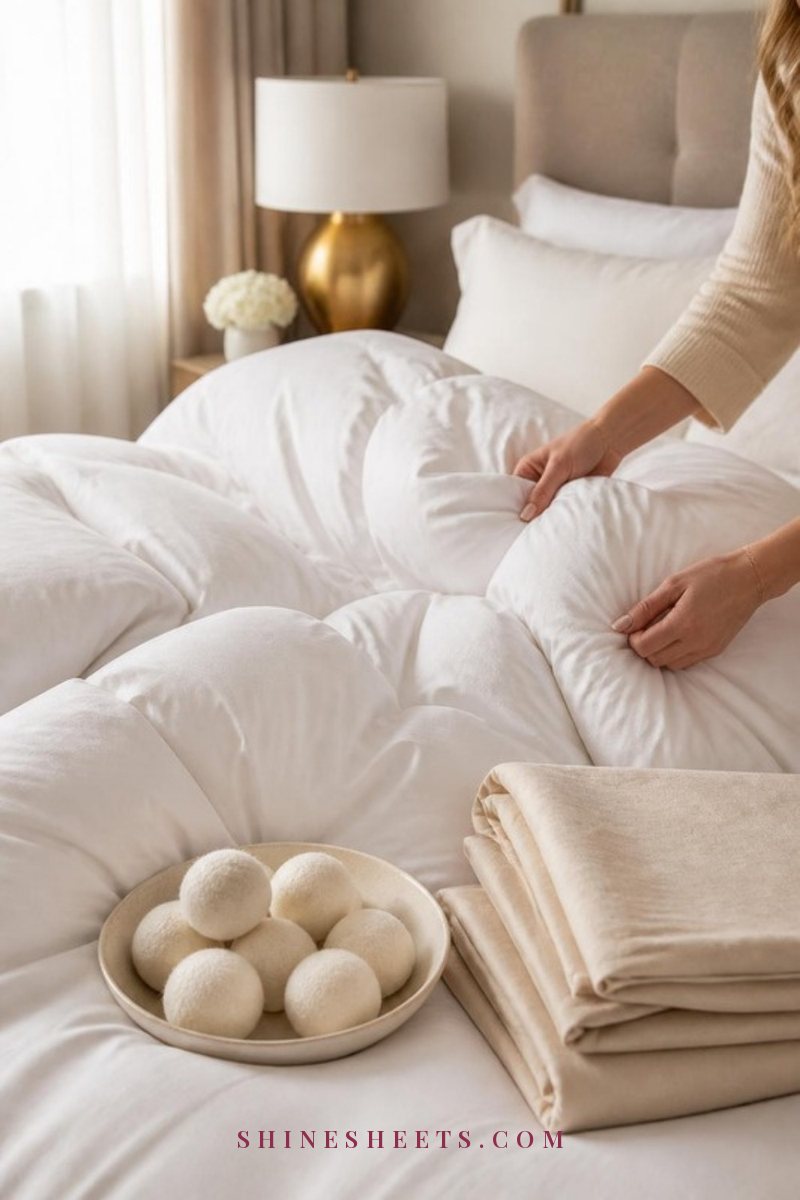
Washing the duvet insert itself feels intimidating, but two or three times a year is all it needs. The real question is whether it fits in your machine.
Check Your Machine First
Here's a quick test: stuff the dry duvet into the drum. If you can close the door easily and there's still a hand's width of space at the top, you're good. A twin or full insert usually fits a standard front-loader; a queen or king often needs a large-capacity machine. Top-loaders with a central agitator can tear the fabric or tangle the filling, so if that's what you have, the laundromat is the kinder choice.
At Home or at the Laundromat
Wash at home when the duvet fits loosely and your dryer is big enough for it to tumble freely. Go to the laundromat when the duvet is a queen or king or your dryer is small (a cramped dryer leaves damp clumps in the middle). Bring your own detergent and dryer balls, and pick the largest front-loading washer they have. Many dry-clean-only comforters (often ones with silk or decorative stitching) really do need a professional, so check the label first.
How To Wash It
- Check for tears. Stitch any small holes closed first, or the filling will escape in the drum.
- Use a small amount of mild detergent. About half of a normal dose. Down hates heavy detergent, and it's hard to rinse out of all that filling.
- Choose a gentle or bulky cycle with warm water. Then add an extra rinse, and a second spin if your machine allows it, to squeeze out as much water as possible.
- Check that it's rinsed. Press a corner. If you see suds, rinse again.
Dry It Completely (This Part Matters Most)
A duvet that's dry on the outside can still be damp in the middle, and that trapped moisture leads to mildew and a smell that's very hard to get rid of. Dry on low heat with three to six wool dryer balls, which bounce around, break up clumps of filling and speed up drying. Every 30–45 minutes, pull the duvet out, shake it and fluff it with your hands. Expect two to four hours for down and one to three for synthetic filling. When you think it's done, press your hands into the thickest parts; if anything feels cool or heavy, it needs more time.
While the duvet is drying, it's the perfect moment to freshen the bed underneath; here's my step-by-step guide on how to clean your mattress.
How To Fix Yellowing, Sweat and Makeup Stains
White sheets and pillowcases slowly turn yellow or gray, usually starting at the top edge and in the center of the pillow. That's body oil, sweat, skincare and hair product building up over time, not a sign that you're not clean. Here's how to handle each kind of mark.
Yellowing From Body Oil and Sweat
Fill a tub or large basin with the hottest water the fabric can take, dissolve oxygen bleach powder according to the package, and soak white cotton bedding for four to eight hours or overnight. Then wash as usual. For colored bedding, check colorfastness on a hidden corner first. Avoid chlorine bleach on yellowed sheets; it can react with body oils and actually make yellowing worse, and it weakens cotton over time.
Makeup and Foundation
Foundation and concealer are oily, so treat them like grease. Dab on a drop of plain dish soap or a bit of micellar water, work it in gently with your fingers, leave it for ten minutes and wash. For mascara or eyeliner, a little oil-based makeup remover breaks it down first. The best prevention is simple: take your makeup off before bed (your skin will thank you too).
Night Creams, Hair Oil and Self-Tanner
Rich creams and hair oils leave greasy shadows on pillowcases. Pretreat with a laundry stain remover spray and let it sit for 10–15 minutes before washing. Self-tanner is trickier: rinse it in cold water as soon as you notice it, pretreat and wash warm. If you tan regularly, keep one older sheet set just for tanning nights.
Blood
Always cold water, never hot, since heat sets the protein. Rinse from the back of the fabric, rub in a little dish soap and wash cold.
The golden rule for any stain: check it before it goes into the dryer. If the stain is still there after washing, treat and wash again rather than drying. My full guide to laundry tips has more tricks for keeping all your fabrics looking new.
How To Dry Sheets So They Come Out Soft (No Ironing)
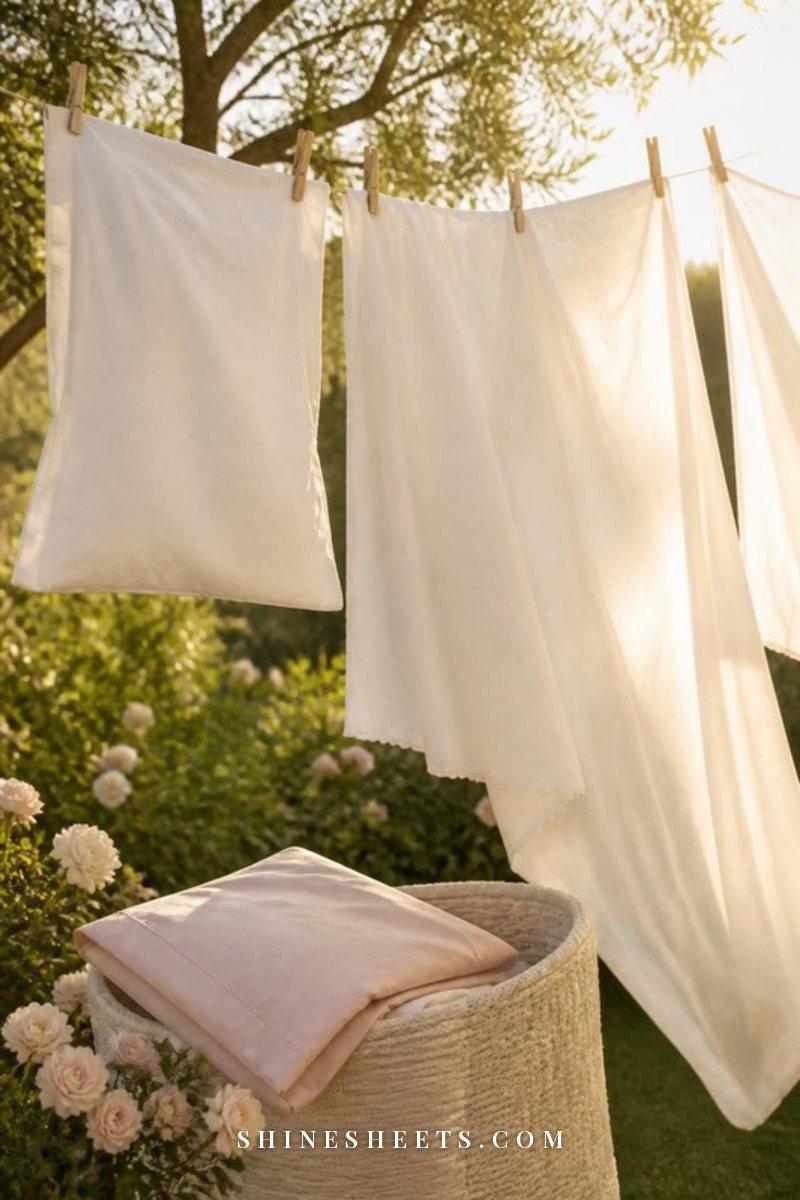
Ironing sheets is a lovely idea almost nobody has time for. These habits give you smooth, soft bedding without it:
- Shake each piece out before drying. A good snap of the fabric loosens twists and prevents deep creases.
- Use medium or low heat. High heat is the main cause of shrinkage, stiffness and wrinkles that won't relax.
- Add dryer balls. They separate the sheets, cut drying time and keep fitted sheets from balling up.
- Take them out a few minutes early. Slightly warm and barely damp is the sweet spot. Put them straight back on the bed and smooth them with your hands; the weight and warmth flatten the last wrinkles as they finish drying.
- Line dry when you can. Sunshine naturally brightens whites, and line-dried sheets smell incredible. If they feel a little crisp, give them five minutes in the dryer on low to soften.
- Fold immediately. Bedding left sitting in a warm pile wrinkles fast.
Want that crisp, layered, five-star look once the clean sheets are back on? Here's how to make a hotel bed at home in ten easy steps.
How To Store Spare Sheet Sets
Two sets per bed make the weekly routine much easier: one on the bed, one in the cupboard, so you never have to wash, dry and remake the bed in one go. A few habits keep spares fresh:
- Store each set inside one of its own pillowcases. Fold the fitted sheet, flat sheet and the second pillowcase, slip them into the first pillowcase and you'll never dig for a matching piece again.
- Make sure everything is completely dry. Even slightly damp sheets develop a musty smell in a closed cupboard.
- Choose breathable storage. Cotton or linen bins, open shelves or baskets are better than sealed plastic for anything you use often. Natural fibers need a little airflow.
- Rotate your sets. Put freshly washed sheets at the bottom of the pile and use from the top, so every set wears evenly.
If your linen cupboard is more chaos than calm right now, my guide to linen closet organization will help you sort it once and keep it neat. And if you're slowly building a calmer bedroom, a soft beige cotton duvet cover is an easy swap: neutral colors hide minor fading and look fresh with almost any sheet set.
A Simple Weekly Bedding Rhythm
The easiest way to stay on top of bedding is to stop deciding every week and give each task a home in your calendar. Here's a rhythm that takes very little effort once it's a habit:
- Sunday (or your reset day): strip the bed, wash sheets, pillowcases and the duvet cover, and put on your spare set straight away so you're never left with a bare mattress.
- Wednesday: swap your pillowcase for a fresh one, especially if you have acne-prone or combination skin.
- Every morning: pull the duvet back for 20–30 minutes before making the bed, so moisture from the night can escape. Then make it; it takes two minutes and helps the room feel calmer.
- First weekend of the month: wash the mattress protector (every one to two months) and any throw blankets.
- Spring and fall: wash the duvet and pillow inserts, and vacuum the mattress while everything is drying.
Final Thoughts
Learning how to wash sheets properly isn't about being perfect or never missing a week. It's about a few kind defaults: the right temperature for the fabric, a lighter hand with the detergent, a proper rinse and drying everything all the way through.
Start with this week's load. Measure a little less soap, pick the right setting, pull the sheets out while they're still warm and smooth them onto the bed. Then light a candle, make a cup of tea and climb into a bed that feels as fresh as it looks. That small Sunday-night feeling is worth every load of laundry.