A clean couch is mostly a matter of doing the right small thing for your specific fabric. Most sofas don't need a weekend of scrubbing or a rented machine. They need a quick vacuum once a week, a calm response when something spills, and a deep clean once or twice a year with a cleaner your fabric can actually handle.
The part almost everyone skips is the little tag under the cushions. That tag holds a one- or two-letter code that tells you whether water is your friend or your worst enemy, and it's the difference between a fresh couch and a permanent watermark the size of a dinner plate. It took me a couple of faded, ringed cushions to learn to check it first (now I check before I even reach for a cloth).
This guide covers how to clean a couch made of any fabric: how to read the cleaning code, a weekly routine, spot cleaning by stain, deep cleaning fabric, microfiber and linen, leather and velvet basics, deodorizing, drying, and keeping it nice longer. You'll also find a cleaning code decoder table you can screenshot and keep on your phone.
Nothing here is complicated. Pick the section you need today and leave the rest for later.
First, Find Your Couch's Cleaning Code
Lift the seat cushions and look for a sewn-in tag on the deck of the couch or under a cushion. Sometimes it's on the back or the underside of the frame. You're looking for a single letter or a pair: W, S, WS (sometimes written SW) or X.
If you have removable cushion covers, check their zipper side too. Covers sometimes carry their own care label with washing instructions, which can differ from the frame fabric.
No tag at all? That happens with older, secondhand or custom pieces. In that case:
- Look up the model on the retailer's site, since care codes are often listed in the product details.
- Treat the couch as S (solvent only) until you know better. It's the safer assumption for most upholstery.
- Always test any cleaner on a hidden spot first, like the back bottom edge or under a cushion.
The Cleaning Code Decoder
Here's the whole system in one table. This is the piece I'd screenshot, because you'll come back to it every time something spills.
| Code | What It Means | What To Use | What To Avoid |
|---|---|---|---|
| W | Water-based cleaners are safe | Distilled water with a drop of clear dish soap, upholstery foam or spray labeled for W fabrics, a light steam | Dry-cleaning solvents, soaking the fabric, hot water on protein stains |
| S | Solvent-based cleaners only | Water-free upholstery solvent, rubbing alcohol (many microfiber couches), dry cleaning powder | Water, steam, soapy mixes (they can leave rings and stiff patches) |
| WS / SW | Either water-based or solvent cleaners work | Mild water-based mix for everyday spills, solvent for oily or greasy stains | Over-wetting, harsh bleach or ammonia cleaners |
| X | Vacuum or brush only | Vacuum with a soft upholstery brush, a lint roller, professional cleaning for stains | Any liquid cleaner, including water |
One small but useful habit: use distilled water whenever water is allowed. Tap water carries minerals that can dry into faint rings, especially on light fabrics.
What You'll Need
You don't need a cupboard full of special products. A short, well-chosen kit covers almost every situation:
- A vacuum with an upholstery tool and crevice tool. If your main vacuum is bulky, a cordless handheld vacuum with an upholstery brush makes the weekly pass so much easier that you'll actually do it.
- Light-colored cloths. A stack of white microfiber cleaning cloths is ideal, because white shows you exactly what's lifting and won't transfer dye onto a pale couch.
- A cleaner that matches your code. For W or WS fabrics, look for an upholstery cleaner spray that says it's safe for the fabric type you have and doesn't need heavy rinsing.
- Distilled water, clear dish soap, baking soda and rubbing alcohol. These four handle most spot cleaning.
- A soft brush. A clean soft-bristled brush (even a new soft toothbrush for small areas) helps lift the pile after cleaning.
- A spray bottle and a small bowl. For mixing gentle solutions, labeled so nobody confuses them later.
If you like keeping your cleaning simple and low-fuss, my guide to natural cleaning swaps (and the combos never to mix) is a good companion to this one.
The 10-Minute Weekly Couch Routine
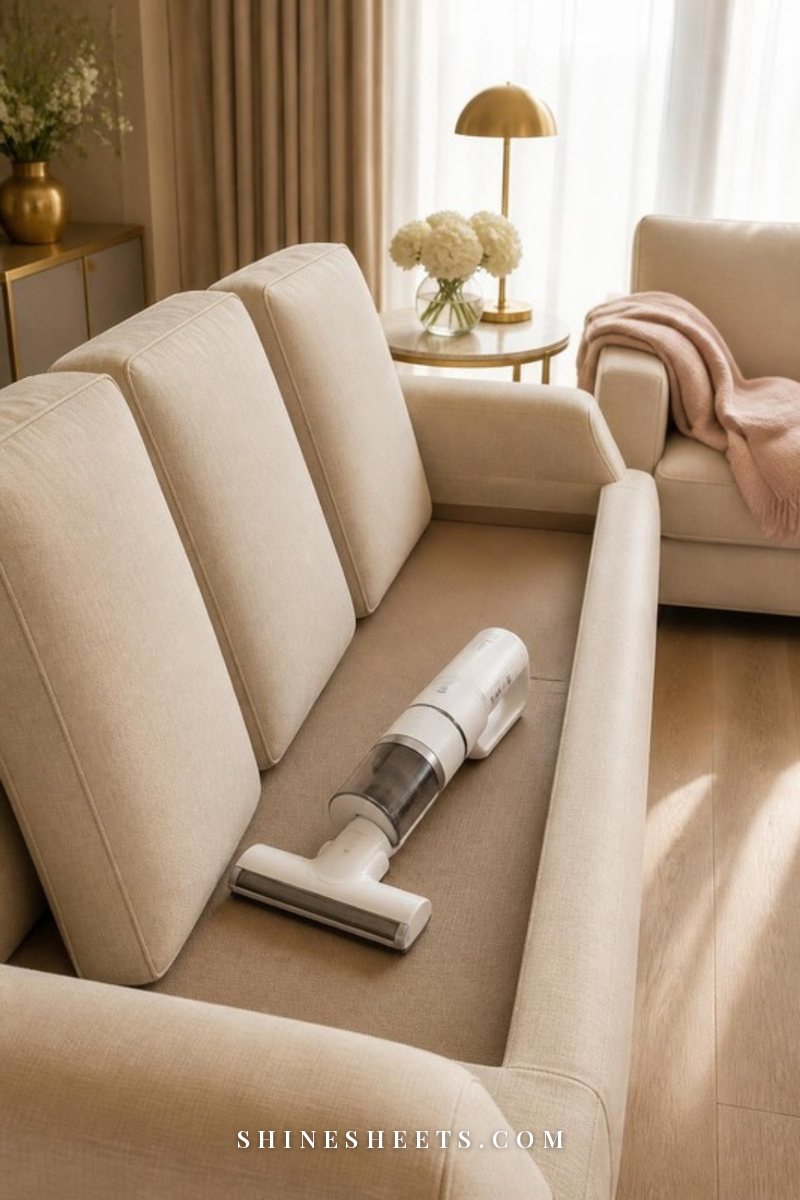
Weekly vacuuming is the most underrated couch habit there is. Dust, skin cells, crumbs and grit settle into the weave and slowly act like sandpaper every time someone sits down. Ten minutes once a week keeps fabric looking newer for years.
- Clear the couch (1 minute). Remove throws, pillows, remotes and that one hair tie that always ends up there.
- Lift every cushion (1 minute). Pull out the seat cushions and back cushions if they come off. Shake throw pillows outside or over a hard floor.
- Crevice tool first (2 minutes). Run it along the seams, the gap where the arms meet the seat, and the deck underneath the cushions. This is where crumbs live.
- Upholstery brush everywhere else (4 minutes). Work from top to bottom: back, arms, then seat. Use slow, overlapping strokes. On velvet or chenille, go in the direction of the pile.
- Vacuum both sides of the cushions (1 minute). Then flip and rotate them as you put them back so they wear evenly.
- Quick lint roll and reset (1 minute). Fold the throw, fluff the pillows, done.
If you'd like this to happen without thinking about it, slot it into the weekly part of a simple daily, weekly and monthly cleaning schedule. Pairing it with another chore (say, right after you water the plants) is what makes it stick.
How To Spot Clean Stains by Type
A few rules apply to every stain, whatever the fabric:
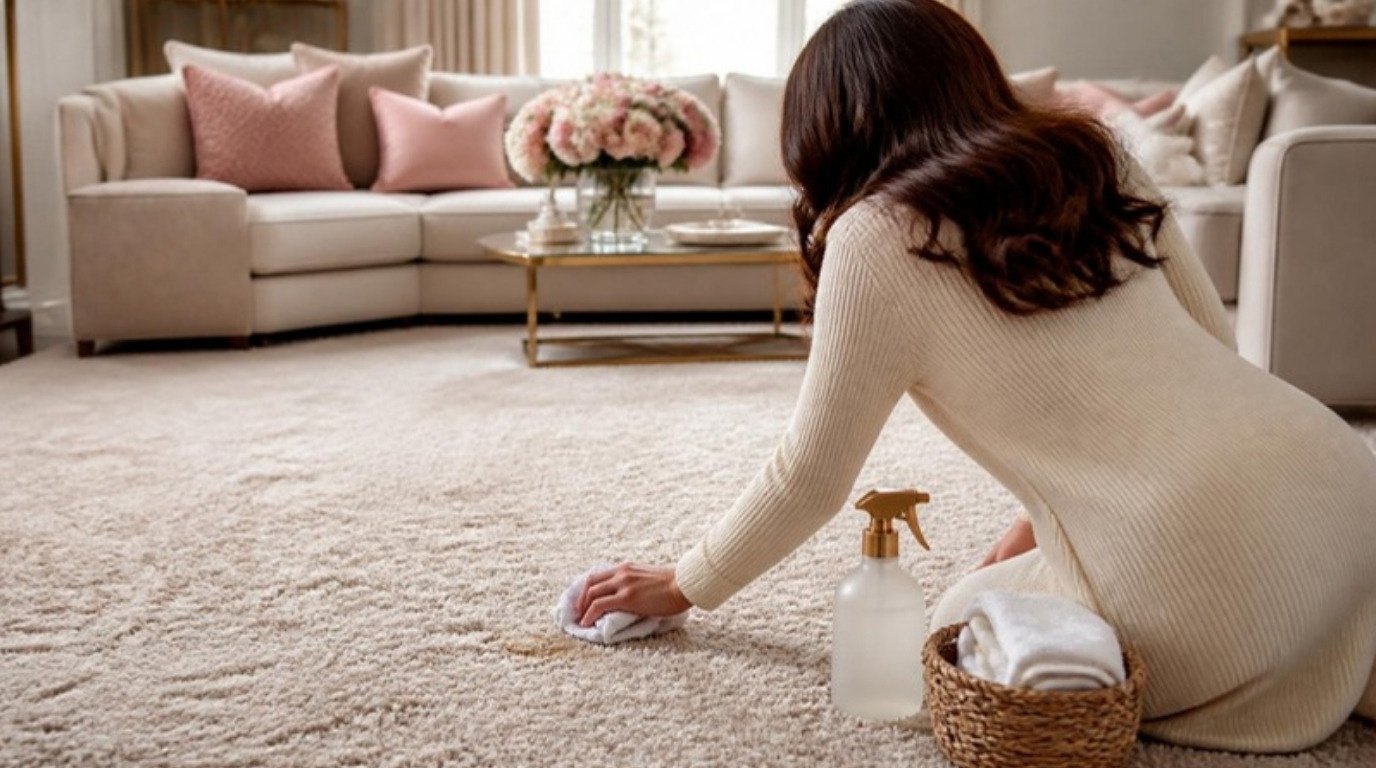
- Act fast, but blot, never rub. Rubbing pushes the stain deeper and roughs up the fibers.
- Work from the outside in so the stain doesn't spread into a bigger ring.
- Use as little liquid as possible. Dampen the cloth, not the couch.
- Test on a hidden spot first. Wait until it's fully dry to check for color change or texture change.
Coffee and Tea
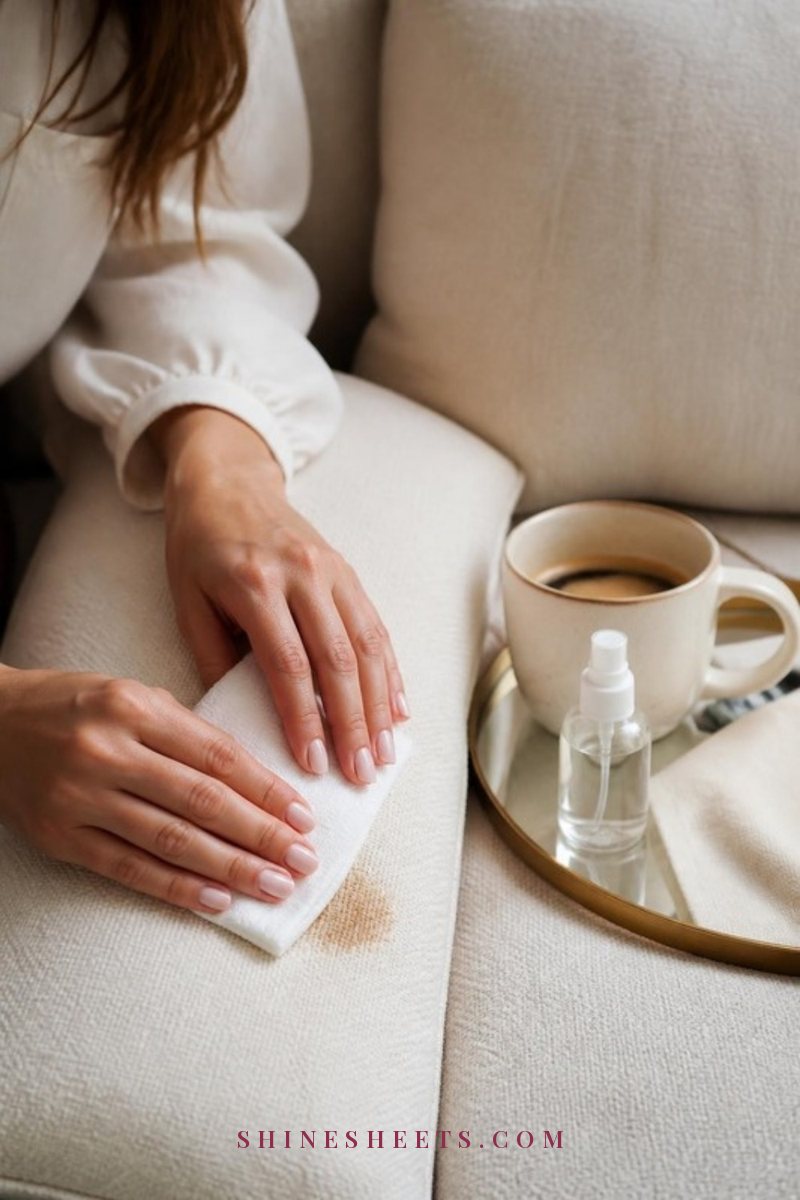
Coffee and tea are among the most common couch spills (my evening tea has a talent for finding the armrest). They're very fixable if you catch them early.
- Blot up as much liquid as you can with a dry white cloth, pressing firmly.
- For W or WS fabrics: mix 1 cup of cool distilled water with 1/2 teaspoon of clear dish soap. Dampen a cloth, blot the stain, then switch to a clean cloth dampened with plain distilled water to rinse. Blot dry.
- For S fabrics: skip water entirely. Dab a little rubbing alcohol or water-free upholstery solvent onto a white cloth and blot until the color transfers.
- If coffee had milk in it, use cool water only. Heat can set the milk proteins.
Oil and Grease
Pizza fingers, salad dressing, body lotion, hair oil: they all leave a darker, slightly shiny patch that water alone won't touch.
- Blot away any excess oil gently.
- Sprinkle a generous layer of baking soda or cornstarch over the spot and leave it for 20 to 30 minutes. It draws the oil out of the fibers.
- Vacuum it up with the upholstery tool.
- For what remains, use your code: a drop of dish soap in distilled water for W fabrics (dish soap is made to break down grease), or a solvent cleaner for S and WS fabrics.
Makeup
Makeup stains are basically a mix of pigment and oil, so treat them like a tiny oil stain.
- Foundation and concealer: blot, then dab with a cotton pad dipped in rubbing alcohol (on S and WS fabrics) or soapy distilled water (on W fabrics).
- Lipstick: scrape off any solid bits with the edge of a spoon first, then use the same method. Work in tiny dabs because lipstick spreads easily.
- Mascara and eyeliner: let it dry, brush away the flakes, then blot with alcohol or soapy water depending on your code.
- Powder makeup: don't touch it with anything wet. Vacuum it up first, and you may find there's nothing left to clean.
Pet Hair
Pet hair weaves itself into upholstery in a way that feels personal. The good news is that it's a dry problem, so it's safe for every cleaning code, even X.
- Run a lint roller over the couch for quick daily touch-ups, pressing and lifting instead of rolling hard.
- Put on a slightly damp rubber dish glove and sweep your hand across the fabric. The hair gathers into clumps you can pick off (skip this on X-coded fabric).
- Follow with the vacuum upholstery brush, going against the direction the hair lies.
- Keep a washable throw on your pet's favorite spot so most of the hair lands somewhere you can toss in the laundry.
How To Deep Clean a Fabric Couch
A deep clean once or twice a year (or before guests, or after a long winter of movie nights) refreshes the whole couch instead of single spots. Always vacuum thoroughly first. Cleaning a dusty couch just turns the dust into mud.
Removable Covers
If your covers zip off and the care label allows washing, you're in luck.
- Zip the covers closed again before washing so the zippers don't snag the fabric.
- Wash on a cold, gentle cycle with a mild detergent. Wash all covers together so they fade evenly.
- Skip the dryer unless the label says it's fine. Heat is the main reason covers shrink and stop fitting.
- Put the covers back on while they're still very slightly damp. They stretch into place more easily and dry smooth.
Your throw pillows deserve a turn too. My guide on how to wash every type of pillow walks through inserts and covers step by step.
Microfiber Couches
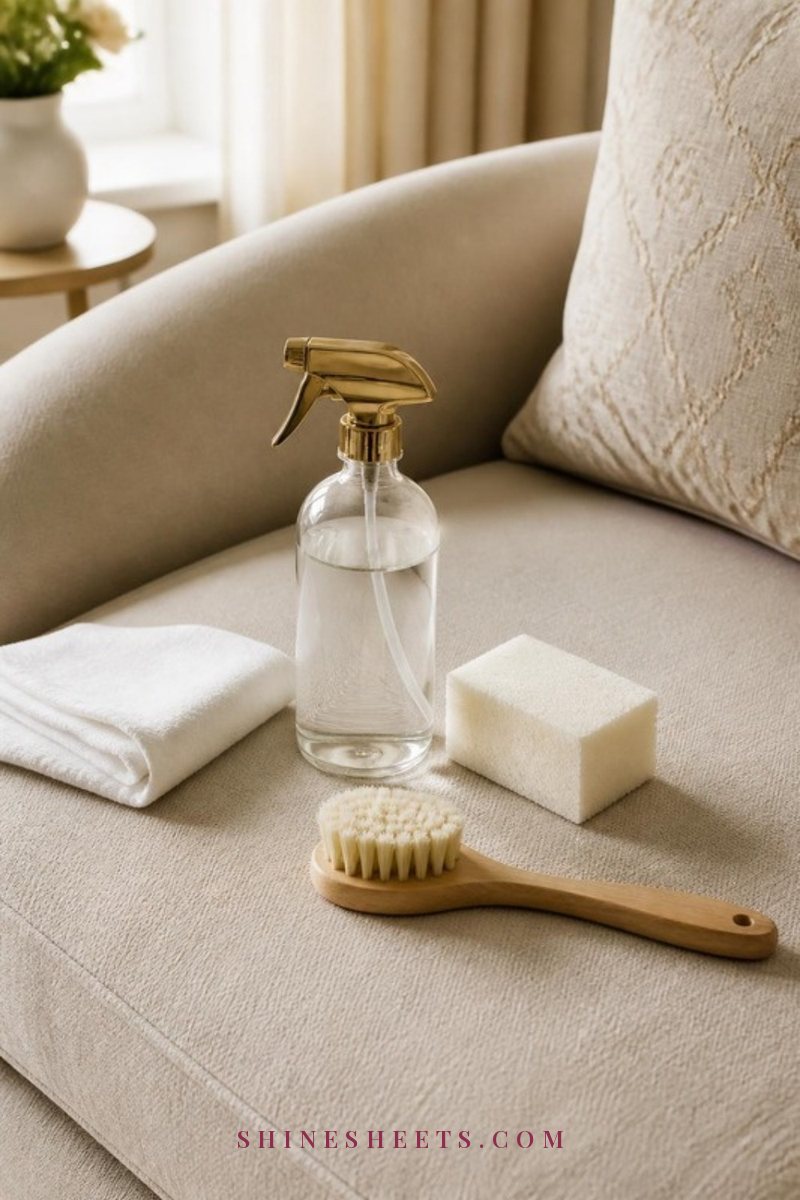
Many microfiber couches carry an S code, which surprises people. The classic method uses rubbing alcohol because it evaporates quickly and doesn't leave water rings.
- Pour rubbing alcohol into a spray bottle.
- Work in small sections, roughly the size of a seat cushion. Lightly mist the fabric so it's damp, not wet.
- Scrub gently with a clean white sponge or cloth. You'll see dirt transfer quickly, so switch to a clean side often.
- Once the section is dry (it only takes a few minutes), brush the fibers in a circular motion with a soft brush to soften them again.
Open a window while you work, keep the area well ventilated, and keep alcohol away from candles and any open flame. Test a hidden spot first, since some dyed microfibers can lighten.
Linen and Cotton Couches
Linen and cotton are usually W or WS coded, and they look beautiful but show water marks easily. The secret is cleaning a whole panel evenly instead of a single spot.
- Use a light foam (whip the soapy distilled water mix with a whisk and use only the foam) or an upholstery cleaner for W fabrics.
- Apply it seam to seam across an entire cushion or panel, so there's no edge where clean meets less clean.
- Blot with a damp clean cloth, then a dry one, and let it air dry fully.
- Keep light linen out of strong direct sun when it's damp, since it can yellow or fade unevenly.
Leather and Velvet Basics
Leather and velvet both look luxurious and both need a lighter hand than regular fabric. Think "maintain often, clean gently."
Leather Couches
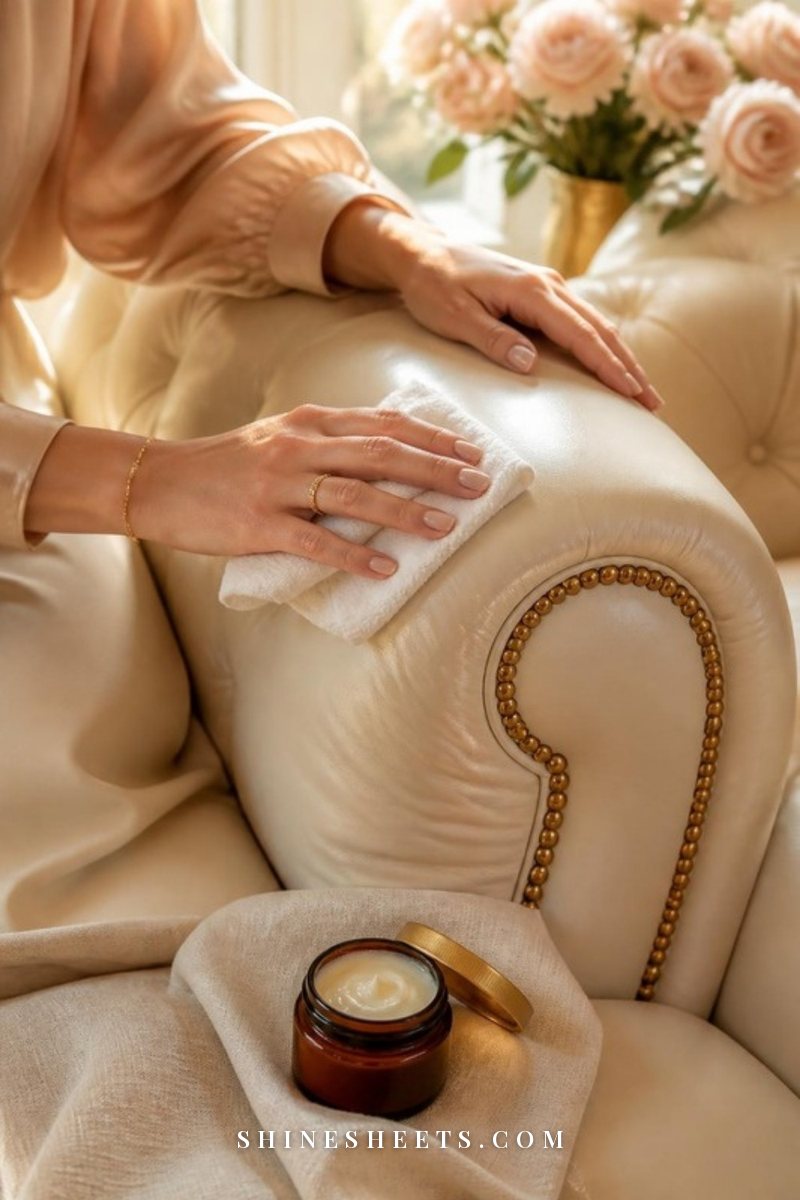
- Weekly: dust with a dry microfiber cloth and vacuum the seams with a soft brush attachment.
- Monthly: wipe with a cloth barely dampened in distilled water with a tiny drop of mild soap, then dry immediately with a second cloth.
- Every 6 to 12 months: apply a thin layer of leather conditioner made for furniture with a soft cloth, let it absorb as directed, then buff. This keeps leather supple and helps prevent cracking.
- Spills: blot right away. Don't use baking soda, vinegar, ammonia or all-purpose sprays on leather, since they can dry it out or strip the finish.
- Placement: keep it away from radiators and harsh afternoon sun, both of which dry leather over time.
If your couch is faux leather, skip the conditioner and just use the gentle wipe-down method. Check the tag, as always.
Velvet Couches
Velvet has that Old Hollywood softness I adore, and it's tougher than it looks once you know its quirks.
- Vacuum on low suction with a soft brush, always in the direction of the pile.
- Many velvets are S coded. Blot spills immediately with a dry cloth and use a solvent cleaner rather than water.
- If the pile gets crushed (it happens where people sit most), hold a handheld steamer a few inches away for a few seconds, without touching the fabric, then brush the pile gently while it's warm. Only do this if your code allows moisture, and test it first.
- Brush the whole couch lightly once a month with a soft clothes brush to keep the nap looking even.
How To Deodorize a Couch With Baking Soda
Couches quietly absorb everything: cooking smells, pets, damp coats, the person who naps on it every Sunday. Baking soda is a gentle, inexpensive fix that works on most fabric couches.
- Vacuum the couch thoroughly first.
- Sift a light, even layer of baking soda over the seats, back and arms. A fine mesh sieve helps it land evenly.
- Leave it at least 1 hour, or overnight for stronger smells.
- Vacuum it up slowly with the upholstery brush, going over each area twice.
Test on a hidden area first on dark fabrics, which can show a faint white haze if any powder stays behind. Skip this step entirely for leather and X-coded fabrics.
If the smell is more of a damp, musty one that keeps coming back, the cause might be the room rather than the couch. My guide on how to get rid of a musty smell helps you track down where it's coming from.
Drying and Fluffing (Don't Skip This)
How you dry the couch matters as much as how you clean it. Fabric that stays damp for hours can develop water rings, a musty smell or even mildew deep in the cushions.
- Increase airflow. Open windows, switch on a fan aimed at the couch or run a dehumidifier in the room.
- Stand cushions on their sides so air reaches both faces.
- Don't sit on it until it's fully dry, usually 4 to 8 hours after a deep clean. Pressure on damp fibers can leave marks.
- Brush once it's dry. A soft brush lifts the pile so the fabric feels soft again instead of stiff.
- Fluff and rotate the cushions. Punch them lightly on each side, then swap their positions so they wear evenly.
Never use a hair dryer on high heat or put cushions on a radiator. Heat can shrink fabric, melt synthetic fibers and set any stain that's still hiding in there.
How To Keep Your Couch Clean Longer

The easiest couch to clean is the one that barely gets dirty. A few small habits do most of the work:
- Use a washable throw. A soft cream washable throw draped over the seat or arm where you sit most catches crumbs, lotion and pet hair, and it goes straight into the washing machine.
- Consider a washable slipcover if you have pets, very light upholstery or a busy household. It protects the original fabric and can change the look of the room too.
- Make a "snacks on a tray" rule. A tray on your lap prevents more stains than any spray.
- Keep lotions and makeup off the couch until they've absorbed. Fresh body lotion is one of the most common causes of dark, oily patches on armrests.
- Rotate and flip cushions every week so one seat doesn't sag and fade before the others.
- Mind the sun. Sheer curtains or a slight shift in placement can prevent fading, especially on linen, velvet and leather.
If you're working with a smaller space where the couch is the star of the room, these small living room ideas show how to style it so it looks intentional and easy to keep tidy.
6 Couch Cleaning Mistakes To Avoid
- Ignoring the cleaning code. Water on an S-coded fabric is the number one cause of permanent rings.
- Rubbing instead of blotting. It spreads the stain and fuzzes the fibers.
- Using too much liquid. Soaking the cushion pushes the stain into the foam, where it can wick back up later as a brownish ring.
- Mixing cleaners. Never combine products, especially anything with bleach and ammonia or bleach and vinegar. Use one cleaner, rinse, then try another if needed.
- Cleaning a single tiny spot on light fabric. It can leave a clean "halo." Feather the edges or clean the whole panel.
- Skipping the patch test. Thirty seconds on a hidden spot saves you from a very visible mistake.
For tough, set-in stains on X-coded fabric, antique pieces or expensive upholstery, a professional upholstery cleaner is genuinely worth it. There's no prize for doing everything yourself.
And if the couch is just one part of a whole-house tidy-up you're tackling, my guide on how to clean a messy house fast helps you decide what to do first without getting overwhelmed.
Final Thoughts
Your couch holds a lot of life: lazy Sundays, long phone calls, evening tea and the occasional cry over a good movie. It deserves a little care, but it doesn't need perfection.
Check the tag once, keep the decoder table handy, vacuum weekly and treat spills calmly when they happen. Do those few things and your couch will stay soft, fresh and inviting for years, a place you're always happy to sink into at the end of the day.