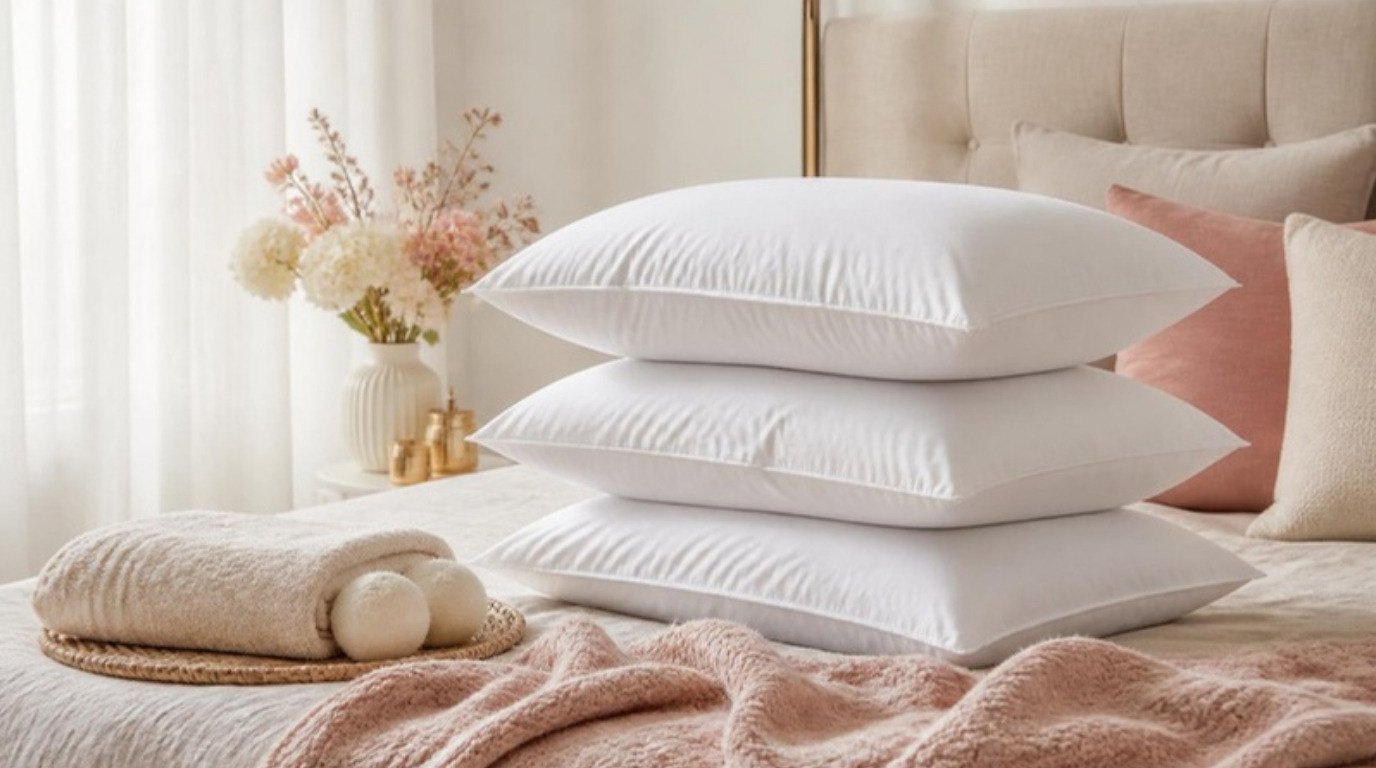
Pillows get dirtier than almost anything else on your bed, and most of that dirt is invisible. Every night they soak up a little sweat, skin oil, hair product and whatever skincare you put on before sleep, and the pillowcase only catches part of it. The good news is that most pillows are far easier to wash than they look. You need the right cycle, a light hand with the detergent and a lot more patience with drying than you would expect.
This guide covers how to wash pillows of every common type, step by step: how often to do it, how to read the care label, the washing machine method, how to dry them properly so nothing goes musty, and what to do with the pillows that should never go near a washer (looking at you, memory foam). There is also a pillow care table you can screenshot and keep, plus a quick fold test for when washing will not save a pillow anymore.
It took me a while to admit that my "clean" bed was only clean on the surface. Once I started washing the pillows themselves a few times a year, the whole bed felt fresher, and it really is a small job once you know the rhythm.
How Often Should You Wash Pillows?
Here is the simple rhythm I would suggest for most people:
- Pillowcases: once a week, or every three to four days if you have oily or breakout-prone skin, wear a lot of hair product or sleep with damp hair.
- Pillow protectors: once a month, plus any time something spills.
- The pillows themselves: every three to six months. Twice a year is a perfectly good baseline, and it is easy to remember if you tie it to the change of seasons.
- Decorative throw pillows: wash the covers every month or two, and the inserts once or twice a year if the label allows it.
Wash sooner if you have been sick, if a pet sleeps on your bed, if you sweat a lot at night or if a pillow has started to smell a little "off" even with a clean case. A yellowish tint on a white pillow is another gentle hint that it is time.
If you like having all of this on a calendar, my cleaning schedule for daily, weekly and monthly tasks has a natural slot for pillows in the seasonal list.
Start With the Care Label
Before anything gets wet, find the little sewn-in tag along one seam. It tells you three important things: what the pillow is filled with, whether it can be machine washed, and how hot the water and dryer can be. A few symbols to know:
- A tub with water: machine washable. Dots inside the tub show the temperature (one dot is cold, two is warm, three or more is hot).
- A tub with a hand: hand wash only.
- A crossed-out tub: do not wash with water. Spot clean only.
- A square with a circle inside: tumble dry is fine. One dot means low heat, two means medium.
- A crossed-out square with a circle: no tumble drying. Air dry instead.
If the label has faded or been cut off, work from the filling. Squeeze the pillow: feathers usually crunch a little and you can sometimes feel quills, polyester fiberfill feels springy and even, memory foam is one solid block that slowly bounces back, and buckwheat sounds like soft rustling sand. When in doubt, treat it gently: cold or warm water, low heat, and spot cleaning for anything solid.
One more check: look over the seams. A pillow with a small tear will lose filling in the wash, so stitch it closed first or keep it out of the machine.
What You Will Need
Nothing fancy, just a few things that make the job smoother:
- A mild detergent. Look for a liquid, fragrance-light formula without bleach. A gentle liquid laundry detergent rinses out of dense filling more easily than powder, which can leave chalky clumps inside.
- A stain spray for yellow spots. Sweat and skin-oil stains are protein based, so an enzyme stain remover spray breaks them down better than plain soap. Test it on a corner first.
- Dryer balls. I would choose wool dryer balls over plastic ones because they are quieter and help absorb moisture. Two or three per pillow is plenty. Clean tennis balls in a sock work in a pinch.
- A mesh bag for small pillows. A large white mesh laundry bag keeps travel pillows and small throw-pillow inserts from twisting or snagging, and keeps covers with zippers from catching on anything else.
- Clean towels. A couple of dry bath towels help balance the dryer and soak up extra moisture.
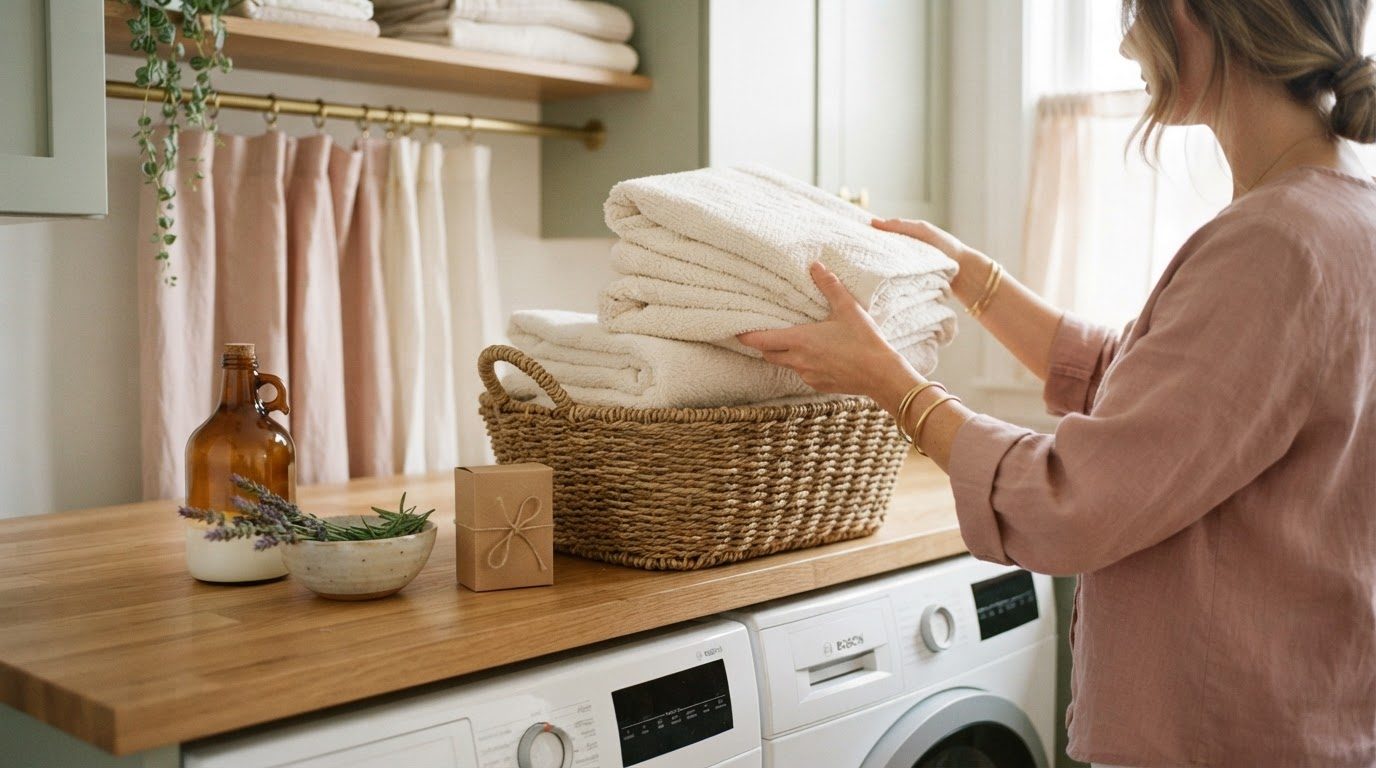
How To Wash Pillows in the Washing Machine

This method works for most down, feather and polyester pillows whose label shows a washtub symbol. Plan it for a morning when you will be home all day, because drying takes longer than washing.
The 7-Step Machine Method
- Strip everything off. Remove the pillowcase and protector and wash them separately with your sheets. Check the seams and fix any small holes.
- Pre-treat stains. Spray yellow or makeup spots with enzyme stain remover, work it in gently with your fingertips and let it sit for 10 to 15 minutes. Do not scrub hard, which can push filling through the fabric.
- Wash two at a time. Two pillows balance the drum, so the machine does not thump and the pillows get evenly washed. In a top-loader with an agitator, stand them upright on either side of the agitator so they do not wrap around it. A front-loader or a top-loader without an agitator is gentler, if you have the choice.
- Use less detergent than you think. About a tablespoon, or half of your usual dose, is enough for two pillows. Too much soap gets trapped in the filling and leaves it stiff and sticky.
- Choose the gentle or delicate cycle. Use warm water for polyester and cold or warm for down, following the label. Hot water is rarely needed and can clump some fillings.
- Add an extra rinse. This is the step people skip, and it matters most. Pillows hold a surprising amount of soapy water, and one extra rinse gets the residue out.
- Add an extra spin. Run one more spin cycle at the end so the pillows go into the dryer as wrung out as possible. They will feel heavy and flat right now, and that is completely normal.
If you want more tricks for getting the most out of your machine, my laundry tips for keeping clothes looking new covers detergent doses, cycles and stain basics in more detail.
Hand Washing Instead
For a "hand wash" label, or a small pillow you do not want to risk, fill a clean bathtub or large sink with lukewarm water and a teaspoon of mild detergent. Submerge the pillow and press it down gently, over and over, for about five minutes. Drain, refill with clean water and press again until no suds come out. Then roll it in a towel and press (never wring) to remove as much water as you can before drying.
How To Dry Pillows Properly

Drying is where pillow washing goes right or wrong. A pillow that is dry on the outside but damp in the middle will smell musty within days and can grow mildew, so the goal is dry all the way through, not just "feels okay."
- Use low heat. High heat can scorch down and melt or clump synthetic fibers. Low or the delicate setting is safer, even though it takes longer.
- Add the dryer balls. Toss in two or three wool dryer balls per pillow. They bounce against the filling, break up clumps and help it dry evenly.
- Add a dry towel. One clean, dry bath towel absorbs moisture and shortens drying time.
- Stop and fluff every 30 minutes. Take the pillows out, shake them hard, squeeze any clumps apart with your hands and put them back. This also lets you check progress.
- Expect it to take a while. Polyester often needs one to two hours. Down and feather can take two to three hours or more.
- Do the squeeze-and-sniff test. When you think they are done, squeeze the center firmly. Any coolness, heaviness or damp smell means another 30 minutes. If you are unsure, run one more cycle. Over-drying on low heat is far better than under-drying.
A small safety note: clean the lint filter before you start and again partway through, since pillows shed fibers and a clogged filter is never a good idea with long, hot dryer runs. If you prefer to air dry, lay pillows flat on a clean rack in a warm, airy room and flip and fluff them every few hours. It can take one to two days, and a final 20 minutes in the dryer on low (if the label allows) brings back the loft.
How To Wash Each Type of Pillow
The basics above apply to most pillows, but each filling has its own little rules. Here is how to handle each one.
Down and Feather Pillows
Down is more washable than people expect, as long as you are gentle and patient. Use cold or warm water, a mild detergent (a down-specific wash is lovely if you have one, but not essential), the delicate cycle and an extra rinse. Wash two at a time so they stay balanced.
The drying is the real job. Use low heat, plenty of dryer balls and fluff every half hour, because wet down clumps into little wads that need to be broken apart by hand. A down pillow that is even slightly damp inside can start to smell like a wet bird (not glamorous), so give it the extra time.
Synthetic and Polyester Pillows
These are the easiest pillows to wash. Most handle warm water on the gentle cycle without any trouble. The one thing to watch is heat in the dryer: polyester fiberfill can melt, flatten or clump on high, so always choose low.
Cheaper polyester pillows sometimes come out of the wash a bit lumpy. Break the clumps up with your hands between drying rounds and they usually even out. If a pillow comes out in hard balls no matter what you do, the filling has simply worn out and it is time to replace it.
Memory Foam Pillows
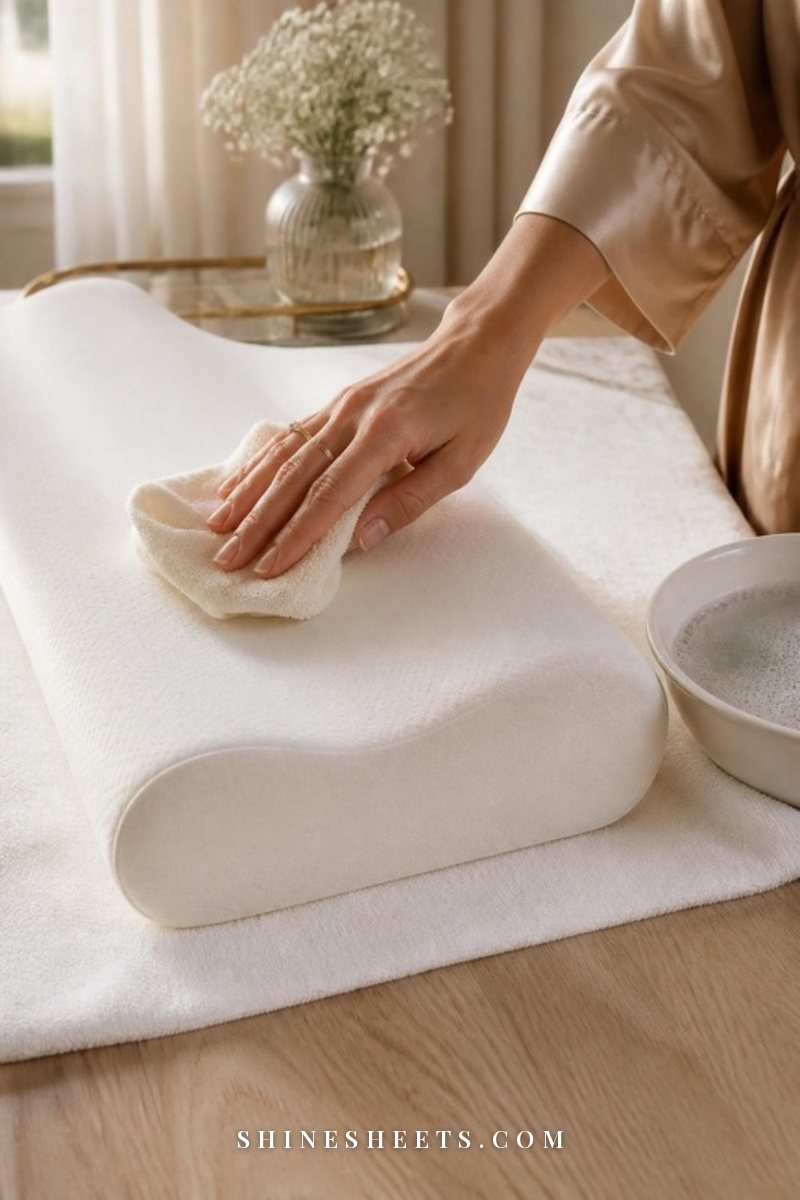
Memory foam should never go in a washing machine or a dryer. The agitation can tear the foam, the foam soaks up water like a sponge and takes days to dry, and heat can make it crumble. Instead:
- Remove and wash the cover. Most memory foam pillows have a zippered outer cover. Wash it according to its own label.
- Vacuum the foam. Use the upholstery attachment to go over every side and remove dust and skin flakes.
- Spot clean stains. Mix a few drops of mild detergent into a bowl of lukewarm water. Dip a soft cloth, wring it out until it is barely damp, and dab the stain. Then dab again with a cloth dipped in plain water to lift the soap.
- Freshen it. Sprinkle a thin layer of baking soda over the foam, leave it for an hour or two, then vacuum it off.
- Air dry completely. Lay the foam flat in a well-ventilated room, out of direct sunlight, until it is fully dry before you put the cover back on. This can take a full day.
Shredded memory foam pillows are the one exception to check: some labels allow a gentle machine wash. If yours does not say so clearly, spot clean it.
Latex Pillows
Latex is treated a lot like memory foam: no washing machine, no dryer, no wringing. Wash the removable cover, then spot clean the latex itself with a barely damp cloth and a drop of mild detergent, using plain water to rinse. Latex can break down in strong sunlight, so air dry it flat indoors in the shade, never in a sunny window. Press it gently with a dry towel to speed things up. Avoid harsh cleaners, bleach and solvents, which can damage the material.
Buckwheat Pillows

Buckwheat hulls should never get wet. Water makes them mold and break down. The good news is that the cover does all the hard work:
- Unzip the cover and pour the hulls into a large bowl, a clean bucket or a pillowcase you can tie shut.
- Wash the empty cover according to its label (usually a regular cycle) and let it dry completely.
- Freshen the hulls by spreading them on a tray in a sunny, dry spot for a few hours. Sift through them with a sieve to remove dust and broken pieces.
- Pour them back in, topping up with fresh hulls if the pillow feels thinner than it used to.
Do this every six months or so. If the hulls smell musty, have been damp or have turned to dust, replace the filling completely.
Decorative Throw Pillows
Start with the cover: if it has a zipper, take it off and wash it inside out in cold water on the gentle cycle (or hand wash velvet, silk and anything with beading or embroidery). Zip it closed first so the teeth do not snag.
Then check the insert. Polyester and feather inserts can usually be washed using the machine method above, in a mesh bag if they are small. Foam inserts get the spot-clean treatment. For covers that are sewn shut, vacuum them with the upholstery attachment and spot clean marks with a damp cloth and a drop of mild detergent.
Pillow Care Table: Every Type at a Glance
Here is everything above in one place. Screenshot it and keep it on your phone for wash day.
| Pillow type | Wash method | Dry method | How often | Replace after |
|---|---|---|---|---|
| Down and feather | Machine, delicate, cold or warm, extra rinse | Dryer on low with dryer balls, fluff every 30 min | Every 6 months | 2 to 3 years (longer with a protector) |
| Polyester / synthetic | Machine, gentle, warm, extra rinse | Dryer on low with dryer balls | Every 3 to 6 months | 1 to 2 years |
| Memory foam (solid) | Never machine wash. Vacuum and spot clean, wash cover | Air dry flat, out of direct sun | Cover monthly, foam every 6 months | 2 to 3 years |
| Shredded memory foam | Only if the label allows: gentle, cold | Low heat or air dry until fully dry | Every 6 months | 2 to 3 years |
| Latex | Never machine wash. Spot clean, wash cover | Air dry indoors in the shade | Cover monthly, latex every 6 months | 3 to 4 years |
| Buckwheat | Never wet the hulls. Wash cover only | Air out hulls in the sun, dry cover fully | Every 6 months | Hulls about 2 to 3 years, or when musty |
| Throw pillow covers | Inside out, cold, gentle (hand wash delicate fabrics) | Air dry or low heat per label | Every 1 to 2 months | When faded or worn |
| Throw pillow inserts | By filling, as above | By filling, as above | Once or twice a year | When flat or lumpy |
The "replace after" numbers are rough guides. A well-protected pillow that passes the fold test below can last longer, and a pillow that is lumpy, smelly or giving you a stiff neck can be done sooner.
How To Remove Yellow Stains From Pillows
Yellow pillows are not a sign that you are doing anything wrong. They are just sweat, skin oil, saliva and leftover skincare that slowly oxidize in the fabric. A few things help:
- Pre-treat every time. Spray the yellow areas with enzyme stain remover and let it sit 15 minutes before washing.
- Try a soak for white polyester pillows. Fill a tub with warm water and an oxygen-based brightener (never chlorine bleach on down), soak for an hour, then wash as usual with an extra rinse. Check the label first.
- Sunlight for covers, not foam. A few hours of sun can gently brighten washed white covers and synthetic pillows as they finish drying. Keep foam and latex out of direct sun.
- Accept some tinting. Very old stains may fade but not disappear. If the pillow is clean, fresh-smelling and still supportive, a faint tint under the case is fine.
The Fold Test: When To Replace Your Pillow
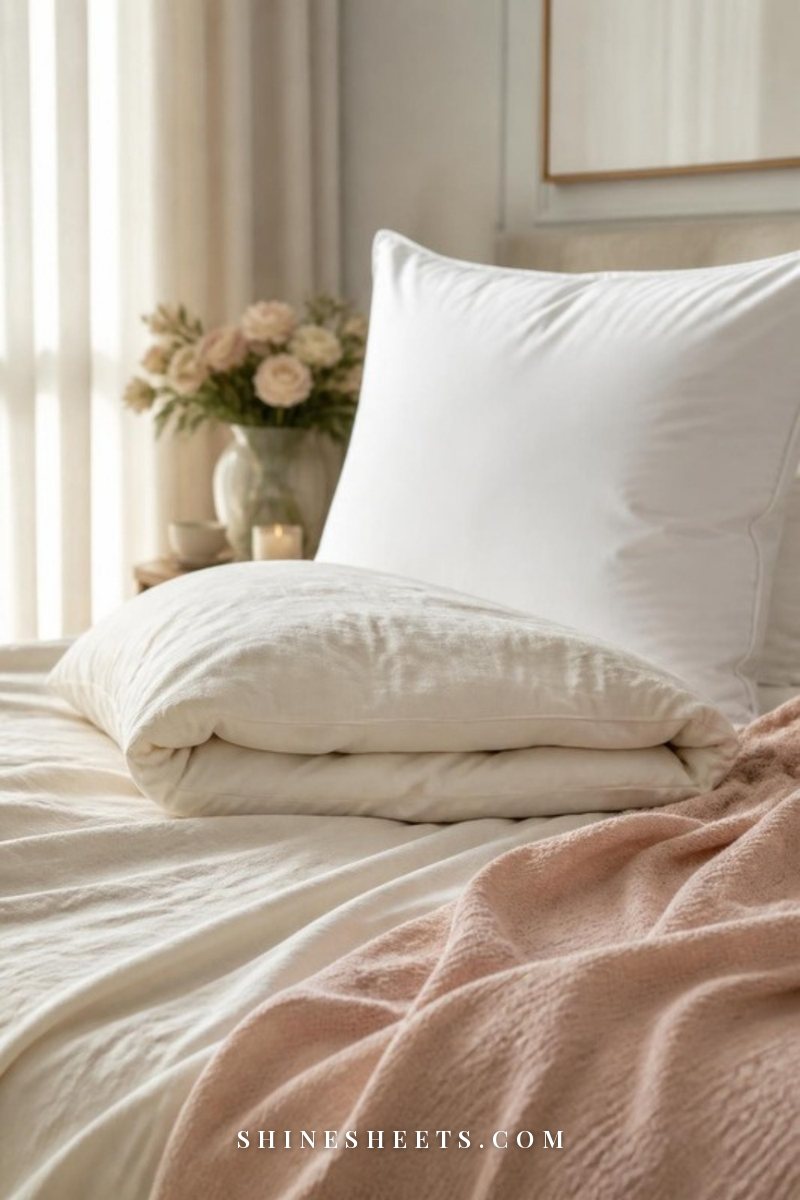
Washing restores freshness and some loft, but it cannot bring a worn-out pillow back to life. Here is the quick test to do every time you wash:
- For polyester and down: fold the pillow in half (fold a thin pillow into thirds). Squeeze out the air and let go. If it springs back open, it still has life. If it stays folded or opens slowly and sadly, it is time to replace it.
- For extra-fluffy down: fold it in half and set a shoe on top. If it pushes the shoe off, keep it. If the shoe stays put, the down has lost its loft.
- For memory foam and latex: folding does not work for solid pillows. Press your palm in firmly. Slow recovery is normal, but cracks, crumbling, a permanent dent or a sour smell that does not air out all mean it is done.
- For buckwheat: sift the hulls. Mostly dust and broken bits means new hulls.
Other signs it is time: lumps that do not break up, a smell that comes back right after washing, stains that have spread across most of the pillow, or waking up with a stiff neck that disappears when you sleep somewhere else. A pillow is one of the cheapest sleep upgrades there is, so give yourself permission to let a tired one go.
How To Keep Pillows Fresh Between Washes
A few small habits mean you wash pillows less often and they stay white and fluffy much longer:
- Use a pillow protector. This is the biggest single difference. A white zippered pillow protector sits between the pillow and the pillowcase and catches sweat, oil and dust before it reaches the filling. Look for a breathable cotton or cotton-blend fabric and a full zipper rather than an envelope opening.
- Change pillowcases weekly. Or more often if you are breakout-prone. Keep a second set in your linen closet so the swap takes ten seconds.
- Do not sleep with wet hair. Damp hair is one of the fastest ways to get a musty pillow. If you shower at night, give your hair time to dry or wrap it first.
- Let skincare sink in. Give night creams and oils ten minutes before you lie down, so more of them ends up on your skin and less on your pillowcase.
- Air the bed out. Once a week, leave pillows by an open window for an hour, or set them in the sun (except foam and latex).
- Fluff every morning. A quick shake and a few pats when you make the bed keep the filling evenly spread and stop clumps from forming.
If you want to go one step further on the case itself, my guide to silk pillowcase benefits for skin and hair explains whether swapping cotton for silk is worth it. And if pillow wash day turns into a full bed refresh, the step-by-step routine for how to clean your mattress pairs perfectly with it, since the mattress is already bare. Then finish with fresh protectors and cases, and use my guide on how to make your bed look like a hotel bed for that crisp, layered look.
Common Pillow-Washing Mistakes
Almost every pillow disaster comes down to one of these six:
- Using too much detergent. It gets trapped in the filling, leaves pillows stiff and can attract more dirt. A tablespoon is enough.
- Skipping the extra rinse. One rinse cycle is rarely enough for something that holds this much water.
- Washing only one pillow. A single pillow throws the drum off balance and gets washed unevenly. Add a second pillow or a couple of towels.
- Drying on high heat. It can scorch down and melt polyester. Low heat and more time always wins.
- Putting a pillow back while it is still damp. This is how musty smells and mildew start. Squeeze the center before you call it done.
- Machine washing foam. Memory foam and latex tear and crumble in a washer. Spot clean only.
Final Thoughts
Washing pillows is one of those jobs that sounds bigger than it is. Read the label, use a little detergent, add an extra rinse, and give the drying all the time it needs. Foam and latex get a gentle spot clean, buckwheat gets aired out, and everything else can usually go right in the machine.
Do it twice a year, protect your pillows in between, and let the tired ones go when they fail the fold test. Your bed will feel softer, smell fresher and be a little more of a sanctuary every single night.