For a long time, Sunday evening had a very specific feeling for me. A low hum of dread. I'd be curled up with my tea, perfectly comfortable, and then my brain would start listing everything waiting for me on Monday – the emails, the appointment I still hadn't booked, the birthday gift I'd forgotten to order, the laundry that had somehow multiplied. By the time I went to bed, the week felt like it was already winning.
What changed things wasn't a fancy system or a color-coded spreadsheet. It was twenty quiet minutes. One small Sunday routine where I put everything on paper, decided what actually mattered and gave each day a gentle shape. The dread didn't disappear completely (I'm prone to anxiety, so my brain will always find something), but it got so much smaller.
So this is my simple guide on how to plan your week without turning it into a second job. You'll find a 20-minute Sunday planning script with exact minutes for each step, my "3 big, 5 small" weekly layout you can set up in any notebook, tips to make the habit stick, an example week and a five-minute midweek reset for when things fall apart (because they will, and that's okay).
Make a warm drink, find a pen and let's give next week a kinder shape.

Why Planning Your Week Beats Planning Every Day
Daily to-do lists are lovely, but they have one big weakness: they only see one day at a time. You end up reacting to whatever feels loudest each morning, and the important-but-not-urgent things (the doctor's appointment, the creative project, calling your grandma) keep sliding to "tomorrow."
A weekly plan zooms out just enough. You can see that Tuesday is already packed, so the big task goes on Wednesday. You notice that Friday evening is free, so you protect it for rest. You spot the birthday on Saturday while there's still time to send a card.
It also calms the brain. When everything lives on paper, your mind doesn't have to keep juggling it at 2 a.m. If you'd like to read more about that side of things, my post on how to use planning to relieve anxiety goes deeper into why writing things down feels so steadying.
What You Need (Hint: Not Much)
You really don't need a perfect setup to plan your week. Here's the short list:
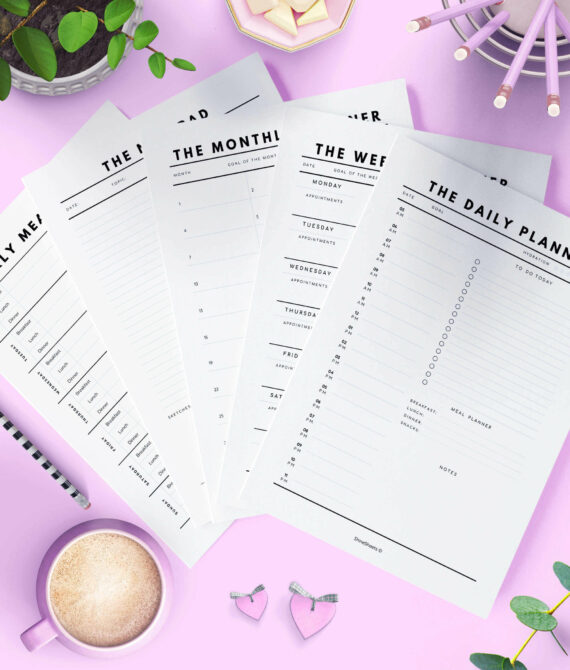
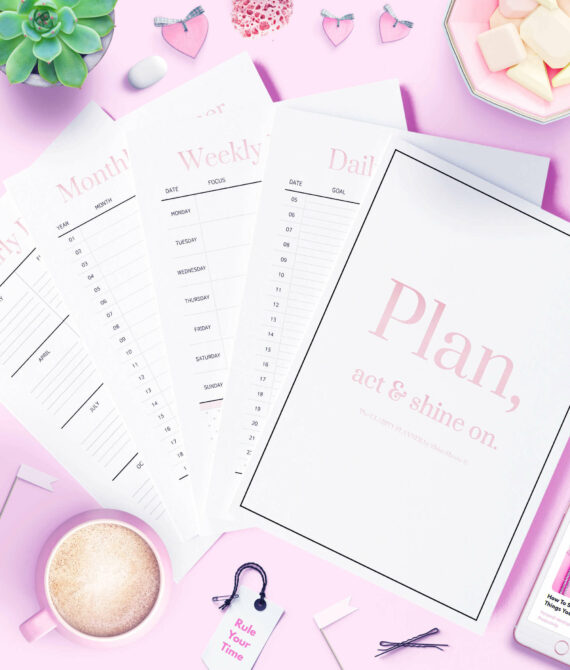
- One place for your plan. A notebook, a planner or a notes app. Paper works better for me because I can see the whole week at once, but pick whatever you'll actually open. If you like paper, look for an undated weekly planner with a two-page week spread, so a missed week never feels like a wasted page.
- Your calendar. Phone, wall, work – whichever holds your appointments.
- A pen you like. Small pleasures make habits stick. A set of soft pastel highlighters is handy for marking your three big tasks.
- Twenty minutes. Same time each week if you can. Sunday afternoon or evening works for most people, but Friday afternoon or Monday morning is fine too.
If you've never found a planner that fits the way your brain works, my guide on how to set up a planner that fits you walks through the options without any pressure to buy the perfect one.
The 20-Minute Sunday Planning Script
This is the heart of the routine. Five steps, each with a set number of minutes, adding up to twenty. Set a timer for each step if you tend to get lost in the details (I do). Screenshot it or copy it onto the inside cover of your planner so you can follow it without thinking.
| Step | Minutes | What you do | What to say to yourself |
|---|---|---|---|
| 1. Brain dump | 5 | Write every task, errand, worry and idea floating around your head. No order, no judging. | "It's on paper now. I don't have to hold it." |
| 2. Look back | 3 | Glance at last week. What got done, what moved, what you're carrying forward. | "What worked, and what was too much?" |
| 3. Check the calendar | 4 | Write fixed appointments, deadlines, birthdays and plans into each day. | "This is the space I actually have." |
| 4. Pick 3 big, 5 small | 5 | From the brain dump, choose three big tasks and five small ones for the week. | "If only these get done, it's a good week." |
| 5. Assign and soften | 3 | Give each big task a day, sprinkle the small ones, then add rest and one nice thing. | "Where's the breathing room?" |
Here's what each step looks like in practice.
Step 1: The Brain Dump (5 Minutes)
Open to a blank page and write everything. "Email landlord." "Return the blue sweater." "Book dentist." "Plan Mia's birthday thing." "Feel weird about that conversation on Thursday." Yes, feelings can go on the list too – sometimes the thing draining your energy isn't a task at all.
Keep your pen moving for the full five minutes. When you think you're done, wait ten seconds. The sneaky little tasks usually show up right then. A pad of blush sticky notes is nice here if you like moving tasks around later, one task per note.
Step 2: Look Back at Last Week (3 Minutes)
Flip back to last week's page. Put a small tick next to everything you finished – and notice how many there are. Then look at what didn't happen and ask one honest question: was it too big, badly timed or not actually important?
Anything still important gets copied onto this week's brain dump. Anything that's been carried forward three weeks in a row gets a decision: do it, schedule it properly, delegate it or let it go. Three weeks of guilt is long enough.
Step 3: Check the Calendar (4 Minutes)
Now write the fixed stuff into each day: appointments, work meetings, classes, social plans, birthdays, bills due. This is the part most people skip, and it's why their plans fall apart by Tuesday. You can't plan a big task for Wednesday if Wednesday already has three appointments and a dinner.
Look at the week as a whole and notice the shape. Which days are heavy? Which are lighter? Write a tiny word at the top of each day if it helps: "full," "easy," "social," "open."
Step 4: Pick 3 Big, 5 Small (5 Minutes)
This is the step that turns a list into a plan. Go back to your brain dump and choose:
- Three big tasks – things that take an hour or more, or that would make you feel genuinely relieved to finish. Finishing a report, deep-cleaning the bathroom, researching a new apartment, writing that difficult email.
- Five small tasks – quick things under 15 minutes. Booking an appointment, paying a bill, sending a thank-you text, returning a package.
Everything else on the brain dump stays on the brain dump. It's not forgotten – it's just not this week's job. If something feels urgent, it can replace one of your eight, but the total stays at eight. That limit is the whole point.
Step 5: Assign and Soften (3 Minutes)
Give each big task a specific day, ideally on your lighter days. Spread the small tasks wherever they fit – one or two per day is plenty. Then do the part that makes this a kind routine instead of a strict one: add rest.
Write one evening off into the week. Write one small nice thing into each day – a walk, a bath, a chapter of your book. If resting on purpose makes you feel lazy, my gentle guide on how to stop feeling guilty for resting is for you. Then close the notebook. You're done. That's twenty minutes.
The "3 Big, 5 Small" Weekly Layout
You can use this layout in any notebook, planner or notes app. No special pages needed – just a pen and a two-page spread. Here's how to set it up:
- Top left corner: "This Week's 3." Write your three big tasks in a small box. Highlight them. These are your priorities, and you'll see them every time you open the page.
- Under it: "The Small 5." A simple list of five quick tasks with little checkboxes. Tick them off whenever you have a spare ten minutes.
- The rest of the left page and all of the right: seven day columns or rows. In each day, write fixed appointments at the top, then any big or small task assigned to that day, then one "nice thing" at the bottom.
- Bottom right corner: "Not This Week." A small parking spot for tasks that came up but don't fit. This is what keeps you from cramming.
- One line at the very bottom: "This week I want to feel…" Write one word. Calm. Rested. Brave. Organized. It sounds small, but it shapes the choices you make all week.
The beauty of the layout is how little it asks of you. Eight tasks, seven days, one feeling. When the week gets busy (and it will), you only need to glance at the top left corner to remember what truly matters.
Keep the planner somewhere you'll see it, not in a drawer. A small gold-accent desk organizer that holds your planner, pens and sticky notes in one spot makes the Sunday ritual feel ready and waiting.
12 Tips To Make Weekly Planning Stick
The routine above is simple. Doing it every week is the harder part. These are the small things that help it become a habit instead of a one-time burst of motivation.
1. Anchor It to Something You Already Love
Habits stick best when they're attached to an existing one. For me, it's Sunday evening tea. The kettle goes on, the candle gets lit, the planner comes out. After a few weeks, the tea itself becomes the reminder. A soft cream glass jar candle lit only during planning time is a surprisingly powerful cue.
2. Keep the Same Time Each Week
Pick a time and protect it like an appointment. Sunday at 6 p.m., Friday at 4 p.m., Monday at 7:30 a.m. – whichever you choose, write it in your calendar as a repeating event so it doesn't depend on remembering.
3. Plan Your Week, Not Your Perfect Week
The biggest trap is planning for the version of you who has endless energy and nothing ever goes wrong. Plan for the real you: the one who gets tired by Thursday and needs a slow morning. A realistic plan you follow beats a perfect plan you abandon.
4. Use the 70% Rule
Only fill about 70% of each day's available time. The other 30% is for the unexpected – a longer phone call, a slow afternoon, a task that takes twice as long as you thought. If you finish early, wonderful. Pull something from the "Not This Week" corner.
5. Give Big Tasks a Time, Not Just a Day
"Finish report on Wednesday" is easy to push around. "Finish report Wednesday, 9–11 a.m." is a plan. Even rough times help: morning, after lunch, evening.
6. Match Tasks to Your Energy
Notice when you think best. If your brain is sharpest in the morning, that's where your big tasks go. Errands, emails and small tasks fit nicely into the afternoon slump. Coffee sometimes perks me up and sometimes makes me jittery, so I don't plan anything important for the half hour after my second cup.

7. Batch Similar Small Tasks
Instead of scattering phone calls and emails across the week, group them. "Tuesday, 4 p.m.: three calls and the landlord email." Twenty focused minutes beats five interrupted moments of switching gears.
8. Put Rest in First, Not Last
If rest only happens when everything else is done, it never happens. During Step 5, write your rest before you assign the small tasks. One evening off, one slow morning, one walk. Then fit the rest around it.
9. Plan One Thing To Look Forward To
Every week should have at least one bright spot: a movie night, coffee with a friend, a new book, a bath with the good bubbles. Having something on the horizon makes the hard days feel shorter. My dopamine menu is full of small ideas if you're not sure what lifts you.
10. Do a Two-Minute Morning Check
Each morning, open your planner and look at today. That's it. Two minutes to see what's on, adjust anything that needs adjusting and remind yourself of the three big tasks. It keeps the weekly plan alive instead of forgotten on Sunday's page.
11. Forgive the Messy Weeks
Some weeks you'll skip planning altogether. Some weeks the plan will fall apart by Monday afternoon. That doesn't mean the system failed or that you're bad at this. Just open the planner the following Sunday and start again. No catching up, no backfilling missed weeks.
12. Notice How It Feels
At the end of each week, take one minute to write a single line about how the week felt. "Calmer than usual." "Too packed on Tuesday." "Loved having Friday evening free." Over a month, these notes show you exactly how to adjust your planning. I like to do this right after my evening tea, in my journal – if you're looking for more prompts for those pages, my journaling ideas are a lovely place to start.
An Example Week Using "3 Big, 5 Small"
Sometimes it helps to see what a finished plan actually looks like. Here's an example week for someone with a regular weekday schedule and a few personal projects. Notice how much empty space there is – that's on purpose.
This Week's 3: finish the quarterly report, deep-clean the bathroom, research weekend trip options.
The Small 5: book eye appointment, pay electricity bill, return online order, text Sarah happy birthday, order new face wash.
This week I want to feel: steady.
| Day | Fixed plans | Big or small task | Nice thing |
|---|---|---|---|
| Monday | Team meeting 10 a.m. | Big: report, 1–3 p.m. Small: pay bill | Evening walk |
| Tuesday | Dentist 4 p.m. | Small: book eye appointment | New episode of a favorite show |
| Wednesday | – | Big: finish report, 9–11 a.m. | Bath and a face mask |
| Thursday | Dinner with friends 7 p.m. | Small: return order | The dinner itself |
| Friday | – | Small: text Sarah, order face wash | Evening off, no plans |
| Saturday | Farmers market | Big: deep-clean bathroom, 11 a.m.–12:30 p.m. | Afternoon with a book |
| Sunday | – | Big: research trip, 2 p.m. Then plan next week | Tea, candle, planning ritual |
Eight tasks across seven days, with room left over. If the report takes longer than expected, Tuesday or Friday can absorb it without the whole week toppling.
The 5-Minute Midweek Reset
By Wednesday, most plans need a little nudge. Something urgent showed up, you got sick, or a task turned out to be three tasks in disguise. Instead of abandoning the week, try this quick reset:
- Breathe and look (1 minute). Open your planner and look at what's left without judging what didn't happen.
- Re-pick your 3 (1 minute). Are your three big tasks still the right three? Swap one if needed. It's allowed.
- Move, don't cram (2 minutes). Shift unfinished tasks to the remaining days, keeping the 70% rule. If it doesn't fit, it goes to "Not This Week."
- Protect your rest (1 minute). Check that your evening off is still there. If something has to go, let it be a small task, not your rest.
Five minutes, and the week feels doable again. When anxiety makes everything look urgent at once, a few slow breaths before step one help more than you'd expect.
Common Weekly Planning Mistakes (and Gentle Fixes)
- Planning too much. If your list has twenty tasks, it's a wish list, not a plan. Stick to eight.
- Forgetting the fixed plans. Always write appointments and commitments first. They take more time than we think.
- Making it pretty instead of useful. Stickers and lettering are fun, but if decorating takes an hour, the planning stops happening. Keep it simple first, decorate later if you like.
- Only planning work. Your week includes your body, your home, your friendships and your rest. Give them space on the page too.
- Treating the plan like a contract. A plan is a guide, not a promise. It's meant to be adjusted.
And if you're planning around bigger goals for the new year, my post on new year goals shows how to break them into the kind of small weekly steps that fit right into your "3 big" box.
A warm drink makes the whole thing feel more like a ritual and less like homework. A white ceramic tea mug with a lid keeps your tea warm through all twenty minutes, so there's no cold-tea sadness at the end.
Final Thoughts
Learning how to plan your week isn't about squeezing more into your days. It's about deciding, ahead of time and in a calm moment, what actually deserves your energy – and giving yourself permission to let the rest wait.
Twenty minutes on a Sunday, three big tasks, five small ones and one evening that's just for you. Start with this coming week, keep it gentle and let the habit grow at its own pace. Next Sunday evening can feel a little lighter.