
An ideal week isn't a perfect week. It's a loose, kind rhythm that reflects what matters to you, built around the life you actually have, so your days stop feeling like a random pile of tasks and start feeling like they belong together.
Most of us plan week by week, reacting to whatever lands in the calendar. That works until it doesn't, and suddenly it's Thursday, you haven't seen a friend in a month and rest only happens when you collapse. Designing your ideal week once gives you a gentle default to come back to, even when real life gets loud.
This guide shows you how to design an ideal week that fits your real life, not a fantasy schedule. We'll start with your values and non-negotiables, walk through six simple steps, look at an example week in a table, and talk about energy, white space, kids, shifts and surprises. All you need is a pen, a sheet of paper or an undated weekly planner, and about an hour of quiet.
What an Ideal Week Really Is (and Isn't)

Think of your ideal week as a sketch of how a good, ordinary week would flow if most things went roughly to plan. It shows where your fixed commitments sit, which days lean toward which kind of work, and where rest and joy are protected. It is a guide you glance at, not a rulebook you obey.
Here's what it isn't:
- It isn't a schedule for every hour. You're shaping the overall rhythm, not booking each 15 minutes.
- It isn't a productivity contest. A good ideal week often has less in it than your current one, not more.
- It isn't something you redo every Sunday. You design it once, then adjust it a few times a year when life changes.
Your ideal week also isn't the same as your weekly planning session. My guide on how to plan your week covers that 20-minute routine, where you fill in this specific week's tasks. The ideal week sits underneath it like a soft blueprint, so each weekly plan starts from a good place instead of a blank page.
Start With What Matters Most

Before you draw a single box, take ten minutes to think about what you want your weeks to hold. It's tempting to skip this and go straight to the calendar, but this is the part that makes the whole thing feel like yours.
Name Your Values in Three Words
Write down three words that describe what you want more of in your life right now. A few examples: calm, connection, creativity, health, learning, home, freedom, faith, adventure, rest. Keep it to three. More than that and every day starts to feel crowded.
Then ask yourself a simple question for each word: "Where does this show up in my week right now?" If one of your words is "connection" and your current week has no time with people you love, that's the gap your ideal week will gently close.
List Your Non-Negotiables
Next, write down everything that has to happen no matter what. These are the facts of your life, not wishes:
- Work hours or shifts, including the commute.
- Family duties, like school runs, caring for a parent or shared custody days.
- Sleep (yes, sleep is a non-negotiable, and it gets a real number of hours).
- Fixed appointments that repeat, like therapy, a weekly class or a standing call.
- Basic home care: groceries, laundry, cooking, cleaning.
Be honest here. An ideal week that pretends you don't have a commute or a toddler will break by Tuesday. The goal is to design around your real anchors, not around an imaginary person with endless free time.
How To Design Your Ideal Week in 6 Steps
Now the fun part. Grab a sheet of paper and draw seven columns, one for each day, or open a fresh spread in your planner. Use pencil or keep it rough. This is a sketch, so it's allowed to be messy.
Step 1: List Your Anchors
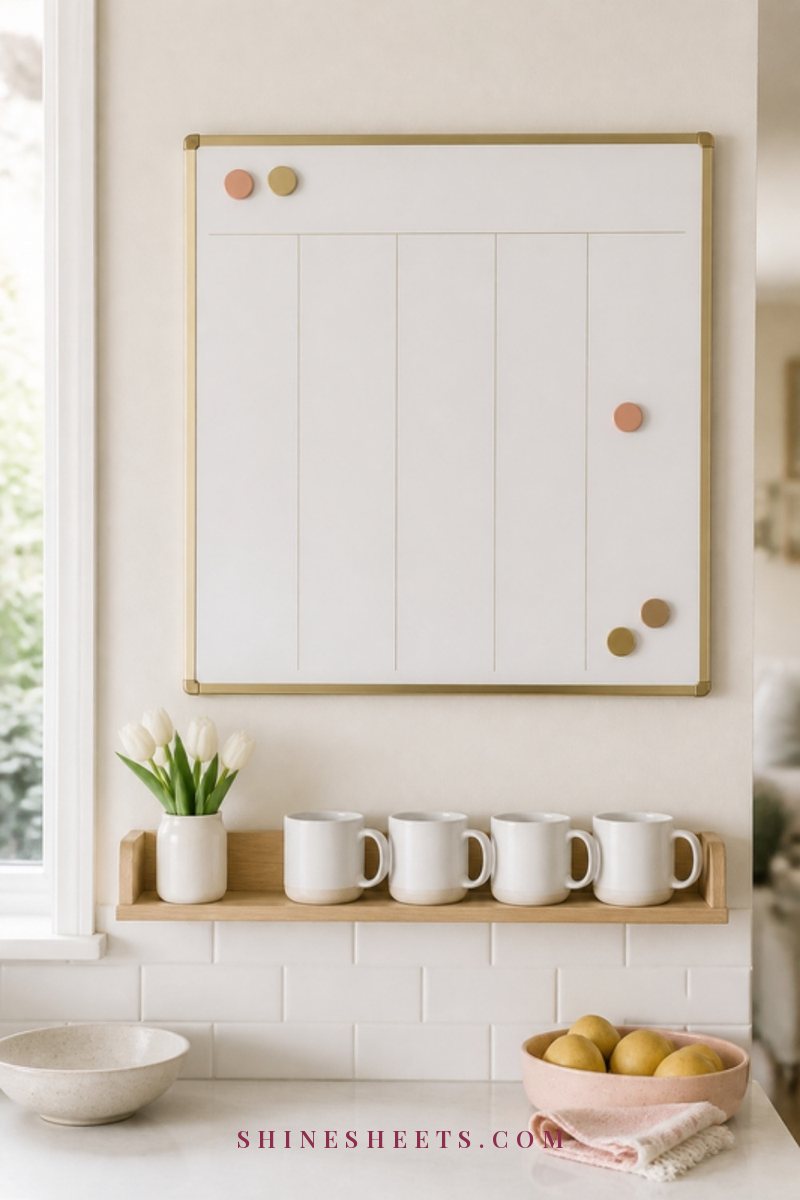
Anchors are the fixed commitments that everything else arranges itself around. Take your non-negotiables list and place each one on the day it happens: work hours, school runs, your Wednesday class, Sunday dinner with family.
If you like seeing things at a distance, a large cream wall calendar on the wall near your desk is lovely for this step, because the anchors stay visible all week without opening anything.
When you're done, look at the shape. Which days are heavy? Which ones have room? This simple picture tells you a lot before you've planned anything else.
Step 2: Choose Day Themes
A day theme is a loose focus for each day, so your brain isn't switching between ten kinds of work at once. It doesn't mean you only do one thing that day. It means you know what the day leans toward.
Some theme ideas:
- Monday: planning and admin.
- Tuesday: deep focus work.
- Wednesday: meetings, calls and people.
- Thursday: creative projects or learning.
- Friday: wrap-up and light tasks.
- Saturday: home and errands.
- Sunday: rest and reset.
Choose themes that fit your anchors. If Wednesday is already full of meetings, that's your people day. If Friday afternoon always fizzles, give it a light theme instead of fighting it. A set of pastel highlighters makes this step easy to see at a glance: one soft color per theme, and you can read your week's rhythm in a second.
Step 3: Protect Rest and Joy

This is the step most people leave for last, and that's exactly why it never happens. Put rest and joy on your sketch now, before the tasks fill the space.
Protect at least these:
- One longer rest block: half a day with nothing planned, often on the weekend.
- Two or three small joy blocks: an hour for a hobby, a walk with a friend, a slow bath, an evening with a book.
- A daily wind-down: even 20 minutes in the evening for tea, journaling or simply sitting.
Mark these as clearly as your work anchors. If you need ideas for how to spend the bigger rest block, my weekend routine ideas help you rest and reset without the weekend disappearing.
A small honest admission: For a long time I treated rest as a reward I'd earn after everything was done. Everything was never done. Putting rest on the plan first was the only thing that changed that.
Step 4: Batch Similar Tasks
Look at the recurring tasks in your life, the ones that happen every week: emails, errands, laundry, meal prep, paying bills, calling family, tidying. Instead of sprinkling them across every day, group similar ones together.
- Errands: one trip on Saturday morning instead of four small trips.
- Admin: bills, paperwork and appointments in one Monday hour.
- Messages: two set times a day to answer, instead of all day long.
- Home care: laundry and a quick clean on the same evening.
Batching saves the energy you'd spend switching gears. If you want to go deeper, my guide to task batching walks through how to group tasks well. For your ideal week, just give each batch a home on one day.
Step 5: Add Buffers
Buffers are small pockets of empty time between things. They're what keep a plan from collapsing the first time a call runs long or the bus is late.
A simple rule: add 15 minutes of buffer around anything important, and leave one buffer hour somewhere in the middle of the week (Wednesday or Thursday afternoon works well). If nothing goes wrong, the buffer becomes a free pocket for a walk or a head start on tomorrow. If something does go wrong, you have space for it without stealing from your rest.
Keep a little sage desk notepad beside you for the week so anything that pops up during a buffer gets written down instead of becoming a new emergency.
Step 6: Test It for Two Weeks
Now live with your sketch for two weeks. Don't change anything in the first few days, even if it feels a little odd. Just notice.
At the end of each day, write one line: "What worked? What didn't?" At the end of two weeks, read your notes and make one or two small changes. Maybe Tuesday's focus block needs to move to the morning. Maybe the Saturday errand batch is too ambitious. Adjust, then test again.
A short weekly check-in makes this much easier. My weekly review routine takes about 30 minutes and pairs perfectly with testing your ideal week.
An Example Ideal Week at a Glance
Here's what an ideal week might look like for someone with a weekday job and a few evening commitments. Yours will look different, and that's the point. Use this as inspiration for your own sketch, not as something to copy line by line.
| Day | Anchor commitments | Focus theme | Energy level | Protected time |
|---|---|---|---|---|
| Monday | Work 9–5 | Planning and admin | Medium | Evening tea and early night |
| Tuesday | Work 9–5 | Deep focus | High | 30-minute walk after work |
| Wednesday | Work 9–5, evening class | People and calls | Medium | Buffer hour after lunch |
| Thursday | Work 9–5 | Creative projects | Medium to high | Hobby hour in the evening |
| Friday | Work 9–3 | Wrap-up and light tasks | Low | Dinner with a friend |
| Saturday | Errands in the morning | Home and errands | Medium | Free afternoon |
| Sunday | Family call | Rest and reset | Low | Slow morning, bath and journaling |
Notice that every day has protected time, and the lowest-energy days have the lightest themes. Screenshot it if you'd like it on hand while you sketch your own.
Match Your Days to Your Energy

Time is only half of the picture. A week that fits on paper can still feel awful if your hardest work lands on your most tired days. That's why the table above has an energy column.
For one week, before you finalize your sketch, rate your energy each morning and afternoon as high, medium or low. Most people notice patterns quickly: Mondays slow, Tuesdays sharp, Friday afternoons gone. Then:
- Put deep focus and creative work on your high-energy days and times.
- Put admin, errands and messages in medium slots.
- Give low-energy days light themes and extra rest, not your hardest tasks.
Energy also changes with sleep, hormones, seasons and stress, so treat this as a living guide. If you'd like to understand this idea better, my article on energy management vs time management explains why the two work best together.
Leave White Space on Purpose
White space is time with nothing planned. Not rest, not buffer, just open. It feels strange to plan "nothing," but it's often what makes a week feel spacious instead of packed.
Aim for at least two or three open blocks of an hour or more across the week. Leave them blank on your sketch. When the week arrives, you can use them for whatever feels right: a spontaneous coffee, a nap, finishing something you're excited about, or simply sitting with your thoughts.
If you find yourself filling every white space during planning, that's a sign to pause and remove one commitment instead. A full week isn't the same as a good week.
Ideal Week Ideas for Real Lives

The idea of an ideal week can sound like something only people with quiet, predictable lives can do. It isn't. It just needs a bit more flexibility built in.
With Kids at Home
Build around school hours, nap times and bedtimes as anchors. Give each day one small personal block, even 20 minutes, rather than aiming for long stretches that rarely happen. Batch household tasks on the evenings when you share duties with a partner or helper, and keep one weekend slot that is just for the family, with no errands attached. Expect sick days and plan a "soft week" version where only anchors and rest stay in.
With Shift Work or Changing Hours
If your schedule changes from week to week, design your ideal week around shift types instead of days. Sketch three short versions: an early-shift day, a late-shift day and a day off. Each one gets its own anchors, one focus and protected rest. When your rota comes out, you simply place the right version on each day. Sleep is the first thing to protect here, so give it a fixed block after every shift.
When Surprises Happen
Some weeks will fall apart, and that's normal. When a surprise hits (a sick child, a deadline, a family visit), keep only three things from your ideal week: your anchors, your sleep and one small joy block. Let the rest go without guilt. Your ideal week will be right there when things calm down.
How To Adjust Your Ideal Week When Life Changes

New job, new baby, a move, a breakup, a health change, a new season. Big changes call for a fresh sketch, not a stricter one. Here's a gentle way to redo it:
- Revisit your three words. Do they still fit? It's okay if "adventure" becomes "rest" for a while.
- Update your anchors. Put the new fixed commitments on the page first.
- Remove before you add. Cross out one old habit or commitment for every new one.
- Protect rest again. Life changes are tiring, so give yourself more rest than usual, not less.
- Test for two weeks. Same as before: notice, note, adjust.
A quick check-in about three or four times a year, even without big changes, keeps your ideal week feeling true. If any change leaves you feeling overwhelmed for a long time, talking it through with someone you trust, or with a counselor, can help a lot.
How To Use Your Ideal Week Every Week
Once your sketch is ready, keep it somewhere you'll see it: taped inside your planner, pinned by your desk or copied onto the first page of your notebook. Then use it in three small ways:
- During weekly planning: glance at your ideal week first, then fill this week's tasks into the right themed days.
- When someone asks for your time: check where it would fit best, instead of saying yes to whatever slot is open.
- When the week feels off: compare your actual week to the sketch and gently bring back one missing piece, like a walk or a free evening.
Write the sketch out once with a smooth gold-accent pen on good paper, and it starts to feel less like a plan and more like a promise to yourself. Your daily habits fit inside it too, so if you're still shaping those, my guide on how to create a daily routine that sticks is a helpful companion. And if you like a soft visual nudge, a few pastel sticky notes can mark this week's protected time right on your planner pages.
Final Thoughts
Designing your ideal week isn't about controlling every hour. It's about deciding, once and with care, what a good week looks like for you, then giving yourself a gentle shape to come back to whenever life pulls you off course.
Start with your three words, your anchors and one protected joy block. Let the rest grow slowly. Some weeks will match your sketch beautifully and some won't, and both are part of a life that is truly yours.