A good Sunday reset isn't a deep clean, a three-hour planning session or a full life overhaul squeezed into one afternoon. It's a handful of small, kind tasks that make Monday-you feel looked after: clean sheets, a clear counter, a rough plan for the week and a quiet hour that belongs only to you.
The real trick is choosing the right size. Some Sundays you have two slow hours and a full tank. Other Sundays you have thirty minutes and the energy of a wilted houseplant. Both count, and both can work beautifully if you know which tasks matter most.
This guide walks you through a Sunday reset routine built around four simple areas – home, body, mind and plan. You'll find a 30, 60 and 120 minute version side by side in one table, 15 steps explained in detail, a gentle reframe card for the Sunday scaries and a few ideas for turning the whole thing into a ritual instead of another chore on the list.

What a Sunday Reset Actually Is (and What It Isn't)
A Sunday reset is a short, repeatable routine that closes one week and opens the next. That's it. It's not a punishment for a messy week, and it's definitely not a test you can fail.
The goal is simple: reduce the number of small messes and tiny decisions waiting for you on Monday morning. Every pile you clear, every outfit you choose in advance and every task you write down instead of carrying around in your head is one less thing pulling at your attention when the week gets busy.
It also isn't about making Sunday productive from morning to night. A reset works best as a defined block of time – with a start and an end – so the rest of the day can stay soft and slow. I'd much rather you do a calm hour and then curl up with a book than spend the whole day half-cleaning, half-resting and fully guilty about both.
One small honest admission: I'm prone to anxiety, and Sunday afternoons used to be when it crept in. What helped most wasn't a perfect routine. It was having any routine – a familiar sequence my brain could follow without negotiating every step.
The Four Areas of a Sunday Reset
Every step in this routine fits into one of four buckets. Thinking in buckets keeps you from over-focusing on one area (usually cleaning) while the others get ignored.
- Home: the physical stuff – laundry, sheets, counters, the one spot in your home that turns into a pile magnet.
- Body: a shower or bath, your weekly care bits, a bit of movement and an outfit ready for Monday.
- Mind: emptying your head onto paper, closing out the week you just had and tidying your digital space.
- Plan: looking at the week ahead, choosing a few priorities and setting up a calm evening.
If you only touch one thing in each area, you've done a Sunday reset. Really. The rest is a bonus.
Pick Your Version: 30, 60 or 120 Minutes
Here's the whole routine in three sizes. Pick the column that matches the Sunday you actually have, not the Sunday you think you should have. Screenshot it and keep it on your phone if that helps.
| Area | 30 minutes (the bare minimum) | 60 minutes (the sweet spot) | 120 minutes (the full reset) |
|---|---|---|---|
| Home | 10-minute tidy sweep, start one load of laundry | Tidy sweep, laundry washed and folded, kitchen counters and sink cleared | Everything in 60, plus fresh sheets, one "hot spot" reset and trash out |
| Body | Lay out Monday's outfit | Outfit ready, a proper shower with your weekly care bits | A slow bath or long shower, weekly care, a 20-minute walk or stretch |
| Mind | 5-minute brain dump on paper | Brain dump, three quick questions about last week | Brain dump, weekly reflection, a small phone and inbox tidy |
| Plan | Glance at your calendar, write down Monday's top task | Look over the week, choose three priorities | Full week preview, three priorities, one thing to look forward to, calm evening set up |
A little tip: the 30-minute version is not a "failed" reset. On a hard week it might be the most loving thing you do for yourself. Most weeks, I aim for the 60-minute column and let the 120-minute version happen naturally once a month or so.
15 Steps for a Calm Sunday Reset
These are the steps in the order I'd do them – home tasks first (because laundry needs time to run), then body, mind and plan, ending with a quiet evening. Take what fits, skip what doesn't, and don't be afraid to shuffle the order around your own Sunday.
1. Start With a Ten-Minute Tidy Sweep
Set a timer for ten minutes and walk through your home with an empty basket or tote. Anything that's out of place goes into the basket. When the timer ends, walk the basket around and put things back where they live.
The timer matters. It tells your brain "this is short," which makes it much easier to start. And ten minutes of focused tidying clears more than you'd think – usually every surface you actually look at during the week.
2. Get the Laundry Moving Early
Start a load as soon as your sweep is done, so the washing machine works while you do everything else. If you hate the sorting part, keep a woven laundry basket with a lid in your bedroom and a second bag for delicates, so by Sunday the sorting is already half done.
The finish line here isn't "washed." It's "folded and put away." A clean pile living on a chair all week doesn't count as a reset (we've all been there). If folding feels endless, my laundry tips that make the whole chore easier include a few quick folding tricks.
3. Change Your Sheets
Fresh sheets on a Sunday might be the single most satisfying part of the whole routine. Climbing into a crisp, clean bed on Sunday night makes Monday feel softer before it even starts.
Every week is lovely if you can manage it; every other week is completely fine too. Having two sets makes this so much easier, because you never have to wait for one to dry. If you're shopping for a spare, look for a washed cotton bedding set in white or cream – it softens with every wash and looks calm even when it's a little rumpled.
4. Clear the Kitchen Counters and Sink
You don't need to clean the whole kitchen. Just get the counters clear, the sink empty and the dishwasher running (or the dishes dried and put away). Wipe the counters, wipe the stovetop and take out the trash and recycling.
A clear kitchen on Monday morning is a gift. Making coffee or tea in a calm space sets a completely different tone than digging a mug out from under Saturday's dishes.
5. Reset One "Hot Spot"
Every home has one spot that collects everything: the entryway chair, the corner of the desk, the nightstand, the bathroom counter. Pick just one and give it a full reset – clear it, wipe it and put back only what belongs there.
Rotate through your hot spots week to week. Over a month, your whole home gets a little attention without you ever doing a big cleaning day.
6. Take a Longer Shower or a Slow Bath
This is where the routine shifts from doing to caring. Take a shower that's a few minutes longer than usual, or run a bath if you have the time. Put on music or a podcast, use the nice body wash and actually let yourself enjoy it.
If baths are your thing, I've gathered plenty of relaxing bath ideas for a calm evening. Have a stack of fresh waffle-weave bath towels ready afterward – the small luxury of a soft, clean towel is part of the reset too.
7. Do Your Weekly Body Care Bits
These are the things you skip on busy weekday mornings: a hair mask, a gentle exfoliation, a proper layer of body lotion, a face mask if you like one. Pick one or two, not all of them.
Keep everything for this step together in one basket or drawer, so you're not hunting through cabinets. Ten minutes of looking after yourself on Sunday tends to carry a quiet confidence into the week.
8. Lay Out Monday's Outfit
Choose your Monday outfit completely – clothes, shoes, jewelry, bag – and hang it somewhere visible. If you want to go further, plan two or three outfits for the busiest days of the week.
This saves you maybe ten minutes on Monday, but the real benefit is mental. One less decision on the hardest morning of the week leaves more room for a calm start.
9. Move Your Body Gently
A 20-minute walk, a short stretch on the living room floor or a few minutes of yoga all count. The aim isn't fitness. It's shaking off the week and getting a little fresh air before the evening slows down.
If you can, walk outside while it's still light. Even a short walk around the block can quiet the restless, slightly anxious energy that Sunday afternoons sometimes bring.

10. Do a Brain Dump
Grab a piece of paper and write down everything that's floating around in your head: errands, emails to answer, appointments to book, ideas, worries, that birthday card you keep forgetting. Don't organize it yet. Just get it out.
Five minutes is usually enough. You'll be amazed how much lighter your head feels when the list lives on paper instead of on a loop in your brain.
11. Close Out Last Week
Before you plan the next week, take a few minutes to close the last one. Answer three quick questions in a journal or notebook:
- What went well this week?
- What felt heavy or hard?
- What would I like to do a little differently next week?
Keep the answers short – a line or two each. This tiny habit helps you notice patterns (like "I always feel drained on Wednesdays") and gives you real information for planning, instead of just guessing.
12. Tidy Your Phone and Inbox a Little
Digital clutter is still clutter. Spend ten minutes on one or two of these: delete screenshots you no longer need, close old browser tabs, archive emails you've already dealt with, unsubscribe from three newsletters you never read, delete old files you no longer need or move your home screen apps around so the calm ones are easy to reach.
Don't try to reach inbox zero on a Sunday evening. Just make the space feel a little lighter for Monday.
13. Look at the Week Ahead
Now open your calendar and look at the week as a whole. Note appointments, deadlines, social plans and anything that needs preparing in advance (a gift to buy, a form to fill in, a call to make).
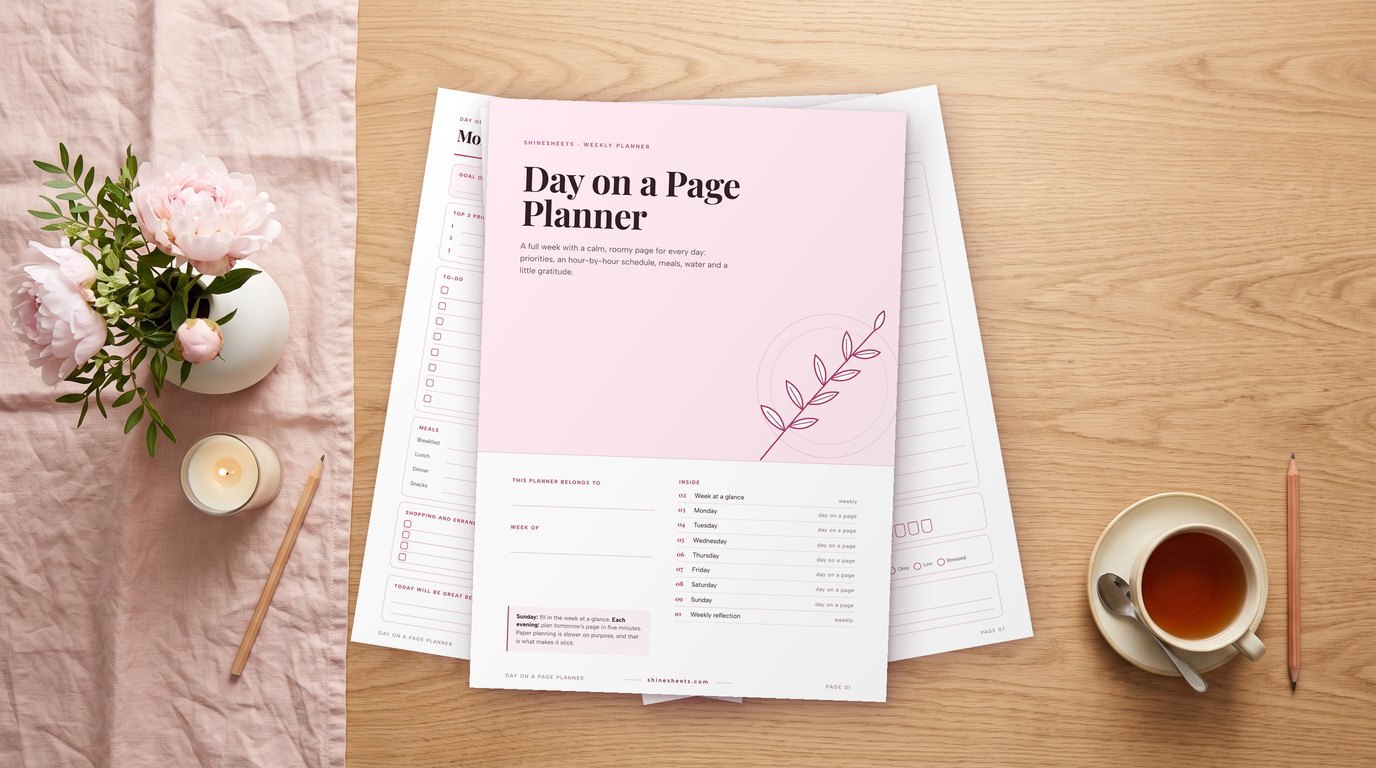
I like writing the week out by hand on a tear-off weekly planner pad that lives on my desk – seeing every day on one page makes it easier to spot the overloaded days before they arrive. For a deeper walkthrough, my guide on how to plan your week without overwhelm has the full system.
14. Choose Three Priorities and One Thing To Look Forward To
Look at your brain dump and your calendar, then choose three priorities for the week. Not ten. Three. These are the things that would make the week feel like a success even if everything else is just "fine."
Then add one thing to look forward to: a coffee date, a new book, a solo walk, a movie night. A week that has something nice in it feels very different from a week that's only obligations.
15. Set Up a Calm Sunday Evening
End your reset by making the evening feel soft. Light a candle in a simple glass jar, make a cup of tea and do something unhurried – reading, journaling, a face mask, an easy show. An essential oil diffuser in white ceramic with a few drops of lavender is a gentle alternative if you prefer no open flame in the bedroom.
Prepare one or two things for Monday morning too: fill your water bottle, set out your mug, pack your bag. If you'd love your weekday mornings to feel less rushed, my slow morning routine for busy women pairs perfectly with a Sunday reset. And please blow out candles before you fall asleep – a tiny safety habit worth keeping.
The Sunday Scaries: A Gentle Reframe Card
That heavy, slightly anxious feeling that arrives on Sunday afternoon is so common it has a nickname. It usually comes from anticipating the week – everything you have to do, everything that might go wrong – all at once, before any of it has actually happened.
A reset routine helps, because it turns vague worry into small, concrete actions. But sometimes your thoughts need a gentle nudge too. Here's a reframe card you can come back to:
| When you think… | Try telling yourself… |
|---|---|
| "The whole week is going to be too much." | "I only have to do Monday on Monday." |
| "I didn't get anything done this weekend." | "Rest was something I did. It counts." |
| "I'm already behind." | "I can choose three things and let the rest wait." |
| "Something is going to go wrong." | "I've handled hard weeks before, and I'll handle this one too." |
| "Sunday is ruined because I'm anxious." | "I can feel anxious and still have a gentle evening." |
If the dread is heavy every single week, it's worth looking at what's underneath it – your workload, a situation that drains you, or simply a need for more rest. My post on how to stop feeling guilty for resting might help with the "I should be doing more" voice. And if Sunday anxiety starts spilling into the rest of the week or affects your sleep, a kind conversation with a doctor or therapist is always a good idea.
Common Sunday Reset Mistakes
A Sunday reset should leave you feeling lighter, not more tired. If yours doesn't, one of these is usually the reason:
- Making it too long. A four-hour reset is a cleaning day, not a reset. Stick to your chosen column in the table and stop when the time is up.
- Starting too late. Starting at 8 p.m. means rushing, skipping your evening and going to bed wired. Mid-afternoon is ideal for most people.
- Only cleaning. If your reset is all home and no body, mind or plan, you'll have a clean home and the same heavy head. Touch every area, even briefly.
- Planning every hour of the week. A plan that fills every slot breaks by Tuesday. Leave white space on purpose.
- Treating a skipped Sunday as failure. Life happens. A Monday-evening mini reset works just as well. The routine is there to serve you, not the other way around.
How To Make Your Sunday Reset Stick
The best Sunday reset is the one you actually repeat. A few small things make that much more likely:
- Pick a regular start time. "Sunday at 3" becomes automatic far faster than "sometime on Sunday."
- Make a reset playlist. Same playlist every week. After a few Sundays, the first song alone tells your brain what's happening.
- Pair it with something you love. A favorite tea, a podcast you save just for Sundays, a candle you only light during your reset.
- Keep your supplies together. Planner, pen, cleaning spray and body care basket in their places means no hunting and no excuses.
- Notice how Monday feels. After a few weeks, compare Mondays with and without a reset. That difference is your best motivation.
You'll find the routine slowly shapes itself around your life. Some weeks you'll do every step. Others you'll fold one load of laundry, write down Monday's top task and call it a night. Both are a Sunday reset.
Final Thoughts
A Sunday reset isn't about becoming a perfectly organized person. It's about giving yourself a soft landing into the week – a clean bed, a clear head and a plan that's kind enough to actually follow.
Start small this Sunday. Pick the 30-minute column if that's what you have, light a candle when you're done and let that be enough. Monday-you will feel the difference, and over time, so will every other day of the week.