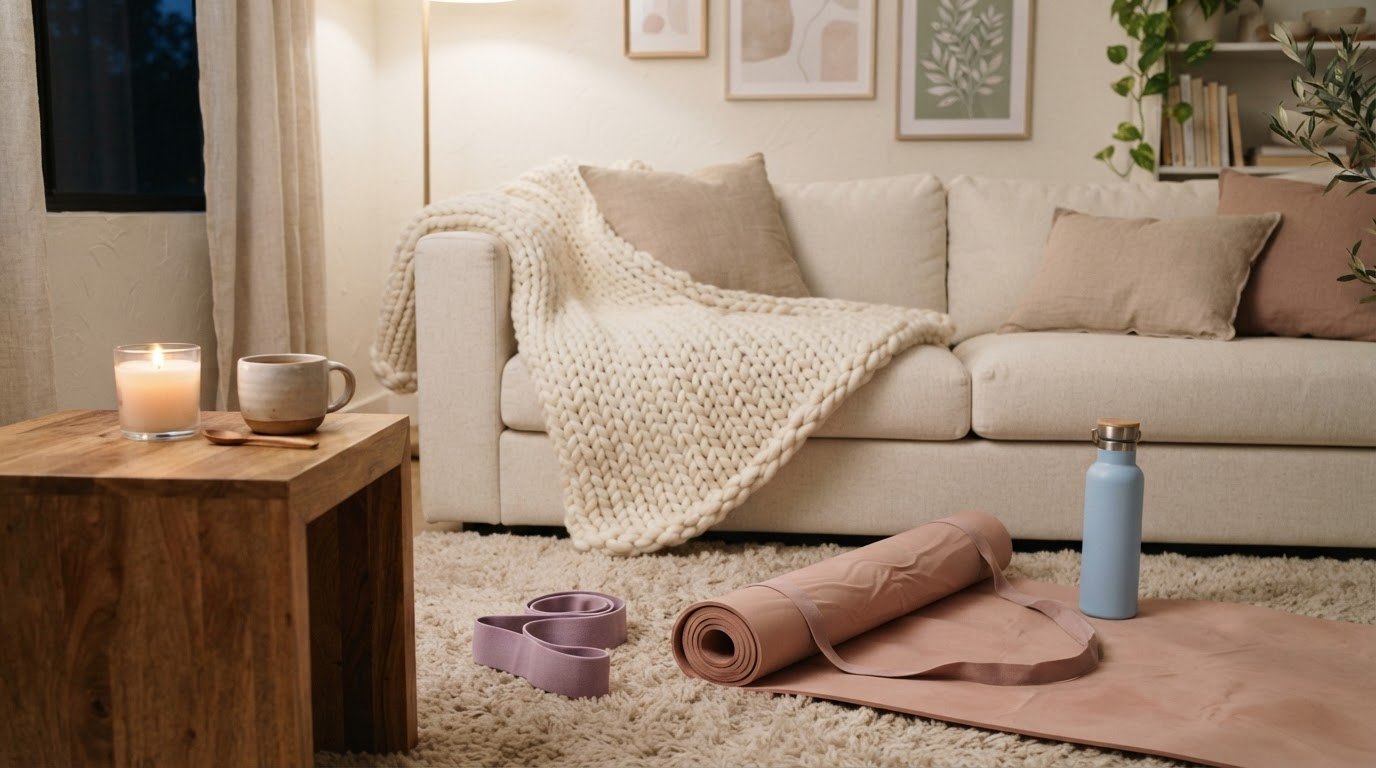
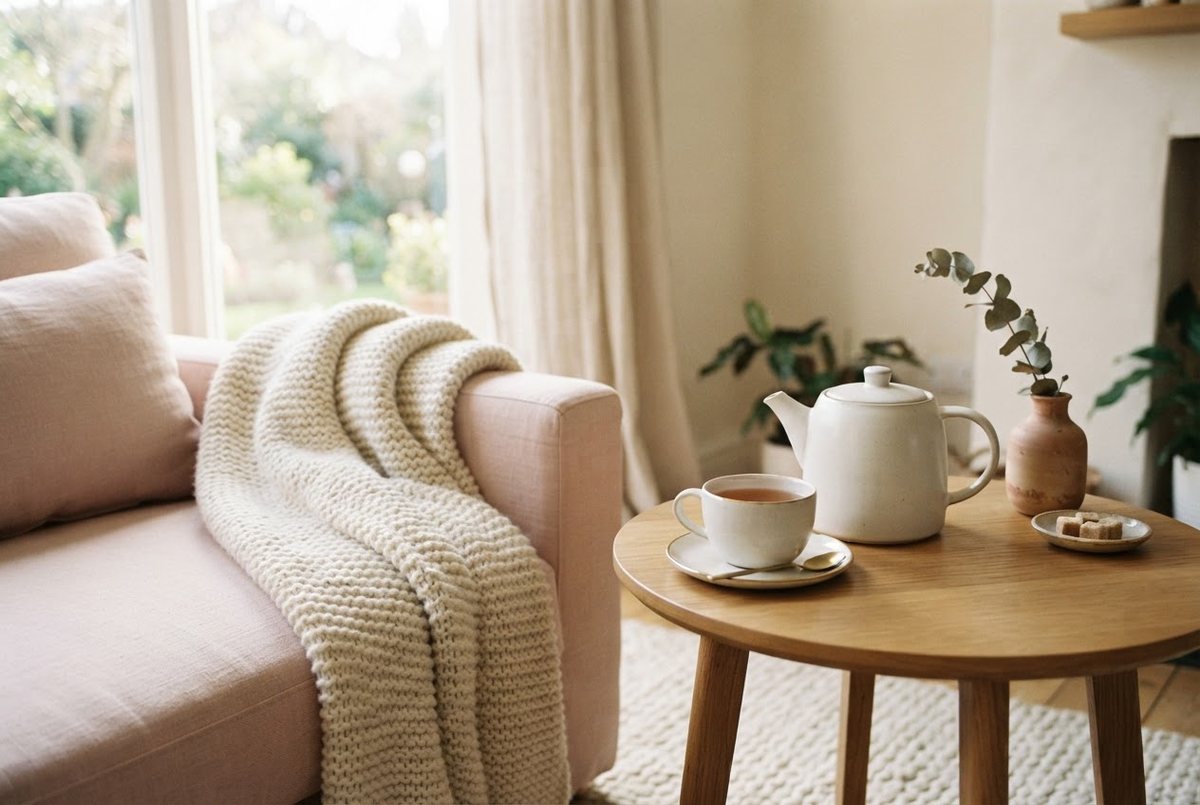
It's a Sunday afternoon. I've finally sat down on the sofa with a blanket and a cup of tea, the light is soft, nothing is urgent. And within about four minutes, a little voice starts up: You haven't answered those emails. The bathroom needs cleaning. Other people are using their weekends to get ahead. What are you doing just sitting here?
So I get up. I wipe a counter that didn't need wiping. And by evening I'm tired in that particular way that comes from never fully stopping, and somehow still feeling like I didn't do enough.
If that sounds familiar, you're far from alone. So many of us learned somewhere along the way that rest has to be earned, that slowing down is lazy and that our worth is measured by how much we get done. It's a heavy thing to carry, and it makes the very thing that should restore us feel like something to apologize for.
This guide is here to help you put that weight down. You'll find why rest triggers guilt in the first place, the 7 types of rest (because sometimes you're tired in a way a nap won't fix), 15 gentle reminders to stop feeling guilty for resting and a rest permission slip you can copy into your journal or stick on the fridge. Consider it a friendly nudge to sit back down.
Why Resting Makes You Feel Guilty
Understanding where the guilt comes from takes away a lot of its power. Here are the most common reasons rest feels "wrong", and see if you recognize yourself in any of them:
- You learned that being busy means being good. If you grew up hearing praise for hard work and side-eye for "lounging around", your brain may still link resting with being bad.
- Rest became a reward. When rest only comes after everything is done, and everything is never done, you never quite qualify.
- You compare your rest to other people's output. A quick look at your phone and someone else has run a half marathon, reorganized her pantry and launched a business, all before lunch.
- An anxious brain reads stillness as danger. I'm prone to anxiety, and for me the moment I stop is often the moment the worries get louder. Busyness can feel safer than quiet, even when it's exhausting.
- You care for everyone else first. When you're used to looking after people, sitting down can feel selfish, even when nobody actually needs anything from you right now.
None of these make you weak or broken. They're habits of thought, and habits can be gently changed. The first step is simply noticing: "Ah, there's the guilt. It's an old story, not the truth."
The 7 Types of Rest
Have you ever slept eight hours and still woken up exhausted? That's because sleep is only one kind of rest. Physician Saundra Dalton-Smith popularized the idea that there are seven different types, and that we often try to fix one kind of tiredness with the wrong kind of rest (like reaching for your phone when your brain is already overstimulated).
Use this table to figure out what kind of tired you really are, then pick one small way to refill:
| Type of rest | Signs you need it | What helps | 10-minute version |
|---|---|---|---|
| Physical | Heavy limbs, sore shoulders, yawning all afternoon | Sleep, naps, gentle stretching, a warm bath | Lie on the floor with your legs up the wall |
| Mental | Foggy head, rereading the same sentence, forgetfulness | Breaks between tasks, writing lists, a walk | Brain-dump everything onto paper, then close the notebook |
| Emotional | Feeling numb, tearful or like you're always "on" for others | Honest conversations, journaling, time with people who don't need you to perform | Write "Right now I feel…" and finish it without editing |
| Social | Dreading plans, wanting to hide after people time | Quiet time alone, or time with only the most nourishing people | Phone on silent, door closed, nobody to talk to |
| Sensory | Irritated by noise and light, headache after screens | Dim light, silence, no notifications | Lights off, eyes closed, five slow breaths |
| Creative | No new ideas, everything feels flat and grey | Nature, art, music, beauty without a goal | Look out of the window at the sky, or listen to one song with nothing else |
| Spiritual | Feeling disconnected, asking "what's the point?" | Meaning, gratitude, prayer, meditation, volunteering, community | Write down one thing that mattered to you today and why |
Here's the gentle bit: once you know which type you need, the guilt often softens. You're not "doing nothing". You're doing the specific thing your body and mind are asking for.
15 Gentle Reminders To Stop Feeling Guilty for Resting
Read these slowly. Pick the one that makes your shoulders drop a little and write it somewhere you'll see it. Each one comes with a small "try this" so it's not just a nice thought, but something you can practice.
1. Rest Is Not a Reward. It's a Need.
You don't earn sleep, water or food by being productive enough. Rest belongs on the same list. Your body doesn't check your to-do list before it gets tired.
Try this: schedule one 20-minute rest break into tomorrow's calendar, like an appointment, before you add any tasks. And once a week, block out a longer stretch: my guide to a perfect self-care Sunday shows how to plan a whole slow day without it turning into another to-do list.
2. Your To-Do List Will Never Be Finished
If you're waiting until everything is done to rest, you'll be waiting forever. There will always be another email, another load of laundry, another thing. Rest has to happen in the middle of an unfinished life, because that's the only kind there is.
Try this: before you sit down, say out loud: "The list will be here later. I'm allowed to stop now."
3. Resting Makes You Better at Everything Else
Tired people make more mistakes, snap more easily and take longer to do things. Rest is part of doing good work, not the opposite of it. If you need a practical reason, that's a real one.
Try this: next time you're stuck on a task, take a 10-minute break away from your screen and notice how it feels when you come back.
4. You're Allowed To Rest Before You're Exhausted
Many of us only stop when we physically can't keep going: the headache, the cold, the burnout. A best friend wouldn't wait until you collapse to tell you to sit down. Rest while you still have something left.
Try this: rate your energy from 1 to 10 at lunchtime. If it's 4 or below, take a short break before the afternoon starts.
5. Doing Nothing Is Doing Something
Staring out of the window, lying in the bath, sitting on a bench in the park: these aren't wasted minutes. They're how your nervous system settles and your mind sorts through the day.
Try this: set a timer for 5 minutes and do nothing at all. No phone, no podcast. Just sit and breathe. Notice how hard it is at first (and how much easier by day three).
6. Other People's Pace Is Not Your Pace
Someone online may seem to do everything before breakfast. You don't know what she's not showing, who helps her or what it costs her. Your energy, your health and your season of life are yours, and they deserve their own rhythm.
Try this: mute two accounts that leave you feeling behind, just for a month.
7. Rest Can Be Small
You don't need a spa weekend to rest. A cup of tea drunk sitting down, five minutes with your eyes closed, a slow shower: tiny rests add up. A soft knit throw blanket that lives on the arm of the sofa is a lovely invitation to take one, because it's always right there.
Try this: find three 5-minute pockets in your day for a micro-rest, like after lunch, after work and before bed.
8. Your Worth Isn't Measured in Output
You are not a machine with a productivity score. The people who love you don't love you for your finished tasks. They love you for you, on lazy Sundays too.
Try this: write down three things you love about a dear friend. Notice none of them are about how much she gets done. The same is true for you. I wrote a whole guide on how to be your own best friend if you'd like to practice treating yourself that way.
9. Saying "I'm Resting" Is a Full Sentence
You don't have to invent an illness to justify staying in. "I'm taking a quiet evening" is a perfectly good reason. The more you say it plainly, the less guilty it feels.
Try this: next time you decline a plan to rest, use this script: "Thank you so much for asking. I'm having a quiet night in, but I'd love to catch up next week."
10. Rest Doesn't Have To Be Productive Either
Turning rest into another project ("I'll meditate for 20 minutes, then journal, then stretch, then read 30 pages") can make it feel like work. Some rest is just lying there. That counts.
Try this: once this week, rest with no goal at all. No improvement, no tracking. Just comfort. Change out of your day clothes first (a soft waffle knit lounge set is a good pick, because it feels like a signal that the "doing" part of the day is over), then lie down with a blanket and let your mind wander wherever it likes.
11. Your Body Is Talking to You
Yawning, heavy eyes, a tight jaw, a short temper: these are messages, not inconveniences. Listening to them is a form of respect for the body that carries you through everything.
Try this: three times a day, pause and ask, "What does my body need right now?" Then give it one small thing: water, a stretch, a sit-down.
12. Guilt Is a Feeling, Not a Fact
Feeling guilty doesn't mean you're doing something wrong. It may just mean you're doing something unfamiliar. Let the guilt sit beside you like an overexcited puppy: you notice it, you don't have to follow it.
Try this: when the guilt shows up, name it: "This is guilt. It's uncomfortable, and I'm still allowed to rest." Then stay put for five more minutes.
13. Rest Is a Kindness to the People Around You
When you're rested, you're more patient, more present and more fun to be around. Taking care of your energy isn't selfish; it means the people you love get the real you, not the frazzled one.
Try this: notice how you treat others after a properly restful evening compared with a rushed one. Let that be your evidence.
14. Evenings Are Allowed To Be Slow
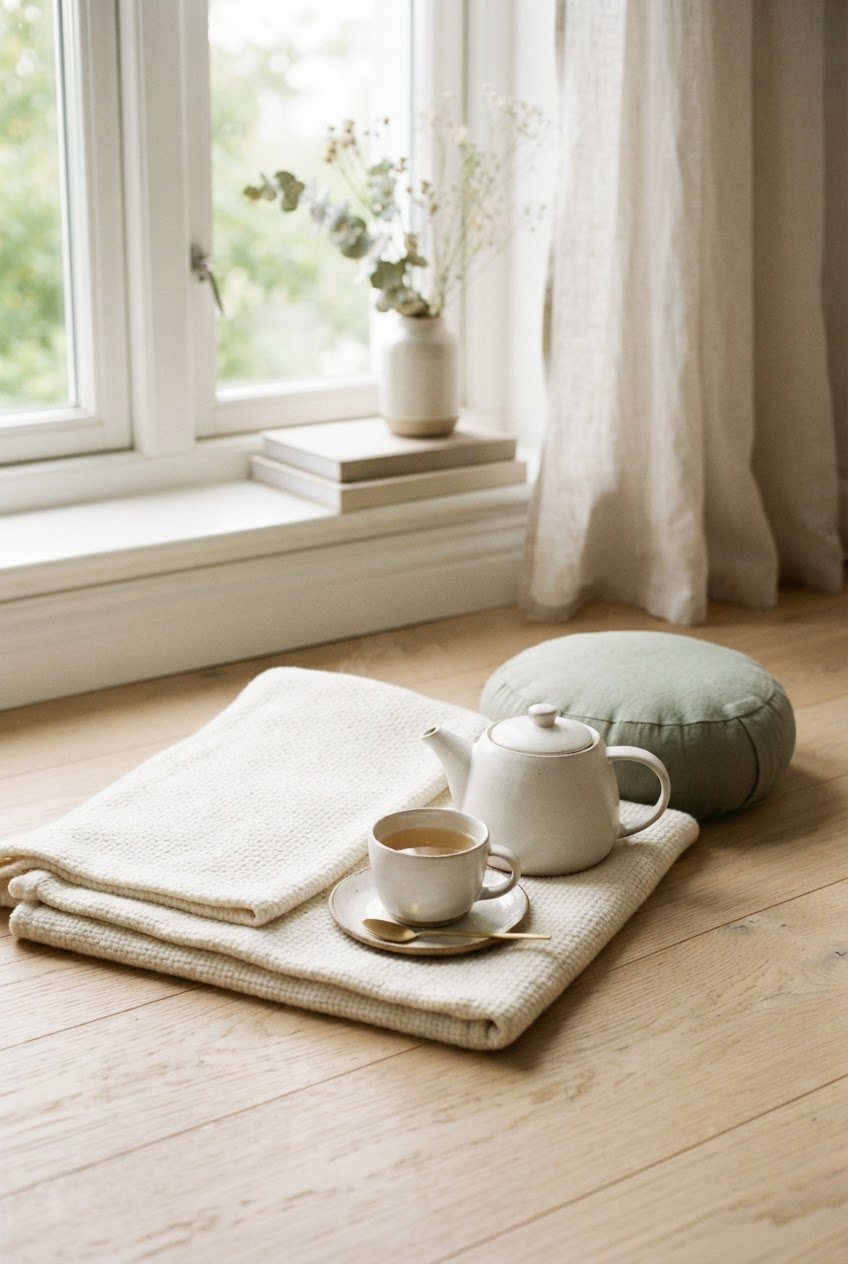
Your evening doesn't need to be a second shift. A slow wind-down routine helps your body get ready to sleep, which is its own kind of rest. A white ceramic teapot and your favorite caffeine-free tea turn it into a small ritual. On harder days, a warm bath with a handful of lavender bath salts is a sweet extra. My winter sleep routine has a step-by-step plan for slower evenings.
Try this: choose a "work stops here" time for tonight and protect it, even if it's only 30 minutes before bed.
15. You Don't Need Anyone's Permission (But Here It Is Anyway)
Deep down, you already know you're allowed to rest. But sometimes it helps to see it in writing, from someone on your side. So here's your official permission slip.
Your Rest Permission Slip
Copy this into your journal, onto a pretty card or onto a sticky note for the fridge. Fill in the blanks, sign it and read it whenever the guilt starts talking. It sounds a little silly. It works anyway.
REST PERMISSION SLIP
I, ____________, hereby give myself full permission to rest.
- I'm allowed to rest before everything is done.
- I'm allowed to rest without being sick, exhausted or having a good excuse.
- I'm allowed to say "I'm resting" and leave it at that.
- I'm allowed to rest in a way that doesn't look productive.
- I'm allowed to change plans when my body asks me to.
- I'm allowed to enjoy it, without paying for it with guilt later.
The kind of rest I need most right now: ____________ (physical, mental, emotional, social, sensory, creative or spiritual)
One small way I'll rest this week: ____________
Signed: ____________ Valid: always.
I keep mine tucked into the back of my journal, and on evenings when I catch myself getting up to wipe the counter again, I read it with my tea. It's a small, soft reminder that I'm on my own side.
How To Rest When Your Brain Won't Switch Off
Sometimes the problem isn't guilt exactly. It's that the moment you sit down, your mind starts racing through every unfinished thing. Here's what helps me:
- Do a 3-minute brain dump first. Write every task and worry on paper. Your brain relaxes when it knows nothing will be forgotten.
- Give your hands something easy. A puzzle, coloring, knitting or stroking a pet keeps the restless part of you busy while the rest of you slows down.
- Make the room feel restful. Dim the lights, put the phone in another room and add soft background sound. A white noise machine is a good pick if every little sound pulls your attention.
- Breathe out longer than you breathe in. In for 4, out for 6, for 1–2 minutes. It's a simple way to tell your body it's safe to slow down. More ideas in my list of 30 ways to calm your mind.
- Sit somewhere that's just for resting. A floor cushion by a window, the corner of the sofa, one chair. When your body learns "this spot means slow", it gets easier to settle.
- Keep a list of easy, restful joys. When you can't think of how to rest, pick from your own dopamine menu of small comforting things instead of reaching for your phone.
When Tiredness Needs More Than Rest
A gentle but important note: rest helps with everyday tiredness, but it isn't a cure for everything. If you feel exhausted most days even after good sleep and plenty of rest, if your tiredness comes with other symptoms, or if you've lost interest in things you usually enjoy, please talk to your doctor. Ongoing fatigue can have many causes, from sleep problems to low iron to depression, and some of them need proper care. My post on reasons you might feel tired all the time covers a few common ones, but it's no substitute for a professional opinion.
And if you're feeling overwhelmed, hopeless or unsafe, please reach out to someone you trust, a mental health professional or a local crisis line right away. Asking for help is a strong, brave thing to do.
Final Thoughts
Rest is not something you squeeze in once you've proven you deserve it. It's part of being a person, as ordinary and necessary as breathing. The guilt might not disappear overnight, but every time you sit back down instead of getting up to wipe that counter, it gets a little quieter.
So fill in your permission slip, pour a cup of tea and stay on the sofa a little longer today. The list will still be there. And you'll meet it a lot more gently once you've rested.