Decluttering books is hard for a good reason: books aren't just objects. They hold the person you were when you read them, the person you hope to become, and the friend who pressed one into your hands and said "you have to read this". Letting one go can feel like letting a little piece of that go too.
Here's the reassuring part. The goal isn't an empty shelf or a magic number of books. The goal is a shelf you love, where every spine you see makes you glad, and where there's room for the next good story. That can be twenty books or six hundred.
This guide shows you how to declutter books without regret: a gentle six-step process, eight honest questions to ask, a table for different kinds of books, how to handle tricky cases like gifts and unread books, where your books can go next, small-space shelf ideas and a one in, one out habit that keeps things easy. No shaming collectors, no rules about how many you "should" own.
Why Decluttering Books Feels So Hard
Most of us can donate an old sweater without a second thought, yet freeze over a paperback we haven't opened in years. That's because books tend to carry three things at once:
- Memories. The novel you read on a long trip, the battered copy from school, the book that got you through a hard winter.
- Identity. Shelves quietly say who we are: curious, romantic, a classics person, a cookbook collector, a lover of mysteries.
- Good intentions. The language course, the big biography, the business book you meant to finish. Letting them go can feel like admitting you won't.
There's also a cultural feeling that getting rid of books is somehow wrong, as if a book is more precious than other things. I understand that completely. (I still pause over every single one.) But a book sitting unread in a box isn't being honored. A book in the hands of someone who'll read it is.
The Goal: A Shelf You Love, Not an Empty One
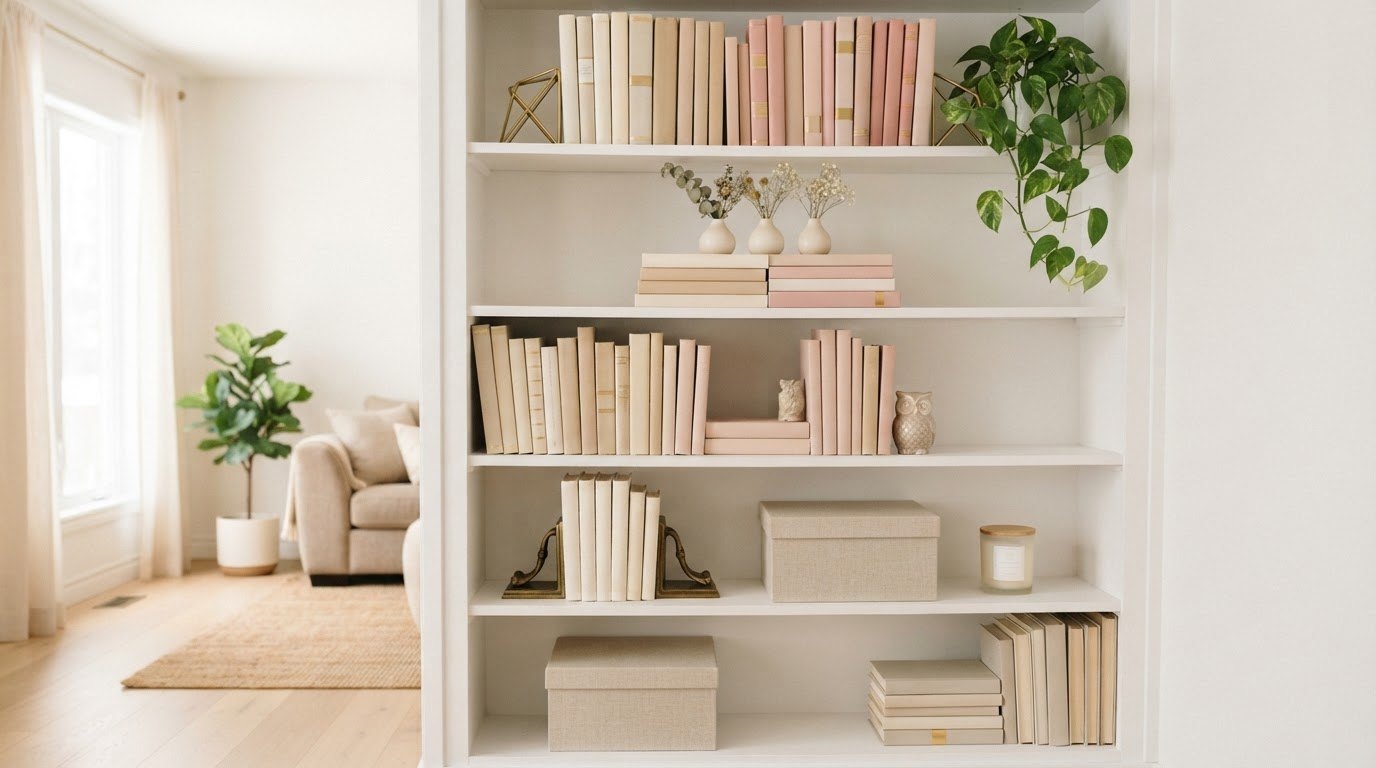
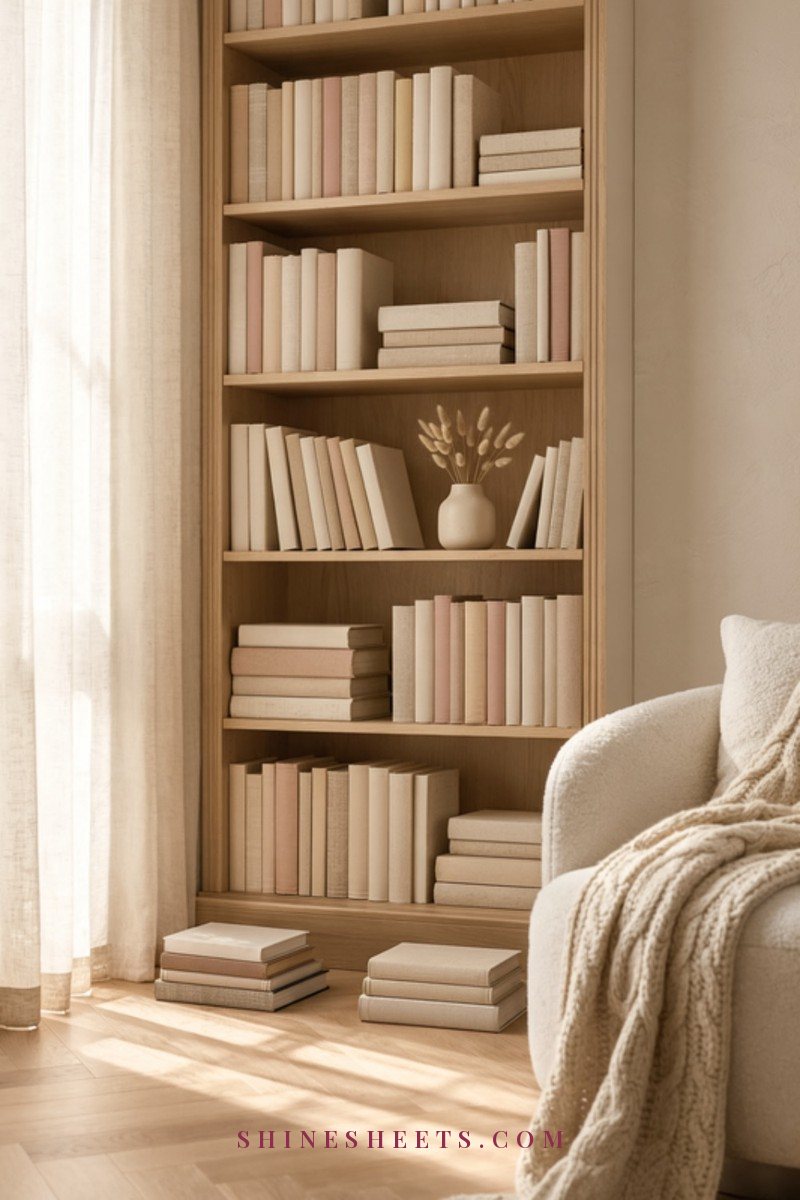
Before you touch a single book, decide what you want your shelves to feel like. Calm and roomy? Full and library-like, but organized? A small, curated collection of favorites? There's no right answer, only yours.
Some people find it helpful to set a gentle container limit: "my books live on these three shelves" or "this one bookcase". When the shelves are full, that's your signal to make a choice, rather than your books spilling onto floors, chairs and nightstands. If you'd love a home where books are part of the decor, my home library ideas are full of book corners for every size of space.
And if you love a big collection, keep a big collection. Decluttering just means the books you own are the ones you actually want.
6 Steps To Declutter Books Without Regret
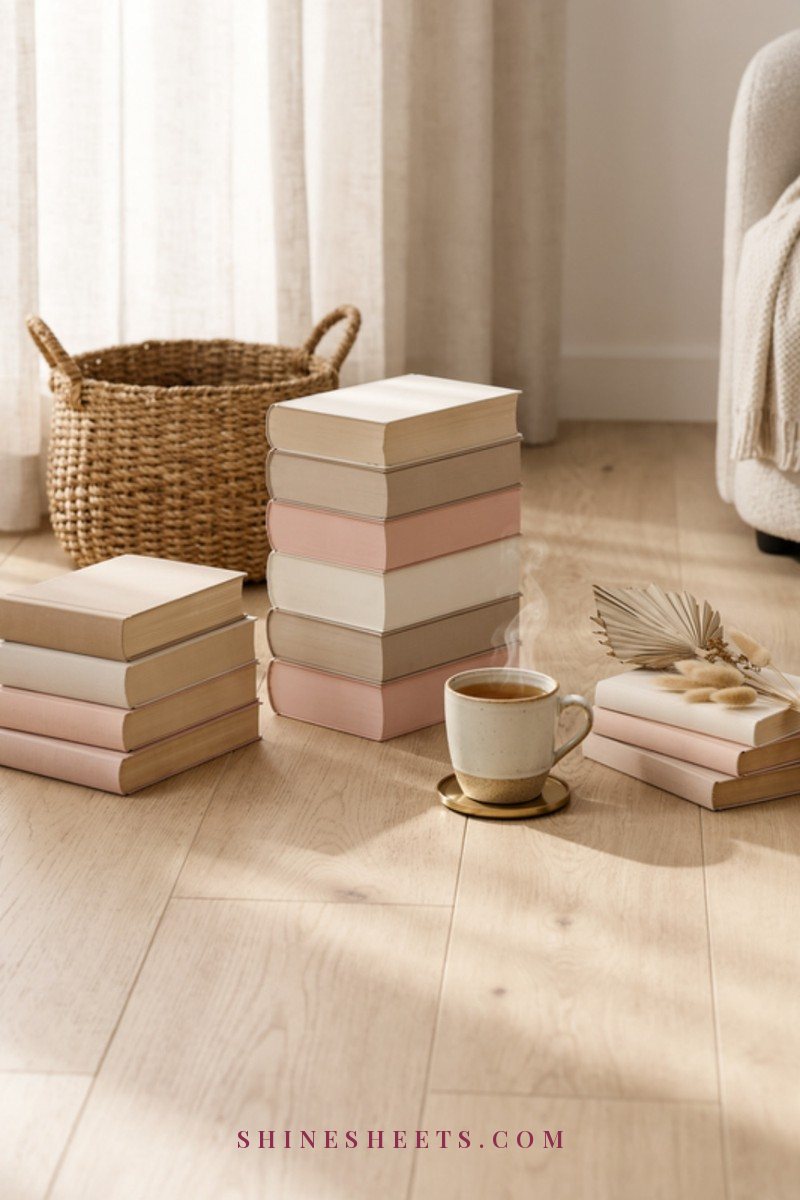
This process works for a single shelf or a whole home library. Give yourself an afternoon for one bookcase, and don't try to do the entire house at once. Tea, a candle and a little patience help a lot.
1. Gather Your Books by Category
Books hide all over the house: bedside tables, the kitchen, the car, the bottom of tote bags, boxes in the closet. Bring them together one category at a time, for example fiction, nonfiction, cookbooks, reference, children's books and sentimental books.
Seeing all your mystery novels in one pile, or realizing you own three copies of the same classic, makes decisions much clearer than looking at one book at a time on a crowded shelf. Clear a table or a bit of floor and work through one category before you start the next.
2. Set Aside Your Never-Let-Go Favorites First
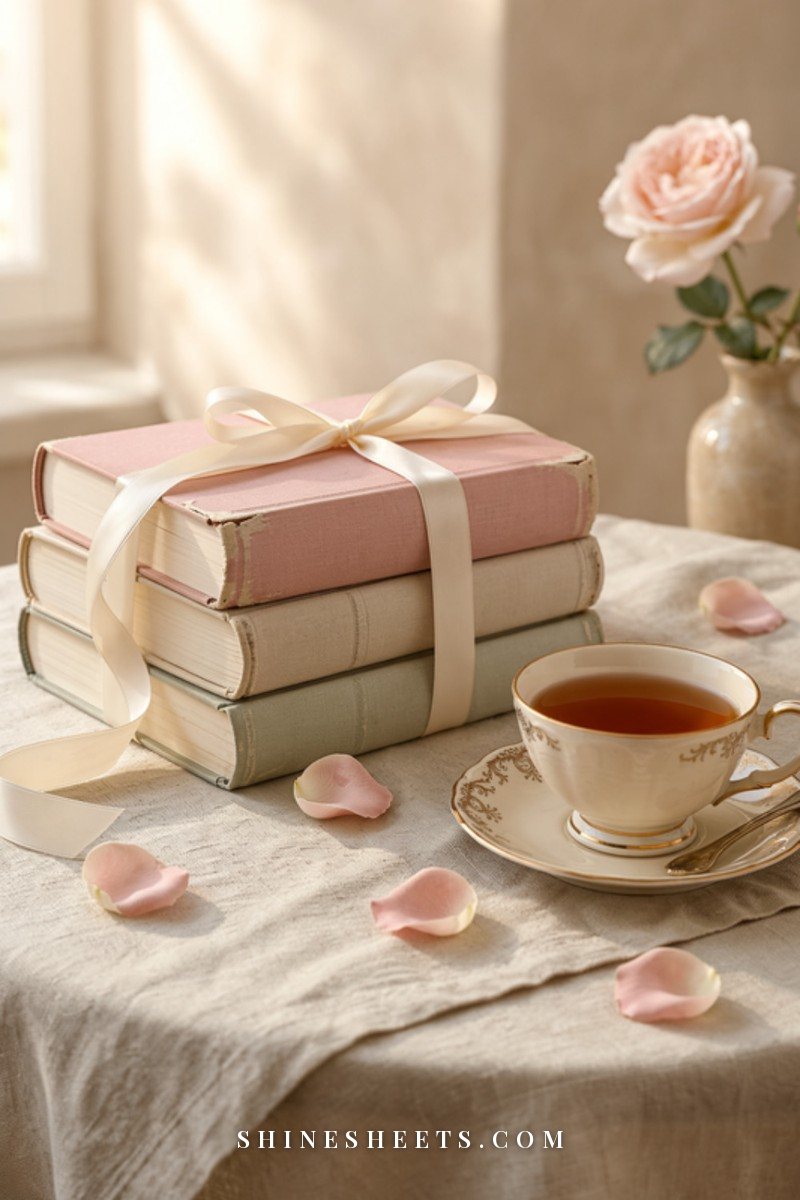
Start with the easy, happy part. Pull out the books you already know you'll keep forever: the ones you reread, the ones with handwritten notes, the ones that changed something in you. Put them straight back on the shelf, in the best spot.
This does two things. It reminds you that you're not losing your favorites, and it shows you how much space your true keepers actually need. Everything after this is just a question of what deserves the remaining room.
3. Ask Honest Questions
Now pick up each remaining book and ask yourself a few gentle, honest questions (there's a list of eight below). Hold the book for a moment instead of judging it from its spine. Notice your first reaction: a little lift of happiness, a sigh of guilt, or nothing at all.
That first reaction is useful information. Guilt and "I should" usually point to a book you can let go. Happiness and "oh, I loved this" usually point to a keeper.
4. Sort Into Keep, Maybe and Pass On
Make three clear piles or use three boxes or baskets:
- Keep: books you love, reread, use or truly plan to read soon.
- Maybe: books you're unsure about and can't decide on today.
- Pass on: books you're ready to give to someone else.
Keep the decisions moving. If you hesitate for more than a few seconds, the book goes in the maybe pile, not back on the shelf. A set of white fabric storage bins makes the sorting feel tidy and keeps the piles from mixing.
5. Give the Maybe Box a Three-Month Test
The maybe box is what makes this method regret-free. Tape it shut, write the date on it and put it somewhere out of sight, like a closet shelf or under the bed. Then set a reminder on your phone for three months from now.
When the reminder comes up, ask yourself two things: did you miss any of these books, and can you even remember what's inside? Anything you went looking for goes back on the shelf. The rest can usually go without a second thought, because you've already lived three months without it.
6. Rehome Your Books Thoughtfully
Don't let the pass-on pile sit by the door for weeks, or it will slowly creep back onto your shelves. Within a week, decide where each book is going and take it there. Check donation guidelines first (some places don't accept textbooks, encyclopedias or damaged books), and recycle anything that's moldy, water-damaged or falling apart.
There's a whole list of good homes for books further down, so you can match each one to the person or place that will love it.
8 Questions To Ask About Every Book
Use these as gentle prompts, not a test you have to pass. You don't need a "yes" to all of them to keep a book; one strong reason is enough.
- Would I buy this book again today? If the answer is a quick no, that's telling.
- Have I read it, and did I enjoy it? A book you finished and felt lukewarm about doesn't need shelf space.
- Is it a reference I actually use? A cookbook you cook from or a field guide you take on walks earns its place. One you never open doesn't.
- Would I reread it, or lend it to a friend? Rereads and lend-outs are the heart of a great shelf.
- Do I want to read it in the next year? Be honest about the realistic version of you, not the imaginary one with endless spare afternoons.
- Is it here out of guilt? Guilt about the price, the gift-giver or an unfinished goal isn't a reason to keep a book.
- Could I easily borrow it from the library if I wanted it again? If yes, letting it go costs you almost nothing.
- Does it make me happy when I see it on the shelf? Some books are simply beautiful or meaningful to look at, and that counts.
If you'd like more prompts for the rest of the house, my list of decluttering questions to ask before you keep things works beautifully alongside this one.
Book Decluttering Table: What To Keep and What To Let Go
Different books deserve different rules. Here's a quick table to help when you're stuck on a particular kind of book.
| Book type | Keep if | Let go if | Where it can go |
|---|---|---|---|
| Novels you've read | You loved it, would reread it or lend it out | It was fine but forgettable | A friend, a little free library, a charity shop |
| Unread books | You're genuinely excited to read it this year | It's been waiting for years and the interest is gone | A book swap, a library book sale |
| Nonfiction and self-help | You still return to it or it shaped how you think | You got the main idea and won't reopen it | A friend facing the same topic, a charity shop |
| Cookbooks and reference | You use it at least now and then | You only use one recipe or look things up online instead | A charity shop, a community swap |
| Gifts | You love it or it reminds you of the person warmly | You kept it only out of guilt | A friend with matching taste, a little free library |
| Children's books | It's a family favorite or still read aloud | Everyone has outgrown it and it holds no special memory | A school, a daycare, a family with younger kids |
| Textbooks | You still work in that field and use it | It's outdated or from a course long finished | A student, a buy-back program, recycling if very outdated |
| Signed and special editions | It means something to you or is genuinely rare | It no longer means much to you | A collector, a used bookstore that buys special editions |
| Duplicates | One copy is special (a gift, an old edition) | You simply have two of the same | A friend, a little free library |
Take a screenshot of the table and keep it open while you sort. It's surprising how much easier a decision feels with a simple rule in front of you.
Special Cases: The Hardest Books To Decide On
Some books ask for a little more care. Here's how I'd think about the trickiest ones.
Unread Aspiration Books
These are the books we bought for the person we planned to become: the big classic, the language course, the philosophy book. They can carry a lot of quiet guilt. Try this: choose your two or three most exciting unread books and put them on your nightstand to read next. For the rest, ask whether you'd pick it up from a library shelf today. If not, it's okay to let that version of the plan go. You can always borrow it later if the interest returns.
If you'd love to actually get through the keepers, my tips on how to read more books make it feel easy rather than like homework.
Books You Were Given as Gifts
A gift's job is to show care, and that job was done the moment you received it. You don't owe the giver a lifetime of shelf space. If the book doesn't suit you, it can go to someone it does suit. If it holds a lovely memory, keep it, or keep only the page with the handwritten note. My guide on how to declutter sentimental items without guilt has more ideas for exactly this feeling.
Children's Books
Children's books are often the most sentimental of all. Keep a small box of true family favorites, the ones with worn corners and read-aloud voices attached. Let the rest go to schools, daycares or families with younger children. If the books belong to your children, involve them in the decision instead of choosing for them.
Old Textbooks
Textbooks are expensive, which makes them hard to let go of, but most go out of date quickly. Keep the ones you still use for work or study. Sell or give recent editions to students, and recycle very outdated ones, since many charity shops can't accept them.
Signed and Special Editions
A signed copy or a beautiful edition can be a real treasure, and it's fine to keep it purely for the joy of owning it. If it doesn't mean much to you, though, a collector or a used bookstore will often value it more than your shelf does. Look up the edition before you donate, in case it's worth selling.
Where Your Books Can Go
Rehoming books thoughtfully is half the joy of decluttering them. Here are good places to start:
- Friends and family. Offer a small stack to the friend who loves the same genre. Tuck a sticky note in with a line about why you liked it.
- Little free libraries. Those small wooden boxes on street corners are perfect for a few good-condition paperbacks. Take one or two at a time so you don't overfill them.
- Charity shops. Most accept clean, readable books. Call ahead or check their website for what they take.
- Local libraries. Many libraries accept donations for their book sales, which raise money for library programs. Ask first, because rules vary.
- Book swaps. Community swaps, workplace swap shelves and book clubs are a lovely way to trade books you're done with for ones you'll actually read. If you're thinking of starting one, a book club evening can easily end with a little swap table.
- Schools, shelters and care homes. Children's books, easy reads and large-print books are often welcome. Always check first.
- Used bookstores. Some buy books for cash or store credit, especially recent titles and special editions.
Books that are moldy, badly water-damaged or missing pages can go into paper recycling (remove hard covers if your local rules ask for it).
Small-Space Shelf Ideas
Once your collection fits your life, a little organization keeps it feeling calm, especially in a small apartment.
- Go vertical. A tall, narrow cream wooden bookshelf fits into a corner and holds far more than a wide, low one.
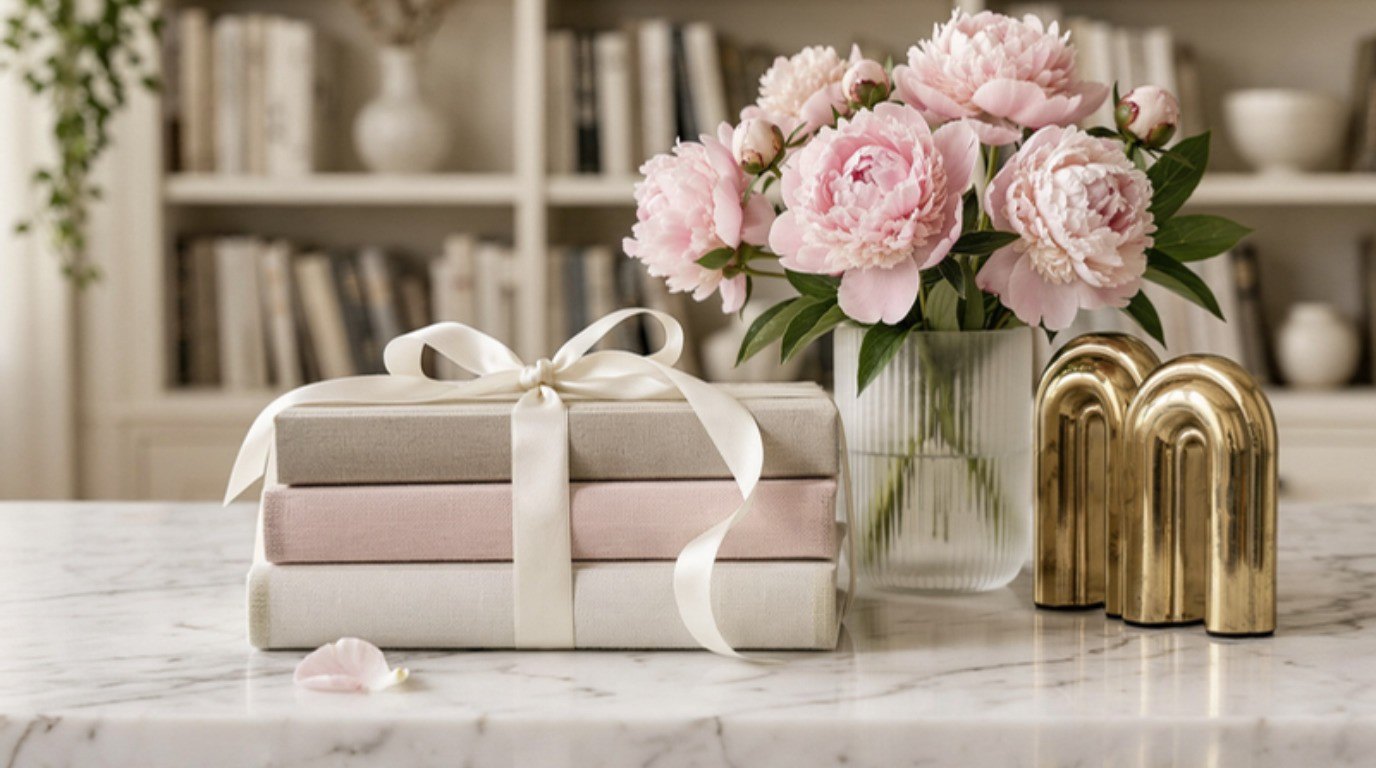
- Use bookends on open surfaces. A row of books on a dresser or desk looks intentional with a pair of blush bookends with gold accents at each end.
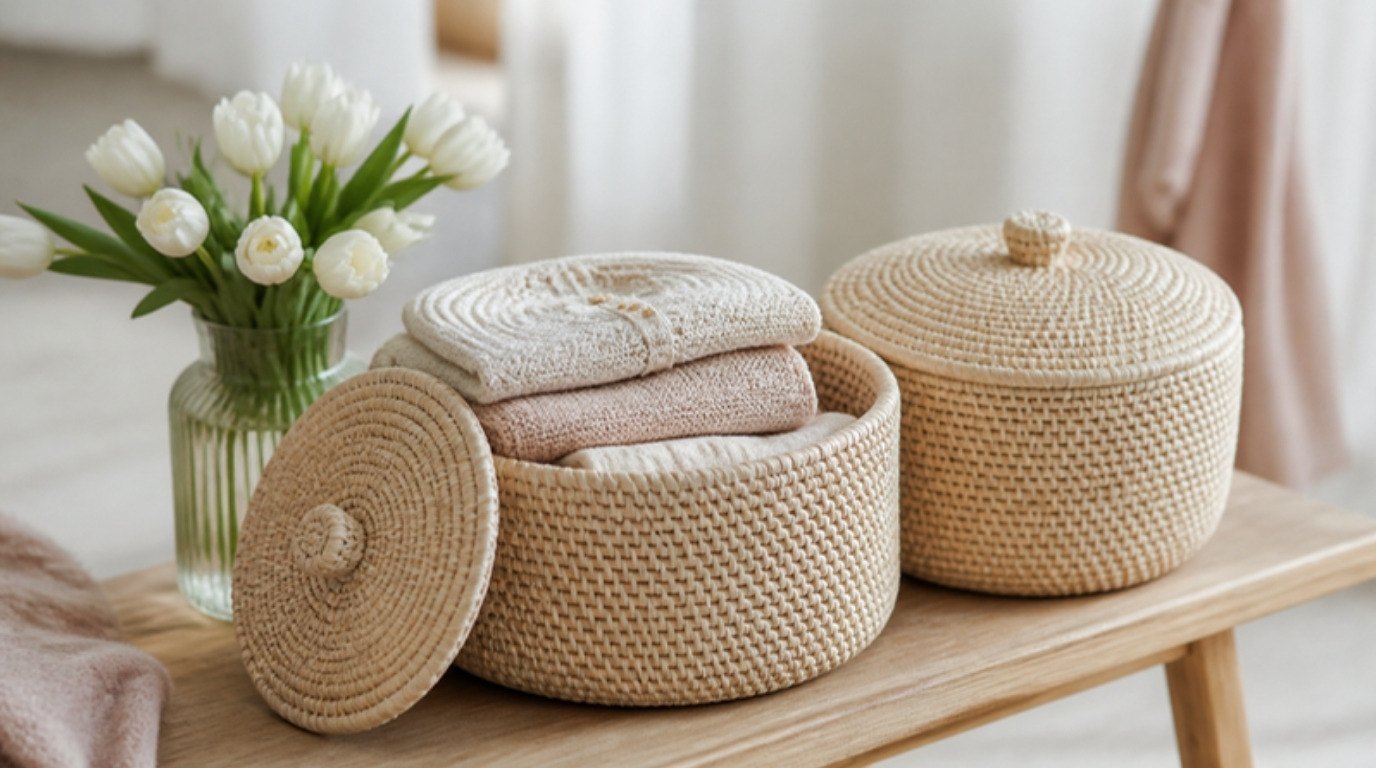
- Store off-season reading. Travel guides, reference books and books you rarely need can live in lidded sage storage boxes on a high shelf or under the bed.
- Leave breathing room. Aim to keep each shelf around three-quarters full. Space for a candle, a small plant or simply air makes the whole shelf look curated.
- Stack some horizontally. Mixing upright rows with small horizontal stacks makes room for tall books and looks softer.
- Use a bedside stack for "reading next". Limit it to three books so it never becomes a pile.
For the styling side, my guide to bookshelf styling that looks curated, not cluttered shows how to arrange what you keep so it looks calm and lovely.
A Gentle One In, One Out Habit
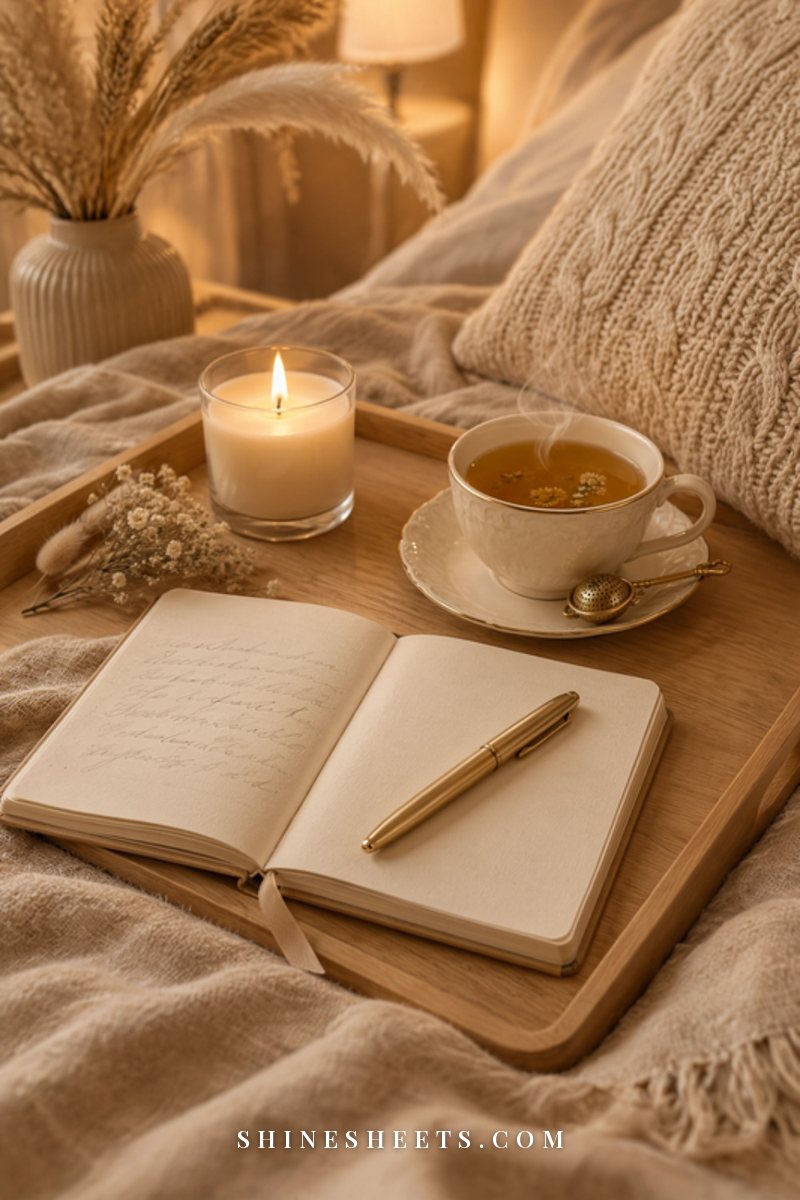
The simplest way to avoid another big book declutter is a soft one in, one out habit: when a new book comes home, one book leaves. It doesn't have to be strict or immediate. Some people do it once a month, choosing a few books to pass on for every few that arrived.
A few ideas that make it easier:
- Keep a small "pass on" basket near your bookshelf, so finished books have somewhere to go right away.
- When you finish a book, decide on the spot: keep, lend or pass on.
- Track what you read in a linen reading journal, so you can let a book go and still keep a few lines about how it made you feel.
- Borrow first. Library books and e-books let you try a title before giving it permanent shelf space.
This takes the pressure off. Your shelves stay roughly the same size, and every new book still feels like a treat.
Shared Shelves and Other People's Books
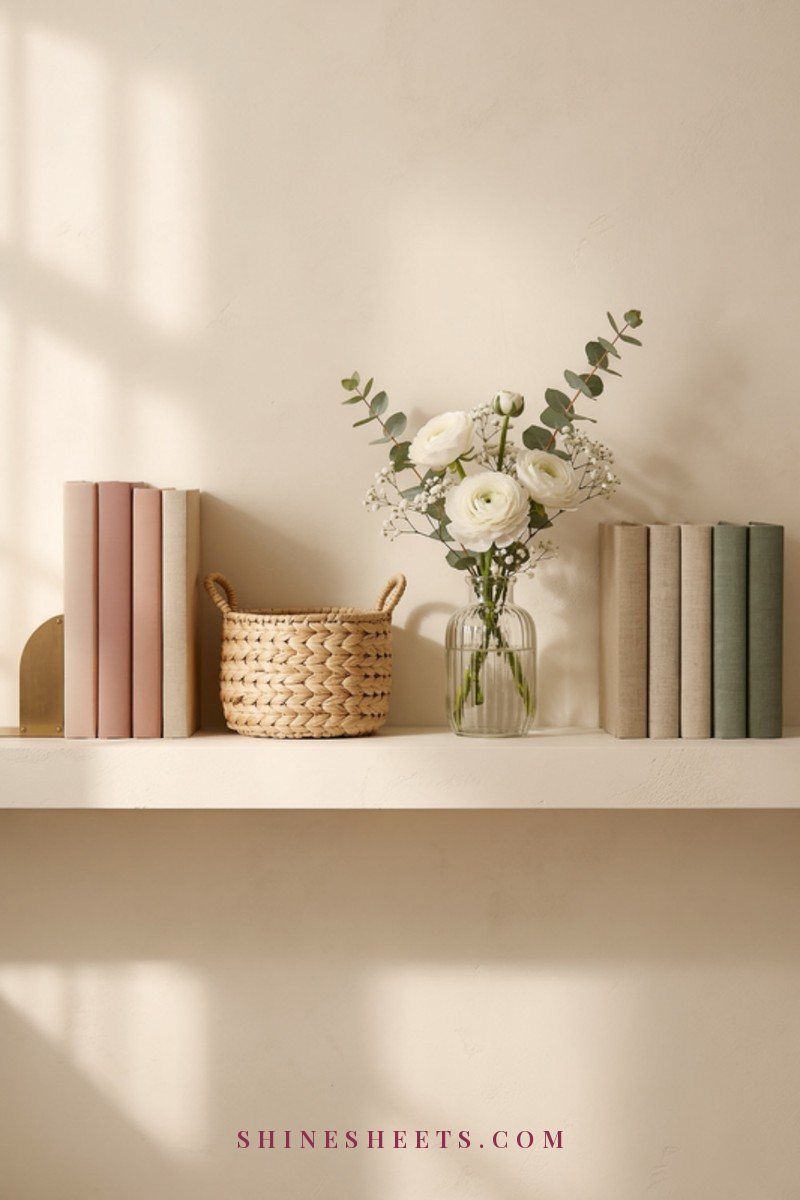
If you share a home, only declutter your own books. A partner's, roommate's or child's books are theirs to decide about, even if you're sure they'll never read them again. Getting rid of someone else's books without asking can really hurt trust.
What you can do is make a kind, shared plan. Try something like: "I'm going through my books this weekend. Would you want to do a shelf of yours too, or should I just give you your own section?" Giving each person a clear shelf or bookcase helps a lot, and it keeps your own decluttering from feeling like a judgment on theirs.
Final Thoughts
Learning how to declutter books isn't about loving books less. It's about giving the ones you love the space and attention they deserve, and letting the rest find readers who'll treasure them.
Start with one shelf, set your favorites back first, and let the maybe box do the hard part for you. Your shelves can be full, small or somewhere in between, as long as every book on them feels like it belongs there.